

Prof. Dr. Thomas Stäcker is a Part-time Professor for Digital Humanities at the Department of Information Sciences, University of Applied Sciences Potsdam. He serves as Director of the University and State Library Darmstadt (since 2017) and Deputy Director of the Herzog August Library Wolfenbüttel (since 2009). His career spans roles as a librarian at Herzog August Bibliothek (since 1998) and Johannes a Lasco Library in Emden (1997-1998). Education: Master's degree in History of Philosophy and Latin (1991), doctorate (1994) from TU Braunschweig, University of Essex, and University of Osnabrück Research: Digital Humanities, digitization of early printed books, XML/TEI encoding, OCR technologies, and cultural heritage preservation Leadership: Key roles in major digitization projects (e.g., VD17, Dünnhaupt Digital) and digital library development His work bridges library science with scholarly research, emphasizing open access, digital editions, and metadata standards. He has authored/co-authored numerous monographs, including the 2015 'Grenzen und Möglichkeiten der Digital Humanities' and the 2016 Festschrift chapter on open access. Stäcker co-edited digital editions like Christoph Heidmann's Oratio de Bibliotheca Julia (2013) and maintained active engagement through blogs like 'dhd-blog.org' (2015 post on humanities research data).
جستوجوی استاد و پژوهشگر
استاد راهنما، استاد دانشگاه یا پژوهشگر مناسب برای مسیر پژوهشیتان را پیدا کنید و با او ارتباط بگیرید.
نمایش ۶۷۶-۶۹۰ از ۸٬۰۲۳ استاد راهنما
اطلاعات این پروفایلها از صفحات عمومی دانشگاهها جمعآوری شده و ممکن است بهروز نباشد.
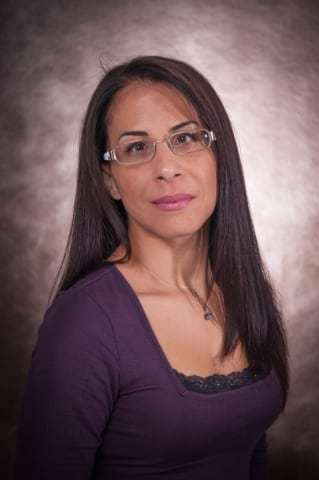
Despo Ktoridou serves as Professor and Head of the Department of Management at the University of Nicosia's School of Business in Cyprus. She has held academic positions since 1999, advancing from Assistant Professor of Educational Technologies to Associate Professor in 2007 and full Professor in 2019. A Certified Engineer by the Cyprus Scientific and Technical Chamber (ETEK), she maintains active memberships in IEEE and ACM while bridging engineering, management, and educational disciplines through her scholarly contributions. Her educational background includes: Bachelor of Science in Engineering (Computer Systems & Networks) from Saint Petersburg Electrotechnical University (awarded 1991) Master of Science in Engineering (Computer Systems & Networks) from Saint Petersburg Electrotechnical University (awarded 1993) Doctor of Philosophy in 'Expert Systems in Education' from Saint Petersburg Electrotechnical University (awarded 1999) Professor Ktoridou's research centers on ICT integration in educational practice, technology and innovation management pedagogies, and open and online distance learning. Her work examines how technological advancements can be effectively incorporated into teaching methodologies and management education, with publications spanning theoretical frameworks to practical applications in higher education settings. Analysis of her recent publications (2024-2025) reveals a pronounced focus on emerging technologies including artificial intelligence and the metaverse within educational contexts. These studies consistently investigate student perspectives, acceptance patterns, and specialized course development (e.g., intellectual property management for technology students), demonstrating interdisciplinary approaches that merge computer science, business management, and educational theory. Scientific Awards: No scientific awards, prizes, or fellowships documented in provided information Professor Ktoridou has supervised numerous graduate students throughout her academic career and participated in multiple EU-funded and locally sponsored research programs. Her academic service includes guest lecturing at foreign universities, conference session chairing, program committee membership, and editorial review activities. As Department Head since 2012, she demonstrates sustained commitment to academic administration and program development. While specific laboratory facilities are not detailed, her research trajectory indicates leadership in interdisciplinary teams focused on educational technology innovation. Current work explores cutting-edge topics including AI ethics in education and metaverse applications, positioning her contributions at the forefront of technology-enhanced learning research.

Andrei Hagiu is a Professor in the Information Systems department at Boston University's Questrom School of Business, with a focus on platform strategy and business models. He has previously taught platform strategy at Harvard Business School and MIT Sloan School of Management. Current Affiliation: Boston University (Questrom School of Business) Prior Affiliations: Harvard Business School, MIT Sloan School of Management His research explores the economics of two-sided platforms, marketplace dynamics, and the strategic use of data and generative AI in digital ecosystems. Recent work includes studies on AI regulation, platform discoverability, and antitrust implications for digital marketplaces. Key trends in his publications include: Platform economics and generative AI integration Data-driven competitive advantage Antitrust and regulatory challenges in digital markets Marketplace leakage and discoverability He serves as a Dean’s Research Scholar at BU and advises startups and corporations on platform-based business strategies. His collaborations include extensive co-authorships with researchers like Julian Wright and Catherine Dellarocas.
- Heat Transfer
- Fluid Mechanics
- Thermodynamics
- +۳ مورد دیگر
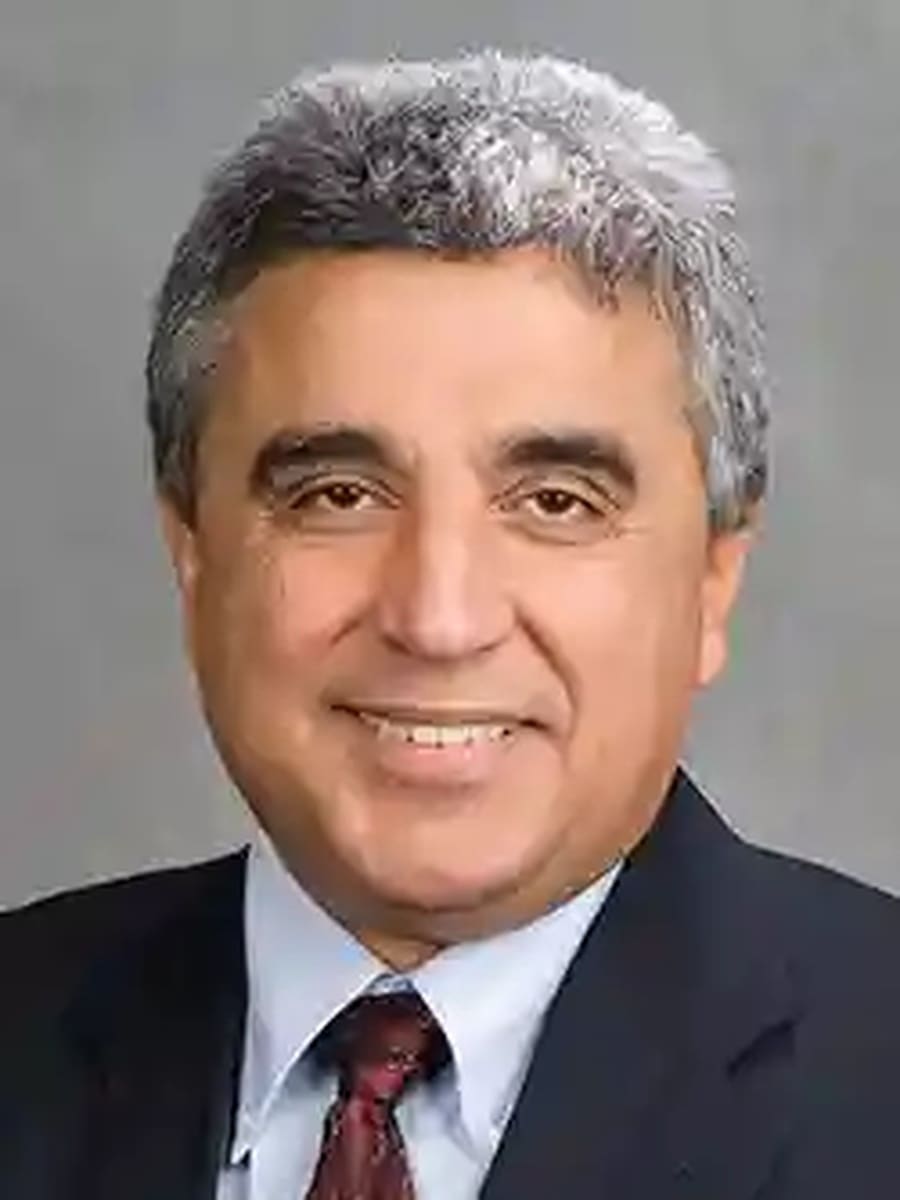
Ahmad Fakheri is Professor of Mechanical Engineering at Bradley University’s Caterpillar College of Engineering & Technology . He has served the university for more than two decades, including as Interim Associate Provost & Dean of the Graduate School (1996-1998) and Director for Research & Sponsored Programs (1992-1996). A triple alumnus of the University of Illinois at Urbana-Champaign (B.S., M.S., Ph.D., all in Mechanical Engineering), he is an ASME Fellow recognized for exceptional research and service. Education Ph.D., Mechanical Engineering, University of Illinois at Urbana-Champaign M.S., Mechanical Engineering, University of Illinois at Urbana-Champaign B.S., Mechanical Engineering, University of Illinois at Urbana-Champaign Research Interests Dr. Fakheri’s scholarship lies at the intersection of heat transfer , fluid mechanics and thermodynamics , with concentrated effort on heat-exchanger design and optimization . His work employs second-law analysis, entropy-generation minimization and advanced numerical techniques to enhance thermal efficiency and guide sustainable energy-system development. Scientific Awards & Honors Fellow, American Society of Mechanical Engineers (ASME) Outstanding Research Award, Bradley College of Engineering Outstanding Service Award, ASME Process Industries Division NASA Summer Faculty Fellow, NASA Lewis Research Center Caterpillar Fellows Program Research Award Leadership & Service Within ASME he has chaired the Process Industries Division (6,000+ members) and the Manufacturing Technical Group (10,000+ members), served on the Board on Research and Technology Development, and acted as Technical Program Chair for the 2012 ASME International Mechanical Engineering Congress. On campus he has been a member of the University Senate and has led curriculum-reform initiatives. Laboratory & Teaching Dr. Fakheri teaches undergraduate and graduate courses such as Heat Transfer , Advanced Heat Transfer , Advanced Fluid Dynamics and Advanced Computer-Aided Design , integrating computational tools and real-world design projects that connect classroom theory to industrial practice.
- Information Systems
- Databases
- Knowledge Graphs
- +۷ مورد دیگر
Stefan Decker is a full University Professor (Universitätsprofessor) at RWTH Aachen University, Germany, where he heads the Chair of Information Systems and Databases (Informatik 5) within the Faculty of Mathematics, Computer Science and Natural Sciences. He is actively involved in teaching, research, and the supervision of numerous ongoing and completed doctoral, master’s, and bachelor theses. Education & Academic Background Doctorate (Dr. rer. pol.) – field of Information Systems or related (exact institution/year not stated in text). Appointed as University Professor and Chair of Information Systems and Databases at RWTH Aachen University. Research Interests Prof. Decker’s work lies at the intersection of databases, knowledge graphs, semantic web technologies, data science, and cybersecurity . He investigates architectures and algorithms for large-scale, privacy-preserving, decentralized data analytics , develops ontology-driven information systems , and explores the use of large language models (LLMs) for educational technology, anomaly detection, and incident-response playbooks. Additional focal areas include smart energy systems, mixed-reality learning environments, FAIR data principles, and federated machine learning . Scientific Contributions & Trends His recent publications (2022-2025) demonstrate a clear trend toward explainable AI, LLM-enhanced systems, secure data spaces, and semantic interoperability . Key contributions include novel anomaly-detection frameworks for encrypted power-grid communications, knowledge-graph-driven chatbots for higher-education support, and methodological advances in decentralized analytics and FAIR data sharing. These works are disseminated in top-tier venues such as AAAI, IEEE ISGT Europe, ESWC, IDEAL, and various Springer LNCS and IEEE Transactions. Supervision & Grants Doctoral Theses Advised: A. T. Neumann – “Chatbots as professional companions in large-scale community information systems” (2024) S. M. Welten – “Methods for practical data sharing and decentralized analytics” (2025) Master’s Theses Co-Advised: A. R. Küsters – “Object-centric process constraints using variable bindings” (2025) Additionally supervising more than 30 ongoing bachelor, master, and doctoral projects covering topics such as LLM-driven cybersecurity playbooks, knowledge-graph construction for German law, privacy-preserving analytics in smart grids, and mixed-reality learning agents. Principal investigator or senior researcher in large collaborative projects including NFDI4DS, WestAI, champI4.0ns and several EU/national initiatives on sovereign data spaces and AI services. Labs & Teams Prof. Decker leads the Information Systems & Databases (DBIS) Research Group . The group operates well-equipped laboratories for knowledge-graph engineering, mixed-reality applications, privacy-enhancing technologies, and secure distributed analytics . Current team size exceeds 30 researchers including PhD candidates, postdocs, and scientific programmers, supported by national and EU funding streams.

Gordon Jones is a Professor in the Department of Physics at Hamilton College, serving as the Stone Professor of Natural History and Chair of Physics. His academic leadership extends to directing interdisciplinary research in Chemical Physics. Ph.D. in Nuclear Physics, Princeton University M.A., Princeton University B.A., Williams College Specializing in neutron-based research, Jones explores both fundamental and applied physics. His work investigates time reversal symmetry and weak interactions in nuclei, while also developing neutron polarization techniques for materials science applications like magnetic computer hard drive components. Recent publications focus on neutron beta decay studies (2011-2021), emphasizing precision measurements of angular correlations and time reversal violation. Collaborative efforts span institutions such as NIST and Indiana University. American Physical Society award for Research at an Undergraduate Institution (2021) Samuel and Helen Lang Prize for Excellence in Teaching (2017) John R. Hatch Excellence in Teaching Award (2002) Recipient of five National Science Foundation grants and five Department of Energy grants, Jones bridges experimental physics with technological innovation. His laboratory develops advanced neutron optics tools, including polarized 3He cell systems, for probing magnetic materials.
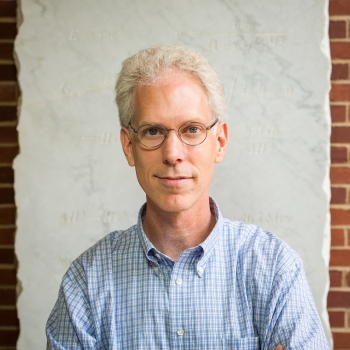
Ben Vollmayr-Lee is an Associate Professor in the Department of Physics & Astronomy at Bucknell University. His research focuses on theoretical statistical physics, particularly non-equilibrium systems and critical phenomena. Education: Ph.D. in Physics from UC Santa Barbara (1994), with postdoctoral work at the University of Maryland and NIST. His scholarly interests include: Coarsening Kinetics: Universality classes in phase separation dynamics. Reaction-Diffusion Systems: Field-theoretic renormalization group methods for non-equilibrium systems. Ionic Criticality: Interplay of energy and entropy in complex systems. General Statistical Mechanics: Nonintegrable interactions and numerical algorithms. Recent publications highlight trends in nonequilibrium work relations, anomalous dimensions in reaction-diffusion systems, and computational approaches to coarsening. Collaborators include international researchers from institutions such as Virginia Tech, Dalhousie University, and NIST. Students mentored by Vollmayr-Lee include Andy Baish (Bucknell '15), Greg Seyfarth (Colby '13), and Phil Marquis (Bucknell '07), among others.
Saif Dewanمشاهده پروفایل
مدرس ارشد
Dr Saif Dewan is a Senior Lecturer at the School of Law & Business , University of Notre Dame Australia. He holds a PhD in Business IT from the Australian National University and has taught Quantitative Methods for Business and Business Information Technology courses. Dr Dewan maintains honorary research affiliations with the University of New South Wales and the University of Twente, Netherlands. PhD in Business IT from Australian National University His research spans IT artefact design , business analytics , digital innovation , cybersecurity management , and AI . His work focuses on integrating technology with organizational effectiveness and consumer behavior. While the recent publications highlight his expertise in analytics knowledge management , neuro-IS studies , and mobile banking research , his broader contributions include conceptual frameworks for digital entrepreneurship, context-aware business processes, and information transparency in e-commerce. Dr Dewan actively collaborates with international institutions and has consulted for the United Nations, Samsung, and governments on IT and business analytics. He has supervised numerous PhD and Honours students and served on boards of technology startups, NGOs, and private schools globally.

Alessandro Del Tomba is a Tenure-Track Researcher in Linguistics and Glottology at Sapienza University of Rome, specializing in historical linguistics, Indo-European studies, and Central Asian philology. He holds a PhD in Linguistics from Sapienza and Comparative Indo-European Linguistics from Leiden University. Historical linguistics Indo-European studies Eastern Iranian philology Language contact theories His research focuses on Khotanese and Tocharian languages, with recent publications analyzing manuscript transmission, morphological variation, and phonological developments. He serves as Principal Investigator for the FIS project "Khotanese language and texts in contexts (KhoTxt): A multimodal approach to the classification and periodisation of the Khotanese language and its texts within the cultural and historical framework of medieval Central Asia". He teaches General Linguistics at undergraduate levels and Linguistics courses at the graduate level in Modern Philology. Active in international academic networks, he participates in conferences across Italy, Europe, and Asia.

- Political Thought Renaissance Florence
- Machiavelli Studies
- Continental Political Theory Weimar Germany
- +۴ مورد دیگر
John P. McCormick is a Professor of Political Science at the University of Chicago , renowned for his groundbreaking work in Machiavelli studies , continental political theory , and democratic reform . His scholarship interrogates historical mechanisms for elite accountability and proposes modern institutional adaptations to counteract economic and political inequality . Key research areas: Political thought in Renaissance Florence (Machiavelli & Guicciardini) Weimar Germany and Central European emigre theory Philosophy/sociology of law Normative dimensions of European integration Contemporary democratic theory McCormick's 15 most recent publications focus on Machiavellian institutional design , elite-populace dynamics , and republican governance models , with interdisciplinary extensions into software-based political analysis and medical imaging technology . His work has sparked academic debates about the democratic potential of class conflict and non-electoral representation . Notable scientific endorsements include: Adrian Vermeule (Harvard) praising his institutional design sensitivity David Armitage (Harvard) calling it a radical rethinking of aristocratic democracy Larry Bartels (Princeton) highlighting his republican tradition contributions
- Commercial Law
- Maritime Law
- Energy Law
- +۶ مورد دیگر
Professor Jason Chuah (PhD, FRSA) is a leading academic in Commercial and Maritime Law at City, University of London (fractional basis since 2023) and holds a Chair at the University of Malaya, Malaysia. He has served as Head of Department and currently directs the London Universities Maritime Law and Policy Group. His career spans adjunct professorships at institutions in Canada, Sweden, Singapore, and 8 other countries. His research focuses on Maritime Law , Energy Law , Project Finance , Cybersecurity in Shipping , and Green Finance . He has contributed to landmark publications including the ICC-ECCO International Good Practice Guide for Offsets and advised on legislative frameworks for seafarer protections cited in the UK Queen’s Speech 2022. His 15 most recent publications (2023-2025) reveal trends at the intersection of AI in Maritime Trade , Blockchain-based Commerce , and Environmental Compliance . Articles frequently address Autonomous Shipping , Cybersecurity Risks for Offshore Units , and Modernization of Trade Instruments . Scientific recognition includes: Cambridge Commonwealth Trust Award Clive Schmitthoff Commercial Law Prize Fellow of the Royal Society of Arts Nomination for Oxford University Press Best Law Teacher Award (x3) He supervises 18 PhD students in topics ranging from Autonomous Shipping Regulation to Cryptoasset Money Laundering . His professional activities include editorial board roles at 5 journals and peer review for the Arts and Humanities Research Council, Polish National Science Centre, and South Africa National Research Foundation.
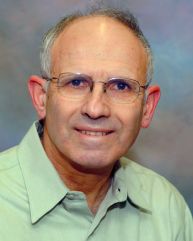
Professor Yonathan Shapir is a full Professor in the Department of Physics at the University of Michigan, with a joint appointment in Chemical Engineering. Since his arrival in 1985, he has advanced from Assistant Professor to full Professor, pursuing theoretical condensed-matter physics and statistical mechanics. Education: B.Sc. in Physics, Tel-Aviv University (1971) Ph.D. in Physics, Tel-Aviv University (1981) Research Interests: Professor Shapir’s work centers on understanding complex disordered systems through statistical mechanics. His investigations encompass critical phenomena in spin-glasses and random-field systems, classical and quantum transport in dirty metals leading to the metal-insulator transition, polymer statistics, fractal properties of percolation clusters, and kinetic models of surface growth and aggregation. These themes are unified by a deep interest in scaling laws, universality, and the emergent geometry of random media. Publication Trends: Between 2001 and 2010, his articles reveal a concentrated effort on diffusion in dynamically disordered environments, scaling behavior of growing surfaces, and the morphology of organic thin films such as pentacene. Earlier work (1996–2000) explored critical dynamics of dendrimers, surface growth on disordered substrates, and transitions in crystalline roughness. The breadth spans from fundamental statistical-physics questions to applications in materials science and organic electronics. Scientific Awards: Fulbright Award (1981) Bourse Joliot-Curie (1982) Visiting Compton Fellowship at the Technion (1989–1990) Advising & Grants: No explicit lists of students or current funding are provided in the material; however, his extensive publication record with numerous co-authors suggests active mentoring and collaboration. Future directions likely continue along the interface of statistical mechanics and nanoscale materials. Labs & Teams: While no specific laboratory names are given, Professor Shapir’s joint appointment implies active participation in both the Physics Department and the Chemical Engineering program, fostering interdisciplinary teams working on materials growth, transport phenomena, and computational statistical physics.

Roberto Giacobazzi is a Professor at the University of Arizona specializing in theoretical computer science with a focus on abstract interpretation, program analysis, and verification. His research bridges theoretical foundations with practical applications in software security and verification systems. Dr. Giacobazzi received his Ph.D. from the University of Pisa in Italy in 1993, establishing a long-standing academic career focused on the theoretical underpinnings of program analysis. His educational background forms the foundation for his contributions to abstract interpretation theory. His primary research interests center around abstract interpretation, a theoretical framework for approximating program semantics. This work spans theory of computation , programming languages , program analysis and verification , and logic in computer science . Giacobazzi has made significant contributions to understanding completeness and precision in abstract interpretation, with applications extending to code obfuscation, security analysis, and more recently, AI fairness in legal contexts. His work demonstrates how theoretical computer science concepts can address practical software engineering challenges. An analysis of his recent publications (2022-2025) reveals a consistent research trajectory with increasing sophistication in abstract interpretation theory. His work shows a growing emphasis on completeness properties, precision limitations, and security applications. Notably, his 2024 publication on "Fairness of AI Systems in the Legal Context" indicates an expansion of his theoretical expertise into AI ethics and regulatory compliance, demonstrating the versatility of abstract interpretation frameworks. Dr. Giacobazzi has contributed extensively to major conferences in programming languages and verification, including SAS (Static Analysis Symposium), POPL (Principles of Programming Languages), and VMCAI (Verification, Model Checking, and Abstract Interpretation). His publications reflect deep theoretical insights while maintaining relevance to practical software analysis challenges. His research has significant implications for software security, particularly in code obfuscation techniques based on abstract interpretation. The systematic approach to measuring incompleteness in abstract interpretations has provided new frameworks for understanding and improving program analysis tools. His work continues to influence both academic research and practical applications in program verification and security.

- Labour Law
- Economics of Law
- Law and Development
- +۳ مورد دیگر
Simon Deakin is a Professor of Law at the University of Cambridge and Director of the Centre for Business Research (CBR) . He is a Fellow of Peterhouse and contributes to law and economics , empirical legal studies , and labour law . Education : M.A., Ph.D. (Cantab.), Ph.D. (h.c.) (Louvain-la-Neuve) His research focuses on labour law , law and technology , and corporate governance , with datasets like the CBR Labour Regulation Index and Platform Work Index covering 117+ countries. He has conducted fieldwork in Europe, Asia, and Africa. Key publications include Is Law Computable? (2022) and The Law of the Labour Market (2005). Recent work explores AI's legal implications and labour law's economic impact , funded by DIGIT and ESRC . He edits the Industrial Law Journal and Cambridge Journal of Economics . Scientific Awards : Fellow of the British Academy (2005) Honorary Doctorate, Catholic University of Louvain (2012) ECGI and Allen & Overy Prizes for Corporate Governance Research He leads projects like the Global Comparison of Legal Protections for Platform Workers under Digital Futures at Work (Digit) , collaborating with institutions like the International Labour Organization (ILO) and British Department of Business and Trade .

Anna Puzioمشاهده پروفایل
پژوهشگر
- Philosophy
- Theology
- Ethics
- +۱۵ مورد دیگر
Anna Puzio is a philosopher, theologian, and ethicist working at the University of Twente as part of the Netherlands-wide ESDiT Research Programme (Ethics of Socially Disruptive Technologies) . She also holds a visiting researcher position at the University of California, Berkeley, USA. Her research spans interdisciplinary intersections of technology, identity, and ethics, with a focus on humanoid robotics, medical technologies, and queer AI. Education: Doctorate in interdisciplinary philosophy at Munich School of Philosophy, focusing on transhumanist anthropology; prior studies in Catholic theology, German literature, and philosophy at Westfälische Wilhelms-Universität Münster and Hochschule für Philosophie Munich. Research Interests: Puzio specializes in technological anthropology , robot ethics , and environmental ethics , with additional work on transhumanism , new materialism , and religion-technology intersections . Her eco-relational approach to robot ethics emphasizes sustainable human-environment-technology interactions. Publication Trends: Recent work addresses AI's disruption of personhood , queer perspectives in healthcare technology , and ethics of religious robots , reflecting her commitment to socially relevant technological dilemmas. Scientific Awards: Hanns Seidel Foundation Scholarship for her doctoral program. Networks: Co-founder of the Network for Theology and AI , contributing to interdisciplinary collaborations in technology ethics.
فقط ۷۵۰ نتیجه اول نمایش داده میشود. برای رسیدن به نتایج دقیقتر، جستوجو را با فیلترها محدودتر کنید.