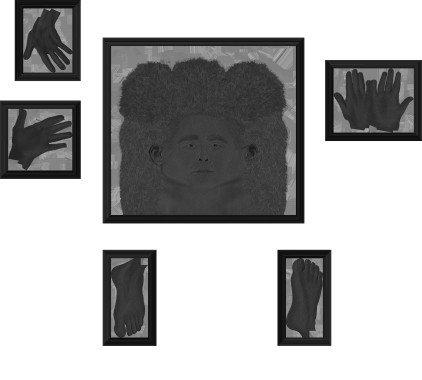
Maciej Zięba is an academic researcher affiliated with the Faculty of Information and Communication Technology at Wrocław University of Science and Technology, specifically within the Department of Artificial Intelligence . His work spans machine learning, deep learning, and computer vision, with a focus on hyperspectral imaging, autonomous systems, and 3D modeling. Recent research includes uncertainty-aware sensor deployment for autonomous vehicles, low-light image enhancement algorithms, and probabilistic regression frameworks for tabular data. He has co-authored publications on flow-based models, hypernetworks, and neural radiance fields (NeRF) applied to 3D face rendering. Contact: maciej.zieba@pwr.edu.pl
Robert Sitnik is a Professor and Dean of the Faculty of Mechatronics at Warsaw University of Technology, where he is affiliated with The Institute of Micromechanics and Photonics. He earned his Doctorate in 2002 and has established himself as a leading researcher in 3D optical measurement techniques and applications. His research focuses on 3D light measurement, optical shape analysis, structured light techniques, and 3D data processing with applications spanning cultural heritage documentation and medical imaging. As the leader of the 3D/4D Optical Surface Measurement Team, he has pioneered innovative approaches to surface measurement and documentation. His work demonstrates strong interdisciplinary connections between mechanical engineering, computer vision, and practical applications in both cultural preservation and healthcare. His research has led to significant advancements in 3D scanning technologies, particularly for human body analysis and cultural heritage conservation. His publications reveal a consistent research trajectory focused on improving accuracy, efficiency, and applicability of 3D measurement systems. His scientific impact is evidenced by 159 publications, an h-index of 18 in Scopus and 17 in Web of Science, and 103 promoted theses. His research has been supported by 22 projects, resulting in 1 patent and substantial contributions to both academic knowledge and practical applications. As an academic leader, he has supervised numerous students and researchers, contributing significantly to the development of expertise in optical measurement technologies. His work bridges theoretical research with real-world applications in medical diagnostics, cultural heritage preservation, and industrial measurement systems.
Dr. Bogumiła Hnatkowska serves as Assistant Professor at the Institute of Informatics within the Faculty of Computer Science and Management at Wrocław University of Science and Technology. Her academic career spans software engineering research and education with emphasis on model-driven approaches and quality assurance methodologies. Her research interests include: Software Engineering Analysis and Design of Information Systems Software Development Methodologies Model-Based Software Development Domain-Specific Languages Software Quality Recent publications (2021-2025) reveal concentrated research in model-driven engineering, business rules processing, and ontology integration. Key trends involve textual specification languages for use-cases, automated test generation mechanisms, and formal transformations for ontologies – demonstrating consistent application of theoretical rigor to practical software development challenges across agile and model-based contexts. Scientific Awards: No scientific awards were mentioned in the provided text Dr. Hnatkowska has served as principal investigator for multiple State Committee for Scientific Research grants including UML extensions for multimedia systems (2000), real-time systems analysis (2005), and model-driven database design (2008). Her teaching portfolio includes Software Engineering, Software System Development, and Advanced Programming Techniques courses where she supervises team projects providing students with hands-on development experience. She actively participates in partner programs including Visual Paradigm's Academic Training Partner Program (providing UML/BPMN/agile tools) and IBM Academic Initiative, supporting her research in software engineering methodologies and educational tool development.
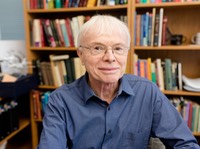
Thomas J.R. Hughes is the Peter O’Donnell Jr. Chair in Computational and Applied Mathematics and a Professor of Aerospace Engineering and Engineering Mechanics at The University of Texas at Austin. He is affiliated with the Oden Institute for Computational Engineering and Sciences (Oden Institute), where he leads the Computational Mechanics Group. His research focuses on computational mechanics, isogeometric analysis, and biomedical modeling. Education: B.E. and M.E. in Mechanical Engineering from Pratt Institute; M.S. in Mathematics and Ph.D. in Engineering Science from the University of California, Berkeley. Research Interests include Isogeometric Analysis (integrating CAD and FEA), stabilized numerical methods for fluid flows, patient-specific biomedical simulations, and phase-field modeling. His work spans applications in cardiovascular systems, tumor growth, and geophysical flows. Hughes has authored over 150 journal articles, with recent contributions on isogeometric analysis, fluid-structure interaction, and computational geosciences. Notable awards include the von Neumann Medal (USACM), Gauss-Newton Medal (IACM), and Worcester Reed Warner Medal (ASME). He is a member of the National Academy of Engineering. His group advises students and postdocs in computational methods and collaborates with centers like the Oden Institute’s Computational Visualization Center. Current projects include isogeometric analysis, nanoparticle drug delivery, and ice sheet modeling.
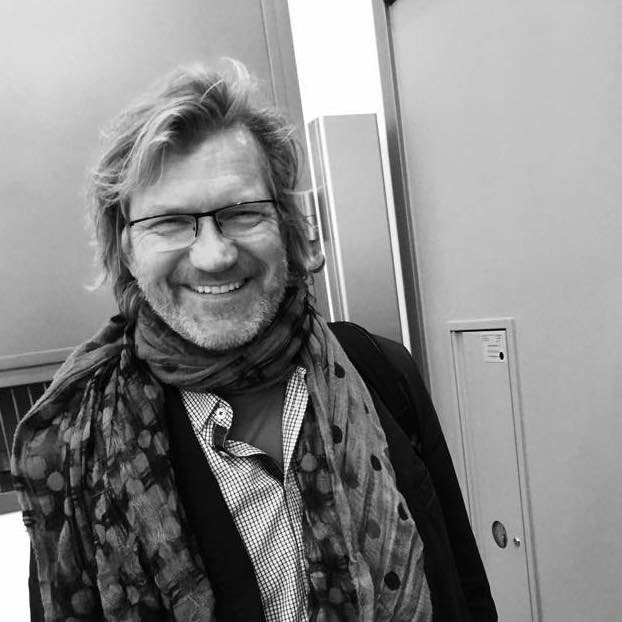
Paulina Tarara is a multidisciplinary academic and visual artist affiliated with the Akademia Sztuk Pięknych im. Jana Matejki w Krakowie , where she explores the intersection of Art & Science . Her research spans neuroscience, digital communication, and interspecies language , using data and visual symbols to create universal communication frameworks. Doctoral thesis: "Multimodal Exploration of the Interspecies Structure and Evolution of Language in Digital Communication" Key fields: Cognitive Science, Digital Aesthetics, Neurotechnology Her recent publications and exhibitions (2024-2020) include: Academic articles in Neuroinformatics Springer and inAW Journal Chapters in "Myth and Mythologies" publications 2024 installations: "Particles of Sound I & II" holographic concerts Selected Awards: 2017 A’Design Award in Graphics and Visual Identification 2024-2023 exhibitions: Sinzig Biennale, Spiš Artists Gallery, Silesian Philharmonic
Krzysztof Walczak is a Professor at the Department of Information Technology, University of Economics in Poznan. His work bridges Information and Communication Technology (75%) with Management and Quality Studies (25%). 2020–Present: Professor 2010–2020: Assistant Professor 2001: Doctorate Research focuses on Virtual & Augmented Reality applications in education, industry, and cultural heritage. Key themes include semantic modeling for adaptive XR interfaces, 3D content creation for marketing, and AI integration in immersive environments. Recent work explores: Generative AI ethics in education Industry 4.0 VR training systems Financial data visualization in AR Green digital transition policies As a scientific leader, he has published 70+ works and supervised 110+ research activities. His Hirsch index (approx. 25) reflects significant impact in semantic XR systems and 3D web technologies.
Dr Monika Anna Łaszkiewicz is an Adjunct Professor at the University of Maria Curie-Skłodowska (UMCS) in Lublin, Poland. She works within the Faculty of Languages, Literatures and Cultures , specifically in the Department of Textology and Polish Grammar . Her research focuses on ethnolinguistics, linguistic image of the world, ethnic stereotypes, and digital humanities. PhD in Humanities (2014) with specialization in linguistics Master’s degree in Polish Philology with dual specialization in pedagogy and speech therapy (2009) Key research areas: Ethnic stereotypes, folkloric language analysis, abstract creation, and cultural memory Her publications include monographs on ethnic stereotypes in Polish folklore, co-edited interdisciplinary works, and analyses of scientific abstracts. She has presented research on Tatar, Cossack, Swedish, and Turkish stereotypes in Polish linguistic culture, and contributed to dictionaries of folkloric symbols. Her recent work explores graphic abstracts as an evolving genre in scientific communication. Current projects involve analysis of manual vs. automated summarization techniques and interdisciplinary collaborations on cultural memory representation. She serves on editorial teams for ethnolinguistic journals and participates in international conferences.
Prof. Krzysztof Molenda is a Professor of Fine Arts at the University of Arts in Poznań, holding a leadership role in the Publishing Workshop since 2011 within the Faculty of Graphic Arts and Visual Communication. With 36 years of teaching experience, he actively instructs in graphic arts workshops covering metal techniques and relief printing while bridging artistic practice with technical publishing education. His research centers on the synthesis of traditional graphic arts with digital innovation, explicitly exploring woodcut, linocut, and metal techniques alongside digital image processing and photography. Molenda investigates how visual representations embody reality through emotional and physical surroundings, focusing on contemporary trends in art and graphic design within broader cultural contexts. His practice emphasizes intuitive craft processes and the fusion of manual techniques with digital tools to create new expressive pathways. Artistic output reveals a clear trajectory: 2017 oil paintings (e.g., Labyrinth , Trace ) examine spatial/temporal concepts on large canvases, while 2013 works like Transformation and Broken Figure combine woodcut/monotype with digital print. This demonstrates consistent engagement with both traditional printmaking media and modern publishing technologies. Scientific Awards: No specific awards, fellowships, or medals are documented in the source text. Advising and Grants: Molenda has mentored students for 36 years in graphic design, printing techniques, and computer science applications for publishing. His workshops cover technical preparation for albums, catalogues, and books, though no grant funding or formal student names are listed. Labs and Teams: He directs the Publishing Workshop at the Faculty of Graphic Arts and Visual Communication, which handles design, typesetting, and print production. This team actively experiments with traditional graphic media and digital tools, supporting both artistic creation and publication workflows.
Dr. Dorota Jegorow is an Assistant Professor at the Department of Econometrics and Statistics , Institute of Economics and Finance , within the Faculty of Social Sciences at the John Paul II Catholic University of Lublin , Poland. Specializes in Econometrics , Regional Development , and European Cohesion Policy Active in Entrepreneurship , Public Finance , and Digital Technology Applications in socio-economic contexts Recipient of 2022 National Award for research on cryptocurrency volatility
Jakub Kuna is an Assistant Professor at the Department of Geomatics and Cartography, Faculty of Earth Sciences and Spatial Management, Maria Curie-Skłodowska University (UMCS) since 2015. He earned his PhD in Earth Sciences (Geography) in 2017. His work bridges cartography, geomatics, and historical GIS. Key Roles: Researcher, Lecturer, Project Coordinator for NPRH grants Projects: Atlas historyczny miast polskich, DARIAH-PL, NCN Miniatura 4.0 Research Focus: He specializes in cartographic mathematics, spatial-temporal analysis, 3D/4D modeling, and geostatistical methods in R programming. His work advances Historical GIS for reconstructing urban landscapes and processing archival aerial imagery. Key Publications: His 2025 Scientific Reports paper on loess gully sustainability and 2024 ISPRS Journal methodology for multi-sheet historical map georeferencing highlight his technical contributions. Recent monographs include Zamość’s digital reconstruction in the Atlas historyczny miast polskich series. Scientific Awards: NPRH Grant (2023-2027): Leadership role in historical city atlas project European Funds (2021-2024): DARIAH-PL digital infrastructure NCN Miniatura Grant (2020-2021): Pioneering 1944 Lublin orthophotomap Academic Leadership: He supervises 18 MA/BA theses on topics like Lublin’s WWII urbanism and Shtetl Routes tourism. As Deputy Chair of the Polish Cartographic Association (2024) and ICA member (2021-), he shapes national cartographic standards.
Adrian Widłak is a Teaching Assistant at the Department of Computer Science, Faculty of Computer Science and Telecommunications, Cracow University of Technology. His research focuses on information and communication technology (ICT) with specialization in point cloud analysis, visibility mapping, and network security. Specializes in LIDAR technology and Digital Surface Model (DSM) processing for viewshed generation Conducts research in big data algorithms, cryptography, and artificial intelligence Active in edge computing optimization and intelligent transportation systems His work spans multiple interdisciplinary domains including environmental monitoring, biomedical applications, and blockchain security. Recent publications demonstrate a focus on: 3D spatial analysis techniques using point cloud data Machine learning applications in ecological modeling Cybersecurity challenges in modern network architectures Optimization of edge computing infrastructures Blockchain consensus mechanisms and security frameworks
Professor Dariusz Sawicki is a faculty member at Warsaw University of Technology's Faculty of Electrical Engineering, affiliated with The Institute of the Theory of Electrical Engineering, Measurement and Information Systems. His research spans computer vision, optical engineering, and human factors with applications in virtual reality and occupational safety. His primary research interests focus on advanced optical systems including ray tracing methodologies, light source characterization, and image processing techniques. Specialized work in glare assessment at outdoor workplaces has established him as an expert in lighting ergonomics, while his development of Semi-Cave virtual reality environments demonstrates interdisciplinary innovation connecting computer graphics with human psychophysiology. Recent publications reveal expanding work in botanical reconstruction, fractal generation, and pandemic-era communication systems. Professor Sawicki has supervised 92 promoted theses and authored 80 publications with significant bibliometric impact (h-index 9 in Scopus). His work includes 1 patent and participation in multiple projects, with research funded through institutional support at Warsaw University of Technology. Current laboratory activities center on the Semi-Cave virtual reality facility for studying audiovisual environment impacts on human performance. 80 Publications with cumulative ministry score of 2,315 92 Supervised theses 1 Patent h-index (Scopus): 9 | h-index (WoS): 8 Total CiteScore: 63.19
Dr. Eng. Ewa Mackoś-Iwaszko serves as an Assistant Professor in the Department of Environmental Protection and Landscape at the Institute of Mathematics, Informatics and Landscape Architecture, Faculty of Natural and Technical Sciences, John Paul II Catholic University of Lublin. Her academic position places her at the intersection of environmental science, landscape architecture, and urban ecology, where she contributes significantly to research and educational initiatives. Her educational background includes a degree in environmental protection and landscape architecture from the John Paul II Catholic University of Lublin, a PhD in agricultural sciences specializing in horticulture, and postgraduate studies in computer graphics, desktop publishing, and publishing graphics. This diverse academic foundation supports her interdisciplinary approach to urban landscape research. Dr. Mackoś-Iwaszko's research interests focus on the impact of herbivorous arthropods on urban trees in terms of their ornamental value, landscape conservation, the role of vegetation in urban greenery systems, and the perception of urban landscapes. Her work bridges ecological science with practical landscape architecture applications, particularly examining how urban environments affect plant-animal relationships and how these relationships influence landscape aesthetics and functionality. Analysis of her recent publications reveals a consistent focus on urban dendroflora, plant-insect interactions in city environments, and the cultural dimensions of landscape. Her research demonstrates how urbanization affects biodiversity, particularly in housing estates and street tree populations, while also exploring therapeutic applications of horticulture and the historical-cultural significance of plants in regional contexts. Bronze Medal for Long Service (2021) Medal of the National Education Commission (2019) Multiple Rector's Awards from the Catholic University of Lublin (2024, 2023, 2022, 2020) Dr. Mackoś-Iwaszko actively contributes to academic service through membership on the Disciplinary Committee for Students and Doctoral Students and the Digital Humanities Program Council. She has organized numerous educational events including the Lublin Science Festival, Digital Humanities Days, and various art and photography competitions. Her work demonstrates strong commitment to both scholarly research and public science communication, particularly regarding urban ecology and landscape architecture.
Jakub Jernajczyk serves as Associate Professor and Dean of the Doctoral School at the Eugeniusz Geppert Academy of Art and Design in Wrocław, affiliated with the Faculty of Graphics and Media Art and Media Art Department. He teaches Visual Recognition for BA/MA Media Art students and Visual Recognition in Art and Science for doctoral candidates. His academic background includes Mathematics from University of Wrocław (2003) and Graphic Design from Academy of Arts and Design in Wrocław (2008). Prof. Jernajczyk pioneers "art of cognition" research at the intersection of art and science, focusing on visual cognition , perception mechanisms, and cognitive metaphors. His work examines how art elucidates scientific concepts through discrete information systems, mathematical visualization, and philosophical geometry, emphasizing the knowledge-creative function of artistic practice. His publication trajectory reveals consistent exploration of mathematical abstraction in visual form , evolving from irrational number visualization (2015) to non-measurable sets (2020), with recurring themes in pattern theory, geometric philosophy, and discrete representation across computer science and craft traditions. Key recognitions include: Award of the Minister of Culture and National Heritage for didactic achievements (2017) Third Award in the INTER competition of the Foundation for Polish Science (2014) Scholarship of the Minister of Science and Higher Education for outstanding young scientists (2012) Distinction at the National Student Drawing Exhibition in Toruń (2010) Award of the President of Szczecin at the International Festival of Visual Art (2009) As Doctoral School Dean, he mentors emerging researchers through the Visual Cognition Studio while advancing interdisciplinary methodologies. His leadership in academic programming and international exhibitions like INVISIBLE (2021) demonstrates commitment to bridging theoretical research with artistic practice.
Marta Brennenstuhl-Bludnik is an academic at the University of Arts in Poznań, Faculty of Interior Design and Scenography. Since 2012, she has taught computer science and 3D graphics, and since 2021, she has served as an assistant at the 2nd Studio of Interior Design. Born: 1987, Żuromin Education: MA in Interior Design and Scenography (University of Arts in Poznań, 2012) Her research focuses on universal design , particularly for people with autism , integrating evidence-based design (EBD) to enhance multi-sensory stimulation and reduce stress in healthcare interiors. She also creates private/public interior designs and 3D graphics, with works published in Elle Decoration and Architektura&Biznes . Selected projects include: Specialized Offices in the Residential and Rehabilitation Guest House (2022, re-FORMA Conference) Single-family house in Rynarzewo (2022)