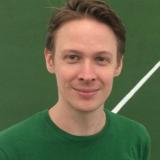
Siebe Bluijs is an Assistant Professor at Tilburg University's Tilburg School of Humanities and Digital Sciences, affiliated with the Tilburg Center of the Learning Sciences (TiCeLS). He holds a PhD in Dutch Literature from Ghent University (2020). His research focuses on digital literature, experimental media forms, and the semiotic innovations in non-book literary media like radio plays and virtual reality narratives. He also has expertise in graphic design, particularly book typography. Education: PhD in Dutch Literature (Ghent University, 2020) Research Interests: Digital culture, avant-garde literature, narratology, radio play adaptation, and AI-generated texts Courses Taught: Include '21st Century Perspectives on Education' and 'Literature in the Anthropocene' His recent work explores AI's impact on literary creation, radio play transnational dynamics, and the acoustic spaces of experimental adaptations. He serves on advisory boards for literary funding organizations and actively contributes to interdisciplinary discussions on digital literature preservation and education.
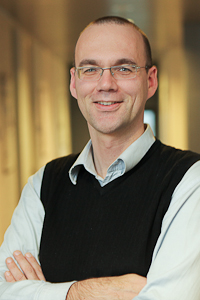
Alessio Albanese is a PhD candidate and active researcher at Wageningen University & Research , affiliated with the Mathematical and Statistical Methods group under Biometris. His work bridges computational biology and plant sciences, focusing on symbiosis mechanisms and omics data integration. Current research: Multi-Omics Network Reconstruction during Plant Development (2022–present) Key collaborations: U. Paszkowski (University of Cambridge), G.E.D. Oldroyd (John Innes Centre) Research trends highlight his expertise in statistical modeling, plant-microbe interactions, and molecular diagnostics, with publications spanning graphical lasso for network analysis, PCR methods for pathogen detection, and nutrient signaling in plant-mycorrhizal symbiosis.
Prof. Alexandru C. Telea holds a full professorship in Visual Data Analytics at Utrecht University's Department of Information and Computing Science. He leads the Visualization and Graphics group, previously serving as a full professor at the University of Groningen's Bernoulli Institute. His research focuses on visual analytics, AI visualization, and multidimensional data exploration. He authored the textbook Data Visualization: Principles and Practice , with editions in English and Chinese, and has supervised over 140 students. His work bridges theory and industry, including founding SolidSource BV (2006–2012) for software maintenance tools. Awards include Best Paper and Honorable Mention across multiple conferences. Research interests span information visualization, AI explainability, and interactive systems design. Notable projects include VISSION, a simulation environment, and contributions to dimensionality reduction techniques. His courses cover visualization, scientific computing, and software evolution analysis. Publications span journals like Computers & Graphics and conferences such as EuroVis and IEEE TVCG.
Ernst Wit is a Professor of Statistics and Probability at the University of Groningen, affiliated with the Johann Bernoulli Institute. He holds a PhD in Philosophy from Pennsylvania State University (1997) and a PhD in Statistics from the University of Chicago (2000). His research focuses on network science, high-dimensional inference, systems biology, and algebraic statistics, with applications in genetics and ageing research. He has led large-scale projects, including coordinating a Europe-wide network on Network Science through an EU COST Action. Wit has supervised over 12 PhD students and numerous postdocs, contributing to advancements in statistical methodology and its interdisciplinary applications. Wit’s academic roles include Chair of the Board at the Johann Bernoulli Institute and former President of the Biostatistics Netherlands Society. His work bridges philosophy and science, with interests in game theory, ethics, and Kantian philosophy. Key achievements include challenging assumptions about scale-free networks and developing statistical frameworks for genomic data analysis. His research often addresses methodological gaps in bioinformatics and systems biology, emphasizing rigorous statistical approaches. Publications span statistical theory, bioinformatics, and applied mathematics, reflecting his interdisciplinary approach. Awards include the Fulbright Fellowship and grants from NWO and the UK’s Natural Environment Research Council. Current efforts focus on dynamic network inference, ODE modeling in biological systems, and statistical methods for museum visitor behavior analysis (MUSE project).
Prof. Dr. Susan te Pas serves as Professor of Cognitive Psychology at Utrecht University's Faculty of Social Sciences and Dean of University College Utrecht. Her research examines cognitive processes in higher education contexts, with expertise spanning visual perception, cognitive neuroscience of numerosity, and human-AI interaction. Her work investigates fundamental perceptual mechanisms through psychophysical and neuroimaging approaches, particularly exploring neural adaptation in quantity perception and temporal aspects of cognition. Research themes also include pedagogical innovation, transformative learning environments, and perceptual foundations of visualization techniques. Recent publications demonstrate consistent focus on numerosity perception adaptation effects, temporal modulation of cognitive processes, and applications in educational visualization. Cross-cutting interests emerge in sensory-cognitive interactions and perceptual expertise development.
Frans A. Oliehoek is an Associate Professor at the Department of Intelligent Systems, Delft University of Technology. He leads the Sequential Decision Making group and directs the Mercury Machine Learning Lab and ELLIS Unit Delft. His research focuses on interactive learning and decision making, combining AI, machine learning, and game theory to develop intelligent systems capable of learning through interaction with dynamic environments. Notable contributions include work on influence-based abstraction, decentralized planning in multi-agent systems, and applications in robotics, traffic control, and human-AI collaboration. Education: PhD in Computer Science (2010) from the University of Amsterdam, with postdoctoral positions at MIT, Maastricht University, and the University of Liverpool. Research Interests: Active perception, Bayesian reinforcement learning, multi-agent coordination, and scalable algorithms for complex decision-making problems. His work emphasizes balancing task performance with uncertainty management and lifelong learning. Scientific Contributions: Over 88 publications, including ERC Starting Grant-winning research, and contributions to open-source tools like the MADP Toolbox. Recognitions include ELLIS Fellowship and Senior AAAI Membership. Grants & Labs: Led projects funded by ERC and Dutch national grants, overseeing labs advancing AI for societal challenges. Supervised 4 doctoral students and actively participates in academic outreach through editorial roles (JAIR, AIJ) and conference organization.
Andrei Jalba is an Assistant Professor at Eindhoven University of Technology (TU/e), affiliated with the Department of Mathematics and Computer Science. His research focuses on visualization algorithms, medical imaging, computational fluid dynamics, and real-time graphics. He leads groups in Visualization and Visual Analytics, contributing to interdisciplinary projects like physics-based fluid simulations and MRI data processing. Jalba teaches courses such as Simulation in Computer Graphics and Computer Graphics . His work bridges theoretical advancements with practical applications in healthcare and interactive systems. Research Interests: Computer Graphics, Medical Imaging, Data Assimilation, Scientific Visualization. Key Projects: Physics-based MRI denoising, volumetric light transport simulation, and collision response algorithms for deformable models. His publications emphasize efficient algorithms for real-time applications and medical data analysis, with notable contributions to ACM Transactions on Graphics and Computer Graphics Forum. No specific awards or grants are explicitly listed, but his work is funded by initiatives like the ERC TouchDesign project (2019).
Jun Wu is an Associate Professor in the Department of Sustainable Design Engineering at Delft University of Technology (TU Delft), Faculty of Industrial Design Engineering, where he has been a tenure-track faculty member since 2016 and was promoted to Associate Professor in August 2022. He holds two PhDs: one in Computer Science from Technische Universität München (2015) and another in Mechanical Engineering from Beihang University (2012). Prior to TU Delft, he was an HC Ørsted Postdoctoral Fellow at DTU Denmark. Research Interests: His research lies at the intersection of computational design, digital fabrication, and structural optimization. He specializes in topology optimization (generative design) for additive manufacturing, with a focus on space-time optimization, stress-constrained design, multi-material lattices, and bio-inspired infill structures. His work bridges mechanical engineering, computer graphics, and materials science to create high-performance, lightweight, and printable structures. Recent Research Trends: His most recent publications (2023–2025) demonstrate a strong trend toward integrating physical constraints—such as residual stress, thermal distortion, and manufacturability—into topology optimization frameworks. He is pioneering space-time optimization for multi-axis additive manufacturing, developing methods for stress-aligned lattices, and exploring differentiable microstructures. His interdisciplinary work spans biomedical implants, soft robotics, and educational tools for design. Scientific Awards: Frontiers of Science Award, International Congress of Basic Science (2023) 2023 ISSMO Haftka Young Investigator Award 2021 SMA Young Investigator Award Best Paper Award (2nd place), SPM 2019 ISSMO/Springer Prize (2020) Multiple ESI Highly Cited Papers Advising and Grants: He leads a vibrant research group with numerous PhD students and postdocs. In 2023, he was awarded a Vidi grant from the Dutch Research Council (NWO) for his project on Space-time optimization for additive manufacturing . He has also secured funding under the Dutch Research Agenda (NWA) for the project AM4Micro . He actively mentors PhD candidates and has co-organized the IDEA League summer school on Computational Design for Additive Manufacturing since 2020. Labs and Teams: He is affiliated with the Computational Design Lab at TU Delft and is the initiator and convener of the TOP Webinar series since 2020, fostering global collaboration in topology optimization. He serves on the editorial boards of Computer-Aided Design and Structural and Multidisciplinary Optimization , and has been a program committee member for major conferences including SPM, CGI, and CVM.
Daan de Geus serves as Assistant Professor in the Department of Electrical Engineering at Eindhoven University of Technology (TU/e), affiliated with the Mobile Perception Systems Lab. His research directly contributes to UN Sustainable Development Goals through advanced computer vision systems for sustainable mobility and urban environments. His academic credentials include: PhD in Electrical Engineering (2024) from TU/e with dissertation "Advances in Scene Understanding: Towards Efficient Image Segmentation at Multiple Abstraction Levels" Master's degree (2018) from TU/e focused on panoptic segmentation architectures De Geus specializes in image segmentation across multiple abstraction levels, with particular expertise in vision transformers and unsupervised domain adaptation. His research develops efficient neural network architectures that maintain accuracy while reducing computational demands, enabling real-time perception systems for mobile applications. Current work integrates diffusion models with segmentation pipelines to enhance image synthesis capabilities. Recent publications (2024-2025) reveal a strategic shift toward foundation models and efficiency optimization. His team's ALGM framework demonstrates novel token merging techniques for vision transformers, while diffusion model research challenges conventional fine-tuning assumptions. These efforts culminated in leadership roles for the BRAVO Semantic Segmentation Challenge, establishing new benchmarks in the field. As principal investigator for the PPS TKI NXP Smart Mobility project (2018-2023), de Geus secured industry-academic funding exceeding €500,000. His supervision portfolio includes two graduate students, with ongoing mentorship in the Mobile Perception Systems Lab where he develops next-generation perception algorithms for autonomous systems. The Mobile Perception Systems Lab under his guidance focuses on real-time computer vision for smart mobility applications, with current projects spanning automotive perception, drone navigation, and urban infrastructure monitoring using multi-sensor fusion approaches.
Martijn de Heer is a Lecturer in the Graphic Design department at the Royal Academy of Art, The Hague (KABK). He graduated from the same department in 2016 and later established his graphic design studio, Apt Opt Out, in 2018 after residing in Berlin. Research Interests: His practice focuses on: Developing custom tools for design and coding Digital-physical intersections in creative work Experimental storytelling methodologies Interactive media and design research Education: Bachelor of Graphic Design, Royal Academy of Art, The Hague (2016)
Pascal de Man is a Coding Tutor at the Royal Academy of Art, The Hague (KABK) since 2013, specializing in interaction design and development across physical, virtual, and digital domains. His work spans projects including games, apps, websites, and physical user interfaces, collaborating with artists and designers. Research Interests: Focus on bridging design with computational methods, emphasizing user experience and cross-disciplinary digital solutions.
Dr. Evanthia Dimara is a Tenured Assistant Professor in the Department of Information & Computing Sciences at Utrecht University's Faculty of Science. Her research focuses on Information Visualization and Human-Computer Interaction, particularly how technology can aid unbiased decision-making in individual and group contexts. Education : Ph.D. in Computer Science (2017) from INRIA & University Paris-Saclay M.Sc. in Human-Computer Interaction (2013) from University of Paris-Saclay B.Sc. in Informatics & Telecommunications (2012) from National and Kapodistrian University of Athens Her work addresses decision-making failures in current visualization systems, with a focus on cognitive biases. Recent publications analyze financial fraud detection frameworks, job-seeking tools, and public policy reasoning errors, emphasizing human-AI collaboration and visual analytics. Professional Activities : Associate Editor, IEEE Transactions on Visualization and Computer Graphics (2023–present) Chair, IEEE VIS Workshops (2023, 2017) Program Committee Member, IEEE VIS, BELIV, VisPsych
Christian Kehl is a Lecturer at the Faculty of Science and Engineering, University of Groningen, specializing in Scientific Visualization and Computer Graphics. His work intersects Earth and Planetary Sciences, Environmental Science, and Computer Science, with a focus on physics-based games, computational geosciences, and marine pollution mitigation. His research contributes to the UN Sustainable Development Goals (SDGs), particularly in education and environmental challenges. Recent projects include developing mobile simulations for fluid transport and interactive games to raise public awareness about marine pollution in the Dutch North Sea. Key collaborators include researchers from University College Dublin. His academic background includes a Doctor of Mathematics and Natural Sciences in Computational Geosciences from the University of Bergen, completed between November 2014 and October 2017. His research outputs emphasize advection, environmental management, and SIMD architecture applications in computational modeling.
Dr. Michael Behrisch is an Associate Professor for Visual Analytics in the Visualization and Graphics Group at Utrecht University's Department of Information and Computing Sciences. With a PhD from University of Konstanz, his career includes postdoctoral work at Harvard and Tufts Universities, and over six years as a research associate at Konstanz. Specializes in matrix-based representations for relational data Focuses on cognitive load reduction in visual analytics Develops interactive systems for pattern discovery Research Highlights: Combines algorithmic approaches with user-centric visualization techniques to address challenges in large-scale, multivariate, and dynamic datasets. Research themes include: Automated pattern quantification Matrix reordering algorithms Explainable AI integration Game research applications Scientific Contributions: Recognized through 61 publications and multiple awards, including the EuroVA 2022 Best Paper and IEEE VAST 2018 Honorable Mention. His work bridges theoretical research with practical applications across life sciences, network analysis, and big data domains.
Lonneke Boels is a PhD candidate at Utrecht University's Freudenthal Institute, specializing in Mathematics Education and Statistics Education . While primarily affiliated with the Faculty of Science, she teaches mathematics at the Christelijk Lyceum Delft secondary school. Her research focuses on improving statistical literacy through graphical interpretation, particularly histograms, using eye-tracking methodology as part of the Dynamics of Youth research theme. Education : MSc in Mathematics (Educational focus) Methodology : Eye-tracking analysis, didactic design Key Publications : 2021: Polygon learning with gamified software 2019: Teacher strategies with histograms 2018: Machine learning analysis of student gaze patterns Scientific Recognition : Awarded a prestigious NWO doctoral grant for teachers in 2016. Active in academic discourse through invited presentations at ICOTS, PME, and CERME conferences. 2021: International Congress on Mathematical Education 2020: EARLI SIG 27 conference 2019: PME and CERME conferences 2018: ICOTS10 keynote Professional Contributions : Regular contributor to Euclides journal since 2011, covering digital math games, educational websites, and practical didactic problems in secondary school mathematics.