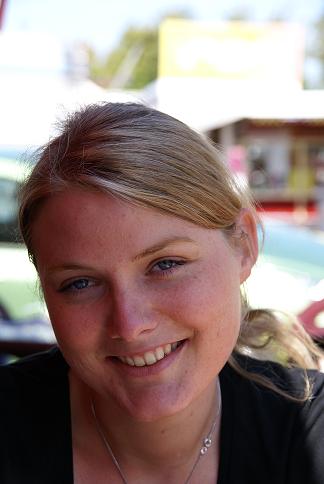
Sabine Barrat is an Assistant Professor at the University of Tours, affiliated with the University Institute of Technology of Tours (IUT) and the Fundamental and Applied Computer Science Laboratory (LIFAT). She teaches courses in website design and databases. Dr. Barrat obtained her PhD in Computer Science from Nancy 2 University in 2009, focusing on probabilistic models for image recognition. She completed a JSPS Postdoctoral Fellowship at Osaka Prefecture University and served as Vice-President for Digital Systems at the University of Tours (2016-2020). Her research explores image analysis, indexing/retrieval systems, automatic annotation, and document processing. Core methodologies include Bayesian networks, feature indexing structures, and hybrid visual-semantic modeling. Recent publications emphasize scalable image retrieval systems and document classification techniques. She received the JSPS Postdoctoral Fellowship for her work on character recognition. Dr. Barrat collaborates with the RFAI research team at LIFAT laboratory, focusing on pattern recognition and intelligent indexing systems.
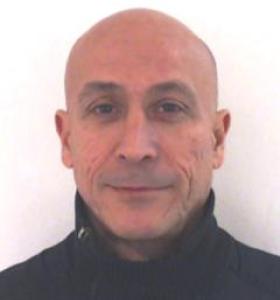
Renaud Seguier is a Professor in the Department of Electronics and Telecommunications at the Institute of Electronics and Telecommunications of Rennes, School of Engineering. His research spans computer vision, signal processing, and human-computer interaction with a focus on facial analysis and speech processing. His primary research interests include computer vision (specializing in micro-expression recognition, 3D facial modeling, and gaze estimation), signal processing (speech emotion recognition and source-filter decomposition), and affective computing (emotion detection from multimodal inputs). Key methodologies involve deep learning architectures like variational autoencoders, GANs, and specialized metric learning techniques. His recent publications demonstrate strong trends in multimodal emotion analysis combining audiovisual inputs, unsupervised learning for human activity recognition , and generative model applications for facial editing and deepfake detection. The work shows increasing sophistication in temporal modeling of facial dynamics and disentangled feature representations. As an academic advisor, he supervises numerous students including Jingting Li, Samir Sadok, and Mouath Aouayeb who frequently appear as first authors on publications. His collaborative network includes Catherine Soladie, Simon Leglaive, and Amine Kacete across multiple institutions. His laboratory work centers on the 3D facial analysis pipeline involving texture reconstruction, motion denoising, and micro-expression spotting systems. Current projects integrate RGB-D sensing with deep learning for unconstrained environments, particularly focusing on health diagnostics from facial cues and real-time gaze estimation.
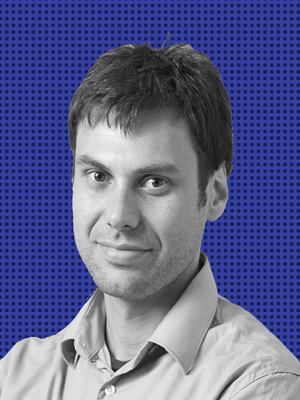
Josef Sivic is a Senior Researcher at Inria (National Institute for Research in Digital Science) since 2008. His work focuses on computer vision , combining applied mathematics, computer graphics, and cognitive science to develop methods for automatic visual information understanding. He leads the LEAP project (2013 ERC Starting Grant), which exploits collective visual memory from internet archives, surveillance footage, and personal recordings to analyze long-term trends and predict future events in dynamic scenes. Research interests include: Machine learning for visual pattern identification Temporal analysis of visual data Scene prediction models Statistical methods for crowd behavior analysis Applications to early disaster warning systems Scientific awards: 2013 ERC Starting Grant for LEAP project
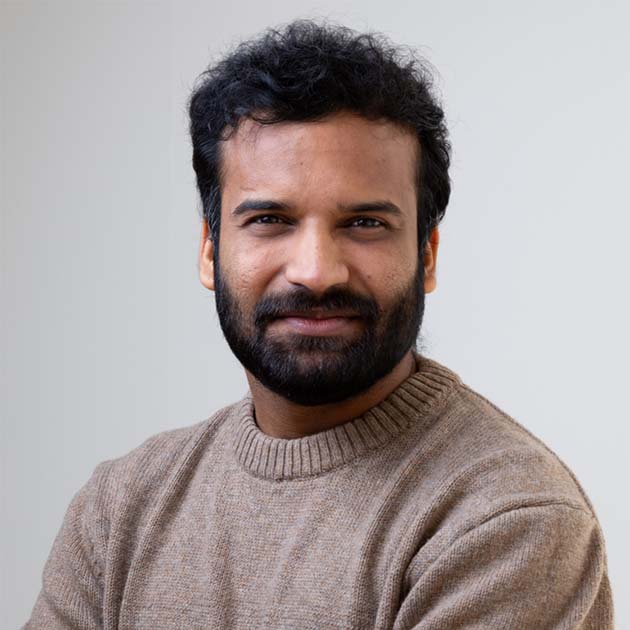
Amal Dev Parakkat is a tenured Assistant Professor at Telecom Paris (Institut Polytechnique de Paris) since September 2021, affiliated with the Computer Graphics Group and the IMAGES research team. His work focuses on sketch-based interfaces and geometry processing , particularly for digital content creation tasks like 3D shape inference and mesh generation. PhD in Computer Science from IIT Madras (2019), under Ramanathan Muthuganapathy Postdoctoral experience at Ecole Polytechnique (2019) and TU Delft (2020-2021) Research highlights include Surface Reconstruction , Interactive Modeling , and Geometric Algorithms . He leads the ANR SketchMAD project (2024-2028) and serves as International Mobility Chair at Telecom Paris. His publications span top conferences like SIGGRAPH Asia , Eurographics , and ACM CHI . Scientific Awards: SMI Young Investigator Award (2024) BEST PAPER AWARD (SIGGRAPH Asia Technical Communication 2023) Administrative roles include Head of Interaction, Graphics & Design at Telecom Paris. He mentors PhD students Tara Butler , Anandhu Sureshkumar , and Leiheng Qin , and collaborates with international researchers.
Jean-Claude Moissinac is a Lecturer at Télécom Paris, part of the Institut Mines-Télécom, affiliated with the Image, Data, Signal department and Multimedia research group. He serves as the educational manager for the CPD master's degree program (Digital Project Designer). His research focuses on semantic technologies applied to multimedia systems and knowledge representation. His primary research areas include: Semantic representations of knowledge and knowledge graphs Machine learning techniques for graph-based data analysis Advanced multimedia document processing (production, transport, representation) Semantic web technologies across diverse application contexts His publications demonstrate consistent focus on semantic technologies, knowledge graphs, and multimedia systems, with recent work emphasizing cultural heritage applications and graph-based machine learning techniques. Earlier publications focused on multimedia systems optimization and SVG standards development. He has led multiple research projects including: ILOT Project : Intelligent Learning Object for Teaching SOA2M : Multimodal interface research Data&Musée : Semantic applications for cultural heritage data SemBib : Semantic representation of bibliographic data GeoRacing : Interactive mobile TV services for sporting events He contributes to standardization efforts as co-author of the SVG web standard and participates in academic committees including SVG Open, IEEE International Symposium on Multimedia, and project evaluations for the French National Research Agency.
Pierre Laforcade is a researcher at the University of Le Mans, affiliated with the IEIAH (Laval) laboratory. His work focuses on applying Model-Driven Engineering (MDE) principles to Technology-Enhanced Learning (TEL), with a particular emphasis on serious games, gamification, and adaptive learning scenarios for children with Autism Spectrum Disorder (ASD). He develops domain-specific modeling methodologies and graphical instructional design languages to create specialized editors for educational applications. His research spans three decades, with recent publications (2023-2025) exploring frameworks for generating personalized training games, mapping declarative knowledge to gameplay mechanics, and enhancing system maintainability through uncertain model transformations. Earlier work (2005-2021) concentrated on formalizing instructional design languages for Learning Management Systems (LMS) like Moodle, meta-modeling approaches, and visual scenario design using UML4LD. Current research: Serious games for declarative knowledge, roguelite-based educational frameworks, MDE-driven TEL systems Key collaborations: Bérénice Lemoine, Sébastien George, Youness Laghouaouta Notable contributions: Domain-specific modeling tools, adaptive scenario generation, LMS instructional language formalization
André Bigand is a Lecturer at Université du Littoral Côte d'Opale (ULCO) and leads the IMAP research team. His work focuses on uncertainty modeling with fuzzy sets, image processing, and deep learning applications in art analysis. 1981: Aggregation of Applied Physics 1987: DEA in Electronics-Instrumentation (Univ. Paris6) 1993: Doctorate in Electronics (Univ. Paris6) 2001: Authorization to Direct Research (ULCO) His research spans image processing , deep learning , and time series analysis , with applications in phytoplankton dynamics , face detection in paintings , and explainable AI . He has published 11 international peer-reviewed articles and 41 communications with proceedings. Bigand collaborates with international institutions like the University of Waterloo (Canada) and the Lebanese University. He has served as Jury President for the 'Electronics-Instrumentation' Master's Degree and co-led ERASMUS+ programs. His recent publications emphasize visual art analysis , plant disease detection , and environmental time series imputation . He supervises 2 ongoing theses and has directed 5 thesis projects.
Samuel DELEPOULLE is an Associate Professor (Maître de Conférences) at the University of the Littoral Opal Coast, France, holding an HDR (Habilitation à Diriger des Recherches) qualification for PhD supervision. His research centers on visual perception and image synthesis within computer graphics and interdisciplinary applications. His core research domains include: Visual Perception mechanisms in human-computer interaction Image Synthesis techniques for realistic rendering Computer Graphics algorithms for Monte Carlo rendering Machine Learning applications in noise reduction Neuroscience collaborations on action representation Computer Vision for biological imaging analysis Recent publications reveal dominant trends in deep learning architectures for rendering optimization, interdisciplinary neuroscience collaborations, and software development for video-microscopy. His work bridges technical computer graphics with cognitive science and biological applications, particularly through the IC research team. Scientific recognition: No specific awards documented in source materials As an HDR-qualified researcher, Delepoulle supervises doctoral candidates though no student names are publicly listed. His grant activity appears concentrated in computer graphics research with biological and neurological applications, evidenced by cross-disciplinary publications. He maintains active affiliation with the IC research team at University of the Littoral Opal Coast, focusing on image processing and computational perception systems.
Pierre Alliez is a Research Director at Inria, specializing in geometry processing and digital representation of 3D shapes. He has been associated with several project teams at Inria, including Geometrica (2010-2013), GraphDeco (2016-present), and Sierra (2020-present). Dr. Alliez pioneered the field of digital geometry processing, developing techniques for representing and processing 3D shapes analogous to signal processing for 1D signals and image processing for 2D images. His research bridges theoretical mathematics with practical applications in computer graphics and geometric modeling, with implications for computer-aided design, virtual reality, 3D scanning, and digital heritage preservation. His significant contributions were recognized with: ERC Starting Grant (2010) As team leader of GraphDeco, Dr. Alliez oversees cutting-edge research that continues to push the boundaries of how we represent and interact with digital 3D content. His vision positions digital geometry processing as the logical continuation of the digitization of sound in the 1970s-80s, images, and video in the 2000s, but applied to 3D geometry.
Pierre-Alexandre Hébert is an Associate Professor at the University of the Littoral Opal Coast. His research spans interdisciplinary domains including dielectric material analysis , electronic waste recycling , and machine learning applications for environmental monitoring. Key research focus: Liquid Crystal recycling from E-waste using dielectric spectroscopy Contributions to phytoplankton detection via automated systems and clustering algorithms Collaborations across France, Turkey, Italy, and Ireland His recent publications (2021-2023) emphasize sustainable materials processing, particularly dielectric characterization of recycled liquid crystals for circular economy applications. Earlier work (2008-2018) showcases expertise in image processing , phytoplankton classification , and data clustering techniques. Collaborative projects include: JERICO NEXT (2018), ISyDMA'6 (2021), and SFGP (2022) conferences. Current affiliations involve laboratories at Université du Littoral Côte d’Opale (ULCO) and Université d’Artois (UA).
Kartic Subr is an Associate Professor and Royal Society University Research Fellow at Heriot Watt University's School of Engineering and Physical Sciences, specifically within the Institute of Sensors, Signals & Systems. His research focuses on computer graphics, particularly Monte Carlo methods for image synthesis, stochastic sampling techniques, and advanced rendering algorithms. Before joining Heriot Watt in July 2014, he was a post-doctoral researcher at Disney Research in Edinburgh and held a Royal Society's Newton International Fellowship at University College London. Dr. Subr received his PhD in June 2008 from the University of California, Irvine under the guidance of Jim Arvo. His dissertation explored sampling decisions in Monte Carlo image synthesis. Prior to his PhD, he earned a Bachelor of Technology degree in Computer Science and Engineering from PESIT (Bangalore University, India) and worked for a year as a Telecommunications engineer at Hewlett Packard. Dr. Subr's research centers on improving the efficiency and accuracy of image synthesis through advanced sampling strategies. His work spans Monte Carlo integration techniques, frequency analysis of light fields, and novel approaches to rendering effects like depth of field and motion blur. He has made significant contributions to understanding the statistical properties of stochastic sampling patterns and their impact on integration error. His research bridges computer graphics, signal processing, and statistical methods to develop more efficient rendering algorithms. His most recent publications demonstrate a clear trajectory toward more sophisticated analysis of light transport and image formation. The 2013-2014 papers focus on error analysis of combined sampling strategies, Fourier analysis of stochastic methods, and efficient handling of 5D light fields. His work consistently addresses fundamental challenges in rendering while developing practical algorithms that balance computational efficiency with visual quality. Dr. Subr has received several prestigious awards for his research: Royal Society University Research Fellowship (2014) Newton International Fellowship (2010) Best Paper award at I3D 2011 for "Real-time rough refraction" Best-paper-honorable-mention at I3D 2012 Dr. Subr has supervised numerous research projects and collaborated extensively with institutions including Disney Research, INRIA-Grenoble, and University College London. His research has been supported by competitive fellowships from the Royal Society and has resulted in multiple publications at top-tier graphics and vision conferences. He actively seeks PhD students in the areas of stochastic sampling and signal processing, indicating ongoing research funding and project development. While specific lab information isn't detailed in the provided text, Dr. Subr's research appears to be conducted within the Institute of Sensors, Signals & Systems at Heriot Watt University, with strong connections to the broader computer graphics research community through collaborations with researchers at Disney Research, INRIA, and UCL.
Tiphaine Colliot is an Associate Professor in Cognitive Psychology at the University of Poitiers, affiliated with the Center for Research on Cognition and Learning (CeRCA) and the School of Human and Social Sciences (MSHS). Her research focuses on educational psychology, particularly in written production, note-taking strategies, graphic organizers, and multimedia learning. Active member of the executive committee of the IPHD MA program at INSPE Niort Collaborates with É. Jamet on studies related to cognitive load and generative learning Her recent work explores the impact of digital tools on learning outcomes, including tablet-based geometry instruction, adaptive feedback mechanisms, and multitasking effects during video lectures. Collaborative research with É. Jamet investigates structured note-taking, self-generated graphic organizers, and the role of real-time feedback in educational technology. Despite significant contributions to cognitive load theory, no explicit scientific awards are documented in the provided materials. Colliot’s teaching responsibilities include academic methodology instruction, and she engages in developing interventions to enhance students’ self-regulation and writing efficacy.
Luca Ganassali is an Assistant Professor in the Department of Mathematics at Université Paris-Saclay and a member of the Inria Celeste team. Previously, he was a postdoctoral researcher at EPFL (BAN Chair) and completed his PhD at Inria Paris under Laurent Massoulié and Marc Lelarge. His research focuses on algorithmic fairness, optimal transport in statistical learning, statistical inference in graphs and matrices, and informational computational thresholds for random instances. Education: PhD in Computer Science from Inria Paris (2022), postdoctoral studies at EPFL (2022). Research interests include causal discovery, graph alignment, and the intersection of machine learning with mathematical statistics. He actively collaborates on projects like the PhD offer on handling unfairness in data through mathematical and machine learning approaches. His work bridges theoretical computer science with applied statistics, addressing challenges in alignment of graph databases, detection of correlations in tree structures, and developing efficient algorithms for sparse graph alignment. Recent contributions include foundational results on Gaussian-weighted graph alignment thresholds and impossibility results in partial graph recovery. Lab affiliations: Inria Celeste team. Advising: Currently seeking a PhD student for a project on mathematical statistics and machine learning.
Catherine ACHARD is a Senior Lecturer at the Institute of Intelligent Systems and Robotics (ISIR) within Sorbonne University. Her research focuses on robotics, machine learning, and human-machine interaction. She is a member of the ISIR scientific council. Research Interests: Catherine’s work spans assisted surgery, data analysis, deep learning, and pattern recognition. Her projects emphasize practical applications such as 3D pose estimation and sport gesture quality assessment using advanced neural networks. Publications: Her recent work includes studies on 3D multi-person pose estimation and anchor-based systems, reflecting her expertise in computer vision and robotics. She has collaborated with institutions like the Italian Institute of Gene Technology (2008-2011) and industries such as Spectralys and Valéo. Industrial Collaborations: Spectralys project (2017): Predicting wheat grain quality Valéo contract (2002-2003): Road curvature estimation for autonomous systems Labs/Teams: Active member of the ISIR, contributing to interdisciplinary robotics and AI research.
Fakhri Torkhani is affiliated with the University of La Rochelle, specifically the Department of Information Systems and Technology (ISIT) within the College of Science and Technology. His research focuses on perceptual quality assessment of 3D meshes, including static and dynamic models, and the development of objective metrics for evaluating geometric distortions. He has presented work on perceptual selection of optimal viewpoints for 3D textured scenes, published at the 15th IAPR International Workshop on Document Analysis Systems (DAS 2022). Active in academic events, he has participated in conferences such as CICLing 2019, CORIA-RJCRI 2024, and multiple editions of the Science Festival. He is also involved in interdisciplinary initiatives like the CircularSeas project and the MIRES Federation. His contributions span lab seminars, doctoral thesis defenses, and educational outreach activities, including interventions at high schools and workshops on digital humanities. He has contributed to projects like NewsEye (winner of CLEF-HIPE-2020) and collaborated in events related to AI4Industry, software preservation, and advanced networks. His work bridges computational methods with perceptual analysis in 3D modeling and multimedia applications.