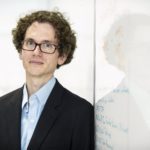
Dr. Arnaud Blouin is an Associate Professor at INSA Rennes (University of Rennes) and researcher at IRISA/Inria. He leads projects in software engineering including Interacto (user interaction framework) and HyperAST (large-scale code analysis). His research focuses on improving developer productivity through human-computer interaction engineering, domain-specific languages, and software maintenance techniques. He currently supervises PhD candidates working on web testing, scientific computing, and heterogeneous modeling. Dr. Blouin teaches human-computer interaction, object-oriented programming, and web engineering. He serves on program committees for major software engineering conferences including FSE and ASE.
Michèle Sebag is a Principal Scientist (Directrice de recherche) at CNRS and member of the Académie des Technologies, affiliated with Université Paris Saclay. She heads the Équipe A-O at Laboratoire de Recherche en Informatique (LRI) and co-leads Project-Team TAU. Her research spans causal modeling, machine learning, optimization, and AI applications in social sciences. Leadership: Head of Steering Committee for ECML PKDD (2015-2019); Editorial board member for Machine Learning Journal; Board member of DataIA Institute and INS2I Council. Current PhD Students: Armand Lacombe Eléonore Bartenlian Victor Berger Roman Bresson Héri Rakotoarison Nilo Schwencke
Thomas Dyhre Nielsen is a Professor in the Department of Computer Science at Aalborg University, Faculty of IT and Design. His research centers on artificial intelligence, machine learning, and probabilistic graphical models, with applications in healthcare, environmental systems, and intelligent control. He is affiliated with the Distributed, Embedded and Intelligent Systems group and contributes to the AI for the People initiative. His research interests include Bayesian networks, decision support systems, data mining, and machine learning. He applies these to domains such as microbial ecology, clinical risk prediction, and smart water systems. His work often bridges theoretical AI with real-world engineering challenges. His recent publications (2024–2025) show a strong trend in applying explainable and probabilistic AI to healthcare (e.g., urinary tract infection risk prediction) and environmental control (e.g., stormwater management). These works emphasize safety, interpretability, and optimization under uncertainty. Scientific Awards: Best Paper Award (2018) He has been involved in PhD supervision and has collaborated on major interdisciplinary projects like DarkScience and CLAIRE , focusing on microbial dark matter and urban water control, respectively. His work integrates AI with systems engineering, environmental science, and medicine. He is associated with research labs and teams including the Distributed, Embedded and Intelligent Systems group at Aalborg University.
Titus Zaharia is a Professor at Telecom SudParis, affiliated with the SAMOVAR research department. His work focuses on computer vision, 3D data compression, neural networks, and augmented reality applications. He has contributed extensively to standards like MPEG-4 and MPEG-7, particularly in 3D mesh compression and multimedia indexing. Zaharia leads research in assistive technologies for visually and hearing-impaired individuals, developing systems like DEEP-HEAR and wearable devices for navigation assistance. His work bridges theoretical advancements with practical industrial applications, such as optimizing AR systems for manufacturing and improving public transportation prediction through machine learning. Zaharia has collaborated on projects like the INVENIO platform for content reuse in multimedia production, and his contributions span over 20 years of academic and applied research. Key research areas include dynamic point cloud compression, lightweight neural network libraries (e.g., FasterAI), and multimodal fusion for video advertising and accessibility. He has published over 100 peer-reviewed papers in journals like IEEE Access and Image and Vision Computing, and presented at conferences including CVPR, ICCV, and ISMAR. His research emphasizes real-world impact, addressing challenges in efficient data representation, human-centric technology, and industrial automation.
Umut Simsekli is a Researcher at INRIA - SIERRA team and École Normale Supérieure de Paris, Computer Science Department. He earned his PhD (2015) and MSc (2010) from Boğaziçi University, and a BSc from Sabancı University (2008). His career includes roles at Télécom Paris (2016-2020) and visiting positions at Oxford and Boğaziçi University. Research Focus: Mathematical Machine Learning, emphasizing Deep Learning theory, Heavy-Tailed Optimization, Bayesian Inference, and Stochastic Dynamics. Grants: Principal Investigator for ERC Starting Grant DYNASTY (€1.5M, 2022-2027) and co-PI for ANR/TUBITAK grant FBIMATRIX (2016-2022). Recent Article Trends: Explores PAC-Bayesian generalization, heavy-tailed SGD dynamics, and topological stability in optimization algorithms. Scientific Awards: ERC Starting Grant (2021) ICASSP Best Student Paper Award (2020) Multiple IEEE/SPS Student Travel Grants (2012-2020) Victor L. Wooten Bass/Nature Camp Scholarship (2005) Teaching & Advising: Teaches Deep Learning at École Polytechnique and previously led courses on Probabilistic Graphical Models at Télécom Paris. Supervises PhD students Dario Shariatian, Benjamin Dupuis, and others.
Gaël Obein is a Senior Lecturer (HDR) and Associate Professor at Conservatoire National des Arts et Métiers (CNAM) in Paris, France. He serves as Director of LNE-CNAM, the national metrology laboratory for radiometry, photometry, temperature, and length, and leads the 'Radiometrics/Photonics' team. His academic career spans roles at CNAM, Paris VI, NIST (USA), and MNHN, with a PhD in 'Physical Systems and Metrology' (2003) and HDR since 2019. President of French Lighting Association (AFE) Secretary of CIE Division 2 Coordinator of four European research projects (2013–2027) Expert in BRDF, BSSRDF, and BTDF metrology His research focuses on optical metrology for material appearance, including: High-angular-resolution goniospectrophotometry (0.015°) µBRDF measurements for 50µm surfaces Specular gloss perception studies Development of primary standards for BRDF/BSSRDF/BTDF Light polarization and speckle effects Scientific Leadership includes: Secretary of CIE Division 2 Director of CIE TC2-85 and JTC17 Coordination of EURAMET-PR-K6 key comparisons Participation in 4 CIE technical committees Publications (2023–2024) cover bidirectional reflectance distribution functions, gloss metrology, spectral irradiance traceability, and material appearance modeling. Projects include 'xDReflect', 'BiRD', 'BxDiff', and 'xDDiff', addressing multidimensional optical diffusion and appearance measurement standards.
Marc Sebban is a Professor in Computer Science at the Hubert Curien Laboratory (LabHC) and Deputy Director of this research unit. He leads the Inria project-team MALICE, focusing on machine learning, domain adaptation, and metric learning. Research Interests Metric learning with theoretical guarantees Domain adaptation via optimal transport Physics-informed neural networks Imbalanced data classification Tree-structured data similarity learning Recent Publications His 2025 work introduces provably accurate adaptive sampling for collocation points in PINNs and theoretically grounded quadrature methods using residual Hessians. 2024 publications explore physics-informed ML for laser-matter interaction, predictive modeling of body shape changes, and approximation error analysis in tanh neural networks. Earlier works address graph diffusion Wasserstein distances, metric learning for imbalanced data, and boosting algorithms with confidence oracles.
Romain Pacanowski is a Research Scientist at INRIA Bordeaux South-West, a French national research institute for computer science and applied mathematics. His work bridges computer graphics, optics, and physics with a focus on material appearance representation and rendering techniques. His primary research interests center on Material Appearance Representation, with specific focus on BRDF modeling and acquisition. He works closely with opticians and physicists to improve the quality and speed of (SV)-BRDF and roughness acquisition. His research also involves developing new mathematical representations and parametrizations of the BRDF space. Additional interests include Global Illumination for both offline and real-time rendering systems, sketched-based UI for highlight design, and emerging technologies like OptiX for hybrid rendering systems. His publication record shows a consistent focus on BRDF modeling, material appearance, and rendering techniques. His recent work (2016-2018) particularly emphasizes diffraction effects in material measurements, novel BRDF representations, and efficient sampling techniques for rendering. He frequently collaborates with researchers from academic institutions while working at the INRIA research institute. Pacanowski maintains an active research program with numerous publications in top computer graphics venues including SIGGRAPH, Eurographics, and Computer Graphics Forum. His work combines theoretical modeling with practical implementation, often providing open-source tools like the ALTA BRDF Analysis Library.
Indira Thouvenin is a Professor and contractual researcher (Rang A) at the University of Technology of Compiègne, affiliated with the CNRS-UTC Joint Research Laboratory Heudiasyc (UMR 7253). Her work focuses on virtual environments, augmented reality, and human-computer interaction. Research interests: Immersion and interaction in virtual environments Informed virtual environments Adaptive feedback in augmented/virtual environments Augmented driving for intelligent vehicles Gestural error modeling Attention/inattention estimation Responsibilities: Associate Editor of Computers and Graphics Co-leader of the Equipex CONTINUUM scientific committee Scientific advisor of the CAVE Platform and TRANSLIFE Former Chairwoman of the French Society for VR (AFRV, 2011-2015) Former co-chair of the CNRS group GDR IG-RV's Metaphors and Interfaces research group (2014-2018) Former member of Industrialab Board (Picardie Council, 2010-2016) Conference Participation: Program Committee member: SVR 2020, ACM ISMAR 2020 (Publicity Chair), HUCAPP 2016, IEEE CSCWD (since 2003), ICoRD (since 2010), Web 3D 2011, IEEE VR workshops (since 2014) Co-chair and organizer of VIA 2004 conference
Catherine Labruère Chazal serves as a Lecturer at the Institute of Mathematics of Burgundy (IMB), UMR CNRS 5584, within the University of Burgundy's Faculty of Science and Technology. She is an active member of the Statistics, Probability, Optimization and Control (SPOC) research team and holds significant administrative responsibilities including President of the L1 jury, Chair of Parcoursup and Study in France application review committees, and Head of Mathematics for L1 AGIL programs. Her research demonstrates exceptional interdisciplinary breadth, anchored in statistical methodology development. Primary expertise includes topological data analysis, functional principal components analysis, and biostatistical modeling, with applications spanning archaeology (computer-assisted pottery reconstruction), microbiology (Candida albicans pathogenesis), evolutionary biology (tooth morphology and echinoderm architecture), perinatal health (birth-weight curve modeling), and social sciences (ageism in fashion media and adolescent sports psychology). This cross-domain approach highlights the versatility of statistical frameworks in solving complex real-world problems. Publication trends since 2007 reveal consistent methodological innovation in statistical theory, particularly in handling high-dimensional and topological data structures. Her work increasingly bridges theoretical advances with practical applications in health sciences and cultural studies, evidenced by collaborations with medical researchers on perinatal networks and microbiologists studying fungal pathogenesis. Recent publications indicate growing engagement with social science questions, notably age representation in media. Within the IMB structure, she contributes to the SPOC team's mission of advancing research in stochastic processes, optimization theory, and statistical learning. Her teaching portfolio directly supports this research ecosystem through courses in machine learning (Python), algorithms (C++), and statistical methodology for doctoral students, fostering the next generation of quantitative researchers.
Erwan David is an Associate Professor of Computer Science at Le Mans University's Computer Science Lab, affiliated with the Technology Enhanced Learning team in Laval, France. His work intersects computer science and cognitive sciences, focusing on gaze dynamics and modeling in extended reality environments. Master's in Psychology (2014) Master's in Cognitive Sciences (2016) PhD in Computer Science (2019) Research interests center on gaze behavior analysis in 3D environments, particularly through VR experiments. He developed the Salient360! project for 3D gaze processing and tracking body-gaze interactions in naturalistic scenarios. Recent publications include the Salient360! toolbox (Computers and Graphics, 2024), which focuses on accessible 3D gaze data handling. This work aligns with his research on attention modeling and spatial cognition. Active in open science, with code repositories on GitHub for VR gaze data collection. Collaborates with Melissa Võ's Scene Grammar Lab (2019-2023) and maintains affiliations in both computer science and cognitive science domains.
Thierry Ciblac is a Professor at Université PSL, affiliated with the Transitions department under the disciplinary fields of Science and Technology for Architecture (STA) and Mathematical and Computer Tools. He serves as a co-director and researcher at the GSA laboratory, and is linked to the MAP-Maacc laboratory. Doctorate in civil engineering State Public Works Engineer His teaching focuses on: Projection geometry (descriptive geometry, axonometry, perspective) Structural morphology (graphic statics, structural form research) Computer modeling (parametric models, 3D reconstruction, photogrammetry) Research spans: Computer-assisted architectural design (parametric modeling, early evaluation) Historical structural calculation methods Technical evaluation of masonry heritage (limit analysis, failure calculation) His work integrates mathematical and computational tools with architectural design and heritage preservation, emphasizing parametric modeling, structural analysis, and historical reconstruction. Contact details: 14 rue Bonaparte (and annex at 1 rue Jacques Callot), 75006 Paris
Chantal Revol-Muller is an Associate Professor at the Department of Telecommunications Engineering, INSA Lyon , part of Université de Lyon . She is affiliated with the CREATIS Laboratory (CNRS UMR 5220 – INSERM U1044) and has held leadership roles such as Director of the Apprenticeship Engineer Program and Head of Internships for 4TC/5TC cohorts. Education: Habilitation to Supervise Research (2012), University C. Bernard Lyon I and INSA Lyon PhD (1996), University of Saint-Etienne, Image Specialty Engineering Degree (1993), ICPI Lyon Master of Advanced Studies (DEA), University of Saint-Étienne Her research focuses on medical image processing , particularly applying deep learning to brain MRI analysis and multiple sclerosis lesion segmentation . She explores synthetic brain MRI generation, 3D neural networks for lesion tracking, and microscopic image analysis of insect cells. Recent publications emphasize generative AI for medical imaging, automated segmentation , and 3D reconstruction in both clinical and biological contexts. Contact: Laboratoire CREATIS - Équipe Myriam INSA Lyon 21 av. Jean Capelle Bât. Léonard de Vinci, 2nd floor 69621 Villeurbanne Cedex, France Tel: +33 (0)4 72 43 75 71 Email: chantal.muller@creatis.insa-lyon.fr Website: www.creatis.insa-lyon.fr/~muller
Jean-Baptiste Masson is a tenured Researcher at the Pasteur Institute since 2008. His work bridges Neuroscience , Biophysics , and Machine Learning , focusing on understanding decision-making processes in biological systems and developing innovative 3D visualization tools like DIVA and Genuage for medical imaging and single-molecule analysis.
Bruno Vallet is a Senior Researcher at IGN (French National Institute of Geographic and Forest Information) within the LASTIG lab and leads the ACTE research team since 2019. His work focuses on geospatial data processing, including LiDAR and image registration, 3D urban modeling, and computer vision applications. He contributes to projects like AI4GEO and Time Machine , specializing in large-scale point cloud analysis and structured city reconstruction. Education : Habilitation (HDR) in Geographic Information Science (Univ Paris-Est, 2016), PhD in Computer Science (Institut National Polytechnique de Lorraine, 2008), and Master's in Computer Vision (Telecom ParisTech, 2005). His research integrates surface reconstruction , semantic labelings , and uncertainty propagation , with methodologies applied to autonomous navigation and urban change detection. Recent publications emphasize data fusion, visibility computation, and deep learning for 3D scene analysis. He co-supervises PhD students and leads teaching activities at ENSG (National School of Geographic Sciences), covering image processing and 3D data structures. Bruno Vallet also chairs the ISPRS Working Group II/4 on 3D Scene Reconstruction, demonstrating leadership in photogrammetry and remote sensing communities.