Junichi Tsujii is a Professor of Text Mining at the University of Manchester, UK, and Director of the Artificial Intelligence Research Center (AIRC) in Tokyo, Japan. He completed his first degree in Electronics at Kyoto University, followed by MSc and PhD in Electrical Engineering from the same institution. His academic career spans multiple prestigious institutions including Kyoto University, CNRS Grenoble, University of Manchester Institute of Science and Technology (UMIST), and Tokyo University Graduate School. Broad research contributions in Text Mining, Natural Language Processing, and Machine Learning Former Research Professor at UMIST (1988-2001) Principal researcher at Microsoft Research Asia (2011 onwards) Active in biomedical text mining and pharmacovigilance applications His work aligns with UN Sustainable Development Goals through contributions to digital futures and interdisciplinary biocenters. Recent research focuses on clinical NER, document clustering, and phrase alignment techniques. Key collaborations include Manchester Interdisciplinary Biocentre and researchers like Sophia Ananiadou. Though no explicit awards are listed, his 46 research outputs and leadership roles demonstrate significant impact.
Jiří Šíma is a senior scientist at the Department of Theoretical Computer Science, Institute of Computer Science, Czech Academy of Sciences. He holds the academic title of Research Professor (DrSc.) and has been a key researcher at ICS CAS since 1994. He has also served as head of the department (2010–2012, 2021–2023) and has held external lecturing positions at Charles University, Masaryk University, and Czech Technical University. His educational achievements include a CSc. (Ph.D.) in 1993, an Associate Professor qualification (doc.) and RNDr. in 2000, and a DrSc. in 2009 from the Slovak University of Technology. These qualifications reflect his deep expertise in theoretical computer science and neural networks. Šíma's research focuses on the theoretical foundations of neural computation, including the computational power of analog and spiking neural networks, energy complexity in deep learning models, formal language recognition by neural automata, and complexity theory. His work bridges theoretical computer science and artificial intelligence, with a strong emphasis on mathematical rigor and computational models. The 15 most recent publications highlight a consistent trend in analyzing the computational capabilities and energy efficiency of neural networks. His recent work (2020–2024) centers on energy complexity in fully-connected and convolutional networks, while earlier work explores analog neuron hierarchies, hitting sets for branching programs, and the limitations of spiking neurons. The research spans subfields such as formal languages, computational complexity, dynamical systems, and neurocomputing, demonstrating a cohesive and long-term research trajectory in theoretical machine learning. Best ICS Paper Award (2024) Best ICS Paper Award (2021) Second/Third Best ICS Paper Award (2019) Best ICS Paper Award (2018) Otto Wichterle Award (2003) Award of the CAS for young scientists (1998) Šíma has been principal investigator on multiple Czech Science Foundation grants, including LEDNeCo (2025–2027), AppNeCo (2022–2024), and FoNeCo (2019–2021). He has also served on grant evaluation panels and scientific councils, including at the Czech Science Foundation and Charles University. Although no formal students are listed, he has collaborated extensively with researchers such as J. Cabessa, P. Vidnerová, S. Žák, and P. Orponen. He is actively involved in the academic community, serving on program committees for major conferences such as ICANN, ICONIP, SOFSEM, and MFCS. His work is primarily conducted within the Department of Theoretical Computer Science at ICS CAS, a leading research group in theoretical computer science in the Czech Republic.
Mark Applebaum, the Leland and Edith Smith Professor at Stanford University, is a composer, performer, and educator renowned for his work in electroacoustic music, sound sculpture design, and experimental notation. He has received prestigious awards including the 2025 American Academy of Arts and Letters Award in Music and Stanford’s Gores Award for Teaching Excellence. Applebaum directs the Stanford Improvisation Collective and has held administrative roles including Associate Professor and Faculty Scholar. Ph.D. in Music Composition (1996), University of California, San Diego M.A. in Music Composition (1992), University of California, San Diego B.A. in Music (1989), Carleton College His research spans electroacoustic composition, sound sculpture design, and interdisciplinary collaborations with neural artists and architects. He explores the metaphysics of musical notation and pedagogical frameworks for contemporary composition. Applebaum’s publication history from 2000–2012 reveals a focus on sound-art intersections, improvisation, and innovative educational practices. Key venues for his work include the Kennedy Center, Darmstadt New Music Courses, and ICMC. Recipient of the 2025 American Academy of Arts and Letters Award in Music 2005 EMS Prize (Electronic Music Stockholm) for 8-channel tape work 2003 Stanford Walter J. Gores Award for Teaching Excellence 2004 SEAMUS Award for Best Use of Technology 1997 Stephen Albert Award from American Music Center As an advisor (2000–Present), he mentors undergraduate and graduate composers. His leadership roles include chairing Stanford’s Committee on Undergraduate Admissions and Financial Aid and serving on faculty senates. He has produced recordings with institutions like Sonic Circuits and Music from Stanford series. Applebaum directs the Stanford Improvisation Collective, a laboratory for experimental performance practices, and has designed kinetic sound sculptures exhibited at venues including the Essl Museum and NIME at IRCAM.
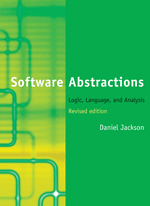
Prof. Daniel N. Jackson is a Professor of Electrical Engineering and Computer Science at MIT, serving as Associate Director of the Computer Science and Artificial Intelligence Laboratory (CSAIL) and Director of the Middle East Education Through Technology (MISTI MIT-MEET) initiative. His research focuses on software dependability, formal methods, and design analysis, particularly through the Alloy framework. Jackson emphasizes lightweight formal methods to reduce development costs and enhance software safety, with applications in cybersecurity, autonomous systems, and safety-critical software. His work includes developing tools like Bluefish for declarative diagram composition and Riffle for reactive systems. He explores ethical software design frameworks to address dark patterns and advocates for concept-centric development. Jackson's contributions span academic publications, educational initiatives, and industrial collaborations, aiming to bridge formal methods with practical software engineering challenges. Recent projects involve certified control systems for autonomous vehicles, end-to-end dependability cases, and model checking for security flaws. His research integrates interdisciplinary approaches, combining programming languages, static analysis, and human-centered design principles.
Erik Brunvand is a Professor at the School of Computing , University of Utah, and holds an Adjunct Professor position in the Department of Electrical and Computer Engineering. He was a University Professor from 2014–2016 and is currently on leave at the National Science Foundation (CISE/CNS division) (Fall 2019–2021). His research focuses on computer architecture, VLSI systems, asynchronous circuits, and graphics processing, particularly GPU architectures for ray tracing. Teaching includes courses like Digital VLSI Design , Embedded Systems and Kinetic Art , and interdisciplinary classes like Making Noise: Sound Art and Digital Media . He has organized the ASYNC international symposium series and contributed to projects such as TRaX (ray tracing architecture) and ACK (asynchronous design framework). Grants include NSF awards for GPU architectures, ray tracing applications, and microengine-based control systems. His work spans hardware design, sustainable computing, and arts/technology collaborations, including kinetic art installations and educational initiatives like circuit bending.
Gerhard Krumpl is a PhD student at the Institute of Computer Graphics and Vision at Graz University of Technology , supervised by Prof. Horst Bischof and Horst Possegger. His research focuses on anomaly detection and out-of-distribution detection within computer vision and machine learning frameworks.
LuEttaMae Lawrence is an Assistant Professor in the Instructional Technologies and Learning Sciences program at Utah State University's Emma Eccles Jones College of Education and Human Services. As a learning scientist and design researcher, she collaborates with communities to co-design equitable learning environments that address social justice through participatory methodologies. Her educational background includes: PhD in Curriculum and Instruction, University of Illinois Urbana-Champaign MA in Curriculum and Instruction, University of Illinois Urbana-Champaign BFA in Graphic Design, Iowa State University Prior to USU, she completed postdoctoral fellowships at Carnegie Mellon University's Human-Computer Interaction Institute and UC Irvine's School of Education. Her research focuses on Design-Based Research, Design Justice, and Participatory Design to create collaborative learning environments that center community needs while addressing systemic inequities through educational technology. Recent publications (2024-2025) reveal three dominant trends: development of AI orchestration tools for dynamic classroom transitions, responsive teaching frameworks for theory-building activities, and community-engaged design justice projects addressing reproductive health and LGBTQ+ equity. Her work increasingly integrates generative AI with human-centered design principles while maintaining critical focus on ethical implications. Scientific recognition includes: Best Design Paper Award at CSCL 2022 for co-designing AI orchestration tools with middle school teachers Best Design Paper Nominee at CSCL 2021 Dr. Lawrence actively recruits graduate students for her lab, emphasizing collaborative culture and ethical research in co-design, social justice, and technology. Current projects include: PROJECT UNITE: Improving disability transition services with Canyons School District Emergency Contraception Access evaluation on USU campus Kids' Ethical Sensemaking in AI/Robotics afterschool makerspace Bear River Region LGBTQ+ Community Coalition for health equity Community Justice Advocate Program training social workers Rural Utah sexual health educator cultural navigation study Her lab operates through interdisciplinary partnerships with educators, nonprofits, and community organizations, prioritizing wellbeing and inclusive research practices while scaling design-based solutions from local contexts to broader educational applications.
Octavian Mihai Machidon is an Assistant Professor at the Faculty of Computer and Information Science (FRI), specializing in mobile computing, IoT systems, and approximate computing. His research bridges technological innovation with diverse applications in agriculture, cultural heritage, and smart governance. Current research focuses on energy-efficient mobile systems, UAV-based agricultural monitoring, and smart governance frameworks Previously led H2020 Smart4All AgriAdapt project Recipient of multiple awards for research excellence and innovation His work demonstrates cross-disciplinary impact through projects like Mobiprox (IEEE IoT Journal) and SqueezeSlimU-Net (IEEE Journal of Selected Topics in Applied Earth Observations). Key trends include adaptive algorithms, real-time processing, and sustainable technology integration. 2024 - FRI Special Award for Exceptional Research Achievement 2023 - Agrobiznis 'Best Idea' award for AgriAdapt project As member of the Computer Communications Laboratory , he contributes to digital transformation initiatives and teaches courses in process automation and mobile sensing platform development.
Professor Sergey Karabasov is a leading academic in computational modeling and aeroacoustics at Queen Mary University of London’s School of Engineering and Materials Science . As Director of the Centre for Intelligent Transport , he bridges aerospace engineering with environmental technology and bioengineering. Education: PhD (1999, Moscow State University), DSc (2010, Keldysh Institute) Affiliations: Fellow of the Royal Aeronautical Society (FRAeS), Fellow of the Higher Education Academy (FHEA), Associate Fellow of AIAA (AFAIAA) Research Interests span multiscale fluid dynamics, computational aeroacoustics, and high-performance computing. His work addresses: Future Mobility: Noise reduction in urban air mobility and conventional aircraft Environmental Technologies: Turbulence modeling for renewable energy and climate systems Digital Twins: Physics-based and data-driven simulations for aerospace and bioengineering Article Trends focus on: Hybrid LES-acoustic models for jet noise Multiscale methods in nanofluidics and molecular systems GPU-accelerated algorithms (e.g., CABARET) for complex flows Climate dynamics (Southern Ocean jets, Chandler wobble) Scientific Awards include: Fellowships at Royal Aeronautical Society and Higher Education Academy Associate Fellowship at AIAA Guest Editor for Royal Society Phil.Trans. A theme issues (2014, 2019) Advising includes current PhD student Hussain Ali Abid and alumni working on: Jet noise optimization Graphene suspension rheology Hybrid molecular-continuum simulations Labs & Teams involve the Centre for Intelligent Transport , GPU-Prime.Ltd consultancy, and collaborations with institutions like Cambridge University and Keldysh Institute.
Dr. Mark Dekker is a Researcher at Utrecht University's Faculty of Geosciences, specifically within the Copernicus Institute of Sustainable Development and the Environmental Sciences department. He also holds a position at the Netherlands Environmental Assessment Agency (PBL). His work bridges data science, mathematical modeling, and environmental policy, with a particular focus on climate change mitigation strategies. Dr. Dekker completed his PhD in 2022 with a thesis titled 'Macroscopic Dynamics in Complex Systems,' which examined interactions between microscopic and macroscopic phenomena across various complex systems including climate tipping points, railway disruptions, ecological patterns, neuroscience data, and pandemic interventions. His educational background has equipped him with strong analytical skills in mathematical and computational modeling. His research interests span Dynamics of Complex Systems , Climate Dynamics , Critical Transitions , and Integrated Assessment Modelling . Dr. Dekker applies data science and mathematical techniques to climate change questions, particularly focusing on climate justice and mitigation effort-sharing. He distinguishes normative considerations from climatological uncertainties to understand what determines fair national emission reduction targets. His work includes developing the Carbon Budget Explorer webtool for visualizing fair climate targets. Dr. Dekker's publication record shows a clear evolution from fundamental complex systems research during his PhD (2017-2021) toward applied climate policy analysis. His recent work (2022-2025) focuses on energy system modeling, climate scenario analysis, and effort-sharing frameworks. He has made significant contributions to understanding variance in climate policy scenarios and identifying 'model fingerprints' in mitigation pathways. His interdisciplinary approach connects climate science with social considerations of fairness and justice. As an educator, Dr. Dekker contributes to several bachelor-level courses including Introduction to Adaptive Systems, Graphics, Image processing, Introduction to Complex Systems, and Introduction Project. His teaching reflects his expertise in complex systems and computational approaches. Dr. Dekker is actively involved in the IMAGE team within the Horizon-2020 ECEMF project, working on scenarios describing future energy economy evolution and identifying potential routes to climate neutrality. His research combines data analysis, network analysis, computational modeling, and mathematical modeling using Python and Matlab. His work has significant policy relevance, particularly for national and international climate target setting.
Dr. Lili Wang serves as an Associate Professor at Southern University of Science and Technology (SUSTech), joining in May 2024 as an independent Principal Investigator and PhD advisor. Her research focuses on theoretical and applied control systems for intelligent sensor networks through interdisciplinary integration of control theory, optimization, and machine learning. Her academic foundation includes: PhD in Engineering and Applied Science from Yale University (2014-2020) Master's in Control Theory and Control Engineering from Zhejiang University (2011-2014) Bachelor's in Automation from Zhejiang University (2007-2011) Dr. Wang's research spans social dynamics , distributed estimation , distributed control , formation control for multi-agent systems , and distributed learning applications . Her work develops novel algorithms for networked control systems with applications in intelligent sensor networks and multi-robot coordination, emphasizing theoretical rigor and practical implementation. Analysis of her publications reveals consistent advancement in distributed observer design, formation control strategies, and consensus algorithms. Key trends include innovative applications of graph theory and spectral methods to multi-agent systems, with growing integration of learning techniques for adaptive control in uncertain environments. Her distinguished recognition includes: IEEE Senior Member (2024) Lillian Gilbreth Fellowships at Purdue University (2023) CPS Rising Star Award (2023) Henry Prentiss Becton Graduate Prize (2019) Zhang Siying Outstanding Paper Award (2012) As a PhD advisor at SUSTech, Dr. Wang mentors graduate researchers in control theory and its applications. She is currently founding COL-LABORATORY, a dedicated research team advancing control systems for intelligent sensor networks through interdisciplinary collaboration, with ongoing projects in distributed learning frameworks and robust multi-agent coordination.
Jan Allbeck is an Associate Professor in the Department of Computer Science and Associate Dean of the Honors College at George Mason University's College of Engineering and Computing. She advises honors students in Applied Computer Science and Computer Science, while teaching courses on game design, computer graphics, and special effects. PhD, Computer and Information Science, University of Pennsylvania MSE, Computer and Information Science, University of Pennsylvania BS, Computer Science, Bloomsburg University of Pennsylvania BA, Mathematics, Bloomsburg University of Pennsylvania Allbeck's research focuses on the intersection of animation, artificial intelligence, and psychology, particularly in simulating virtual humans and intelligent crowds. She develops frameworks for behavioral realism, agent decision-making, and crowd dynamics, with applications in virtual reality and cybersecurity training. As director of the Games And Intelligent Animation (GAIA) Lab, she explores advanced simulation techniques including semantic virtual environments, parameterized memory models, and high-density autonomous crowd systems. Her work emphasizes creating agents that can interact plausibly with humans and environments.
Jason Donati is a Teaching Professor in the College of Art + Design at Northeastern University, where he teaches animation and digital cinematography. An internationally recognized animator, his award-winning films have screened at SIGGRAPH, Ani Mundi, Seoul Film Festival, and ASIFA East events globally. Education: M.F.A. from Rochester Institute of Technology B.F.A. from the University of Massachusetts Amherst His research integrates artistic expression with technological innovation across 3D Animation, Digital Cinematography, and Visualization. Professor Donati explores how digital tools transform cinematic storytelling and visual communication, with particular focus on emerging applications in virtual reality and interactive media. His work bridges traditional animation techniques with cutting-edge production technologies. Publications reveal an evolving trajectory from foundational digital cinematography principles to contemporary VR applications, demonstrating consistent innovation in media production pedagogy and practice. Recent work addresses industrial training solutions through immersive technologies. Scientific Awards: Multiple first-place awards at Rhode Island International Film Festival and MIMC Awards Four-time winner at New York State Student Film Festivals (1999-2000) Three competitive scholarships from industry leaders including Rhythm & Hues Studios Eleven festival selections and honorable mentions at SIGGRAPH, ASIFA-East, and international animation festivals Features in Fortune Magazine, Animation Magazine, and Storybench for industry commentary Professor Donati maintains active industry partnerships with organizations including Tufts Medical Center, Beth Israel Deaconess Medical Center, and Bose Corporation, translating academic research into applied media solutions. His courses span animation fundamentals to advanced game animation, shaping next-generation digital storytellers. Current initiatives focus on public VR research applications for advanced manufacturing training, extending his expertise in digital visualization to industrial contexts while maintaining strong connections to animation pedagogy.
Zoë J. Wood is an Associate Professor in the Computer Science Department within the College of Engineering at California Polytechnic State University (Cal Poly). She leads the International Computer Engineering Experience (ICEX) program and serves as faculty advisor for Women Involved in Software and Hardware (W.I.S.H.), a student organization supporting female computing majors. Her educational background includes a Ph.D. and M.S. in Computer Science from the California Institute of Technology. Wood co-founded the interdisciplinary minor Computing for the Interactive Arts, reflecting her commitment to bridging artistic expression with technical skills. Wood's research spans computer graphics, scientific visualization, and computer science education, with a focus on geometric modeling and underwater archaeological visualization. Her work often integrates visual arts, mathematics, and computer science, creating innovative approaches to both research and teaching. Recent projects demonstrate an increasing emphasis on socially responsible computing, diversity in STEM, and community engagement. Her scholarly output shows a clear evolution from technical computer graphics research toward educational innovation and social impact, particularly in broadening participation in computing. The most recent publications focus on socially responsible computing, Latinx student retention, and community-based learning approaches in introductory courses. Wood actively promotes diversity in computing through multiple initiatives, including advising W.I.S.H., developing inclusive curricula, and conducting research on student belonging and retention. Her work with the Computing for the Interactive Arts program empowers students to realize artistic visions through coding. She teaches a range of courses from introductory computing with an arts focus (CSC 123) to advanced computer graphics (CSC/CPE 471), computer animation (CSC/CPE 474), and graduate-level computer graphics (CSC 572). Her teaching philosophy emphasizes creative approaches to computational thinking and technical skill development.
Dr. Eugene H. Spafford ("Spaf") is a Distinguished Professor in the Department of Computer Sciences at Purdue University, serving since 1987. He holds courtesy appointments in Philosophy, Communication, Electrical and Computer Engineering, Nuclear Engineering, and Political Science. As founder and Executive Director Emeritus of CERIAS and the COAST Laboratory, he has shaped information security research and education. His research centers on information security, computer crime investigation, and information ethics. Spafford's work in cybersecurity, computer forensics, and computing ethics has established him as a leading figure in the field. He emphasizes practical security solutions and ethical considerations in technology. Recent publications address cybersecurity myths, deception-based security techniques, and password security, alongside memorials for computing pioneers. This blend reflects his dual focus on advancing security research and preserving the field's history. Spafford has advised numerous graduate students and secured significant funding for CERIAS, fostering interdisciplinary collaboration. He currently serves as Editor-in-Chief of Computers & Security and on the board of the Computing Research Association. Leading CERIAS, Spafford built one of the world's premier academic centers for information assurance, integrating expertise from computer science, engineering, and social sciences to address complex security challenges.