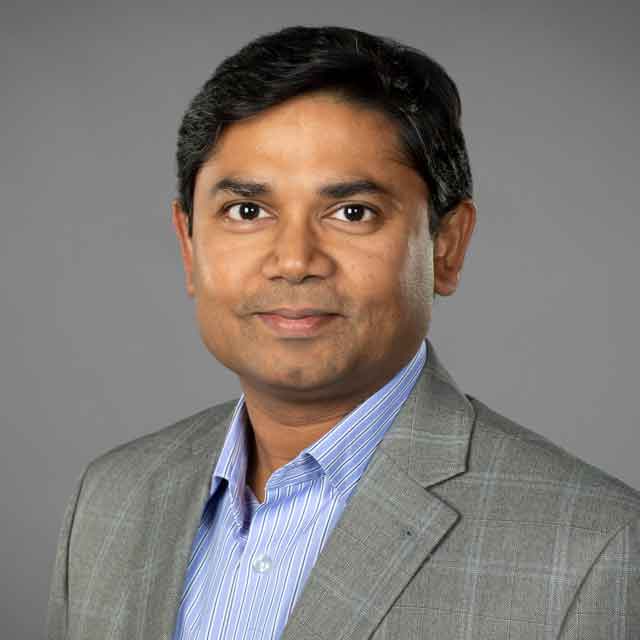
Shamik Sengupta is the Ralph E. and Rose A. Hoeper Professor at the University of Nevada, Reno (UNR) , where he serves as Professor in the Department of Computer Science & Engineering and Executive Director of the Cybersecurity Center . He holds a PhD in Computer Science from the University of Central Florida (2007) and a BE in Computer Science from Jadavpur University (2002). IEEE Senior Member Director, UNR Cybersecurity Center NSF CAREER Award Recipient
Rune Andersen is a Senior Lecturer at the University of Agder , affiliated with the Department of Information and Communication Technology . He has pioneered Europe's first holistic Bachelor's program in Academic Esports and serves as its Program Head, while also leading external communication and innovation initiatives within the department. Education: General Teacher (1999) Master's in Educational Use of ICT (2008) Guidance Pedagogy (2012) Welfare Technology (2018) His research interests focus on ICT integration in education , gamification , and leveraging transferable skills from esports for workforce development. He emphasizes interdisciplinary collaboration and industry partnerships to bridge academic and professional transitions. Recent publications highlight esports as a pedagogical tool, gamification in higher education, and skill transfer from digital environments to real-world applications. His work spans game-based learning, universal design, and curriculum innovation.
Jean F. Honorio Carrillo is an Adjunct Professor at Purdue University's Department of Computer Science and a Senior Lecturer at the University of Melbourne's School of Computing and Information Systems. He specializes in machine learning theory, optimization, and their applications to combinatorial and non-convex problems. His research focuses on developing algorithms with theoretical guarantees for structured prediction, robustness, fairness, and federated learning. He has advised numerous students across multiple institutions and holds adjunct roles at Purdue's Statistics Department and MIT CSAIL. Roles: Senior Lecturer (Melbourne), Adjunct Professor (Purdue), Adjunct at MIT CSAIL Research Areas: ML Theory, Non-Convex Optimization, Fairness, Federated Learning Key contributions include breakthroughs in exact inference for structured prediction, optimization frameworks for NP-hard problems, and theoretical foundations for modern ML challenges. His work has been published in top venues like NeurIPS, ICML, and JMLR. He has secured grants from NSF and industry partners, including a 2021 NSF DMS grant for deep learning research. His students have gone on to postdoctoral roles at NUS and UChicago/CMU.
Daniel J Eck is an Assistant Professor in the Department of Statistics at the University of Illinois Urbana-Champaign within the College of Liberal Arts & Sciences. His research focuses on statistical methodology development driven by collaborations in diverse fields such as sports analytics, evolutionary biology, economics, and biostatistics. He holds a PhD in Statistics from the University of Minnesota (2017) and a BS in Mathematics from Southern Illinois University Carbondale (2009). Education: PhD in Statistics, University of Minnesota, 2017 BS in Mathematics, Southern Illinois University Carbondale, 2009 His research interests emphasize methodological innovation in areas like envelope models, variance reduction techniques, and applications in sports and ecology. Recent work explores fire effects on plant fitness, soybean genomics, and infectious disease intervention design. He actively collaborates with researchers across disciplines and mentors graduate students in statistical methods. Eck teaches courses such as Baseball Analytics and Advanced Regression Analysis. Research Trends: His articles span statistical theory (e.g., envelope estimation), applied ecology (fire-pollination interactions), and sports analytics (player performance comparisons). He balances foundational methodology with practical applications in diverse domains. Advising & Grants: Eck advises graduate students on projects in evolutionary biology and economics. While specific grant details are not provided, his research reflects active engagement with funded collaborative projects. He maintains affiliations with the Department of Statistics and has ties to computational biology and public health initiatives. Labs/Teams: While no specific lab is mentioned, his work aligns with interdisciplinary teams at UIUC and Yale School of Public Health (prior postdoctoral affiliation).
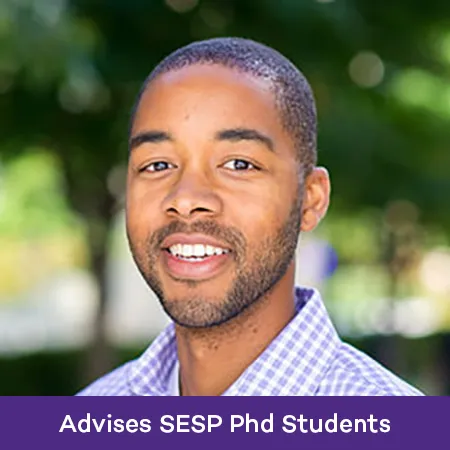
Marcelo Worsley is the Karr Family Associate Professor in Computer Science and Learning Sciences at Northwestern University's School of Education and Social Policy (SESP). His research focuses on promoting STEM education for underserved populations through hands-on, project-based learning. He holds a PhD and MS in Learning Sciences and Computer Science from Stanford University, along with dual bachelor's degrees in Chemical Engineering and Portuguese. His work emphasizes inclusive learning technologies, multimodal learning analytics, and fostering agency in students to address real-world challenges. Research Interests: Worsley’s research spans four core areas: (1) designing meaningful hands-on learning experiences; (2) extracting and analyzing multimodal data; (3) developing naturalistic interfaces for education; and (4) bridging engineering education with conceptual change. His Technological Innovations for Inclusive Learning and Teaching (tiilt) Lab aims to address inequities in education by co-designing tools with teachers and learners. Grants & Projects: Worsley has led initiatives such as Multimodal Learning Analytics (funded by NSF EAGER) and PE++ , integrating computer science with physical education. His projects often involve intergenerational making, refugee youth engagement, and culturally responsive computing. Publications: His work appears in journals like Journal of Learning Analytics and conferences such as ICLS and EDM. Recent themes include AI in education, embodied learning in games like Minecraft, and leveraging sports for computational thinking.
Morten H. Christiansen is the William R. Kenan, Jr. Professor of Psychology at Cornell University and holds a concurrent position as Professor of Cognitive Science at Aarhus University's School of Communication and Culture and the Interacting Minds Centre. His research focuses on the interplay between biological and environmental factors in language evolution, acquisition, and processing. Key methodologies include computational modeling, neuroimaging, and experimental psychology. He is an elected member of Denmark’s and Norway’s Royal Academies of Sciences and a Fellow of the Association for Psychological Science and Cognitive Science Society. His work spans over 250 papers and four edited volumes, with his monograph The Language Game (2022) proposing a novel theory of language emergence through improvisation. Research interests emphasize multiword chunking, statistical learning, and individual differences in language processing. Current projects explore Danish language challenges, computational models of cultural evolution, and the impact of large language models (LLMs) on human cognition. Christiansen directs the Cognitive Science of Language Lab, teaches undergraduate and graduate courses (e.g., PSYCH 2150: Psychology of Language), and collaborates internationally on projects like the Danish Gigaword Corpus. His recent work highlights language as an emergent system shaped by interactive and ecological pressures.
Nathan R. Holbert is an Associate Professor of Communication, Media, and Learning Technologies Design at Teachers College, Columbia University, and the founder/director of the Snow Day Learning Lab. He holds a Ph.D. in Learning Sciences from Northwestern University, an M.A.Ed. in Instructional Process from Washington University, and a B.S. in Secondary Chemistry Education from Greenville College. His research focuses on designing playful tools and environments for children to engage with computational thinking and STEM topics. Key interests include culturally responsive education, game-based learning, and constructionist pedagogy. Holbert co-edited Designing Constructionist Futures (MIT Press, 2020) and co-authored Playful Testing (ETC Press, 2022). He also hosts the Pop & Play podcast on education and pop culture. Recent publications explore topics such as Afrofuturism in design, educational video games as cognitive tools, and leveraging cultural values in maker activities. His work emphasizes equity and accessibility in educational technology. The Snow Day Learning Lab serves as a hub for his experimental projects in playful and culturally grounded learning.
Marco Lazzari is a Full Professor at the University of Bergamo in the Department of Human and Social Sciences. His research focuses on educational technology integration, digital storytelling applications in teaching, and inclusive education methodologies. Previously he served as Department Head (2018-2024) and coordinates doctoral studies in Human Sciences and Welfare Innovation. Education Background: Ph.D. in Computer Science M.S. in Information Sciences B.S. in Information Sciences Research Interests: Digital storytelling for inclusive pedagogy Educational robotics applications Technology-mediated distance learning Teacher training in digital literacy Social media's educational impact His recent publications demonstrate strong focus on educational technology in post-pandemic contexts, inclusive robotics programs, and digital storytelling frameworks. Research trends include addressing educational disparities through technology, evaluating pandemic learning impacts, and developing sustainable digital pedagogies across educational levels. Scientific Awards: No major awards listed in provided materials As Director of the Educational Technologies Center (2005-2018), he established technology-enhanced learning initiatives. Currently supervises doctoral students investigating educational technology efficacy, digital inclusion, and robot-assisted learning. Research collaborations span computer science, pedagogy, and special education disciplines. Laboratory Focus: Educational robotics implementation Digital storytelling frameworks Teacher technology training programs Accessibility in educational technology
Dr. Jody Clarke-Midura is a Professor and Associate Dean of Graduate Studies in the Emma Eccles Jones College of Education and Human Services at Utah State University. She holds an Ed.D. from Harvard Graduate School of Education, an M.Ed. in Technology in Education, and a B.A. in English and Women’s Studies from the University of Massachusetts. Her research focuses on designing playful, technology-enhanced learning environments to foster STEM engagement and computational thinking in K-12 and early childhood education. Key areas include game-based learning, computational thinking integration, and technology-enhanced assessments. She collaborates on interdisciplinary teams and leads externally funded projects. Clarke-Midura co-directs the Playful Explorations Lab (PEL), which designs STEM learning experiences for elementary classrooms. Her work emphasizes hands-on, student-driven exploration and connects theory to classroom practice. She mentors graduate and undergraduate students, supporting their research development. Her publications address topics like formative assessments, computational thinking assessment frameworks, and the role of coding toys in early math learning. She has contributed to curriculum models integrating computer science and mathematics, and explored cultural relevance in co-design processes. Professional activities include leading graduate studies administration, advising on educational technology initiatives, and advancing inclusive pedagogical practices.
Kevin W. Hamlen is the Louis A. Beecherl, Jr. Distinguished Professor in the Department of Computer Science at the University of Texas at Dallas. He serves as Executive Director of UT Dallas' Cyber Security Research and Education Institute. His research focuses on language-based security , binary software hardening , cyberdeception , and formal program verification . He has received multiple grants from agencies like AFOSR, NSF, DARPA, and industry partners including Lockheed Martin and Intel. PhD and MS from Cornell University BS from Carnegie Mellon University His research explores automated approaches to software security through techniques like binary disassembly , control-flow integrity , and honey-patching . He has pioneered methods for malware defense and cloud/web/mobile security . Recent work examines adaptive cyberdeception and GPU-based security frameworks . His publications span binary code manipulation , malware mitigation , and blockchain security . Key awards include the NSF IUCRC Technology Breakthrough Award and two CSAW Best Paper 2nd Prizes . He advises numerous PhD students, many of whom now work at Google, IBM, and Microsoft. His book Autonomous Cyber Deception (Springer, 2019) with Ehab Al-Shaer and Cliff Wang provides comprehensive coverage of adaptive cyberdeception strategies.
Karl Kunisch is a Professor at the Department of Mathematics and Scientific Computing at the University of Graz and serves as Scientific Director of the Radon Institute of the Austrian Academy of Sciences in Linz. With a distinguished career spanning several decades, he has established himself as a leading researcher in optimization and control theory. Prof. Kunisch completed his PhD and Habilitation at the Technical University of Graz in 1978 and 1980, respectively. His academic journey includes significant positions at Brown University's Lefschetz Center for Dynamical Systems, INRIA Rocquencourt, Universite Paris Dauphine, and he previously served as a professor of numerical mathematics at the Technical University of Berlin. Research Interests: Prof. Kunisch's research focuses on optimization and optimal control, inverse problems and mathematical imaging, numerical analysis and applications, with current emphasis on life sciences applications. His specific areas include Optimal Control of Partial Differential Equations, Nonsmooth Optimization in Function Spaces, and Applications of Optimization and Control in the Life Sciences. His work bridges theoretical mathematics with practical applications across various scientific domains. His recent publications demonstrate a continued focus on advancing the theoretical foundations of optimal control while developing practical numerical methods. Key trends include work on infinite horizon control problems, feedback stabilization techniques, applications to PDE-constrained optimization, and the integration of machine learning approaches with traditional control theory. His research group actively explores connections between theoretical developments and applications in the life sciences. Scientific Recognition: W.T. and Idalia Reid Prize 2021 SIAM Fellow (2017) European Research Council Advanced Grant (2015) Alwin Walther Medaille (2008) SIAM Outstanding Paper Prize (2006) Prof. Kunisch has made substantial contributions to the mathematical community through his editorial work, serving as editor for prestigious journals including SIAM Journal on Control and Optimization, SIAM Journal on Numerical Analysis, and the Journal of the European Mathematical Society. He leads the Research Group on Optimization and Optimal Control at the Johann Radon Institute for Computational and Applied Mathematics (RICAM) and is involved in the ERC-Project OCLOC "From Open to Closed Loop Control".
Christopher Thomas Ryan is an Associate Professor in the Operations and Logistics Division at the UBC Sauder School of Business. He holds a PhD and BA from UBC in Management Science and Mathematics, respectively. His research spans optimization theory, game theory, theoretical economics, video game design, and pedagogy for business education. He has held positions at the University of Chicago Booth School of Business and is affiliated with the Colibri Learning Foundation. Education: BA (Mathematics) and PhD (Management Science) from UBC; BA (Sociology and Economics) from University of Guelph. He has authored numerous textbooks and case studies, including works on research careers, operations management, and teaching methodologies. His work integrates human-centric approaches to operations and education systems. Research Interests include small business operations, education operations, theoretical economics, and the design of video games. He has published in top journals like Management Science, Econometrica, and Mathematical Programming. His grants include SSHRC and NSERC awards. Ryan advises students across multiple institutions and has mentored prominent faculty in marketing, operations, and MIS fields. Teaching focuses on core operations management for MBA programs and pedagogical innovation. He has developed cases on AI in education, early childhood development, and small business sustainability. Ryan’s work bridges academic research with practical applications in business and education sectors.
Associate Professor Archie Chapman is an Associate Professor in Computer Science and Deputy Director (Teaching and Learning) at the School of Electrical Engineering and Computer Science, The University of Queensland. His research focuses on applying artificial intelligence, game theory, optimization, and machine learning to address challenges in future power systems, including renewable energy integration and battery storage optimization. Prior to UQ, he held roles as a Research Fellow in Smart Grids at the University of Sydney (2011-2019) and a postdoc at the University of Southampton (2009-2010), where he completed his PhD in 2004. Research interests include: - Large-scale optimization for energy systems - Demand response and peer-to-peer energy trading - Renewable energy integration and grid stability - Battery storage strategies for smart grids - Algorithmic game theory for energy market design Notable projects: - Bruny Island battery trial for network congestion management - Analysis of tariff impacts on solar households - Development of decentralized energy management frameworks Publications span over 100 articles, with recent work focusing on: - Prosumer battery systems and capacity firming (2025) - Unbalanced optimal power flow benchmarks (2024) - P2P energy trading mechanisms (2021-2023) Expertise includes: - Techno-economic analysis of energy systems - Distributed optimization algorithms - Policy and market design for renewable integration
Prof. Dr. Joshua Weidlich is an Assistant Professor for Digital Higher Education at the University of Zurich (UZH), collaborating with Zurich University of Education as a DIZH Bridge Professor. His academic background includes a PhD in Educational Technology from FernUniversität in Hagen, where he earned the Early Career Award for Outstanding Dissertation. He holds a BA in Educational Science from TU Chemnitz and an MA in E-Learning and Media Education from the University of Education Heidelberg. His research focuses on leveraging digital technologies to enhance higher education, emphasizing personalized feedback, feedback literacy, learning analytics, AI-driven environments, and social presence in online learning. Prior to UZH, he worked at the DIPF | Leibniz Institute for Research and Information in Education, contributing to both research and teaching. Key achievements include pioneering work on social presence in distance learning, validated through frameworks like the Social Presence Measure, and exploring gender dynamics in STEM education. His recent studies address the impact of AI tools like ChatGPT in education and the role of feedback literacy in student success. Prof. Weidlich’s publications span educational technology, gender studies, and learning analytics, reflecting his commitment to advancing digital pedagogy and equitable educational practices. He actively contributes to the Digital Society Initiative (DSI) at UZH, fostering interdisciplinary dialogue on societal impacts of technology.
Dilian Gurov is a Professor in Computer Science at KTH Royal Institute of Technology, associated with the Digital Futures Faculty and the Division of Theoretical Computer Science. He also coordinates the Doctoral Programme in Computer Science at the CSC school. Before joining KTH in 2002, he earned a Ph.D. from the University of Victoria, Canada (1998), and worked at the Swedish Institute of Computer Science (1997-2002). His research focuses on software specification and verification, including contracts, program models, logics, and tools, as well as multi-agent strategic planning involving knowledge-based strategies in imperfect information settings. Key contributions include the CAV Distinguished Paper Award 2023 for 'Automatic Program Instrumentation for Automatic Verification' and an EASST award for 'Checking Absence of Illicit Applet Interactions: A Case Study' (2004). He leads projects funded by VR (SEFROS, ContraST) and Vinnova (AVerT2) and collaborates with industries like Scania on formal verification of C programs. His service roles span over 30 conference committees and organization roles, including PC memberships for iFM, TAP, and ISoLA. Teaching responsibilities include courses such as 'Formal Methods,' 'Program Semantics and Analysis,' and 'Knowledge in Games with Imperfect Information.' His work emphasizes practical applications of formal methods, bridging academic research with industry needs through collaborations and tool development (e.g., CVPP, ProMoVer, TriCo).