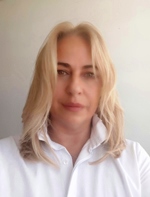
Milan R. Dincic is an Associate Professor at the University of Niš, Faculty of Electronic Engineering, Department of Telecommunications. He holds a PhD in Metrology and Measurement Technology (2017) and a Master’s degree in Telecommunications (2012), both from the same institution. His academic career includes research on quantization techniques, signal processing, and metrology applications. Dr. Dincic’s research focuses on optimizing quantizers for measurement signals, including Gaussian and Laplacian distributions. He has contributed to adaptive quantization, lossless coding algorithms, and hybrid systems integrating codecs like ITU-T G.711. His work bridges theoretical signal processing with practical applications in telecommunications and sensor systems. His publications (26 journal articles) emphasize quantizer design, image sampling, and compression techniques. He co-authored the textbook "Sensors in Vehicles" (2014). Current projects include national/international collaborations in metrology and measurement technology. His lab focuses on advancing signal processing methodologies for precision measurement systems.
Goran S. Miljkovic is an Assistant Professor at the Faculty of Electronics in Niš, University of Niš, within the Department of Measurements. His academic career includes a Master's degree (2011) and a Bachelor's degree (2002) in Metrology and Measurement Technology from the same institution. His research focuses on metrology systems, position encoders, and pseudorandom sequence applications. He has contributed to advancements in encoder design, error detection methods, and synchronization techniques in measurement technologies. Education: Master’s in Metrology and Measurement Technology, Faculty of Electronics in Niš (2011) Bachelor’s in Telecommunications, Faculty of Electronics in Niš (2002) Research interests prioritize metrology and measurement technology innovations, particularly in position encoding, sensor systems, and automation. His publications emphasize practical applications in industrial measurement systems, including encoder reliability and signal processing. He collaborates on national research projects and co-authored an auxiliary textbook on computer measurement systems for laboratory exercises (2011). His work bridges theoretical metrology with practical engineering solutions in instrumentation and automation.
Nenad N. Cvetkovic is a Full Professor at the Faculty of Electronics, University of Niš, specializing in Theoretical Electrical Engineering. He earned his PhD (2009), MSc (2002), and BSc (1995) from the same institution. His research focuses on electromagnetic field interactions with biological tissues, grounding system design, and numerical modeling of geoelectrical phenomena. Key areas include mobile phone radiation effects on human tissues, SAR distribution in anatomical models, and innovative approaches to multi-layered soil grounding analysis. He has contributed over 19 peer-reviewed articles in high-impact journals, addressing topics like dental implant EM interactions, orthodontic brace SAR profiles, and optimizations for grounding systems. His work bridges theoretical rigor with practical applications in electrical safety, biomedical engineering, and environmental geoelectrics. Prof. Cvetkovic is actively engaged in national/international research projects and speaks English and German fluently. His laboratory activities include finite element method (FEM) simulations, experimental validation of grounding models, and collaborations on standards for non-ionizing radiation exposure assessment.
Živko Bojović is affiliated with Singidunum University, holding a doctoral degree in Telecommunications and Signal Processing from the University of Novi Sad. His career includes roles as an engineer and manager in telecommunications companies like Telekom Srbija and PTT Serbia. He has extensive experience in academic publishing, with monographs on network technologies and textbooks on software-defined networking (SDN) and IoT applications. His research focuses on cybersecurity, machine learning applications in healthcare, smart government systems, and network virtualization. Education: PhD in Telecommunications (2011), Postgraduate studies in Telecommunications (2000-2001), Bachelor’s in Electronics with Telecommunications (1986-1992). He also completed high school in Peć with a mathematical focus. Research Interests: He explores advanced networking technologies including SDN, 5G/6G networks, IoT security, and educational technology innovations. His work bridges theoretical advancements with practical implementations in healthcare diagnostics and public sector digitization. Recent studies include applying machine learning to predict thrombosis and thyroid cancer metastasis, reflecting his interdisciplinary approach. His articles collectively highlight trends in smart systems (e.g., government services, energy grids) and network security, with frequent contributions to journals like Computer Applications in Engineering Education and Journal of Network and Systems Management . The Wiley Top Cited Article award (2020-2021) recognizes his impactful work on rapid transition to distance learning during crises. Prof. Bojović holds IEEE membership and sits on editorial boards for journals like Inventi Impact: Software Engineering . He actively participates in EU Horizon projects focusing on 6G privacy and smart city analytics.
Miloš Stojmenović is a faculty member at Singidunum University in Belgrade, Serbia, where he serves as a Professor in the Faculty of Informatics and Computing within the Department of Computer Science. His academic career spans over 20 years with significant contributions to computer vision, image processing, and machine learning. Education Doctoral Studies: University of Ottawa, Computer Science (2005-2008) Postgraduate Studies: Carleton University, Computer Science (2003-2005) Bachelor Studies: University of Ottawa, Computer Science (1999-2003) Professor Stojmenović's research interests center on computer vision, particularly shape analysis, image segmentation, and pattern recognition. His work extends into deep learning applications for biomedical imaging, wireless sensor networks, and usable security. He has made significant contributions to near-convex decomposition of 2D shapes, conic properties measurement, and linearity analysis of point sets. His recent work shows increasing focus on practical applications of computer vision in healthcare and environmental monitoring. Analysis of his 15 most recent publications reveals a strong trend toward interdisciplinary research, particularly in biomedical applications of computer vision. Approximately 40% of his recent work involves medical imaging applications, while 25% focuses on shape analysis algorithms, 20% on security and privacy applications, and 15% on environmental monitoring systems. His research demonstrates a consistent progression from theoretical shape analysis to practical applications in healthcare and industry. Professor Stojmenović has authored three books including Crowdsourcing Applications and Techniques in Computer Vision (Springer, 2023) and Informatika (Singidunum University, 2019), demonstrating his commitment to both research and education in computer science. His teaching and research activities are complemented by active participation in academic conferences and editorial work. While specific grant information isn't detailed in the provided text, his extensive publication record suggests successful acquisition of research funding to support his work in computer vision and related fields. Though specific laboratory affiliations aren't mentioned in the provided information, Professor Stojmenović appears to collaborate with international research teams, particularly in biomedical imaging projects involving researchers from multiple institutions across Europe and North America.
Miloš Dobrojević serves as a Professor at Singidunum University's Faculty of Informatics and Computing in Belgrade, Serbia. His academic foundation includes doctoral, postgraduate, and bachelor studies at the University of Belgrade's Faculty of Mechanical Engineering. His research spans Artificial Intelligence , Internet of Things , and Computer Vision with emphasis on practical applications. Key focus areas include metaheuristic optimization of neural networks for tasks like crop yield prediction, medical diagnostics, and cybersecurity. Recent work demonstrates strong industry relevance in precision agriculture, drone detection systems, and sustainable homestead automation. Analysis of his 15 most recent publications reveals a consistent pattern of applying modified metaheuristics to enhance deep learning models across diverse domains. His work bridges theoretical AI advancements with real-world implementations in agriculture, healthcare, and energy systems. Scientific Contributions: Author of 3 textbooks including 'Veb informacioni sistemi' (2024) and 'Veb programiranje' (2021) Published 40+ journal/conference papers between 2003-2025 Active contributor to Springer book chapters on AI applications Dobrojević's work demonstrates strong practical orientation with projects in Serbian renewable energy transition, flood prevention systems, and municipal e-government solutions. His recent collaborations with researchers like N. Bacanin and M. Zivkovic show consistent output in high-impact journals. Current projects focus on generative AI for medical data and computer vision for agricultural optimization. His laboratory work centers on IoT-based monitoring systems for environmental applications, particularly water management in mountainous regions. Ongoing research explores drone detection networks and waste classification systems using advanced computer vision techniques.
Emilijan Mohora is affiliated with Singidunum University, where he holds the role of Researcher. His academic background includes a Bachelor's in Physics (1988-1994), Master's in Environmental Engineering (2000-2002), and a Doctorate in Chemistry/Biochemistry (2010-2013) from the University of Novi Sad. His research focuses on environmental engineering, particularly arsenic removal from groundwater and water treatment technologies using electrocoagulation and advanced materials. He has contributed to over a dozen peer-reviewed studies since 2003, addressing topics ranging from electrochemical processes to pollutant modeling in aquatic systems. Key research interests include: environmental sustainability, electrochemical technologies for water purification, and innovative sorbent materials. His work emphasizes practical solutions for contaminated water systems, particularly in regions with high arsenic or organic matter concentrations. Collaborative projects often involve interdisciplinary approaches combining engineering, chemistry, and environmental science. Publications since 2012 highlight advancements in continuous electrocoagulation systems and low-cost biosorbents for arsenic removal. Earlier contributions (2003-2004) explored statistical modeling of diffusion in materials and fire/explosion risk mitigation using D'Alambert's principle. Despite no explicitly listed awards or grants, his sustained publication record reflects active engagement in environmental research and technological innovation.
Nada Damljanović is a Full Professor at the Department of Mathematics within the Faculty of Technical Sciences in Čačak, University of Kragujevac, Serbia. Her academic progression includes positions as Junior Teaching Assistant (2003-2007), Teaching Assistant (2007-2012), Assistant Professor (2012-2017), Associate Professor (2017-2022), and Full Professor (2022-present). Education includes: BSc in Mathematics (2002) from University of Belgrade MSc in Mathematics (2007) from University of Niš PhD in Mathematics (2012) from University of Niš Her research focuses on automata theory , fuzzy systems , semiring structures , and multi-criteria decision-making methods . She investigates mathematical foundations of weighted automata, lattice-based algebraic structures, and applications in engineering decision models. Recent work explores fuzzy relation inequalities and computational methods for automata equivalence. Publications predominantly address mathematical modeling in computer science and decision theory. Most articles focus on automata bisimulations (2010-2014), shifting toward multi-criteria analysis and applied mathematical methods in engineering (2015-2020). Recent works integrate mathematical frameworks with signal processing and electrical engineering applications. She leads/participates in key research projects: Quantitative automata models (QUAM, 2022-2024) Computation methods development (174013, 2011-present) Weighted pushdown automata (DFG-funded, 2019-2020) Algebraic structures in information processing (144011, 2006-2010) Editorial activities include Co-Editor-in-Chief of Mathematica Moravica and Associate Editor for Kragujevac Journal of Mathematics . Teaches undergraduate courses in Mathematics, Discrete Mathematics, and Quantitative Methods, plus graduate courses in Mathematical Modeling and Fuzzy Systems.
Dragana Cetojević-Simin is a Professor at Singidunum University, where she serves as head of undergraduate, master's and doctoral studies for the Environment and Sustainable Development program since April 2024. She obtained her full professor title in biology in March 2021 and previously earned the title of scientific adviser in biotechnical sciences in January 2016. Doctoral dissertation in Biology, Faculty of Science, Novi Sad (2006-2009) Specialist studies in Medical Genetics, Faculty of Medicine, Novi Sad (2004-2007) Master's studies in Microbiology, Faculty of Science, Novi Sad (1996-1998) Basic studies in Biology, Faculty of Science, Novi Sad (1989-1993) Secondary school in Biology, Gimnazija JJ-Zmaj, Novi Sad (1987-1989) Dr. Četojević-Simin's research focuses on the bioactivity of natural products, synthetic compounds and xenobiotics, with over 70 publications in international journals, 2705 citations, and an h-index of 28 (Google Scholar, June 2025). Her work spans pharmacology, toxicology, food science, and environmental chemistry, examining antioxidant, antimicrobial, and antiproliferative properties of various plant extracts and compounds. Her recent publications demonstrate a strong focus on plant bioactives, particularly pomace and fruit extracts, with applications in food science, cancer research, and environmental remediation. The research shows interdisciplinary collaboration across chemistry, biology, and environmental science, with emphasis on sustainable approaches to waste valorization and natural product utilization. Editor-in-Chief of Archive of Oncology (2017-2022) Associate Editor of Frontiers in Pharmacology (2021-present) Coordinator of European project iPAAC Joint Action (2018-2021) Reviewer for COST, EU, and OTKA (Hungary) projects Dr. Četojević-Simin has mentored numerous doctoral students at the University of Novi Sad and served on dissertation committees. She has managed multiple international and national research projects (2004-2019) and has been actively involved in editorial work for prestigious journals. Her research has significant implications for food safety, environmental protection, and cancer treatment development. As head of the Environment and Sustainable Development program, she leads academic initiatives focused on integrating environmental science with sustainable practices, continuing her commitment to interdisciplinary research that addresses contemporary environmental challenges.
Marija Paunović serves as an Assistant Professor at the Department of Natural Sciences within the Faculty of Hospitality and Tourism at the University of Kragujevac. She was elected to this academic position on July 14, 2021, and maintains regular consultation hours on Mondays from 10:00-12:00 AM. Despite working in a faculty primarily focused on hospitality and tourism, her expertise lies in advanced mathematical disciplines with applications across multiple fields. Her educational background includes basic academic studies at the Faculty of Mathematics in Belgrade, Master's studies at the Faculty of Economics in Belgrade, and dual Doctorates of Science from the Faculty of Technical Sciences in Novi Sad and the Faculty of Computer Sciences in Belgrade. This diverse academic foundation enables her to bridge theoretical mathematics with practical business applications. Dr. Paunović's research centers on Applied Mathematics with specializations in Fixed Point Theory, Uncertainty Theory, and Phases of Mathematics. Her work demonstrates how abstract mathematical concepts can solve concrete problems in image processing, fractional calculus, and business analytics. She has developed innovative approaches to fuzzy metrics and credibility measures that have practical applications in data analysis and decision-making under uncertainty. An analysis of her recent publications (2019-2024) reveals a strong focus on extending fixed point theorems with applications to fractional differential equations and integral systems. Her research consistently bridges pure mathematics with practical applications, particularly in image processing and uncertainty modeling. She frequently collaborates with an international network of researchers, most notably V. Parvaneh, producing high-impact work published in reputable mathematics journals. Member, secretary and founder of the Serbian Actors' Association Member of the Serbian Mathematician Society Delegate member of International Actuarial Association committees (Supranational Relations and Advice & Assistance) Dr. Paunović has secured significant research funding including the 'Mathematical Methods in Image Processing under Uncertainty – MaMIPU' grant (No 7632) through Serbia's PRIZMA program. She has also contributed to projects supporting rural development programming and payment systems, actuarial assessments for insurance companies, and digital learning games for mathematics education. Her interdisciplinary approach connects mathematical theory with applications in economics, medicine, engineering, and education.
Professor Danijela Miloradović is a distinguished faculty member at the University of Kragujevac, Faculty of Engineering Sciences, Department of Motor Vehicles and Engines. She currently holds the position of Full Professor, having been promoted to this rank in 2022 after serving as Associate Professor (2017-2022) and Assistant Professor (2012-2017). Her extensive academic career spans over 25 years at the same institution, with progressive appointments from Research Associate in 1994 to her current position. Prof. Miloradović's research focuses primarily on vehicle dynamics, noise, vibration and harshness (NVH), steering and suspension systems, brake systems, and vehicle safety. Her work has significant practical applications in automotive engineering, particularly in improving vehicle performance, safety, and environmental impact. She has made notable contributions to understanding the interaction between steering and suspension systems, brake noise problems, and vehicle vibration comfort. Her publication record is impressive, with over 50 scientific and professional papers, including numerous articles in prominent international journals. Her research has evolved from fundamental vehicle dynamics studies to more specialized areas like brake wear particle emissions and their environmental impact. Recent work shows a strong focus on sustainable automotive technologies and environmental considerations in vehicle design. Among her notable recognitions are the KSME award for the second best paper in JMST magazine (2017) and the "Editor's Choice Article" award from the journal "Machines" (2022). She has also received early career recognition as the best student at the Faculty of Mechanical Engineering in 1990 and for excellent academic achievement in 1994. Prof. Miloradović has been actively involved in mentoring doctoral students, serving as mentor for Aleksandar Poznić's doctoral dissertation and participating in numerous doctoral defense committees. She has also contributed significantly to educational development through textbook writing, curriculum design, and supervision of numerous academic courses in vehicle dynamics and related fields. Her leadership extends to administrative roles including serving as Vice-Dean for Teaching (2012-2015), Head of the Department of Motor Vehicles and Engines, and currently as President of the Faculty Council of the Faculty of Engineering Sciences. She has also played key roles in organizing international conferences and serving on accreditation committees for academic programs.
Aleksandar Dedić is a Full Professor at the University of Belgrade's Faculty of Forestry, specializing in Process Engineering with over 125 scientific and professional publications. His academic career spans more than 30 years since joining the faculty in 1992, with his promotion to full professor in 2018. His research focuses on industrial drying processes, biomass energy conversion, and advanced modeling techniques. Key areas include: Heat and mass transfer modeling in wood drying Biomass utilization for energy production Automation of industrial processes using pneumatics, hydraulics, and AI Machine learning applications in wood processing His publication record shows consistent contributions to drying technology since 1997, with recent work expanding into biomass energy systems (2010-2018) and computational modeling of industrial processes. The 15 most recent articles demonstrate strong international collaboration and application in food engineering, environmental systems, and renewable energy. Professional recognitions include: DAAD Scholarship for research at Dresden University of Technology (2000-2001) Technical Assessor for Accreditation Body of Serbia since 2009 Peer reviewer for Horizon 2020 projects and Marie Sklodowska-Curie scholarships As an educator, he teaches across all academic levels including specialized courses in pneumatics/hydraulics, automation systems, and dynamic modeling for furniture production. His industry engagement includes technical design projects and consultancy for companies like AGROSAVA.
Dr. Nebojsa Stanković is an Assistant Professor at the Department of Information Technologies , Faculty of Technical Sciences Čačak , University of Kragujevac . With a career spanning over three decades in academia, he focuses on educational technology innovation , machine learning applications , and IT pedagogy . BSc: Electrical Engineering, University of Kragujevac (1991) MSc: Technical Sciences, University of Kragujevac (2009) PhD: Information Technologies, University of Kragujevac (2021) His research explores artificial intelligence in education , student success prediction , and e-learning systems . Recent work includes hybrid AI models for solar energy optimization and vibration classification in industrial settings. Publications demonstrate consistent engagement with machine learning , cybersecurity , and digital transformation in educational contexts. He actively contributes to international conferences like TIE and UNITECH, specializing in pedagogical applications of Python programming , NLTK , and MATLAB . As a certified ECDL examiner and conference organizer, he bridges academic research with practical IT training . His textbook on Multimedia Technologies (2019) exemplifies his commitment to educational resource development.
Nebojša Raičević is a Full Professor at the Faculty of Electronic Engineering, University of Niš, Serbia, specializing in Theoretical Electrical Engineering. He has been a permanent faculty member since his graduation in 1989, achieving Full Professor status in 2021 after serving as Associate Professor since 2016. His career is deeply rooted in the Department of Theoretical Electrical Engineering, where he also served as Department Head. His educational journey at the University of Niš includes: Bachelor's degree in Theoretical Electrical Engineering (1989) Master's degree in Theoretical Electrical Engineering (1998) PhD in Theoretical Electrical Engineering (2010) Raičević's research centers on computational electromagnetic field theory with emphasis on high-voltage systems. He pioneered the Hybrid Boundary Element Method (HBEM) for electrostatic/magnetostatic problems and developed novel cable accessories with reduced dielectric stress. His work bridges theoretical modeling with practical power engineering applications, particularly in electric field distribution, grounding systems, and electromagnetic compatibility. He maintains active collaboration through eleven international research stays. Analysis of his recent publications reveals consistent innovation in numerical methods for electromagnetic field problems. His work increasingly integrates multi-physics approaches for high-voltage applications, with growing focus on optimization techniques for electrostatic shielding and pulse phenomena in conductors. The research demonstrates strong industry relevance through applications in substation safety and cable engineering. His scientific recognition includes: Best Paper Award at international conferences (twice) As an academic leader, Raičević has mentored two doctoral dissertations and participated in 18 doctoral thesis defenses, plus numerous master's and bachelor's theses. He has secured substantial research funding through participation in nine domestic and five foreign projects, personally managing two initiatives. Currently, he leads two national and two international projects while serving as president of the IEEE EMC chapter for Serbia and Montenegro. He also acts as guest editor for the SCI-listed journal Electronics (MDPI) and reviews for multiple prestigious publications. His practical contributions extend to developing patented cable accessories and computational tools adopted in power engineering. Through his leadership in the IEEE EMC chapter and collaborations with international research groups, he maintains strong industry-academia links focused on electromagnetic compatibility solutions for power systems.
Velibor Isailovic is an Associate Professor at the Faculty of Engineering Sciences, University of Kragujevac, Serbia, where he is affiliated with the Department of Applied Mechanics and Automatic Control. His academic work centers on information technology and control systems within engineering contexts. His research interests include Information Technology , Automatic Control , Applied Mechanics , Control Systems , Engineering Informatics , Mechatronics , and Industrial Automation . These fields reflect his interdisciplinary role bridging mechanical engineering and computing. While specific publications are not detailed in the source text, his affiliation with the Department of Applied Mechanics and Automatic Control suggests a focus on automation, robotics, and intelligent systems in industrial and mechanical applications. There are no listed scientific awards or honors in the provided information. Velibor Isailovic advises students within his department, though no named students are listed. He contributes to academic and research activities at the university, likely participating in funded projects related to automation and information systems in engineering. He is part of the research and teaching team within the Department of Applied Mechanics and Automatic Control, which is involved in various national and international research initiatives, laboratories, and technical developments.