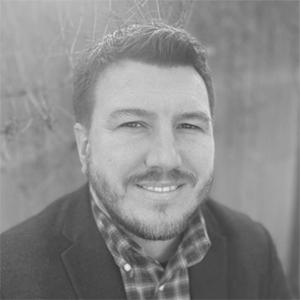
Dr. Daniel Allen is a Lecturer in Human Geography at Keele University's School of Life Sciences, specializing in human-animal relations. An IUCN/SSC otter specialist, his research on otter conservation and dog theft informs policy and advocacy. He led an Environment Agency project on otter predation perceptions and founded the 'Pet Theft Reform' campaign, influencing UK legislation (Pet Abduction Act 2024). His research examines human-animal bonds, including dog theft impacts and mental health benefits. Current projects include 'No pets! Young people’s transitions to campus living,' funded by the Society for Companion Animals Studies. Teaching includes modules on Nature Conservation, Space and Society, More-than-human Geographies, and Animals and Society. He supervises PhD student Emma Randall on eco-therapy. Awards include the Daily Mirror’s Peoples Pet Awards Special Recognition (2021) and the PM’s Points of Light Award (2022). Publications emphasize spatial justice, animal advocacy, and policy impacts, with recent work on pet theft trends and human-animal bonds in crises.
Mathieu Couttenier serves as Professor of Economics at Ecole Normale Superieure de Lyon and Head of the Center for Economic Research on Governance, Inequality and Conflict (CERGIC). He is additionally a Research Fellow at the Centre for Economic Policy Research (CEPR) specializing in International Trade, Regional Economics, and Political Economy. His interdisciplinary research spans political economy, economic development, civil conflicts, natural resources, and media dynamics, with significant contributions to understanding conflict determinants and resource-driven socio-economic impacts. His academic trajectory includes a PhD in Economics from University Paris 1 Sorbonne (2011), followed by positions as Assistant Professor at the University of Geneva and post-doctoral researcher at the University of Lausanne. He has held visiting appointments at Stanford University, Sciences Po Paris, and the University of Bologna, building expertise in spatial conflict analysis and resource economics. PhD in Economics, University Paris 1 Sorbonne (2011) Assistant Professor, University of Geneva Post-doctoral researcher, University of Lausanne Visiting researcher: Stanford University, Sciences Po Paris, University of Bologna Couttenier's research program centers on microeconomic analyses of conflict diffusion, examining how income shocks, climate variability, and natural resource extraction influence violence patterns across space and time. His work integrates economic modeling with geospatial techniques to investigate resource-conflict linkages and local development impacts, particularly in African contexts. His publication record reveals a consistent methodological evolution toward spatial and quantitative approaches, with recent work employing deep learning for geospatial mining detection and network analysis for conflict cost measurement. Key thematic threads connect natural resource governance, media effects on political behavior, and climate-conflict interactions across his American Economic Review, Journal of EEA, and Economic Journal publications. Major scientific recognition includes: ERC Consolidator Grant (2023) for socio-economic impact research on African artisanal mining Ongoing CEPR Research Fellowship status As head of CERGIC and EMR CNRS 5001 Equality and Conflict, Couttenier directs research teams investigating governance structures and inequality drivers. His current ERC-funded project will conduct field studies on artisanal mining communities in Africa, aiming to produce evidence-based policy recommendations for sustainable resource management and conflict prevention through interdisciplinary collaboration.
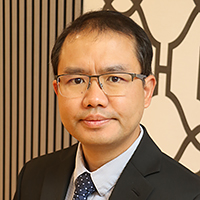
Mr. Mark De Bels is an NSA Visiting Professor at the Center for Cyber Security Studies, United States Naval Academy. He holds an M.S. in Computer Science with an Emphasis on Network Security and a B.S. in Mathematics. His research focuses on Trust Infrastructure and Security of Software Cryptographic Applications. Mr. De Bels has extensive experience in both defensive and offensive NSA missions. He previously served as Chief of a 100-person Signals Intelligence analysis team targeting cryptographic applications, and as a technical SME at the Department of Defense Cyber Crime Center (DC3). His career spans roles such as Information Assurance Analyst, Operating Systems Analyst, and Cryptographic Application Analyst at NSA from 1994–2016. His professional contributions include leadership in securing defense contractor networks against foreign cyber attacks and advancing cryptographic application analysis methodologies. He currently engages in academic cybersecurity research and education through the Center for Cyber Security Studies, integrating his operational expertise into academic training programs.
Claudio Mezzetti is the Colin Clark Professor of Economics at the University of Queensland, School of Economics. His research focuses on microeconomic theory, particularly mechanism design, game theory, and their applications to antitrust, environmental regulation, and market design. He is a Fellow of the Econometric Society. Key Projects include Information and Market Design; Mediation and Analogical Argumentation (2019–2023) Technology Transforming Markets: Large-Scale Field Experiments in Electricity Use (2015–2018) Economic efficiency and the provision of incentives for information acquisition (2015–2016) His research explores strategic behavior in auctions, regulatory frameworks for pollution, and antitrust leniency policies. Recent work analyzes digital-age economic challenges like cybercrime impacts and public goods provision mechanisms. Scientific Awards: Fellow of the Econometric Society Grants and advising: His projects often involve interdisciplinary collaborations, such as with computer scientists on trust-based task allocation. He advises on policy-relevant issues in competition law and environmental economics. Labs/Teams: Active in research groups at the University of Queensland's School of Economics and collaborates internationally on market design and game theory applications.
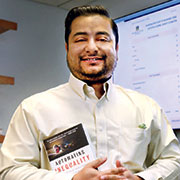
Professor William Housley is a Chair in Sociology at Cardiff University’s School of Social Sciences. He holds a PhD and DSc.Econ. (2012), and is a Fellow of both the Academy of Social Sciences (FAcSS) and Learned Society of Wales (FLSW). His expertise spans qualitative research methods, sociological theory, ethnomethodology, and digital sociology. He co-founded the COSMOS social media observatory and leads the EMTEDS research group, focusing on disruptive technologies and socio-digital systems. Education: PhD; DSc.Econ. (Cardiff University, 2012) Research interests include algorithmic accountability, automation, interaction studies, and the sociological implications of digital technologies. He has held prestigious roles such as the Vincent Wright Chair at Sciences Po, Paris (2017), and serves on international panels for the Volkswagen Foundation and UK REF 2021. His work emphasizes digital sociology’s role in understanding new socio-technical systems, with recent focus on AI ethics, social media governance, and interdisciplinary collaboration. Awards: DSc.Econ. (2012), Vincent Wright Chair (2017) Professor Housley supervises research in digital societies, ethnomethodology, and collaborative interdisciplinary practice. He has led projects like the Cardiff University Research Fellowship on disruptive digital technologies and contributed to policy reviews for ESRC, British Academy, and others. Active in editorial roles (e.g., Qualitative Research co-editor, 2012–2018), his lab (EMTEDS) explores emerging tech’s societal impacts. Current projects address algorithmic transparency, digital citizenship, and governance of social media.
Dr Glenda Cooper is Reader in Journalism Studies and Head of the Department of Journalism at City St George's, University of London , where she leads a team of 25 staff, 50 visiting lecturers, and over 500 students from 53 countries. She holds a PhD in Journalism from City and an MA in English Language and Literature from Oxford, and has played a pivotal role in elevating the BA Journalism programme to 1st place nationally in the Guardian and Complete University Guide (2023), as well as 1st for Graduate Prospects (Sunday Times 2022). Education: MA in Academic Practice, City, University of London (2022) PhD in Journalism, City, University of London MA in Creative Writing, City, University of London BA (Hons) English Language and Literature, St Hilda's College, University of Oxford PG Diploma in Newspaper Journalism, City University of London Glenda's research focuses on crisis and humanitarian reporting , journalism ethics , live journalism , and the intersection of media and politics, particularly through the legacy of Alistair Cooke’s Letter from America . She has led major funded projects with the British Academy, ESRC, Google Digital News Initiative, and HEIF. Her current research explores AI’s impact on journalism through the DMINR project and innovative storytelling formats via the News on Stage initiative and the Contemporary Narratives Lab . Her recent publications span topics such as AI in newsrooms, humanitarian scandals (#AidToo), refugee representation, and digital narrative innovation. These works reflect a strong interdisciplinary trend, combining journalism studies with media technology, ethics, performance, and political communication. The articles indicate a growing focus on digital transformation, ethical challenges in sourcing, and the evolving role of journalists in public discourse. Scientific Awards and Recognition: Laurence Stern Fellow at the Post (2001) Guardian Research Fellow at Nuffield College, Oxford (2006–2007) AURORA Role Model for Future Women Leaders in Academia (2018) Glenda has supervised PhD students on topics ranging from political communication in Istanbul to the manosphere's influence on journalism. She has been instrumental in curriculum development, notably designing a core ethics module for final-year journalism students. She also serves as Reviews Editor for Journalism: Theory, Practice and Criticism , UK Director of the European Journalism Observatory, and Board Member of The Conversation UK . She co-founded and co-presented the Knowhow podcast, bridging academia and media. She co-directs the Contemporary Narratives Lab and co-founded the News on Stage project, which merges journalism with theatre through live events such as News Cabaret and News on the Street . Her play Aid Memoir , based on her PhD research, was performed at the Pleasance Theatre and featured in the ESRC Festival of Social Science.
Dr. Wei David Dai is an Assistant Professor of Computer Science at Purdue University Northwest and Director of the Advanced Intelligence Software (AIS) Lab. His research focuses on robust deep learning, data quality, and public safety technologies like gunshot detection systems. He previously worked at IBM China as a senior engineer and served in Arkansas state government as a data scientist. Education: Ph.D. in Computer and Information Sciences (University of Arkansas at Little Rock, USA, 2020) M.S. in Information Science (University of Arkansas at Little Rock, USA, 2016) M.S. in Software Engineering (South China University of Technology, China, 2013) B.S. in Computer Science (Central South University, China, 2007) Research Interests: His work spans robust deep learning models, distributed computing systems, and privacy-preserving technologies. Notable projects include public safety innovations such as acoustic gunshot detection and AI-driven campus security systems. Articles Trends: Recent publications emphasize public safety applications (e.g., mass school shooting simulations) and deep learning robustness evaluation (e.g., the Accuracy-Stability Index metric). Earlier works address cloud computing optimization and data quality frameworks. Awards: Recipient of the 2024 Excellence in Research Award and multiple IBM honors for technical excellence and instruction. Grants & Advising: Leads the Indiana Space Grant Consortium-funded satellite imaging project and Purdue Provost Grant for gunshot detection. Advises doctoral and master’s students on AI ethics, distributed systems, and public safety. Labs: The AIS Lab develops AI tools for public safety, equipped with GPU resources for audio and image analysis.
Professor Rachel Kerr is a leading scholar in the Department of War Studies at King’s College London, specializing in transitional justice, international criminal law, and the role of art in post-conflict reconciliation. She co-convenes the War Crimes Research Group and leads the Visual and Embodied Methodologies Network , focusing on intersectional gendered violence. Education: PhD and MA in War Studies from King’s College London; BA in International History and Politics from University of Leeds Research: Explores judicial intervention in the ICTY, Sierra Leone Court, and UK war crime allegations in Iraq; current work bridges art with peacebuilding in Bosnia, Canada, and South Africa Teaching: Courses on Conflict, Rights, and Justice; International Law and the Use of Force; War and Genocide Her AHRC-funded research project Art and Reconciliation: Conflict, Culture and Community (2016-2021) produced interdisciplinary insights into creative peacebuilding. She also leads ESRC research on visual methodologies for gendered violence studies. Awards: Elected to International Institute for Strategic Studies (2001) Elected to Royal Institute for International Affairs (2001) Recent publications analyze art’s role in Bosnian reconciliation, digital data in transitional justice, and Canada’s reconciliation processes. She supervises PhD research on topics spanning UK war crimes, post-conflict education, and atrocity prevention.
Shion Guha is an Assistant Professor at the University of Toronto's Faculty of Information, cross-appointed to the Department of Computer Science. He directs the Human-Centered Data Science Lab and is affiliated with the Schwartz Reisman Institute for Technology and Society and the Data Sciences Institute. His research focuses on integrating technical methodologies with critical social science approaches to address algorithmic biases in public sectors like child welfare, healthcare, and policing. Key roles include coordinating the Human-Centred Data Science concentration in the Master of Information program and advising national policies on AI ethics. Education: PhD in Information Science and Statistics, Cornell University (2016) MS in Information Science, Indian Statistical Institute (2010) Bachelor of Business Administration, Jadavpur University (India) Research Interests: Human-Centered Data Science, AI ethics, public policy, healthcare systems, algorithmic accountability, and marginalized communities' interaction with technology. His work emphasizes participatory design and real-world impact, addressing high-stakes decisions in public services. Recent Trends in Articles: Focus on participatory AI design in public sectors, algorithmic harms in child welfare, and cultural biases in NLP tools. His studies explore the intersection of technical systems and societal values, advocating for equity and transparency in algorithmic decision-making. Awards: Way-Klingler Early Career Award (2019) Connaught New Researcher Award (2021) Schwartz-Reisman Institute Faculty Fellowship (2023–2025) Grants & Advising: Secured funding from NSERC, CIFAR, and others for projects like the Responsible AI for Health Systems (RAIHS) framework. Advises PhD students through cross-departmental programs and collaborates with organizations like Parkview Health and the ACLU. Current supervisees include Ramaravind Kommiya Mothilal and Seh Young Moon. Labs & Initiatives: Leads the Human-Centered Data Science Lab, contributing to interdisciplinary research on AI ethics. Active in policy advocacy, including work with the Canadian government’s AI Policymakers Expert Group and the CIFAR AI Solutions Network.
Dr. Isabel Straw is an Assistant Professor in Healthcare Artificial Intelligence & Cybersecurity at the Faculty of Population Health Sciences, University College London. She leads the CRASH Team (Cybersecurity Resiliency & AI Safety in Healthcare) and collaborates with the Centre for Healthcare Cybersecurity at the University of California San Diego. As an Emergency Doctor at Homerton Hospital NHS Trust, her research bridges clinical practice, AI development, and cybersecurity. PhD in Artificial Intelligence Contributed to UNESCO's Recommendation on the Ethics of AI Developed CIPHER: tool for modeling patient harms from cyberattacks Co-led international workshops on healthcare cybersecurity Featured in 15+ international media outlets Her research examines technology-facilitated abuse, algorithmic bias in healthcare, and risks from interconnected medical technologies. She has delivered over 70 invited talks, including DEF CON and May Contain Hackers events. Recent publications include: 2025: Cybersecurity in family medicine clinics 2024: Sex-based disparities in cardiac ML algorithms 2023: Biotechnological syndromes and digital pathologies 2022: Ethical model calibration in medical AI 2020: AI biases in mental health She leads UCL postgraduate modules on Healthcare AI and Cybersecurity, and mentors MSc students on topics including AI fairness in oncology and cardiology. Her work has informed WHO policy, UK parliamentary frameworks, and UN AI governance reports.
Germain Gauthier is an Assistant Professor at the Department of Social and Political Sciences, Bocconi University. His work bridges economics and political science with a focus on political economy, public economics, and machine learning methods. He develops AI tools for social scientists, particularly for analyzing unstructured data like texts and images. Ph.D. in Economics, Ecole Polytechnique (2018–2023) Postdoctoral Researcher, ETH Zürich (2023) M.Sc. in Analysis and Policy in Economics, Paris School of Economics (2017–2018) M.Sc. in Quantitative Economics, HEC Paris (2013–2017) His research spans two main areas: applied studies on digital technologies' societal consequences (e.g., X's algorithms, #MeToo's impact) and methodological innovations in machine learning for social science data. Recent publications include work on protest dynamics, inequality, and narrative extraction from texts. Key trends in his publications include: Machine learning applications to political and economic analysis Text mining for social science narratives Empirical studies on protest movements and digital governance Algorithmic bias in labor markets Economic policy evaluation using big data He has received significant funding: Swiss National Sciences Foundation Grant (300K CHF, 2023–2026) Swiss National Sciences Foundation Grant (100K CHF, 2020) Laboratoire d’Excellence Ph.D. Grant (2018–2023) He teaches courses on Public Finance (Bocconi) and Text as Data for Social Sciences (LMU München), and has developed open-source software packages like relatio and DeepLatent for text analysis and latent variable modeling.
Kate Bowers is a Professor of Security and Crime Science and Head of Department at University College London's Department of Security and Crime Science. She is also Director of the Jill Dando Institute of Security and Crime Science, with over 30 years of experience in crime science research. Education: Doctor of Philosophy, University of Liverpool (1999) Master of Arts, University of Liverpool (1994) Bachelor of Science, University of Durham (1993) Kate's research focuses on quantitative methods and data analytics in crime analysis and prevention, with special interests in predictive policing, big data approaches, evidence-based crime prevention, and innovative data utilization. Her work explores spatial, temporal and spatio-temporal crime patterns, crime radiation theory, and the relationships between crime and environmental context. Her research has been funded by organizations including the UK Government, US Department of Justice, Police, and UK research councils (EPSRC, ESRC, AHRC). She has contributed to three world-leading REF case studies and served as Editor-in-Chief of the Crime Science Journal. Teaching Contributions: Programme Convener for MSc in Crime Science (8 years) Co-developed many MSc modules including Preventing Crimes, Quantitative Methods and Crime Mapping, Spatial Analysis Involved in curriculum development and internal quality assurance External examiner and advisor at University of Leicester and Abertay University
John E. Taylor is the Frederick Law Olmsted Professor and Associate Chair for Faculty Development and Research Innovation at the Georgia Institute of Technology's School of Civil and Environmental Engineering within the College of Engineering. His research focuses on the intersection of human and engineered networks, with particular emphasis on creating resilient infrastructure systems that serve society's needs while creating more livable communities. Taylor's research interests span multiple domains including Smart City Digital Twins , Urban Infrastructure Resilience , Network Dynamics , and Building-Occupant Interaction . His work examines how human behavior, infrastructure systems, and environmental factors interact during normal operations and extreme events. He has developed innovative approaches to understanding urban systems through the lens of network theory and computational modeling. His publication record demonstrates consistent contributions to the fields of urban analytics and infrastructure resilience, with a recent focus on digital twin technologies for urban systems. Taylor's work shows a clear trajectory toward increasingly sophisticated integration of AI, network science, and civil infrastructure engineering to address complex urban challenges. His research has particular relevance for cities facing climate change impacts and seeking to build more equitable and resilient communities. Taylor leads the Network Dynamics Lab at Georgia Tech, where he mentors PhD students and postdoctoral researchers. His lab has produced significant work on human-infrastructure interaction, particularly during disasters and extreme events. The lab's research combines computational modeling, data analytics, and field studies to understand and improve urban systems. His work has been applied to real-world challenges including river emergency response systems, urban heat exposure forecasting, and disaster response optimization. Taylor has collaborated with city officials and agencies to implement systems that have demonstrable community benefits, such as the AI-enabled camera system for drowning prevention on the Chattahoochee River and crime reduction systems using mobile cameras guided by AI algorithms.
Damon McCoy is a Professor of Computer Science and Engineering at NYU Tandon School of Engineering and Co-Director of the NYU Center for Cybersecurity (CCS). He holds a Ph.D. in Computer Science from the University of Colorado, Boulder (2009) and a B.S. in the same field (1999). His research focuses on empirically measuring the security and privacy of technology systems, with a current emphasis on online payment systems, cybercrime economics, automotive security, privacy-enhancing technologies, and censorship resistance. He co-directs Cybersecurity for Democracy , a multi-university initiative addressing online threats to democratic processes. His research has examined topics such as the monetization of YouTube conspiracy content, toxic online discourse targeting election officials, and vulnerabilities in automotive systems. He has collaborated with institutions like the International Computer Science Institute and led studies on social media platforms' content moderation practices, including Facebook's handling of political ads and YouTube's ecosystem of deceptive advertising. McCoy's work often bridges cybersecurity with societal impacts, analyzing how technology intersects with democracy, misinformation, and economic exploitation. His contributions include developing frameworks for securing automotive software updates (Uptane) and methodologies to combat cybercrime supply chains. He has received funding from the National Science Foundation and other agencies to pursue projects addressing emerging cyber threats. Key affiliations include the NYU Center for Cybersecurity and the Center for Automotive Embedded Systems Security (CAESS), where he contributed to early automotive security analysis. He advises on cybersecurity policy and has published extensively in top-tier journals and conferences, focusing on real-world applications of security research.
Giacomo Fiumara is an Associate Professor at the University of Messina, Department of Mathematical and Computer Sciences, Physical Sciences and Earth Sciences. He holds academic rank since October 2021. Previously, he served as a Permanent Researcher (2008–2021) and secondary school teacher (1997–2008). He earned a Doctorate in Physics (1993) and a Degree in Physics (1989), both from the University of Messina. He is an associate member of the Accademia Peloritana dei Pericolanti and qualified as an associate professor in INF/01 and ING-INF/05 sectors. His research focuses on social network analysis, network science, data science, criminal networks, knowledge representation, bioinformatics, and computational modeling. He has supervised over 170 theses and advised PhD students in Mathematics and Computational Sciences. Key collaborations include work with Prof. Pasquale De Meo on criminal networks and complex systems, and international projects with institutions in the US, UK, China, and Australia. Teaching includes courses on Algorithms, Data Structures, Bioinformatics, and Machine Learning across Computer Science, Engineering, and Medical programs since 2000. He also contributed to international programs at Lviv Polytechnic, Birzeit University, Cluj-Napoca, and Murcia. His editorial roles include Associate Editor of IEEE Access and Academic Editor of Complexity. He holds a patent for predictive analysis of criminal organizations' social structures and has received FFABR research funding. Key awards include FFABR funding (2017) and recognition in the FFABR Unime 2020 II edition. He organized conferences like Crimenet 2014 and participated in high-profile events such as the 2022 Complex Networks conference in Palermo, presenting on quantum walks for criminal network analysis.