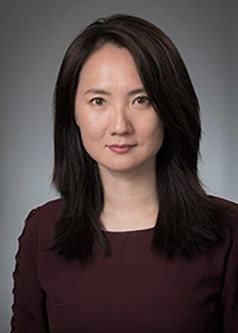
Angela D. R. Smith is an Assistant Professor at The University of Texas at Austin, specializing in human-computer interaction (HCI), computer supported cooperative work, and information sciences. Her research focuses on designing equitable sociotechnical interventions for homeless young adults in shelter networks, employing community-based participatory research and participatory design methods. She draws on critical race theory, intersectionality, and asset-based approaches to address systemic inequities in technology. Before her academic role, Angela worked as an IT Consultant, Cybersecurity Analyst, and UX Researcher at Airbnb and startups. Her interdisciplinary background bridges technical expertise with social justice advocacy. She holds a Ph.D. in Technology & Social Behavior from Northwestern University. Her work emphasizes ethical AI frameworks, culturally informed design, and social justice in computing education. Key themes include algorithmic equity, marginalized community engagement, and reimagining technology’s role in fostering social change.
Nicole Ziegler is an Associate Professor and Graduate Chair at the University of Hawaii at Manoa, holding a PhD from Georgetown University. Her research focuses on second language acquisition (SLA) in instructed contexts, with particular emphasis on task-based language teaching (TBLT), computer-assisted language learning (CALL), and maritime English communication. She investigates how corrective feedback in traditional and digital environments influences learners' perceptions and language development, while also exploring lexical and socio-pragmatic challenges in the commercial shipping industry. Her expertise spans interdisciplinary research methodologies, including mixed-methods and synthetic approaches to enhance SLA and CALL research quality. Dr. Ziegler collaborates with cooperating faculty such as Graham Crookes, Dustin Crowther, and others, contributing to the development of authentic teaching materials based on real-world maritime communication needs. Her work bridges theoretical SLA frameworks with practical pedagogical applications in digital and traditional settings.
Prof. Dr. Sören Ohlhus is a Professor of Linguistics and Language Didactics at the University of Hildesheim , specifically within the Institute for German Language and Literature . His academic career spans institutions including TU Dortmund University, University of Hamburg, and Bielefeld University, reflecting a deep engagement with discourse studies and educational linguistics. Current position: Professor (since 2021) Prior roles: Junior Professor (2017–2021), Acting Professor (2014–2015), Temporary Academic Councillor (2012–2017) Ohlhus's research focuses on discourse acquisition , development of written language use , and multimodal communication in educational settings. His work examines how interactive learning processes shape narrative and argumentative competence, particularly in primary and secondary schools. He has led and contributed to interdisciplinary projects like 'Writing between Languages and Cultures' and 'The Role of Family Support in Discourse and Writing Skills', funded by the Volkswagen Foundation and Federal Ministry of Education and Research. His 15 most recent publications explore themes across oral and written narrative structures, classroom discourse, and semiotic resource integration. Notably, his 2019 work on perspectivity in learning processes and 2017 studies on multimodal resources in arithmetic education highlight his interdisciplinary approach. He has also co-edited special issues on classroom interaction and published monographs on topics like narrative as a process and knowledge generation in practice fields. Ohlhus has collaborated extensively, co-authoring with scholars such as Uta Quasthoff, Friederike Kern, and Miriam Morek. His projects often bridge theoretical linguistics with practical educational applications, emphasizing the role of interactive contexts in textual competence development.
Sonia Liboria Maria Alessandra is an Adjunct Professor at the Department of Humanities, University of Catania, and teaches at the Special Teaching Structure in Ragusa. She holds a degree in Modern Foreign Languages and Literatures (University of Catania, 1991) and Modern Literatures (University of Catania, 1997), the latter earning her the Leonardo Sciascia degree prize. Graduate of University of Catania (1991, 1997) Collaborates with Instituto Cervantes as DELE examiner Peer reviewer for Cuadernos de Lingüística Hispánica Her research focuses span: Spanish as a second language instruction ICT integration in pedagogy Intercultural communication frameworks Translation theory and practice Literary text analysis Language assessment methodologies Recent publications emphasize gamification in language classrooms, cinematic intercultural competence, and fashion terminology acquisition. Scientific awards include the prestigious Leonardo Sciascia degree prize. She conducts seminars on: Spanish language education ICT application in linguistics Translation of literary works Intercultural mediation
Tonje Hilde Giæver is a Professor at Oslo Metropolitan University, Faculty of Education and International Studies, Department of Primary and Secondary Teacher Education. Her work focuses on digital literacy, teacher education, and the integration of information and communication technology (ICT) in educational settings. She leads projects like ENHANCE (strengthening teacher education for digital competence) and TEFF Academy (addressing teacher training amid school challenges). Her research spans wearable technologies, virtual learning environments, and ethical considerations in digital education. Giæver has co-authored numerous scientific publications, including studies on virtual collaboration, digital media in classrooms, and cyberethics. Her work emphasizes cross-disciplinary approaches and systemic strategies to address digital exclusion. Key projects include DiCTE (Developing ICT in Teacher Education) and ongoing studies on AI and digital citizenship in Norwegian schools. Her research collaborations extend to international institutions like the University of Malta and George Mason University. She contributes to academic dissemination through conferences and workshops, focusing on digitalization in education and teacher training.
Dr. Dijana Drandić is an Associate Professor at the Faculty of Educational Sciences , Juraj Dobrila University of Pula , specializing in Early and Preschool Education . As Lecturer in charge for courses like General Didactics and Intercultural Communication , she emphasizes inclusive practices and pedagogical innovation. Research Interests : Intercultural communication, inclusive education for children with developmental disabilities, music pedagogy, and ICT integration in special education. Key Projects : Collaborative work on ICT in Special Education , Montessori Adaptation for Disabilities , and intercultural readiness studies. Publications : 15+ works on intercultural sensitivity, traditional music in education, and bilingualism in multicultural kindergartens. Advising : Supervised 20+ theses, including studies on autism inclusion, Roma education, and creative workshops for special needs. Her recent work explores technology-enhanced learning for children with disabilities and curriculum design for intercultural competence. She also co-authored practical guides on ICT as Special Needs Support and Native Identity Development in Istrian contexts.
Kellie M. Gray is an Assistant Professor at the Department of English at Texas Tech University, specializing in Technical Communication & Rhetoric. She coordinates ENGL 2311: Introduction to Technical Writing and co-authored the textbook Guide to Technical Communication (2021). Research Interests: Visual rhetoric in digital spaces Ethical data analysis and digital humanities Technical communication pedagogy and practice Multimodal public pedagogy through emojis Her publications focus on intersections between digital rhetoric, social justice, and technical communication, including studies on emoji frequency in activism and code literacy. Recent works analyze how emojis function as multimodal tools for public engagement. Scientific Awards & Grants: MassMine Advancement Grant (2019-2022), Role: Co-PI, $325,000 NEH Digital Humanities Advancement Grant, $325,000 Gray contributes to the Digital Humanities Lab and UX Lab at Texas Tech, emphasizing interdisciplinary collaboration. She actively shapes technical communication curricula and advocates for ethical digital practices.
Mihwa Park is an Assistant Professor in the Department of Curriculum and Instruction at Texas Tech University, specializing in STEM education. With a decade of middle school science teaching experience in South Korea and dual master's degrees in physics and science education, she earned her doctorate in Science Education from the University at Buffalo. Her research focuses on integrating assessments with educational technologies to enhance conceptual understanding in science, particularly through interactive computer simulations. Education: Dual Master’s in Physics & Science Education (South Korea), Doctorate in Science Education (University at Buffalo) Current Role: Assistant Professor, Department of Curriculum and Instruction, Texas Tech University Her research explores formative assessment strategies in STEM classrooms, emphasizing data-based decision making and the application of computer models. Recent projects analyze achievement emotions in physics education, cross-disciplinary energy concepts, and the use of simulation-based assessments. Her publications demonstrate a consistent focus on leveraging technology for deeper conceptual understanding and improving teacher practices through data analytics. Key Research Areas: STEM Education, Physics Learning, Educational Technology, Formative Assessment, Cross-Disciplinary Science
Lena Tica is an Assistant Professor at the Department of Social and Human Sciences within the Faculty of Technical Sciences in Čačak, University of Kragujevac. She holds a PhD in Philological Sciences (English Language) from the University of Kragujevac (2022), alongside MA and BA degrees in English Language and Literature from the University of Belgrade (2011 and 2009). Her academic career at FTS Čačak began in 2009, advancing to her current position in 2023. Born: October 31, 1985 in Čačak Education: University of Belgrade (BA/MA), University of Kragujevac (PhD) Current Role: Assistant Professor (English Language) Her research spans English Language Teaching (ESL/ESP) , Anglo-American Literature , and Digital Education . Key areas include: postmodern literary analysis, AI integration in language instruction, and technology-driven pedagogical frameworks. Recent publications examine ChatGPT's impact on writing skills and social media's role in language acquisition. Notable collaborations include co-authors Lidija Palurović and Ivana Krsmanović across 12 international conference papers and journal articles since 2014. She actively participates in Erasmus+ projects, serving as coordinator since 2019, and contributes to conferences like ELALT and TIE. Her methodological innovations combine Community of Inquiry (COI) frameworks and Blended Intensive Programmes for engineering students.
Thomas Montgomery serves as an Assistant Professor in the Department of Chemistry and Biochemistry within Duquesne University's School of Science and Engineering. His academic journey began with a B.A. in Chemistry and Biology from St. Mary's College of Maryland, followed by Ph.D. and M.S. degrees in Organic Chemistry from the University of Chicago where he worked under Professor Viresh Rawal. After completing postdoctoral research at the University of Pennsylvania with Professor Amos B. Smith III focusing on organo-lithium chemistry, he joined Duquesne University in summer 2018. His research spans interdisciplinary domains including synthetic organic chemistry, natural product total synthesis, photophysical materials development, and computational analysis. The Montgomery lab integrates experimental laboratory work with computational methods using DFT on computing clusters, particularly focusing on N-oxide chemistry for nitrogen heterocycle synthesis and photophysical material design. Recent publication trends reveal a strong emphasis on [3+2] cycloadditions using tertiary amine N-oxides, aza-BODIPY synthesis, and computational elucidation of reaction mechanisms. Montgomery has secured significant research funding including NIH grant 1R15GM148917-01 for N-oxide applications in heterocycle synthesis and NSF grant CHE-2244151 for integrating chemical theory with computation and experiments. His educational scholarship examines pandemic-era adaptations in science education, particularly through Universal Design for Learning frameworks. Application of N-Oxides for the Synthesis of Nitrogen Heterocycles (NIH 1R15GM148917-01) Integration of Chemical Theory, Computation and Experiments at Duquesne University (NSF CHE-2244151) The Montgomery lab operates as an interdisciplinary research environment where students engage in both synthetic chemistry projects and computational modeling. Current work focuses on developing novel synthetic methodologies using persistent anions and hydrogen bonding scaffolds, with particular attention to photophysical materials and complex natural product synthesis pathways.
Bernhard Standl-Gruber is a Professor at the Faculty of Computer Science , affiliated with the Research Group Education, Didactics and Entertainment Computing . Previously, he served as a W1 Professor at Pädagogische Hochschule Karlsruhe until 2022. His work focuses on Computer Science Education and Computational Thinking , particularly in K-12 contexts. Research Interests: Digital Literacy, Artificial Intelligence in Education, Robotics, and Educational Technology. Awards: Forschungsstipendium (2015), Fulbright Grant for Teaching and Research (2015). His recent publications emphasize integrating Physical Computing into learning environments, analyzing student preferences in Robotics workshops , and exploring the impact of Generative AI on text literacies . He also investigates cognition-adaptive assistance tools for educational applications.
Dr Craig Testrow serves as an Assistant Professor in the Department of Physics at Durham University, specializing in the transformative impact of artificial intelligence on academic assessment methodologies across physics and computer science education. His research critically examines how large language models (GPT-3.5/GPT-4) disrupt traditional evaluation frameworks, with dual focus on programming education and physics assessment . Key investigations include human-AI performance comparisons in coding courses and the obsolescence of short-form physics essays due to AI capabilities, highlighting urgent challenges for academic integrity and pedagogical adaptation in the AI era. Recent publications reveal a concentrated trajectory analyzing AI's paradigm-shifting role in educational evaluation, particularly through empirical studies in high-impact journals. This work signals fundamental changes in how student competencies are measured, demanding institutional responses to maintain assessment validity amid rapidly evolving AI tools.
James Fenton is a Senior Lecturer in English for Academic Purposes at the University of Westminster's Centre for Education and Teaching Innovation (CETI). He holds an MA in Linguistics from University College London and a Postgraduate Certificate in Higher Education, and is a Fellow of the Higher Education Authority. With over 20 years of international teaching experience across 11 countries, he previously taught at De Montfort University and established English-language education businesses. His research focuses on cognitive processes underlying language ability, pedagogical approaches, educational assessment, and independent learning. Current investigations examine bilingual assessment frameworks in European education systems, while future work targets independent learning sustainability and student wellbeing in higher education. Publications demonstrate consistent focus on practical applications of linguistic theory, evolving from foundational work in language acquisition to contemporary studies on educational equity and academic English pedagogy. Research frequently addresses bilingual development, learner autonomy, and technology-enhanced language instruction. Honors include: Fellow of the Higher Education Authority Collaborates with European researchers on bilingual assessment projects and contributes to institutional curriculum development as module leader for two Academic English courses.
Po Kan Noble Lo is a Lecturer in the Division of Languages and Communication at Lancaster University. He holds prestigious fellowships including Fellow of the Royal Society of Arts (FRSA) and Chartered Linguist. His academic journey includes a Juris Doctor from The Chinese University of Hong Kong, a Master of Studies from the University of Oxford, and multiple degrees from The University of Hong Kong. He also serves as International Cooperation Director for ESP Korea (2025-2027) and is an active member of both the Law and Society Association and The Association of Law Teachers. Educational Background: Certificate in Computer Science for Lawyers, Harvard Law School Executive Education (Aug 2025) Certificate in Generative AI for the Legal Profession, University of California at Berkeley (Apr 2025) Juris Doctor, The Chinese University of Hong Kong (Oct 2022) Master of Studies, University of Oxford (May 2015) Master of Arts, The University of Hong Kong (Nov 2011) Bachelor of Arts, The University of Hong Kong (Dec 2009) Chartered Linguist, Chartered Institute of Linguists (Nov 2016 - present) Fellow, Royal Society of Arts (Aug 2015 - present) Noble Lo's research spans the intersection of language education, artificial intelligence, and higher education pedagogy. His work particularly focuses on AI-assisted language learning, self-regulated learning through mobile applications, and the impact of technology on educational outcomes. He has conducted comparative studies across multiple countries including Hong Kong, South Korea, Mainland China, the UK, and the USA, examining how cultural contexts influence language learning effectiveness. His recent work has increasingly explored the ethical implications of AI in education and human rights considerations. His publication portfolio demonstrates a clear evolution from traditional language instruction studies toward cutting-edge investigations of AI's role in education. The research reveals a strong emphasis on practical applications of technology in language learning environments, with particular attention to student motivation, engagement, and learning outcomes in both online and face-to-face settings. His work bridges theoretical frameworks with empirical evidence from diverse educational contexts. Scientific Awards: Most Popular Preprints Award: 1st Prize (Apr 2024) CPCE Active Scholar Awards 2024 (Sept 2024) Educational Technology Research and Development (ETR&D) 2024 Reviewer Excellence Award (Oct 2024) Educational Technology Research and Development (ETR&D) 2023 Reviewer Excellence Award (Oct 2023) The 8th LRC Law Reform Essay Competition 2021: Award Certificate and Letter of Appreciation (2021) Noble Lo has secured significant research funding for projects totaling over HK$2.4 million, demonstrating his ability to lead substantial research initiatives. His role as Principal Investigator on multiple projects indicates his leadership in the field. As an editorial board member for Frontiers in Sociology and Frontiers in Education, he contributes to scholarly discourse and quality control in his fields of expertise. His activities as a subject leader for university courses and adjudicator for English speaking competitions further demonstrate his commitment to advancing language education. Through his current projects including 'Investigating the Effectiveness of AI-Driven Personalized Feedback' and 'Adapting to AI in Higher Education,' Noble Lo is positioned at the forefront of educational technology research, exploring how artificial intelligence can be effectively integrated into language learning and academic writing instruction while maintaining educational quality and addressing ethical considerations.
Ivan Lukovic is a Professor at the Faculty of Technical Sciences, University of Novi Sad, specializing in database systems, information systems, and conceptual modeling. His research spans over two decades with consistent publication output, demonstrating expertise in domain-specific languages, business process modeling, and data science education. His educational background isn't explicitly detailed in the provided sources, but his extensive publication record and editorial roles suggest advanced academic training in computer science. His research primarily focuses on database systems, information modeling, and applications of these technologies in various domains including education and industry. Lukovic's research interests center around database systems, conceptual modeling, and domain-specific languages. His work demonstrates particular expertise in form-based modeling approaches, integrity constraints, and model-driven development methodologies. He has made significant contributions to the understanding of business application modeling, production process modeling in Industry 4.0 contexts, and educational approaches in computer science. His recent publications show a strong focus on practical applications of database and information systems research, particularly in the areas of production process modeling, educational technologies, and data integration. The articles demonstrate increasing sophistication in methodology and application scope, with recent work addressing contemporary challenges in AI-powered literature review assistance and explainable AI methods. Lukovic has served as guest editor for multiple journal issues, including special editions on computer science applications in management and sustainability, and explainable AI methods. His editorial work reflects recognition of his expertise by the academic community. His collaborative work spans numerous projects with colleagues at the University of Novi Sad and international partners. He has contributed to educational initiatives in data science, particularly through the development of academic study programs at his institution. His work on students' preferences in computer science education indicates active engagement with educational research and curriculum development. Lukovic's research has practical applications in industry settings, particularly in manufacturing and business process domains. His recent work on production process modeling for Industry 4.0 demonstrates how his theoretical research translates into real-world applications that address contemporary industrial challenges.