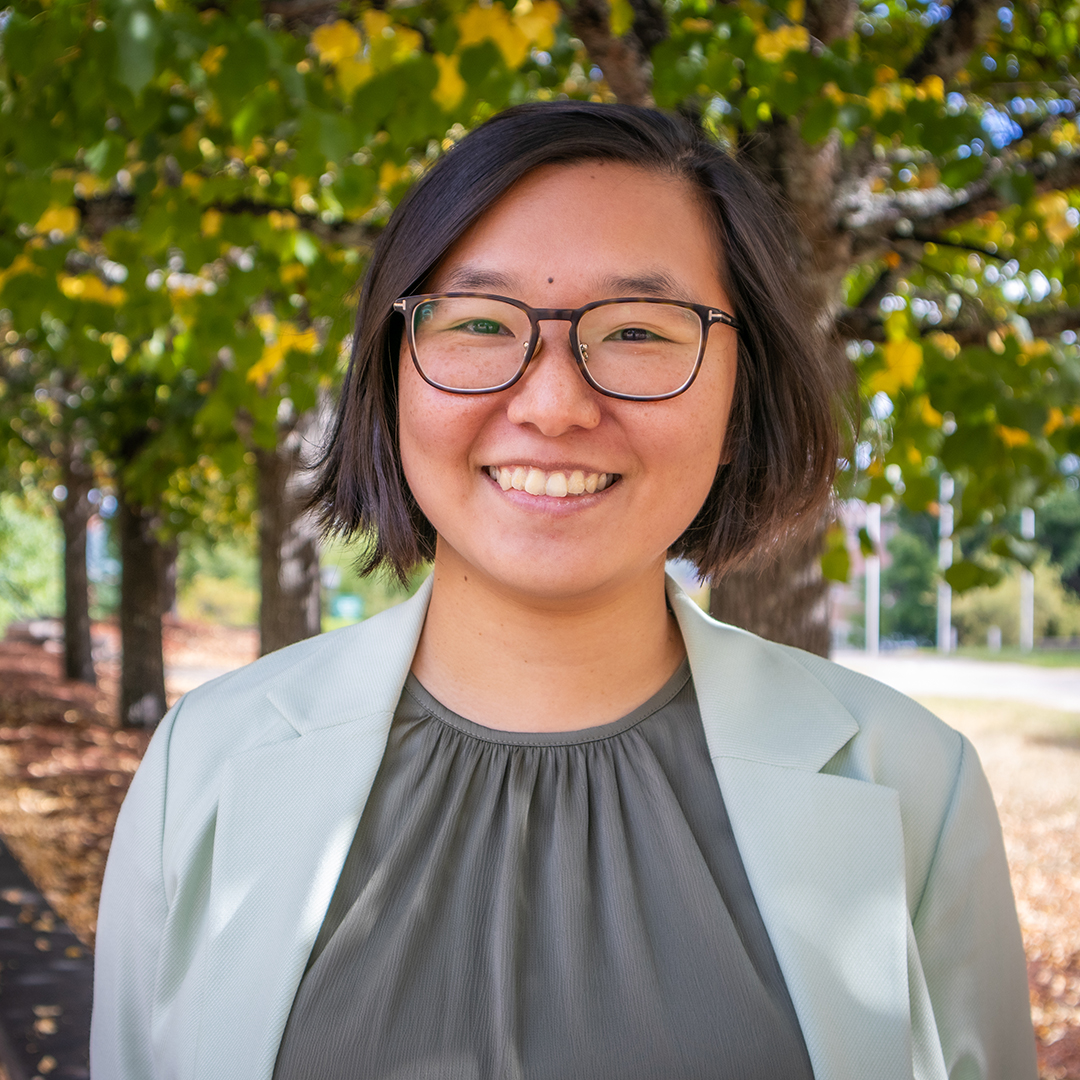
Radia Hannachi is a Senior Lecturer in Language Didactics at the University of Franche-Comté, affiliated with the research team Heritage and Creation in Text and Image (HCTI). Her work bridges language pedagogy and digital innovation, emphasizing: AI-driven writing assessment and generative tools Multimodal grammar instruction Collaborative digital literacy frameworks Her research, often co-authored with international collaborators, examines technology's role in reshaping language education. Recent publications highlight trends in generative AI applications, scientific text simplification, and social media discourse analysis. She actively contributes to CLEF initiatives, focusing on accessibility in academic communication. Key research domains include: Language Didactics : Active learning methodologies enhanced by digital tools Digital Writing : From mind mapping to AI-assisted co-creation Multimodal Communication : Integrating text, image, and data visualization She maintains a focus on practical pedagogical innovations, as evidenced in her development of virtual collaborative environments and strategies for technology integration in curricula.
Patricio Alejandro Mario Cabello Cadiz is an Assistant Professor at the Institute of Advanced Studies in Education , University of Chile , teaching graduate courses in qualitative methodology and collaborative problem-solving. He holds a Doctorate in Education from Complutense University of Madrid (2013), a Master's in Anthropology and Development (2008), and dual Bachelor's and Licentiate in Psychology (2004, 2005). 11-hour teaching load at UCH Primary affiliation: Faculty of Social Sciences His research focuses on digital education , collaborative learning , and student well-being , with key projects on computational thinking integration, cyberbullying, and digital skill assessment. Recent publications in Computers & Education and Teaching and Teacher Education analyze digital competencies and pedagogical identity. He mentors graduate theses on topics like immigrant student integration and mental health in schools . Grants include: Fondecyt_Anid Regular (2024-2028) on digital technologies and well-being IDEA R&D (2024-2026) for computational skill development Basal Financing Program (2014-2024) as part of the Center for Advanced Research in Education
Dr. Jennifer England serves as an Assistant Professor of Music Theory at the School of Music within the College of Arts and Architecture at Montana State University, a position she has held since fall 2022. She teaches courses in music theory and aural perception, including foundational and advanced coursework. Prior to her appointment at Montana State, she taught at the University of Delaware and Temple University, and as a graduate teaching associate at Ohio State University. Her educational background includes: Ph.D. in Music from Ohio State University (2016) M.A. in Music Theory from the University of Kentucky (2012) B.M. in Music from East Texas Baptist University (2010) Dr. England's research focuses on the intersection of music and mathematics, particularly through empirical and computational approaches to music analysis. She is also deeply engaged in music theory pedagogy, exploring innovative methods for teaching music theory and aural skills. Her work aims to bridge theoretical concepts with practical classroom applications, enhancing student learning in the music discipline. In 2024, Dr. England published two articles in the Journal of Music Theory Pedagogy. One addresses writing pedagogy in the music theory classroom, offering strategies for integrating writing assignments. The other is a review of a textbook on aural skills training. These publications reflect her commitment to advancing music theory education through scholarly contributions and critical evaluation of teaching resources. Dr. England has been recognized with the following honors: Nominated for the Pedagogy of Music Theory Award by the Society for Music Theory (2024) Nominated for the Teaching Innovation Award by Montana State University (2023) Recipient of the Dean's Excellence Award for Service from the College of Arts & Architecture (2023) Dr. England advises students in the School of Music at Montana State University. She is actively involved in professional service, serving as President Elect of the Rocky Mountain Society for Music Theory, on the editorial review board for the Journal of Music Theory Pedagogy, and in various committee roles including the 2024 Pedagogy into Practice Program Committee. While specific research laboratories are not mentioned, Dr. England collaborates with colleagues through professional organizations such as the Rocky Mountain Society for Music Theory and the Society for Music Theory, contributing to the broader academic community in music theory and pedagogy.
Flourice Richardson serves as Assistant Professor and Director of Technical and Professional Writing in the Department of English at North Carolina A&T State University. Her academic leadership spans curriculum development, research on technology ethics, and Black feminist pedagogy. Her research focuses on critical intersections of race, gender, rhetoric, and technology, with emerging expertise in AI ethics and social justice. Key projects include the forthcoming co-authored book Consent Denied: Black Women, Eugenics, and the Politics of Forced Reproduction (2027) and practical guides for AI ethics education integration. Recent publications demonstrate interdisciplinary reach across technical communication, literature, and computing education. Her work consistently addresses systemic inequities through frameworks like Black feminist rhetoric and Afrofuturism, with applications spanning classroom pedagogy to AI development ethics. Richardson's educational foundation includes: Ph.D. in English Studies (Illinois State University, 2018) Graduate Certificate in Women’s & Gender Studies (Illinois State University, 2015) Graduate Certificate in Technical and Professional Communication (East Carolina University, 2009) M.A. in English & African American Literature (NC A&T, 1996) B.A. in English (NC A&T, 1995) Her scholarship actively shapes conversations in technical communication and AI ethics through practical frameworks for curriculum development, as evidenced by her 2025 SIGCSE publication on institutional implementation strategies for AI ethics education.
Santa Esmeralda Tejeda Torres serves as an Adjunct Researcher at Tecnológico de Monterrey's Institute for the Future of Education, where she contributes to the Socially Oriented Interdisciplinary STEM Education Research Group (SOI-STEM). Her work bridges physics education, technology integration, and gender-inclusive pedagogical approaches to advance STEM learning. Industrial Physicist Engineer, Tecnológico de Monterrey Master of Science in Educational Physics, Centro de Investigación del IPN PhD in Educational Innovation, Programas en Línea Her research centers on interdisciplinary STEM education with emphases on affective domains in mathematics learning, gender perspectives, and technology-enhanced environments. She pioneers applications of machine learning, augmented reality, and telepresence systems to overcome conceptual barriers in physics education while promoting equity. Her work examines kinematics graph interpretation, transversal competency development in engineering students, and sustainable educational technology ecosystems. Analysis of her 2017-2024 publications reveals evolving expertise from foundational physics education research toward cutting-edge AI integration. Key trajectories include gender-sensitive mathematics instruction, holographic telepresence for distance learning, and machine learning applications that enhance cognitive assessment. Her work consistently addresses UN Sustainable Development Goals for Quality Education and Gender Equality through technology-driven pedagogical innovations. Mexican Researcher Certification - Level 1 While specific student advisement details aren't documented, her teaching portfolio includes Applied Research Projects, Computational Modeling courses, and Scientific Writing Workshops. Her research group SOI-STEM operates within institutional frameworks supporting educational innovation grants, though specific funding sources aren't detailed in available materials. As a core member of the Socially Oriented Interdisciplinary STEM Education Research Group (SOI-STEM), she collaborates on developing equity-focused STEM initiatives that integrate emerging technologies with culturally responsive pedagogy, particularly targeting gender gaps in mathematics and physics education through affective domain interventions.
Lubomir Ivanov is a Professor of Computer Science and current Chair of the Computer Science Department at Iona University, where he also serves as Game Development Coordinator and primary contact for all undergraduate programs. He joined Iona in 1999 after completing his academic training at Stevens Institute of Technology and has established himself as a versatile educator teaching courses ranging from computer architecture to virtual reality development. Education: Ph.D. in Computer Science, Stevens Institute of Technology M.S. in Computer Science, Stevens Institute of Technology B.S. in Computer Engineering, Stevens Institute of Technology Dr. Ivanov's research demonstrates exceptional interdisciplinary breadth, with dual pillars in Natural Language Processing and Applied Virtual Reality . His NLP work pioneers authorship attribution techniques using linguistic features from phonetic patterns (alliteration, assonance) to semantic dimensions (abstractness/concreteness), particularly for historical texts like Thomas Paine's writings. Simultaneously, his VR research creates impactful educational tools, including anti-bullying simulators with facial-expression recognition and mental health applications for non-suicidal self-injury assistance, reflecting strong collaborations with psychology departments. Analysis of his 15 most recent publications (2016-2024) reveals an evolving trajectory: early work focused on phonetic features for authorship analysis, progressively incorporating semantic and sentiment features, while his VR research matured from basic environments to sophisticated systems integrating real-time facial recognition and user experience optimization. Both strands consistently address real-world problems through computational methods. Scientific Awards: None mentioned in source material. Dr. Ivanov actively mentors students on research projects including the 'Bully' virtual environment and NSSI assistance software, securing collaborative grants with psychology departments. His leadership extends to university governance through the Faculty Senate and previous department chairmanship (2006-2009), alongside curriculum development for game development courses targeting non-CS majors. He directs a cross-disciplinary research ecosystem centered on the Game Development concentration, integrating computer science with education and psychology to create socially impactful technologies through ongoing VR and NLP innovation.
Dr. Jose Badillo Carlos serves as an Assistant Professor in the Department of World Languages within the College of Arts & Sciences at Queens University of Charlotte. His academic journey includes a Ph.D. in Hispanic and Cultural Studies from Michigan State University, complemented by advanced degrees in Spanish Language and Literature from Northern Illinois University. Ph.D., Hispanic and Cultural Studies, Michigan State University M.S., Spanish Language and Literature, Northern Illinois University B.A., Spanish Language and Literature, Northern Illinois University Dr. Badillo Carlos specializes in the analysis of Mexican cultural productions examining state violence and corruption through contemporary literature, music, and film. His research particularly focuses on narcocorridos (drug ballads), cinematic satires like Luis Estrada's works, and representations of Chicanx/Latinx communities in media and higher education. He actively investigates how violence manifests in cultural narratives through mediums ranging from Narcos to Breaking Bad , while connecting these analyses to broader societal structures. His recent work has expanded into digital humanities, exploring AI integration in language pedagogy and technological tools for translation learning. His scholarly output demonstrates consistent engagement with Mexican political representation across multiple platforms—peer-reviewed publications in MIFLC Review and Aula lírica , book reviews, and frequent conference presentations at venues like SAMLA and MIFLC. These works collectively trace evolving methodologies from traditional literary analysis toward digital scholarship. Summer Support Fellowship (Michigan State University, $4,500.00, 2021) Dissertation Completion Fellowship (Michigan State University, $8,000.00, 2019) Dr. Johannes Sachse Memorial Award (Michigan State University, $1,128.00, 2018) Outstanding Graduate Student Award (Northern Illinois University, 2014) As an active academic citizen, Dr. Badillo Carlos serves as Faculty Advisor for the Latin American Student Organization (LASO), sits on Queens' Student Experience Committee, and contributes to editorial boards including Revista Letral and Label Me Latina/o Journal . He produces the student-centered podcast Descubriendo Momentos , which highlights student narratives both on and off campus. His community engagement extends to keynote speeches for organizations like ORGULLO at JELD-WEN and Somos Uno for Tepper Sports & Entertainment, where he addresses Latino representation in Hollywood and immigration policy impacts.
Doris Chow is an active Assistant Professor of Psychology at St. Thomas University (STU), where she has served on faculty since 2022. Her research laboratory focuses on multisensory perception and cognition, investigating how humans integrate sensory information across the lifespan through experimental studies with human participants. She teaches core psychology courses including Introduction to Psychology, Perception, and Visual Perception, while mentoring undergraduate researchers in experimental design and scientific communication. Her educational background spans a Bachelor of Social Sciences and Master of Philosophy from the University of Hong Kong, followed by a Ph.D. in Developmental and Brain Sciences from the University of Massachusetts Boston and postdoctoral training at the University of British Columbia Vancouver. Dr. Chow's research examines the neural mechanisms of multisensory integration, with emphasis on how perceptual abilities evolve from infancy through adulthood and the consequences when these processes malfunction. Her work bridges experimental psychology, vision science, and developmental neuroscience through controlled laboratory experiments. Current research trends in her publications reveal consistent focus on cross-modal interactions (particularly audio-visual and audio-tactile), developmental trajectories of perception, and the neural underpinnings of sensory integration. Recent work increasingly incorporates infant studies and computational approaches to understanding perceptual organization. Scientific recognition includes: NSERC Discovery Grant (awarded summer 2024) Harrison McCain Foundation research funding Dr. Chow maintains an active mentoring program where students develop research skills through honors theses and NSERC-funded projects. Her lab has produced multiple conference presentations at venues like Vision Sciences Society and Science Atlantic, with recent graduates accepted into competitive graduate programs including the Max Planck School of Cognition. She collaborates with community partners such as the Museum of Science in Boston (2014-2018) and continues this outreach approach at STU. The Multisensory Perception and Cognition Laboratory involves undergraduate researchers in all stages of experimental work, from participant recruitment to data analysis. Current projects examine haptic exploration strategies, sound-shape correspondences, and optic flow perception, with strong emphasis on developing students' academic writing and technical skills for research careers.
Dr. Katarzyna Wądołowska-Lesner serves as Senior Lecturer at the Institute of Russian and Eastern Studies within the Faculty of Languages at the University of Gdańsk, concurrently holding the position of Deputy Director for Education at the Institute. Her academic career centers on advancing Russian language pedagogy through empirical research on textual comprehension and didactic methodologies. Her educational foundation includes a Master's degree in Russian Philology (2004) and a PhD in Humanities specializing in Linguistics (2013), both earned at the University of Gdańsk. These qualifications underpin her expertise in Slavic linguistics and language education. Wądołowska-Lesner's research focuses on quantifiable aspects of text readability, particularly examining compositional-graphic elements, paragraph structure, and linguistic difficulty metrics in Russian didactic materials. Her work investigates multimedia applications in vocabulary acquisition, silent versus aloud reading comprehension, and cross-linguistic challenges for Polish learners of Russian. This research bridges theoretical linguistics with practical classroom applications, emphasizing empirical validation of teaching strategies. Analysis of her 15 most recent publications reveals a consistent trajectory in text readability research, evolving from foundational studies on paragraph usage (2012) and multimedia tools (2011) toward sophisticated difficulty measurement formulas (2010) and business Russian applications (2008). Her scholarship demonstrates methodological rigor through student-based empirical studies while maintaining strong relevance to Slavic language education curricula. As an active member of the Polish Neophilological Society and the Polish Association of Teachers and Lecturers of the Russian Language, she contributes to national academic discourse. Her service as Deputy Director for Education at the Institute of Russian and Eastern Studies reflects institutional recognition of her administrative capabilities alongside scholarly contributions. While specific grant details are unreported, her sustained publication record indicates consistent research activity within the University of Gdańsk's academic framework.