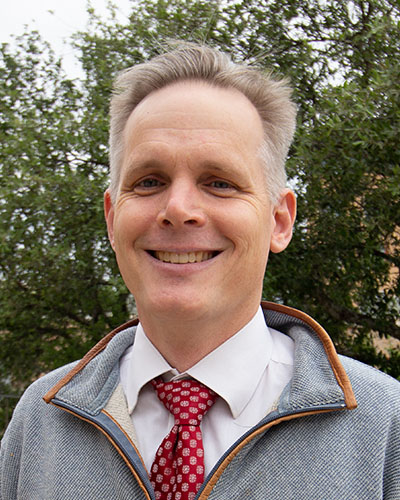
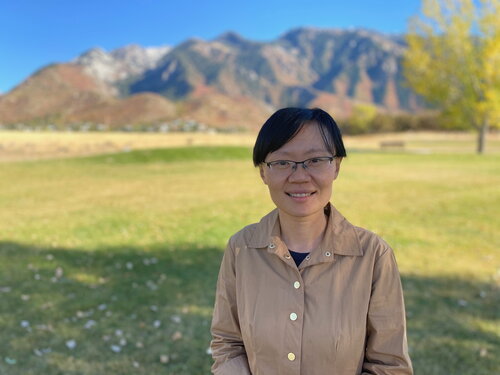
Professor Luke Harding is a faculty member at the Department of Linguistics and English Language , Lancaster University , within the School of Social Sciences . His work bridges applied linguistics, language assessment, and critical discourse studies, with a focus on the ethical and societal implications of testing. Research Interests : Language testing and assessment, World Englishes and English as a Lingua Franca (ELF), second language listening and pronunciation assessment, diagnostic approaches to language evaluation, and language assessment literacy. Recent projects integrate digital technology and corpus linguistics into testing frameworks. Publications : Published extensively in Language Testing , Applied Linguistics , and Language Assessment Quarterly . Co-edited the Routledge Handbook of Language Testing (Second Edition) (2022), a key reference work in the field. Teaching : Leads modules in Language Test Construction and Evaluation , Issues in Language Testing , and Statistical Analysis for Language Testing within the university's distance MA program. Leadership : Convened the Language Testing Research Group with colleagues Tineke Brunfaut and John Pill, advancing interdisciplinary approaches to assessment.
Assoc. Prof. Hana Vančová, PhD., is a dedicated academic at Trnava University's Faculty of Education, where she has served as an Associate Professor in the Department of English Language and Literature since 2013 (promoted from Assistant Professor following her 2022 habilitation). Currently Deputy Head of Department for Education, she oversees curriculum development and serves as study advisor for single-subject and combined English language teacher education programs at bachelor's, master's, and doctoral levels. Her institutional commitment spans over a decade with full-time employment since 2013. Education: 2004–2009: Master of Arts (Mgr.) in English Language and Literature – Slovak Language and Literature, Faculty of Education, Trnava University 2009–2012: Doctor of Philosophy (PhD.) in Pedagogy, Faculty of Education, Trnava University 2019: Professional Development: "Teaching languages in the digital era: the best apps, web platforms and ICT solutions for learning languages", Institute for Training, Employability and Mobile Learning Hana Vančová's scholarly work centers on English pronunciation pedagogy , with pioneering research in technology-enhanced instruction . Her primary domains include phonetics and phonology , lexicology , and digital language learning tools , investigating how AI, mobile applications, and multimedia resources optimize pronunciation acquisition. She bridges theoretical linguistics with practical classroom applications through ergonomic educational design, emphasizing learner-centered methodologies that address sociolinguistic factors like accent identity and intelligibility. Her habilitation thesis established her as a key innovator in pronunciation technology. Analysis of Vančová's publication trajectory (2014-2024) reveals a decisive shift from foundational studies on Slovak learners' pronunciation errors toward cutting-edge research on AI-driven pronunciation training. Her recent work explores karaoke-based methods and ethical AI implementation in CALL (Computer-Assisted Language Learning), highlighting human-AI interaction dynamics. The consistent thread is her commitment to making pronunciation instruction accessible through technological innovation, with publications increasingly addressing inclusivity, ethical considerations, and ergonomic design in digital language learning environments. While no specific scientific awards are documented beyond her academic promotion, Vančová's habilitation procedure—evaluated by an international committee including scholars from Poland, Czech Republic, and Slovakia—represents significant scholarly recognition. Her work has received 36 citations (14 foreign, 22 domestic) as of 2021. As study advisor for English language teacher training programs, Vančová mentors students across bachelor's, master's, and doctoral studies, guiding curriculum development for profile subjects in phonetics, lexicology, and digital language education. She maintains structured consultation hours (Wednesdays 10:00-11:30, study advising 11:30-13:00 via MS Teams) and demonstrates sustained research productivity through monographs, textbooks, and peer-reviewed articles. Though specific grant funding isn't detailed, her habilitation thesis exemplifies capacity for substantial scholarly projects with practical pedagogical impact. No dedicated laboratories or formal research teams are documented; Vančová's academic activities operate within the Department of English Language and Literature framework, focusing on individual research initiatives and departmental leadership in educational technology integration.
Renáta Pavlová, PhD is a Lecturer for Slovak language at the Institute of Slavic Linguistics and Cultural Studies, Faculty of Humanities, University of Regensburg since September 2020. Previously, she served as a Scientific Assistant at Constantine the Philosopher University in Nitra (2017-2020) and as a Slovak Language Lecturer at the Slavic Institute, University of Cologne (2016-2013). Her academic journey includes completing her PhD at Constantine the Philosopher University in Nitra in 2011 with a dissertation on 'Slovak as a Foreign Language.' Dr. Pavlová's educational background includes: Studies in Slovak Language and Literature – German Language and Literature at Constantine the Philosopher University, Nitra (1998-2003) PhD in Slovak as a Foreign Language from Constantine the Philosopher University, Nitra (2011) Dr. Pavlová's research focuses on three interconnected areas: Slovak as a foreign language with emphasis on linguodidactic aspects, machine translation between German and Slovak, and the development of reading comprehension in foreign language learning. Her work in linguodidactics examines effective teaching methodologies for Slovak language acquisition, while her machine translation research analyzes error patterns and quality assessment. The reading comprehension strand investigates intervention programs for developing literacy skills in both native and foreign language contexts, with applications across primary and secondary education levels. Her recent publications demonstrate a consistent focus on the intersection of language learning, technology, and literacy development. The trend shows increasing attention to machine translation quality assessment, particularly examining morphosyntactic and lexical errors in German-Slovak translation. Her work also reveals a strong commitment to practical applications, with numerous publications on language testing, certification (particularly ECL exams), and intervention programs for reading comprehension. The collaborative nature of her research is evident through multiple co-authored works with colleagues across various institutions. Dr. Pavlová has been involved in several significant research projects including VEGA projects on reading comprehension development (2019, 2017), APVV projects on machine translation error classification (2018), and KEGA projects on language preparation (2019). She also contributed to international initiatives like EUROPODIANS (2009) for developing online Slovak courses and EURONOUNCE (2009) analyzing Slovak pronunciation by German speakers. As an educator, Dr. Pavlová teaches various Slovak language courses at University of Regensburg, including Slovak I, Slovak III (general and translation-specific), Slovak Conversation, and specialized seminars on Machine Translation. She actively participates in cultural outreach, having recently attended events with the Slovak Ambassador and the President of the Slovak Republic, demonstrating her role in promoting Slovak language and culture internationally.
Dr Zoe Handley is a Senior Lecturer in the Department of Education at the University of York . With a PhD in Informatics from the University of Manchester and a BSc in French Language Technology from UMIST, her career spans roles such as Research Fellow at the University of Nottingham (2007-2009) and Oxford University Press Research Fellow at the University of Oxford (2009-2011). She joined York in 2011 and was promoted to Senior Lecturer in 2017. Education BSc in French Language Technology, UMIST (2001) PhD in Informatics, University of Manchester (2006) Research Interests Her research focuses on second language oral fluency and computer-assisted language learning (CALL) . Key projects include a British Academy-funded investigation into fluency measurement and a British Council-funded study on study-abroad impacts on fluency. She also explores technology's role in pronunciation training, teacher cognition, and digital tools like wikis and smartphones. Scientific Awards Vice Chancellor’s Award for Teaching (2014) Oxford University Press Research Fellowship (2009-2011) Teaching & Leadership She has taught TESOL, applied linguistics, and research methods, leading innovations recognized by the Vice Chancellor. Administrative roles include Director of Taught Masters (2014-2016) and Programme Leader for the interdisciplinary MA in Social Research. Laboratory & Teams She is affiliated with the Centre for Advanced Studies in Language and Education (CASLE) , contributing to interdisciplinary research and supervising doctoral students in CALL-related areas.
Rodica Frimu is an Assistant Professor of French specializing in Second Language Acquisition at the University of Tennessee, Knoxville. She holds a Ph.D. from Indiana University, Bloomington, and serves as the Language Program Director for lower-division French courses. Ph.D., Indiana University Her research focuses on the interplay between grammatical organization and working memory limitations in real-time deployment of L2 grammatical knowledge. Key areas include error detection mechanisms, subject-verb agreement, and phonological phenomena like liaison and enchaînement in French. Publications analyze computational cycles in language processing and inferencing strategies in native and non-native speakers. Recent articles explore feature-based vocabulary selection in the French future tense, inference-driven error detection in subject-verb agreement, and instructional impacts on L2 phonology. These works span journals like Glossa and Lingua , emphasizing morphosyntactic and phonetic challenges in French acquisition.
Nicole Ziegler is an Associate Professor and Graduate Chair at the University of Hawaii at Manoa, holding a PhD from Georgetown University. Her research focuses on second language acquisition (SLA) in instructed contexts, with particular emphasis on task-based language teaching (TBLT), computer-assisted language learning (CALL), and maritime English communication. She investigates how corrective feedback in traditional and digital environments influences learners' perceptions and language development, while also exploring lexical and socio-pragmatic challenges in the commercial shipping industry. Her expertise spans interdisciplinary research methodologies, including mixed-methods and synthetic approaches to enhance SLA and CALL research quality. Dr. Ziegler collaborates with cooperating faculty such as Graham Crookes, Dustin Crowther, and others, contributing to the development of authentic teaching materials based on real-world maritime communication needs. Her work bridges theoretical SLA frameworks with practical pedagogical applications in digital and traditional settings.
Miroslaw Pawlak is affiliated with Adam Mickiewicz University in Poznan, Poland, focusing on second language acquisition and language learning psychology. Key research areas: Emotional dynamics in language classrooms, strategic grammar instruction, blended learning environments Recent work explores foreign language enjoyment/boredom, grit in SLA, and technology-mediated learning Publications from 2025 investigate: Emotion mediation in Chinese student engagement Pronunciation knowledge development through explicit/implicit learning Playfulness as a counterbalance to language learning boredom His work employs advanced statistical modeling and mediation analysis to understand affective factors in multilingual education contexts.
Aurore Patricia Mroz serves as Associate Professor of French in the Department of French and Italian at the University of Illinois, holding key administrative roles including Director of Graduate Studies, Graduate Program Advisor for the Second Language Acquisition Teacher Education (SLATE) program, Director of French Around the Corner, and Co-Director of a Center of Excellence. Her academic credentials include a Ph.D. and M.A. in Foreign Language and ESL Education from The University of Iowa, and an M.A. in Rhetorics of Arts from Université de Pau et des Pays de l'Adour (France). Dr. Mroz's research investigates the nexus of mobile technology and language acquisition, with particular focus on study abroad contexts. Her work employs mixed methods and complex dynamic systems theory to examine smartphone impacts on language proficiency development, social attachment, and crisis management during international experiences. Key areas include phonetics of French, language justice, and computer-assisted language learning. Recent publications demonstrate consistent thematic focus on mobile technology's role in mediating language learning outcomes and social dynamics during study abroad, with methodological emphasis on longitudinal case studies and microgenetic analysis. Her scholarly contributions have been recognized through: ACTFL-NFMLTA/MLJ Emma Marie Birkmaier Award for Doctoral Dissertation Research in World Language Education (2013) ACTFL Research Priorities Award (2019) MwALT Graduate Student Presentation Award (2011) As Graduate Program Advisor for French SLATE, Dr. Mroz oversees student training while directing outreach initiatives like French Around the Corner. Her leadership in the Center of Excellence supports interdisciplinary research in language education and technology integration.
Yiqiang Wu serves as Professor of Teaching English as a Second Language and Graduate Coordinator for TESL within the Department of Special Education, Language, and Literacy at The College of New Jersey's School of Education. His 30-year academic career at TCNJ includes progressive appointments from Assistant Professor (1995) to current Professor (2019-present), with continuous leadership as TESL Program Coordinator since 1996. His educational background includes: Ph.D. in Curriculum and Instruction, Texas A&M University (1992) M.A. in English Literature and Linguistics, Texas A&M University (1989) Wu's research centers on second language acquisition in transnational contexts, with particular emphasis on Chinese-American educational interfaces. His work bridges theoretical linguistics and classroom practice through investigations of language assessment methodologies, sociocultural dimensions of bilingual education, and technology-enhanced language learning. Current projects examine motivational dynamics in heritage language acquisition and cross-cultural communication challenges in U.S. educational settings. Analysis of his 20+ publications reveals consistent focus on practical applications of language theory, with evolving emphasis from foundational language skills (1990s) to contemporary sociopolitical dimensions of multilingual education (2020s). His scholarship demonstrates strong alignment with federal priorities in bilingual teacher development and immigrant student support. Award recognition includes: Certification of Excellence Award in Teacher Education (NJ DOE, 2012) Wu directs substantial grant-funded initiatives including the $3.5M USDOE Back to Community Bilingual Multilingual Teacher Certification Project (2024-2029) and the $600K MUSIC grant addressing urban immigrant EL challenges. His sustained funding record since 2002 demonstrates significant impact in bilingual education policy and practice. As TESL Program Coordinator, he oversees comprehensive teacher preparation pathways and maintains active collaboration with New Jersey school districts through the Center for Future Educators and professional development partnerships.
Shawn Loewen serves as Professor and Associate Chair for Graduate Studies in Michigan State University's Department of Linguistics, Languages, and Cultures within the College of Arts & Letters. He directs the Second Language Studies (SLS) program and teaches second language acquisition and quantitative research methods courses. His educational background includes an MA from Temple University and PhD from the University of Auckland. Loewen's research centers on instructed second language acquisition (ISLA) , second language interaction , and quantitative methodology , with particular focus on bridging SLA research and classroom practice. He investigates how teachers engage with research and how mobile-assisted language learning impacts pedagogy. His recent publications reveal strong trends in mobile language learning effectiveness (Duolingo/Babbel studies), research-practice interface challenges, and methodological rigor in SLA. He examines nonverbal feedback mechanisms, synchronous communication platforms, and pronunciation acquisition through both empirical and theoretical lenses. His scientific recognition includes: Fulbright award for Polish University collaboration (2021) As SLS program director, Loewen fostered the graduate community that earned MSU's 2018 Outstanding Graduate Program Community Award. Since 2018, he has served as associate editor of The Modern Language Journal while securing research grants including the Fulbright. Though specific advisees aren't listed, his leadership roles indicate active graduate mentorship across second language studies. Loewen maintains active involvement in the SLS program and collaborates on language learning technology projects, frequently addressing media inquiries about language app efficacy as seen in Kiplinger's 2024 coverage.
Christopher Botero serves as Associate Professor and Program Director in the Department of English & World Languages at Augusta University's Pamplin College of Arts, Humanities, and Social Sciences. He additionally coordinates the BA World Language Education programs and MAT World Languages program within the College of Education & Human Development. His academic credentials include a Ph.D. in Spanish from Pennsylvania State University (2011), M.A. in Spanish from the same institution (2004), and B.A. in Linguistics, Comparative, and R from the State University of New York (2001). Dr. Botero's research centers on Hispanic linguistics with specialization in phonetics and phonology, second language acquisition, and language teaching methodology. His work examines Spanish sound systems, bilingual code-switching phenomena, and computer-assisted language learning applications. He actively develops educational resources for language instruction and disability comprehension within Spanish-speaking contexts. His publication record reveals consistent focus on L2 phonological acquisition, particularly how instructional methods and digital tools impact pronunciation development. Recent work analyzes perceptual feedback mechanisms in language production while earlier research investigated phonetic carryover effects in bilingual speech. Among his professional recognitions are the American Association of Teachers of Spanish & Portuguese (GA Chapter) 'Professor of the Year' award (2014) and Augusta State Center of Teaching and Learning's 'Caught in the Act of Great Teaching' award (2012). Additional honors include Alpha Mu Gamma Honor Society membership (2011) and Bunton-Waller Scholarship Award (2008). Dr. Botero maintains extensive service commitments across departmental, college, and university levels. He currently serves on the Foreign Language Academic Advisory Committee (FLAAC) and Georgia DOE K-16 World Languages Advisory Committee while previously contributing to promotion/tenure committees, curriculum design initiatives, and textbook selection processes. As codirector of the Linguistics Certificate program and coordinator of world language teacher education pathways, he shapes pedagogical training for future language educators across multiple degree programs.
Gillian Lord is a Professor of Hispanic Linguistics at the University of Florida's Department of Spanish and Portuguese Studies, affiliated with the College of Liberal Arts and Sciences. She holds administrative roles as Associate Dean for Undergraduate Affairs and Director of the Academic Advising Center. With a Ph.D. in Hispanic Linguistics from Penn State University (2001), she specializes in second language acquisition, particularly Spanish phonetics/phonology and technology-enhanced language pedagogy. Her research explores effective teaching methods, study abroad outcomes, and digital innovations in language learning. She has directed UF's lower-division Spanish program and served as Department Chair (2010-2021). Education: Ph.D. in Hispanic Linguistics, Penn State University, 2001 M.A. in Spanish Literature, University of Virginia, 1997 B.S. in Spanish and English, Vanderbilt University, 1993 Research Interests: Gillian's work focuses on optimizing language learning through technology, including her digital textbook Contraseña . She investigates L2 phonology acquisition, the role of phonological memory, and compassionate pedagogical approaches to language placement. Her publications span journals like Second Language Research and Practice , Foreign Language Annals , and CALICO Journal , emphasizing real-world applications of digital tools and intercultural competence development. Recent Trends in Articles: Recent work addresses pandemic-driven educational shifts, textbook modernization, and the integration of maker culture into language learning. She critiques traditional language requirements while advocating for adaptive digital curricula and inclusive assessment strategies. Grants & Advising: Gillian has advised numerous graduate instructors and led initiatives to improve language program articulation. She collaborates on projects funded through interdisciplinary grants exploring technology's role in fluency development and intercultural awareness. Labs/Teams: Her work involves collaboration with the University of Florida's Academic Advising Center and digital language resource development teams. She actively contributes to professional networks like CALICO and ADFL.
Michael Rushforth serves as Assistant Dean for Experiential Learning Initiatives and Professor of Instruction in the Department of Modern Languages and Literatures at the University of Texas at San Antonio's College of Liberal and Fine Arts, where he bridges academic leadership with innovative language education practices. His research spans computational linguistics, virtual reality applications in language pedagogy, dialogue systems for tactical questioning, and accessibility solutions for visually impaired learners. He integrates artificial intelligence with speech technologies to develop immersive language learning environments, with particular focus on Spanish fluency assessment and cross-cultural communication frameworks. His work addresses critical gaps in accessible linguistics education and equitable technology implementation. Recent publications reveal a trajectory from foundational dialogue system research toward AI-driven language assessment tools, demonstrating consistent innovation in merging theoretical linguistics with practical educational technology. His 2024 dataset for Spanish fluency prediction exemplifies this evolution, building upon earlier work in virtual human interactions and tactical questioning systems developed since 2001. Rushforth secured a $74,750 grant for an Intelligent Virtual Reality System for Language Learning (2020-2022) and maintains active conference engagement, presenting at Linguistics Society of America meetings on accessibility, pandemic-era online teaching adaptations, and virtual reality applications across national and international venues including Washington DC, San Francisco, and Salt Lake City.
Aaron Braver is an Associate Professor and Director of Linguistics at the Department of English, Texas Tech University. He investigates phonetics, phonology, and their interface through both theoretical and experimental approaches, with a focus on South African Bantu languages like Xhosa. Ph.D. in Linguistics, Rutgers University (2013) B.A. in Linguistics and Linguistic Anthropology, Brandeis University His research spans three interconnected projects: Bantu (morph)phonology: Examining phonotactic generalizations in noun class morphology, uncommon sounds (e.g., Xhosa’s velar ejective affricate), and incomplete neutralization phenomena. Incomplete Neutralization: Modeling phonetic-phonological interactions in cases where contrasts persist despite phonological identity. Gesture in Language Learning: Interdisciplinary studies on whether gesturing avatars enhance computer-based L2 pronunciation learning, collaborating with psychology and computer science researchers. Recent publications highlight trends in phonetic constraint modeling (2023, 2019), Bantu morphophonology (2020, 2016), and gesture-based pedagogy (2020, 2019). He leads the Phonetics and Phonology Linguistics Lab (PPLL) at TTU.
Yunwen Su serves as Assistant Professor and Director of the Chinese Language Program in the Department of East Asian Languages and Cultures at the University of Illinois Urbana-Champaign, with additional appointments in Linguistics and the Center for East Asian Languages and Cultures. Her research centers on second language acquisition, particularly pragmatic and interactional competence development in Chinese language learning. Education: Ph.D. in Second Language Studies, Indiana University Bloomington M.A. in Applied Linguistics and TESOL, Xi'an Jiaotong University B.A. in English, Xi'an Jiaotong University Dr. Su investigates acquisition, pedagogy, and assessment of L2 pragmatics, examining learners' pragmatic production through linguistic approaches. Her recent work explores nonproductive aspects of pragmatic competence focusing on prosody-pragmatics interfaces and digital-context interactional competence assessment, alongside native speaker analysis of Chinese speech events from cross-cultural perspectives. Analysis of her 2023-2025 publications reveals increasing methodological sophistication through computational analysis, acoustic measurement, and discourse-gating tasks applied to Mandarin speech acts. Key trends include prosody-pragmatics integration in refusal strategies and digital assessment tools for business Chinese contexts. Grants: 2023–2024: CIBER Business Language Research Grant for 'Web-Based Instruction of Second Language Chinese Pragmatics in Business Chinese' (with Yingling Bao) 2021–2022: CIBER Business Language Research Grant for 'Gift Giving Interactions and the Chinese Concept of Politeness' (with Yingling Bao)