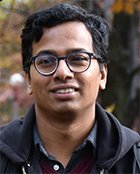
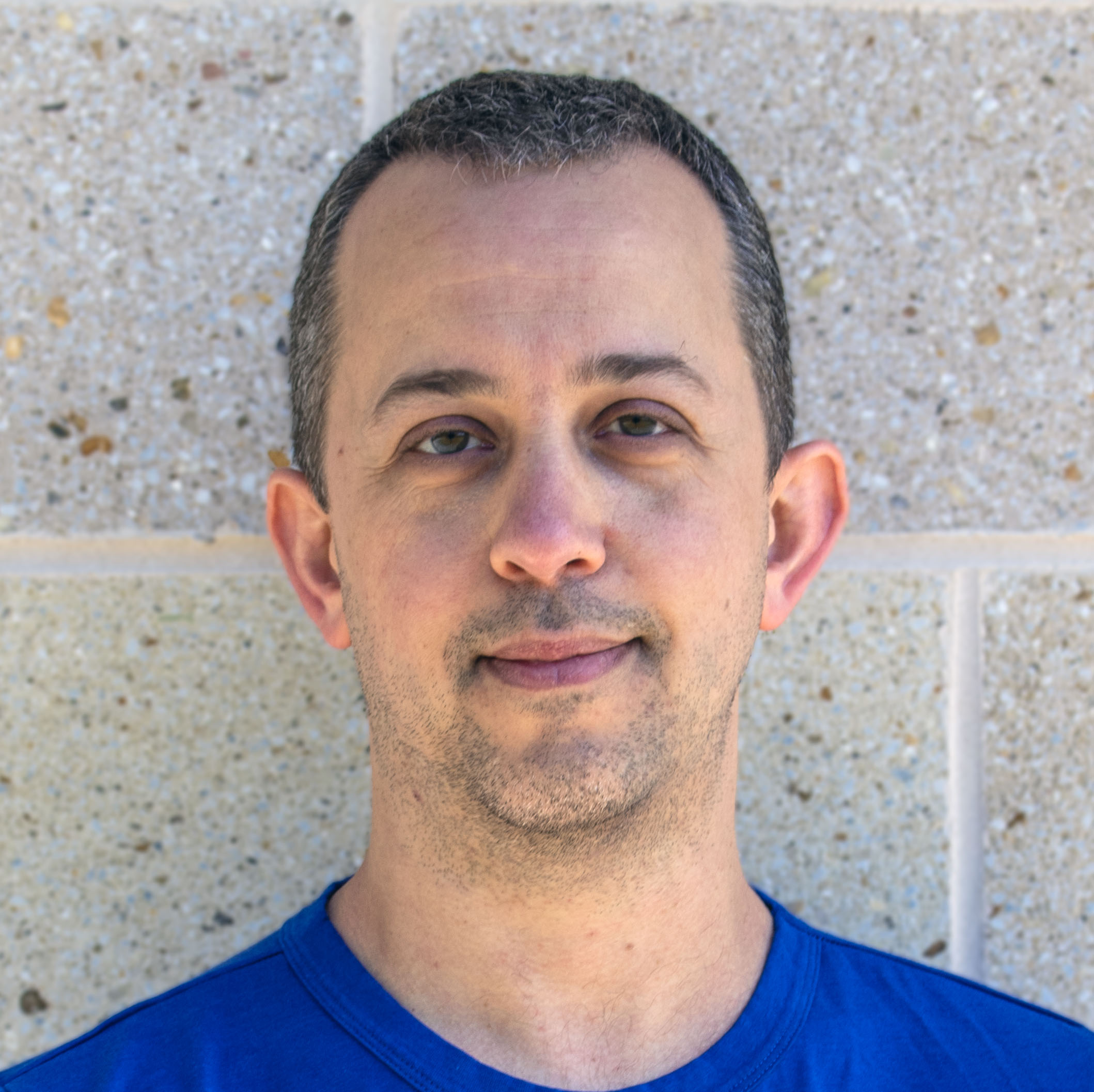
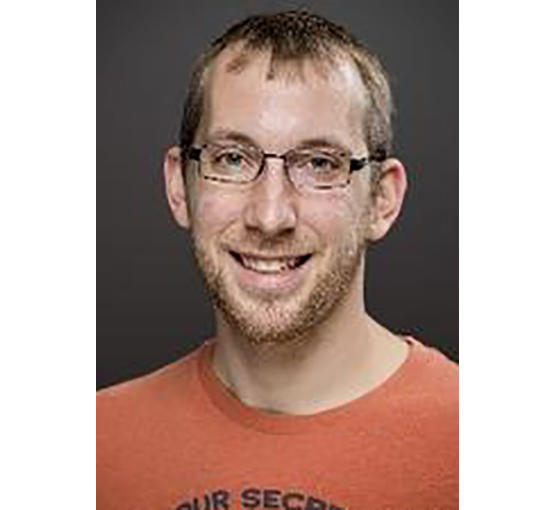
Luís Pedro Montejano Cantoral is an Assistant Professor at the Department of Computer Engineering and Mathematics (DEIM) of Rovira i Virgili University (URV) under the Serra Húnter Fellow program since 2020. He holds a PhD in Applied Mathematics (Cum Laude and International Doctor) from Universitat Politècnica de Catalunya (UPC, Spain, 2011), preceded by undergraduate and master's studies in Mathematics at Universidad Nacional Autónoma de México (UNAM, 2000–2007). His postdoctoral research included stays at the Institut Montpelliérain Alexander Grothendieck (Université de Montpellier, France, 2012–2015) and Centro de Investigación en Matemáticas (CIMAT, Mexico, 2015–2017). His research focuses on discrete mathematics, with emphasis on graph theory, matroid theory, discrete geometry, and algorithmic problems. He explores intersections between combinatorial structures and computational methods, often addressing theoretical and applied challenges in these domains.
Supartha Podder is an Assistant Professor in the Department of Computer Science at Stony Brook University, located in Stony Brook, NY. He holds a PhD from the Centre for Quantum Technologies at the National University of Singapore and master's degrees from École Normale Supérieure de Cachan (now ENS Paris Saclay) and the Chennai Mathematical Institute. Before joining Stony Brook, he was a postdoctoral researcher at the University of Ottawa under Anne Broadbent and at the University of Texas at Austin under Scott Aaronson. His research focuses on quantum and classical complexity theory, particularly exploring scenarios where quantum computation surpasses classical methods. Key interests include quantum cryptography, quantum algorithms, and the intersection of complexity theory with cryptographic systems. He also investigates foundational topics like analysis of Boolean functions and communication complexity. Podder teaches graduate and undergraduate courses in theoretical computer science, including the Theory of Computation (CSE 540, CSE 350) and advanced topics in Quantum Computing and Applications (CSE 550). He actively mentors a research group with PhD candidates and undergraduates, focusing on quantum computing and related areas. His service roles include program committee memberships for TQC 2024 and QCNC 2025, NSF panel participation, and session chair roles at ITCS 2025. He leads the AALO charity initiative with undergraduates to support underprivileged students in India. His research has led to notable contributions in quantum algorithms, communication complexity, and cryptographic protocols, with recent work appearing in venues like STOC, FOCS, and SICOMP.
Christos Nicolaides is an Assistant Professor at the Department of Business and Public Administration within the School of Economics and Management at the University of Cyprus (UCY), holding a secondary appointment as a Digital Fellow at MIT's Initiative on the Digital Economy. Previously, he spent three years as a James McDonnell Foundation-funded Postdoctoral Fellow at MIT Sloan School of Management. His educational background includes a PhD in Engineering from Massachusetts Institute of Technology (2014), SM from MIT (2011), MSc in Applied Mathematics from Imperial College London (2009), and BSc in Physics from University of Thessaloniki (2008). Nicolaides' research applies mathematical, statistical, and computational tools to large-scale empirical questions in social influence mediated by digital technologies. His work spans Data Science , Machine Learning , Social Networks , and Computational Social Science , with significant contributions to understanding human mobility patterns, disease transmission dynamics, and social contagion effects. His research has established novel methodologies for analyzing complex network structures in mobility data and social interactions. Analysis of his 15 most recent publications reveals a consistent focus on applying network science to real-world problems, particularly in pandemic response (12 publications), human mobility analytics (9 publications), and social contagion dynamics (7 publications). His work demonstrates increasing interdisciplinary integration, combining computer science, epidemiology, and organizational behavior since 2020. Marie S. Curie Fellow Two Highly Cited Papers by Web of Science (2017, 2020) Best Paper Award by Risk Analysis Society (2019) Professor of The Week by Poets & Quants (2020) As principal institutional investigator, Nicolaides has secured over €1 million in research funding from the European Commission, industry partners, Cyprus Innovation and Research Foundation, and Cyprus Ministry of Health. His current teaching includes Social Networks and Entrepreneurship, Introduction to Operations Management, and Quantitative Methods in Management. Media coverage of his work spans major outlets including The New York Times, CNN, Nature, and Science, with significant impact on public health policy discussions during the COVID-19 pandemic.
Shahar Kovalsky is an Assistant Professor of Mathematics at the University of North Carolina at Chapel Hill (UNC-CH), with secondary appointments in the School of Data Science and Society and an adjunct role in the Department of Computer Science (both within the College of Arts and Sciences). He holds a Ph.D. in Computer Science and Applied Mathematics from the Weizmann Institute of Science, and B.Sc./M.Sc. degrees in Mathematics and Electrical Engineering from Ben-Gurion University. His research bridges optimization, geometry, computer graphics, machine learning, and their applications in biology and medicine. Kovalsky's work includes advancements in geometric modeling, medical imaging diagnostics, and evolutionary biology analysis. He has been recognized with awards such as the Günter Enderle Best Paper Award (Eurographics 2016) and the SGP 2015 Best Paper Award. Education: Ph.D., Computer Science & Applied Mathematics, Weizmann Institute of Science, Israel B.Sc./M.Sc., Mathematics & Electrical Engineering, Ben-Gurion University, Israel Research Interests: His work focuses on geometric optimization, machine learning for medical diagnostics (e.g., thyroid cytopathology), and computational methods in evolutionary biology. He develops algorithms for injectivity-preserving parameterizations, medical image analysis, and Gaussian process landmarking for morphometric studies. Key Contributions: Deep learning models for thyroid cancer prediction from smartphone images Geometric algorithms for surface parameterization and injectivity Applications of Gaussian processes in evolutionary shape analysis Awards: Günter Enderle Best Paper Award (Eurographics 2016) SGP 2015 Best Paper Award Teaching & Mentoring: Kovalsky advises graduate and undergraduate students (e.g., Fengyu Yang, Maddy Vinal) and teaches courses like Optimization in Machine Learning at UNC-CH. He also co-advises students in interdisciplinary projects with Caroline Moosmüller and Jeremy Marzuola. Labs & Affiliations: Member of the Carolina Center for Interdisciplinary Applied Mathematics (CCIAM) and previously a Phillip Griffiths Assistant Research Professor at Duke University (2017-2020).
Ryan Henry is an Assistant Professor in the Department of Computer Science at the University of Calgary. His research focuses on applied cryptography, emphasizing the development of secure systems that prioritize user privacy. His work spans designing privacy-enhancing technologies, implementing cryptographic protocols, and analyzing number-theoretic attacks on cryptographic assumptions. He also explores theoretical aspects of cryptographic efficiency and practical deployment challenges. While specific educational background details are not provided in the text, his research contributions highlight expertise in cryptography, secure systems, and privacy-preserving technologies. His work has addressed topics such as Private Information Retrieval (PIR), secure messaging, and blockchain privacy. Key research interests include: Secure Multiparty Computation Privacy-Preserving Data Access Efficient Cryptographic Protocols Zero-Knowledge Proofs IoT Security Cryptocurrency and CBDC Design His recent publications emphasize advancements in distributed systems security, privacy in recommendation systems, and cryptographic efficiency. Notable contributions include the Grotto and Duoram frameworks for secure computation, and proposals for Canadian CBDC frameworks. Despite extensive research output, no scientific awards or grants are explicitly mentioned in the provided text. Collaborations and lab affiliations are not detailed, though his work suggests involvement in interdisciplinary projects on privacy and security technologies.
Stephen Lee is an Assistant Professor in the Department of Computer Science at the University of Pittsburgh, affiliated with Pitt Cyber. His research focuses on distributed systems, cyber-physical systems, and sustainability, emphasizing energy efficiency and cost optimization. Dr. Lee holds a PhD from the University of Massachusetts Amherst, a Master’s from Chennai Mathematical Institute, and a Bachelor’s from St. Stephen’s College, Delhi. He actively seeks students for his research group. Education: PhD, Computer Science, University of Massachusetts Amherst Master’s, Chennai Mathematical Institute Bachelor’s, St. Stephen’s College, Delhi Research Interests: Dr. Lee’s work integrates distributed systems, machine learning, and optimization to enhance sustainability. Key areas include IoT-enabled energy systems, emission-aware computing, and privacy-preserving frameworks. He leads projects like GreenWhisk (serverless emission reduction) and Sat2map (3D building modeling from satellite imagery). Recent Achievements: Best Paper Award in IEEE TPS 2024 DOE-funded Cyber Energy Center (2024) MCSI Seed Grant for Pitt building sustainability (2024) NSF Grant on sustainable distributed infrastructures (2023) Grants & Advising: Secured over $2M in grants, including NSF and DOE funding. Advises on energy-efficient systems and IoT security. Teaches CS 2510 (Operating Systems) and CS 1699 (Systems & Sustainability). Labs & Teams: Directs the Sustainable Systems Research Group, focusing on decarbonizing IT and optimizing renewable energy systems. Collaborates with industry partners on smart grid solutions and edge-cloud systems.
Rob Silversmith is a Warwick Zeeman Lecturer in the Warwick Mathematics Institute at the University of Warwick, with a focus on algebraic geometry and combinatorics. Starting Fall 2025, he will transition to an Assistant Professor role at Emory University. His academic journey includes a Ph.D. from the University of Michigan (2017), advised by Yongbin Ruan, and postdoctoral positions at Northeastern University and the Simons Center for Geometry and Physics. His research interests span algebraic geometry—particularly moduli spaces of curves, tropical geometry, and combinatorial structures—as well as connections to string theory, geometric rigidity, and dynamics. Key contributions include work on Gromov-Witten invariants, cross-ratio degrees, and the T-graph of Hilbert schemes. His recent publications (2021–2025) explore topics such as moduli spaces, tropical geometry, and combinatorial algebraic geometry, reflecting a blend of geometric and computational methods. Notable collaborations include work with R. Cavalieri, T. Kelly, and R. Ramadas on projects like Genus-zero r-spin theory and Equations at infinity for critical-orbit-relation families of rational maps . Rob has advised no listed graduate students but has contributed to interdisciplinary projects involving computer-aided conjecture-making. His scholarly activities include organizing seminars and maintaining an active presence in geometric research communities. He is affiliated with the Warwick Mathematics Institute and holds a position in the Zeeman Building. His work frequently intersects with combinatorial and computational approaches to algebraic geometry, emphasizing explicit polynomial constructions and data-driven conjectures.
Holden Lee is an Assistant Professor in the Department of Applied Mathematics and Statistics at Johns Hopkins University, where he joined in 2022. His research focuses on the theoretical foundations of machine learning, probability, and their intersections with theoretical computer science. He explores probabilistic methods in modern machine learning, including deep learning-based generative models and convergence guarantees for sampling algorithms like Markov Chain Monte Carlo. Prior to JHU, he was a postdoc at Duke University and a Simons Fellow at UC Berkeley. He holds a PhD in Mathematics from Princeton University and degrees from MIT and the University of Cambridge. Education: PhD in Mathematics, Princeton University, 2019 MASt in Pure Mathematics, University of Cambridge, 2014 BSc in Mathematics, MIT, 2013 Research Interests: Machine Learning Theory Probabilistic Sampling Methods Generative Models Statistical Learning Theory His work emphasizes theoretical rigor, particularly in understanding the success and limitations of deep learning algorithms and designing efficient sampling techniques beyond classical log-concave settings. Articles Trends: Lee’s recent publications (2022–2024) focus on advancing sampling algorithms for complex distributions, analyzing generative models, and improving convergence guarantees for methods like MCMC and score-based diffusion. His work bridges theory and practice, with applications in multimodal data, text generation, and dynamical systems. Awards: Simons Fellow at UC Berkeley (2021) Advising & Grants: Lee has contributed to projects at NeurIPS and collaborates on research in AI efficiency and theoretical guarantees. He teaches courses on probability and applied mathematics at JHU and Duke. Labs/Teams: His research group focuses on theoretical machine learning and probabilistic methods, with ongoing projects on scalable sampling algorithms and generative model analysis.
Soledad Villar is an Assistant Professor in the Department of Applied Mathematics and Statistics and a member of the Mathematical Institute for Data Science at Johns Hopkins University. She also contributes to the Data Science and AI Institute . Her research focuses on computational methods for extracting information from data, emphasizing optimization for data science, machine learning, equivariant representation learning, and graph neural networks. Dr. Villar holds a PhD in Mathematics from the University of Texas at Austin and has been a research fellow at New York University and the Simons Institute at UC Berkeley. Her work bridges theoretical foundations with practical applications in fields like scientific computing and political analysis. Awards include the National Science Foundation CAREER Award (2024). Her research has addressed topics such as gerrymandering detection, fluid dynamics modeling, and graph representation learning. She collaborates on interdisciplinary projects and organizes academic events like the One World MINDS Seminar and the Cibercoloquio Latinoamericano de Matemáticas . Her research interests span computational methods, equivariant machine learning frameworks, and graph neural networks, with applications in physics, engineering, and data-driven decision-making. She actively engages in advancing machine learning techniques for scientific and engineering challenges.
Xiucai Ding is a tenured Associate Professor in the Department of Statistics at the University of California, Davis, starting in 2025. He is also affiliated with the Graduate Group in Applied Mathematics (GGAM) at UC Davis. Previously, he was an Assistant Professor in the same department from 2020 to 2025 and a Research Associate at Duke University from 2018 to 2020. PhD in Statistics, University of Toronto (2014–2018), advised by Jeremy Quastel Research Associate, Duke University (2018–2020), with Hau-Tieng Wu Assistant Professor, UC Davis (2020–2025) Associate Professor (tenured), UC Davis (starting 2025) His research focuses on mathematical statistics and statistical learning theory, particularly applied random matrix theory, high-dimensional statistics, non-stationary and functional time series analysis, statistical optimal transport, and the statistical foundations of machine learning algorithms. His methodological work emphasizes nonparametric and sieve-based estimation, inference under complex dependencies, and applications to noisy, high-dimensional data. The recent publications and software tools (such as RMT4DS, Sie2nts, SIMle) reflect a consistent trend in developing theoretically grounded, computationally feasible tools for analyzing complex time series and high-dimensional covariance structures. His work bridges theoretical statistics with practical data science. His research has been supported by the National Science Foundation (NSF). Estimation and inference for precision matrices of nonstationary time series (2020) Auto-regressive approximations to non-stationary time series (2021) On the partial autocorrelation function for locally stationary time series (2022) He advises students and researchers through his role in the Department of Statistics and GGAM. He has taught courses such as STA 108 (Regression Analysis), STA 137 (Applied Time Series Analysis), STA 135 (Multivariate Data Analysis), STA 221 (Big Data & High Performance Statistical Computing), and STA 250 (Topics in Applied and Computational Statistics) at UC Davis. He previously taught at Duke University and the University of Toronto. He has developed several open-source R packages for statistical methodology: RMT4DS : Random matrix tools for data scientists (CRAN/GitHub) Sie2nts : Sieve methods for non-stationary time series (CRAN/GitHub) SIMle : Estimation and inference for nonlinear and non-stationary regression (CRAN/GitHub) UHDtst : Two-sample tests for high-dimensional covariance matrices (GitHub)
Ameya Jagtap is an Assistant Professor (Tenure-Track) in the Department of Aerospace Engineering at Worcester Polytechnic Institute (WPI), USA. Prior to this, he served as an Assistant Professor of Applied Mathematics (Research) at Brown University from 2021 to 2024. He holds a Ph.D. and M.E. in Aerospace Engineering from the Indian Institute of Science (IISc), and completed postdoctoral research at TIFR-CAM (India) and Brown University's Division of Applied Mathematics. His research bridges mechanical/aerospace engineering, applied mathematics, and computation, focusing on scientific machine learning algorithms that integrate data and physics. Key areas include physics-driven deep learning, uncertainty quantification, multi-scale simulations, and novel neural network architectures like quantum and graph networks. He serves on editorial boards for Neural Networks , Neurocomputing , and others. His work emphasizes interpretable neural operators for PDE solutions, domain decomposition methods, and adaptive activation functions to enhance PINN convergence. Notable contributions include XPINNs (extended physics-informed neural networks) and causal sweeping frameworks for PDEs. His research has been widely cited, particularly for PINN applications in supersonic flows and high-dimensional PDEs. Jagtap has delivered invited talks at institutions like Los Alamos National Laboratory, Tsinghua University, and the Alan Turing Institute. He is also recognized as a Top 2% World Scientist by Stanford University.
Marco Martino Rosso is a Research Fellow at the Department of Structural, Building and Geotechnical Engineering (DISEG) at the Polytechnic University of Turin, where he also serves as an external lecturer and teaching assistant in both DISEG and the Department of Mathematical Sciences (DISMA). He is affiliated with the Doctoral School (SCDOTT) and completed his PhD under the supervision of Professor Giuseppe Carlo Marano. His academic work bridges civil engineering with advanced computational methods, focusing on structural health monitoring, optimization, and machine learning applications. His research interests center on Structural Health Monitoring , Machine Learning in Civil Engineering , Earthquake Engineering , Structural Optimization , Operational Modal Analysis , and AI-driven diagnostics for infrastructure. He applies deep learning, neural networks, and hybrid modeling techniques to problems such as damage detection, post-earthquake assessment, tunnel and bridge monitoring, and dynamic analysis of timber and concrete structures. His recent publications, spanning from 2023 to 2025, demonstrate a strong trend toward integrating artificial intelligence with structural engineering, particularly in automating modal analysis, optimizing structural forms, and enhancing seismic resilience. These works appear in journals like Mechanical Systems and Signal Processing , Computers & Structures , and Bulletin of Earthquake Engineering , as well as in proceedings of international conferences such as IOMAC and EWSHM. Marco Rosso has not received any explicitly mentioned scientific awards in the provided text. However, his extensive publication record and active role in research projects indicate strong recognition in his field. He has contributed to teaching as a course collaborator in subjects including Dynamic Identification of Structures , Statistics , Construction Techniques , and Safety Assessment and Retrofitting of Structures . He has also been involved in the ARTISTE 2025 Summer School, indicating engagement in advanced training programs. While no formal lab or team name is specified, his frequent collaborations with researchers such as Angelo Aloisio, Giuseppe Carlo Marano, and Jonathan Melchiorre suggest he is part of a vibrant research group focused on intelligent structural systems and data-driven engineering at Politecnico di Torino.
Dr. Hamidreza Mohades Kasaei is an Associate Professor in the Department of Artificial Intelligence at the University of Groningen, Netherlands. He holds positions in both the Faculty of Science and Engineering and the Faculty of Medical Sciences/UMCG, focusing on Robotics and image-guided minimally-invasive surgery. His work bridges theoretical advances in machine learning with practical robotic applications. Dr. Kasaei's research focuses on developing algorithms for adaptive perception systems through interactive environment exploration and open-ended learning. His specific interests include 3D object perception, grasp affordance detection, object manipulation, and active perception. He has evaluated his research on various robotic platforms including PR2, UR5e, Kinova, Franka robotic arms, and humanoid robots. His work enables robots to learn from past experiences and intelligently interact with non-expert human users using data-efficient techniques. Analysis of his recent publications reveals strong trends toward increasingly sophisticated manipulation capabilities, particularly in dual-arm coordination and handling dense clutter. There's a clear progression toward integrating language models with robotic control systems, as seen in works like 'Lifelong Robot Library Learning' and 'Towards Open-World Grasping with Large Vision-Language Models.' His research consistently addresses real-world challenges in agricultural robotics, assistive technologies, and service robotics applications. Gratama Science Award (2022) Google Research Scholar Award in Machine Learning (2023) Outstanding Associate Editor for IEEE Robotics and Automation Letters (2023) Dr. Kasaei has successfully supervised multiple PhD students including Zhenxing Zhang (thesis on 'Generative Adversarial Networks for Diverse and Explainable Text-to-Image Generation') and Hamed Ayoobi (thesis on 'Explain What You See: Argumentation-Based Learning and Robotic Vision'). His research is supported by significant grants including the Google Research Scholar Award for 'Continual Robot Learning in Human-centered Environments' and various conference organization roles including workshops at RSS 2023 and NeurIPS 2022. He leads the Lifelong Interactive Robot Learning Lab (IRL-Lab), which focuses on six key research directions: Perception and Perceptual Learning, Object Grasping and Manipulation, Lifelong Interactive Robot Learning, Dual-Arm Manipulation, Dynamic Robot Motion Planning, and Exploiting Multimodality. The lab develops cutting-edge approaches for robots to learn in open-ended fashion through interaction with non-expert human users, with applications in assistive robotics for people with disabilities.
Dr. Christopher S. Hlas is a Professor of Mathematics Education at the University of Wisconsin-Eau Claire within the College of Arts and Sciences Department of Mathematics. With a doctorate from the University of Iowa, he specializes in mathematics pedagogy, technology integration, and cross-disciplinary connections between math and foreign languages. Ph.D. in Mathematics Education (University of Iowa, 2005) B.S. in Mathematics and Computer Science (University of Iowa, 2001) His research focuses on teaching through problem solving , student motivation , and technology-enhanced mathematics instruction . He has developed innovative formative assessment probes and conducted extensive studies on homework design, flow theory, and creativity in K-12 education through grants like the ESEA Title II Mathematics and Science Partnerships. His work spans curriculum development, professional development for teachers, and mathematical modeling. Recent publications highlight his exploration of creativity assessment in language education and the application of game mechanics to classroom engagement. He serves as an AP Calculus Reader and Table Leader, while maintaining active roles in the Wisconsin Mathematics Council and National Council of Teachers of Mathematics. Bilingual education initiatives GeoGebra integration in geometry instruction Formative assessment frameworks Game-based learning strategies Scientific Awards CARE Award (2015) ACTFL Research Priority Grant (2010) Multiple teaching scholarships UWEC student-nominated award (2007) Outstanding teaching assistant recognition (2004) Mentoring over a dozen student research projects and securing more than $4 million in federal and state grant funding, Dr. Hlas has supervised numerous collaborative research initiatives. He maintains open-source educational tools like interactive Pascal's Triangle and rational functions resources at math.hlasnet.com while serving on multiple university committees and grant review panels.
Nadia Heninger is a Professor in the Computer Science and Engineering department at the University of California, San Diego. Previously, she was an assistant professor at the University of Pennsylvania from 2013 to 2018. Her research focuses on mathematical and empirical cryptanalysis of public-key cryptographic systems, with significant contributions to identifying vulnerabilities in widely deployed cryptographic implementations. Her primary research interests include cryptography, cryptanalysis, and security, with particular emphasis on mathematical cryptanalysis aimed at real-world applications. Her work frequently employs lattice techniques, computational number theory, coding theory, and network measurement to uncover weaknesses in cryptographic systems. She has made notable contributions to understanding the security of RSA, Diffie-Hellman, and ECDSA implementations in practice. Heninger's research output shows a consistent focus on practical cryptanalysis, with recent work including the Blast-RADIUS vulnerability discovery, SSH key compromise via lattice techniques, and analyses of cryptographic implementations in blockchain systems like Bitcoin. Her publications span top security and cryptography venues including Crypto, Eurocrypt, Usenix Security, and CCS, often receiving best paper awards. Among her scientific achievements are an NSF CAREER award and multiple best paper awards from premier conferences including Crypto, PKC, CCS, and Usenix Security, as well as test of time awards from Crypto and Usenix Security. These accolades reflect the significant impact of her work on the field of cryptography and security. She advises several PhD students including Miro Haller, Laura Shea, Adam Suhl, and George Sullivan, and has a substantial list of notable alumni who have gone on to successful careers in academia and industry. Her research has been supported by various grants, including an Amazon Research Award for work on 'Bringing Modern Security Guarantees to End-to-End Encrypted Cloud Storage.'