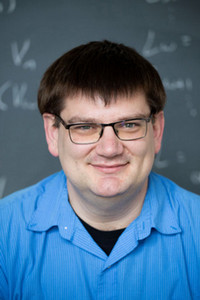
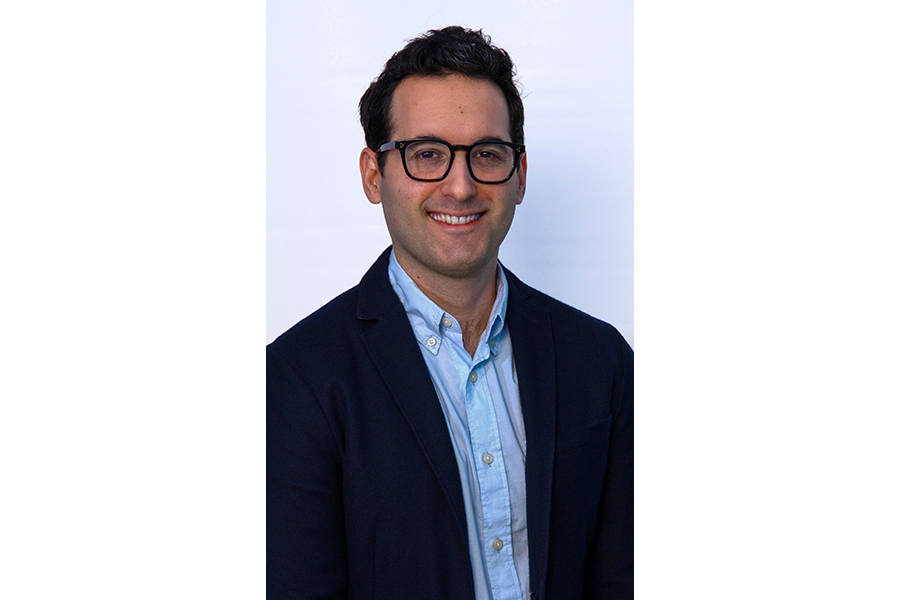
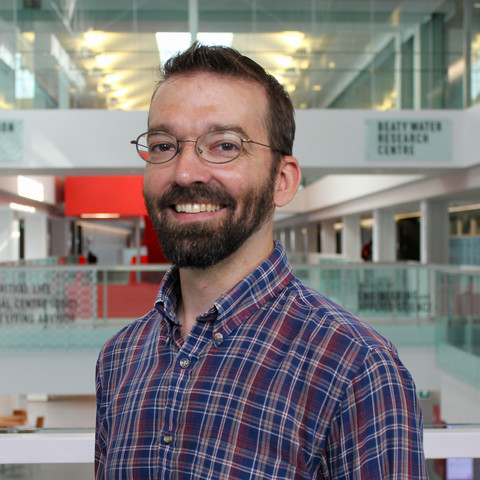
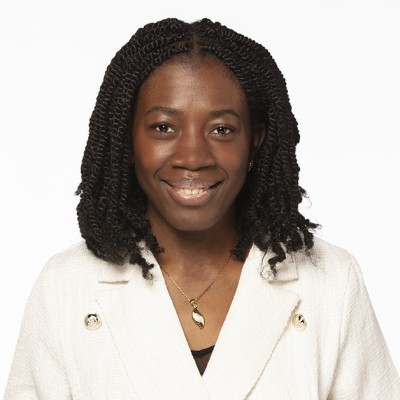
Gail C Murphy is a Professor in the Department of Computer Science at the University of British Columbia and currently serves as Vice-President Research & Innovation. She is also a co-founder of Tasktop Technologies Incorporated. Her research focuses on improving the productivity of knowledge workers, particularly software developers, through empirical studies and tool development for large software system evolution. Professor, Department of Computer Science, University of British Columbia Vice-President Research & Innovation, University of British Columbia Co-founder, Tasktop Technologies Incorporated Her research spans software engineering, human-computer interaction, and productivity tools. Key areas include task context modeling, code refactoring, developer collaboration in hybrid teams, and the application of generative AI in software development practices. Recent publications highlight trends in leveraging semantic analysis for task-relevant information identification, empirical studies on developer productivity, and the integration of human-centered AI tools in software engineering workflows. Awards include the IEEE Harlan Mills Award (2018) and an Impact Award (2022). Contact details include the University of British Columbia (VPRIO) address at Suite 580, 1958 Main Mall, and the Computer Science department at 201-2366 Main Mall, Vancouver, BC, Canada. Phone numbers and emails are provided for liaison purposes.
Ian Arawjo is an Assistant Professor at the Université de Montréal in the Department of Computer Science and Operations Research (DIRO), affiliated with Mila – Quebec AI Institute. He leads the Montreal HCI group, focusing on human-centered AI, prompt engineering, and LLM evaluation. His work bridges programming, AI, and HCI, emphasizing tools like ChainForge for visual prompt design. He holds a PhD from Cornell University in Information Science, advised by Tapan Parikh. Research interests include AI-driven tools for design, LLM evaluation methodologies, and multimodal programming interfaces. Notable projects include ChainForge, EvalGen for evaluation criteria generation, and disaster early warning systems funded by CRSNG and MITACS. His work has won awards at top conferences like CHI, CSCW, and UIST. Education: PhD in Information Science (Cornell University), MS/BS in Computation Arts and Computer Science (Concordia University). Active in teaching and mentoring, currently recruiting PhD students for HCI/AI research. Professional activities include conference organizing (e.g., Dynamic Abstractions workshop), industry collaborations, and open-source contributions.
Christopher Eagle is an Associate Teaching Professor in the Department of Mathematics and Statistics at the University of Victoria, Canada. He holds a Ph.D. in Mathematics from the University of Toronto (2015), with prior degrees including an M.Math. in Pure Mathematics (University of Waterloo, 2010), an M.Litt. in Philosophy (University of St. Andrews, 2008), and a B.Math. in Pure Mathematics (University of Waterloo, 2007). His research focuses on mathematical logic and its applications, particularly model theory and its interactions with functional analysis, topology, and infinitary logics. Key areas include real-valued logics, applications to C*-algebras, and the development of pure model theory. He also explores mathematics education, emphasizing the role of language and writing in teaching and learning. Eagle has taught a wide range of courses at UVic, including matrix algebra, real analysis, mathematical logic, topology, and directed studies in model theory and set theory. His teaching roles have included coordinating multi-section courses such as Matrix Algebra for Engineers and Calculus. His publications span model theory, functional analysis, and topology, with contributions to journals like the Annals of Pure and Applied Logic, Journal of Functional Analysis, and Topology and its Applications. Recent work includes studies on computable K-theory for C*-algebras, topological principality in groupoid C*-algebras, and applications of topology to model theory. Eagle’s academic trajectory includes postdoctoral research at the University of Toronto at Mississauga (2015) and prior teaching roles as an Assistant Teaching Professor at UVic (2016–2023). He actively engages in interdisciplinary research, bridging logic, algebra, and topology.
Philippe Jouvet is a Clinical Professor in the Department of Pediatrics at Université de Montréal's Faculty of Medicine. He is affiliated with CHU Sainte-Justine, a leading pediatric healthcare institution in Montreal, Canada. His clinical and research activities focus on advanced technologies for critical care environments, particularly in respiratory assistance and diagnostic automation. Dr. Jouvet's research spans pediatric intensive care innovations, including machine learning applications for clinical decision-making, respiratory distress detection, and safety protocols for aerosol transmission. His work addresses key challenges in mechanical ventilation, hypoxemia triage, and artifact detection in physiological signals, with a strong emphasis on cross-national collaborative studies. His recent publications demonstrate expertise in integrating artificial intelligence with clinical workflows, evidenced by studies on LoRA adapters for LLMs, vision transformers for rPPG estimation, and hybrid neural networks for signal processing. His work also includes critical contributions to international guidelines for pediatric ventilator liberation and acute respiratory distress syndrome management.
Hoifung Poon is General Manager at Microsoft Health Futures and affiliated faculty at University of Washington Medical School. He leads Real-World Evidence (RWE) research focusing on AI applications for precision health. Poon earned a B.S. with Distinction in Computer Science from Sun Yat-Sen University and a Ph.D. in Computer Science and Engineering from University of Washington. Specializes in biomedical AI research Focuses on structuring unstructured medical data Co-PI for DARPA Big Mechanisms projects Research strength lies in biomedical multimodal learning (text, radiology, pathology, genomics) and causal learning for real-world evidence generation. His team develops methods for LLM self-verification , multi-modal fusion , and biases correction in observational data. Publications show expertise in Nature , Nature Methods , and NEJM AI , covering topics from digital pathology to clinical text analysis. Scientific recognition includes: Best Paper Awards at NAACL, EMNLP, and UAI Winner of ACM Health Best Paper Award Named Technology Champion 2022 by Puget Sound Business Journal
Xin Tang is an Assistant Professor at the Michael Smith Laboratories and the Department of Computer Science in the Faculty of Science at the University of British Columbia. He leads the Tang Lab, which focuses on developing AI models to advance biological understanding at multiple scales and modalities. PhD in Engineering Sciences from Harvard University and the Broad Institute of MIT and Harvard Xin Tang's research spans computational cell biology, brain-computer interfaces, and in silico cellular digital twins. His work integrates explainable and interpretable AI with biological systems to address fundamental questions from molecular interactions to animal behaviors. Key areas include computational omics, multi-modality cell biology, spatio-temporal gene regulation, neuroengineering, and biological large language models. His lab develops autonomous AI approaches that serve as digital twins for biological systems, enabling in silico experiments that guide wet lab research. Analysis of Tang's recent publications reveals a strong focus on bridging AI and biology across multiple scales. His work spans from molecular and cellular levels (single-cell biology, multi-omics, spatial transcriptomics) to neural systems (brain-computer interfaces, neural activity tracking) and organ-level applications (cardiac interfaces). A consistent theme is the development of explainable and interpretable AI methods that provide mechanistic insights rather than just predictive power. His research has significant implications for understanding development, aging, and diseases like neurodegeneration. NSERC Discovery Grant (2025) Resource Allocation Competition of Digital Research Alliance of Canada (2025) Professor Tang actively supervises multiple graduate students, postdoctoral fellows, and undergraduate researchers across UBC's Computer Science, Bioinformatics, and Genome Science and Technology programs. His lab has received significant research funding including an NSERC Discovery Grant. He is committed to interdisciplinary collaboration and has established research partnerships with biologists, engineers, and clinicians to address complex biological questions related to neurodegenerative diseases, heart disease, and aging. The Tang Lab, located in the Michael Smith Laboratories at UBC, fosters a collaborative environment for researchers interested in AI for biology. The lab actively recruits dry-lab researchers with strong coding and machine learning backgrounds to work on projects spanning computational biology, neuro-inspired AI, explainable AI, biological LLMs, computational omics, and brain-computer interfaces. The lab has a remote work policy that allows flexible arrangements while maintaining strong collaborative ties.
Amir Michalovich is an Assistant Professor of Literacies Education at the Faculty of Education, University of Manitoba. He specializes in digital and multimodal literacies, focusing on newcomer youth from refugee and marginalized backgrounds. Education: PhD (2023) and MA (2017) from Tel Aviv University, BFA (2015) from Tel Aviv University His research explores digital multimodal composing as a tool for language and literacy learning, teacher professional development in multiliteracies, and participatory media. Recent work examines refugee-background youth's use of video production for identity expression and ethical challenges in research-based theatre. Amir's publications highlight trends in digital storytelling, multimodal data analysis, and multilingual education. He integrates arts-based research and qualitative methodologies into classroom practices. Scientific Awards: SSHRC Postdoctoral Fellowship (2023) He is affiliated with the American Educational Research Association, Canadian Association of Applied Linguistics, and other professional networks. His background as a filmmaker and multilingual education policy manager in Israel informs his interdisciplinary approach.
Jia Hu is a public health physician and medical lead of the prevention and health promotion team within Population and Public Health at the British Columbia Centre for Disease Control (BCCDC). He also holds a position as a Clinical Assistant Professor at the University of British Columbia's School of Population & Public Health, where he contributes to academic training and research in public health disciplines. Dr. Hu's educational background includes medical training at the University of Alberta, followed by residency training in family medicine and public health and preventive medicine at the University of Toronto. During his residency, he earned a Master of Science in Health Policy, Planning, and Finance from the London School of Economics and the London School of Hygiene and Tropical Medicine. His research interests span multiple critical areas in modern public health, with particular focus on social determinants of health, housing and health, climate change and health, food security, mental wellness, and cancer prevention and screening. Dr. Hu has also developed significant expertise in behavior change and marketing strategies specifically tailored for public health interventions such as vaccination programs and cancer screening initiatives. His work bridges clinical practice with population-level health promotion strategies. Analysis of Dr. Hu's recent publications reveals a strong interdisciplinary research profile that spans public health, epidemiology, and increasingly, computational approaches to health data. While his earlier work focused on traditional public health domains, his recent publications show a growing engagement with artificial intelligence, natural language processing, and speech technology applications in healthcare contexts. This evolution demonstrates his ability to adapt to emerging technological paradigms while maintaining focus on core public health challenges. Dr. Hu's professional journey includes diverse experiences that have shaped his interdisciplinary approach: working at McKinsey advising large organizations on health-related issues, serving as a Medical Officer of Health in Alberta where he contributed to the COVID-19 response, and founding and leading a public health non-profit organization focused on increasing uptake of preventive health behaviors. As medical lead of the prevention and health promotion team at BCCDC, Dr. Hu oversees initiatives that address a wide range of public health concerns across British Columbia. His work integrates evidence-based approaches with practical implementation strategies to improve population health outcomes through prevention-focused interventions and health promotion activities.
Geoffrey G. Pinchbeck is a faculty member at Carleton University’s School of Linguistics and Language Studies. He holds PhDs in Education (Languages and Literacy) and Medical Biochemistry from the University of Calgary, along with an M.Ed in TESL. His career spans teaching, research, and service in applied linguistics and language pedagogy. His research focuses on corpus linguistics , second language acquisition , and academic English . He explores the operationalization of academic English , computer-assisted language learning (CALL) , and content and language integrated learning (CLIL) . His work has implications for vocabulary diagnostic tools and text readability metrics. His refereed publications and conference presentations examine lexical and derivational morphology , word list validation , and mathematics education pedagogy . Recent collaborations highlight interdisciplinary approaches to language assessment and curricular design . Excellence in Graduate Teaching Award, Western University (2017) EuroSLA Doctoral Student Travel Grant (2017) AAAL ‘Educational Testing Services Graduate Student Award’ (2016) Pinchbeck has served as Strand Coordinator for Vocabulary and Lexical Studies at AAAL annual meetings (2020–2021) and contributed to graduate student award committees. His work bridges language research and mathematical pedagogy , emphasizing accessibility and student engagement.
Siva Reddy is an Assistant Professor at McGill University , affiliated with the Mila - Quebec AI Institute and a Facebook CIFAR AI Chair . His work focuses on artificial intelligence and computational linguistics, with a particular emphasis on language technologies and machine learning. Research interests: Artificial Intelligence Machine Learning Natural Language Processing Deep Learning Computational Linguistics He is associated with initiatives in Montréal and has been tagged in academic contexts from 2020 to 2022. His contributions to AI research include participation in projects at the intersection of language processing and machine learning. Scientific Awards Facebook CIFAR AI Chair
Felipe Gohring de Magalhaes is an Assistant Professor in the Department of Computer Engineering and Software Engineering at Polytechnique Montréal, where he has been working since July 2018 and assumed his current position in October 2024. He holds a dual doctorate from PUC-RS (Brazil) and Polytechnique Montréal (2016), with degrees in both computer science and computer engineering. His research spans embedded system architectures, real-time systems, avionics, and cybersecurity for emerging technologies. He is affiliated with the Microelectronics and Microsystems Research Group and the Multidisciplinary Institute for Cybersecurity and Cyber Resilience, reflecting his focus on integrated circuits, microelectronics, and system security. Professor Gohring de Magalhaes has published over 40 articles in international journals and conferences, with recent work focusing on photonic integrated circuits security, optical neural networks, and post-quantum cryptography for avionic systems. His publication trend shows consistent output with increasing focus on security aspects of emerging computing technologies. He has supervised at least one PhD student to completion and teaches courses including Introduction to Programming and Operating System Kernel. His research interests align with NSERC topics in integrated circuits, microelectronics, computer systems organization, and VLSI systems.
Michel C. Desmarais is a Full Professor in the Department of Computer Engineering and Software Engineering at Polytechnique Montréal, where he has been faculty since 2002. With a PhD in Psychology from Université de Montréal, his research bridges artificial intelligence, educational technology, and human-computer interaction. He holds affiliations with IVADO and LAMA-WeST research groups, and has held visiting positions at Sorbonne University, Eindhoven Technical University, and other European institutions. His research focuses on three interconnected pillars: 1) Cognitive modeling and educational data mining , developing algorithms for student knowledge assessment and adaptive learning systems; 2) AI-driven educational tools , including automated grading systems and peer instruction platforms; and 3) Recommendation systems and user modeling , particularly for personalized learning interfaces. His work consistently applies machine learning to solve practical challenges in technology-enhanced education. Analysis of his 150+ publications reveals strong trends in educational NLP (sentence similarity for short-answer grading), generative AI (LLM-generated code validation), and Bayesian modeling (Q-matrix refinement). Recent work increasingly focuses on transformer architectures and real-world educational datasets. He maintains an active supervision record, having graduated 35+ graduate students. Current PhD candidates work on NLP for educational applications (Bakhtiari, Kamdem) and AI for engineering (Wang). His teaching covers user interface design, recommender systems, and intelligent interfaces. Professional service includes editorial leadership (JEDM journal), conference co-chairing (UMAP 2017, EDM founding), and grant review panels for NSERC, MITACS, and EU programs. Industry experience includes prior roles as R&D Director at MVM Inc. and researcher at Montreal Computer Research Center.
Sean Kauffman is an Assistant Professor in the Department of Electrical and Computer Engineering at Queen's University, Faculty of Engineering and Applied Science. He holds his office in Walter Light Hall, Room 611, and can be reached at sean.k@queensu.ca or by phone at 613-533-6000 ext. 77360. Dr. Kauffman earned his Ph.D. in Electrical and Computer Engineering from the University of Waterloo before completing a two-year postdoctoral position at Aalborg University in Denmark. Notably, he returned to academia after accumulating over a decade of industry experience as a software engineer, with his final industry role being Principal Software Engineer at Oracle. His research expertise spans several critical areas in computer science and software engineering, with a particular focus on safety-critical software systems. His work significantly contributes to the fields of Formal Methods, Runtime Verification, Anomaly Detection, and Explainable AI. Dr. Kauffman has established productive research collaborations with prestigious organizations including NASA's Jet Propulsion Laboratory, the Embedded Systems Institute, QNX, and Pratt and Whitney Canada. Dr. Kauffman's research output demonstrates a consistent focus on event stream analysis, formal verification techniques, and the development of practical tools for system monitoring. His most notable contribution is the nfer language and toolset, which has become influential in the runtime verification community for its ability to abstract event streams into meaningful temporal hierarchies. His publications reveal a progression from theoretical foundations to practical implementations, with applications spanning spacecraft telemetry, autonomous vehicles, and embedded systems. Among his scientific contributions, Dr. Kauffman has received recognition for his work on the complexity analysis of nfer evaluation, developing methods for annotating control-flow graphs for formalized test coverage criteria, and creating frameworks for anomaly detection in embedded systems. His research has been published in top-tier venues including Science of Computer Programming, International Journal on Software Tools for Technology Transfer, and proceedings of major conferences like Runtime Verification and NASA Formal Methods. As an educator, Dr. Kauffman employs active learning techniques, productive failure approaches, and peer instruction to foster student engagement. His industry background informs his teaching approach, providing students with practical insights into real-world software engineering challenges, particularly in safety-critical domains. Dr. Kauffman leads the CritLab research group at Queen's University, which focuses on critical systems research. The lab develops tools and techniques for analyzing and verifying systems where failures could have severe consequences, with applications in aerospace, automotive, and other safety-critical domains. His work on the nfer language has spawned related projects including nvis for visualizing temporal interval hierarchies.
Ange Adrienne Nyamen Tato serves as an Assistant Professor in the Department of Teaching and Learning Studies at Laval University's Faculty of Education. Her academic journey spans multiple institutions across Canada and Morocco, with a strong interdisciplinary background combining computer science, artificial intelligence, and educational theory. PhD in Computer Science (Artificial Intelligence) from University of Quebec at Montreal (UQAM), 2020 Master's degree in Computer Science from University of Quebec at Montreal (UQAM), 2015 Engineering degree in Information Systems from Mohammedia School of Engineers in Morocco, 2014 DEUST in Mathematics, Computer Science and Physics from Hassan II University, Morocco, 2011 Professor Tato's research focuses on the intersection of artificial intelligence and education, with particular expertise in generative AI applications for educational contexts, machine learning algorithms, intelligent tutoring systems, educational data mining, and serious game design. Her work addresses critical challenges in educational technology including transparency, assessment practices, and engagement issues that have limited the adoption of AI-powered learning tools. She is particularly interested in the ethical implications, environmental impact, and potential biases of AI in educational settings. Her recent publications demonstrate a consistent focus on developing sophisticated models for user behavior prediction, adaptive learning systems, and integrating pedagogical knowledge into AI frameworks. The research spans multiple domains including logical reasoning development, socio-moral reasoning, piloting training, and general educational applications of deep learning and knowledge tracing techniques. Professor Tato has secured significant research funding, including a $192,500 NSERC Discovery Grant for her project 'Optimizing Generative Artificial Intelligence for Education: Towards a Holistic Approach Integrating Teachers and Learners.' This five-year project aims to develop pedagogically aware large language models (PA-LLMs) that better serve educational purposes by integrating educational theories, human learning factors, and bias correction mechanisms. Principal Investigator for NSERC Discovery Grant ($192,500 over 5 years) PC Member for ICCE 2023 and 2024 conferences PC Member for EDM 2024 conference PC Member for AIED 2024 conference Professor Tato teaches graduate courses including TEN-7028 Games and Learning and TEN-7030 Digital Intelligence in Education: Opportunities and Challenges. She is currently accepting Master's students interested in AI applied to education. Her previous professional experience includes work as an Artificial Intelligence Specialist at Beam Me Up Augmented Intelligence (2018-2022) and a postdoctoral fellowship in Deep Learning applied to aeronautics in partnership with Bombardier and CAE (2020-2022).
Dr. Isabelle Préfontaine is an Assistant Professor in the Department of Foundations and Practices in Education at Université Laval's Faculty of Education. Her academic journey includes a Postdoctoral Fellowship in Sociology at the University of Quebec at Montreal (2023) focused on social inclusion of autistic individuals, a PhD in Psychoeducation from the University of Montreal (2022) examining differential effectiveness of autism interventions, and a Master's in Psychoeducation (2017) validating technology-assisted behavioral tools. Research Focus Her research program centers on neurodevelopmental disorders with emphasis on: Early behavioral intervention efficacy School transition support systems Social inclusion mechanisms Technology-assisted therapies Longitudinal outcomes analysis She leads a significant FRQSC-funded project (2024-2027) investigating school exclusion pathways for neurodiverse students. Publication Trends Her 15 most recent publications demonstrate consistent focus on autism intervention research, featuring longitudinal methodologies, machine learning applications for treatment personalization, mobile health solutions for behavior management, and socio-educational inclusion frameworks. Recent works show increased emphasis on community implementation and predictive modeling. Teaching & Supervision She teaches undergraduate psychoeducation courses including: PSE-1012: Psychoeducational observation PSE-2101: Intervention in Intellectual Disability PSE-2103: Intervention with ASD PSE-3001: Psychoeducational Intervention Planning