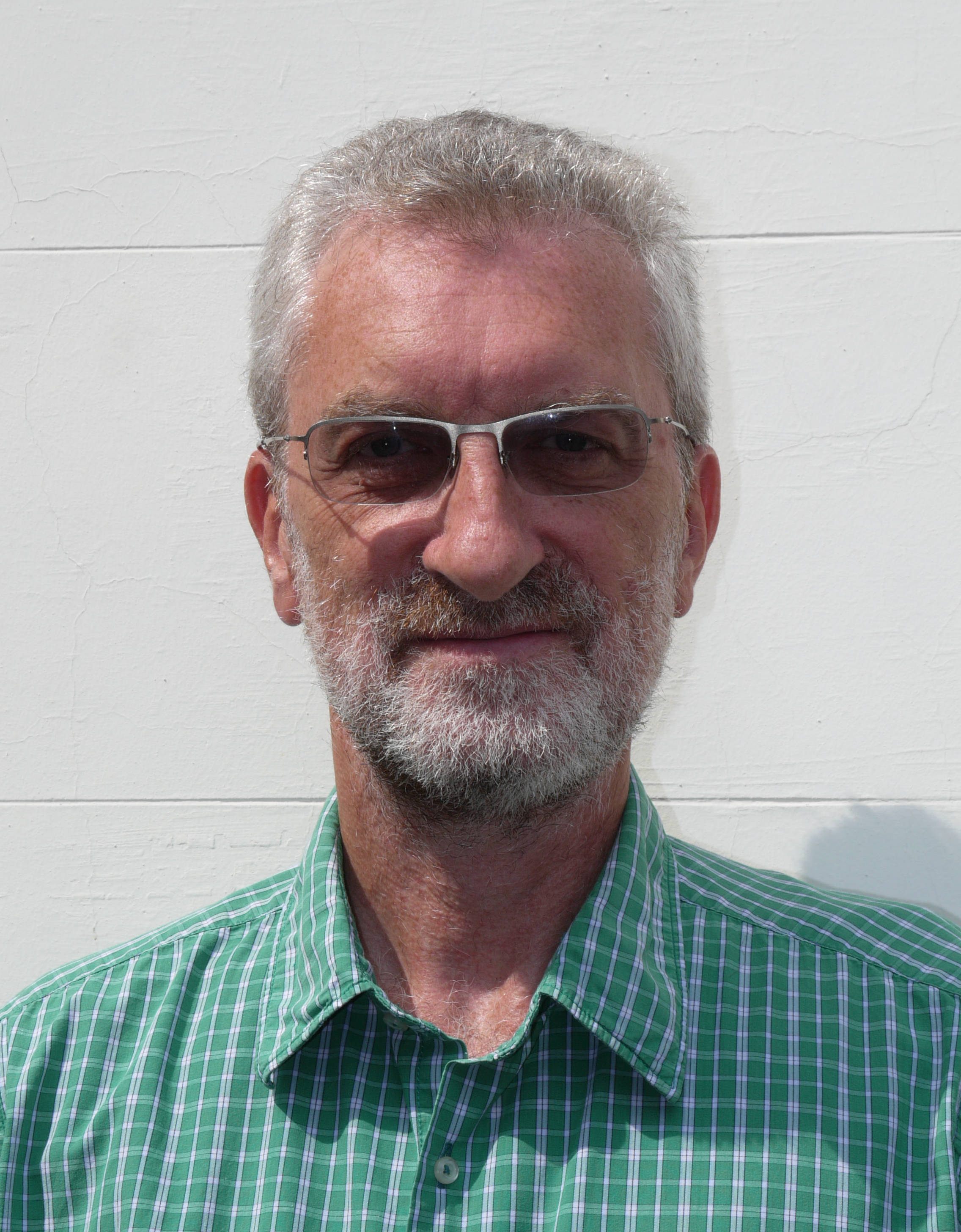
Stefania Perri is an Associate Professor of Electronics at the Department of Mechanical, Energy and Management Engineering (University of Calabria, Italy). She holds a PhD in Electronics Engineering from the University of Reggio Calabria and has been actively involved in research and teaching since 1996. Research Interests include: Quantum-Dot Cellular Automata (QCA) - Invented an efficient QCA adder design methodology with three theorems. Image Processing - Developed memory architectures for aerospace applications and stereovision systems on FPGA. Low-Power Circuits - Designed novel SRAM cells and validated sub-threshold logic models. High-Speed Arithmetic - Holds US Patent 7,016,932 B2 for carry propagation optimization. Scientific Contributions: Over 120 publications including 58 journal papers, 48 conference proceedings, 3 patents International Collaborations with University of Rochester (USA) and Idaho State University Awards: Best Paper Awards at CENICS 2016 and CENICS 2010 Bronze Leaf Certificate at IEEE PRIME'06 Multiple Invited Paper recognitions
Carlo Sanna is an Associate Professor at the Department of Mathematical Sciences (DISMA) of Politecnico di Torino, Italy. His research focuses on algebraic and analytic number theory, cryptography, and their intersections, particularly in post-quantum and public-key cryptographic systems. Research Interests : Algebraic Number Theory, Analytic Number Theory, Cryptanalysis, Post-Quantum Cryptography, Public-Key Cryptography, Discrete Mathematics. Teaching : He teaches Linear Recurrences (PhD level) and Advanced Cryptography (Master's level) at Politecnico di Torino, while also lecturing Linear Algebra and Geometry for Aerospace and Management Engineering. Publications : His recent work spans Fibonacci partitions, Lucas sequences, post-quantum cryptographic algorithms, and properties of linear recurrences. Supervised PhD Students : Leonardo Errati (Post-Quantum Cryptography, 2025) Giulia Salvatori (2024) Federico Accossato and Enrico Guglielmino (2022) Giuliano Romeo (2021-2025, p-adic continued fractions) Research Projects : Algebraic Methods in Cryptanalysis (2025-2027, Scientific Director) QUBIP (Quantum-oriented browser updates, 2023-2026, Scientific Head) SERICS Spoke 5 (Cybersecurity, 2023-2025, Scientific Manager) Email : carlo.sanna@polito.it
Gabriella Olmo is a Full Professor in the Department of Control and Computer Science (DAUIN) at the Polytechnic University of Turin, where she also serves as a member of the Interdepartmental Center PolitoBIOMed Lab - Biomedical Engineering Lab. Her academic and research activities are centered on biomedical signal processing, neuroscience, and artificial intelligence, with a strong emphasis on healthcare applications. She is actively involved in doctoral education, supervising PhD candidates in Computer and Systems Engineering, Artificial Intelligence, and Biomedical Engineering, and has contributed to doctoral programs at both the Polytechnic University of Turin and the University of Turin. Her research interests include biomedical signal processing , neuroscience , artificial intelligence , telecommunications , and digital health , with applications in Parkinson’s disease, sleep disorders, neonatal monitoring, and stress assessment. She leads several major research initiatives funded by national and European programs, including PNRR, EU Horizon Europe, and private foundations, focusing on wearable technologies, AI-driven diagnostics, and telemedicine. Her recent publications demonstrate a consistent trend in developing AI-powered, non-invasive solutions for monitoring neurodegenerative and sleep disorders using wearable sensors and signal processing. These works span topics such as freezing of gait detection, REM sleep behavior disorder, neonatal pain assessment, and deep brain stimulation effects, reflecting a strong interdisciplinary focus on clinical translation of engineering innovations. She has led or managed numerous competitive research projects, including OMNIA-PARK, PERSIMMON, S-CoDe, and NODES, and holds patents in distributed arithmetic coding and video storage. Her leadership roles as Scientific Director and Contractual Manager highlight her active engagement in both academic and applied research. She advises a large cohort of PhD students working on AI in healthcare, computer vision, and biomedical signal analysis. Her teaching portfolio includes courses in Signal Analysis, Telemedicine Technologies, Artificial Intelligence in Medicine, and Machine Learning in Healthcare, across undergraduate, master's, and doctoral levels. She is a key member of the SMILIES research group, which focuses on resilient computing architectures for life sciences, and collaborates with healthcare institutions such as the Orfanelle Nursing Home on geriatric frailty monitoring.
Francesco Tulone is a Researcher at the Department of Mathematics and Computer Science, University of Palermo. His primary academic role involves teaching and research in mathematical analysis and integration theory. University: University of Palermo Department: Department of Mathematics and Computer Science Academic Rank: Researcher Tulone's research focuses on real analysis, harmonic analysis, and integration theory, particularly involving Henstock-Kurzweil integrals, Fourier series, and generalized integrals. His work explores descriptive characterizations of integrals, derivative recovery, and convergence properties of trigonometric and Haar series. His publications span topics like the Hake theorem, variational measures, and applications of integration theory to harmonic analysis. No scientific awards or part-time status are explicitly mentioned. Contact: francesco.tulone@unipa.it
Pasquale Corsonello is a Professor of Electronics at the Department of Informatics, Modeling, Electronics and System Engineering (DIMES) , University of Calabria. He has held academic positions at the University of Reggio Calabria and the University of Rochester (Adjunct Associate Professor). His career spans over three decades in digital electronics, VLSI design, and low-power systems. Education: Master's in Electronic Engineering, University of Naples “Federico II” (1988) Key Roles: Editor-in-Chief (Journal of Low Power Electronics), Senior Area Editor (IEEE Transactions on Circuits and Systems II), Steering Committee Member (IEEE Transactions on VLSI Systems) Research interests include: Embedded systems and low-power design for IoT VLSI architectures for image processing and neural networks FPGA-based accelerators for real-time applications Quantum-dot cellular automata (QCA) circuits His recent publications focus on energy-efficient FPGA implementations, approximate computing for imaging, and QCA-based arithmetic circuits. He has co-authored over 180 technical articles and holds three patents. Awards : BEST ASSOCIATE EDITOR IEEE CASS AWARD (2016) GOLDEN LEAF Certificate (PRIME 2019) Multiple BEST PAPER AWARDS at ICECS, CENICS, and PRIME Top 25 Downloaded Articles (IEEE Transactions on VLSI Systems) Leadership : Coordinated PhD programs in Information and Communication Technologies Directed research units in projects exceeding €8M in funding Member of editorial boards for IEEE Transactions and Electronics journal He leads the Nanoelectronics and Microsystems research group , which integrates material characterization, IC design, and system-level electronics for applications in power systems and photovoltaics.
Simona Bonvicini is an Associate Professor at the Department of Physical, Computer and Mathematical Sciences, University of Modena and Reggio Emilia, Italy. Her research focuses on geometry, combinatorics, graph theory, and algebraic structures, with a particular emphasis on cycle decompositions, edge-colorings, and symmetric graph designs. She teaches Geometry for Mathematics students and Mathematics and Computer Science for Geological Sciences students, emphasizing affine/Euclidean geometry, linear algebra, and algorithmic problem-solving. Her work spans topics like Hamilton-Waterloo problems , Kirman Triple Systems , and 1-factorizations , often involving collaborations with researchers such as Marco Buratti and Gloria Rinaldi. She has explored automorphism groups, critical graphs, and applications to DNA self-assembly, though no specific scientific awards are mentioned in the provided data. Her recent publications address even cycle decompositions, palette indices, and structural graph properties. Teaching methods include in-person lectures, digital platforms like Moodle, and problem-solving exercises. She is available for student reception by appointment.
Nicola Anselmi is a Researcher (RTD-A) at the University of Trento, affiliated with the Department of Civil, Environmental and Mechanical Engineering. He also contributes to the Department of Physics through teaching and research. His work focuses on advanced antenna array design, quantum computing applications in electromagnetics, and modular phased array architectures. Key research areas include tolerance analysis of reconfigurable systems, compressive sensing techniques for antenna characterization, and optimization strategies for next-generation wireless communication systems. He teaches courses such as Antenna Theory and Synthesis Methods (Civil Engineering) and Quantum Electromagnetics (Physics), emphasizing theoretical foundations and practical software applications. His research leverages quantum computing for solving complex electromagnetic problems and explores novel array configurations for low Earth orbit (LEO) satellite communications and urban wireless networks. Anselmi’s recent work highlights advancements in interval arithmetic for robust array tolerance analysis, Bayesian compressive sensing for microwave imaging, and self-replicating tiling techniques for modular array design. His publications span IEEE journals and conferences, addressing topics like electromagnetic environment optimization, sparse array synthesis, and AI-driven antenna optimization. Though no scientific awards are explicitly mentioned, his contributions reflect cutting-edge innovations in electromagnetics and quantum engineering. His research also involves collaborations with the ELEDIA Research Center, focusing on task-oriented reflectarrays and system-by-design methodologies for multi-scale applications. Current interests include overcoming electromagnetic challenges in smart cities and next-generation radar systems.
Stefano Alberto Malan is a Tenured Assistant Professor at the Department of Electronics and Telecommunications (DET) , Politecnico di Torino, and a member of the CARS@PoliTO - Center for Automotive Research and Sustainable Mobility . His academic rank is Assistant Professor in the scientific disciplinary sector IINF-04/A - Systems and Control Engineering (Area 0009 - Industrial and Information Engineering). Educational Background : Laurea in Electrical Engineering (1988) from Politecnico di Torino. Control Engineer at FIAT Research Center (1988-1990). Research Interests : Stefano's work spans Automatic Control , Control Systems Engineering , and Dynamic Modeling , with a focus on model-based and sensor-based algorithms for combustion and emission control in diesel engines and Direct Virtual Sensors . He contributes to Robust Control via uncertainty model sets identification, Building Energy Management (e.g., WiFi4Energy, EcoThermo projects), and Automotive Systems (chassis dynamics, engine controls). His methodologies include Computer-Aided Control System Design using H-infinity and interval arithmetic, and Multi-objective Robustness Analysis . Article Trends : His publications since 2015 emphasize Control Systems (e.g., LiDAR for UAS precision spraying), Diesel Engine Emissions Management , Virtual Sensor Design , and Sustainable Mobility . Recent works integrate Machine Learning (e.g., recurrent neural networks) and Optimization Techniques (e.g., genetic algorithms) into automotive and energy systems. Teaching Contributions : He has taught Automotive Control Systems (2019–2025) and Automation and Planning of Production Systems (2020–2021) at Politecnico di Torino’s Master of Science in Computer Engineering . He is a member of the College of Computer, Film and Mechatronics Engineering . Patents : Co-inventor of two national patents: Gruppo contabilizzatore per impianti termici di riscaldamento o raffrescamento (2013, heating/cooling metering unit). Metering unit for heating or cooling systems (2010, PCT/IB2009/055912). Laboratories and Teams : Active in the Automatica Research Group at DET and the CARS@PoliTO center, Stefano collaborates on projects like WiFi4Energy and EcoThermo to advance sustainable mobility and energy efficiency.
Yaroslav D. Sergeyev is a Distinguished Professor affiliated with both University of Calabria in Italy and Lobachevsky University in Russia. With over 8842 citations, he has established himself as a leading researcher in mathematical optimization and computational mathematics. His academic career spans multiple institutions, reflecting his international recognition in the mathematical community. Sergeyev's research primarily focuses on Global Optimization, Numerical Analysis, and his groundbreaking work on Infinity Computing. He has developed novel methodologies for handling infinite and infinitesimal quantities, challenging traditional approaches in numerical analysis. His work bridges theoretical mathematics with practical computational implementations, particularly in addressing complex optimization problems that arise in engineering and scientific applications. The development of the "Infinity Computer" represents one of his most innovative contributions to computational mathematics. His publication record shows consistent contributions since the 1990s, with significant acceleration in the 2000s and 2010s. His research demonstrates a clear progression from traditional optimization techniques to more revolutionary approaches involving numerical infinities. The publications reveal expertise in both theoretical foundations and practical algorithm development for global optimization problems. Scientific Awards: 2010 Pythagoras International Prize in Mathematics Sergeyev's work has significant implications across multiple disciplines requiring advanced optimization techniques. His methodologies have potential applications in engineering design, computational physics, and complex system modeling where traditional numerical approaches face limitations. The development of computational tools based on his theoretical frameworks represents an important contribution to scientific computing.
Marcello De Matteis serves as Associate Professor in the Department of Physics at the University of Milano-Bicocca, Italy, specializing in Application-Specific Integrated Circuit (ASIC) design for medical physics, high-energy experiments, and sensor systems. With over 35 ASICs developed since 2005—including principal design of 20+ chips across 0.5μm CMOS to 16nm FinFET technologies—he bridges electronics engineering with clinical applications in proton therapy and neuroscience. His educational background features a double degree from the Top Industrial Managers for Europe (TIME) program: Industrial Engineering, Polytechnic University of Madrid (2003) Electronic Engineering, Polytechnic University of Milan (2004) Research focuses on radiation-hardened analog circuits for particle detectors (ATLAS Muon Drift Tubes), proton therapy instrumentation (Proton Sound Detector project), and neuromorphic biosensors using neuron-electronic junctions. His work emphasizes low-power, high-precision front-ends for ionoacoustic imaging, with recent publications targeting FLASH radiotherapy monitoring and quantum computing interfaces. Analysis of his 15 most recent publications reveals dominant trends in medical physics instrumentation (70% of works), particularly ionoacoustic dosimetry for proton beam therapy, alongside growing contributions to neuromorphic engineering (20%) and radiation-hardened design (10%). All leverage advanced CMOS/FinFET nodes (28nm–12nm) to address noise, power, and radiation tolerance challenges in clinical and space applications. Key career recognition includes: Italian National Scientific Qualification for Full Professor (Electronics, 2020) Technical Program Committee roles for IEEE ESSCIRC, PRIME, and ICICDT conferences Associate Editor for Journal of Circuits, Systems and Computers (World Scientific) As Principal Investigator for INFN-funded projects since 2018, he coordinates multi-institutional teams across Italy and Germany on proton therapy instrumentation. His grant portfolio includes: Proton Sound Detector (INFN): 4-unit collaboration (Milano-Bicocca, CNAO, LMU Munich, INFN Catania) for real-time Bragg peak localization ScalTech28/FinFet16 (INFN): Rad-hard ASIC design in 28nm/16nm for high-luminosity LHC upgrades SAFIR GEM (2022): Submarine acoustic monitoring infrastructure funded by University of Milano-Bicocca Current leadership spans two research streams: CMOS 28nm biosensors for neuron-electronic interfaces and proton sound detectors for hadron therapy. Previously, he directed MEMS sensor development at University of Salento (2008–2012) and served as technical lead for ATLAS Muon Drift Tube ASICs. His industry collaborations include Infineon, IMEC, and STMicroelectronics, with recent work integrating PVDF ultrasound arrays for melanoma diagnosis and FinFET neurons for neuromorphic computing.
Roberta Gori is an Associate Professor at the Dipartimento di Informatica of the University of Pisa. Her research focuses on formal verification techniques for biological systems and floating-point intensive programs, leveraging abstract interpretation and coinductive methods. She collaborates with BUGSENG Srl on safety-critical systems verification and has led multiple projects including 'Metodi Informatici Integrati per la Biomedica' (UniPi 2020-2021) and PRIN initiatives since 2000. Her work bridges theoretical computer science with practical biomedical applications, addressing challenges in program obfuscation, numerical analysis, and systems biology. Education: Background in Computer Science with focus on formal methods Key research interests include: Verification of floating-point computations Modeling biological systems using reaction networks Formal program analysis and abstract interpretation Development of verification tools like FPSE and ECLAIR Notable collaborations include work with Simula Research Laboratory (Norway) and the University of Parma. Her contributions span over 60 publications, emphasizing both foundational theory and industrial applications in safety-critical domains.
Fabio Frustaci is an Associate Professor in the ING-INF/01 scientific-disciplinary sector at the Department of Computer Engineering, Modeling, Electronics and Systems (DIMES), University of Calabria. Previously, he served as a Research Fellow (RTd A/RTd B), Assistant Professor, and Adjunct Professor at the same department. From 2011–2014, he was a Visiting Research Fellow at the University of Michigan, Ann Arbor. B.S. in Electronic Engineering (2003), University "Mediterranea" of Reggio Calabria Ph.D. in Electronic Engineering (2007), University "Mediterranea" of Reggio Calabria His research focuses on low-power electronic design , FPGA-based hardware acceleration , and approximate computing , with applications in image processing, wearable systems, and neural networks. He actively explores quantum-dot cellular automata , dynamic voltage scaling , and noise-tolerant logic circuits . Recent publications highlight his work in deep learning hardware , energy-efficient multipliers , and real-time imaging systems . He leads research groups in nanoelectronics and microsystems and collaborates on projects involving SRAM optimization , carry skip adders , and radiation-hardened FPGAs . National Scientific Qualification for Full Professor (2023) Frustaci is affiliated with the Nanoelectronics and Microsystems Lab at DIMES, contributing to advancements in power-aware design , embedded systems , and semiconductor device modeling .
Alessandro Zaccagnini is an Associate Professor of Mathematical Analysis at the Department of Mathematical, Physical, and Computer Sciences, University of Parma. His academic career spans over three decades, with significant contributions to number theory and its applications. He has held teaching positions across multiple programs including both Mathematics and Computer Science degrees at various academic levels. His educational background includes a Mathematics degree earned in 1989 followed by a PhD in 1994 from the University of Turin under the supervision of Alberto Perelli. His doctoral research established important results related to the Hardy-Littlewood conjectures in additive number theory. Zaccagnini's research primarily focuses on analytic and additive number theory, with special emphasis on prime number distribution, Goldbach-type problems, and cryptographic applications. His work often employs the circle method of Hardy, Ramanujan, and Littlewood to tackle challenging problems in prime number theory. He has made significant contributions to understanding the distribution of primes in short intervals and the relationship between the Selberg integral and density theorems for zeta function zeros. His recent publications demonstrate a continued focus on additive problems involving prime powers, with particular attention to Cesàro averages and asymptotic formulas in short intervals. The research shows a strong pattern of collaboration, especially with A. Perelli and A. Languasco, across multiple decades. His scholarly output spans both highly technical mathematical papers and more accessible works on cryptography and prime number applications for general audiences. As an educator, Zaccagnini has taught a diverse range of courses including Calculus, Cryptography, Number Theory, and Probability across both undergraduate and graduate programs at the University of Parma. His teaching portfolio reflects his dual expertise in pure mathematics and practical applications in cryptography. Zaccagnini maintains an active research program with publications extending to 2025, demonstrating his ongoing contribution to the field of number theory. His work bridges theoretical mathematics with practical applications, particularly in cryptography, making him a significant figure in contemporary Italian mathematics.
GIOVANNI ZINI is an Associate Professor at the Department of Physical, Computer and Mathematical Sciences of Università di Modena e Reggio Emilia (UNIMORE) . His research focuses on Algebraic Geometry , Finite Fields , and their applications to Coding Theory , particularly in the study of Maximal Curves , MRD Codes , and Permutation Polynomials . He teaches courses such as Linear Algebra , Algebra B , and History of Mathematics II , with office hours on Tuesdays from 10:00 to 11:00 at the Mathematics Building, Via Campi 213/B, Modena, Italy. His ORCID is 0000-0003-4760-0428 . Research Highlights : Zini's work spans Classification of automorphism groups of maximal curves Exceptional scattered polynomials and their role in coding theory Analysis of MRD codes and their tensor rank properties Geometric constructions of quantum error-correcting codes Intersection problems for linear sets in projective geometry Group-theoretic Möbius functions for non-solvable groups His recent publications address the algebraic structures underpinning coding theory, finite field properties, and automorphism groups of maximal curves. Teaching and Supervision : Zini teaches Linear Algebra (Computer Science, 2025), Algebra B (Mathematics, 2024), and History of Mathematics II (Mathematics, 2025). His teaching emphasizes foundational algebra, discrete mathematics, and historical perspectives in mathematical development. He encourages students to engage with both theoretical and applied aspects of these fields.
Danilo Bazzanella is a Tenured Assistant Professor at the Department of Mathematical Sciences (DISMA) at the Polytechnic of Turin. He serves as a Member of the Regulations Commission and the Academic Senate of the Polytechnic University of Turin. His academic affiliations include being the Founder and Head of the CrypTO group (Cryptography and Number Theory Group), Academic Head of the BIT PoliTO Student Team, and Director of the CrypTO node of the National Cybersecurity Laboratory. His primary research interests encompass Number Theory, Cryptography (particularly Post-quantum Cryptography and Public-key Cryptography), and Blockchain Technology. His work bridges theoretical mathematics with practical applications in cryptography and blockchain systems. Bazzanella has made significant contributions to primality testing, consensus protocols, and the mathematical foundations of cryptocurrencies. An analysis of his recent publications reveals a strong focus on the intersection of number theory and cryptography, with particular attention to blockchain applications. His research spans theoretical investigations of prime number distribution alongside practical cryptographic implementations for blockchain systems, demonstrating a unique blend of pure mathematics and applied security research. His honors include membership in several prestigious organizations: DLT Group - Italian Distributed Ledger Technology Working Group (2024-) Istituto Nazionale di Alta Matematica "Francesco Severi" - INDAM (2020-) Laboratorio Nazionale di Cybersecurity (2020-) Unione Matematica Italiana - UMI (2020-) De Componendis Cifris (2018-) Bazzanella actively supervises numerous PhD students working on topics ranging from post-quantum cryptography to blockchain applications and number theory. He has secured multiple research grants from commercial partners including Technology Innovation Institute, DarkMatter, Telsy SpA, and others. His teaching portfolio includes courses on Cryptography, Blockchain and Cryptoeconomics at both Master's and PhD levels. He leads the CrypTO research group and organizes several academic conferences including the biennial CrypTO Conference, CrypTOgraphy Days, and the annual Number Theory Meeting, establishing himself as a central figure in Italy's cryptography and number theory research community.