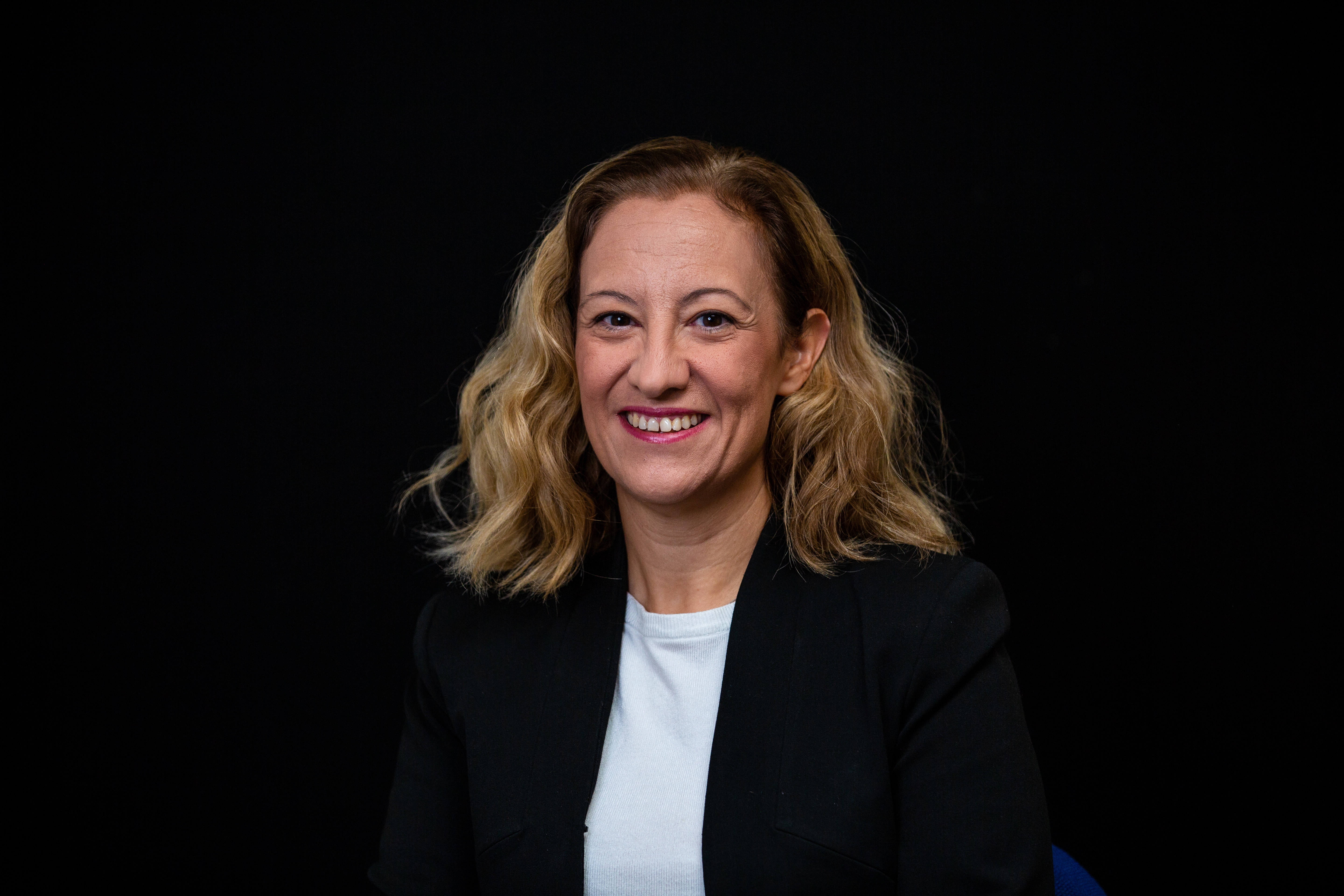
Professor Irem Dikmen is a leading academic in Construction Engineering and Management at the University of Reading, where she serves as School Director of Internationalisation in the Chancellor's Building. Her research integrates engineering, management, and information sciences to advance construction project risk management, particularly focusing on climate resilience, digital technologies, and social value in infrastructure systems. PhD, MSc, and BSc in Civil Engineering from Middle East Technical University Her work leverages systems thinking, artificial intelligence, and digital tools to develop decision-support frameworks for megaprojects and climate adaptation. Recent publications highlight innovations in NLP contract analysis, energy performance ontologies, and risk visualization techniques. She supervises students on topics spanning IoT lifecycle management, ESG risks, and NLP defect detection. Key collaborations include the Climate and Finance Research Cluster and Walker Institute , with contributions to digital construction technologies and sustainability risk assessment. Teaching modules include Construction Risk Management, Economics, and Business Organisation.
Christiane Fellbaum serves as Lecturer with Rank of Professor in Princeton University's Program in Linguistics and Department of Computer Science, where she has been a senior research scholar since returning in 1987 after postdoctoral work at the University of Paris. Her foundational contributions to computational linguistics include co-developing WordNet and co-founding the Global WordNet Association. Her educational background features: Ph.D. in Linguistics, Princeton University (1980) Postdoctoral Fellowship, University of Paris Fellbaum's research integrates theoretical linguistics with computational applications, specializing in lexical semantics, corpus analysis, and semantic network construction. Her work bridges computational linguistics and lexicography through projects like WordNet and Medical WordNet, with recent emphasis on multilingual resources, bias analysis in embeddings, and African language technology development. She examines semantic phenomena including idioms, verb alternations, and emotion scales through both corpus linguistics and formal ontological frameworks. Analysis of her publication trajectory reveals sustained innovation in lexical resource development since the 2000s, evolving from foundational WordNet studies to contemporary work on large language model adaptation and social bias mitigation. Current research demonstrates increasing interdisciplinary collaboration across NLP, cognitive science, and social justice applications. Her scientific recognition includes: Wolfgang Paul Prize from the German Humboldt Foundation (2001) Antonio Zampolli Prize (2006) Fellbaum has secured continuous research funding from the U.S. National Science Foundation, European Union Seventh Framework, Frank Moss Foundation, and Tim Gill Foundation. She actively mentors junior researchers through Princeton's Independent Work seminars and hosts the North American Computational Linguistics Olympiad (NACLO), while leading major international collaborations including the KYOTO and SIERA European projects. As director of the WordNet project and permanent fellow at the Berlin-Brandenburg Academy of Sciences, she maintains leadership in global lexical resource initiatives through the Princeton Language and Intelligence initiative and Natural and Artificial Minds research group.
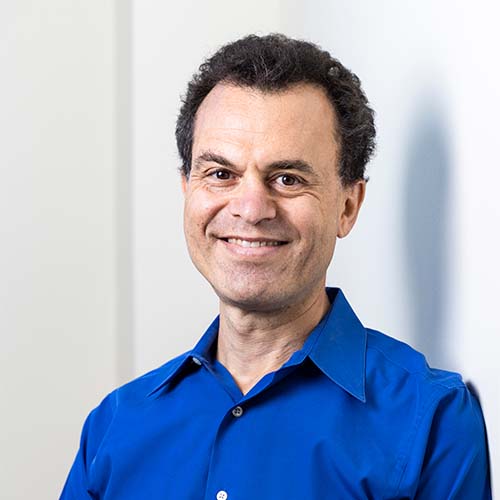
Yang Luo is a Kennedy Trust Senior Research Fellow in Data Science at the University of Oxford's Kennedy Institute of Rheumatology. His research bridges statistical genomics and computational immunology to unravel genetic contributions to immune-mediated traits, with a focus on the major histocompatibility complex (MHC) region. His work leverages large biobank datasets (UK Biobank, Biobank Japan), gene expression resources (GTEx), and proteomic data to decode molecular mechanisms linking genetic variation to disease risk. Specific interests include tuberculosis genetics, multi-ancestry polygenic risk scores, and single-cell eQTL modeling. Recent publications highlight expertise in HLA association studies, evolutionary immunogenetics, and disease-specific cell state dynamics. Key contributions include constructing a global HLA haplotype panel and developing novel statistical methods for admixed population genetics. Scientific Awards: Kennedy Trust Senior Research Fellow in Data Science His lab integrates computational and experimental approaches to translate genetic findings into clinical applications for immune disorders.
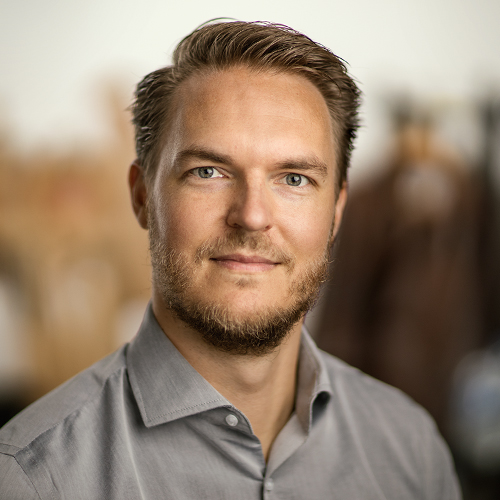
Giorgio Ascoli is a University Professor in the Department of Bioengineering at George Mason University, where he has been since 1997. He is the Founding Director of the Center for Neural Informatics, Structures, & Plasticity (CN3) and Founding Editor-in-Chief of the journal Neuroinformatics . His affiliations span computational neuroanatomy, neuroinformatics, and hippocampal modeling. Education : PhD in Biochemistry and Neuroscience (1996), Scuola Normale Superiore; MS in Chemistry and Biochemistry (1993), Pisa University; BS in Chemistry and Physics (1991), Scuola Normale Superiore. Dr. Ascoli investigates the relationship between brain structure, activity, and function from cellular to circuit levels. His research focuses on anatomically plausible neural networks to model mammalian brains, particularly the hippocampus, with implications for understanding human memory and consciousness . He pioneered computational neuroanatomy, developing tools like L-Neuron for neuronal shape modeling and curating NeuroMorpho.Org , a central repository for digitally reconstructed neurons. His recent publications emphasize neuronal classification , connectome analysis , and biologically informed machine learning . Awards include the 2012 Outstanding Faculty Award (Virginia), 2022 AIMBE fellowship , and 2023 Presidential Faculty Excellence Awards . He has mentored over 20 graduate students and postdoctoral fellows, with funding from NIH, NSF, DARPA, and private foundations. Scientific Contributions : Over 137 peer-reviewed articles, 4 patents, 2 authored/edited books, and leadership in NeuroMorpho.Org and Hippocampome. Grants : $20M+ in cumulative funding, including NIH R01s, NSF BRAIN EAGERs, and Burroughs-Wellcome Trust support. Labs : Leads the Computational Neuroanatomy Group within CN3, focusing on hippocampal modeling, neuronal morphology, and consciousness theories.
Pascal Mettes is a tenured Assistant Professor at the University of Amsterdam within the Informatics Institute, specializing in Artificial Intelligence. He leads groundbreaking research in hyperbolic deep learning, a field he has significantly advanced through theoretical developments and practical applications in computer vision and multimodal learning. His research focuses on three primary domains: hyperbolic vision-language models that address the hierarchical nature of language-vision relationships; hierarchical deep learning using hyperbolic embeddings that naturally accommodate exponential growth patterns; and robust deep learning in hyperbolic space that improves out-of-distribution detection and network resilience. Mettes has established himself as a leading figure in this emerging field through numerous publications at top-tier conferences including CVPR, ICCV, ICML, NeurIPS, and ICLR. His recent work demonstrates how hyperbolic geometry provides natural solutions to fundamental limitations in modern deep learning, particularly regarding hierarchical data structures that cannot be adequately represented in Euclidean space. The publication trends show increasing impact and recognition in the computer vision and machine learning communities, with multiple papers receiving oral presentations and best paper nominations. Best paper nomination ESWC25 for 'Designing Hierarchies for Optimal Hyperbolic Embedding' Finalist MM 2023 Best Open-Source Software Competition (for HypLL) Multiple reviewer awards across major conferences including CVPR, ICLR, ECCV, ICML, and NeurIPS MM 2016 Best Doctoral Student Award TRECVID 2015 Winner Multimedia Event Detection Benchmark Mettes actively mentors eight PhD students working on hyperbolic learning and related topics, while also securing significant research funding including ELLIs PhD Award, NWO ClickNL, Google Perception Academic Funding, and Data Science Centre PhD Grants. He serves in prominent academic roles as Program Chair for International Conference on Multimedia Retrieval 2026 and has organized multiple workshops on hyperbolic learning at major conferences. His leadership in establishing hyperbolic deep learning as a recognized research direction is evident through his survey paper in IJCV 2024 and the development of the HypLL library for hyperbolic learning.
Daryl Cameron is an Associate Professor of Psychology at The Pennsylvania State University and the Sherwin Early Career Professor in the Rock Ethics Institute (2023-2026). He serves as the Social Area Coordinator in the Department of Psychology and is a Senior Research Associate in the Rock Ethics Institute. His interdisciplinary work bridges psychology, philosophy, and neuroscience to investigate empathy and moral decision-making. His educational background includes: Ph.D. in Psychology, University of North Carolina at Chapel Hill, 2013 M.A. in Psychology, University of North Carolina at Chapel Hill, 2009 B.A. in Philosophy and Psychology, College of William and Mary, 2006 Cameron's research centers on the psychological mechanisms of empathy and moral judgment, investigating motivational and situational factors that shape empathic responses in contexts like mass suffering and intergroup conflict. His lab employs affective science , social cognition , and moral philosophy to study empathy regulation toward humans, animals, and artificial intelligence. Key findings reveal that people often avoid empathy due to perceived cognitive costs, and he explores creative interventions to foster compassionate responses across diverse populations including students, community adults, voters, patients, and physicians. Analysis of his 2019-2025 publications shows consistent focus on empathy regulation, moral judgment, and cognitive underpinnings of prosocial behavior, with emerging emphasis on artificial intelligence and animal ethics. His work spans social psychology , cognitive science , and applied ethics , demonstrating how cognitive load influences empathy choices, the dynamics of moral outrage in social media, and cross-species empathic decision-making. Cameron has received the following scientific awards: Sherwin Early Career Professor, Rock Ethics Institute (2023-2026) While specific grant awards and doctoral advisee lists are not detailed in source materials, Cameron's leadership of two major research initiatives—the Empathy and Moral Psychology Laboratory and the Consortium on Moral Decision-Making—demonstrates active mentorship and research funding acquisition. His laboratory explicitly recruits trainees from psychology, philosophy, neuroscience, and related disciplines, reflecting commitment to interdisciplinary training. Cameron directs the Empathy and Moral Psychology Laboratory (https://emplab.la.psu.edu/), which investigates empathy mechanisms using implicit measurement and mathematical modeling, and leads the Consortium on Moral Decision-Making (https://moralconsortium.psu.edu/), an interdisciplinary network advancing research on empathy and moral decisions across diverse contexts and populations.
Theo Arentze is a Full Professor at Eindhoven University of Technology (TU/e) in the Department of the Built Environment, leading the Real Estate Management and Development group. He is affiliated with EAISI Health and EAISI Mobility research institutes. Education: MSc in Psychology (Cognitive Psychology & AI) from Groningen University, PhD from TU/e Urban Planning Research: Spatial choice behavior, decision support systems, activity-based modeling, agent-based simulation His research integrates bounded rationality into spatial choice models to enhance behavioral realism, with applications in real-estate management , neighborhood development , healthy cities , and hybrid work environments . Recent work includes child-friendly urban planning and energy-efficient housing impacts . Prominent article themes include: Hybrid work location decisions Urban public space affective experiences Child friendliness in residential choices Sustainable energy preferences Spatial decision support systems Social network modeling Scientific recognition includes: Best Poster Award (2025) - Computational Urban Planning Conference Long Paper of Distinction (2021) - Healthy Buildings Europe EuroFM Best Paper Award (2017) Pyke Johnson Award (2016) As an educator, he teaches courses in Urban Planning , Housing Economics , and Quantitative Research Methods . His multidisciplinary team combines expertise from psychology, sociology, and urban economics to create high-quality built environments through behavioral research.
Melanie Weber is an Assistant Professor of Applied Mathematics and Computer Science at Harvard University's John A. Paulson School of Engineering and Applied Sciences (SEAS), leading the Geometric Machine Learning Group. Her research focuses on leveraging geometric structures in data for designing efficient machine learning and optimization algorithms with theoretical guarantees. She holds a PhD from Princeton University (2021) and has held fellowships at the Mathematical Institute of Oxford, Brasenose College, and the Simons Institute. Her work bridges geometry, optimization, and machine learning, with funding from NSF, Sloan Foundation, and Harvard initiatives. Education : PhD in Applied Mathematics, Princeton University (2021) BSc/MSc in Mathematics and Physics, University of Leipzig (2016) Research Interests : Dr. Weber's research integrates geometric principles into machine learning and optimization, focusing on non-Euclidean spaces, graph structures, and manifold-based methods. Key areas include optimization on Riemannian manifolds, curvature-based analysis (e.g., Ricci curvature), and developing algorithms resilient to data geometry challenges like over-smoothing in graph neural networks. Her work emphasizes theoretical foundations while addressing practical scalability in high-dimensional data. Awards & Recognition : 2024 Sloan Research Fellowship 2023 Leslie Fox Prize in Numerical Analysis 2023 NSF Grant for Geometric Optimization Grants & Funding : Supported by National Science Foundation (NSF), Alfred P. Sloan Foundation, Aramont Foundation, Harvard Dean’s Fund, and Harvard Data Science Initiative. Labs & Collaborations : Leads the Geometric Machine Learning Group at SEAS, collaborating with institutions like MIT, Max Planck Institute, and industry labs (Facebook, Google, Microsoft). Active in organizing workshops on geometric methods and curvature analysis.
Noah A. Smith is an Adjunct Professor of Computer Science and Engineering at the University of Washington. His work focuses on computational linguistics, machine learning, and natural language processing. He holds a Ph.D. in Computer Science from Johns Hopkins University (2006). His research explores ethical AI applications, multimodal systems, and foundational aspects of language models. Key research areas include: Ethical considerations in NLP, such as detecting rights abuses through text analysis Efficient decoding and alignment strategies for large language models Large-scale evaluation frameworks for multitask and multimodal generation Understanding pretraining dynamics and data composition effects Recent work emphasizes transparency in language models (e.g., tracing outputs to training data) and improving alignment through human feedback. He has contributed to open-source projects like OLMo and Dolma, advancing reproducibility in NLP research. No awards explicitly listed in provided texts. No specific advising or grant details available, though extensive publication output indicates active research involvement.
Fabian E. Bustamante is a Professor of Computer Science at the McCormick School of Engineering, Northwestern University. His research focuses on experimental analysis of large-scale Internet networks and distributed systems, emphasizing network measurement, infrastructure characterization, and system design improvements. He leads the AquaLab research group. Education: Ph.D. Computer Science, Georgia Institute of Technology (200?) M.S. Computer Science, Georgia Institute of Technology Licenciado en Ciencias de la Computacion, Universidad Nacional de la Patagonia San Juan Bosco, Argentina Analista Programador Universitario, same university Research Interests: Professor Bustamante's work spans network survivability, crisis-driven network analysis (e.g., Venezuela's internet), and re-architecting internet infrastructure. His lab develops tools to improve network visibility and system resilience. Recent Work Trends: 2023-2024 publications emphasize geopolitical network impacts, infrastructure interdependencies, and latency optimization across global networks. His team collaborates with institutions like ACM and Springer on measurement-driven system redesign. Lab/Team: AquaLab focuses on applied networking research with real-world deployment implications. Current projects include crisis network analysis and internet topology optimization.
Clyde Kruskal is an Associate Professor in the Department of Computer Science at the University of Maryland, College Park. His research focuses on parallel architectures, models, and algorithms. He earned a Ph.D. from New York University in 1981 and a bachelor’s degree from Brandeis University in 1976. His work includes foundational contributions to parallel computing, such as the read–modify–write concept in distributed systems. Kruskal’s research spans topics like interconnection networks, synchronization mechanisms, and algorithm design for parallel systems. Education: Bachelor’s Degree: Brandeis University, 1976 Master’s Degree: New York University (Courant Institute), 1978 Ph.D.: New York University (Courant Institute), 1981 Research Interests: Parallel computing architectures, parallel algorithms design, multiprocessor synchronization, interconnection networks, and computational geometry problems like graph coloring and visibility analysis. His work emphasizes theoretical foundations and practical implementations in parallel systems. Notable Contributions: Kruskal co-authored the book Problems With A Point: Exploring Math And Computer Science (2019), and his research includes foundational papers on parallel prefix operations, sparse matrix algorithms, and synchronization protocols. His publications span over three decades, reflecting sustained contributions to parallel computing theory and practice. Advising & Outreach: He has mentored students through programs like the Summer Combinatorial Algorithms REU at UMD, fostering undergraduate research in algorithm design and parallel computing.
Prof. Dimitris Gizopoulos is a Professor at the Department of Informatics & Telecommunications, University of Athens, leading the Computer Architecture Laboratory. His research focuses on fault tolerance, design validation, performance, and energy efficiency in microprocessors, GPUs, and AI accelerators. He is an IEEE Fellow (2013) and ACM Distinguished Member (2022). His work is supported by Horizon Europe projects like DARE, Neuropuls, and Vitamin-V, alongside industry grants from AMD, Cisco, and Meta. He participates in networks like HiPEAC and Eurolab4HPC and serves on editorial boards of journals including ACM Computing Surveys and IEEE Transactions on Computers . Prof. Gizopoulos teaches Computer Architecture courses at both undergraduate and graduate levels. His research spans cross-layer reliability analysis, voltage scaling effects, and secure hardware design. Notable contributions include frameworks for GPU reliability assessment (GUFI, GPUI-4) and tools like MerLIN for microarchitecture-level analysis. His lab’s work has been funded by the EuroHPC Joint Undertaking and the Greek-China Research Collaboration program. Key Projects: DARE (RISC-V Europe), Neuropuls (neuromorphic accelerators), Vitamin-V (RISC-V cloud environments). Awards: IEEE Fellow (2013), ACM Distinguished Member (2022), IEEE Golden Core (since 2002). Industry Partnerships: AMD, Cisco, Bosch, NVIDIA, Intel, IBM Research. Labs: Leads the Computer Architecture Lab, focusing on fault tolerance and energy-efficient computing. His work emphasizes bridging hardware-software co-design challenges, with publications in top venues like IEEE Transactions on Computers and ACM Computing Surveys . Recent efforts include analyzing silent data corruptions (SDCs) in CPUs and GPUs, and developing validation frameworks for cloud-native architectures.
Amro Awad is an Associate Professor in the Department of Electrical and Computer Engineering (ECE) at North Carolina State University's College of Engineering. He previously served as an Assistant Professor at the University of Central Florida and as a Senior Member of Technical Staff at Sandia National Laboratories. Dr. Awad earned his Ph.D. and Master's in Computer Engineering from NC State and a Bachelor's from Jordan University of Science and Technology. Research Focus His research spans computer architecture and security, emphasizing secure hardware systems , memory security , and integration of emerging technologies . Key contributions include novel approaches to secure and efficient GPU memory management, FPGA resource scheduling, and DRAM simulation. Publications & Awards Dr. Awad's work appears in top-tier venues like ISCA, MICRO, ASPLOS, and HPCA. He holds six U.S. patents and received the prestigious R. Ray Bennett Faculty Fellow Award and recognition as a Goodnight Early Career Innovator . Funding & Collaborations His research group has been supported by DARPA , Sandia National Laboratories , NSF , Naval Surface Warfare Center , and Air Force Research Lab . Collaborations include AMD Research, Los Alamos National Lab, HP Labs, and Air Force Research Laboratory.
Michael Gastpar is a full Professor at École Polytechnique Fédérale de Lausanne (EPFL) in the School of Computer and Communication Sciences, where he leads the Laboratory for Information in Networked Systems (LINX). He previously held faculty positions at the University of California, Berkeley (2003-2011, earning tenure in 2008) and Delft University of Technology. His research spans information theory, signal processing, communications, and systems neuroscience. His research interests focus on network information theory and related coding and signal processing techniques, with applications to sensor networks and neuroscience. Recent work demonstrates a strong shift toward exploring the theoretical foundations of modern machine learning, particularly investigating transformer architectures from an information-theoretic perspective. His research group at EPFL explores how information theory principles can provide fundamental limits and novel approaches for contemporary machine learning problems. His recent publications reveal a clear trend toward bridging classical information theory with modern machine learning. The 15 most recent papers show increasing focus on theoretical analysis of transformers, rate-distortion frameworks for language models, universal prediction methods, and applications of information measures to machine learning theory. This represents a strategic evolution from his earlier work on sensor networks and physical-layer network coding toward foundational questions in artificial intelligence. Scientific Awards: IEEE Fellow 2013 Communications Society & Information Theory Society Joint Paper Award Information Theory Society Distinguished Lecturer (2009-2011) ERC Starting Grant (2010) Okawa Foundation Research Grant (2008) NSF CAREER award (2004) 2002 EPFL Best Thesis Award Professor Gastpar has advised over 20 PhD students who have gone on to successful careers in both academia and industry. His research has been generously supported by major grants including an ERC Starting Grant "ComCom" (2011-2016) and ongoing support from the Swiss National Science Foundation. He has served in significant editorial roles, including as Associate Editor for Shannon Theory for the IEEE Transactions on Information Theory (2008-11) and as Technical Program Committee Co-Chair for the IEEE International Symposium on Information Theory in 2010 and 2021. He leads the Laboratory for Information in Networked Systems (LINX) at EPFL, which brings together researchers working at the intersection of information theory, machine learning, and networked systems. The lab maintains strong connections with both theoretical research communities and practical applications in communications and neuroscience.
Prof. Dr. Tobias Gemmeke is a University Professor at RWTH Aachen University's Faculty of Electrical Engineering and Information Technology, leading the Chair of Integrated Digital Systems and Circuit Design. His work focuses on neuromorphic computing, hardware accelerators, and energy-efficient electronics. He has pioneered advancements in FPGA-based computational neuroscience simulators, neuromorphic processor architectures, and sensor integration for industrial and medical applications. Research interests include time-domain computing, ReRAM reliability, and co-optimization of neural networks with hardware. Notable contributions include the neuroAIx framework for accelerated neuroscience simulations and energy-efficient ASIC designs for post-quantum cryptography. He actively explores memristive devices and domain generalization techniques for edge computing. Recent publications highlight innovations in spiking neural networks, sensor systems for plain bearings, and time-domain compute-in-memory engines. His work bridges theoretical neuroscience with practical hardware implementations, emphasizing scalability and real-time performance.