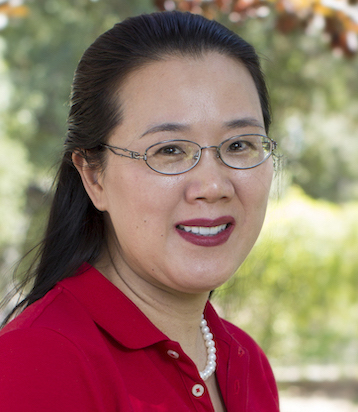
Professor Weiqing Gu is a McAlister Professor of Mathematics at Harvey Mudd College's Department of Mathematics. She is currently on leave until July 2026. Her research focuses on differential geometry and topology, with applications to Big Data analysis, computer-aided design, robotics, and mathematical biology. She explores geometric problems in manifolds, Lie Theory, Grassmann-Cayley algebra, and Riemannian geometry, with practical implications for anomaly detection, predictive modeling, computer animation, and robot motion planning. Her work also extends to industrial mathematics, including optimal control, encryption, and color scheme applications. Professor Gu’s contributions bridge theoretical geometry and applied fields, addressing challenges in dynamics, control theory, and interdisciplinary collaborations. No specific scientific awards or grants are explicitly mentioned in the provided text.
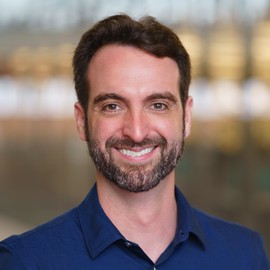
Gabriel W. Hassler is an Associate Statistician at the RAND Corporation and a Professor of Policy Analysis at the RAND School of Public Policy. His research focuses on computational Bayesian statistics, scalable statistical models for big data, and their applications in public health and policy. Key areas include viral genetics and clinical outcomes in HIV/AIDS, SARS-CoV-2/COVID-19 evolution, and biological systems analysis. He holds a B.A. in Anthropology and Biology from Washington University in St. Louis and a Ph.D. in Biomathematics from UCLA. His work bridges statistical methodology with real-world challenges, emphasizing scalable solutions for complex datasets. Recent research includes suicide prevention strategies, public health emergency communication systems, and entrepreneurship trends in digital economies. He explores age-specific suicidal ideation in youth welfare systems and evaluates the reach of national emergency alerts. His interdisciplinary approach addresses societal issues through data-driven policy analysis. Notable contributions include modeling misinformation spread via social networks and analyzing challenges faced by Black and female e-commerce entrepreneurs. His work underscores the intersection of statistical innovation, public health, and equitable policy design.
Sos S. Agaian is a Distinguished Professor of Computer Science at the College of Staten Island and the Graduate Center, City University of New York (CUNY). Previously, he was the Peter T. Flawn Professor of Electrical and Computer Engineering at the University of Texas at San Antonio (UTSA), where he also served in the Graduate School of Biomedical Sciences and led the Multimedia and Mobile Signal Processing Laboratory. He has held visiting positions at Tufts University and Tampere Institute of Technology and was a Leading Scientist at AWARE, Inc., Massachusetts. Dr. Agaian holds a PhD in Mathematics and Physics from the Steklov Institute of Mathematics, Russian Academy of Sciences, a Doctor of Engineering Sciences from the Institute of Control Systems, RAS, and an MS in Mathematics and Mechanics (summa cum laude) from Yerevan State University, Armenia. His research spans Big and Small Data Analytics, Computational Vision, Machine Learning, Digital Forensics, Information Fusion, and Fast Algorithms . His work emphasizes extracting meaning from visual content and developing intelligent systems for applications in healthcare, biomedical data mining, multimedia security, and urban computing. He has contributed foundational theories such as Agaian's Theorem , Agaian's Family , Agaian's Method , and Agaian’s Matrix , which are widely recognized in signal processing and combinatorics. His publications include over 650 peer-reviewed papers, ten books, and nineteen edited proceedings. His research has been cited extensively, reflecting broad impact across engineering and computer science. Trends in his recent work focus on real-time data analytics, neurocomputing, and secure multimedia systems, particularly in defense and medical imaging. SPIE Fellow (2005) AAAS Fellow (2010) IS&T Fellow (2013) IEEE Fellow (2017) Entrepreneurship Award (UTSA, 2016, 2013) Innovator of the Year (UTSA, 2014) Tech Flash Titans - Top Researcher (2014) Distinguished Research Award (UTSA, 2006) Dr. Agaian has mentored over 30 PhD and 60 Master’s students, many of whom now work at top institutions and companies including Intel, Raytheon, MIT-LL, Siemens, and Cisco. He has secured over $7 million in research funding from NSF, DARPA, U.S. Army, DOE, and AFOSR. He co-founded BA Logix, Inc. and the Center for Simulation, Visualization, and Real Time Prediction at UTSA, which received a $5M NSF grant. He holds over 44 U.S. and international patents, several of which are licensed commercially, including to Latakoo for use in media transmission (e.g., NBC’s Sochi Olympics coverage). He leads the Computational Vision, Machine Learning, and Data Analytics (CSMAD) Laboratory , which focuses on real-time intelligent systems, multimodal biometrics, cancer imaging, and urban computing. The lab trains students in cutting-edge research and collaborates with industry and government sponsors.
Sergio López Ureña is a permanent faculty member (Prof. Permanente Laboral) in the Department of Mathematics at the Universitat de València, Spain. He is affiliated with the Faculty of Mathematics and the ANIMS (Numerical Analysis, Images, Multiresolution and Simulation) research group, focusing on applied mathematics. His research lies at the intersection of numerical analysis and approximation theory, with a strong emphasis on subdivision schemes, signal processing, and multiresolution methods. He develops advanced mathematical tools for high-accuracy approximation of piecewise smooth functions and nonlinear subdivision techniques that reproduce exponential and trigonometric functions. His work combines theoretical analysis with computational applications, particularly in geometric modeling and data processing. Based on his recent publications, López Ureña has been actively contributing to the advancement of subdivision schemes, especially in the areas of non-oscillatory interpolation, reproduction of exponential polynomials, and convergence analysis via weighted local polynomial regression. His work demonstrates a consistent focus on improving accuracy and stability in numerical approximation. Dr. Rosa María Donat Beneito (PhD advisor) Costanza Conti Alberto Viscardi Dionisio F. Yáñez Francesc Aràndiga He has published in leading journals such as Applied Mathematics and Computation , Journal of Computational and Applied Mathematics , and Advances in Computational Mathematics . While no formal awards or student advisement details are mentioned, his active publication record since 2017 indicates a strong research trajectory. He is based in the Faculty of Mathematics, contributing to both theoretical and computational aspects of applied mathematics.
Dr. Ian D. Marsland is an Associate Professor in the Department of Systems and Computer Engineering at Carleton University, Faculty of Engineering and Design. He holds a Ph.D. in Electrical Engineering from the University of British Columbia and has been a faculty member since 1999. His research is centered on wireless digital communications, with a focus on error control coding, noncoherent detection, iterative decoding, and indoor localization. B.Sc.Eng. (Honours) in Mathematics and Engineering, Queen's University, 1987 M.Sc. in Electrical Engineering, University of British Columbia, 1994 Ph.D. in Electrical Engineering, University of British Columbia, 1999 His research interests span wireless digital communications , including indoor localization using wireless networks , error control coding (LDPC, turbo, polar codes) , noncoherent receiver design , and applications of iterative decoding . His work bridges theoretical communication systems with practical implementation in modern wireless networks. The analysis of his recent publications (2020–2024) reveals a strong trend toward advanced modulation and coding schemes such as SCMA , faster-than-Nyquist signaling , and polar codes , often integrated with machine learning (e.g., neural network-aided detection) and high-resolution localization techniques. His work frequently appears in high-impact IEEE journals like IEEE Transactions on Communications and top conferences including ICC and GlobeCom . Dr. Marsland has not been explicitly mentioned as receiving scientific awards in the provided texts. He actively advises graduate students and has collaborated extensively with researchers including H. Yanikomeroglu , R.H. Gohary , and T. Shehata . His research has been supported through academic grants and industrial partnerships, though specific grant details are not listed. He supervises work in areas such as MIMO systems, SCMA, polar coding, and indoor positioning. Dr. Marsland leads a research group focused on wireless communications and signal processing, with active projects in next-generation multiple access, low-latency detection, and robust communication in fading and interference-prone environments. His lab contributes to both theoretical advancements and practical implementations in modern wireless systems.
Mohammad Ghaleeh is a Senior Lecturer in Mechanical Engineering & Design at the University of Northampton, affiliated with the Technology Centre for Advanced and Smart Technologies. He is actively involved in research, teaching, and industry collaboration, with a focus on structural integrity, design optimization, and advanced manufacturing technologies. He is accepting PhD students and willing to speak to the media. His research interests are centered on Finite Element Analysis , Materials and Structural Integrity , Design , Robotics , Optimization , and Biomedical Engineering . These areas reflect his expertise in applying computational mechanics to solve complex engineering challenges in industrial and sustainable technology contexts. His work bridges theoretical modeling with practical applications across energy, manufacturing, and transportation sectors. The recent research outputs demonstrate a strong trend in applying numerical and analytical methods to real-world engineering problems, including 3D printing process modeling , pressure vessel design , fatigue and creep analysis , catalytic syngas production , and microbial fuel cells for wastewater treatment . These articles span disciplines such as mechanical engineering, materials science, chemical engineering, and environmental technology, indicating a highly interdisciplinary research profile. Mohammad Ghaleeh has been involved in knowledge exchange and public engagement, as reflected in press/media coverage and hosting academic visitors. His projects include industry consultancy and internal research funding, showing active collaboration with both academic and corporate partners. He has led and participated in multiple research projects, including: Frequency Analysis for Elevator Product Design (2019) Finite Element Analysis for Elevator Design (2019) Testing of Fire Control Switch (2019) Versalift Stability Project (2019) Hosting Academic Visitors and Knowledge Exchange (2025) His research is supported by computational platforms and experimental validation, and he collaborates widely with researchers across institutions. While no formal grants are detailed, his enterprise and consultancy projects suggest external funding and industry engagement. Mohammad Ghaleeh contributes to advancing engineering solutions through rigorous modeling, sustainable materials, and innovative design practices. His work in the Technology Centre for Advanced and Smart Technologies positions him at the forefront of applied mechanical engineering research.
Yiying Tong is a Professor in the Department of Computer Science and Engineering at Michigan State University (MSU), within the College of Engineering. His research focuses on discrete geometric modeling, physically-based simulation/animation, and applications in biometrics, biomolecular surfaces, and medical imaging. Tong received his Ph.D. from the University of Southern California (2004), M.S. from Zhejiang University (2000), and B.Eng. from Zhejiang University (1997). Education: Ph.D., Computer Science, University of Southern California, 2004 M.S., Computer Science, Zhejiang University, China, 2000 B.Eng., Computer Science, Zhejiang University, China, 1997 Research Interests: Tong's work spans discrete differential geometry, computational geometry, fluid dynamics, and biomedical applications. Key areas include: Development of efficient algorithms for mesh generation and surface reconstruction Physically-based simulations for fluids, deformable objects, and sound Applications in biomolecular modeling, face recognition, and medical imaging Geometric modeling techniques for computer graphics and engineering Publications: His research emphasizes geometric and topological methods, with notable contributions to fluid simulation, meshing, and biomolecular surface modeling. Recent work includes advancements in Hodge decomposition, spectral graph theory, and manifold learning. Grants & Collaborations: Tong leads NSF-funded projects on geometric integrators and biomolecular modeling. Collaborators include institutions like Caltech, Zhejiang University, and the University of Southern California. His work bridges computational mechanics and computer graphics, with applications in bioinformatics and engineering. Labs & Teams: Supervises a research group focused on geometric computing, with active projects in discrete differential geometry, fluid simulation, and biomedical applications. Notable alumni include researchers at Qualcomm, Apple, and Google.
Zsolt Horvath is a researcher at TU Wien's Engineering Hydrology Research Section (Forschungsbereich Ingenieurhydrologie). His work focuses on advanced hydrological modeling, flood risk management, and computational fluid dynamics. He specializes in developing high-resolution simulation frameworks for urban/rural flash floods and river flooding, leveraging GPU acceleration and numerical methods like the Saint-Venant system. Expertise: Flood modeling, computational hydrology, geospatial analysis, climate impact studies Key Projects: HORA 3.0 flood risk zoning, interactive flood visualization tools, Kepler shuffle GPU algorithms
David Johnson is an Associate Professor (Lecturer) at the Kahlert School of Computing, University of Utah. His research focuses on geometric modeling, haptics, robot motion planning, and computer science education. He has collaborated extensively with institutions like the School of Computing and Department of Mechanical Engineering at the University of Utah, as well as organizations such as Siemens and NVIDIA. His work spans computational geometry, haptic interface development, and interdisciplinary applications in robotics and biomedical engineering. Notable contributions include algorithms for real-time haptic rendering, collision detection methods, and optimization techniques for robot motion planning. He has also contributed to educational initiatives, including summer computer science programs for youth. Research highlights include advancements in tactile feedback systems, virtual prototyping, and QSAR modeling for environmental toxicity. His publications span journals such as IEEE Transactions on Haptics and conferences like the IEEE International Conference on Robotics and Automation. No scientific awards are explicitly mentioned in the provided texts. Dr. Johnson’s work integrates computational methods with practical applications in fields ranging from medical robotics to sustainable urban design. His academic contributions emphasize both theoretical advancements and their real-world implementation.
Dr. Benjamin Vogt is a researcher at the Offenbach am Main University of Art and Design, affiliated with the Department of Design. His work explores the evolving intersection of traditional design methodologies and digital technologies, focusing on how design processes—from initial sketches to 3D modeling—are transformed by tools like tablets, touchscreens, and virtual reality (VR) systems. University: Offenbach am Main University of Art and Design Department: Department of Design Vogt’s research investigates the conceptual and practical implications of digitization in design, particularly the role of the line as a foundational element. He examines how digital tools like CAD programs and VR systems alter the relationship between human creativity and machine processing, challenging traditional assumptions about spatiality and design workflows. His project draws on academic knowledge from art and architecture, applying it to contemporary design practices. Vogt’s work seeks to redefine the understanding of the line through its mathematization in digital environments, asking how rules and configurations govern its transformation into three-dimensional models.
David M. Rosen is an Assistant Professor at Northeastern University, affiliated with the Departments of Electrical and Computer Engineering, Mathematics, and the Khoury College of Computer Sciences (by courtesy). He leads the Robust Autonomy Lab (NEU-RAL), focusing on mathematical and algorithmic foundations for trustworthy autonomous systems. ScD in Computer Science (2016), Massachusetts Institute of Technology MA in Mathematics (2010), University of Texas at Austin BS in Mathematics (2008), California Institute of Technology His research combines nonlinear optimization, differential geometry, abstract algebra, and probability to design robust algorithms for machine perception and control. Recent work emphasizes convex relaxation techniques for problems like SLAM and rotation averaging, enabling provably optimal solutions in real-world settings. Recent publications highlight advancements in range-aided SLAM, distributed pose-graph optimization, and spectral synchronization methods. These works often integrate semidefinite programming and Riemannian optimization to address non-convex challenges in autonomous navigation. 2023: Grant from Draper Laboratory for decentralized multi-agent perception 2023: Grant from MIT Lincoln Laboratory for certifiable perception tools His awards include the WAFR Best Paper Award (2016), RSS Pioneer Award (2019), RSS Best Student Paper Award (2020), and IEEE T-RO King-Sun Fu Award Honorable Mention (2021). He has contributed to key tools like SE-Sync and Shonan averaging, widely used in robotics and computer vision communities.
Gyde Asmussen is a Research Scientist and Doctoral Candidate at the Leibniz Institute for Science and Mathematics Education (IPN), specializing in Chemistry Education. She holds a Master’s degree in Chemistry and Biology from Christian-Albrechts-University Kiel (2018-2020) and a Bachelor’s degree in the same fields from the same university (2015-2018). Her work focuses on adaptive problem-solving tools in organic chemistry education, combining educational theory with digital innovation. Education: Bachelor’s & Master’s in Chemistry and Biology, Christian-Albrechts-University Kiel Current research investigates adaptive support systems for organic chemistry problem-solving, including: Intelligent tutoring system design Systemization of student difficulties with reaction mechanisms Optimization of tutorial videos for chemistry concepts Her projects align with broader trends in educational technology and domain-specific learning strategies. Asmussen’s publications in journals like International Journal of Science Education and Chemistry Education Research and Practice demonstrate her commitment to improving STEM pedagogy through evidence-based approaches.
Joaquin Bautista Valhondo is a Professor at the Universitat Politècnica de Catalunya (UPC), affiliated with the School of Industrial Engineering and the Department of Business Organisation . His academic career spans over 40 years, with extensive contributions to operations research, production scheduling, and industrial engineering. Doctorate in Industrial Engineering Chair of Industrial Organisation Head of OPE-PROTHIUS and SIR-OPE research groups Research interests focus on Operations Research , Heijunka Sequencing , and Production System Optimization . He has pioneered methods for assembly line balancing, bufferless scheduling, and ergonomic risk integration in manufacturing processes. Scientific awards include the Best Paper for Parallel Session at ICIEM-CIO 2022 and the Primer premio al mejor trabajo at CAEPIA 2021. His work has influenced industries ranging from automotive manufacturing to nuclear waste management. Recent publications (2021-2024) analyze economic impacts of zero-buffer systems, ergonomics in assembly lines, and thermal load optimization in nuclear fuel casks. Collaborations with researchers like Rocio Alfaro and Manuel Mateo highlight his interdisciplinary approach.
Jiri Kosinka is an Associate Professor at the University of Groningen , affiliated with both the Faculty of Science and Engineering and the Faculty of Medical Sciences/UMCG . His work bridges Scientific Visualization and Computer Graphics with Robotics and Image-Guided Surgery . Research spans computational geometry, medical visualization, and fluid dynamics Key contributions in subdivision surfaces, distance transforms, and point cloud processing Recent publications focus on 3D surgical planning , turbulent flow simulations , and medical image analysis . His work integrates deep learning techniques for geometry processing and virtual reality applications in medical education. Notable collaborations include interdisciplinary projects with UMCG and Siemens . Awards and grants are not explicitly listed in the provided data.
Berat Gürcan ŞENTÜRK serves as an Assistant Professor in the Mechanical Engineering Department at Doğuş University's Faculty of Engineering. His academic career spans teaching advanced mechanical engineering courses in both English and Turkish while conducting specialized research in gear systems and computational mechanics. His educational background includes a Bachelor's degree from Süleyman Demirel University (2011), a Master's from Istanbul Technical University (2014) focusing on railway wagon fatigue analysis, and ongoing doctoral research at Istanbul University since 2014. His doctoral thesis centered on mathematical modeling of beveloid gears and tooth contact analysis. Research interests concentrate on solid mechanics, computer-aided fatigue analysis, and precision gear modeling. His work bridges theoretical mechanics with industrial applications, particularly in optimizing gear manufacturing processes and preventing mechanical failure through advanced simulation techniques. Recent publications demonstrate consistent innovation in gear design mathematics and manufacturing simulation. Teaching responsibilities include Computer Applications in Mechanical Engineering, Computer-Aided Engineering Graphics, and Applied Solid Mechanics at both undergraduate and graduate levels. Since 2021, he has held administrative duties as Department Deputy Chair. His publication record shows strong specialization in gear system mechanics with multiple 2024 publications in SCI-Expanded journals.