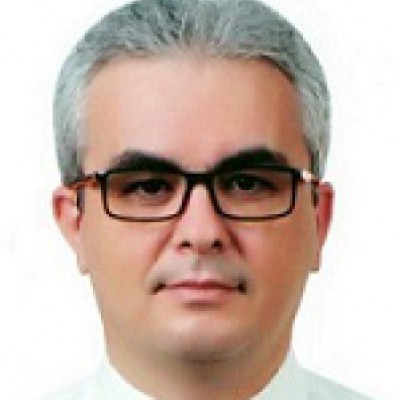
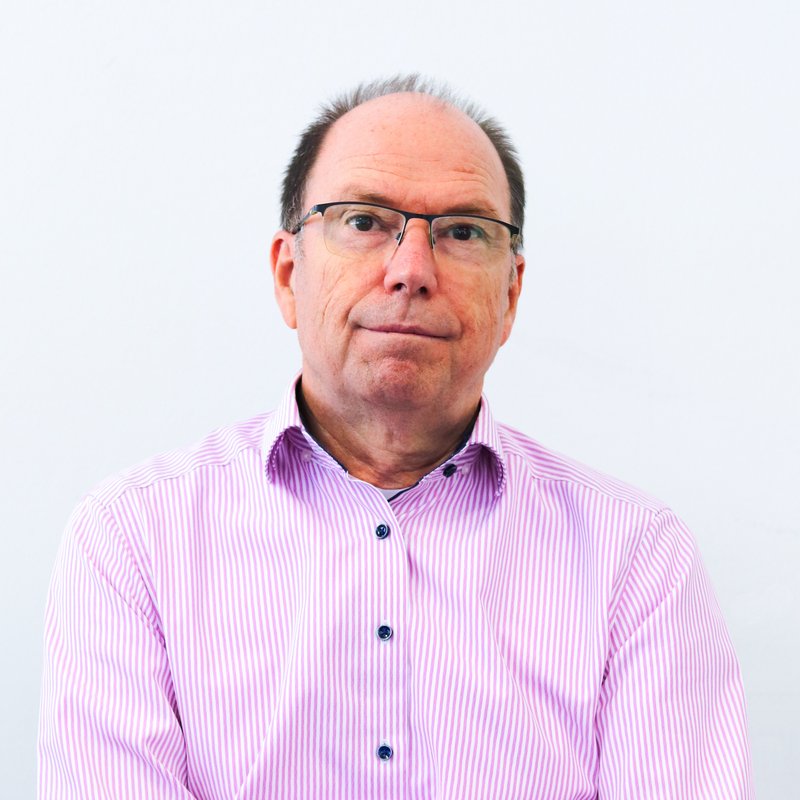
Mehmet TONGUR is a Lecturer at Kırşehir Ahi Evran University's Kaman Vocational School, Department of Machinery and Metal Technologies. He combines industrial experience with academic expertise in CAD/CAM, CNC machining, and composite materials. His work bridges advanced manufacturing techniques with material science. PhD in Mechanical Engineering (2020), Necmettin Erbakan University MSc in Mechanical Engineering (2018-2020), Necmettin Erbakan University BSc in Mechanical Engineering (2009-2014), Atatürk University His research focuses on production technologies , machine design , and optimization techniques . Key interests include machinability of composite materials, tool wear analysis, and computer-aided engineering solutions. Recent publications highlight work on nanoparticle-doped adhesives and thermal properties of hybrid composites , reflecting his expertise in enhancing material performance for automotive and defense industries. Collaborated with Necati ATABERK on studies of hybrid polyurethane adhesives and thermal characteristics of nanocomposites Participated in two university-supported scientific research projects (2019-2020 and 2022) addressing composite material machining and adhesive properties
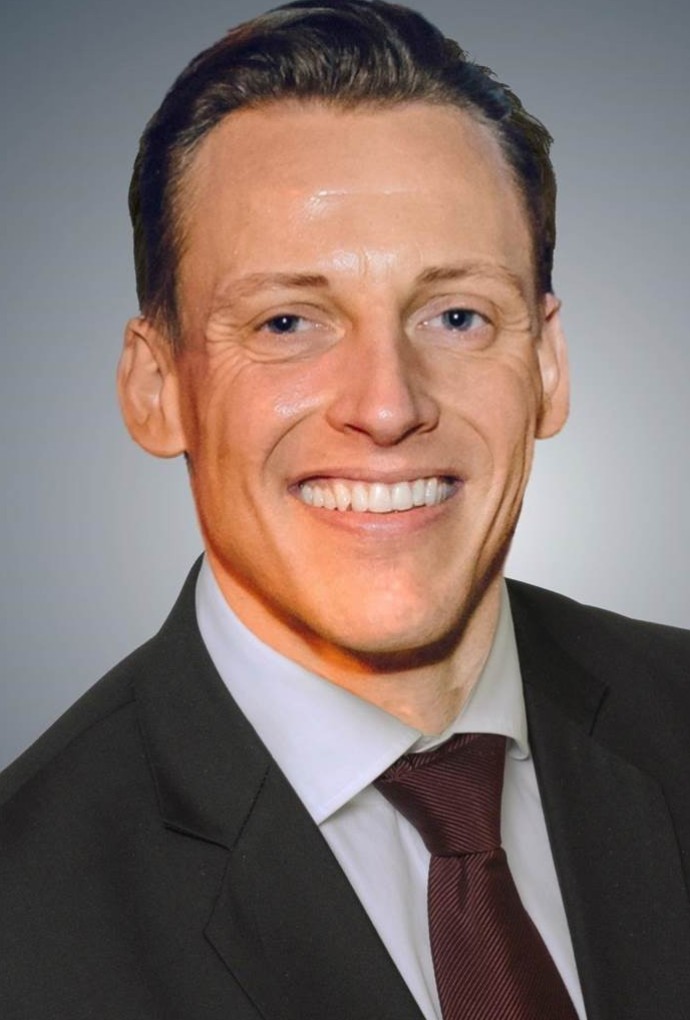
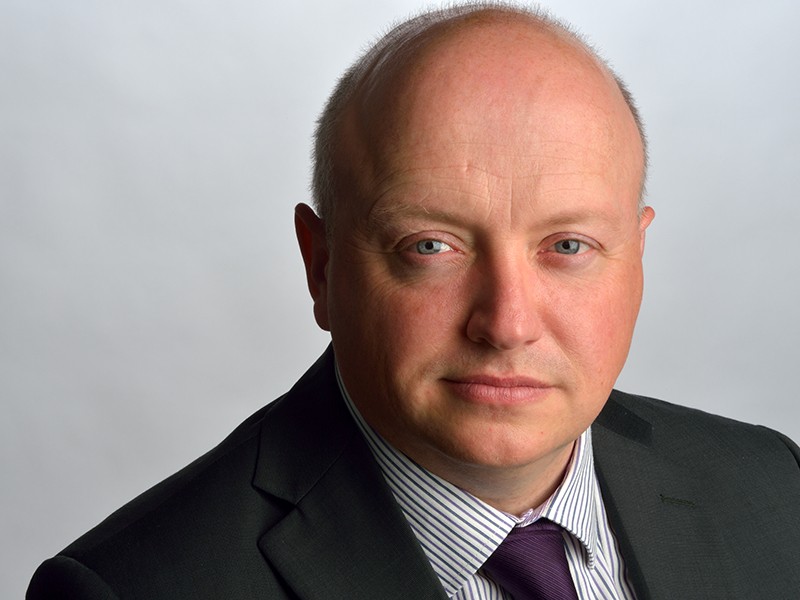
Cüneyd DEMİR is a full-time Lecturer at Ahi Evran University's Mucur Vocational School, Department of Computer Technologies. He has held this position since 2019 and was promoted to Doktor Öğretim Görevlisi (Lecturer with PhD) in 2024. His administrative roles include Department Head (2021-2023), Vice Director of the Vocational School (2021-present), and membership in university committees (Quality Board, Management Council). He holds a PhD in Industrial Design Engineering from Gazi University (2020-2024), an MSc in Defense Technologies from Kırıkkale University (2015-2017), an MSc in Occupational Health and Safety from Aksaray University (2019), and a BSc in Mechatronic Engineering from Gaziosmanpaşa University (2011-2015). His research focuses on Robotics , Mechatronic System Design , Computer-Aided Design/Manufacturing (CAD/CAM) , and Artificial Intelligence , with emphasis on unmanned ground vehicles (UGVs), defense systems, renewable energy integration, and AI-driven design methodologies. Publications primarily explore UGV design using machine learning, solar-powered autonomous systems, and material science for robotics. Recent works demonstrate strong trends in AI/neural network applications for defense technology and systematic design processes. He contributed to the TÜBA/TÜBİTAK-supported project: "Güneş Enerjisi İle Uçuş Süresi Artırılmış Otonom Model Uçak" (Solar-Powered Autonomous Model Aircraft with Extended Flight Duration, 2014-2015) as a researcher.
Jorma Mettälä is a Lecturer at Seinäjoki University of Applied Sciences (SEAMK), specializing in technical education and industrial management topics. His expertise spans Computer-Aided Design (CAD) Computer-Aided Manufacturing (CAM) Industrial Economics Production Control Human Resources Management . Education: Licentiate of Technology degree . Research trends focus on integrating digital tools into engineering education, particularly CAD teaching methodologies. He has contributed to SEAMK's educational development initiatives, including curriculum design for technical programs. Contact: jorma.mettala@seamk.fi
António Ismael Freitas Vaz serves as Associate Professor with Habilitation at the School of Engineering, University of Minho, and holds a Senior Researcher position at the ALGORITMI Research Centre. As a core member of the SEOR (Systems Engineering and Operations Research) R&D Group, he directs research in mathematical optimization methodologies with applications spanning energy systems, additive manufacturing, and biomedical engineering. His institutional profile includes verified metrics: h-index 17, 1,505 citations, and 41 publications including 34 in Q1/Q2 journals. His research program centers on developing advanced optimization frameworks including multi-objective, derivative-free, and semi-infinite programming techniques. Key application domains feature renewable energy integration (demand-response co-optimization, cost-effectiveness analysis), 5-axis 3D printing (curved layer path planning, build orientation optimization), and medical diagnostics (automated tumor detection in wireless capsule endoscopy). Methodological innovations focus on particle swarm optimization, DC programming, and gradient descent complexity for complex constrained problems. Analysis of his 15 most recent publications (2018-2022) reveals three dominant research thrusts: energy systems optimization (33% of output), additive manufacturing (33%), and medical imaging (13%), with foundational optimization theory comprising the remainder. This distribution demonstrates strategic application of core methodologies to high-impact engineering challenges, particularly in sustainable energy transition and advanced manufacturing. The consistent publication in top-tier venues like Renewable and Sustainable Energy Reviews and Applied Energy underscores disciplinary influence. Scientific Awards: No specific awards, fellowships, or medals were documented in the provided profile information. Regarding academic advising, the source material contains no listings of PhD or Master's students supervised. The funding section explicitly indicates zero recorded projects ("Fundings (0)"), suggesting either institutional management of grants outside individual reporting or incomplete profile documentation. His h-index and publication volume imply significant research leadership despite absent grant details. As an integral contributor to the SEOR R&D Group at ALGORITMI, Vaz participates in a cross-disciplinary research ecosystem focused on operational research applications. The group maintains industry partnerships in energy, manufacturing, and healthcare sectors, facilitating translation of optimization algorithms into practical solutions for industrial partners and public administration through the Centre's thematic lines.
Erhan Budak is a Professor at Sabanci University's Faculty of Engineering and Natural Sciences, specializing in manufacturing engineering. With a Ph.D. in Mechanical Engineering from the University of British Columbia, he has held academic positions since 1994 and founded Maxima Manufacturing R&D in 2008. His work focuses on machining dynamics, tool design, and manufacturing process optimization. Sabanci University (2011-Present: Professor; 2004-2011: Associate Professor; 2000-2004: Assistant Professor) Pratt & Whitney Canada (1994-2000: Manufacturing R&D Engineer) Founder of Maxima Manufacturing R&D (2008) Research Interests: Manufacturing processes, machining dynamics, tool design optimization, chatter stability analysis, virtual manufacturing systems, and thermo-mechanical modeling. His publications demonstrate expertise in 5-axis milling, process damping, and industrial applications. Scientific Contributions: Developed analytical methods for chatter stability prediction Innovative tool design approaches for increased productivity Advancements in 5-axis machining simulations Thermo-mechanical force modeling Process damping identification techniques Awards: CIRP Taylor Medal (2003) Outstanding Achievement Award from Pratt & Whitney Canada (1998) Multiple scholarships from UBC and TUBITAK Industrial Applications: Collaborates with Maxima Ltd. for implementing research outcomes in manufacturing environments. Maintains editorial roles with CIRP Journal, International Journal of Advanced Manufacturing Technology, and Journal of Machining Science and Technology.
Professor Alaattin Kaçal is a distinguished academic at Kütahya Dumlupınar University's Simav Faculty of Technology, where he serves as Professor of Mechanical Engineering. With a career spanning over two decades, he has progressed through the academic ranks from Research Assistant to his current position as Professor, while also taking on significant administrative responsibilities including Director of Simav Vocational School and Head of Department. Professor Kaçal's educational background includes a Bachelor's degree in Mechanic Education (1994-1998), Master's degree in Mechanical Education (1999-2002), and PhD in Machine Training (2003-2008), all completed at Turkish institutions. His academic journey has been primarily centered at Dumlupınar University, with a notable period at Gazi University during his doctoral studies. His research focuses on CAD/CAM, machining processes, cutting mechanics, and the machinability of engineering materials, with recent emphasis on additive manufacturing technologies. Professor Kaçal has led multiple significant research projects investigating drilling and milling of advanced materials, particularly titanium alloys produced through additive manufacturing methods. With 44 publications to his name, his recent work demonstrates consistent scholarly output in areas related to surface roughness analysis, tool wear mechanisms, and sustainable machining techniques using Minimum Quantity Lubrication. His research employs experimental methodologies combined with statistical analysis, frequently utilizing Taguchi method and increasingly incorporating artificial intelligence techniques for modeling and prediction. As an educator, Professor Kaçal teaches core mechanical engineering courses including Computer-Aided Manufacturing, Manufacturing Technologies, and Machinability of Engineering Materials, while supervising graduate thesis work. His administrative roles reflect his leadership within the institution, contributing to both academic and operational aspects of the faculty.
Prof. Mirko Langhorst serves as a Professor at Munich University of Applied Sciences within Faculty 03. His institutional roles include: Chairman of the Examination Committee for Master's Degrees in Mechanical Engineering Chairman of the Examination Committee for Bachelor's Digital Engineering (MUC.DAI) Co-director of the Bachelor Digital Engineering (MUC.DAI) program Member of the Examination Committee for 4D Modern Energy Systems and Mobility His research concentrates on Machining, Business Organization, Computer-Aided Manufacturing (CAM), and Production Automation. This interdisciplinary focus bridges mechanical engineering with business process optimization, emphasizing practical applications in industrial automation and digital manufacturing systems. Prof. Langhorst is affiliated with the IPB Laboratory, which supports his work in production technology and engineering education through hands-on research facilities and industry partnerships.
Dr. Kyuil Kim is a Professor in the Department of Mechanical Engineering at Marquette University's College of Engineering. His scholarly work focuses on computer-aided manufacturing, industrial automation, precision engineering, and sculptured surface machining. He earned his Ph.D. in Mechanical Engineering from the University of Wisconsin-Madison (1986), M.S. in Mechanical Design and Production Engineering from Seoul National University (1982), and B.S. in the same field from Seoul National University (1980). Research Highlights: Pioneered volumetric error compensation techniques for multi-axis laser machining systems Developed mathematical models for automotive thermal comfort optimization Contributed to entrepreneurial engineering education frameworks Publications reveal expertise in manufacturing precision, thermal engineering, and educational innovation, with methodological emphasis on CAD/CAM integration, error analysis, and experimental validation. Contact: kyuil.kim@marquette.edu
Prof. Dr.-Ing. Thomas Reibetanz serves as a Professor at the Faculty of Technology, Reutlingen University, with his office located in Building 4, Room 015. Contactable via +49 7121 271 7049 and thomas.reibetanz@reutlingen-university.de, his teaching focuses on applied engineering disciplines with office hours by appointment. His research and instructional expertise spans: Manufacturing Engineering and production technologies Quality Management Systems and CAQ-Labor (Computer-Aided Quality) Digital Factory implementations Simulation techniques including factory planning and casting simulation CAD/CAM integration Prof. Reibetanz leads core coursework in Simulationstechnik, CAD/CAM, and Qualitätsmanagement, emphasizing practical applications in mechanical technology and manufacturing processes within Reutlingen University's engineering programs.
Robert Biggs serves as a Senior Lecturer at the University of Bolton's Centre of Dental Technologies, managing curricula for Dental Technology, Dental Nursing, Pharmaceutical Services, and Health and Social Care programs. His research centers on Dental Technology innovation, particularly CAD-CAM (Computer-Aided Design and Manufacturing) systems in dentistry. He established the UK's first CAD-CAM Centre of Excellence for dental technology, driving advancements in digital dentistry training. Additional interests include Dental Nursing, Pharmaceutical Services, and Health and Social Care. Dr. Biggs contributes to the academic community through regulatory body memberships, educational authorship, and project leadership. His work in creating the CAD-CAM Centre of Excellence demonstrates commitment to elevating dental technology education standards nationally.
Colin Reiff serves as a Research Assistant at the Institute for Control Engineering of Machine Tools and Manufacturing Units at the University of Stuttgart, focusing on advanced manufacturing systems and process optimization. His work bridges theoretical research with industrial applications in automotive, aerospace, and general production contexts. His research interests center on process control and optimization in multi-stage production systems and Additive Manufacturing (Powder Bed Fusion Processes) . Reiff has developed innovative approaches for zero-defect manufacturing, particularly through smart centering methods for rotation-symmetric parts and automated vision data systems using collaborative robots. His work demonstrates how dimensional deviations can be compensated during production rather than detected at final inspection. Analysis of his publication record from 2018-2024 reveals consistent focus on manufacturing innovation, with increasing emphasis on data-driven approaches, software-defined manufacturing, and sustainable production. His research spans both theoretical frameworks and practical implementations, with several solutions transitioning to industrial applications. Reiff actively supervises student theses and practical experiments, including the "Simulation of a feed axis closed loop control with MATLAB/Simulink" laboratory course. His work has been supported through EU-funded projects like ForZDM under Horizon2020 and the High-Performance Center "Mass Personalization" in Stuttgart. His research group operates within the University of Stuttgart's manufacturing ecosystem, contributing to initiatives like the "Stuttgarter Maschinenfabrik" - a fully digitalized production environment for customer-individualized products. This environment leverages digital twins and new technological infrastructure to enable application development freedom and machine park flexibility.
Christine Barrot is a Professor at the University Institute of Technology in Mechanical and Production Engineering of Toulouse (IUT GMP), part of the University of Toulouse, and a member of the Modeling of Mechanical Systems and Microsystems group (MS2M) at Espace Clément Ader. She serves as Director of the IUT of Toulouse Auch Castres, demonstrating significant leadership in academic administration. Her research focuses on microfluidics and experimental fluid dynamics, with particular expertise in molecular tagging velocimetry and thermometry techniques for studying liquid and gas flows in microchannels and microsystems. Dr. Barrot's work spans multiple applications including medical devices (micro-pumps for drug delivery), aerospace engineering, and environmental monitoring systems. Her recent publications (2019-2024) demonstrate a consistent research trajectory focused on molecular tagging techniques for measuring diffusion coefficients, temperature-dependent photoluminescence of vapors, thermally driven micropumps, and advanced optical thermometry methods for microscale gas flows. These works reveal her specialization in experimental characterization of mini- and micro-systems with applications across multiple engineering disciplines. Dr. Barrot has led and participated in numerous significant research projects including PUCK (2023-2027), PERSEUS (2020-2022), MACAO (2016-2020), MIGRATE (2015-2019), and GASMEMS (2008-2012), with funding from European programs including H2020 Clean Sky projects and Franco-German ANR-DFG collaborations. Her teaching portfolio includes Computer-aided manufacturing (CAM), Numerical Control/Machining, Non-destructive testing, Aeronautical Sciences, and Active Pedagogies such as Problem/Project Based Learning. She has made substantial contributions to pedagogical approaches in engineering education, particularly in peer learning frameworks.
Daniel Alter is an Associate Professor in the Department of Restorative Dentistry at New York City College of Technology (City Tech), part of the City University of New York (CUNY) system. His academic journey at City Tech spans over 15 years, progressing from Adjunct Instructor (2008-2009) to Assistant Professor (2009-2016) and currently Associate Professor (2016-Present). He concurrently operates Alter Smiles Dental Studios, applying industry expertise to academic instruction. Professor Alter holds an MSc in Business Management and Leadership from CUNY (2014), a BS in Biochemistry from Queens College (1997), and an AAS in Dental Laboratory Technology from New York City Technical College (1994). His professional certifications include: Certified Dental Technician (CDT), Crown & Bridge (2008) Master Dental Technologist (MDT) from ASMDT/NYU (2000) Full Mouth Cosmetic Rehabilitation certification (1996) His research focuses on transformative dental technologies with emphasis on: Digital Dentistry : CAD/CAM systems, 3D printing, and milling technologies Clinical Applications : Implant abutment design, sleep apnea appliances, and geriatric prosthetics Technical Innovation : Stereolithographic models, digital workflows, and materials science This work addresses both clinical outcomes and dental laboratory efficiency. Analysis of Professor Alter's 12 most recent publications (2012-2016) reveals consistent focus on digital dentistry advancements. Over 75% examine CAD/CAM applications, while others explore 3D printing (17%) and sleep medicine devices (8%). Key themes include treatment efficiency (33%), prosthodontic innovations (25%), and business/education applications (17%). Professor Alter coordinates critical program components including Dental Ceramics courses, CAD/CAM curriculum, and Orthodontics instruction. He maintains active membership in multiple professional organizations: American Society of Master Dental Technologists (2000-Present) ADEA (American Dental Educators Association) Editorial Board Member for Inside Dental Technology National Board for Certification in Dental Laboratory Technology
Bosniakos Georgios Christopher serves as Professor at the National Technical University of Athens (NTUA) within the School of Mechanical Engineering, Department of Manufacturing Technology. His academic journey at NTUA shows progressive advancement from Assistant Professor (1999-2010) to Associate Professor (2010-2015) and finally to full Professor (2015-present). His research focuses on advanced manufacturing technologies including Computer-aided Manufacturing (CAM), Computer numerical control (CNC), machining systems design, Computer-aided process planning (CAPP), robotics applications, Additive Manufacturing, Artificial Intelligence, and Virtual Reality. These research areas position him at the intersection of traditional manufacturing and cutting-edge digital technologies. Professor Bosniakos holds significant administrative responsibilities as Deputy Dean of the School of Mechanical Engineering, member of the Internal Evaluation Team (OMEA), and member of the Innovation Committee. His expertise is recognized through editorial board memberships in six international journals and evaluation roles for major research funding bodies across multiple countries. Member of Sectoral Scientific Council (TES) of Engineering Sciences, National Council for Research and Innovation (NESI) Editorial board member for six international manufacturing journals Research proposal evaluator for EU H2020 and multiple national research foundations Member of Panhellenic Association of Electrical and Mechanical Engineers His teaching portfolio includes undergraduate courses in Machine Tools, Machining Systems I and II, Mechanical Design I and II Laboratory, and Innovative Design of Mechanical Products, plus postgraduate instruction in CAM and Automation Systems. His international experience includes positions at UMIST in England and research work in Germany, demonstrating global academic engagement.