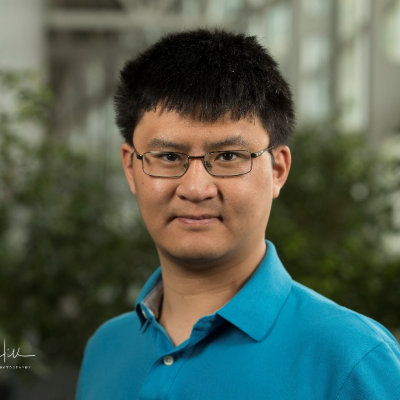
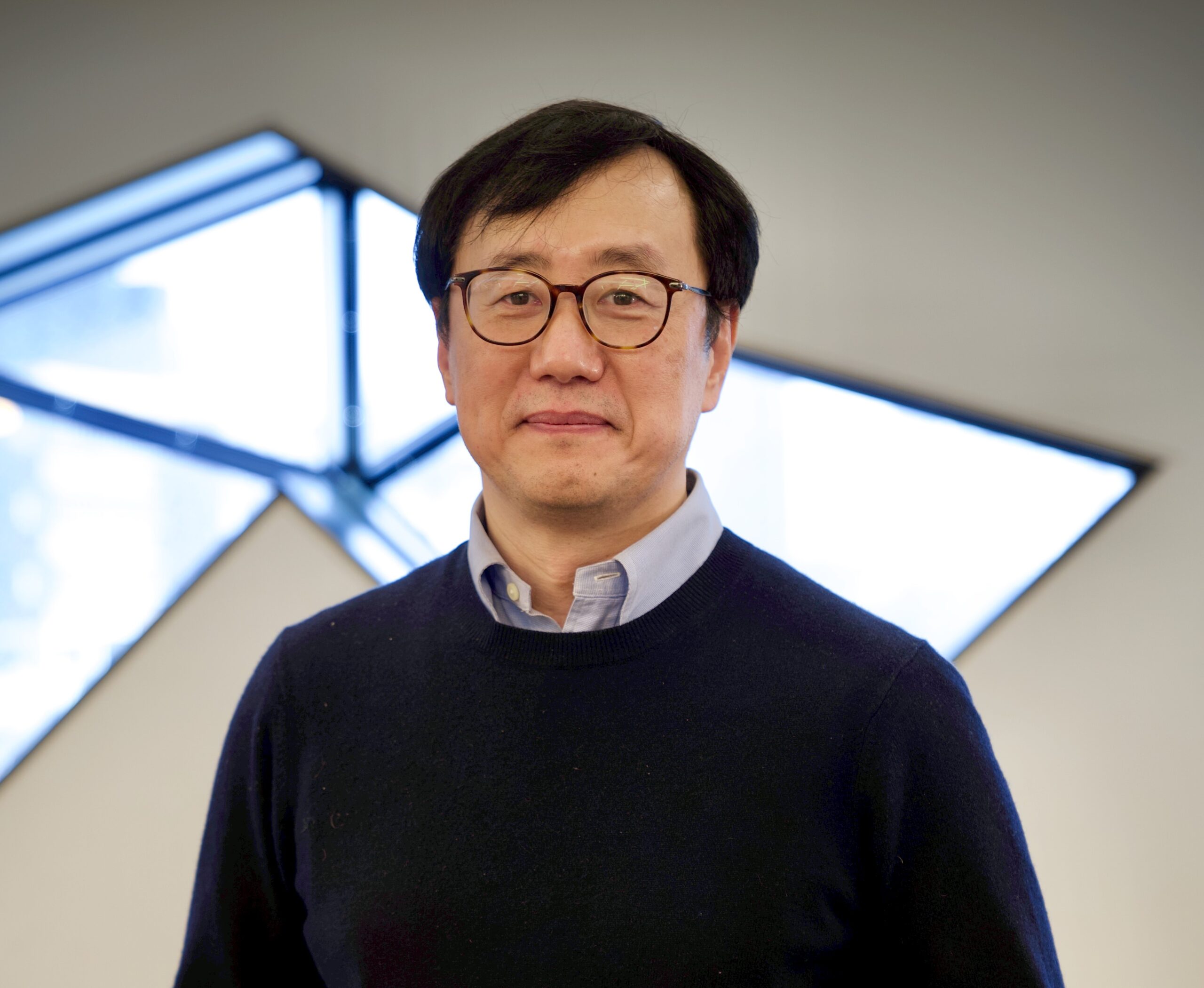
Robert Xiao is an Assistant Professor in the Department of Computer Science at the University of British Columbia (UBC), affiliated with the Designing for People research cluster. He holds a Ph.D. from Carnegie Mellon University and a BMath from the University of Waterloo. His research focuses on interactive technologies, including VR/AR interfaces, sensing systems, and cybersecurity. Notable contributions include Lumitrack (tracking system), TouchTools (touch interaction), and CVE-2023-37271 (Python sandbox exploit). Education: Ph.D., Human-Computer Interaction Institute, Carnegie Mellon University; BMath, Computer Science & Combinatorics, University of Waterloo Affiliations: Core member of UBC's Designing for People cluster Research interests span novel input modalities, mixed-reality systems, and security challenges. He actively competes in DEF CON CTF (multiple 1st places) and publishes in top venues like CHI, UIST, and ISMAR. Recent work explores VR decision-making, low-latency tracking, and collaborative AR/VR environments. Awards: SIGCHI Outstanding Dissertation Award, CHI Honorable Mention, DIS Honourable Mention Teaching includes courses on computer systems (CPSC 213), human-computer interaction (CPSC 554X), and cybersecurity (CPSC 436S). His lab develops tools like SurfShare (surface sharing) and VirtualNexus (collaborative AR).
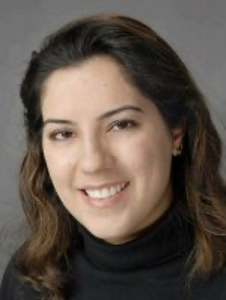
Dr. Xuesen Dong is an Associate Professor in the Department of Urologic Sciences at the University of British Columbia and a senior scientist at the Vancouver Prostate Centre. His research focuses on prostate cancer therapy resistance mechanisms and developing novel therapeutics. His educational background: Medical training in China MSc in Molecular and Cellular Biology, Laval University PhD in Physiology, University of Toronto Postdoctoral training: Samuel Lunenfeld Research Institute (Mount Sinai Hospital, University of Toronto) and Vancouver Prostate Centre Research interests include prostate cancer, therapy resistance, RNA splicing, gene regulation, drug development, hormone-dependent cancers, endocrine regulation, and biomarker discovery. His lab uses RNA sequencing and computer-aided drug design to identify new targets and diagnostics for prostate cancer. Scientific awards and funding: Rising Star Award from Prostate Cancer Canada Continuously funded by Canadian Institutes of Health Research (CIHR) grants since 2005 Dr. Dong supervises graduate students in UBC's Cell and Developmental Biology, Experimental Medicine, and Interdisciplinary Oncology programs. His laboratory at the Vancouver Prostate Centre is dedicated to overcoming treatment resistance in prostate cancer.
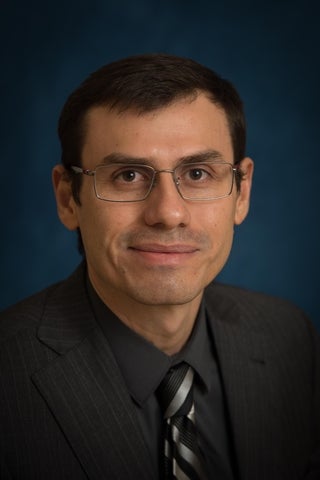
Christophe Danjou is an Associate Professor in the Department of Mathematical and Industrial Engineering at Polytechnique Montréal . He joined as a professor in January 2018 and serves as Scientific Director of the Poly-Industries 4.0 Laboratory since June 2021. His expertise spans Industrial Engineering , Industry 4.0/5.0 , Manufacturing Systems , and Blockchain . His research focuses on solving interoperability challenges in digital transformation through ontological approaches (OntoSTEP-NC) and blockchain technology. Key themes include strategic positioning frameworks for Industry 4.0/5.0, knowledge management , and smart manufacturing . Recent work explores digital twins for system-of-systems resilience , data integrity in IoT , and AI-driven food processing optimization . He teaches courses like Industry 4.0 and Manufacturing Processes . Under his supervision, 7 PhD and 6 Master’s students are advancing research in areas such as blockchain-based smart maintenance , distributed manufacturing , and carbon emission traceability . He is affiliated with institutions including IVADO (Member), CIRRELT (Member), and Data Intelligence Lab (Member). His publications highlight contributions to digital transformation across construction, agri-food, and SMEs, with 83 total publications (15+ recent articles shown).
Shadi Dalili is an Associate Professor, Teaching Stream at the University of Toronto's Scarborough (UTSC) campus. He specializes in Chemistry Education and Organic Chemistry research. His roles include teaching undergraduate courses like Organic Chemistry I and mentoring students in directed research projects. Education: BSc, University of Tehran, Iran (1999) MSc, University of Toronto (2001) PhD, University of Toronto (2005) Research Interests: His work focuses on synthesizing biologically active isatin derivatives, developing hole transport materials (HTMs) for Perovskite solar cells, and advancing chemistry education through technologies like augmented reality (AR). Collaborations with Dr. Kagan Kerman and Dr. Meissam Norouzifar address renewable energy materials, while his work with Dr. Maryam Abdinejad led to the ARchemy app, supported by grants from the Centre for Teaching and Learning and ITIF. Publications: Key contributions span AR-based educational tools, organic synthesis methodologies, and drug discovery. Recent work highlights include studies on student perceptions of AR in chemistry and lab skills seminars. Grants & Collaboration: Received $20,000 in grants for ARchemy development and partnered with UofT’s MADlab. Research emphasizes bridging technology and education, with applications in molecular visualization and renewable energy materials. Labs/Teams: Lead the ARchemy project team and collaborates on Perovskite solar cell research, fostering interdisciplinary innovation.
Luis A. Ricardez-Sandoval is an Associate Professor in the Department of Chemical Engineering at the University of Waterloo and holds a Tier II Canada Research Chair in Multiscale Modelling and Process Systems. His research group develops advanced computational tools for optimizing chemical processes across multiple scales. Doctorate: Chemical Engineering, University of Waterloo (2008) MASc: Chemical Engineering, Instituto Tecnologico de Celaya (2000) BASc: Chemical Engineering, Instituto Tecnologico de Orizaba (1997) The research group focuses on multiscale modelling and process systems engineering , particularly for CO2 capture , energy systems , and heterogeneous catalysis . Their work combines advanced mathematics, machine learning , and uncertainty analysis to optimize chemical processes before physical implementation. Recent publications emphasize dynamic system optimization under uncertainty, multiscale simulation , and CO2 conversion technologies . Key methodologies include probabilistic uncertainty quantification and economic predictive control . Scientific Awards : 1997: First Place, XII National Creativity Contest 1998: Best Student Award, Instituto Tecnologico de Orizaba 1999: Third Place, XIV National Creativity Contest 2000: J.M. Smith Award for Best MASc Student He has collaborated with international institutions like CONACyT-Mexico, China Scholarship Council, and Universidad de Los Andes. His teaching includes graduate courses in process control, optimization, and computer-aided design.
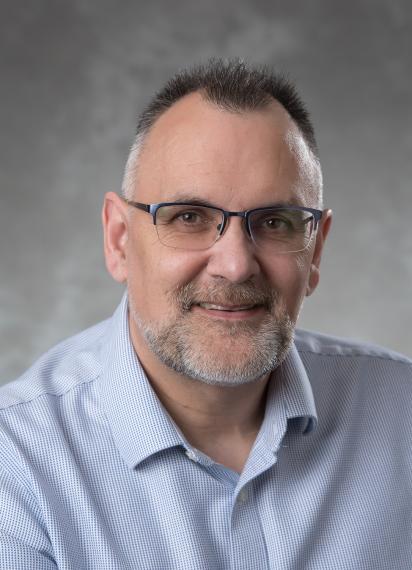
Gary Grewal is an Associate Professor at the School of Computer Science , University of Guelph. His research focuses on developing intelligent Computer-Aided Design (CAD) tools for Field Programmable Gate Arrays (FPGAs) , integrating classical optimization techniques with machine learning and deep learning to address challenges in placement and routing for heterogeneous devices. He has received the Michal Servit Award (2017, 2018) for outstanding FPGA research and the University of Guelph Faculty Association Distinguished Professor Award for Excellence in Teaching (2017) . Grewal has held NSERC Discovery Grants annually from 1999 to 2023. Co-founder of the Guelph FPGA CAD Group Key collaborator with institutions like Ryerson University , University of Toronto , and University of British Columbia His work extends to health technology through the IronTracker mobile app , developed with Andrew Hamilton-Wright and students (A. D'Angelo, J. Carter, F. Liu, R. Pattison) to manage Hereditary Hemochromatosis (HHC) . The app, available in four languages and adopted in 100+ countries, was recognized at Parliament Hill and the Ontario Legislature. Scientific Awards : Michal Servit Award (2018) Michal Servit Award (2017) Distinguished Professor Award for Teaching (2017) NSERC Discovery Grants (1999-2023) His recent publications highlight trends in machine learning for FPGA CAD , including reinforcement learning for partitioning, deep learning for congestion estimation, and adaptive algorithms for placement. Grewal remains active in teaching courses like Discrete Optimization (CIS*6070) and Digital Systems I (CIS*3120).
Octavia A. Dobre is a full Professor and Canada Research Chair Tier-1 in Ubiquitous Connectivity at Memorial University's Faculty of Engineering and Applied Science. Her research focuses on wireless, optical, and underwater communications, integrated sensing and communication systems, and AI-driven network innovations. She leads over 500+ journal/conference publications and holds positions like VP Publications of IEEE Communications Society. Education: Dipl.-Ing. and PhD from Politehnica University of Bucharest Roles: Editor-in-Chief of IEEE Open Journal of Communications Society, former Editor of IEEE Communications Letters Her work spans IEEE standards development, conference leadership (e.g., General Chair, Technical Chair), and industry partnerships with entities like Huawei and DRDC. Recognized globally with awards like IEEE Fellow (2020), Fellow of the Canadian Academy of Engineering (2021), and Top 2% Global Scientist (Stanford, 2020-2024). Her lab explores cutting-edge topics including quantum networks, reconfigurable surfaces, and 6G innovations.
Naglaa Elagamy is an Associate Teaching Professor in the Department of Mechanical and Manufacturing Engineering at Ontario Tech University. She holds a Ph.D. in Mechanical Engineering from Carleton University (2015), an M.A.Sc. in Engineering from Alexandria University (2002), and a B.Sc. in Engineering from the same institution (1994). As a licensed Professional Engineer (P.Eng.) in Ontario (2016–present) and a Certified SolidWorks Associate (CSWA), her expertise spans advanced composite materials, micro-CT imaging, stress simulation, and fatigue assessment of composite structures. Her research focuses on predicting progressive damage in materials and applying micro-CT for quantitative and qualitative damage analysis in carbon fiber reinforced polymers (CFRP). She has also explored aerodynamic performance optimization of small unmanned aerial vehicles (UAVs) through propeller design studies. Elagamy’s publications and presentations emphasize interdisciplinary approaches, combining experimental techniques like micro-CT with computational methods such as the Cohesive Zone Model and Finite Element Analysis. Her work addresses challenges in composite material durability, structural integrity, and multi-mode fatigue behavior. Beyond research, she contributes to teaching core mechanical engineering courses, including Kinematics and Dynamics of Machines, Statics, Solid Mechanics, and Computer-aided Design. Her professional recognitions include the Carleton University Development Grant (2014) and the AUD Recognition for Services (2018). Her advising and grants activities are not explicitly detailed here, but she has secured funding for her research at Carleton University. She is affiliated with the Faculty of Engineering and Applied Science and collaborates with industry and academic conferences such as SAMPE and CAMX. While specific lab affiliations are not mentioned, her research aligns with cutting-edge structural and materials analysis within the department.
Snigdha Chaturvedi is an Associate Professor in the Department of Computer Science at the University of North Carolina at Chapel Hill. She previously held faculty positions at the University of California, Santa Cruz, and has conducted postdoctoral research at the University of Pennsylvania and University of Illinois, Urbana-Champaign. PhD in Computer Science from University of Maryland, College Park Bachelor's degree in Computer Science and Engineering from Indian Institute of Technology (IIT) Kanpur Her research spans Natural Language Processing with emphasis on Narrative Understanding , Text Summarization , and Socially Aware Language Generation . She advances Fairness in AI through ethical NLP applications in Mental Health and Educational Technology . Recent work focuses on 2025 publications in ACL and NAACL journals, alongside 2024 contributions to EMNLP Findings and ICLR . Earlier projects include the NarraSum dataset (2022) and MOOC forum analysis (2020). Scientific recognitions include: ACM Student Research Competition First Place (2014) IBM PhD Fellowship (2014-2015, renewed in 2015) Kulkarni Summer Research Fellowship (2015) WPI STEM Faculty Launch Program Participant (2015) Her team has advised 13 PhD and Master's students with notable placements at Bloomberg, AI2, and University of Southern California. Research integrates Accessibility challenges through collaborations with Google and IBM labs.
Alla Sheffer is a Professor and Associate Head of Faculty Affairs in the Department of Computer Science at the University of British Columbia, Faculty of Science. She is affiliated with multiple research centers including CAIDA (Centre for Artificial Intelligence Decision-making and Action), the Institute of Applied Mathematics, and ICICS (Institute for Computing, Information and Cognitive Systems). B.Sc., Hebrew University, Jerusalem (1991) M.Sc., Hebrew University, Jerusalem (1995) Ph.D., Hebrew University, Jerusalem (1999) Postdoctoral Research Associate, University of Illinois, Urbana-Champaign (1999-2001) Assistant Professor, Technion, Israel (2001-2003) Assistant Professor, University of British Columbia (2003-2008) Associate Professor, University of British Columbia (2008-present) Professor Sheffer's research focuses on geometry processing, addressing algorithmic challenges in digital shape modeling and manipulation. Her work primarily deals with discrete geometry representations, specifically meshes (polygonal model representations), with applications in computer graphics and computer-aided engineering. She utilizes tools from computational and differential geometry, discrete mathematics, and graph theory to generate, manipulate, and edit discrete geometric models. Her research spans virtual and augmented reality, visual computing, and 3D modeling, with significant contributions to sketch-based modeling, mesh processing, and cloth simulation. The 15 most recent publications reveal a consistent research trajectory in geometry processing, with recent work focusing on vector sketch processing, VR drawing tools, and advanced mesh manipulation techniques. Her work demonstrates a strong connection between human perception and computational methods, particularly in the interpretation of freehand sketches and the generation of perceptually-accurate geometric representations. The recurring themes across her publications include flowlines, curve networks, mesh parameterization, and the application of perceptual studies to improve algorithmic outputs. Eurographics Fellow ACM Fellow IEEE Fellow Royal Society of Canada Fellow SIGGRAPH Academy Member UBC Killam Research Prize NSERC Discovery Accelerator Supplement IBM Faculty Award Professor Sheffer has supervised numerous doctoral and master's students, with recent theses focusing on geometric mesh processing, vector sketch interpretation, VR drawing tools, and garment modeling. Her research group maintains strong connections with industry through various partnerships and has received substantial grant funding to support their innovative work in geometry processing and computer graphics. She teaches courses in computer graphics, geometric modeling, and video game programming, contributing significantly to both undergraduate and graduate education in computer science.
Gunho Sohn is an Associate Professor and Department Chair in the Earth and Space Science and Engineering (ESSE) Department at York University's Lassonde School of Engineering. His research focuses on advanced geomatics engineering applications, including 3D urban modeling, photogrammetric computer vision, and geospatial data integration. He specializes in developing innovative solutions for navigation systems, energy optimization, and autonomous robotics through interdisciplinary approaches. Dr. Sohn's work emphasizes practical implementations of remote sensing technologies, with notable contributions to LiDAR data processing, SLAM systems, and BIM-GIS integration. His research has addressed real-world challenges such as improving air quality models using industrial plume observations and creating inclusive pedestrian navigation tools using open geospatial datasets. Recent trends in his publications highlight advancements in deep learning for geospatial tasks, including semantic segmentation of aerial LiDAR data, noise reduction in sensor networks, and UAV positioning systems. His work also explores digital twin applications for simulating urban environments and optimizing building energy consumption through BIM data analysis. While no specific awards or grants are listed, his extensive publication record reflects significant contributions to the fields of geomatics and computer vision. His research group collaborates on large-scale datasets like YUTO MMS and Yuto Semantic, advancing mobile mapping and semantic understanding of urban infrastructure.
Dr. Kristen Jones-Bonofiglio is an Associate Professor and Director of the School of Nursing at Lakehead University. She also serves as Director of the Centre for Health Care Ethics within the Faculty of Health & Behavioural Sciences. Her work bridges nursing practice with ethical frameworks, focusing on moral distress and compassionate care. Academic Background: PhD in Educational Studies (Cognition & Learning Stream), Lakehead University MPH in Nursing Specialization, Lakehead University BScN, Lakehead University Research Focus: Dr. Jones-Bonofiglio's research addresses ethical decision-making in health care, moral distress, teaching compassion in nursing, substance use in inpatient settings, and digital storytelling. She integrates theory with practical applications, such as patient care planning using computer-aided design. Publication Trends: Recent works include pandemic ethics, rural health care frameworks, nurse practitioner retention, and patient-oriented research. Many publications analyze moral distress in acute and community settings, while others explore digital storytelling and educational innovations. Scientific Contributions: AMS Phoenix Fellow Co-editor of Health Care Ethics through the Lens of Moral Distress (2020) Editorial Board, Global Bioethics Enquiry Leadership & Collaboration: She leads the Centre for Health Care Ethics and contributes to EPID@Work Research Institute. Her affiliations include the Centre for Research on Aging & Health. She supervises student theses and emphasizes interdisciplinary collaboration.
Kangkang Yin is an Associate Professor in the School of Computing Science at Simon Fraser University (SFU). His research focuses on computer animation, computer graphics, humanoid robotics, machine learning, and multimedia analysis. He teaches courses such as Computer Animation and Scientific Computing, and holds a PhD from the University of British Columbia (2007), MSc from Zhejiang University (2000), and BSc from Zhejiang University (1997). His work bridges robotics and animation through projects like physics-based character controllers, motion diffusion models, and robotic manipulation. Key contributions include the SIMBICON biped locomotion framework and research into emotion-driven dance animation. Recent efforts emphasize reinforcement learning applications in motion synthesis and robust visual navigation for unmanned ground vehicles. Yin's publications span over two decades, addressing challenges in motion control, physics-based simulation, and machine learning applications. His lab contributes to both academic advancements and practical robotics solutions. Current research trends show strong emphasis on combining generative AI with traditional animation techniques, as seen in recent work on auto-regressive motion models (AAMDM) and physics-augmented reinforcement learning (PARC).
James Stewart is a Professor at Queen's University's School of Computing. His research focuses on biomedical computing and surgical navigation systems. Education: Ph.D. in Computer Science from Cornell University (1992) Location: Office Goodwin 732 Contact: Phone 613 533-3156 Research Interests Professor Stewart's work bridges computer graphics, image processing, and medical applications. Key areas include: Computer-assisted surgical navigation 3D medical visualization Geospatial data representation Robust geometric computation Human-computer interaction in clinical settings Medical imaging uncertainty analysis Scientific Awards Best Poster Award (2013) for 'Image-guided Osteochondral Autologous Autografting of the Ankle' Publications His publications span multiple domains including: Computer graphics algorithms Medical imaging techniques Geospatial visualization Biomedical engineering applications Surgical navigation systems Robust geometric computation
Philippe le Billon is a Professor at the University of British Columbia , affiliated with both the School of Public Policy and Global Affairs and the Department of Geography . His work bridges the environment-development-security nexus , with a focus on climate change, ocean governance, extractive sectors, and conflicts. He collaborates extensively with NGOs and international organizations, particularly on environmental defenders' issues. Research Expertise: Development, Energy Policy, Environment and Climate Change, International Security, Oceans and Fisheries, Social Justice Geographic Focus: Africa, Canada/US, Latin America, Southeast Asia His research explores global challenges such as green transition mineral risks , fish crimes , reparative capitalism , and neoliberalized violence . Recent work examines the techno-utopianism of space mining , AI in anti-corruption , and ocean defender human rights . He has contributed to leading journals like Global Environmental Change and Nature Sustainability , while engaging public audiences via The Guardian and The Conversation . Scientific Contributions: 8 2025 publications on AI in extractives, energy transitions, and ocean governance 7 2024 works addressing carbon neutrality, green extractivism, and fisheries 2023 PNAS study on climate-smart conservation in Africa Awards & Appointments: Scholar, Institute for Advanced Study (Princeton) Fulbright Research Chair, UC Berkeley Research Fellowship, Science-Po Paris Founding Director, Environmental Peacebuilding Association Supervision: Mentored 15+ graduate students including Erik Post (green energy conflicts), Nick Middeldorp (environmental defenders), and Larissa Santos (microhydropower). Current advisees include Erik Post and Philippe's former students hold academic posts at institutions like University of Toronto and University of Sheffield.