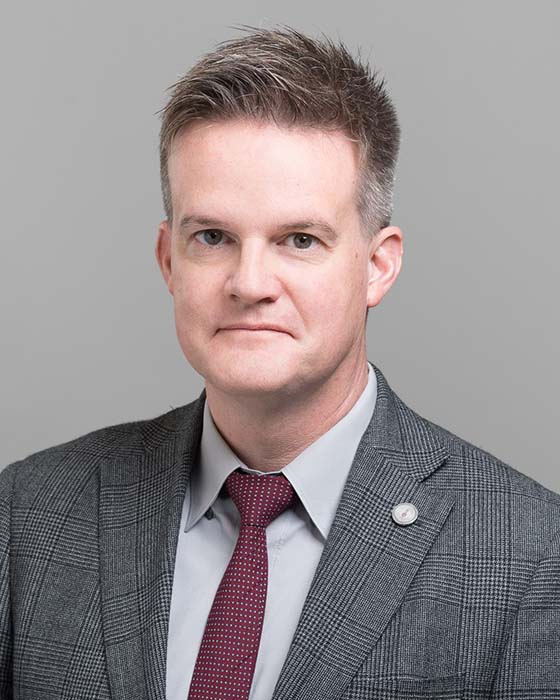
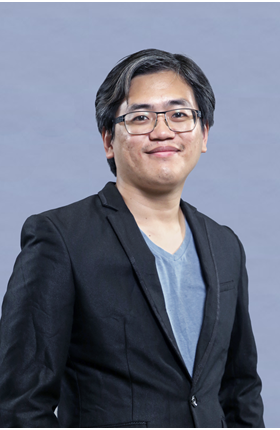
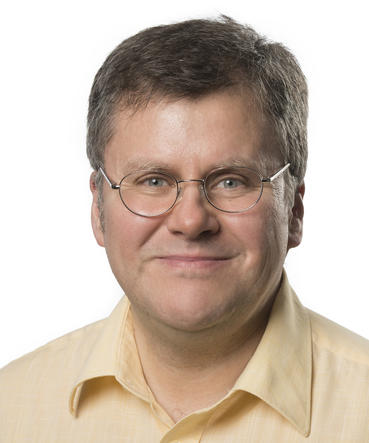
Prof. Bruno Clerckx is a Professor of Wireless Communications and Signal Processing at Imperial College London's Department of Electrical and Electronic Engineering, Faculty of Engineering. He leads the Communications and Signal Processing Group and the Wireless Communications and Signal Processing Lab. Education: M.Sc. and Ph.D. in Electrical Engineering from Université Catholique de Louvain, Belgium Doctor of Science (DSc) from Imperial College London Research Interests: Focuses on wireless communications and signal processing for next-generation networks, including MIMO systems, reconfigurable intelligent surfaces (RIS), rate-splitting multiple access (RSMA), and integrated sensing and communications (ISAC). His work emphasizes 6G technologies, full-duplex systems, and energy-efficient architectures. Key contributions include pioneering research on beyond-diagonal RIS and RSMA prototyping. Awards: 2021 Blondel Medal (France) 2021 Adolphe Wetrems Prize (Royal Academy of Belgium) Fellowships from IEEE and IET IEEE Communications Society Distinguished Lecturer (2021-2023) Labs & Teams: Heads the Wireless Communications and Signal Processing Lab, and is affiliated with the IEEE Special Interest Groups on RSMA and BD-RIS. Collaborates with global institutions including Stanford University, Tsinghua University, and Samsung Electronics. Industry Experience: Former CTO of Silicon Austria Labs and contributor to 4G/5G standards at Samsung. Holds 80+ patents and authored two books on MIMO systems.
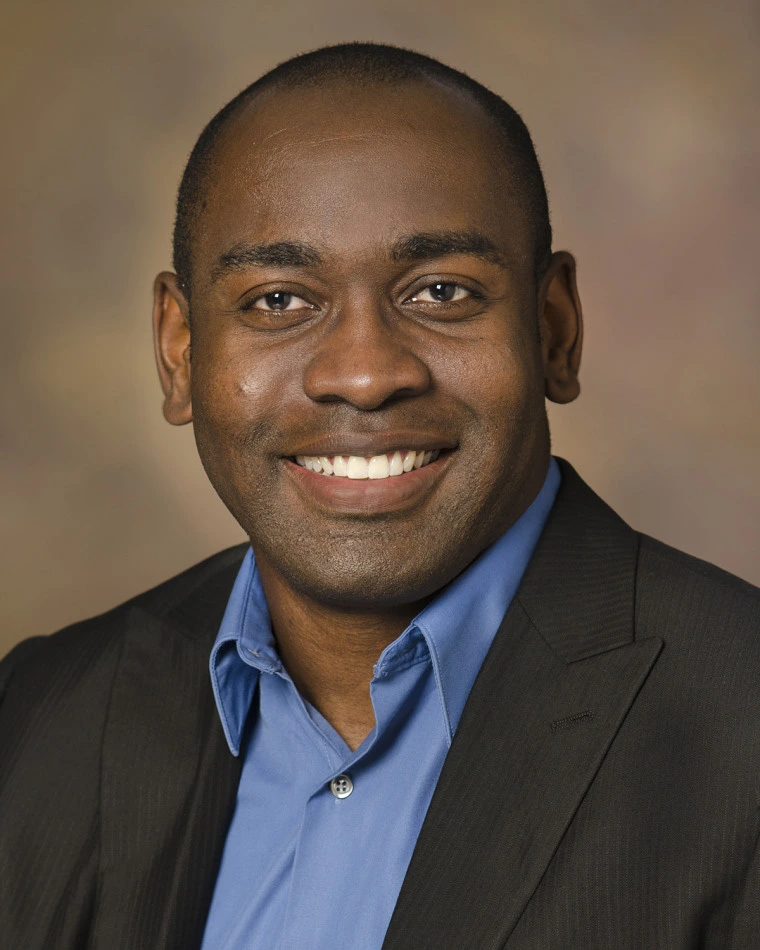
Tosiron Adegbija is an Associate Professor in the Department of Electrical and Computer Engineering at the University of Arizona, where he serves as Director of Graduate Studies and Thomas R. Brown Endowed Fellow. He is a member of the Graduate Faculty and actively contributes to research and teaching in computer architecture and embedded systems. Education: PhD in Electrical and Computer Engineering, University of Florida, 2015 MS in Electrical and Computer Engineering, University of Florida, 2011 BS in Electrical Engineering, University of Ilorin, Nigeria, 2005 His research centers on energy-efficient computing with a focus on bio-inspired computer architecture , including spiking neural network (SNN) accelerators and in-memory computing. He also explores domain-specific architectures , adaptable memory systems , and microprocessor optimizations for IoT . His work leverages novel memory technologies like STT-RAM to enhance performance and reduce energy consumption in embedded and resource-constrained systems. Recent publications highlight trends in hybrid SNN acceleration, domain-specific accelerator generation, and system-level design space exploration. His research is increasingly focused on neuromorphic computing, automated hardware design, and ultra-efficient architectures using emerging materials like antiferromagnetic tunnel junctions. Scientific Awards: National Science Foundation (NSF) CAREER Award (2019) Elected IEEE Senior Member (2020) Best Paper Award at IEEE ISVLSI (2014) Teaching Award, University of Arizona (2018) ACM GLSVLSI Travel Award (2015) He advises numerous graduate and undergraduate students, many of whom have pursued careers at institutions like Pacific Northwest National Labs, Micron Technology, and Amazon. He has secured significant funding, including a $1.9M NSF FuSE2 grant for energy-efficient computing. His lab collaborates with UA Physics, CMU, and UNL. He has also developed educational tools for Chipyard and RISC-V, supporting hands-on learning in computer architecture. Labs and Research Teams: Leads a research group focused on bio-inspired and domain-specific computing, fostering innovation in energy-efficient hardware. The lab emphasizes hardware/software co-design, neuromorphic engineering, and real-world deployment in IoT and biomedical applications.
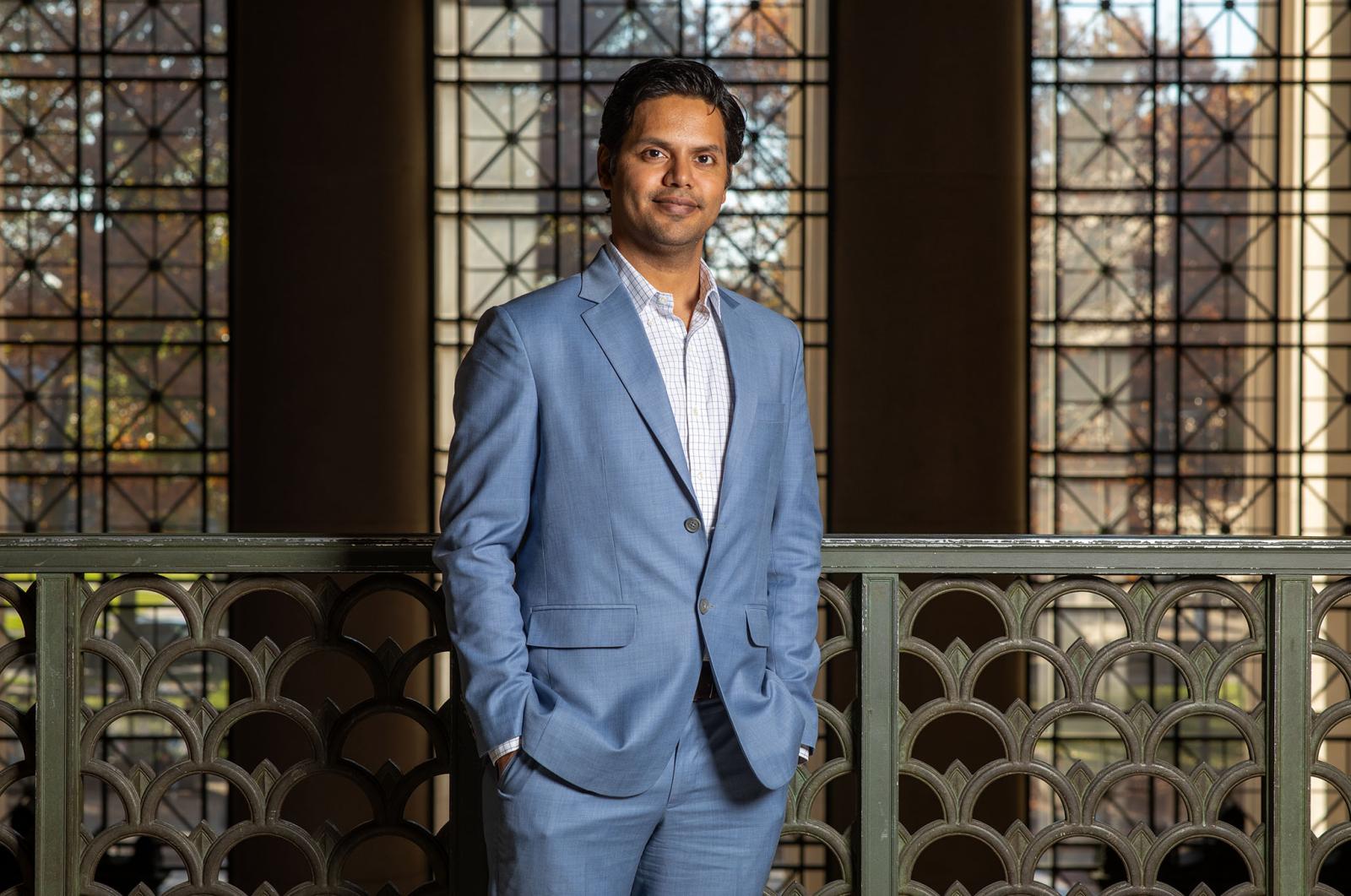
Faez Ahmed is an Associate Professor at the Department of Mechanical Engineering, Massachusetts Institute of Technology (MIT), where he serves as the Doherty Chair in Ocean Utilization. He leads the Design Computation and Digital Engineering (DeCoDE) Lab, focusing on integrating machine learning and optimization with engineering design to enhance human-AI collaboration and accelerate design processes. Ph.D., Mechanical Engineering, University of Maryland College Park (2019) B.Tech.-M.Tech., Mechanical Engineering, Indian Institute of Technology Kanpur (2012) His research interests include generative design methodologies, AI-driven optimization techniques, and the development of algorithms that facilitate collaboration between human designers and artificial intelligence systems. This interdisciplinary work spans applications in automotive design , ship hull synthesis , and wind turbine optimization , with a strong emphasis on creating open-source tools and datasets for the engineering community. Recent publications demonstrate his lab's leadership in fields such as 3D CAD generation , multimodal design datasets , and constraint-aware generative models . These works often address challenges in design space exploration , performance prediction , and data-driven design frameworks . Scientific Awards NSF CAREER Award (2025) ASME Young Investigator Award (2024) Google Research Scholar Award (2024) 3M Non-Tenured Faculty Award (2022) University of Maryland Alumni Research Award (2022) Faez Ahmed's lab has trained numerous Ph.D. candidates and postdoctoral researchers, fostering a collaborative research environment that bridges mechanical engineering , artificial intelligence , and computational methods . The DeCoDE Lab actively engages with industry partners and academic institutions, contributing to large-scale datasets and benchmarks that power the next generation of engineering design research.
Prof. Dr.-Ing. Thomas Zwick is a full professor and director of the Institute of High Frequency Engineering and Electronics (IHE) at the Karlsruhe Institute of Technology (KIT). He holds a Dipl.-Ing. (M.S.E.E.) and Dr.-Ing. (Ph.D.E.E.) from the University of Karlsruhe. His career includes roles at IBM Research (2001–2004), Siemens AG (2004–2007 managing automotive radar teams), and KIT since 2007. He leads research in high-frequency technologies, antennas, radar systems, and wireless communications. Research interests include radio wave propagation, antenna design, automotive radar architectures, and millimeter-wave systems. He has authored/co-authored over 400 papers, 20 patents, and received IEEE Fellow status (2018), honorary doctorate from Budapest University (2022), and membership in the Heidelberg Academy and acatech. His work emphasizes integrating sensing and communication systems, 3D-printed RF components, and high-frequency measurement techniques. Teaching focuses on high-frequency engineering, electronic circuits, and radar systems. He oversees the IHE’s laboratories, including the Microwave Engineering Lab and Student Innovation Lab. Recent work explores sub-THz communication, RIS-aided ISAC systems, and beamforming for reduced EMF exposure in urban scenarios.
Shantanu Dutt is a full Professor in the Department of Electrical and Computer Engineering at the University of Illinois at Chicago , located in Chicago, IL. His office is in 930 SEO at 851 S. Morgan St, and he can be reached at dutt@uic.edu . Education Ph.D. in Computer Science and Engineering, University of Michigan, Ann Arbor (1990) M.Tech. in Computer Engineering, Indian Institute of Technology Kharagpur (1984) B.E. in Electronics and Communication Engineering, Maharaja Sayajirao University of Baroda (1983) Research Interests Professor Dutt’s research agenda centers on VLSI Computer-Aided Design (CAD) , with particular emphasis on physical design and incremental synthesis targeting both ASICs and FPGAs. He explores discrete optimization techniques to solve placement, routing, and partitioning problems. Another major thrust is FPGA built-in self-test (BIST) and trusted design , ensuring provable diagnosability and security against hardware Trojans. He also investigates fault-tolerant computing at both chip and system levels, and develops parallel and distributed computing algorithms for scalable performance. Scientific Awards 1996 Best Paper Award , ACM/IEEE Design Automation Conference, for “A probability-based approach to VLSI circuit partitioning” 1995 Most Influential Paper Award , Fault-Tolerant Computing Symposium, for “Design and reconfiguration strategies for near-optimal k-fault-tolerant tree architectures” Research Impact and Funding Professor Dutt has published extensively in top-tier journals (IEEE TVLSI, ACM TRETS, IEEE TCAD) and premier conferences (ICCAD, DAC, DATE, FTCS). His work has shaped incremental placement, timing-driven routing, FPGA security, and fault-tolerant multiprocessor architectures. While specific grant numbers are not listed, the breadth and longevity of his publication record indicate sustained funding from NSF, industry, and other agencies. Laboratory and Collaborations Although no formal laboratory name is provided, Professor Dutt’s research is conducted within the ECE department’s VLSI CAD and Fault-Tolerance groups, collaborating with graduate students and colleagues across the US and internationally.
Dr. Saqib Khursheed is an Assistant Professor in the Department of Electrical Engineering and Electronics at the University of Liverpool, UK. He holds a PhD in Electronics and Electrical Engineering from the University of Southampton (2010), where he later worked as a Senior Research Fellow on EPSRC-funded projects. His research focuses on reliability, testability, and hardware security of low-power/high-performance systems and 3D integrated circuits. He has served in leadership roles at major conferences such as IEEE DFT (General Co-Chair 2018) and ETS (Program Co-Chair 2017). Dr. Khursheed is a Senior Member of IEEE and Fellow of the Higher Education Academy. His professional activities include roles as Guest Editor for IEEE Design & Test (2016) and IET Computers & Digital Techniques (2018). He currently chairs the Examinations Officer committee in his department and serves on multiple university-level committees (Senate Progress, Quality Assurance). He has organized workshops like the Friday Workshop on 3D Integration (2012-2015) and reviews for top-tier journals/conferences in his field. Dr. Khursheed’s funded projects include the eFutures Sandpit Award (2018) for secure microelectronics design. His teaching responsibilities include coordinating modules like Advanced Low Power Computer Architecture (ELEC470) and Digital Electronics & Microprocessor Systems (ELEC211). His research has led to innovations in hardware security (e.g., PCB Trojan detection via machine learning), age estimation of ICs, and fault tolerance in 3D ICs.
David Salesin is an Affiliate Professor in the Department of Computer Science & Engineering at the University of Washington and a Principal Scientist/Director at Google Research since 2019. He has held academic roles at Cornell University (Visiting Assistant Professor, 1991-92) and guest professorships at Zhejiang University. His career spans academia and industry, including leadership at Adobe's Creative Technologies Lab (2005-17) and Microsoft Research (1999-2005). PhD, Stanford University (1991) Sc.B., Brown University (1983) His research focuses on computer graphics, particularly non-photorealistic rendering, digital typography, color science, and adaptive document layout. He pioneered techniques in image-based rendering, pen-and-ink illustration, and facial animation, with applications in multimedia and user interface design. Article Trends : His work bridges procedural content generation, 3D visualization, and artistic computing, emphasizing user-driven tools for creative industries. Key subfields include texture advection, multiresolution modeling, and real-time camera control for virtual cinematography. Scientific Awards : ACM Fellow (2002) ACM SIGGRAPH Achievement Award (2000) Carnegie Foundation Professor of the Year (1998) NSF Presidential Faculty Fellow (1995-98) Alfred P. Sloan Research Fellowship (1995-97) Numerous industry grants and lab donations He has advised over 30 PhD and Master's students, including leaders at Microsoft, Pixar, and Google. His labs at UW and Adobe focused on graphics, imaging, and creativity tools.
Zhuo Feng is Professor of Electrical and Computer Engineering at Stevens Institute of Technology, directing the HUDSON Lab and holding a Ph.D. from Texas A&M University. His research develops spectral graph methods for VLSI design, including circuit simulation, power grid verification, and machine learning applications. Funded by NSF CAREER and multiple grants, his work has produced award-winning algorithms like GRASS for graph sparsification. Recent publications focus on spectral methods for circuit stability analysis, physics-informed neural networks, and explainable AI frameworks. He teaches graduate courses in VLSI design and GPU programming while co-founding LeapLinear Solutions. NSF CAREER Award (2014) ACM/IEEE DAC Best Paper Award (2013) Multiple Best Paper Nominations (ICCAD 2008, 2006)
Azad J Naeemi is a Professor holding the Dean's Professorship in the School of Electrical and Computer Engineering at the Georgia Institute of Technology. He serves as Editor-in-Chief of the IEEE Journal on Exploratory Computational Devices and Circuits and Associate Director for Computation of the NSF-supported National Nanotechnology Coordinated Infrastructure (NNCI). His educational background includes a B.S. in Electrical Engineering from Sharif University (1994) and M.S./Ph.D. in Electrical and Computer Engineering from Georgia Tech (2001/2003). Prior to academia, he worked as a design engineer in Tehran (1994-1999) and as a research engineer at Georgia Tech's Microelectronics Research Center (2004-2008). Professor Naeemi's research spans nanotechnology with focus on emerging nanoelectronic devices, spintronics, ferroelectric devices, and design technology co-optimization for CMOS/beyond-CMOS technologies. His work bridges materials, devices, circuits, and systems, particularly investigating integrated circuits based on nanoscale devices and interconnects. Educational research includes experiential learning environments for engineering education. Recent publications (2024-2025) demonstrate strong emphasis on spin-orbit torque MRAM, ternary content addressable memories, ferroelectric/antiferroelectric devices, and plasmonic circuits. Key trends include energy-efficient hardware accelerators, neuromorphic computing applications, and compact modeling for advanced technology nodes. His scientific honors include: IEEE Solid-State Circuits Society James Meindl Innovators Award (2022) IEEE Electron Devices Society Paul Rappaport Award (2008) NSF CAREER Award (2013) SRC Inventor Recognition Award (2010) Multiple Georgia Tech teaching awards Professor Naeemi leads research supported by NSF (including NNCI infrastructure) and SRC. His editorial role with IEEE JXCDC positions him at the forefront of exploratory computational devices. He previously served as General Co-Chair for the IEEE International Interconnect Technology Conference (2013). His work connects with Georgia Tech's Microelectronics Research Center and national nanotechnology initiatives through the NNCI network, focusing on computational infrastructure for nanoscale device characterization and design.
Reiko Heckel is a Professor of Software Engineering at the University of Leicester, serving as Director of Postgraduate Teaching for Computing degrees and Data Analytics Lead at the Leicester Innovation Hub. She previously held academic roles at the Technical Universities of Dresden and Berlin before joining Leicester in 2004. Her research focuses on graph transformation systems, model-based development, stochastic modeling, and formal methods in software engineering. She earned her PhD (Dr.-Ing.) in Computer Science from TU Berlin in 1998. Her research interests span software engineering pedagogy, formal specification techniques, and applications of graph grammars in system modeling. Recent work explores stochastic graph transformations for social networks, transparency engineering in AI systems, and blockchain-based smart contract frameworks. Her contributions bridge theoretical foundations with practical applications in cybersecurity, data integration, and human-centric systems design. Key contributions include advancements in automated test case generation via graph transformations, visual contracts for software reverse engineering, and formal methods for complex system analysis. Her work frequently intersects with industry through collaborations via the Leicester Innovation Hub, emphasizing data analytics and technology transfer. Education: MSc Computer Science, Technical University of Dresden PhD (Dr.-Ing.), Computer Science, TU Berlin (1998) Leadership Roles: Head of Department (2014-2018) Director of Postgraduate Teaching (Ongoing) Research Themes: Model-Based Development Stochastic Systems Analysis Graph Neural Networks Trustworthy AI Her publications reflect a focus on formal methods, with recent trends in applying graph transformation techniques to social network modeling, blockchain smart contracts, and educational pedagogy.
Professor Jason H. Anderson is a faculty member in the Department of Electrical & Computer Engineering (ECE) at the University of Toronto, affiliated with the Faculty of Applied Science & Engineering. He specializes in computer engineering, with a focus on field-programmable gate arrays (FPGAs) and related computer-aided design (CAD) tools. BSc in Computer Engineering from the University of Manitoba MASc and PhD in Electrical & Computer Engineering from the University of Toronto His research spans FPGA architecture, circuit design, and CAD tool development. He has contributed to strategic R&D projects through his academic and industry roles. Scientific awards include multiple Best Paper Awards at IEEE and ACM conferences (2017, 2014, 2011, 2010, 2009), the Xilinx Ross Freeman Award (2000), and teaching accolades such as the Gordon Slemon Award (2012) and several ECE Departmental Teaching Awards (2009-2014). He served as General Chair and Program Chair for leading FPGA conferences. As Chief Scientific Advisor and Co-Founder of LegUp Computing Inc., he bridges academic research with industry innovation. He is a licensed Professional Engineer in Ontario and an active IEEE/ACM member.
Adam Marcus is an Associate Professor of Architecture at Tulane University School of Architecture and serves as Research Director of the Center on Climate Change and Urbanism. He directs Variable Projects, an award-winning design and research studio operating at the intersection of architecture, computation, and fabrication, and is a partner in Futures North, a public art collaborative dedicated to exploring data aesthetics. His educational background includes: Master of Architecture from Columbia University Bachelor of Arts from Brown University Adam's research focuses on critical approaches to design computation, digital fabrication, and robotics, exploring how these technologies enable new modes of ecological, material, and public engagement. His work particularly emphasizes climate adaptation, buoyant ecologies for sea level rise, computational representation, and multispecies architecture. He integrates these interests through practical design-build projects that address ecological challenges while advancing architectural representation and fabrication techniques. His recent publications demonstrate a strong emphasis on computational approaches to architectural representation and ecological design. The works consistently explore the intersection of digital technologies with ecological imperatives, particularly focusing on climate adaptation strategies, multispecies collaborations, and innovative drawing protocols that bridge analog and computational paradigms. His book 'Drawing Codes' represents a significant contribution to rethinking architectural drawing in the computational age. Notable awards include: Selected as one of the '30 Most Admired Educators' by Design Intelligence (2013) Recipient of the New Faculty Teaching Award from the Association of Collegiate Schools of Architecture (2016) Adam has served on ACADIA's Board of Directors from 2015 to 2021 and currently serves on the editorial board of the International Journal of Architectural Computing. His teaching at Tulane includes design studios and courses in computational design and digital fabrication with ecological applications, building on his decade of experience at California College of the Arts where he co-founded the Architectural Ecologies Lab. He leads research initiatives through Tulane's Center on Climate Change and Urbanism, developing practical design solutions for ecological challenges, particularly those related to climate change and sea level rise. His Buoyant Ecologies Float Lab project exemplifies this approach, creating 'optimized upside-down benthos for sea level rise adaptation' that has received attention from major media outlets including Smithsonian Magazine and Architectural Record.
Sky Lo Tian Tian is an Assistant Professor at the School of Design, Hong Kong Polytechnic University. His research focuses on "Spatial Phygital Interaction", integrating technologies like XR (Extended Reality), BIM (Building Information Modeling), and gamification to bridge virtual and physical environments through human-centred architectural design. Key expertise includes computational architecture, digital fabrication, and interactive design Developed novel concepts like Human-Virtual Reality Interaction (HVRI) and phygital-aided construction systems His notable projects include the Green Weaved Corridor bamboo pavilion in Chaozhou, China, and the Meta Archive platform for 3D model archiving. He actively organizes workshops at international venues like DigitalFuture, CCD-ASC, and POLAR. Scientific Awards : Full Doctoral Scholarship recipient from The Chinese University of Hong Kong and Victoria University of Wellington
Tariq Iqbal is an Assistant Professor at the University of Virginia , with joint appointments in the Department of Systems and Information Engineering and Department of Computer Science . He leads the Collaborative Robotics Lab (CRL) , specializing in human-robot teams and embodied AI . Previously, he was a Postdoctoral Associate at MIT's CSAIL , advised by Prof. Julie Shah , and earned his Ph.D. in Computer Science from University of California San Diego (UCSD) under Prof. Laurel Riek . Ph.D. in Computer Science, University of California San Diego (2017) M.S. in Computer Science, University of Texas at El Paso (2012) B.S. in Computer Science and Engineering, Bangladesh University of Engineering and Technology (2007) His research lies at the intersection of artificial intelligence and robotics , focusing on human-robot collaboration in dynamic environments. Key areas include motion prediction , multimodal fusion , trust modeling , and collaborative learning . His work integrates cognitive science and deep learning to enhance robotic fluency in naturalistic settings. Recent publications (2023–2025) highlight advancements in human-robot team dynamics , multimodal dataset creation , and motion prediction algorithms . Notable works include Energy-Based Transformers for scalable AI, PoseTron for motion prediction, and Accessible Navigation Mapping for assistive robotics. These contributions span trust modeling , cloud robotic infrastructure , and safety in close-proximity collaboration . National Science Foundation (NSF) CAREER Award Air Force Office of Scientific Research (AFOSR) Young Investigator Program (YIP) Award Commonwealth Center for Advanced Manufacturing (CCAM) Innovation Award As faculty, he has secured grants from NSF and AFOSR , mentored research students, and taught courses like Stochastic Modeling I (SYS 6005) and Robots and Humans (SYS 4582/6465, ECE 4502/6465, CS 6465) . His prior industry roles at IBM Watson Lab and Grameenphone Ltd. inform his applied research in telecom infrastructure and cognitive robotics . He leads the Collaborative Robotics Lab (CRL) at UVA, which develops multimodal datasets , real-time coordination algorithms , and adaptive pathfinding systems . Current projects explore human motion prediction , team synchrony , and embodied question-answering , reflecting his commitment to advancing human-robot fluency and contextual AI .
Joachim Weickert is a Professor of Mathematics and Computer Science at Saarland University where he heads the Mathematical Image Analysis Group since 2001. He received his diploma and Ph.D. in mathematics from the University of Kaiserslautern (1991, 1996), and a habilitation degree in computer science from the University of Mannheim (2001). Prior to his current position, he worked as a research assistant at the University of Kaiserslautern, as a post-doctoral researcher at the universities of Utrecht and Copenhagen, and as an assistant professor at the University of Mannheim. His research focuses on image processing, computer vision, and scientific computing, with special emphasis on techniques based on partial differential equations, variational principles, wavelets, morphological and nonlocal methods, as well as neuroexplicit approaches. He has developed mathematical models and efficient numerical algorithms for image restoration, enhancement, segmentation, compression, optic flow computation, stereo reconstruction, shape from shading, and signal processing methods for tensor fields. These ideas have been successfully applied in industry, biomedical image analysis, and other fields. Analysis of his recent publications reveals a strong trend toward combining traditional PDE-based methods with modern deep learning approaches, particularly in the areas of image inpainting and compression. His work increasingly explores the connections between numerical algorithms for partial differential equations and neural network architectures, demonstrating how mathematical foundations can inform cutting-edge AI techniques while maintaining strong theoretical guarantees. Gottfried Wilhelm Leibniz Prize (2010), considered the most important research award in Germany ERC Advanced Grant (2017) for "Inpainting-based Compression of Visual Data" Elected member of Academia Europaea - The Academy of Europe Jan Koenderink Prize for Fundamental Contributions in Computer Vision (2014) Multiple DAGM Prizes and Best Paper Awards throughout his career AAIA Fellow (2021) and Highly Ranked Scholar (2024) distinctions Professor Weickert has supervised over 250 bachelor's and master's theses and initiated the Master Programme in Visual Computing at Saarland University, the first of its kind in Germany taught in English. He has established numerous interdisciplinary collaborations with colleagues from medicine, bioinformatics, pharmacy, physics, mechatronics, and mechanical engineering. As Principal Investigator for Visual Computing within the Multimodal Computing and Interaction Cluster of Excellence, and former dean of the Faculty of Mathematics and Computer Science (2008-2010), he has played a significant leadership role in advancing visual computing research and education. He heads the Mathematical Image Analysis Group, which has been at the forefront of developing mathematical methods for image analysis. The group maintains strong connections with both theoretical mathematics and practical applications, bridging the gap between fundamental research and real-world implementation across various domains including medical imaging, industrial inspection, and multimedia processing.