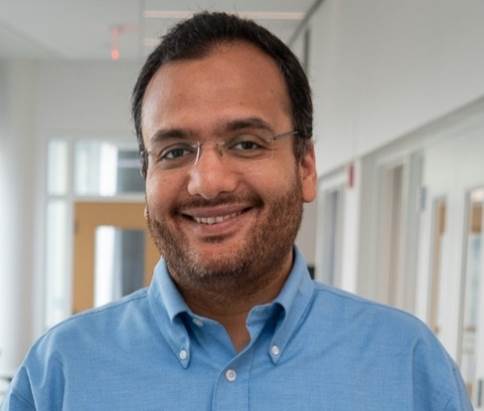
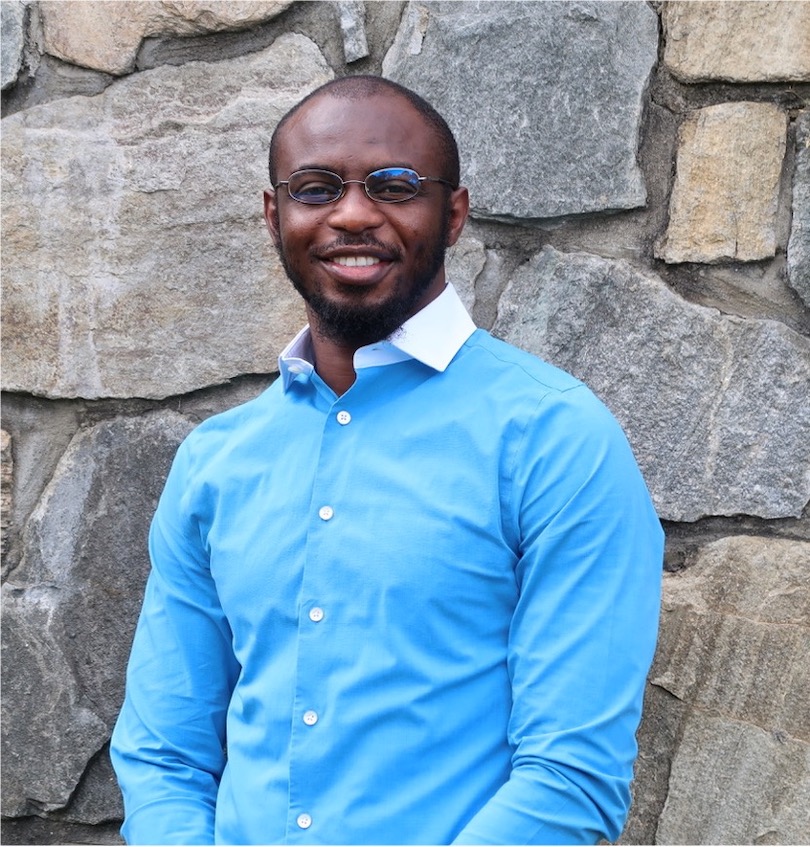
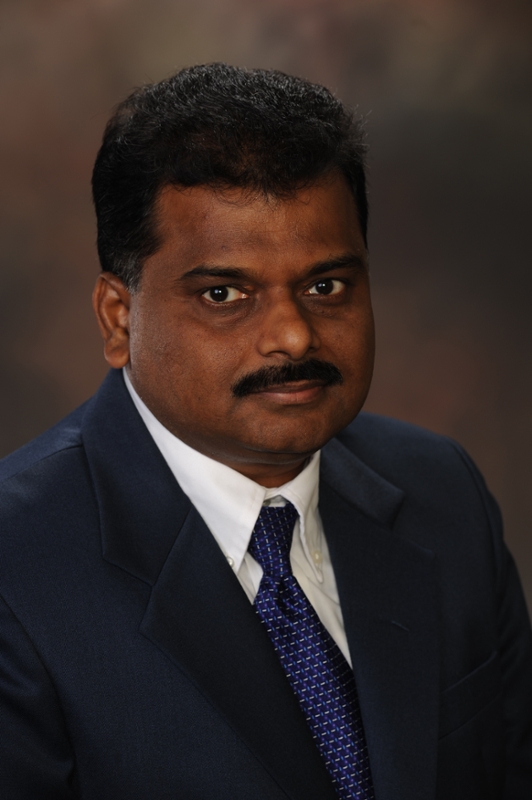
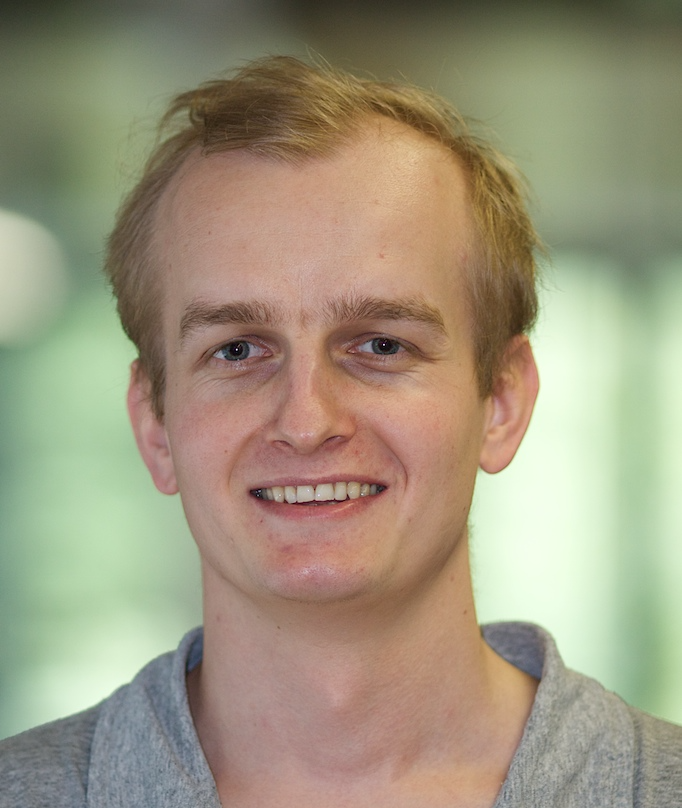
Vipul Goyal is an Associate Professor at the Computer Science Department of Carnegie Mellon University and a Senior Scientist at NTT Research in California. He is on leave from CMU since joining NTT Research in June 2020 after a 7-year tenure at Microsoft Research. His research focuses on Cryptography , Quantum Cryptography , Security & Privacy , and Theoretical Computer Science , supported by grants from NSF, DARPA, Department of Energy NETL, JP Morgan, Cisco, PNC, Ripple, and CyLab initiatives.
Habeeb Olufowobi is an Assistant Professor in the Department of Computer Science and Engineering at the University of Texas at Arlington (UTA), where he leads the Cyber-Physical System Security Lab. He holds a PhD in Computer Science from Howard University (2019) and previously served as a Lecturer at Howard before joining UTA in 2020. His research is centered on the security and trustworthiness of embedded and distributed systems, particularly in the domains of autonomous vehicles, IoT, and healthcare AI. He investigates cybersecurity challenges at the hardware-software interface in real-time systems and develops AI/ML models that are transparent, explainable, and equitable. His interdisciplinary work integrates principles from cybersecurity, real-time systems, and machine learning. The recent publications reflect a strong trend in securing cyber-physical systems using advanced AI techniques, with emphasis on intrusion detection, secure communication (e.g., named data networking), and robustness of autonomous systems. His work frequently appears in top-tier venues such as IEEE Transactions, VehicleSec, and ICMLA. Project Management Professional (PMP), PMI (2012–Present) Member, Institute of Electrical and Electronics Engineers (IEEE) (2020–Present) Habeeb has secured significant research funding, including an NIH grant on ethical AI for Chagas disease prediction and an AIM-AHEAD grant focused on health equity. He mentors several graduate students, including Paul Agbaje and Afia Anjum, who have received awards and internships at prestigious institutions like Los Alamos National Laboratory. He teaches courses in cloud computing, embedded systems, and information security, and serves as a faculty advisor for the National Society of Black Engineers (NSBE) at UTA. His lab, the Cyber-Physical System Security Lab, focuses on developing scalable and reliable security solutions for critical infrastructure, with growing emphasis on healthcare applications and fairness in algorithmic decision-making.
Professor David Dupret is a Professor of Neuroscience and MRC Investigator at the University of Oxford, where he also serves as a Tutorial Fellow in Biomedical Sciences at St Edmund Hall. His work takes place within the MRC Brain Network Dynamics Unit, part of the Nuffield Department of Clinical Neurosciences, and he is affiliated with the Department of Physiology, Anatomy and Genetics. David completed his Ph.D. in Neuroscience at the Institute François Magendie (INSERM, University of Bordeaux, France), receiving the French Neuroscience Association's 2007 Ph.D. Year Prize. He joined the MRC Anatomical Neuropharmacology Unit in 2007 as a Visiting Fellow, funded by the Institute of France and the International Brain Research Organisation. In 2009, he became an MRC postdoctoral scientist and Junior Research Fellow at St Edmund Hall, progressing to MRC Programme Leader Track scientist in 2011 and tenured MRC Programme Leader in 2014. Professor Dupret's research focuses on the circuit-level mechanisms of memory-guided behavior, with particular emphasis on neural dynamics of memory circuits during active waking behavior and sleep. His laboratory employs in vivo multichannel recordings and optogenetic manipulation of neuronal ensembles to investigate how hippocampal networks organize memory processes. His work has revealed fundamental insights into how memory circuits operate during both waking behavior and sleep states, particularly regarding hippocampal ripple activity, dentate spikes, and offline reactivation processes. Analysis of Professor Dupret's recent publications reveals a consistent focus on hippocampal network dynamics and memory processes. His work spans from basic neural circuit mechanisms to applications in neurodegenerative conditions like Alzheimer's disease. A notable trend is the integration of computational approaches with experimental neuroscience to understand how neural assemblies encode and retrieve memories. His team has made significant contributions to understanding how dentate spikes support memory flexibility and how hippocampal ripple diversity organizes neuronal reactivation during offline states. French Neuroscience Association's 2007 Ph.D. Year Prize Foundation Louis D. Research Fellowship (2007) International Brain Research Organisation Fellowship (2008) FENS-Kavli Network of Excellence Scholar (2016) Boehringer Ingelheim-FENS Research Award (2018) Elected to membership of Academia Europaea (2024) Professor Dupret has secured substantial research funding through his MRC Programme Leader position and has mentored numerous researchers who appear as co-authors on his publications. His laboratory, the Dupret Group, operates within the MRC Brain Network Dynamics Unit, collaborating extensively with other research groups including the Sharott Group, Magill Group, and Denison Group. Current research directions include investigating how memory circuits maintain flexibility while resisting extinction, exploring the relationship between neural coactivity patterns and memory organization, and developing computational models of hippocampal function. His team is actively pursuing future work on the mechanisms underlying memory persistence and the neural basis of flexible memory recall.
Xiaowen Zhang is a Professor of Computer Science at the College of Staten Island (CSI), City University of New York (CUNY), and a Doctoral Faculty Member at the CUNY Graduate Center. His academic work bridges theoretical and applied research in cybersecurity, information systems, and network technologies. Dr. Zhang holds a Ph.D. in Computer Science from the CUNY Graduate Center (2007) and a Ph.D. in Electrical Engineering from Northern Jiaotong University (1999), along with an M.A. from CUNY Queens College, an M.S. from Northern Jiaotong University, and a B.S. from Shanxi University. His research focuses on Cryptography, Information Security, Cybersecurity, Secure Biometrics, RFID Security & Privacy, Information Retrieval, and Wireless Sensor Networks . He explores both foundational cryptographic methods—such as secret sharing schemes and hash functions—and their practical implementations in secure systems, including RFID authentication protocols and data visualization platforms for sensor networks. The analysis of his recent publications reveals a consistent focus on security mechanisms in distributed and wireless environments . His work frequently combines cryptographic theory with system-level implementations, particularly in RFID and sensor networks. There is a strong trend toward privacy-preserving protocols, efficient data retrieval, and secure information sharing , often leveraging mathematical structures like Latin squares and Bloom filters. Dr. Zhang has been actively involved in mentoring students, as evidenced by numerous co-authored publications with graduate and undergraduate researchers. His contributions span journals such as Security and Communication Networks , Journal of Applied Security Research , and International Journal of Security and Networks , as well as major conferences including IEEE LISAT, ACM CODASPY, and IEEE Sarnoff Symposium.
Sanjeev Baskiyar is a Professor in the Department of Computer Science and Software Engineering at Auburn University's College of Engineering. He has been actively involved in research, teaching, and academic leadership, with a strong focus on computer systems, real-time and embedded computing, scheduling, cloud and fog computing, and energy-aware architectures. Education: Ph.D., Electrical and Computer Engineering, University of Minnesota M.S., Electrical and Computer Engineering, University of Minnesota B.S., Electronics and Communications, Indian Institute of Science, Bangalore B.S., Physics (with honors), and distinction in Mathematics Dr. Baskiyar’s research interests span scheduling, real-time and embedded systems, computer architecture, fog/cloud computing, thermal/energy-aware computing, and STEM education. His recent work explores machine learning applications in scheduling and quantum computing for fake news detection. He has supervised over 25 graduate students, many of whom now hold academic and industry positions. His recent publications emphasize fog computing simulation, service placement, quantum-inspired fake news detection, and adaptive scheduling using machine learning. These works reflect a trend towards intelligent, scalable, and energy-efficient computing systems, particularly in distributed and edge environments. Scientific Awards and Honors: Walker Teaching Excellence Award, Auburn University, 2020 Summer Faculty Fellow, Air Force Research Labs, 2020 Nominated Best Teaching Assistant, University of Minnesota, 1992 Multiples Merit and State-merit Scholarships Honors in Physics and Distinction in Mathematics Dr. Baskiyar has successfully advised numerous MS and PhD students and secured over $2 million in research funding as Principal Investigator from the National Science Foundation, DARPA, NASA, and industry partners like Wind River Systems and Mentor Graphics. His grants focus on parallel computing education, real-time micro-architectures, and embedded systems. He has also served on editorial boards, program committees, and as a reviewer for NSF and IEEE journals. He has held leadership roles including Senator in the University Faculty Senate and Chair of the E-day Committee. Labs and Research Groups: While not explicitly named, Dr. Baskiyar leads a research group focused on computer systems, scheduling, and embedded computing, as evidenced by his long list of graduate student supervision and funded projects in fog, cloud, and real-time systems.
Juan Carlos De Martin is a Full Professor of Computer Engineering at the Polytechnic of Turin, where he is also co-founder and co-director of the Nexa Center for Internet & Society. He holds a Faculty Associate position at the Berkman Klein Center for Internet & Society at Harvard University and is a member of the Scientific Council of the Treccani Institute and the Steering Committee of Biennale Democracy. He previously served as Vice Rector for Culture and Communication at the Polytechnic of Turin (2018–2023) and as president of its libraries (2007–2015). His research centers on the societal implications of digital technologies, with a strong emphasis on algorithmic and data justice, digital power, and the democratic challenges posed by modern technology. He advocates for a more democratic and ethical technological future, particularly critiquing the dominance of smartphones and promoting digital sovereignty. His recent publications reflect a clear trend toward ethical AI, data protection, and the social impact of algorithms. He has published on gender bias in language models, GDPR compliance tools, and non-discrimination audits in software, demonstrating a sustained commitment to fairness, transparency, and accountability in digital systems. Best Student Paper Award IEEE ISCC 2011 Best Student Paper Award IEEE ICME 2005 Fellow at Harvard University (Berkman Klein Center) (2011–2015, 2016–2024) Faculty Associate at Collège d'études mondos, France (2016) De Martin has advised PhD students like Marco Rondina on Responsible AI and has led numerous EU-funded research projects such as COMMUNIA and DECODE. He has also played a key role in public policy, serving on ministerial working groups on AI and online hate. He is the founder of the Biennale Tecnologia and has authored influential books on the future of universities and technology, all published under Creative Commons licenses. He leads the Nexa Center for Internet & Society, a multidisciplinary research group focused on the legal, economic, and social aspects of the Internet. The center fosters collaboration between computer scientists, legal scholars, and social scientists to address pressing digital challenges.
Przemyslaw Grabowicz is an Assistant Professor of Computer Science at University College Dublin and an Adjunct Professor at the University of Massachusetts Amherst. He leads the SIMS (Socially Intelligent Media and Systems) Lab and the EQUATE initiative, and is actively involved in the Knowledge Discovery Lab (KDL). His work bridges computer science, social science, and public policy, focusing on responsible AI and digital society. Research Interests: Fair and Explainable Machine Learning Computational Social Science Social Media and Network Science Public Opinion Modeling Algorithmic Bias and Discrimination Prevention Open-World Learning His research develops statistical and machine learning methods to understand and augment public opinion in digital environments, ensuring fairness, transparency, and societal benefit. He emphasizes legal compliance and ethical design in AI systems. Recent Research Trends: His recent publications focus on social media polls, political bias, misinformation, and fairness in machine learning. He investigates how algorithmic systems shape public discourse, especially during elections and global crises, and develops methods to detect and mitigate bias in data and models. Scientific Awards and Recognition: Best Paper Honorable Mention, ICWSM’25 WICI Data Challenge Main Prize (2013) Arnold O. Beckman Research Award Multiple UMass Amherst Interdisciplinary Research Grants Volkswagen Foundation Grants (over €900k total) Advising and Grants: Dr. Grabowicz supervises several PhD students in the SIMS and KDL labs and collaborates with MS students. He has secured significant funding from the Volkswagen Foundation, UMass Amherst, and the University of Illinois, supporting research on political misinformation, media bias, and global agenda setting. He is currently recruiting a postdoc at UCD. Labs and Initiatives: He heads the SIMS Lab and the EQUATE initiative, and contributes to the KDL. His project socialpolls.org explores public opinion through social media, and he maintains an active presence through the Uncommon Good blog on responsible AI.
Dr. Jose Luis SANCHEZ LOPEZ is a Research Scientist at the Interdisciplinary Centre for Security, Reliability and Trust (SnT) of the University of Luxembourg, leading the Aerial Robotics Lab (AeRoLab) within the Automation & Robotics Research Group (ARG). He joined SnT in 2017 as a Postdoc Research Associate, promoted to Research Scientist in 2021. His research focuses on autonomous robotics, particularly aerial systems, emphasizing situational awareness, SLAM, and trajectory planning. Education: Ph.D. in Robotics (2017), M.Sc. in Automation & Robotics (2012), and Engineering degree in Industrial Engineering (2010), all from the Technical University of Madrid. Visiting Research: Arizona State University (2012), LAAS-CNRS (2014–2016). Research Interests: Multi-agent robotic systems, sensor fusion, localization/mapping, computer vision, machine learning, and trajectory control. He has authored over 56 peer-reviewed publications, with an h-index of 18. Projects: Leads projects like DEUS (PI), NEDA, ÄerdFly (PI), and RoboSAUR. Contributions span European, Luxembourg, and Spain-funded initiatives, focusing on autonomous systems, 5G integration, and construction-site robotics. Teaching: Lectured in MICS, BiCS, BING (Uni.lu) and GITI (UPM). Actively involved in academic service as a reviewer, editor, and competition participant (e.g., IMAV, IARC). Outreach: National Coordinator for Luxembourg’s Robotics European Week, promotes robotics education in schools and public events.
LIM Yi Hao is an Adjunct Lecturer at the School of Computing and Information Systems (SCIS), Singapore Management University (SMU), where he contributes expertise in cyber threat intelligence. He is also Google’s Intelligence Strategy Lead for Asia Pacific, based in Singapore, leading strategic engagements, partnerships, and thought leadership initiatives across the region. His research and professional interests focus on Cyber Threat Intelligence , Information Security , and Digital Risk Management . He actively shapes regional narratives through speaking engagements, conferences, and webinars, bridging industry strategy with academic insight. While no recent publications are listed, his work centers on strategic cybersecurity intelligence and its application in enterprise and policy contexts, reflecting a strong interdisciplinary approach combining technology, strategy, and regional dynamics. No scientific awards listed. LIM Yi Hao advises and collaborates within both academic and corporate frameworks, leveraging his dual role to align real-world cybersecurity challenges with educational development. Though no formal advisees are mentioned, his leadership at Google involves mentoring and strategic guidance across teams. There is no public information on grants or funded research projects. He is affiliated with the School of Computing and Information Systems at SMU and operates at the intersection of academia and industry, contributing to curriculum relevance through practical intelligence frameworks.
Cleotilde (Coty) Gonzalez is a Research Professor of Decision Sciences at Carnegie Mellon University, with primary affiliation in the Department of Social and Decision Sciences (SDS). She serves as the Founding Director of the Dynamic Decision Making Laboratory (DDMLab) and Research Co-Director of the NSF National Institute for AI for Societal Decision Making (AI-SDM). Her extensive academic affiliations include the Security and Privacy Institute (CyLab), the Societal Computing program in the Software and Societal Systems Department (S3D), the Human-Computer Interaction Institute (HCII) in the School of Computer Science, and the Center for Behavioral Decision Research (CBDR) and Center for Neural Basis of Cognition (CNBC). Dr. Gonzalez holds a Ph.D. in Management Information Systems and has developed Instance-Based Learning Theory (IBLT), a significant contribution to cognitive science that explains how people make decisions based on past experiences. Her research spans experimental studies and computational modeling of cognitive processes in dynamic decision environments, with applications in cybersecurity, human-machine teaming, and societal decision making. Her recent publications reveal a strong focus on human-AI collaboration, collective intelligence, cybersecurity, and cognitive modeling. The research trends show increasing integration of AI systems with human decision processes, particularly examining how humans and AI can complement each other in complex decision environments. Her work increasingly addresses cybersecurity challenges through behavioral science perspectives, exploring how cognitive models can improve defense mechanisms against social engineering attacks. Lifetime Fellow of the Cognitive Science Society Lifetime Fellow of the Human Factors and Ergonomics Society Member of the Governing Board of the Cognitive Science Society Member at Large of the Policy Council of the System Dynamics Society Committee member of the National Academies Division Committee for the Behavioral and Social Sciences and Education Dr. Gonzalez has mentored over 50 post-doctoral fellows and doctoral students, with many going on to successful careers in academia, government, and industry. Her research has been supported by major collaborative efforts including Collaborative Research Alliances (CRA) and Multi-University Research Initiative grants from the Army Research Laboratories (ARL) and Army Research Office (ARO), as well as projects with the Defense Advanced Research Projects Agency (DARPA). She directs the Dynamic Decision Making Laboratory, which conducts research involving laboratory experiments and cognitive computational models to derive theoretical conclusions about dynamic decision making and develop applications for societal problems.
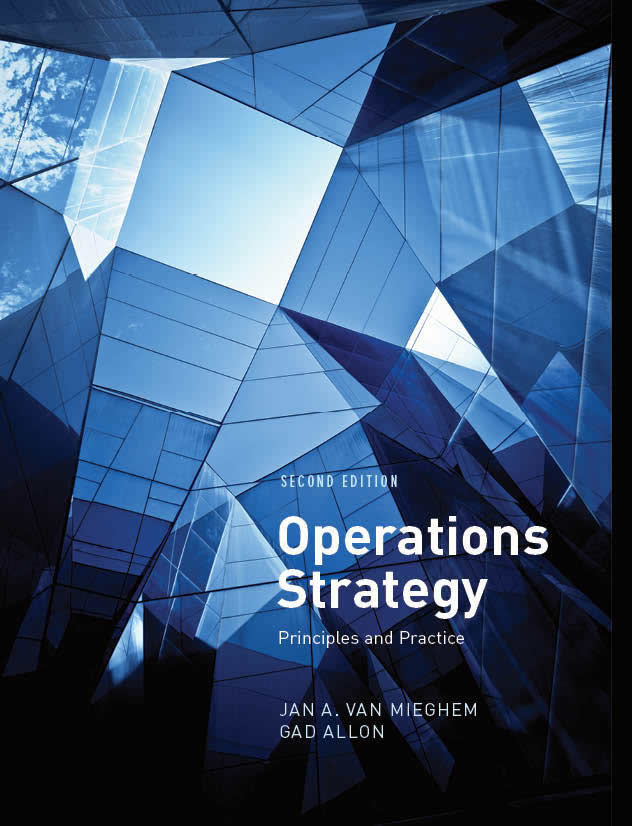
Jan A. Van Mieghem is the A. C. Buehler Professor and Professor of Operations at the Kellogg School of Management, Northwestern University. He also serves as a Professor by Courtesy at the McCormick School of Engineering and Applied Science. His research spans product, service, and supply chain operations, combining strategic and tactical perspectives with mathematical modeling, stochastic analysis, and empirical verification. Ph.D. in Business, Graduate School of Business, Stanford University (1995) MS in Electrical Engineering, Stanford University (1990) MS in Applied Sciences, KU Leuven, Belgium (1989) His research interests focus on operations strategy, supply chain optimization, and digital operations. He explores topics such as operational hedging, capacity investment, network flexibility, and the application of AI in inventory management. His work addresses healthcare operations, dual sourcing, and the interplay between collaboration and productivity in service networks. Recent research trends center on AI-driven inventory systems, dual sourcing under uncertainty, and healthcare resource allocation. He has authored over 60 academic articles and two textbooks: Operations Strategy: Principles and Practice and Managing Business Process Flows: Principles of Operations Management . 2023: First place in POMS College of Supply Chain Management Student Paper Competition 2020: Flexibility Excellence Award 2014: Wickham Skinner Award 2007: First MSOM Best Paper Award Van Mieghem has held leadership roles at Kellogg, including Deputy Dean (2023–present), Faculty Director of the Executive MBA program (2012–2017), and Chairman of the Department of Managerial Economics and Decision Sciences (2006–2009). He advises firms on operations strategy and management and has served on editorial boards of Management Science , Manufacturing & Service Operations Management , and Operations Research . He has mentored numerous Ph.D. students, including Audrey Bazerghi, Simrita Singh, Yangzi Jiang, and Dennis J. Zhang, who have secured academic and industry positions. His teaching spans operations management and strategy across MBA, Ph.D., and executive programs. Van Mieghem's work examines the intersection of operations strategy and execution, emphasizing financial value as a guiding metric. His empirical studies leverage real-world data from healthcare, manufacturing, and e-commerce to validate theoretical models and develop practical frameworks.
Staal A. Vinterbo is a Professor at the Department of Information Security and Communication Technology within the Faculty of Information Technology and Electrical Engineering at the Norwegian University of Science and Technology (NTNU). His research focuses on privacy-preserving technologies, cryptography, and their intersections with machine learning, bioinformatics, and medical informatics. He has contributed to advancements in differential privacy, data anonymization, and secure computational methods.
Prof. Zheshen Zhang is a Professor in the Department of Electrical and Computer Engineering at the University of Michigan College of Engineering . He leads the Quantum Engineering Lab , focusing on harnessing quantum mechanical resources like entanglement to advance sensing, communication, and computing systems. Academic Rank: Professor Institution: University of Michigan School: College of Engineering Department: Electrical and Computer Engineering Research Interests: His work spans quantum engineering, emphasizing: Quantum computing architectures using continuous-variable cluster states Quantum communication via entanglement-assisted protocols Quantum sensing for precision metrology and dark matter detection Hybrid photonic circuits with Scandium Aluminum Nitride and Silicon Nitride Application of machine learning to quantum information processing Publications Trends: Recent articles highlight: Advances in integrated photonics for scalable quantum devices Development of entanglement-enhanced sensors for covert and precision applications Exploration of exceptional points in optical cavities for metrology Quantum network prototypes enabling open-access quantum computing Machine learning integration with quantum data acquisition
Charles Gomez is an Associate Professor in the School of Sociology at the University of Arizona. He is affiliated with the College of Information Science and the Applied Math Graduate Interdisciplinary Program (GIDP), reflecting his interdisciplinary focus. His work centers on computational and mathematical sociology, particularly the study of inequality in global scientific knowledge production, diffusion, and diversity. Dr. Gomez received his Ph.D. from Stanford University, master’s degrees from Harvard Kennedy School and Columbia University, and a B.Sc.Eng. from Duke University. Ph.D., Stanford University M.A., Harvard Kennedy School M.S., Columbia University B.Sc.Eng., Duke University His research integrates natural language processing, social network analysis, survey experiments, simulations, and interviews to explore hierarchies, complexity, and diversity in science. He is particularly interested in how political and institutional forces shape AI research and global knowledge systems. The recent publications reflect a strong focus on global science, AI, knowledge diffusion, and inequality. His work employs both computational and qualitative methods to analyze large-scale scientific networks, epistemic diversity, and the structural biases in research collaboration and dissemination. Themes include international politics in AI, peer review bias, simulation of knowledge spread, and the role of elite institutions in shaping scientific agendas. His scientific recognition includes the prestigious National Science Foundation (NSF) CAREER Award (2024–2029). He has secured over $1 million in research funding as PI or co-PI. National Science Foundation (NSF) CAREER Award (2024–2029) Dr. Gomez leads the Global Knowledge Lab and Observatory ("The Global Lab"), an interdisciplinary research group dedicated to studying science, knowledge, and innovation at a global scale. He is actively involved in mentoring and welcomes Ph.D. students and collaborators. He has published in top journals including Nature Human Behaviour , Nature Communications , Research Policy , Social Networks , and Sociological Science .
Professor Jason Dykes is a leading figure in the field of information and geovisualization at City, University of London, where he holds the position of Professor in the Department of Computer Science and co-directs the giCentre , a renowned research centre in visualization. He is affiliated with the School of Mathematics, Computer Science and Engineering and maintains an active research and teaching profile. His academic journey includes a PhD in Geography from the University of Leicester and extensive leadership in both research and education. Education: PhD in Geography, University of Leicester, 2000 MSc in Geographic Information Systems, University of Leicester, 1991 BA/MA in Geography, University of Oxford, 1989 Jason Dykes' research is centered on designing visual methods and tools for exploring, analyzing, and presenting information, with a strong emphasis on geographic data. His work integrates cartography, information visualization, GIScience, and human-computer interaction , leading to the development of innovative techniques such as geowigs, ODmaps, BallotMaps, and AttributeSignatures. He has published extensively in top-tier journals like IEEE Transactions on Visualization & Computer Graphics, with over 20 papers in the last decade, and co-authored the seminal book Exploring Geovisualization (2005). His research is supported by major funders including EPSRC and the EU, with projects like RAMP VIS (Covid-19 response) and VALCRI (criminal intelligence). The most recent articles highlight a consistent trend in applied and human-centered visualization , focusing on responsive design, education, pandemic modeling, and novel visual metaphors for complex data. His work increasingly emphasizes methodological rigor, design exposition, and the role of visualization in interdisciplinary and emergency contexts. Scientific Awards and Recognition: National Teaching Fellow, Higher Education Academy (2005) Best Paper Awards at GIS Research UK (consecutive years) Honorable Mentions, IEEE InfoVis (2009, 2010, 2016, 2018) Security Innovation Commercialisation Award (EU, 2022) Research Supervisor of the Year, City Student Union (2020) Innovations in Teaching Award and multiple teaching grants at City Jason Dykes has supervised eight PhD students to completion and advised many others, including notable researchers like Roger Beecham, Sarah Goodwin, and Susanne Bleisch. His teaching includes modules such as Visualizing Society and Data Presentation. He has received significant grant funding from UK research councils and the EU for projects like DIVA, VALCRI, and RAMP VIS. His service to the community includes leadership roles in IEEE VIS, ICA Commission on GeoVisualization, and editorial positions at IEEE TVCG and the Journal of Visualization and Interaction. He leads the giCentre , a dynamic research group that fosters innovation in visualization, and has been instrumental in establishing the field’s educational and methodological foundations through participation in Dagstuhl seminars and publications on visualization pedagogy.