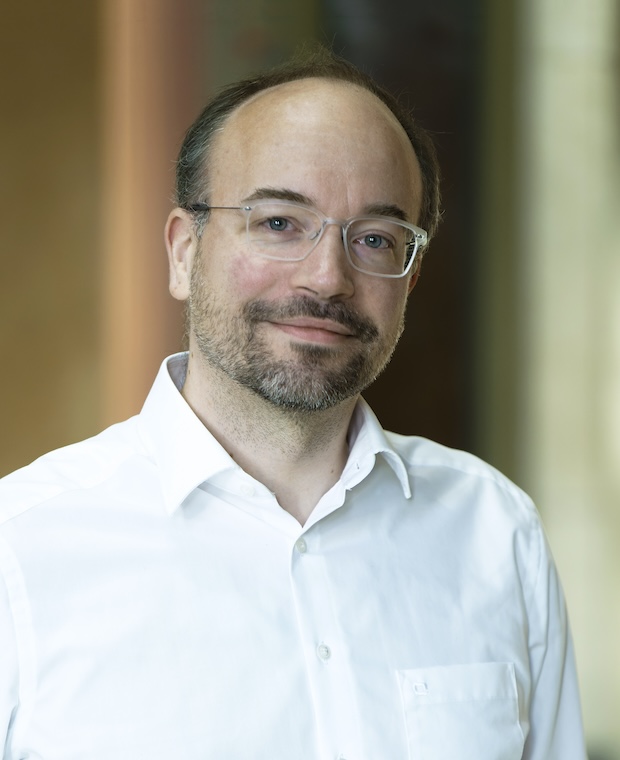
Prof. Dr. Markus Bachmayr is a full professor at the Institute for Geometry and Practical Mathematics, RWTH Aachen University, holding the chair for Applied Mathematics. His research focuses on nonlinear approximation, high-dimensional partial differential equations (PDEs), uncertainty quantification, and numerical methods in quantum chemistry. He leads the ERC Consolidator Grant project Computational Complexity of Highly Nonlinear Approximations (COCOA) and contributes to CRC 1481 Sparsity and Singular Structures, and RTG 2326 Energy, Entropy, and Dissipative Dynamics. His recent work emphasizes adaptive low-rank and sparse approximation techniques for parametric and stochastic PDEs, including applications in radiative transfer and poroviscoelastic flow modeling. He serves as Editor-in-Chief of Foundations of Computational Mathematics and Associate Editor for multiple journals. Scientific Awards: John Todd Award 2013 Borchers Plakette 2014 Erwin Wenzl Preis 2007 He has taught courses such as Numerische Analysis I/II, Numerische Mathematik für Elektrotechniker, and seminars on numerical methods and approximation theory.
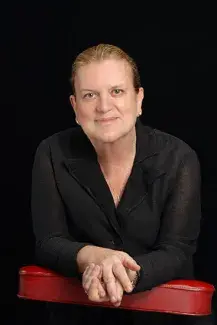
Dr. Moritz Ziegler is a geomechanics researcher affiliated with the Technical University of Munich (TUM) and the Assistant Professorship of Geothermal Technologies . He previously worked at GFZ Potsdam (2017–2023) and earned his PhD in Geophysics from the University of Potsdam (2014–2017). His research focuses on geomechanical numerical modeling , uncertainty quantification , and 3D stress field analysis , with applications to geothermal energy, seismic hazard, and rock mechanics. Education: Bachelor of Science in Geosciences (2008–2011), Freie Universität Berlin Master of Science in Geophysics (2011–2014), University of Potsdam PhD in Geophysics (2014–2017), University of Potsdam & GFZ Potsdam His work integrates advanced computational methods ( Altair Hypermesh , Dassault Systèmes Abaqus , Python , Matlab ) to address complex geomechanical problems. Recent publications analyze stress gradients in the North Alpine Foreland Basin, fault-stress interactions, and physics-based machine learning in geomechanics. He has contributed to software development (DOuGLAS v1.0) and calibration tools (FAST Calibration v2.4). Scientific awards or honors are not explicitly mentioned in the provided text. However, his research has been published in leading journals such as Geophysical Journal International , Solid Earth , and Pure and Applied Geophysics .
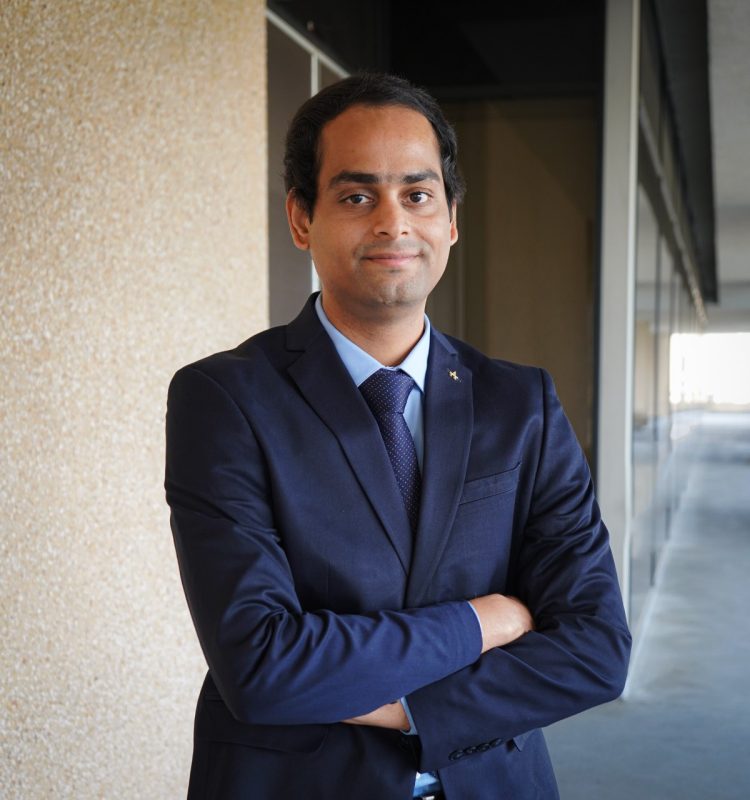
Ahmad Al-Dabbagh is an Assistant Professor in Manufacturing Engineering and holds a Principal's Research Chair in Control Systems (Tier 2) with the School of Engineering at The University of British Columbia. As a Senior Member of IEEE and ISA, he contributes significantly to the field of resilient automation and control systems through research, teaching, and professional service. His academic journey includes postdoctoral fellowships at Imperial College London, the University of Toronto, and the University of Alberta, where he also earned his PhD in Electrical and Computer Engineering. Dr. Al-Dabbagh's research focuses on designing resilient automation and control systems by addressing critical challenges in fault diagnosis, cyber security, and alarm management. His work spans theoretical foundations and practical applications in industrial control systems, with particular emphasis on detection and isolation of faults and cyber attacks, control reconfiguration, event-triggered control, remote state estimation, and alarm systems design. His research interests also extend to causality analysis, prediction methods, and root cause analysis for industrial processes. His extensive publication record demonstrates consistent contributions to control systems security and reliability, with recent work focusing on sophisticated methods for detecting false data injection attacks, analyzing alarm correlations using advanced machine learning techniques, and developing recommender systems for human operators in industrial environments. The trajectory of his research shows an evolution from foundational control theory toward increasingly complex applications in cyber-physical security and human-system interaction in industrial settings. NSERC Postdoctoral Fellowship NSERC Alexander Graham Bell Canada Graduate Scholarship (CGS – D3) Queen Elizabeth II Graduate Scholarship Governor General's Academic Medal (Gold) As a graduate student supervisor, Dr. Al-Dabbagh mentors the next generation of control systems engineers while maintaining an active research program. He serves as an Associate Editor on the IEEE Control Systems Society Conference Editorial Board and is a licensed Professional Engineer in British Columbia and Ontario. His teaching portfolio includes courses such as System Identification, Digital Enterprise, Systems and Control, and Internet of Things, reflecting the breadth of his expertise. Dr. Al-Dabbagh leads the Okanagan Laboratory for Control Systems Research, where his team develops innovative approaches to enhance the security and reliability of industrial automation systems. The laboratory serves as a hub for interdisciplinary research that bridges theoretical control engineering with practical industrial applications, particularly in the energy, manufacturing, and process industries.
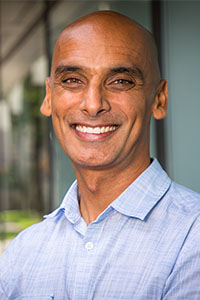
Yang Luo is a Kennedy Trust Senior Research Fellow in Data Science at the University of Oxford's Kennedy Institute of Rheumatology. His research bridges statistical genomics and computational immunology to unravel genetic contributions to immune-mediated traits, with a focus on the major histocompatibility complex (MHC) region. His work leverages large biobank datasets (UK Biobank, Biobank Japan), gene expression resources (GTEx), and proteomic data to decode molecular mechanisms linking genetic variation to disease risk. Specific interests include tuberculosis genetics, multi-ancestry polygenic risk scores, and single-cell eQTL modeling. Recent publications highlight expertise in HLA association studies, evolutionary immunogenetics, and disease-specific cell state dynamics. Key contributions include constructing a global HLA haplotype panel and developing novel statistical methods for admixed population genetics. Scientific Awards: Kennedy Trust Senior Research Fellow in Data Science His lab integrates computational and experimental approaches to translate genetic findings into clinical applications for immune disorders.
Professor Josef Dick serves as a Professor and Deputy Head in the School of Mathematics & Statistics at the University of New South Wales (UNSW). With a distinguished career in computational mathematics, he has established himself as a leading researcher in numerical integration methods and quasi-Monte Carlo theory. His work bridges theoretical mathematics with practical computational applications across various scientific domains. Dr. Dick earned his PhD in Mathematics from UNSW in 2004 and his MSc in Mathematics from the University of Salzburg in 2001. His academic journey reflects a strong foundation in both theoretical and applied mathematics, which has informed his subsequent research contributions. Professor Dick's research primarily focuses on numerical integration and quasi-Monte Carlo rules , employing techniques from number theory , abstract algebra (particularly finite fields), discrepancy theory , wavelet theory , and statistics . His work provides rigorous analysis of practical algorithms for computational problems, with implementations often provided in Matlab to bridge theory and application. His research has successfully addressed point distributions on the unit cube for numerical integration, completely uniformly distributed sequences for Markov chain quasi-Monte Carlo algorithms, and explicit constructions of uniformly distributed points on the sphere. Analysis of his recent publications (2022-2025) reveals a consistent focus on advancing quasi-Monte Carlo methods, with increasing integration of machine learning techniques and applications to complex computational problems. His work demonstrates strong interdisciplinary connections between pure mathematics, computational science, and practical engineering applications, particularly in uncertainty quantification and high-dimensional numerical integration. Discovery project from Australian Research Council (2012-2014): "Mathematics in the round - the challenge of computational analysis on spheres" Queen Elizabeth II Fellowship from Australian Research Council (2010-2014): "Algebraic methods for Markov Chain Monte Carlo and quasi-Monte Carlo" UNSW Vice Chancellor Fellowship (2006-2009) Professor Dick has supervised numerous PhD and Honours students working on topics including Quasi-Monte Carlo methods, Discrepancy Theory, Markov chain Monte Carlo, and Uncertainty Quantification. His research has been supported by significant grants from the Australian Research Council, including serving as Chief Investigator on multiple projects. Beyond his research, he serves as an Editor for the Journal of Complexity and Journal of Approximation Theory, demonstrating his leadership in the mathematical community. He teaches courses in Algebra and Mathematical Computing for Finance at UNSW.
Phillip B. Gibbons is a Professor in both the Computer Science Department and Electrical & Computer Engineering Department at Carnegie Mellon University. He received his Ph.D. in Computer Science from the University of California at Berkeley in 1989 and has held research positions at AT&T Bell Laboratories, Lucent Bell Laboratories, and Intel Research Pittsburgh before joining CMU's faculty. His research spans parallel computing, distributed systems, databases, computer architecture, and machine learning. Gibbons' work bridges theory and systems, with publications in top-tier conferences including SOSP, OSDI, SIGMOD, VLDB, NeurIPS, and many others across computer science and engineering disciplines. His research has been supported by significant funding from NSF, Intel, and other organizations. Gibbons has made substantial contributions to streaming algorithms, parallel computing frameworks, distributed systems security, and large-scale machine learning systems. His work on data stream algorithms with Alon, Matias, and Szegedy has been particularly influential in the field. He has served in numerous leadership roles including Editor-in-Chief of ACM Transactions on Parallel Computing (2012-2018) and on the editorial boards of Journal of the ACM and IEEE Transactions on Cloud Computing. He has also been active on program committees for major conferences in systems, databases, and theory. IEEE Fellow (2014) - For contributions to parallel computing and databases ACM Fellow (2006) - For contributions to parallel computing, databases, and sensor networks Selected for Oral Presentation at NeurIPS '13 (only 20 selected out of 1420 submissions) Co-winner of the best paper award for NSDI '06 Gibbons has advised numerous students and mentored researchers who have gone on to make significant contributions in academia and industry. His research has been supported by major grants including the $15M Intel Science and Technology Center for Cloud Computing (2011-2015) where he served as Co-PI/Co-Director. He currently leads research projects on write-efficient algorithms, big learning systems, and visual cloud systems. His laboratory work focuses on bridging theoretical computer science with practical systems implementation, particularly in the areas of parallel and distributed computing. Current research directions include adapting algorithms for emerging memory technologies and optimizing machine learning systems for large-scale deployment.
Cristina Bicchieri is the S. J. Patterson Harvie Professor of Social Thought and Comparative Ethics at the University of Pennsylvania , where she also holds appointments as Professor of Philosophy and Psychology and Professor of Legal Studies at the Wharton School. She founded and directs the Penn Center for Social Norms and Behavioral Dynamics , the Philosophy, Politics & Economics Program , and the Master of Behavioral and Decision Sciences . Education : PhD in Philosophy from Cambridge University and a Laurea (Summa cum Laude) from the University of Milano . Her research lies at the intersection of philosophy , game theory , and cognitive psychology , focusing on: Judgment and Decision-Making : Fairness, trust, cooperation, and how expectations influence behavior. Social Norms : Their nature, evolution, measurement, and application in policy (e.g., sanitation, corruption). Epistemic Foundations of Game Theory : Rational choices under bounded knowledge and computational models for game solutions. Her recent articles explore topics like norm stability , language framing effects , and sanitation interventions in India . These works emphasize behavioral dynamics , cognitive psychology , and public policy applications . Scientific Awards : Member, American Academy of Arts and Sciences (2021) Member, German Academy of Sciences (2021) Honorary Fellow, Wolfson College, Cambridge (2016) Pufendorf Medal (2015) Cavaliere Ordine al Merito della Repubblica Italiana (2007) She leads the Behavioral Ethics Lab and collaborates with organizations like UNICEF , the World Bank , and the Gates Foundation to implement norm-based interventions globally.
Rohit Kannan is an Assistant Professor in the Grado Department of Industrial and Systems Engineering at Virginia Tech. He holds a Ph.D. and M.S. in Chemical Engineering from MIT and a B.Tech. from IIT Madras. His research focuses on integrating machine learning with global optimization and optimization under uncertainty, emphasizing energy systems applications. Previous roles include postdoc positions at Los Alamos National Laboratory and the Wisconsin Institute for Discovery. Education: Ph.D., Chemical Engineering, Massachusetts Institute of Technology, 2018 M.S., Chemical Engineering Practice, MIT, 2014 B.Tech., Chemical Engineering, IIT Madras, 2012 Research Interests: Global optimization, optimization under uncertainty, computational optimization, energy systems, and machine learning integration. Recent Highlights: Recipient of the Excellence in Teaching Spotlight Award (2024) Lead researcher in stochastic optimization and energy systems (e.g., hybrid polygeneration systems) Developed algorithms for chance-constrained nonlinear programs and distributionally robust optimization Service & Leadership: Elected Vice-Chair of Global Optimization, INFORMS Optimization Society (2025–2026) Reviewer for top journals like Operations Research and Mathematical Programming Advisor to ISE InclusiveVT and Graduate Admissions Committee Labs & Collaborations: Directs a research group advancing optimization and machine learning for energy and engineering systems. Active in interdisciplinary projects with LANL and UW-Madison.
Salil P. Vadhan is the Vicky Joseph Professor of Computer Science and Applied Mathematics at Harvard University's John A. Paulson School of Engineering and Applied Sciences (SEAS). He leads the Privacy Tools Project and co-leads the OpenDP open-source differential privacy initiative. His research focuses on computational complexity, cryptography, randomness in computation, and data privacy. He has taught courses such as CS 1200: Introduction to Algorithms and Their Limitations, and CS 229cr: Spectral Graph Theory in Computer Science. Vadhan holds editorial roles including Editor-in-Chief of Foundations and Trends in Theoretical Computer Science , and serves on steering committees for the Symposium on the Foundations of Responsible Computing (FORC) and the Theory of Cryptography Conference (TCC). Awarded the 2018 ACM Fellowship for contributions to theoretical computer science, he was also elected to the American Academy of Arts & Sciences in 2025. His professional activities include roles with the Harvard Center for Research on Computation and Society and the Electronic Colloquium on Computational Complexity.
Edith Hemaspaandra is a Professor in the Department of Computer Science at the Rochester Institute of Technology (RIT), located in the Golisano College of Computing and Information Sciences. She holds a BS, MS, and Ph.D. in Computer Science from the University of Amsterdam (the Netherlands). Her research focuses on computational social choice, computational complexity theory, logic complexity, and formal methods. She teaches courses such as CSCI-262/263 (Introduction to Computer Science Theory) and CSCI-664 (Computational Complexity). Her work explores the algorithmic aspects of voting systems, including election manipulation, control, and bribery, with a focus on their computational complexity. She has also contributed to formal methods for automata theory, educational tools like JFLAP extensions, and the study of complexity classes such as LWPP and WPP. Her research bridges theoretical computer science with practical applications in social choice theory and algorithm design. Her grants include an NSF-funded project on computationally protecting elections from manipulation (2011). She actively publishes in top venues like STACS and ISAAC, addressing topics ranging from graph reconstruction to hybrid election models. Though no awards are explicitly listed, her extensive publication record highlights her contributions to theoretical computer science. Her advising and grant activities include collaborative research projects and educational tool development. She is affiliated with RIT’s Department of Computer Science and maintains a personal website and ORCID profile.
Kai A. James is an Associate Professor in the Department of Aerospace Engineering at the University of Illinois at Urbana-Champaign (UIUC), with affiliations in Computational Science and Engineering. He holds a Ph.D. (2012) and M.A.Sc. (2006) from University of Toronto, and B.A.Sc. (2004) in Engineering Science. His research focuses on multidisciplinary design optimization, topology optimization, aeroelasticity, and nonlinear mechanics, with applications to aerospace structures, additive manufacturing, and smart materials. He teaches courses such as Structural Design Optimization (AE 498), Nonlinear Solid Mechanics (AE 598), and Finite Element Analysis (ME 471). His honors include the NSF CAREER Award (2018), Scott White Aerospace Engineering Fellow (2020), and UIUC Teacher of the Year (2017). His work spans academic publications (over 50 journal/conference articles listed) and innovations in topology optimization frameworks for complex systems. Recent research emphasizes bi-stable structures (e.g., cardiovascular stents, morphing airfoils), thermomechanical design of shape-memory alloys, and spatial packing optimization for engineering systems. His lab, located in Talbot Laboratory, develops computational tools for multiphysics and multiscale design optimization.
Kristin Shaw is a Professor in the Department of Mathematics at the University of Oslo, specializing in Algebra, Geometry and Topology. She leads the research group on Algebraic and Topological Cycles in Tropical and Complex Geometries, funded by the BFS. Her office is located in room 1114 of Niels Henrik Abels hus, with contact information including email krisshaw@math.uio.no and phone +47 22855940. Shaw's research focuses on the connections between combinatorics and algebraic geometry over the real and complex numbers, with particular emphasis on tropical geometry. Her work bridges abstract mathematical theory with concrete geometric structures, exploring how combinatorial methods can illuminate deep properties of algebraic varieties. She has made significant contributions to understanding matroids, real algebraic curves, and the topology of hypersurfaces through tropical techniques. Her research demonstrates how combinatorial structures can reveal fundamental insights about algebraic varieties and their topological properties. Analysis of Professor Shaw's recent publications reveals a consistent focus on tropical geometry and its applications to classical algebraic geometry problems. Her work frequently examines the interplay between real and complex geometries, with particular attention to combinatorial structures underlying algebraic varieties. Key themes include matroid theory, enumerative geometry, and the topology of algebraic varieties, demonstrating how tropical methods can provide new insights into longstanding problems in algebraic geometry. Her research shows remarkable depth across multiple subfields while maintaining a coherent theoretical framework that connects combinatorial and geometric approaches. Professor Shaw leads the research group on Algebraic and Topological Cycles in Tropical and Complex Geometries, which is funded by the BFS. Prior to her position at the University of Oslo, she held postdoctoral positions at the Max Planck Institute Leipzig, the Technical University of Berlin, the University of Toronto, and participated in the Fields' Institute semester in Combinatorial Algebraic Geometry. Her collaborative work spans multiple international institutions, reflecting her active engagement in the global mathematical research community.
Xiaocheng Shang is an Associate Professor in Mathematical Optimisation and Data Science at the University of Birmingham's School of Mathematics. His research focuses on numerical methods for stochastic differential equations, with applications in computational mathematics, statistics, physics, and data science. He is affiliated with the Optimisation and Numerical Analysis Group, Statistics and Data Science Group, and the Institute for Data and AI. Shang holds a PhD in Applied and Computational Mathematics from the University of Edinburgh (2016) and completed postdocs at the University of Edinburgh, Brown University, and ETH Zurich before joining Birmingham in 2019. His academic achievements include fellowships from The Alan Turing Institute, the LMS Emmy Noether Fellowship, and the EUniWell Leadership Fellowship. He has secured funding from EPSRC, the Royal Society, and the Isaac Newton Institute. Shang is actively involved in supervising PhD students and co-organizing research initiatives such as the Data Science and Computational Statistics Seminar. Research interests include structure-preserving integrators, Bayesian sampling techniques, and machine learning applications in dynamical systems. His work bridges numerical analysis, probability theory, and multiscale modeling in materials science. Recent projects involve neural networks for complex dynamical systems and numerical algorithms for deterministic/stochastic systems.
James Anderson is an Assistant Professor in the Department of Electrical Engineering at Columbia University, with affiliations to the Data Science Institute (DSI) and multiple research centers including the Computing Systems for Data-Driven Science and Foundations of Data Science. Prior to Columbia, he was a Senior Research Scientist at Caltech’s Computing + Mathematical Sciences division (2016–2019) and held a Junior Research Fellowship at the University of Oxford’s Department of Engineering Science (pre-2012). He earned his DPhil (PhD) in Engineering Science from Oxford in 2012. His research focuses on optimal/robust control theory, mathematical programming, data privacy, and cyber-physical systems, with applications in smart grids, systems biology, and power systems. Recent work emphasizes energy storage strategies, distributed control algorithms, and cybersecurity in critical infrastructure. His publications span advanced control methodologies (e.g., reinforcement learning for LQR problems), energy market dynamics, and resilient system designs. Notable contributions include frameworks for decision-focused energy storage arbitrage and defenses against false data attacks in power grids. He actively collaborates on federated learning approaches for distributed systems and has pioneered techniques for system-level synthesis in cyber-physical architectures. Anderson’s affiliations include the Data Science Institute (DSI) and specialized centers focused on data-driven science and energy systems. His work bridges theoretical control advancements with real-world applications in energy and healthcare.
Ye Zhisheng is the Dean’s Chair and Associate Professor in the Department of Industrial Systems Engineering & Management at the National University of Singapore (NUS). His research focuses on reliability engineering, inventory control, emergency response systems, and statistical modeling. He holds a PhD in Industrial and Systems Engineering from NUS, along with a BEng in Material Science and Engineering and a BEco in Economics from Tsinghua University. His work emphasizes practical applications in mission-critical systems, predictive maintenance, and data-driven decision-making. Current research initiatives include optimal maintenance policies for manufacturing systems, degradation analysis of bearings, and federated learning approaches for battery lifecycle prediction. He has pioneered methods for integrating physics-informed neural networks into prognostics and health management (PHM) systems. Key technical contributions span advanced statistical methodologies like sieve estimation for survival data, phase-type distributions modeling, and condition-based maintenance optimization. His interdisciplinary approach bridges operations research, mechanical engineering, and computer science to address complex reliability challenges. Recent projects include resilient consensus-based power grid management and contamination source identification frameworks. Notable collaborations involve developing intelligent cross-domain fault diagnosis systems using transformer networks and advancing the Internet of Federated Things (IoFT) for distributed data analytics. His work has been applied in aerospace, telecommunication infrastructure, and medical emergency response systems.