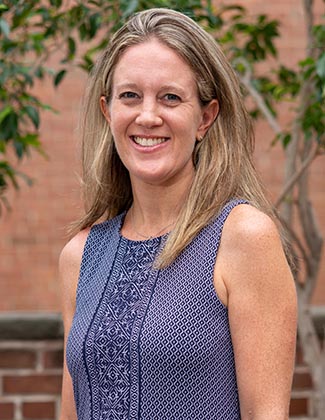
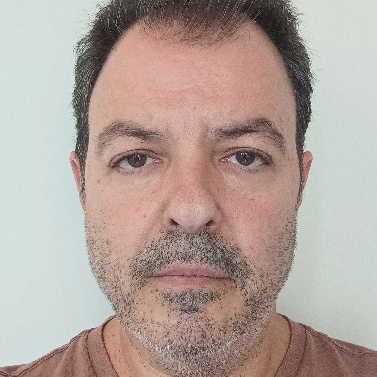
Ben McCorkle is Professor of English at The Ohio State University, teaching composition, rhetoric and digital media studies. His research examines the historical intersections between communication technologies and rhetorical practices. Education credentials: Ph.D. from The Ohio State University (2005) M.A. from The Ohio State University (2000) B.A. from Augusta State University (1996) McCorkle's scholarship investigates how technological innovations from classical times to digital interfaces have transformed rhetorical delivery. He co-directs the Digital Archive of Literacy Narratives, preserving personal accounts of literacy development. Recent publications analyze pedagogical approaches to new media across historical periods. His courses include digital media production, writing instruction, and communication theory.
Lauren Feldman is an Associate Professor in the Department of Journalism & Media Studies at Rutgers University's School of Communication and Information. Her research focuses on media effects in political and science contexts, with emphasis on climate change communication, partisan media, misinformation, and the role of comedy in social justice. She is affiliated with the Rutgers Climate Institute and George Mason University's Center for Climate Change Communication. Education: Ph.D. and M.A. in Communication, University of Pennsylvania B.A. in English, Duke University Grants & Projects: Co-PI on NSF grant investigating algorithm fairness in misinformation detection (2019-2021) NSF-funded research on efficacy messages and climate policy support Research Themes: Her work examines how media shape public engagement with climate change, the impact of partisan news on political divides, and the use of satire/entertainment to drive social change. Notable contributions include co-authoring A Comedian and an Activist Walk into a Bar (UC Press, 2020). Awards: 2021 ICA Outstanding Book Honorable Mention Multiple AEJMC/ICA paper awards Rutgers Excellence in Research Award Labs & Affiliations: Rutgers Climate Institute George Mason University Climate Change Communication Center Behavioral Informatics Lab
Miguel Luís serves as Marketing and Employer Branding Director at The Key Talent while maintaining an academic affiliation as a guest lecturer at ISCTE - Lisbon University Institute's Business School. With over two decades of industry experience, he founded Comunidade Employer Branding Portugal in 2015—a non-profit advancing employability and training in Employer Branding across Portugal. His corporate role focuses on technological solutions for People Management, bridging business strategy with human-centric organizational design. His educational foundation includes: Master's degree in Management from INDEG-IUL Degree in Social and Organisational Psychology from ISPA-IU Research interests manifest a dual trajectory: contemporary work centers on Employer Branding, Talent Management, and Organizational Psychology, while historical publications (1995-2015) reveal deep expertise in Artificial Intelligence, particularly multi-agent systems and semantic web technologies. This interdisciplinary nexus connects computational methods with human resource challenges—evident in works like "Enhancing Excel business tools" (2021) and "Context-Awareness System" (2008). His approach consistently applies technical rigor to organizational behavior problems, such as modeling observed behavior through Rhetorical Structure Theory (2022). Analysis of his 15 most recent publications demonstrates sustained innovation in agent-based systems, with evolving applications from pure AI (2008-2013) to business-integrated solutions (2021-2022). Key thematic threads include: Context-aware computing for adaptive organizational systems Semantic resource discovery in distributed environments Observation-based learning paradigms for human-agent collaboration Quantitative modeling of business processes Notably, his 2021 work transitions from theoretical AI to practical business tool enhancement, reflecting his career shift toward industry applications. Scientific recognition: No formal awards or fellowships documented in available sources Academic mentorship shows no current PhD/Master's advisees, consistent with his industry-focused role. While his pre-2015 research likely involved grant-funded projects (evidenced by semantic web publications), no active grants are referenced—current work operates through The Key Talent's commercial framework. His affiliation with ISCTE remains strictly as a guest lecturer, delivering specialized training without departmental integration. Organizational engagement centers on Comunidade Employer Branding Portugal's event management and training programs, with no dedicated research labs or academic teams indicated. His operational model leverages industry partnerships rather than traditional academic infrastructure, exemplifying practice-based knowledge transfer between corporate and educational spheres.
Rui Lopes is a researcher affiliated with the Iscte Business School at ISCTE - Instituto Universitário de Lisboa. His work focuses on interdisciplinary research at the intersection of sports science, network analysis, and complex systems. Key research interests include team performance dynamics in football (soccer), spatial analysis using Voronoi diagrams, agent-based modeling of collective behavior, and applications of machine learning in sports analytics. His academic contributions span multiple domains: Sports Science: Investigating tactical performance, player coordination, and decision-making in elite football through quantitative methods. Network Analysis: Developing algorithms to detect fraudulent networks in telecom systems and analyzing urban mobility structures. Complex Systems: Exploring synergistic interactions in teams using hypernetworks and ecological dynamics frameworks. Recent research highlights include: A dynamic method using Voronoi diagrams to assess team passing behavior in football (2023) Analysis of synchronization tendencies in elite football teams (2023) Machine learning approaches to decode success features in soccer passes (2022) No scientific awards or grants are explicitly mentioned in available texts. His work often intersects with the Real-Life Learning initiative at ISCTE Business School, emphasizing practical applications of theoretical frameworks.
Enrique Paniagua Aris is an Associate Professor in the Department of Information and Communication Engineering at the University of Murcia, affiliated with the Faculty of Communication and Documentation. His academic background includes a Doctorate from the Universitat Politècnica de Catalunya (1998) and a second Doctorate from the Universidad Católica San Antonio de Murcia (2013). He is a member of the Tecnomod and AIKE research groups, focusing on AI applications, knowledge management, and architectural design methodologies. His research spans interdisciplinary areas such as artificial intelligence in public administration, environmental decision systems, philosophical analysis of architectural space, and computational logic frameworks. He has contributed to over 30 publications, including works on knowledge modeling, environmental governance, and existential rhetoric in architecture. Notably, he explores the intersection of technology and human-centric design through projects like AI-based environmental information systems and Peircean semiotic models for knowledge chains. Dr. Paniagua has led research initiatives in technological knowledge management, auditing organizational knowledge processes, and enhancing collaborative research networks. His work bridges theoretical philosophy with practical technological implementations, emphasizing the role of architecture in human existence and societal structures. Awards: None explicitly mentioned. His contributions are recognized through academic leadership in AIKE and Tecnomod, and his role in advancing interdisciplinary research at the University of Murcia. Advising & Grants: While specific student names are not listed, his involvement in doctoral supervision and research groups indicates a mentorship role. His grants include projects on architectural design modeling and knowledge management systems in public institutions. Labs/Teams: Active in the AIKE (Artificial Intelligence and Knowledge Engineering) and Tecnomod (Modeling, Processing and Knowledge Management Technologies) research groups, focusing on AI applications, architectural theory, and knowledge-driven systems.
María José Marín Pérez is Associate Professor of English Philology at University of Murcia, specializing in legal linguistics and corpus-based approaches to discourse analysis. Her research examines how language constructs meaning in legal contexts, with particular focus on migration discourse, judicial rhetoric, and terminological patterns. She developed the British Law Report Corpus (BLaRC), a significant resource for legal English studies now accessible through multiple platforms. Recent work applies sentiment analysis and NLP techniques to legal and financial texts, including collaborations on FinancES targeted sentiment analysis. As former editor of the International Journal of English Studies (2018-2021), she advanced corpus linguistics scholarship. She teaches English for Specific Purposes courses for law and business students and contributes to the Teacher Training Masters program.
Rafael Valencia Garcia is Full Professor in the Department of Computer Science and Systems Engineering at Universidad de Murcia's Faculty of Informatics. His research develops modeling, processing and knowledge management technologies through semantic approaches. He leads the Tecnomod research group focusing on knowledge extraction and semantic technologies. His 2005 PhD thesis 'Un entorno para la extracción incremental de conocimiento desde texto en lenguaje natural' pioneered incremental knowledge extraction methods under Dr. Jesualdo Tomás Fernández Breis and Dr. Rodrigo Martínez Béjar's supervision. His recent publications demonstrate strong focus on NLP applications for social good: Advanced hate speech detection using multi-task learning Multimodal emotion recognition in Spanish Few-shot learning strategies for low-resource scenarios AI moderation systems for inclusive communication The research consistently integrates transformer architectures with linguistic features across diverse tasks including author profiling, persuasion detection, and emotion analysis. He regularly contributes to SemEval and IberLEF evaluation campaigns, developing state-of-the-art systems for detecting harmful content and analyzing emotional patterns in digital communication.
Maria Piedad Fernandez Toledo is an Associate Professor of English Philology at the University of Murcia's Faculty of Communication and Documentation. She earned her PhD in 2005 with a thesis on genre schemata and EFL reading comprehension, supervised by Dr. Rafael Monroy Casas. Her research focuses on genre analysis, discourse strategies in reading comprehension, applied linguistics in ESP contexts, and media discourse analysis, particularly in digital environments. Education: PhD in English Philology (University of Murcia, 2005) Research Interests: Her work explores genre hybridization, digital discourse practices in communities, and media representation of socio-geographic phenomena. She investigates how prior knowledge and genre schemata influence EFL comprehension, with a focus on scientific English and intercultural communication. Recent studies analyze political cartoons' role in social critique and digital press coverage of tourism-related issues. Recent Article Trends: Her 2020s work emphasizes media's portrayal of geographic issues (e.g., tourism impact), hybrid genres in educational contexts, and discourse strategies in digital communities. Earlier studies addressed genre pedagogy, EFL monitoring strategies, and the role of phraseology in advertising and scientific writing. Grants & Research Groups: She contributes to interdisciplinary groups like INTERFRADIS (Linguistic Interculturality) and has explored funded research impact in library science. Her work bridges applied linguistics with media studies, addressing both theoretical and pedagogical dimensions. Labs/Teams: Active member of interdisciplinary research teams focusing on linguistic interculturality, journalism, and digital communication practices.
Todd Schifeling serves as an Associate Professor in the Department of Strategic Management at Temple University's Fox School of Business and Management, where he conducts interdisciplinary research at the intersection of sociology and business strategy. His work examines how organizational and political contexts shape market dynamics through innovative big data methodologies. Education Background: PhD in Sociology, University of Michigan (with Dow Sustainability Fellowship) Bachelor of Arts in Sociology, Reed College Research Focus: Schifeling investigates sustainability-driven market transformations, analyzing phenomena such as climate-related financial risks in news media, community influences on authenticity-based entrepreneurship (including food truck ecosystems), and corporate responses to social activism. His methodological approach combines computational social science with institutional theory to uncover patterns in large-scale datasets spanning recessions, environmental discourse, and emerging business models. Publication Trends: Recent work (2021-2025) reveals a concentrated exploration of corporate social responsibility mechanisms, with particular emphasis on B Corporation certification dynamics, consumer reactions to corporate silence on social issues, and embedded activism for climate solutions. These studies consistently bridge theoretical frameworks from organizational sociology with practical business strategy implications. Scientific Recognition: Best Paper Award from the American Sociology Association Media Impact: Research featured in National Geographic, Boston Globe, and Harvard Business Review demonstrating real-world relevance of academic work. Teaching portfolio includes specialized courses on corporate sustainability (HRM 2511) and data-driven business analysis (BA 9101), though specific student advising details remain undisclosed in available materials. Research Infrastructure: No dedicated laboratories or formal research teams are mentioned in current documentation, suggesting independent or collaborative project-based work typical of social science research in business schools.
Jennifer Glaser is an Associate Professor and Head of Department at the University of Cincinnati, Department of English. She holds a B.A. in English from Columbia University and a M.A./Ph.D. in Comparative Literature and Literary Theory from the University of Pennsylvania, with a Graduate Certificate in Women, Gender, and Sexuality Studies. Her research bridges 20th/21st-century American literature, Jewish studies, disability studies, and digital humanities. She explores themes like racial ventriloquism, diasporic identity, and graphic narratives. Her book Borrowed Voices: Writing and Racial Ventriloquism in the Jewish American Imagination (2016) and current projects on Jews, disability, and modernity highlight her interdisciplinary focus. She also contributes essays and cultural criticism to platforms like the New York Times and LA Review of Books . Awards: Dean's Award for Teaching (University of Pennsylvania, 2007) Charles Phelps Taft Center Summer Research Fellowship (2009) URC Summer Research Fellowship (2010) Teaching & Leadership: Teaches courses like Jewish American Literature and Culture , Graphic Novels in American Ethnic Studies , and Digital Humanities . Serves on committees including the Charles Phelps Taft Executive Committee and the English Department Graduate Studies Committee. Her work intersects with transnational studies, gender theory, and the intersections of technology and mourning. She actively contributes to academic and public discourse through publications and invited lectures.
Maria Quiles Bailen is a part-time lecturer at the University of Murcia , affiliated with the Faculty of Law and the Department of Political Science, Social Anthropology and Public Finance . She contributes to the Political Analysis Group and holds a PhD from Universidad Miguel Hernández de Elche (2015) for her thesis on women in politics from 1979–2011 in Alicante. Her research focuses on gender in politics , local governance , and media influence on polarization . Recent publications analyze populist rhetoric during the Ukraine war, pandemic-era electoral campaigns, and affective polarization driven by media diets. She explores how media consumption patterns shape political identities and how gender dynamics manifest in municipal leadership. Her work spans Political Science , Gender Studies , and Communication , with a specialization in electoral processes and political polarization . She engages with interdisciplinary approaches to culture and society, particularly in Spanish and Turkish municipal contexts. Research Group: Political Analysis Group Email: mquiles@um.es
Elizabeth Hendrickson is a Professor and Associate Director for Undergraduate Studies at the E.W. Scripps School of Journalism, Ohio University. She teaches courses such as Podcasting & Audio Journalism, Magazine Editing, and Media Business, while co-creating the Podcasting Certificate. Her academic service includes mentoring students in the Honors Tutorial College and serving on graduate thesis committees. Educational Background: Bachelor of Science, University of Missouri Master of Arts, University of Missouri Ph.D., University of Missouri Her research focuses on digital journalism, magazine media, and celebrity studies, often integrating themes of mobile technology, collaboration, and media ethics. Articles analyze trends in magazine-audio integration, gender/race constructions in media, and the evolution of celebrity journalism. She actively reviews for journals like the Journal of Magazine Media and serves as a judge for the National Magazine Awards.
Dr Vanya Kitsopoulou is a Lecturer in Brand Management at Norwich Business School, University of East Anglia. She has been affiliated with the Marketing Research team since 2011 and teaches courses in Marketing, Strategic Marketing Management, and Global Branding at undergraduate and postgraduate levels. Her professional experience includes roles in marketing, PR, and customer relations at companies like Aegean Airways and Eurosport Channel. Education: PhD in Marketing (University of East Anglia) MSc in International Relations (Panteion University) Bachelor of Arts in French Language & Literature (National Kapodistrian University of Athens) Research Focus: Vanya specializes in analyzing marketing communication messages, particularly visual aesthetics in branding. Her work employs computational methods, statistical modeling, and machine learning to study message reception and corporate imagery. She emphasizes formal characteristics of marketing visuals and the rhetoric behind brand communication strategies. Projects: Lead researcher in 'Beyond the horizon: A human-friendly deployment of AI technologies' (Horizon Europe, 2025–2027) Consultancy for the OUHK-NBS Summer School (2023–2024) Awards: Recognized as an Associate Fellow of the Higher Education Academy for teaching excellence.
Howard W. French is a Professor at the Columbia University Graduate School of Journalism and a columnist at Foreign Policy. His expertise spans international relations, geopolitical analysis, and African history. He is the author of Born in Blackness: Africa, Africans and the Making of the Modern World, 1471 to the Second World War , which explores Africa’s pivotal role in global history. His research interests include modern global power dynamics, U.S. foreign policy, China's geopolitical influence, and the intersection of race and politics. French has written extensively on topics such as Trump administration policies, Sino-American relations, and African socio-political developments. Recent articles focus on analyzing Trump’s foreign policy strategies, the implications of U.S.-Iran tensions, and the evolving global order. His work frequently critiques political leadership behaviors and their societal impacts.
Dr. Sarah Sargent is a Reader in Law at the University of Buckingham’s School of Law, within the Faculty of Computing, Law and Psychology. Her expertise lies in international law, particularly focusing on indigenous rights, children’s rights, and cultural heritage. She holds a BA from Kansas State University, a Juris Doctor from the University of Denver, an LLM from the University of Leicester, and a PhD from De Montfort University. A qualified U.S. lawyer with inactive licenses in Colorado, Maryland, and Kansas, she previously worked with non-profits as a Managing Attorney and Director of Legal Services, co-founding the Kansas Association of Counsel for Children. Her research explores transnational legal theory, indigenous rights intersections, and intangible cultural heritage preservation. She has spoken globally, including at Stanford University, and published extensively in journals like Cheiron and International Journal of Cultural Property . Dr. Sargent also contributes to poetry, with works reflecting her Kansas heritage and cross-cultural experiences. Education: BA (cum laude), Kansas State University, USA Juris Doctor, University of Denver, USA LLM (Distinction), University of Leicester PhD, De Montfort University Research Interests: Dr. Sargent’s work bridges law and culture, emphasizing indigenous rights within international frameworks, children’s legal protections, and the preservation of intangible cultural heritage. Her recent focus includes the legal dimensions of horse culture among American Indigenous communities and the role of cultural heritage in soft power dynamics. Publications & Speaking: Her publications explore topics ranging from UNDRIP’s impact on land claims to the socio-legal dimensions of horsemanship traditions. She has delivered keynotes on heritage preservation, transnational law, and indigenous rights at venues like the Stanford Archaeology Centre and the Socio-Legal Studies Association conferences. Advising & Grants: Though no formal advisees are listed, her legal and academic roles involve mentoring through non-profits and university initiatives. Her research collaborations include projects on medical legal issues and indigenous self-determination. Labs/Teams: Active in interdisciplinary networks, she contributes to the University of Buckingham’s Press and collaborates with institutions like De Montfort University and the Royal Hospital for Neuro-disability.