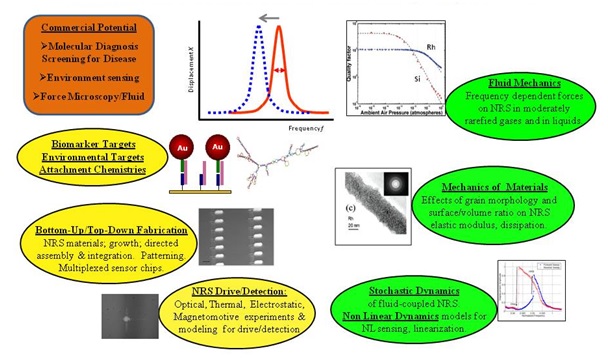
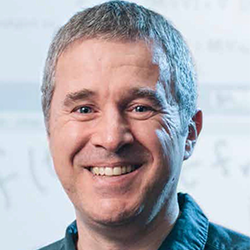
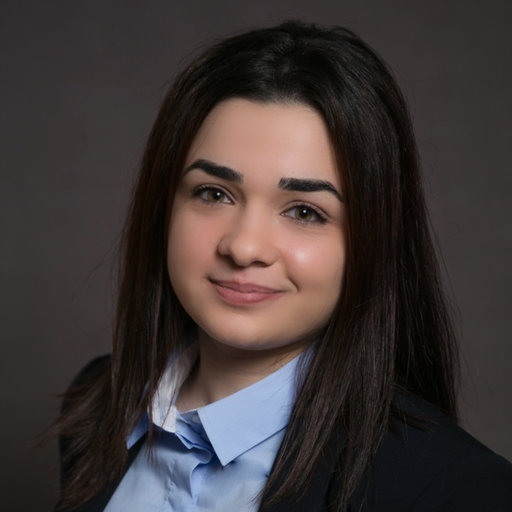
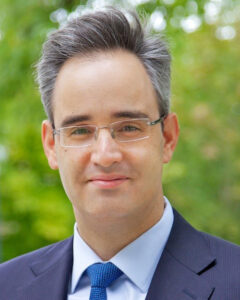
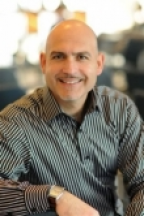
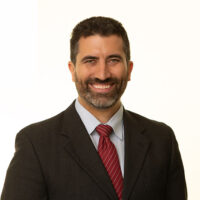
Rustom B. Bhiladvala is an Associate Professor in the Department of Mechanical Engineering at the University of Victoria. His expertise spans nanoscale materials, biomedical sensor development, and sustainable energy solutions. He holds degrees from IIT Kharagpur, the University of Iowa, and Yale University, and is a licensed Professional Engineer (P.Eng). Education: BTech (IIT Kharagpur), MS (University of Iowa), PhD (Yale) Affiliations: Faculty of Engineering, Mechanical Engineering Department, PRIMED Lab His research focuses on nanoresonators for early cancer detection, guard-heated thermal sensors for wind turbine optimization, and scalable nanostructure fabrication. Key projects include vibrating nanowire mass sensors and low-cost solar cell improvements. His work bridges fluid mechanics, materials science, and biomedical engineering. Notable contributions include developing field-directed nanowire assembly techniques and improving turbulent flow measurement accuracy. He teaches courses on energy systems and fluid mechanics at both undergraduate and graduate levels.
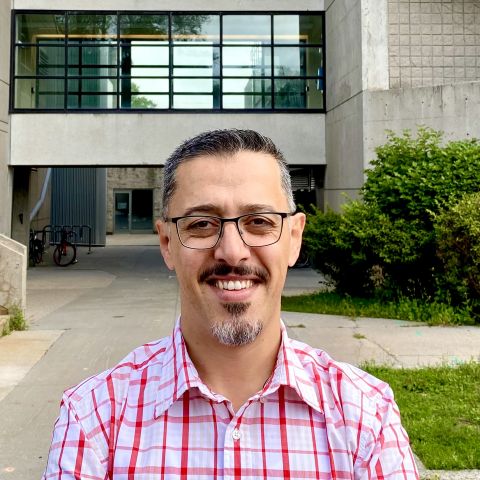
Dr. Mahmoud Alzoubi is an Assistant Professor at Queen's University , cross-appointed between the Robert M. Buchan Department of Mining Engineering and the Department of Mechanical and Materials Engineering . He leads an interdisciplinary research program that couples advanced transport phenomena with energy-efficient technologies for mining and renewable energy applications. Education: Ph.D. in Mining & Mechanical Engineering, McGill University (2018) M.Sc. in Engineering Systems & Management, Masdar Institute of Khalifa University in collaboration with MIT (2014) B.Sc. in Mechanical Engineering, Jordan University of Science and Technology (2005) Research Interests: His work centers on transport phenomena in porous media , with emphasis on phase-change heat and mass transfer , artificial ground freezing , thermal energy storage , microfluidic devices , and renewable HVAC cycles . By integrating high-fidelity experiments with large-scale numerical simulations performed on high-performance clusters, he advances sustainable solutions for energy-intensive mining operations and green building technologies. Publication Impact: Across 32 peer-reviewed articles (2013-2024), a dominant theme emerges: developing computationally efficient models for coupled thermo-hydraulic processes in freezing, storage and ventilation systems. Studies range from Stefan-problem analytical solutions for phase-change materials to large-eddy simulations of cough-jet dispersion for indoor-air safety, underscoring a methodological breadth that spans pure mathematics, experimental heat transfer, and applied computational fluid dynamics. Funding & Recognition: Total research funding secured: CAD 466,000+ (direct cash CAD 381,000 + high-performance computing allocation CAD 85,000) Former member, Canadian Hydrogen in Mining Advisory Committee , Natural Resources Canada Laboratory & Teams: Dr. Alzoubi directs a research laboratory at Queen’s University equipped with state-of-the-art instrumentation for multiphysics experimentation and access to national HPC facilities. The group collaborates closely with industry partners (mining, HVAC) and government laboratories to translate fundamental findings into scalable, energy-efficient technologies for northern mining and cold-region infrastructure.
Aleksander Czekanski is a Professor in the Department of Mechanical Engineering at York University's Lassonde School of Engineering. He serves as co-Director of the Manufacturing Technology and Entrepreneurship Centre and previously held the NSERC Chair in Design Engineering. His expertise spans Additive Manufacturing, Bioprinting, Material Characterization, and Artificial Intelligence in Engineering Education. He holds an MBA from York University's Schulich School of Business and a Ph.D. in Mechanical Engineering from the University of Toronto. Dr. Czekanski's research focuses on advanced materials, including soft and super-soft materials, topology optimization, and in-situ bioprinting. He has pioneered studies on 4D printing, fatigue analysis of natural rubbers, and microstructural evolution in additive-manufactured alloys. His work bridges computational modeling with experimental validation, addressing challenges in both industrial and biomedical applications. Received the President's University-Wide Teaching Award and Lassonde Innovation Award. Served as CSME Board Director (2014-2024) and President of the Canadian Engineering Education Association (2020-2021). Active in professional leadership roles, including Fellowships in CSME, CEEA, and the Engineering Institute of Canada. His research outputs emphasize cross-disciplinary innovation, with over 80 publications spanning material science, manufacturing processes, and engineering education. Current projects include developing smart hydrogels for 4D printing and optimizing topology for fluid-structure interaction systems.
Colin Denniston is a Professor in the Department of Physics & Astronomy at Western University. His research focuses on multiscale modeling of soft matter systems, including complex fluids, liquid crystals, colloidal suspensions, and polymer dynamics. He specializes in developing novel numerical methods for simulating micro/nano-fluidic systems and studying material properties during curing processes. Key research areas include: Molecular dynamics simulations of polymerization reactions Hydrodynamic interactions in confined flows Photonic band gap engineering using colloidal crystals Interfacial dynamics in coupled lattice-Boltzmann and molecular dynamics frameworks His work bridges theoretical physics, computational modeling, and materials engineering. Notable contributions include advancements in LAMMPS integration for fluid simulations and studies on defect-bonded colloidal structures in cholesteric phases. The Denniston Group actively explores applications in advanced composites and nanotechnology. Professional activities include leading the Denniston Group at Western University and collaborating on projects involving fiber-reinforced polymers for aerospace/automotive industries. He accepts graduate student applications year-round.
Dr. Hodjat Shiri is an Associate Professor in Civil Engineering at Memorial University of Newfoundland, holding the Wood Group Chair in Arctic and Harsh Environments. His research addresses Arctic offshore challenges, including ice-seabed interactions, subsea pipeline design, and reliability assessment. Shiri integrates machine learning with geotechnical modeling to predict iceberg impacts and pipeline performance. Recent work explores trenching techniques, layered seabed responses, and fatigue in riser systems. Publications emphasize practical solutions for energy infrastructure in climate-sensitive regions, combining numerical simulations with field data validation.
Raymond J. Spiteri is a Professor in the Department of Computer Science at the University of Saskatchewan, where he also directs the Centre for High-Performance Computing. His research spans numerical analysis, scientific computing, and applied mathematics, with a focus on developing numerical methods and software for differential equations, computational fluid dynamics, and exascale computing. He has led projects funded by Mprime and Mitacs, collaborating with industries like AFCC and Ballard Power. Education: Ph.D. in Mathematics (Institute of Applied Mathematics), University of British Columbia, 1997 B.Sc. (Hons.) in Applied Mathematics (Theoretical Physics), University of Western Ontario, 1990 Postdoctoral Fellow, School of Computer Science, McGill University, 1997–1999 Research Interests: Numerical methods for ODEs/DAEs/PDEs, including Runge-Kutta and SSP methods High-performance computing and parallel programming Applications in fluidized bed simulation, cardiac electrophysiology, and climate modeling Software development for scientific computing (e.g., problem-solving environments) Recent Article Trends: Advancements in implicit-explicit methods and operator-splitting techniques Computational modeling of cardiac arrhythmias and electrochemical systems Large-scale simulations for environmental and geophysical processes High-performance computing optimizations for exascale architectures Grants & Leadership: Director of the Centre for High-Performance Computing (College of Arts and Science) Executive Committee member of WestGrid/Compute Canada Past leader of the Mprime project on fuel cell simulation and transport phenomena Labs & Teams: Research is conducted in the Numerical Simulation Laboratory, focusing on interdisciplinary projects with industrial and academic partners.
Dr. Zeinab El-Sayegh is an Assistant Professor in the Department of Automotive and Mechatronics Engineering at the University of Ontario Institute of Technology. She is affiliated with the Faculty of Engineering and Applied Science and holds professional engineering licensure (PEng). Her research focuses on vehicle dynamics, autonomous systems, and off-road vehicle design, with a strong emphasis on tire mechanics and soil-terrain interactions. She has been recognized with the 2024 Engineering Research Award in the Early Career Category. Education: PhD (Mechanical Engineering), University of Ontario Institute of Technology (2020) MEng (Aerospace Engineering), Concordia University (2018) MEng (Mechanical Engineering), Concordia University (2015) BEng (Mechanical Engineering), Lebanese International University (2013) Research Interests: Vehicle System Dynamics: Studying vibration and control mechanisms in automotive systems. Autonomous Vehicles: Developing path planning and sensor integration for off-road and multi-wheeled platforms. Tire Mechanics: Analyzing tire-soil interaction using advanced computational tools like FEA and SPH. Soil Dynamics: Modeling terrain effects on vehicle stability and performance in diverse environmental conditions. Modeling & Simulation: Creating scalable models for electric combat vehicles and agricultural tires. Professional Activities & Awards: Co-organizer of the F1tenth Competition at the 2024 IEEE Smart Mobility Conference. Assistant Editor of the International Journal of Heavy Vehicle Systems since 2021. Member of ASME Vehicle Design Executive Committee since 2021. Recipient of the 2024 Engineering Research Award (Early Career). Teaching & Engagement: Dr. El-Sayegh teaches courses such as Automotive Vibrations, Machine Design, Autonomous Vehicles, and Vehicle Dynamics & Control. She actively contributes to interdisciplinary research and outreach through memberships in ASME, SAE, and CSME.
Blaise Bourdin is a Professor of Mathematics and the Canada Research Chair in Mathematical and Computational Aspects of Solid Mechanics (Tier 1) at McMaster University's Department of Mathematics & Statistics. He holds a Doctorate from Université Paris 13 (1998) and has held academic positions at Louisiana State University (2002-2021) and postdoctoral roles at Technical University of Denmark, Caltech, and NYU. His research focuses on interdisciplinary modeling, numerical simulation, and analysis in solid mechanics, with emphasis on defect mechanics and optimal design. He pioneered the phase-field approach to brittle fracture, a widely influential method in fracture mechanics. His work has been supported by over $6M in grants from NSF, NSERC, and industry. Key research areas include solid mechanics, applied mathematics, numerical analysis, and theoretical mechanics. Recent publications (2018-2025) explore fracture toughness measurement, phase-field discretization, hydraulic fracturing, and topology optimization. Education: Doctorate in Mathematics, Université Paris 13 (1995-1998) Advanced Studies Diploma (DEA), Université Paris 13 (1994-1995) Master's and Undergraduate degrees, Université Paris 13 (1990-1993) Teaching includes advanced courses like Fourier Analysis, Optimal Design, and Engineering Mathematics. His software contributions include the open-source 'mef90/vDef' project. Awards include the prestigious Tier 1 Canada Research Chair (2022).
Professor Costas Sarris is a faculty member at the Department of Electrical and Computer Engineering , University of Toronto , where he has been since 2002. He holds a PhD in Electrical Engineering and an MSc in Applied and Interdisciplinary Mathematics from the University of Michigan, and a Diploma in Electrical and Computer Engineering from the National Technical University of Athens. Research Focus : Computational electromagnetics, scientific machine learning, wireless propagation modeling, uncertainty quantification, and convex optimization of wireless power transfer systems. Leadership Roles : Editor-in-Chief of the IEEE Journal on Multiscale and Multiphysics Computational Techniques (2019-2024), TPC Chair for multiple IEEE conferences, and Chair of the IEEE MTT-S Technical Committee on Field Theory and Computational Electromagnetics (2018-2020). His recent work includes generalizable neural network propagation models for indoor/tunnel environments, hybrid physics-informed neural networks for multiphysics, and uncertainty quantification techniques using polynomial chaos expansion. He has received numerous awards, including the IEEE Fellow (2025) and the Faculty Teaching Award (2021). Scientific Awards : IEEE Fellow (2025) IEEE Antennas and Propagation Society Distinguished Lecturer (2024-2026) 2021 IET Microwaves, Antennas & Propagation Premium Award IEEE MTT-S Outstanding Young Engineer Award (2013) Ontario Early Researcher Award (2007) He mentors a team of PhD and M.A.Sc. students, with alumni pursuing careers in academia, R&D, and engineering. His group has published extensively in IEEE journals, covering topics like FDTD methods, RIS-enabled communication, and machine learning for microwave engineering.
Mario Ioannidis is a Professor and Chair of the Department of Chemical Engineering at the University of Waterloo. His research focuses on multiphase flow, nanoparticle transport, and interface dynamics in porous media, with applications spanning contaminant hydrology, petroleum production, and environmental remediation. He has taught core courses in fluid mechanics and specialized topics like biomedical transport and nanotechnology engineering practice. Research Interests: Capillarity and Wetting Colloids and Interfaces Nanoparticle Behavior in Porous Media Multiphysics Modeling of Transport Phenomena Groundwater Remediation Technologies Notable Contributions: Recent work includes modeling tortuosity-connectivity relationships in porous media, experimental studies on passive sampling techniques, and fundamental investigations into Pickering emulsions stabilized by ethyl cellulose nanoparticles. His publications highlight interdisciplinary approaches bridging chemical engineering, environmental science, and nanotechnology.
Nasser Mohieddin Abukhdeir is an Associate Professor and Associate Chair in the Department of Chemical Engineering at the University of Waterloo. He leads the Computational Multiphysics Research Group, focusing on multiphase flow, soft matter systems, and computational modeling. His expertise spans computational fluid dynamics, reacting multiphase flows, and nanostructured surface analysis. Education: PhD in Chemical Engineering, McGill University (2010) BS/MS in Chemical Engineering & Computer Science, Carnegie Mellon University (2002) Research emphasizes industrial-scale multiphysics processes, including vapor extraction (VAPEX) for heavy oil recovery, bioreactor modeling, and liquid crystal dynamics. His work integrates advanced numerical methods with experimental validation, particularly in complex geometries and boundary conditions. Teaching includes courses on transport phenomena, applied mathematics, and programming for engineers. He has developed open-source tools like OpenCCM and OpenCMP to advance multiphase flow simulation. Key contributions include diffuse-interface methods for two-fluid systems and shapelet-based nanostructure analysis. His research bridges computational innovation with practical applications in energy, materials, and biotechnology.
Dr. Michael Welland is an Associate Professor in the Department of Engineering Physics at McMaster University, Canada. His research focuses on computational modeling of nuclear and energy materials, with applications in advanced manufacturing, hydrogen storage, and battery technologies. He previously served as a Senior Research Scientist at Canadian Nuclear Laboratories and has held postdoctoral positions at Argonne National Laboratories and the European Commission Joint Research Centre Karlsruhe. Education: Ph.D. in Nuclear Engineering, Royal Military College of Canada B.Sc. in Engineering Physics, Queen’s University Dr. Welland's expertise spans mesoscale modeling, multiphysics transport, and data-driven material property analysis, contributing to international nuclear and energy initiatives. He actively participates in community outreach and scientific communication. Courses Taught: ENGPHYS 2CM4: Computational Multiphysics ENGPHYS 3NM4: Numerical Methods for Engineering
Ricardo Camarero is an Associate Professor in the Department of Mechanical Engineering at Polytechnique Montréal. With a B.Eng., M.Eng., and Ph.D. from McGill University, he has established himself as a leading researcher in computational fluid dynamics and numerical methods for mechanical engineering applications. His research interests span geometric modeling, combustion and reactive flows, numerical simulation of fluid flows, aerodynamics using numerical methods, and turbomachinery design. Professor Camarero's work primarily focuses on developing and applying advanced computational techniques to solve complex engineering problems, particularly in the areas of fluid-structure interaction, high-voltage circuit breaker design, and turbomachinery flow analysis. With 166 publications spanning several decades, his research output demonstrates consistent contributions to the field of computational fluid dynamics. His recent work (2021-2024) shows continued activity in immersed boundary methods, mesh generation techniques, and applications to electrical engineering problems, indicating an active and productive research program. Professor Camarero has supervised 20 PhD students and 15 Master's students, reflecting his significant contribution to graduate education. His teaching responsibilities include courses in numerical methods and fluid mechanics, directly supporting his research areas. His research has strong practical applications, particularly in the electrical engineering sector where his work on circuit breaker design, arc extinction, and alternative insulating gases provides valuable insights for industry. The interdisciplinary nature of his work bridges mechanical engineering, electrical engineering, and computational mathematics.