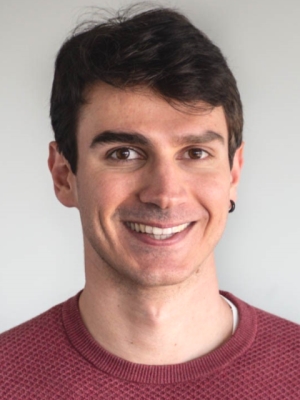
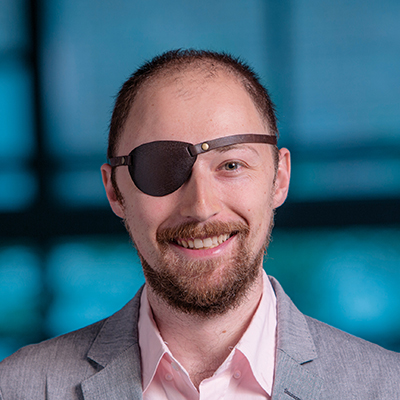
Dr. Iason Sideris is affiliated with ETH Zürich's Department of Neue Fertigungstechnologien (New Manufacturing Technologies), holding a Researcher position within the Professorship for Advanced Manufacturing. His work focuses on advancing additive manufacturing techniques, particularly in path planning optimization, temperature control, and material processing. He contributes to fields like Direct Energy Deposition, Wire-Arc Additive Manufacturing (WAAM), and data-driven finite volume methods. Key Research Areas: Additive Manufacturing, Thermal Modeling, Process Optimization, Materials Science Recent research emphasizes scalable path planning for temperature uniformity in AM processes, with publications addressing challenges in WAAM thermal management and real-time simulation methods. His work combines computational modeling with experimental validation to enhance manufacturing efficiency and material properties.
Jan Dreier is a Research Fellow at the Institute of Logic and Computation at Vienna University of Technology. His research centers on structural graph theory and algorithmic meta-theorems, particularly exploring the boundaries of tractability for model checking problems. Dreier's work bridges theoretical computer science and discrete mathematics, focusing on graph decompositions, parameterized complexity, and logical expressiveness. Key research themes include monadic stability in graph classes, applications of model theory to computer science, and efficient algorithms for logical queries on structured graphs. His publication record shows consistent focus on graph sparsity concepts and algorithmic applications of logic, with recent work expanding into approximation methods for counting queries. Research demonstrates sophisticated applications of combinatorial methods to fundamental problems in computational complexity.
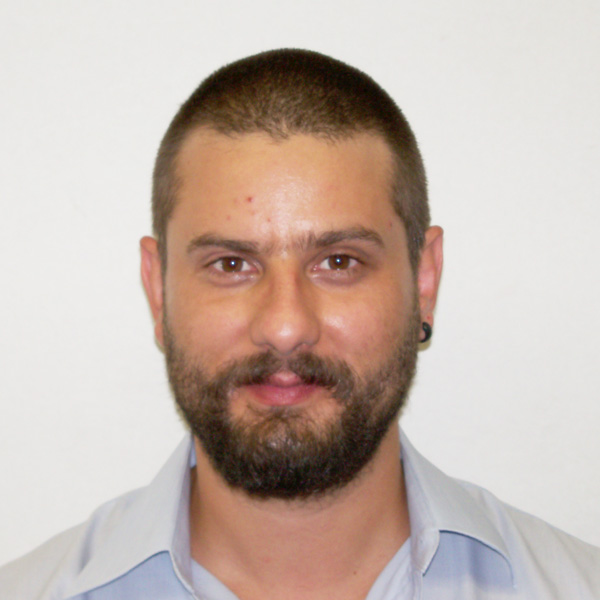
Fabian Suchanek is a full professor at Institut Polytechnique de Paris, specifically affiliated with Télécom Paris. He leads research in the Data, Intelligence, and Graphs (DIG) team within the Computer Science department. His academic career focuses on bridging artificial intelligence with structured knowledge representations. Suchanek's research interests span artificial intelligence, knowledge bases, and natural language processing, with particular emphasis on knowledge graph construction , rule mining , knowledge-based language models , and explainable AI . His work demonstrates how structured knowledge can enhance machine learning systems, particularly large language models, by providing factual grounding and interpretability. The research group he leads develops practical systems that address real-world knowledge management challenges. His recent publications showcase a strong trajectory in knowledge-intensive AI, with notable contributions to knowledge graph completion, rule mining techniques, and neural approaches to knowledge base validation. The research demonstrates increasing integration between symbolic and neural approaches to AI. Best Student Paper Award at KR 2024 for work on contextual reasoning Best Demo Award of IJCAI 2024 for rule mining in knowledge graphs French Open Research Award for the YAGO project Best Paper Award of ESWC 2021 for Neural Knowledge Base Repairs Suchanek has secured significant research funding, evidenced by his active recruitment of PhD students for knowledge-based language model research. He has held visiting positions, including at Nanyang Technological University (June-September 2023), and is recognized internationally through keynote invitations such as the Singapore ACM SIGKDD Symposium 2023. He has deliberately stepped back from administrative duties at Institut Polytechnique de Paris to focus on research. His laboratory maintains strong industry connections through open-source software projects including the YAGO knowledge base, AMIE for rule mining, STACI for explainable AI, and several other tools that have become standard in knowledge representation research.
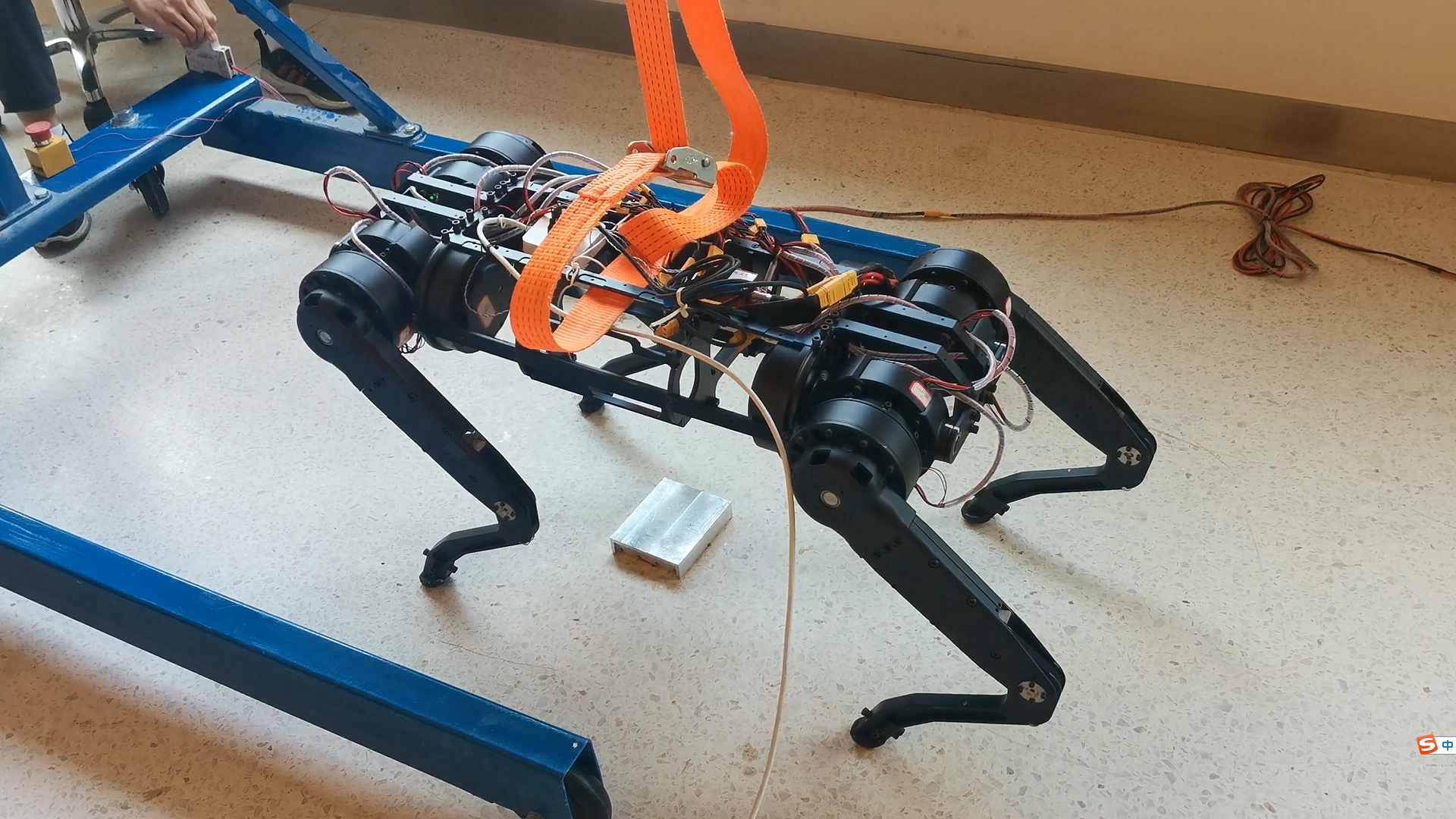
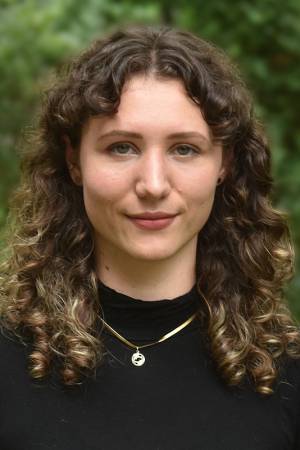
Wei Zhang is a tenured Professor at the Southern University of Science and Technology (SUSTech) , Shenzhen, China, and a Senior Member of IEEE. He serves as Associate Editor for IEEE Transactions on Control System Technology and leads the CLEAR Lab (Control & Learning for Robotics and Autonomy) within the School of Automation and Intelligent Manufacturing (AiM). His career spans institutions including the University of California, Berkeley (postdoc), and The Ohio State University (Assistant/Associate Professor). Education: PhD in Electrical Engineering from Purdue University (2009), MS in Electrical and Computer Engineering from University of Kentucky (2005), BS in Automation from University of Science and Technology of China (2003) Research Interests focus on integrating control theory, optimization, and machine learning to develop intelligent systems. Key areas include: Legged Robots: Dynamic locomotion control, bio-inspired gait design, and push recovery mechanisms Autonomous Systems: Real-time motion planning, obstacle avoidance, and safe navigation in adversarial environments Smart Grids: Distributed control for energy systems and transactive energy optimization Machine Learning: Reinforcement learning for robotics, Q-learning convergence analysis, and hybrid control-learning frameworks Publication Trends highlight interdisciplinary work at the intersection of robotics and control systems. His recent 2024 papers address: Whole-body control for wheeled-quadrupedal robots Geometric object pose refinement in computer vision Task-space Riccati feedback for underactuated systems Teacher-student reinforcement learning architectures Scientific Awards include: 2016 : NSF CAREER Award 2015 : Lumley Research Award (Ohio State University) 2013 : AFOSR Summer Faculty Fellowship 2018 : National Distinguished Expert (Young, China) 2019 : International Underwater Robot Competition 2nd Prize (team advisor) Academic Leadership involves editorial roles at IEEE Transactions on Control System Technology and IEEE Transactions on Power Systems. His lab provides state-of-the-art robotics platforms including quadruped robots, Kuka manipulators, and UAVs for algorithm validation. Research collaborators span The Ohio State University , UC Berkeley , CMU , and The University of Hong Kong .
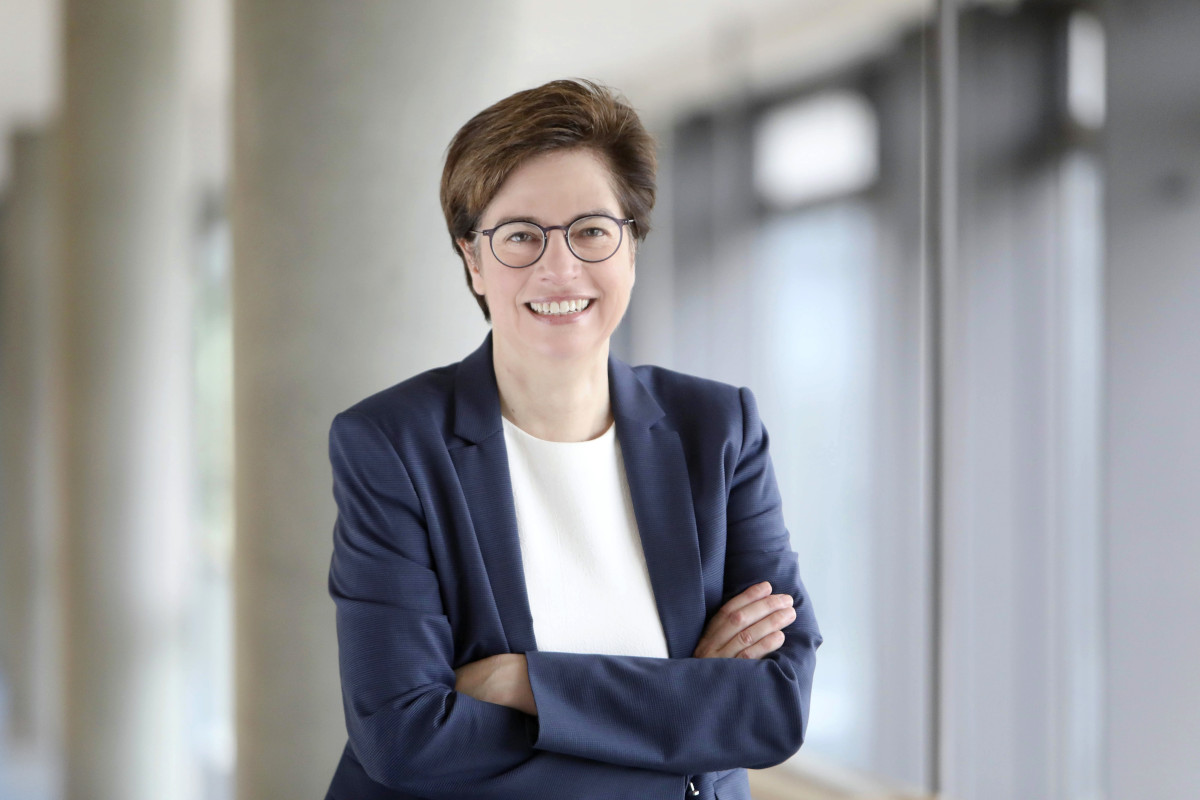
Nicole Koschate-Fischer is Professor and holds the GfK Chair for Marketing Intelligence at Friedrich-Alexander University Erlangen-Nuremberg (FAU), where she currently serves as Dean of Research at the Faculty of Business, Economics and Social Sciences. She is spokesperson for the interdisciplinary research focus "Customer Insights" and founding director of the Experimental Lab for Business Insights Nuremberg (ELAN). Previously, until September 30, 2024, she served as spokesperson for the Institute of Marketing and head of the Master's in Marketing program. Professor Koschate-Fischer earned her doctorate and habilitation from the University of Mannheim after completing a degree in business administration and psychology. Her academic journey includes membership in the interdisciplinary Collaborative Research Center "Concepts of Rationality, Decision Behavior, and Economic Modeling" at Mannheim, along with research stays as visiting scholar at University of Florida and University of Texas at Austin. She has held professorships at Technical University of Kaiserslautern and HEC Paris, and served as visiting professor at University of Vienna and Central University of Finance and Economics in Beijing. Research Interests Professor Koschate-Fischer's research spans customer insights , digital marketing , pricing and product management , and marketing analytics . Her work investigates consumer behavior in digital contexts, brand partnerships, life event impacts on purchasing decisions, and the psychological aspects of pricing. She employs experimental research methods and mediation analysis to understand causal relationships in consumer decision-making processes. Her publication record demonstrates consistent high-impact research in leading journals including Journal of Marketing, Journal of Marketing Research, and Journal of the Academy of Marketing Science. Recent work focuses on digital communication phenomena like emoji usage in electronic word-of-mouth, conversational agent interactions, and the application of behavioral pricing principles in charitable contexts. Professional Recognition Full member of the Bavarian Academy of Sciences and Humanities Member of the Board of Academic Trustees of the Center for Advanced International Marketing Knowledge (AiMark) Editorial board member of Journal of International Marketing Professor Koschate-Fischer regularly serves as reviewer for leading international academic journals and presents her research at both academic and practitioner-oriented conferences. Her work receives funding from organizations including the German Research Foundation (DFG), and she maintains active collaborations with renowned companies across various industries. She has directed the Experimental Lab for Business Insights Nuremberg (ELAN) since its founding, creating a hub for interdisciplinary customer insights research that bridges academic rigor with practical business applications.
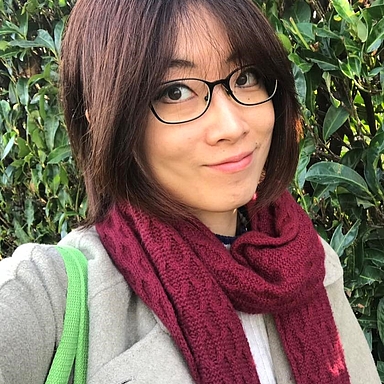
Qiaowei Pan is a Researcher at the University of Lausanne , focusing on Evolution and Ecology . They have held a Guest Researcher role at the Institute of Molecular Biology gGmbH (IMB) in Mainz, Germany since 2023, and a Postdoctoral Researcher position at the University of Lausanne since 2018. Education: PhD in Molecular and Evolutionary Biology (2014-2018), INRAe, University of Rennes II, France Erasmus Mundus Master in Evolutionary Biology (MEME) (2012-2014), University of Groningen (Netherlands) & University of Montpellier II (France) BSc in Biology (2008-2012), University of North Carolina-Chapel Hill, USA Research Interests: Qiaowei Pan's work centers on the intersection of molecular genetics , evolutionary biology , and developmental biology , particularly in sex determination mechanisms across diverse animal models. Their studies span non-coding RNA regulation , sex chromosome evolution , and signal transduction pathways like TGF-β in reproductive systems. Publication Trends: Recent articles highlight expertise in sex determination systems (5/12 publications), genomic approaches (6/12), and fish developmental evolution . Collaborative work includes computational methods ( RADSex workflow ) and comparative studies across ant , goldfish , catfish , and cavefish models. Labs & Teams: Currently affiliated with the Keller-Valsecchi group at IMB and the Department of Evolution and Ecology at the University of Lausanne.
Jörg F. Löffler is a Full Professor of Metal Physics and Technology at the Department of Materials, ETH Zürich , where he has been since 2003. He previously served as Chairman of the Department (2010–2013) and holds Adjunct Professor positions at Tohoku University (Japan) and a Visiting Faculty role at Caltech. His research focuses on bulk metallic glasses , metallic biomaterials , and magnetic materials , combining synthesis, characterization, and applications in biomedical and structural contexts. Educations : Studied Physics and Materials Science at Saarland University (Germany), earned his doctorate at ETH Zurich and Paul Scherrer Institute on magnetism and neutron scattering (1997). Research Trends : Recent work explores additive manufacturing (e.g., laser powder bed fusion), biodegradable magnesium alloys for implants, and magneto-structural coupling in metallic glasses. Collaborative efforts integrate in situ analysis with computational modeling. Scientific Awards : International Magnesium Science and Technology Award (2023) MRS Fellow (2021) DGM 'Breakthrough' Prize (2016) Masing Memorial Prize (2005) ETH Zurich Medal (1998) Alexander von Humboldt Fellowship (1998-2001) Löffler advises the Department of Materials Science and Engineering at UC Davis and serves on editorial boards. His group at ETH Zürich investigates advanced metallic materials using synchrotron radiation and neutron scattering facilities.
Lina Bertling Tjernberg is a Professor at the Department of Electrical Engineering, KTH Royal Institute of Technology, and Deputy Head of the School of Electrical Engineering and Computer Science (EECS) with responsibility for research conditions and impact. She served as Director of KTH's Energy Platform during 2018-2024 and holds memberships in IVA (Swedish Royal Academy of Engineering Sciences) and the IEEE Power & Energy Society. Research Focus: Applying mathematics (statistics, optimization, life cycle assessment) to enhance reliability and predictive maintenance in electric power systems, with emphasis on future electricity grids integrating microgrids, battery storage, HVDC, nuclear/pumped/hydro/wind/solar power, hydrogen, and electrified transport. Collaborations: Engaged with Comillas Pontifical University (Madrid), Addis Ababa University, Norwegian University of Science and Technology (NTNU), and IEA Wind. Key Research Trends: Recent articles highlight advancements in microgrid control (2025), SMR nuclear energy integration (2025), AI-driven asset management (2024), hydrogen sector coupling (2024), and renewable forecasting techniques (2024). Awards: 2021 Power Woman of the Year 2022 Energy Power List (Sweden’s top 20 energy influencers) Leadership Roles: Swedish Electromobility Center (SEC) board Chair of Swedish Electrical Standards (SEK Svensk Elstandard) Member, IEEE PES ISGT Europe steering committee
Professor Haijiang Li is a Chair in BIM for Smart Engineering at Cardiff University's School of Engineering. His roles include leading the Computational Mechanics and Engineering AI Research Group, directing the BIM for Smart Engineering Centre, and overseeing the BIM MSc programme. He holds editorial roles for journals like Construction Innovation and Automation in Construction , and chairs the European Group of Intelligent Computing in Engineering (EG-ICE). Research focuses on smart computational engineering platforms integrating BIM, AI, and big data for sustainable infrastructure. Key areas include digital twins, disaster management, and resilient urban systems. He has secured £40M in research funding, including £9M as PI, and led over 70 research staff and students. Prof. Li is a Standards Committee Technical Executive at buildingSMART, driving international BIM standards. His work includes co-authoring a book on BIM standards across China, the US, and the UK. Awards include Fellowships from the British Computer Society (FBCS) and the Higher Education Academy (FHEA). His research outputs span over 250 publications, covering topics like AI-driven bridge maintenance, ontology-based decision-making, and energy-efficient urban systems. Collaborations with industry and global partners emphasize practical applications of BIM and smart technologies.
Mark Yatskar is an Assistant Professor in the Department of Computer and Information Science at the University of Pennsylvania. His research focuses on the intersection of natural language processing, computer vision, and fairness in machine learning. He earned his PhD from the University of Washington under advisors Luke Zettlemoyer and Ali Farhadi, and previously worked as a Young Investigator at the Allen Institute for Artificial Intelligence. Education: PhD in Computer Science, University of Washington (Advisor: Luke Zettlemoyer & Ali Farhadi) Research Interests: Yatskar's work explores how language can structure visual perception and mitigate human biases in machine learning systems. Key themes include: Natural language as a scaffold for visual intelligence Bias characterization and control in machine learning systems His lab currently investigates projects like language-guided bottlenecks, annotator cognitive heuristics, and gender bias amplification. Teaching: CIS 5300: Computational Linguistics (2021-2024) CIS 7000: Language and Vision (2020) CIS 6300: Efficient NLP (2023, 2025) Awards: Best Paper Award at EMNLP (Gender Bias Amplification Research) Advising & Grants: Yatskar advises a team of PhD/Master's students and actively seeks motivated researchers. His group has explored funding in areas like interpretable AI, multimodal reasoning, and dataset bias mitigation. Labs/Teams: Leads the Penn NLP & Vision Lab, focusing on projects like MolMo/PixMo open models, ViUniT visual unit tests, and bias mitigation frameworks.
Enamul Hoque Prince is an Associate Professor and Director of the School of Information Technology at York University. He leads the Intelligent Visualization Lab, funded by the Canada Foundation for Innovation (CFI) and Ontario Research Funds (ORF). He holds a PhD in Computer Science from the University of British Columbia and completed postdoctoral work at Stanford University. His research integrates information visualization, human-computer interaction (HCI), and natural language processing (NLP) to address information overload challenges. Dr. Prince's educational background includes a PhD from UBC, an MSc from Memorial University of Newfoundland, and a BSc from Chittagong University of Engineering & Technology. He has conducted research at institutions like Tableau Software and the Qatar Computing Research Institute and serves on committees for top conferences like ACL and IEEE Vis. His work is supported by grants from NSERC, CFI, and others. Research interests focus on NLP-driven visual analytics, user-adaptive visualization, and accessible interfaces. Notable projects include Evizeon (natural language interfaces for visual analytics), ConVisIT (topic modeling for online conversations), and CIDER (concept-based image search). Publications highlight trends in multimodal systems, chart comprehension, and accessibility. Key awards include the NSERC Discovery Grant (2019) and a Best Paper Honorable Mention at DIS 2021. He supervises graduate and undergraduate students in areas like visualization, NLP, and HCI. Labs and collaborations emphasize interdisciplinary approaches, with the Intelligent Visualization Lab advancing tools for data exploration and user-centered design. Teaching includes courses on design principles and information visualization.
Theo Damoulas is a Professor of Machine Learning at the University of Warwick with a joint appointment in the Department of Computer Science and Statistics. He is a Turing AI Fellow (2021-2026) through UK Research and Innovation, an ELLIS member, and a Visiting Professor at New York University's Center for Urban Science and Progress (CUSP). He founded and leads the Warwick Machine Learning Group and has directed major projects at The Alan Turing Institute including Project Odysseus and the London Air Quality project. Education includes: PhD in Probabilistic Multiple Kernel Learning (University of Glasgow, 2009) MSc in Informatics (Distinction, University of Edinburgh, 2004) MEng in Mechanical Engineering (1st Class, University of Manchester, 2003) His research focuses on probabilistic machine learning and Bayesian statistics, emphasizing the integration of structural priors, spatiotemporal dependencies, physical laws, and causal relationships. Key applications include Digital Twins, urban science, and computational sustainability. His work advances robust and scalable inference methodologies for complex real-world systems. Publications demonstrate strong emphasis on Bayesian methods, spatiotemporal modeling, and uncertainty quantification, with applications spanning battery modeling, urban mobility, federated learning, and causal inference. Recent work shows increased focus on physics-informed models, federated learning frameworks, and causal abstraction techniques. Major scientific awards: Turing AI Acceleration Fellowship (2021-2026) Best Paper Awards (Wilkes 2024, AISTATS 2022, IEEE ICMLA 2010) ACM SIGMOD Most Reproducible Paper (2017) Dissertation Award (Classification Society 2012) Teaching Excellence nominations (Warwick 2015-2017) He actively advises PhD students and secured significant grants including the £multi-million Turing AI Fellowship. Current doctoral researchers investigate federated learning, causal inference, and spatiotemporal modeling. He leads the Warwick Machine Learning Group, a cross-departmental team developing foundational ML methods for scientific and societal challenges.
Jonathan Vance is a Lecturer in the School of Computing at the University of Georgia. He holds a Ph.D. and B.S. in Computer Science from the University of Georgia (2023 and 2009, respectively). His research focuses on applying artificial intelligence techniques to precision agriculture, particularly machine learning for biomass yield prediction and audio processing. He explores machine learning applications in agriculture, climate science, and image/audio processing. His educational background includes a strong foundation in computer science from UGA. His work emphasizes interdisciplinary approaches combining machine learning with agricultural challenges. Recent publications highlight advancements in data synthesis, domain adaptation, and feature selection for alfalfa biomass prediction. These studies contribute to sustainable agriculture through AI-driven solutions. No scientific awards or grants are explicitly listed in the provided information. He advises no listed students and maintains a professional website at jonathanvance.online .
Andrea Bajcsy serves as an Assistant Professor in the Robotics Institute and School of Computer Science at Carnegie Mellon University, leading the Interactive and Trustworthy Robotics Lab (Intent Lab). Her work focuses on enabling robots to safely interact with open-world environments through novel algorithms in control theory and machine learning. Her educational background includes a Ph.D. in Electrical Engineering & Computer Science from UC Berkeley under Anca Dragan and Claire Tomlin, followed by a postdoctoral position with Jitendra Malik and industry experience at NVIDIA's Autonomous Vehicle Research Group. Research centers on quantifying robot confidence, computing safe interaction policies for nuanced hazards (tearing, spilling, breaking), and aligning AI with human values. Key methodologies integrate optimal control, reinforcement learning, dynamic game theory, and deep learning, applied to robotic arms, quadrotors, quadrupeds, and autonomous vehicles. Core areas include safety for physical human-robot interaction, robot learning for manipulation, and world modeling. Recent publications (2024-2025) reveal a concentrated effort on uncertainty-aware safety mechanisms, out-of-distribution adaptation, and language-based safety specification. Her work increasingly bridges conformal prediction with interactive learning while leveraging vision-language models for real-time policy steering, as evidenced by multiple CoRL, RSS, ICRA, and ICLR acceptances. Scientific Awards: NSF CAREER Award (2025) Advises four active PhD students (Kensuke Nakamura, Ravi Pandya, Junwon Seo, Yilin Wu) and leads research funded by the NSF CAREER grant. Organizes community initiatives including the Northeast Systems and Control Workshop and ICRA workshops on Safely Leveraging VLMs in Robotics and Public Trust in Autonomy. Directs the Intent Robotics Lab, which develops theoretical frameworks and practical implementations for open-world robot safety. The lab maintains strong industry ties through NVIDIA collaborations and emphasizes real-world deployment across multiple robotic platforms.
Professor Winston Hsu is a distinguished faculty member in the Department of Computer Science and Information Engineering at National Taiwan University, where he has served as a full professor since 2015. He is the co-director of the Communications and Multimedia Laboratory (CMLab) and founder of the MiRA (Multimedia indexing, Retrieval, and Analysis) research group. Additionally, he serves as the Founding Director for NVIDIA AI Lab at NTU, the first such lab in Asia. Professor Hsu received his Ph.D. in Electrical Engineering from Columbia University in 2007 under the supervision of Professor Shih-Fu Chang. Prior to his academic career, he was a founding engineer and research manager at CyberLink Corp., now a public image/video software company. National Taiwan University (2007-Present): Professor (2015-Present), Assistant/Associate Professor (2007-2015) MobileDrive (2021-2024): CTO and Vice President (Joint Venture between Foxconn and Stellantis) IBM TJ Watson Research Center (2016-2017): Visiting Scientist Microsoft Research Redmond (2014): Visiting Researcher Columbia University (2007): Ph.D. in Electrical Engineering Professor Hsu's research focuses on machine learning, computer vision, large-scale image and video search and recognition, and embedded AI. His work spans from fundamental research in visual recognition to practical applications in automotive systems, medical imaging, and e-commerce. He has pioneered work in disguised face recognition, low-resolution face hallucination, 3D model search, and virtual try-on systems. His current research emphasizes Embodied AI, integrating perception, action, and learning technologies for applications in automotive and robotics domains. His research group has produced numerous influential publications, particularly in top computer vision and multimedia conferences like CVPR, where they won first place in the Disguised Face Recognition competition in 2018. Their work spans diverse application areas including security, medical diagnostics, automotive systems, and e-commerce solutions, demonstrating strong translation from academic research to real-world impact. IBM Research Pat Goldberg Memorial Best Paper Award (2018) First Place, IARPA Disguised Faces in the Wild Competition (CVPR 2018) Best Brave New Idea Paper Award, ACM Multimedia 2017 NVIDIA AI LAB Award (First in Asia, 2016) First Place, MSR-Bing Image Retrieval Challenge (2013) World's Top 2% Scientists (2023) Professor Hsu actively mentors students and researchers, with his group consistently recruiting PhD students, postdocs, and research assistants. He has successfully bridged academia and industry through multiple collaborations, including his role as CTO at MobileDrive (a joint venture between Foxconn and Stellantis) from 2021-2024. His research has been supported by significant industry partnerships with Microsoft, IBM, and NVIDIA, as well as government grants from Taiwan's Ministry of Science and Technology. His laboratory, the Communications and Multimedia Laboratory (CMLab), maintains strong industry connections and focuses on cutting-edge research in visual AI. The lab has produced numerous award-winning projects and maintains active collaborations with global technology companies, particularly in the automotive and consumer electronics sectors.