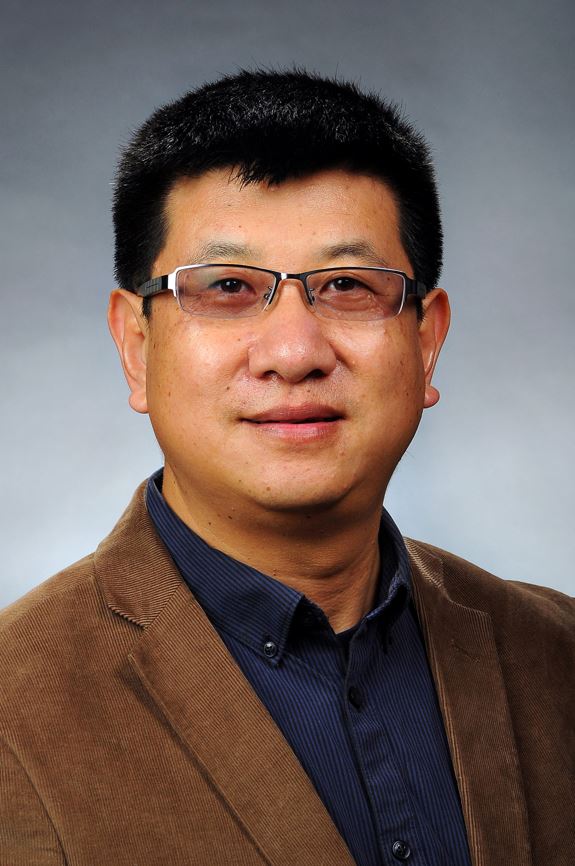
Maria Grazia Guerra is an Assistant Professor at the Department of Mechanics, Mathematics & Management at the Polytechnic University of Bari, Italy . Her work focuses on additive manufacturing, material extrusion processes, and optical monitoring systems for advanced manufacturing technologies. Research Interests: Maria's research spans multiple facets of additive manufacturing, including laser metal deposition, material extrusion, and sintering technologies. She investigates dimensional accuracy, defect detection, and sustainability assessment through exergetic analysis, while also exploring photogrammetry applications for micro-scale measurements and surface characterization. Publications: Maria has published extensively on topics such as layerwise monitoring in laser-powder bed fusion, surface grinding of thermoplastics, and chemical vapor treatment for polymer parts. Her work frequently addresses process optimization, geometric accuracy, and the development of novel methodologies for industrial measurement systems. Contact: Email: mariagrazia.guerra@poliba.it
Alexandre Fournier is a Professor of Geophysics at the Institut de Physique du Globe de Paris (IPGP), where he leads the Geologic Fluid Dynamics research group. He serves as the scientific manager of IPGP's shared HPC and data processing service (S-CAPAD) and coordinates the MOOC 'Our Planet'. From 2016 to 2020, he headed the STPE and GGG master's programs. His research spans Earth's and planetary dynamos, fluid dynamics in planetary settings, inverse problems, data science, and numerical methods for geophysical applications. He completed his Accreditation to Supervise Research at Paris-Diderot University (2012), PhD in Geosciences at Princeton University (2003), DEA in internal geophysics at IPGP (1998), and Master's in Physics at ENS de Lyon (1998). His students include Elisabeth Canet, Sabrina Sanchez, Marie Bocher, Guillaume Pichon, Venkatesh Gopinath, Thijs Franken, Marie Troyano, and Théo Tassin. His recent articles focus on geodynamo simulations, archaeomagnetic studies, and computational methods for planetary fluid dynamics. Notable collaborations include Julien Aubert, Thomas Gastine, and Yves Gallet. His work emphasizes high-performance computing, data assimilation, and applications to Earth and planetary systems.
Dr. Mahmoud Alzoubi is an Assistant Professor at Queen's University , cross-appointed between the Robert M. Buchan Department of Mining Engineering and the Department of Mechanical and Materials Engineering . He leads an interdisciplinary research program that couples advanced transport phenomena with energy-efficient technologies for mining and renewable energy applications. Education: Ph.D. in Mining & Mechanical Engineering, McGill University (2018) M.Sc. in Engineering Systems & Management, Masdar Institute of Khalifa University in collaboration with MIT (2014) B.Sc. in Mechanical Engineering, Jordan University of Science and Technology (2005) Research Interests: His work centers on transport phenomena in porous media , with emphasis on phase-change heat and mass transfer , artificial ground freezing , thermal energy storage , microfluidic devices , and renewable HVAC cycles . By integrating high-fidelity experiments with large-scale numerical simulations performed on high-performance clusters, he advances sustainable solutions for energy-intensive mining operations and green building technologies. Publication Impact: Across 32 peer-reviewed articles (2013-2024), a dominant theme emerges: developing computationally efficient models for coupled thermo-hydraulic processes in freezing, storage and ventilation systems. Studies range from Stefan-problem analytical solutions for phase-change materials to large-eddy simulations of cough-jet dispersion for indoor-air safety, underscoring a methodological breadth that spans pure mathematics, experimental heat transfer, and applied computational fluid dynamics. Funding & Recognition: Total research funding secured: CAD 466,000+ (direct cash CAD 381,000 + high-performance computing allocation CAD 85,000) Former member, Canadian Hydrogen in Mining Advisory Committee , Natural Resources Canada Laboratory & Teams: Dr. Alzoubi directs a research laboratory at Queen’s University equipped with state-of-the-art instrumentation for multiphysics experimentation and access to national HPC facilities. The group collaborates closely with industry partners (mining, HVAC) and government laboratories to translate fundamental findings into scalable, energy-efficient technologies for northern mining and cold-region infrastructure.
Raquel Lieberman is a Professor at the Georgia Institute of Technology, holding the Sepcic-Pfiel Chair in Chemistry. Her lab investigates the molecular mechanisms of protein misfolding and membrane enzymology, with a focus on diseases like glaucoma and Alzheimer's. She can be reached at raquel.lieberman@chemistry.gatech.edu. B.Sc., Massachusetts Institute of Technology (1998) M.S., Northwestern University (1999) Ph.D., Northwestern University (2005) Postdoctoral Research Fellow, Harvard Medical School/Brandeis University (2005-2007) Research Interests: Protein misfolding and aggregation in glaucoma (myocilin) Intramembrane proteases in neurodegenerative diseases Structural and biophysical characterization of membrane enzymes Scientific Awards: PEW Scholar in Biomedical Sciences (2010) Blanchard Fellowship (2010) Rosalinde & Arthur Gilbert/AFAR New Investigator Award (2009) NSF CAREER Award (2008) Glaucoma Research Foundation Shaffer Award (2008) ACS Nobel Laureate Signature Award for Graduate Education (2006) NIH Postdoctoral Fellowship (2005) The Lieberman lab employs crystallography, neutron scattering, and proteomics to study protein folding and membrane enzymology. They are pioneering pharmacological chaperone discovery for glaucoma therapeutics and structural characterization of intramembrane proteases, with recent work focusing on AI-driven mutation classification and lipid-dependent enzyme oligomerization.
Larisa Beilina is Full Professor at the Department of Applied Mathematics and Statistics, Chalmers University of Technology, Sweden. Her work sits at the intersection of numerical analysis, inverse problems, and computational electromagnetics, with recent extensions to biomedical modeling. Education and Career Milestones: PhD awarded in 2003 for pioneering an adaptive finite-element method for hyperbolic coefficient inverse problems. In 2008, co-developed—with Prof. M. V. Klibanov (UNC Charlotte)—a globally convergent numerical method for coefficient inverse problems. 2011: experimentally validated the globally convergent algorithm using blind field data from the US Army Research Laboratory’s Forward-Looking Radar. Research Interests Beilina’s research focuses on ill-posed and coefficient inverse problems governed by PDEs. She designs adaptive finite-element algorithms that deliver reliable reconstructions from limited, noisy data, and couples these with globally convergent optimization techniques to escape local minima. Application domains span microwave thermometry for hyperthermia monitoring , early-stage melanoma detection via RF/microwave imaging , subsurface imaging using ground-penetrating radar , and parameter identification in HIV dynamics models . Recent Publication Trends Over 2022-2024 her articles emphasize four themes: (1) stabilized and explicit finite-element schemes for Maxwell’s equations and coupled wave systems; (2) hybrid FEM/FDM domain-decomposition solvers for large-scale 3D electromagnetic inverse problems; (3) adaptive error control and a posteriori estimates ensuring quantitative accuracy in conductivity and permittivity reconstruction; and (4) biomedical applications —ranging from microwave melanoma detection to time-adaptive determination of drug efficacy in HIV infection models. Scientific Awards & Recognition Keynote speaker and session chair at multiple international conferences on inverse problems and computational electromagnetics. Serves on editorial boards and as guest editor for proceedings volumes such as Springer Proceedings in Mathematics & Statistics and Journal of Inverse and Ill-Posed Problems . Research Teams & Grants Leads a multidisciplinary group comprising graduate researchers and post-docs collaborating with partners including the US Army Research Laboratory, University of North Carolina at Charlotte, and medical institutions in Sweden. Funding sources encompass Swedish Research Council grants, EU Horizon programs, and industry contracts focused on microwave diagnostics and multiphase flow measurements. Laboratory & Infrastructure Heads the Computational Inverse Problems Laboratory at Chalmers, equipped with high-performance GPU clusters, anechoic chamber facilities for microwave experiments, and access to clinical data sets for melanoma and HIV projects.
Cody Sheik is an Associate Professor in the Department of Biology at the University of Minnesota Duluth , affiliated with the Swenson College of Science and Engineering. His research integrates microbial ecology, genomics, and geochemistry to study aquatic environments, with a focus on microbe-water-rock interactions and carbon/nitrogen/sulfur cycling. Research Highlights : Subsurface microbiome biogeography (Deep Carbon Observatory projects) Sulfur cycling in Lake Superior sediments and hot springs Harmful algal bloom dynamics and microbial interactomes Iron mine and hydrothermal plume microbial ecology Teaching : General Microbiology (BIOL 3502) Bioinformatics for Biologists (BIOL 4201/5201) Geobiology: Slime Through Time (GEOL 4095/5095) Current Students : Emily Hyde (M.S., Integrated Biosciences) Jennifer Knack (Ph.D., Integrated Biosciences) Kaela Natwora (M.S., Integrated Biosciences)
Pascal Podwojewski is a researcher affiliated with Sorbonne Université in Paris, France. His work focuses on soil science, biogeochemistry, and environmental geophysics, with field studies across France, Vietnam, India, Laos, Thailand, and South Africa. Key research themes include soil degradation processes, bioturbation dynamics, and land use impacts on soil stability. Specializes in tropical and arid land pedology Utilizes geophysical methods (electrical resistivity, EM38) for soil characterization Investigates termite/earthworm bioturbation effects on soil structure Recent publications address biopore regeneration rates, constructed soil solutions for MENA regions, and silicon cycling in termite-modified soils. His studies often integrate field experiments with advanced imaging techniques like X-ray tomography and Bayesian inversion models. Major contributions include: Demonstrating complete biopore regeneration in seven out of nine study sites within 12 months Identifying termite constructions as nutrient hotspots in Cambodian paddy fields Quantifying long-term sugarcane residue impacts on soil aggregation stability Mapping soil carbon loss patterns following deforestation in Southeast Asian catchments
Prof. Dr. Serge Shapiro is a faculty member at the Free University of Berlin, affiliated with the Department of Geophysics within the Institute of Geological Sciences. His research focuses on anthropogenic seismicity, earthquake physics, geothermal energy, fracking, seismology, rock physics, and geomechanics. Anthropogenic Seismicity Earthquake Physics Geothermal Energy Fracking Seismology Rock Physics Geomechanics Shapiro's recent work analyzes fluid-induced seismic hazards across geo-energy applications, including CO2 storage, wastewater disposal, and hydraulic fracturing. His studies explore stress drop dynamics, pressure diffusion controls on earthquake magnitudes, and advanced DAS-based monitoring techniques for microseismicity. His publications emphasize seismic hazard modeling, fracture mechanics, and geomechanical stress conditions. Key methodologies include machine learning for seismic data analysis, theoretical modeling of fluid-flow effects on fault stability, and field studies in geothermal and gas extraction sites.
Dr. Franz M. Geiger is the Charles E. and Emma H. Morrison Professor of Chemistry at Northwestern University, with additional affiliations as Faculty Affiliate at the Paula M. Trienens Institute for Sustainability and Energy, Faculty Affiliate at the International Institute for Nanotechnology, and Faculty Member in the Applied Physics Graduate Program. He serves as Director of Graduate Curriculum and Executive Editor of The Journal of Physical Chemistry. Ph.D.: Georgetown University Vordiplom: Technische Universität Berlin Professor Geiger's research focuses on the role of surfaces and interfaces in geochemistry, atmospheric chemistry, and biophysics. His laboratory develops cutting-edge laser spectroscopy, mass spectrometry, and computational techniques to investigate environmental interfaces. Key research areas include chemistry for sustainability, climate change science, water pollution, indoor chemistry, and renewable energy production. His interdisciplinary approach bridges molecular-scale interfacial science to continuum-scale models, with particular emphasis on understanding water structure at interfaces and its implications for environmental processes. Analysis of Professor Geiger's recent publications reveals a strong focus on interfacial phenomena across multiple systems. His work spans environmental interfaces from deep sea environments to atmospheric chemistry and indoor air quality. A recurring theme is the application of advanced spectroscopic techniques to quantify molecular behavior at interfaces, particularly water structure and orientation. His research demonstrates how fundamental interfacial science connects to broader environmental challenges including climate change, water quality, and sustainable energy. Friedrich Wilhelm Bessel Prize of the Alexander von Humboldt Foundation (2017) ACS Nobel Laureate Signature Award in Graduate Education in Chemistry (2021) Fellow of the Royal Society of Chemistry (2016) Fellow of the American Association for the Advancement of Science (2012) Sloan Fellowship (2007-2009) NSF-CAREER Award (2004-2009) Professor Geiger maintains an active research group mentoring numerous graduate and undergraduate students, with several receiving prestigious awards including Burwell Fellowships and Outstanding Researcher awards. His group has secured significant research funding, evidenced by the recent granting of a nanometal energy harvester patent based on work published in PNAS in 2019. He serves on multiple national committees including the ACS National Award Canvassing Committee and the National Academy of Sciences Chemical Sciences Roundtable. The Geiger Research Group investigates environmental interfaces through teamwork and mentorship, embracing interdisciplinary collaboration to address complex scientific challenges. Their work spans atmospheric chemistry, water interfaces, energy materials, and indoor environments, using advanced spectroscopic techniques to build fundamental understanding that serves both the scientific community and the public. The group actively recruits students through research experiences and maintains a strong presence at conferences and professional organizations.
Chao Li is an Associate Professor (with tenure) at the Department of Mathematics, Columbia University . His research spans applied mathematics and mathematical physics, with a focus on fluid dynamics in geological systems and rock mechanics. Based on publication trends, his work addresses nonlinear flow behavior in fractures, grouting efficiency, and coupled mechanical-hydraulic processes in rock formations. On leave during Academic Year 2024-2025 Contact: Rm 527, MC 4430, 2990 Broadway, New York NY 10027 Email: cl3396@columbia.edu Website: http://www.math.columbia.edu/~chaoli/
Professor Kathy Whaler is a distinguished Professor of Geophysics at the School of Geosciences, University of Edinburgh, with extensive research experience in Earth's magnetic field and core dynamics. Her academic career spans several decades with significant contributions to geomagnetism and geophysical inverse theory. Her primary research interests include geomagnetism, dynamics and thermal history of the Earth's core, geophysical inverse theory, and electromagnetic induction. Professor Whaler's work focuses on understanding secular variation, core flow, outer core dynamics, and magnetotellurics, employing both satellite observations and ground-based measurements to model Earth's interior processes. Her fingerprint analysis shows strong engagement with topics including Secular Variation (100%), Magma (52%), Observatory studies (48%), and Magnetotellurics (48%). Professor Whaler's recent publications demonstrate continued productivity and relevance in her field, with multiple 2025 papers addressing cutting-edge questions in core dynamics and lithospheric structure. Her work spans from fundamental core processes to practical applications like understanding how subsurface electrical properties affect power grids. 29th Gunning Victoria Jubilee Prize Lectureship (1998) Associate Fellow (2022) Award for services to geophysics (2019) Bullard Lecturer (Dec 2012) Chair, International Scientific Review Panel, FutureEO Programme (2024) Professor Whaler actively supervises graduate students and leads multiple research projects with significant funding from organizations including the British Geological Survey, Met Office, and European Space Agency. Her research has practical applications for understanding geological hazards and infrastructure resilience, as demonstrated by media coverage of her work on magma systems in Ethiopia. Her international collaborations span continents, reflecting the global significance of her research on Earth's deep interior processes.
Pedro Martínez Pagán is a Full Professor specializing in applied geophysics and engineering, with a research focus on geophysical methods for environmental hazard detection, structural assessment, and sustainable resource management across Southeast Spain. His primary research domains include Geophysics (particularly Electrical Resistivity Tomography and MASW techniques), Civil Engineering (structural design and foundation analysis), Environmental Engineering (monitoring of agricultural and mining waste), Geotechnical Engineering (site characterization and seismic risk), and Engineering Education (integrating nomography and augmented reality into curricula). His work consistently bridges theoretical geophysics with practical field applications, emphasizing computational tools like Python for data inversion and analysis. Recent publications (2023-2025) demonstrate a concentrated effort on regional environmental challenges in Spain, including pig slurry pond monitoring, mining tailings assessment, and seismic microzonation for urban safety. His methodology prioritizes cost-effective geophysical solutions for real-world problems, often through collaborative case studies at sites like Murcia Cathedral and Granada’s seismic zones, while advancing educational frameworks for engineering pedagogy.
Dr. Lubo Liu serves as a Professor in the Department of Civil and Geomatics Engineering at California State University, Fresno's Lyles College of Engineering. He is a registered professional engineer in Environmental Engineering with a research-intensive career spanning water resources and environmental systems. His academic credentials include: Ph.D. in Environmental Engineering, University of South Carolina (2003) M.S. in Water Resources and Hydraulic Engineering, Tsinghua University, China (1998) B.S. in Hydraulic Engineering, Tsinghua University, China (1995) Dr. Liu's research integrates laboratory and field observations with advanced modeling to investigate contaminant fate in surface/groundwater systems, subsurface characterization, and bioremediation processes. His current dual focus targets agricultural soil enhancement for improved water/nutrient retention and analysis of near-shore dynamics in inland waters with emphasis on pathogen transport mechanisms. This work bridges theoretical environmental engineering with practical agricultural and public health applications. He instructs core civil engineering courses including CE 80 (Computer Applications), CE 128 (Hydraulics), CE 171 (Engineering Hydrology), CE 172 (Urban Stormwater Design), CE 176 (Environmental Engineering), CE 241 (Groundwater Engineering), and CE 246 (Contaminant Transport). His scholarly output comprises extensive publications in water resources and environmental engineering journals, though specific award recognition is not documented in available materials.
Stefanos Zafeiriou is Professor of Machine Learning and Computer Vision at Imperial College London, holding an EPSRC Early Career Fellowship. With over 12K citations and h-index 54, he leads research in 3D facial modeling, affective computing, and geometric deep learning. His group focuses on: High-fidelity 3D face/head reconstruction Neural talking head generation Facial behavior analysis Polynomial neural architectures Zafeiriou has organized major vision challenges (CVPR/ICCV), serves on editorial boards of TPAMI/IJCV, and co-founded startups Facesoft and Ariel AI. His students have received prestigious fellowships from Google, Intel, and Qualcomm.
Dr. Xiang Kong is a Researcher affiliated with the Department of Materials at ETH Zurich, specifically within the Professorship for Soft Materials. His work focuses on fluid dynamics in porous media, geothermal energy systems, and carbon capture and storage (CCS). He leads experimental and numerical studies to understand subsurface processes, including fluid-rock interactions, CO2 sequestration, and fracture permeability evolution under thermal and mechanical stresses. His research integrates advanced computational methods like lattice-Boltzmann simulations and machine learning to address challenges in energy and environmental engineering. Key areas of investigation include optimizing CO2 storage in salt caverns, enhancing geothermal energy extraction through phase-transition fracturing, and modeling mineral precipitation dynamics during geothermal reinjection. Dr. Kong collaborates on projects such as ZoDrEx, aiming to improve zonal isolation and drilling techniques in enhanced geothermal systems (EGS). His experimental methods involve hydraulic tomography, laser-induced fluorescence (LIF), and 3D-printed fractured media to study solute transport and flow path evolution. Notable contributions include developing novel tracers (e.g., DNA-labeled nanoparticles) for subsurface monitoring and advancing physics-informed machine learning models for direct inversion of subsurface flow systems. His work bridges fundamental materials science with applied geoscience, addressing critical global challenges in energy transition and climate mitigation.