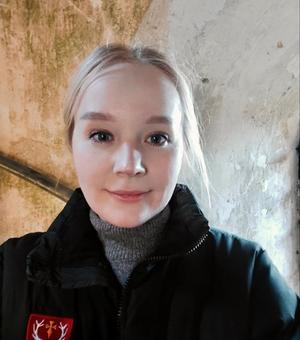
Loli Kim is a Lecturer on Modern Korea at the Faculty of Asian and Middle Eastern Studies, University of Oxford, with a Leverhulme Postdoctoral Research Fellowship (2022–2025). She specializes in cross-cultural multimodal analysis of Asian communication systems, particularly Korean cinema, folklore, and representation in media. Education: DPhil in Asian and Middle Eastern Studies (2019–2022), University of Oxford Research Focus: Multimodal discourse analysis, foodscaping theory, haenyeo women’s communication Editorial Roles: Assistant Editor of European Journal of Korean Studies; General Editor of 'Foodscaping Asia' series Her work develops the Segmented Film Discourse Representation Structures (SFDRS) methodology for analyzing Korean films' narrative conventions, including violence in revenge cinema and socio-pragmatic dimensions of fashion. She collaborates globally as a visiting lecturer and conference organizer. Kimi’s recent publications examine multimodal translation gaps, cultural representation in children’s literature, and the sociocultural implications of foodscaping. She has delivered keynote talks at institutions including Edinburgh University and SOAS, and co-organizes the Translating Squid Game talks series.
Timothy R. Tangherlini serves as the Elizabeth H. and Eugene A. Shurtleff Chair in Undergraduate Education and Professor in the Department of Scandinavian and the School of Information at the University of California, Berkeley. A distinguished folklorist and ethnographer, he has pioneered computational approaches to folklore studies, bridging traditional humanities scholarship with cutting-edge digital methods. His research expertise spans multiple interconnected domains: Digital humanities and computational folkloristics Danish and Scandinavian cultural traditions Network analysis of narrative structures Machine learning applications in cultural analysis Conspiracy theory formation and transmission Korean cultural studies and K-Pop analysis Tangherlini's work focuses on how stories circulate across social networks and how individuals use narratives to negotiate ideology within their social groups. He has been instrumental in developing the field of Culture Analytics, co-directing a three-year program at the NSF's Institute for Pure and Applied Mathematics and leading the NEH's Institute for Advanced Topics in Digital Humanities on Network Analysis for the Humanities. His research combines ethnographic depth with computational sophistication, creating novel methodologies for analyzing large cultural corpora. His scholarly contributions have earned him significant recognition: Fellow of the American Folklore Society Fellow of the Royal Gustav Adolf Academy (one of Sweden's Royal Academies) Elizabeth H. and Eugene A. Shurtleff Chair in Undergraduate Education Tangherlini has secured substantial funding from prestigious organizations including the NEH, NSF, NIH, AFOSR, Mellon Foundation, Nordic Council of Ministers, and Google. His work on conspiracy theories, K-Pop choreography analysis, and historical Danish folklore has garnered media attention, demonstrating the public relevance of his research. With extensive international experience including appointments at the University of Copenhagen, University of Iceland, and Harvard University, he maintains a global scholarly perspective while contributing significantly to undergraduate education at Berkeley.
Andrew Ollett is an Associate Professor and Director of Graduate Studies in the Department of South Asian Languages and Civilizations at the University of Chicago , where he has taught since 2019. His research focuses on the literary and intellectual traditions of South and Southeast Asia, particularly through works in Sanskrit, Prakrit, Apabhramsha, and Kannada from the first millennium CE. Co-founder and editor of NESAR (New Explorations in South Asia Research) Director of NEH-funded edition/translation of the Kavirājamārga (earliest Kannada literary manual) Expert in Prakrit and Kannada literary traditions His work explores the 'question of language'—examining how language choice shaped cultural production and change in premodern India. Current projects include a monograph on context-sensitivity in Indian language theories and a study of manuscript technology's impact on early South Asian knowledge communities. He has authored The Mirror of Ornaments (Naples: Unior Press, 2025) and Language of the Snakes (UC Press, 2017), and co-authored Lilavai (Harvard, 2021). Recent publications include interdisciplinary studies on: Sanskrit-Prakrit campū genre reevaluation Pragmatics in Mīmāṁsā interpretive concepts Manuscript literacy's influence on literary forms Historical linguistics of Middle Indic syllable reduction Philosophy of language in Śālikanātha and Kumārila Bhaṭṭa Awarded the NEH 'Scholarly Editions and Translations' grant , he teaches classical South Asian literature courses covering Sanskrit, Prakrit, and Tamil traditions. He maintains digital resources including a Prakrit Digital Texts Project and Mīmāṁsādigdarśinī digital text repository, and actively contributes to open-access scholarship.
Jamie H. Ferguson is an Associate Professor in the Department of English at the University of Houston, with a cross-appointment to the Honors College. He specializes in Renaissance and early modern literature, focusing on intersections between biblical hermeneutics, literary poetics, and translation theory. Renaissance Literature Shakespeare Studies Biblical Translation Great Books Tradition His research explores how theological debates shaped vernacular literary production in Early Modern Europe, with particular attention to textual materiality and interconfessional dialogues. Ferguson's publication record spans Latin, Italian, French, Polish, and English contexts. Recent projects include the annotated translation of Joachim du Bellay's Deffence et illustration de la langue françoyse and a forthcoming book on European Biblical Poetics . He has received multiple Martha Gano Houstoun Research Grants and been recognized with Honors College lecture awards.
Panpan Yang is a Lecturer in Arts and Visual Cultures of Modern China at the School of Arts, SOAS University of London. She joined SOAS in 2021 after completing her joint PhD at the University of Chicago under the direction of Wu Hung, Tom Gunning, W. J. T. Mitchell, Judith Zeitlin, and Dana Polan. Her interdisciplinary work bridges art history, screen studies, East Asian studies, and digital humanities, with a focus on innovative methodologies in art historical writing. Dr. Yang earned a dual BA from Peking University, double majoring in art and philosophy, followed by an MA from Tisch School of the Arts at NYU, and a PhD from the University of Chicago. During her undergraduate studies, she served as president of the Society of Dream of the Red Chamber Studies, which informed her secondary academic interest in Redology and the visual material world of the novel Hong lou meng. Panpan Yang's research explores how minor discourses can deterritorialize the terrains of both art history and screen studies. Her work demonstrates a multimethodological approach attentive to archival research, material practices, close visual analysis, computer-aided vision, and cross-cultural theorization. She is particularly interested in Chinese animation history, calligraphic imagination in contemporary art, and the intersections between traditional Chinese art forms and new media. Her publications reveal a consistent focus on Chinese visual culture across multiple media forms, with particular attention to animation, film, and calligraphy. Yang's work demonstrates how traditional Chinese art forms engage with contemporary digital media, creating new hybrid forms that challenge disciplinary boundaries. Her research shows a trajectory from historical analysis of Chinese animation to contemporary explorations of calligraphy in digital contexts, revealing the ongoing relevance of traditional Chinese aesthetics in modern media. Dr. Yang has received several prestigious awards for her scholarly and creative work: China's National Young Screenwriter Award Domitor Essay Award Dean's Distinguished Dissertation Award Nomination Honourable Mention from the Association for Chinese Animation Studies As a Principal Investigator, Dr. Yang leads the AHRC-funded research project "Stroke by Stroke: Calligraphic imagination in contemporary Chinese art and emergent media" (2023-25) with Shane McCausland. She was also a collaborating partner on the NEH-funded "Media Ecology Project." Her research has received additional support from the Getty Foundation and the Sino-British Fellowship Trust. At SOAS, she works closely with faculty and graduate students interested in Chinese arts and cultures, art theory, cinematic arts, and digital art history. Dr. Yang is currently developing innovative research at the intersection of traditional Chinese calligraphy and contemporary digital media through her AHRC-funded project. This work explores how calligraphic imagination manifests in contemporary art and emergent media contexts, creating new pathways for understanding Chinese cultural heritage in the digital age.
Paolo Noto is an Associate Professor at the Department of the Arts, Università di Bologna. He specializes in film studies, focusing on post-war Italian cinema, genre transformations, and intertextuality. He holds a PhD in Theatre and Film Studies from the University of Bologna. His research explores the interplay between national and foreign cinematic models, particularly in 1950s Italian cinema. He has presented at conferences such as the NECS Conference 2012 (Lisbon) and contributed to journals like The Italianist and Bianco e nero . His publications include works on Italian neorealism, digital media, and television history. Noto has collaborated with institutions like the University of Bristol and Harvard University through academic exchanges and research projects. His work bridges historical analysis with contemporary media practices, emphasizing cultural and technological intersections.
Associate Professor Daniel Fried holds the Chair position in the Department of East Asian Studies at the University of Alberta's Faculty of Arts. His research focuses on comparative approaches to classical Chinese literature, intellectual history, and Daoist semiotics, with particular attention to Northern Song Dynasty print culture and European literary theory intersections. Current projects include a literary non-fiction work linking Daoist philosophy to social activism. Key academic roles include Co-Editor of the Routledge Studies in Comparative Chinese Literature and Culture series (2020–present), Founding Chair of the MLA Forum on pre-14th century Chinese Literature (2018), and President of the Association of Chinese and Comparative Literature (2017–2019). Teaching responsibilities include advanced readings in modern Chinese literature and graduate research methods courses. Research interests span ancient Chinese textuality, medieval print culture transformations, and cross-cultural philosophical dialogues. Recent publications (2020–2023) emphasize Song Dynasty print modernity and Daoist semiotic frameworks. Earlier works address pre-Qin philosophical discourse and 20th century comparative literature methodologies. No scientific awards explicitly listed. Advising focuses exclusively on graduate students researching Chinese literature/philosophy from Warring States to Southern Song periods. Active in developing interdisciplinary research programs bridging Anglophone and Sinophone scholarship. Led development of East Asia Research Methods (EASIA 550), an online graduate course covering regional and disciplinary methodologies. Current research projects maintain focus on pre-modern Chinese cultural production and its global comparative dimensions.
Sal Hagen is a postdoctoral researcher at the Institute for Logic, Language and Computation (ILLC) at the University of Amsterdam, working within the Natural Language Processing & Digital Humanities group. His research focuses on the intersection of computational methods and cultural analysis, particularly examining online communities, political discourse, and meme culture. His educational background includes a Research Master's in Media Studies from the University of Amsterdam, for which he received the prestigious 2018 Internet Thesis Prize in the Internet & Social Sciences or Humanities category for his work "Here I Am, Praying to an Egyptian Frog: Exploring Political Fluidity on 4chan/pol/". He also won the Audience Award for his presentation at the ceremony. Hagen's research interests center on understanding the dynamics of online communities, with particular expertise in 4chan and related platforms. His work combines qualitative and quantitative approaches to analyze political discourse, far-right movements, and the evolution of memes across digital spaces. He examines how anonymity, platform architecture, and cultural context shape online interactions and political expression. His publication record demonstrates a consistent focus on tracing political movements through digital footprints, with particular attention to the interplay between platform-specific cultures and broader political trends. Hagen's work often bridges computational social science with cultural studies, creating methodologies that capture both the quantitative patterns and qualitative meanings of online discourse. Scientific Awards: 2018 Internet Thesis Prize (Internet & Social Sciences or Humanities category) Audience Award for presentation at Internet Thesis Prize ceremony Hagen has secured significant research funding, including an NWO PhD grant for humanities research running from 2019-2024. He has been involved in multiple research projects including the CAT4SMR project (2024), OILab (2017-present), and the ERC-funded ODYCCEUS project (2018-2019). As part of OILab (Online Intelligence Lab), Hagen contributes to research on online political subcultures, while his work on the CAT4SMR project focuses on stabilizing and developing tools for social media data collection and analysis. He is also the developer of the 4CAT Capture and Analysis Toolkit, which provides transparent and traceable methods for social media research.
Asst. Prof. Hilal Öztürk Baydere serves in the Department of Western Languages and Literatures at Karadeniz Technical University's Faculty of Arts and Humanities since 2021, advancing to Assistant Professor in 2024 after beginning her academic career at the university's School of Foreign Languages in 2013. Her institutional trajectory reflects deep integration within Turkey's translation studies community. Her academic foundation includes: Doctorate in Translation Studies (2016-2022) from Istanbul University's Institute of Social Sciences Postgraduate degree in English Translation and Interpretation (2011-2015) from Hacettepe University Undergraduate degree in English Language and Literature (2007-2011) from Hacettepe University Her research centers on Translation Studies with acute focus on machine translation's disruption of literary translation practices. She investigates translator competence evolution in AI-driven environments, creativity preservation in machine-assisted workflows, and historical/cultural dimensions of translation. Her work bridges theoretical linguistics with practical technological applications, particularly examining lexical diversity and stylistic integrity in neural machine translation outputs. Publication analysis reveals three dominant research vectors: (1) Machine translation evaluation frameworks for literary texts (25% of output), (2) Historical/cultural memory representation through translation (33%), and (3) Translator identity and competence in digital ecosystems (42%). Recent work increasingly incorporates large language models while maintaining strong philological grounding in English-Turkish translation contexts. She actively supervises student research on AI translation applications including subtitle translation effectiveness and e-commerce review sentiment analysis. Her TUBITAK-funded doctoral scholarship (2017-2022) and current membership in the European 'Language in the Human-Machine Era' research consortium demonstrate significant grant acquisition and international collaboration. Conference participation spans 8+ annual international symposia since 2017, primarily KTUDELL and NALANS events. Her ongoing projects with the European Cooperation in Science and Technology group indicate future research directions exploring human-AI symbiosis in translation pedagogy and professional practice, particularly regarding creativity metrics and cultural adaptation in neural machine translation systems.
Jack Chen is a Professor of Chinese Literature and Department Chair at the University of Virginia's Department of East Asian Languages, Literatures and Cultures, with additional affiliation to the Institute of the Humanities and Global Cultures. His office is located in Wilson Hall, where he holds weekly office hours. Previously, he taught at UCLA and Wellesley College. Education BA in Literature, Yale University MA in Comparative Literature, University of Michigan PhD in Comparative Literature, Harvard University Research Focus Chen specializes in classical and medieval Chinese literature (100-900 CE), particularly the Tang Dynasty. His interdisciplinary work bridges traditional literary analysis with computational methods, exploring: The history of information management in imperial China Gossip and anecdote as cultural artifacts Digital humanities approaches to East Asian texts Ghost poetry and supernatural narratives Current projects include developing computational tools for classical Chinese corpora and studying early medieval anecdotal collections. Publication Trends Recent articles (2022-2024) demonstrate three key themes: 1) Integration of digital humanities with classical Chinese textual analysis, 2) Re-examination of literary history through spatial/temporal frameworks, and 3) Genre studies of Tang Dynasty narratives like Chuanqi tales. Computational methods feature prominently across publications. Professional Activities No awards, grants, or supervised students are mentioned in available sources. His departmental leadership includes curriculum development for Chinese Language & Literature and East Asian Studies programs.
Alessandro Del Tomba is a Tenure-Track Researcher in Linguistics and Glottology at Sapienza University of Rome, specializing in historical linguistics, Indo-European studies, and Central Asian philology. He holds a PhD in Linguistics from Sapienza and Comparative Indo-European Linguistics from Leiden University. Historical linguistics Indo-European studies Eastern Iranian philology Language contact theories His research focuses on Khotanese and Tocharian languages, with recent publications analyzing manuscript transmission, morphological variation, and phonological developments. He serves as Principal Investigator for the FIS project "Khotanese language and texts in contexts (KhoTxt): A multimodal approach to the classification and periodisation of the Khotanese language and its texts within the cultural and historical framework of medieval Central Asia". He teaches General Linguistics at undergraduate levels and Linguistics courses at the graduate level in Modern Philology. Active in international academic networks, he participates in conferences across Italy, Europe, and Asia.
Barbara Graziosi is the Ewing Professor of Greek Language and Literature at Princeton University's Department of Classics. Her research centers on ancient Greek literature and its reception, emphasizing the intersection between classical texts and modern interpretative frameworks including queer theory, machine learning, and material culture. Major projects: Living Poets (ERC-funded), Logion (ML for philology), and Sappho, Networked Education: Trieste, Oxford, Cambridge Graziosi's work bridges philology with critical theory, exploring how ancient texts are recontextualized across time. She applies machine learning to textual criticism through the Logion project, focusing on corruption detection and lacunae reconstruction in classical manuscripts. Key scientific awards include the National Teaching Fellowship (UK) and Excellence in Doctoral Supervision Award . Her public engagement spans BBC programs and TLS reviews, connecting antiquity to contemporary discourse.
Professor Gila Safran Naveh holds the Jewish Foundation of Cincinnati Chair in Judaic Studies and serves as Department Head at the University of Cincinnati. She specializes in Holocaust Studies, Genocide Studies, Critical Theory, and Gender and Judaism, with interdisciplinary expertise in Semiotics and Linguistics. Her academic trajectory includes roles from Visiting Assistant Professor (1978-1986) to full Professor (1999–present). Education: Ph.D. in Comparative Literature, University of California San Diego, 1981 Ph.D.C. in Linguistics and Comparative Literature, UC San Diego, 1979 B.A. in Comparative Literature & Near Eastern Studies, Hebrew University, 1969 Multiple additional degrees from San Diego State University (1973–1974) Her research bridges textual analysis with cultural and psychological dimensions, particularly focusing on Holocaust survivors’ narratives, semiotics, and gender dynamics. Key works include Biblical Parables and Their Modern Recreations (2000) and Unpacking the Heart with Words (in progress). She has organized major conferences, including the Semiotic Society of America meetings in 1988 and 2010, and founded the Center for Jewish Cultures and Ideas. Awards include the George C. Barbour Award (2006) and Edith Alexander Award (2000) for teaching excellence. Awards: Fellow of the Academy for Teaching and Learning (2010) Skirball Fellowship (1997) Multiple teaching awards (1996–2006) Her courses span Holocaust literature, Jewish humor, and film studies, reflecting her commitment to interdisciplinary pedagogy. She advises on scholarly journals and serves on boards for the Cincinnati Psychoanalytic Institute and Rockwern Academy.
Heidi A. Campbell is a Professor of Communication at Texas A&M University, with affiliations in Religious Studies and as a Presidential Impact Fellow. She directs the Network for New Media, Religion and Digital Culture Studies and is a founder of Digital Religion studies. Her research explores the intersection of digital and mobile media with religious practices, focusing on Jewish, Muslim, and Christian communities. She co-edits Routledge’s Religion and Digital Culture series and journals in the field. Her work emphasizes the 'religious-social shaping of technology' (RSST), analyzing how religious groups negotiate new technologies. Key topics include digital Judaism, mobile religious apps, and the interplay between online/offline religious practices. She has authored over 100 articles and books, including seminal works like When Religion Meets New Media and Digital Religion . Awards include the RCA Scholar of the Year and TAMU’s Transformational Teaching Award. She teaches courses on technology, media theory, and religious communication, contributing to both academic and public discourse through media outlets like The Guardian and BBC World Service. Her research lab and affiliations underscore interdisciplinary engagement, bridging communication, religion, and digital culture studies.
Ingunn Lunde is a full-time Professor of Russian at the Department of Foreign Languages , Faculty of Humanities , University of Bergen, Norway. She also holds a part-time (20%) Professor II position in Russian literature and culture at the University of Tromsø (2012–2019). Research Focus: Russian sociolinguistics, Slavic medieval culture, 19th–21st-century Russian literature, Byzantine hagiography, and digital media. Leadership: Head of the Research Group for Contemporary Russia at the University of Bergen. Projects: Principal Investigator for Landslide of the Norm (2005–2008) and The Future of Russian (2008–2013), funded by the Research Council of Norway. Publications: 85 works including 3 monographs, 56 articles, and 13 edited books. Notable works: Language on Display (2018), Fragmenter av fortid (2019), and Digital Russia (2014). Founding editor of the Slavica Bergensia book series (2000–present). Scientific Awards: Ugleprisen (2020) FUND-status (2019) Spurveugleprisen (2017) Fellowship at Wissenschaftskolleg zu Berlin (2014/15) Meltzer Prize for Young Researchers (2000) Outreach: Regular public speaker, media commentator, and contributor to the Great Norwegian Encyclopaedia on Russian literature.