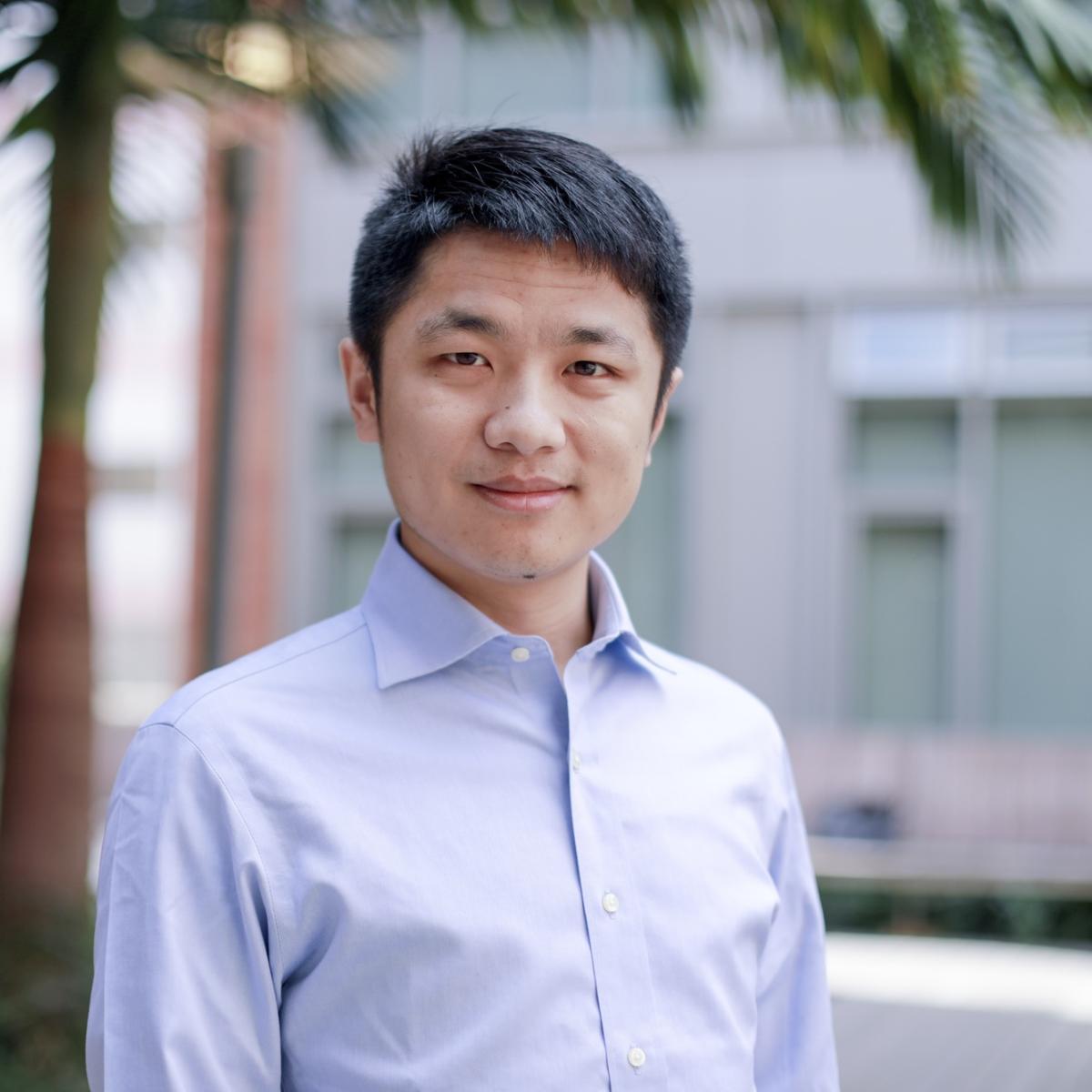
Lin Yang is an Assistant Professor in the Electrical and Computer Engineering Department at the University of California, Los Angeles (UCLA). His research focuses on reinforcement learning theory and applications, learning for control, non-convex optimization, and streaming algorithms. Education: PhD in Computer Science and PhD in Physics & Astronomy - Johns Hopkins University (simultaneously) Bachelor's degree in Math and Physics - Tsinghua University Research Interests: His work spans reinforcement learning theory and its applications, particularly in learning for control systems. He also investigates non-convex optimization techniques and streaming algorithms for efficient data processing. Scientific Awards: Dean Robert H. Roy Fellowship - Johns Hopkins University Previous Positions: Before joining UCLA, he was a postdoc at Princeton University working with Professor Mengdi Wang.
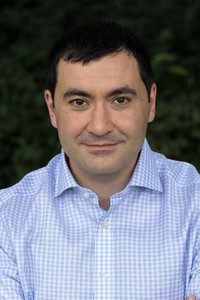
Vladimir Zhdankin is an Assistant Professor of Physics at the University of Wisconsin-Madison , where he leads the Zhdankin Group. He received his Ph.D. and B.S. in Physics from UW-Madison in 2015 and 2011, respectively. His career includes postdoctoral appointments as a NASA Einstein Postdoctoral Fellow (2018-2021) and Flatiron Research Fellow (2021-2023). Research Interests : Theoretical and computational plasma physics Relativistic plasma turbulence and instabilities Nonthermal particle acceleration and radiative processes Nonequilibrium statistical mechanics of collisionless plasmas Coherent structures in astrophysical systems Scientific Awards : NASA Einstein Postdoctoral Fellowship Flatiron Research Fellowship Advising & Collaborations : Current group members: Braden Buck, Miguel Castelan Tanner, Petr Ugarov, Cristian Vega (joint with Prof. Rogerio Jorge), Louis Henderson Collaborators: Dmitri Uzdensky, Matthew Kunz, Alexander Philippov, Stanislav Boldyrev
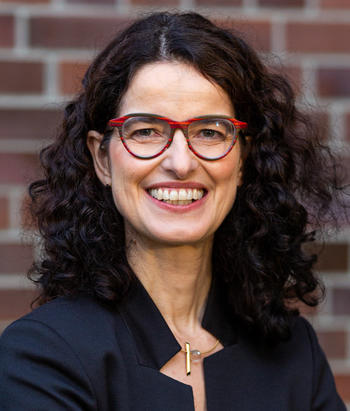
Professor Charlotte Kloft is Head of the Department of Clinical Pharmacy & Biochemistry at the Institute of Pharmacy, Free University of Berlin since 2011, and spokesperson for the interdisciplinary Graduate Research Training Program PharMetrX 'Pharmacometrics and Computational Disease Modelling' since 2008. She previously served as Professor and Head of the Department of Clinical Pharmacy at Martin-Luther-University Halle-Wittenberg (2005-2011) and as Scientific Assistant/Senior Assistant at Freie Universität Berlin (1999-2005). Her academic credentials include a habilitation in Clinical Pharmacy from Freie Universität Berlin (2003) and a Dr. rer. nat. (summa cum laude) from the same institution (1997). She earned her license as a pharmacist in 1992 after completing pharmacy studies at Johannes Gutenberg-University, Mainz (1987-1991). Professor Kloft's research focuses on pharmacometrics, computational disease modeling, and therapeutic drug monitoring across multiple therapeutic areas. Her work bridges pharmaceutical sciences with clinical practice, with particular emphasis on personalized dosing strategies for oncology, antimicrobial resistance, and inflammatory bowel diseases. She has pioneered research in optimizing drug dosing through pharmacokinetic/pharmacodynamic modeling, with applications in both antibiotic and cancer therapies. Her recent publications demonstrate a strong evolution toward integrating advanced computational approaches with clinical pharmacology, including machine learning applications in pharmacometrics, personalized dosing strategies for biologics during pregnancy, and developing nationwide infrastructure for therapeutic drug monitoring in cancer therapy through the ON-TARGET study. Academic Center of Excellence of Pharsight (now Certara), USA (since 2000) Habilitationsreisestipendium of Dr. August and Dr. Anni Lesmüller-Stiftung (2002) Ernst-Reuter-Preis of Ernst-Reuter-Gesellschaft (1998) Joachim-Tiburtius-Preis of Berlin Senate (1998) Young Investigator Award of EORTC-PAMM (1997) Professor Kloft has successfully supervised numerous doctoral students whose research spans diverse areas including CAR-T cell therapy, antimicrobial resistance, inflammatory bowel disease treatment optimization, and pharmacokinetic modeling of novel therapeutic agents. Her research group has secured significant funding for projects including GlobalResist, ON-TARGET, ABIMMUNE, COMBINATORIALS, and TAIN. She leads a vibrant research ecosystem at the Free University of Berlin with strong collaborations across Europe and internationally, maintaining state-of-the-art laboratory facilities including Biosafety Level 2 certified labs for infectious disease research.
Dr. Brigitta Mittmann is a Senior Lecturer at the Department of English and American Studies, Friedrich-Alexander University Erlangen-Nuremberg (FAU), holding the Alexander von Humboldt Professorship for Language and Cognition. Her work focuses on lexicography, phraseology, and comparative analysis of spoken English varieties.
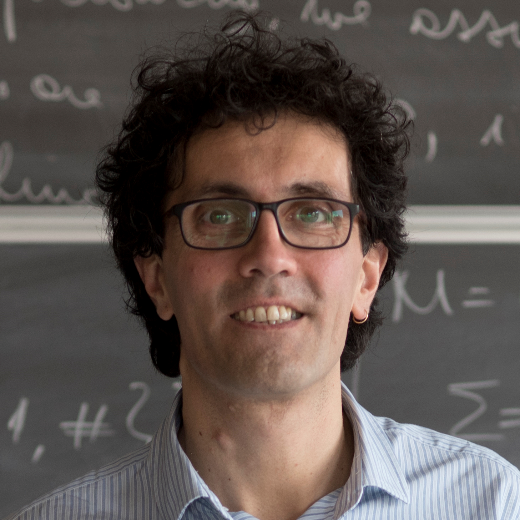
Prof. Gerhard Jäger holds the Chair of General Linguistics at the Faculty of Humanities, University of Tübingen . He serves as a Principal Investigator (PI) in the Clusters of Excellence Human Origins and Machine Learning for Science , and leads projects like Phylomilia (funded by Volkswagen Foundation) and CrossLingference (ERC Advanced Grant). His career spans multiple institutions, including Bielefeld University (2004-2009) and Stanford University (visiting scholar, 2004). Habilitation (2002) at Humboldt University Berlin with thesis on Anaphora and Type Logical Grammar PhD (1996) at Humboldt University Berlin on Dynamic Semantics His research bridges computational linguistics , phylogenetic analysis , and game theory , focusing on Bayesian models , language evolution , and cross-linguistic typology . Recent work explores phylogenetic inference from acoustic speech data and geographic influences on language trees . Key contributions include 15+ recent publications on topics spanning phylogenetic typology , cognate detection , and Bayesian language modeling . These works employ machine learning , statistical inference , and evolutionary game theory to analyze language change , typological variation , and linguistic stability . Honors include ERC Advanced Grant , Volkswagen Foundation funding , and DFG-Humanities Centre for Advanced Studies participation. He has taught courses in Computational Historical Linguistics , Phylogenetic Methods , and Bayesian Data Analysis across institutions like Tübingen, Bielefeld, and Stanford. He actively contributes to academic communities through workshop organization (e.g., Quantitative Theoretical Linguistics , Game Theory in Pragmatics ) and serves on the faculty council at Tübingen. His team collaborates with institutions like Max Planck Institute for Evolutionary Anthropology , University of Pennsylvania , and LMU Munich .
Diego Calvanese is a Full Professor in Computer Engineering at the Faculty of Engineering of the Free University of Bozen-Bolzano, Italy. He serves as Spokesperson of the Institute of Computer Science and Artificial Intelligence and Director of the Smart Data Factory technology transfer lab at NOI Techpark. As Coordinator of the Intelligent Integration and Access to Data (In2Data) research group, part of the Research Centre for Knowledge and Data (KRDB), he leads significant research initiatives in knowledge representation and data management. Calvanese's research focuses on virtual knowledge graphs for data access and integration, ontology-based data access, description logics, semantic web technologies, graph data management, and verification of data-aware processes. His work bridges theoretical foundations with practical applications through the Ontop framework, which enables SPARQL query answering over OWL 2 QL ontologies connected to external data sources. His research has substantial practical impact, powering the South Tyrol Open Data Hub Knowledge Graph and supporting numerous European and national research projects. With more than 400 refereed publications and over 39,000 citations (h-index 80), Calvanese's recent work demonstrates continued leadership in virtual knowledge graphs, ontology-based data federation, explainable AI through knowledge representation, and integration of complex data types including 3D city models and raster data. His publications show a clear trajectory from theoretical foundations toward increasingly practical and applied research addressing real-world data integration challenges across multiple domains. ACM Fellow (2019) EurAI Fellow (2015) AAIA Fellow Program Chair of PODS 2015 and KR 2020 General Chair of ESSLLI 2016 Calvanese has secured significant research funding through numerous competitive projects including EU H2020 INFRAEOS Project (INODE), Italian PRIN Project (HOPE), FESR Project (IDEE), and EU FP7 IP Project (Optique), totaling close to 6.4M Euro. As an originator and co-founder of Ontopic, the first spin-off of the Free University of Bozen-Bolzano, he has successfully translated research into commercial applications. He serves as Associate Editor of Artificial Intelligence (AIJ) and has participated in over 200 program committee roles for international conferences. As Director of the Smart Data Factory technology transfer lab and coordinator of the In2Data research group, Calvanese bridges academic research with industry applications, focusing on practical implementations of knowledge graph technologies. His work with the KRDB Research Center has established Bozen-Bolzano as a significant hub for knowledge representation and data management research in Europe.
Michel Mandjes is a Professor at the University of Amsterdam's Faculty of Science and holds a Visiting Professor position at the Faculty of Economics and Business (FEB). His research focuses on stochastic processes, queueing theory, and probability theory, with applications in risk modeling, network analysis, and operations research. Recent publications highlight his contributions to multivariate Hawkes processes , Lévy-driven systems , and dynamic random graphs , emphasizing large deviations, rare event simulation, and statistical inference. His work bridges theoretical probability with practical challenges in traffic flow, financial risk, and social network modeling. The trends in his research include the development of stochastic models for network stability, appointment scheduling optimization, and inference techniques for non-stationary processes. His methodological innovations often leverage advanced probability theory and queueing frameworks to address real-world problems in transportation, healthcare, and finance.
Istvan David is an Assistant Professor in the Department of Computing and Software at McMaster University , with research expertise spanning Digital Twins , Model-Driven Engineering , and Sustainability . His work bridges theoretical and applied domains, focusing on smart ecosystems , collaborative modeling , and AI-driven simulation . Key contributions include frameworks for digital twin evolution and interoperability in sustainable systems. Education : BSc, MSc, and PhD in Computer Engineering and Computer Science from Budapest University of Technology and Economics, and University of Antwerp. Research Areas : Digital Twins, Model-Driven Engineering, Reinforcement Learning, Smart Ecosystems, Sustainability, Collaborative Modeling, Cyber-Biophysical Systems, and Software Architecture. Recent Article Trends emphasize AI integration with digital twins, collaborative modeling in industrial contexts, and sustainable systems engineering . His work often combines machine learning with formal modeling to address challenges in technical sustainability and smart agriculture .
Dr Yongle Sun is a Lecturer in Additive Manufacture at Cranfield University , specializing in cross-scale modelling of metal manufacturing processes for aerospace and energy applications. BSc & MSc in Mechanics from Xi'an Jiaotong University PhD in Mechanical Engineering from The University of Manchester His research focuses on multi-physics modelling of additive manufacturing and welding processes, with particular emphasis on residual stress/distortion prediction and mitigation. Current projects include: NEWAM (cross-scale additive manufacturing) SAM (smart manufacturing) I-Break (process innovation) With over £10M in research funding, his work bridges mechanistic models with engineering applications through collaborations with: GE Avio Aero WAAM3D Airbus EPSRC Innovate UK Key achievements include: First author of 16 leading journal papers Co-author of 35+ peer-reviewed works H-index of 23 Queen's Anniversary Prize contribution Top-cited paper in International Journal of Impact Engineering
Assoc. Prof. Dr. Osman Kaan Erol is affiliated with Istanbul Technical University , where he serves in the Department of Control and Automation Engineering . His primary research focuses on optimization algorithms and their applications in engineering systems. Doctorate in Control and Computer Engineering Teaching and research at Istanbul Technical University since 2003 Industry experience at BEKO Electronics (2000-2003) and ABC CEDETAŞ (1995-2000) Research Interests include: Big Bang-Big Crunch optimization algorithm Differential Evolution methods Heuristic and metaheuristic approaches Applications in structural engineering, control systems, and transportation Search space reduction techniques Hybrid algorithm design Publication Trends show a consistent focus on optimization algorithms ( Big Bang-Big Crunch , Differential Evolution ), with applications spanning airport operations , structural design , and preventive control . His work emphasizes algorithm hybridization and convergence improvements. Project Leadership includes: Industrial data collection systems AI-assisted service systems for concrete plants Hydrophore control systems under ERP regulations Electrically heated underwear design
Richard Futrell is an Associate Professor at the University of California, Irvine (UCI), affiliated with the Department of Language Science. He leads the Language Processing Group, focusing on computational models of human and machine language processing. His work bridges information theory, Bayesian cognitive modeling, and natural language processing (NLP) interpretability. University of California, Irvine Department of Language Science Language Processing Group leader His research examines how linguistic structures emerge from cognitive and communicative pressures. Key areas include dependency locality, surprisal theory in sentence processing, and efficiency-driven language evolution. He investigates how memory constraints, predictability, and information density shape syntactic and morphological patterns across languages. Recent publications analyze code-switching efficiency, syntactic priming, ERP component modeling, and agent-based language contact simulations. His work frequently employs Bayesian modeling, neural network analysis, and cross-linguistic corpora to uncover universal principles in language processing. ACL Best Paper Award (2024) Best Paper Award for Computational Modeling of Language (2023) Marr Prize for Best Student Paper (2017) He has developed datasets like SPACER for error repair analysis and contributed to phonotactic learning frameworks. His collaborations span cognitive scientists, computational linguists, and neuroscientists, advancing understanding of language production, comprehension, and structural optimization.
Michael P. O'Brien is an Associate Professor of Information Management at the Department of Management & Marketing, Kemmy Business School, University of Limerick. He teaches undergraduate and postgraduate modules in Information & Knowledge Management, Business Analytics Simulation, and Technical Communication, serving as Course Director for the MA in Business Management programme. PhD in Computer Science (University of Limerick) MSc in Computer Science (by research and thesis, University of Limerick) BSc (Hons) in Information Systems His research bridges Data Analytics , Software Evolution , and Educational Psychology , focusing on empirical studies of programmers, instructional design, and gamification in education. Recent publications explore experiential learning and gamification for strategic thinking . Michael supervises Masters students in topics ranging from Cloud Computing Security to Blockchain in Finance , with a focus on Big Data and AI Impacts . His advising style emphasizes practical applications and technology-driven solutions. 2000 : AGB Dwyer Memorial Award for Excellence in Education 2017 : KBS Seed Funding Competition He actively contributes to academic networks like the Irish Learning Technology Association and Psychology of Programming Interest Group , aligning his work with UN Sustainable Development Goals.
Jon Crowcroft is the Marconi Professor of Communications Systems in the Department of Computer Science and Technology at the University of Cambridge, and serves as the Chair of the Programme Committee at the Alan Turing Institute. He is also a Fellow of Wolfson College, Cambridge, and a visiting professor at the Department of Computing at Imperial College London. With a career spanning over three decades in computer networking research, Professor Crowcroft has made seminal contributions to the development of the Internet and continues to be highly active in cutting-edge research areas. His educational background includes: BA in Physics from Trinity College, University of Cambridge (1979) MSc in Computing from University College London (1981) PhD from University College London (1993) Professor Crowcroft's research spans multiple domains in computer networking and distributed systems. He has worked in Internet support for multimedia communications for over 30 years, with three main focus areas: scalable multicast routing, practical approaches to traffic management, and the design of deployable end-to-end protocols. His current research focuses on opportunistic communications, social networks, and techniques to scale infrastructure-free mobile systems. He is particularly known for his 'build and learn' paradigm for research and has recently been exploring decentralized digital identification systems, smart cities, and edge computing. His work often bridges theoretical foundations with practical implementations, emphasizing privacy-preserving approaches and sustainable network architectures. Professor Crowcroft has received numerous prestigious awards recognizing his contributions to the field, including: Election as Fellow of the Royal Society (2013) ACM SIGCOMM Award (2009) ACM Fellow (2002) Fellow of the Royal Academy of Engineering IEEE Fellow (2004) Chartered Fellow of the British Computer Society Throughout his career, Professor Crowcroft has advised numerous PhD students, including Mark Handley and Pan Hui, who have themselves become influential researchers in the networking community. He has authored several influential books that have been adopted internationally in academic courses, such as 'TCP/IP & Linux Protocol Implementation,' 'Internetworking Multimedia,' and 'Open Distributed Systems.' His research has been supported by various grants and collaborations with both academic institutions and industry partners, contributing to successful startup projects and influencing Internet standards. Professor Crowcroft is actively involved in several research initiatives, including serving on the Scientific Council of IMDEA Networks Institute since 2007 and the advisory board of the Max Planck Institute for Software Systems. He is also a director of the Matrix Foundation, which develops open network protocols. His current research group focuses on privacy-preserving analytics, decentralized systems, and the future of Internet architecture.
Dr. Emre Sefer is an Associate Professor at the Faculty of Engineering, Özyeğin University, specializing in machine learning and bioinformatics. He holds a Ph.D. in Computational Biology from Carnegie Mellon University (2015), an M.S. in Computer Science from University of Maryland College Park (2011), and a B.S. in Computer Engineering from Boğaziçi University (2008). His research bridges graph machine learning with financial networks, bioinformatics, and data engineering. Ph.D.: Computational Biology, Carnegie Mellon University M.S.: Computer Science, University of Maryland College Park B.S.: Computer Engineering, Boğaziçi University Research focuses on applying machine learning to financial and biological networks: Bioinformatics : 3D genome modeling, protein modifications, transcriptomic analysis Graph Machine Learning : GNNs for fraud detection, drug response prediction, and network evolution Financial Networks : Cryptocurrency investment strategies, asset price prediction His lab (OzU Machine Learning in Finance and Bioinformatics Lab) develops graph-based deep learning methods for cross-domain applications, including NFT market analysis and chromatin structure prediction. He received the Best research paper award at Recomb 2016 for work on 3D genome architecture. Former postdoc at CMU Machine Learning Department Industry experience as Quantitative Strategist at Goldman Sachs and JPMorgan
Mikail Rubinov serves as Assistant Professor of Biomedical Engineering (primary appointment), Computer Science, Psychiatry, and Psychology at Vanderbilt University's School of Engineering. His interdisciplinary work bridges computational neuroscience, network science, and clinical applications. His research focuses on integrative statistical models of large-scale neural data , exploring brain network organization across species and scales. Key interests include evolutionary principles of brain networks, transcriptomic basis of neural individuality, information transfer in neural systems, and neuropsychiatric connectivity phenotypes. The Rubinov Lab develops computational frameworks for analyzing complex neural systems and integrates neuroscientific knowledge with multi-omics data. Recent publications reveal strong trends in network neuroscience methodology development (circular analysis frameworks, unbiased sampling techniques) and translational applications (epilepsy networks, autism spectrum connectomics, gut-brain axis interrogation). His work increasingly incorporates transcriptomic data with neuroimaging at biobank scale. NIH Grant Writing Workshop (June 2022) NIH Workshop Short Talks (April 2023) Rubinov actively mentors graduate and undergraduate students across Biomedical Engineering and Computer Science. His lab maintains collaborations with UCSF, HHMI Janelia Research Campus, Weizmann Institute, and international neuroscience consortia. Current projects include integrative models of large-scale neural data and transcriptomic basis of neural individuality. The Rubinov Lab operates within Vanderbilt's Department of Biomedical Engineering with extensive cross-school collaborations. Technical resources include GitHub repositories for constraint network models (cnm-code), volumetric segmentation (voluseg), and brain connectivity toolboxes.