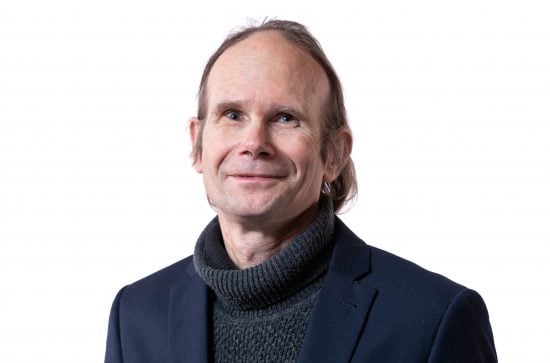
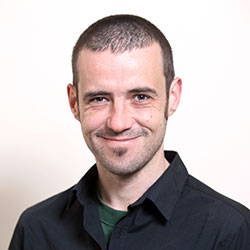
Prof. Anya Belz is Full Professor of Computer Science at Dublin City University's School of Computing and Science Lead at ADAPT Research Centre. A leading NLP researcher with PhD-level expertise, she specializes in natural language generation, evaluation methodologies, and multimodal systems. Recipient of multiple best paper awards and NAACL Test of Time Award nomination. Research innovations include foundational work on statistical language generation (deployed in weather forecasting systems), comparative evaluation frameworks, vision-language integration, and reproducibility quantification. Current EPSRC-funded ReproHum project coordinates 20 global labs studying evaluation consistency. Achievements : Developed industry-deployed generation systems for accessibility applications Pioneered cross-modal alignment techniques for image description Authored 100+ publications spanning generation, evaluation, and reproducibility
Jennifer Edmond is Associate Professor of Digital Humanities and co-director of the Trinity Center for Digital Humanities at Trinity College Dublin, where she also directs the MPhil in Digital Humanities and Culture. She holds a PhD in Germanic Languages and Literatures from Yale University and specializes in applying advanced methods and infrastructures for arts and humanities research. Her research focuses on Digital Humanities, Research Infrastructures, Open Science, Cultural Heritage, and Knowledge Technologies. She has developed significant expertise in European research policy, having coordinated the €6.5m CENDARI FP7 project and participated in numerous EU initiatives including PARTHENOS, Europeana Cloud, and the Computational Literary Studies Infrastructure (CLS Infra). Dr. Edmond maintains an active publication record exploring digital scholarly editing, privacy in literary texts, open science practices, and cultural heritage narratives. Her recent work demonstrates a strong focus on the intersection of technology and democracy, digital ethics, and innovative methodologies for humanities research. Awards and Honors: Named one of Ireland's five 'Champions of EU Research' (2012) She served as President of DARIAH-EU's Board of Directors (2018-2022) and represented the organization on the European Commission's Open Science Policy Platform. Dr. Edmond has contributed to strategic developments at national and institutional levels, while actively promoting public outreach through various media formats and art installations.
Prof. Dorothy Kenny is a full professor of Translation Studies at Dublin City University, affiliated with the School of Applied Language & Intercultural Studies. She holds a BA in French and German from DCU, an MSc in Machine Translation, and a PhD in Language Engineering from the University of Manchester. Her research focuses on AI in literary translation, corpus linguistics, machine translation ethics, and translation pedagogy. She led the EU-funded MultiTraiNMT project (2019–2022), developing materials for MT education. She co-edits the journal Translation Spaces and is an Honorary Fellow of the Chartered Institute of Linguists (UK). Education: BA in French and German, Dublin City University MSc in Machine Translation, University of Manchester PhD in Language Engineering, University of Manchester Research Interests: Her work bridges theoretical and applied translation studies, emphasizing corpus-based methods, machine translation ethics, and the impact of AI on literary translation. Recent projects explore customization of MT for literary texts and ethical workflows in MT. Awards & Recognition: 2020: Co-edited Fair MT: Towards Ethical, Sustainable Machine Translation 2017: Edited Human Issues in Translation Technology 2020: Honorary Fellowship from the Chartered Institute of Linguists Grants & Projects: Principal Investigator of MultiTraiNMT (EU-funded, 2019–2022) Recipient of Ulysses Travel Grant (2018–2019) for collaboration with Université Grenoble-Alpes Labs & Teams: She directs research at the Centre for Translation and Text Studies (CTTS) , fostering interdisciplinary work on translation technology and corpus linguistics.
James Hadley is an Associate Professor in Russian and Slavonic Studies and holds the Ussher Assistant Professorship in Literary Translation at Trinity College Dublin. He directs the MPhil in Literary Translation program and leads the Irish Research Council-funded QuantiQual Project. His research focuses on translation studies, particularly indirect translations, employing digital humanities and empirical methods to explore previously unanswerable questions. He is based at the Trinity Centre for Literary and Cultural Translation, fostering public engagement through events and initiatives. Dr. Hadley’s work bridges literary translation, technology integration, and computational analysis. He actively recruits doctoral/postdoctoral researchers interested in digital humanities applications in translation studies, especially regarding indirect translation. His research has addressed topics such as machine translation impacts, sentiment classification, and historical translation practices in Japan. He can be contacted at hadleyj@tcd.ie for collaborative opportunities. His academic contributions span theoretical frameworks (e.g., the Concatenation Effect Hypothesis) and practical applications like OCR tools for historical texts. The Trinity Centre serves as a hub for interdisciplinary translation studies, emphasizing both scholarly rigor and public accessibility.
Victor Lazzarini is a Professor of Music at Maynooth University, Ireland, specializing in computer music and audio signal processing. He holds a BMus from Universidade Estadual de Campinas (UNICAMP), Brazil, and an AMusD from the University of Nottingham, UK. His research spans electroacoustic music, digital signal processing, and music technology. He leads the Csound project, a widely used sound and music computing system, and authored libraries like Aulib and Aurora. Education: Bachelor of Music (BMus), UNICAMP, Brazil Advanced Music Degree (AMusD), University of Nottingham, UK His research interests include sound synthesis, computer music languages, and the intersection of music with technology. He has authored over 150 peer-reviewed publications and books such as Spectral Music Design: A Computational Approach (Oxford UP, 2021) and co-edited volumes like Ubiquitous Music Ecologies (Routledge, 2020). His work bridges academic and industrial sectors through projects like the Enterprise-Ireland-funded commercialization initiative. Prof. Lazzarini’s contributions to music technology include pioneering tools like Csound, which enable real-time audio synthesis and processing. His articles span topics from digital filter design to historical computer music archaeology, reflecting his expertise in both theoretical and applied domains. Awards: AIC/IMRO International Composition Prize (2006) He advises on interdisciplinary projects such as the BeatHealth initiative, integrating ubiquitous computing and music. His creative output includes electroacoustic compositions performed globally and released on labels like FarPoint Recordings. Lazzarini actively collaborates with international teams, contributing to conferences like DAFx and ICMC, and leads initiatives like the Ubimus (Ubiquitous Music) research network.
Dr. Enda Donlon is an Associate Professor at Dublin City University's School of STEM Education, Innovation & Global Studies, part of the DCU Institute of Education. He specializes in ICT integration in education, digital technologies for teacher training, and AI in education. As APF leader for the AI and Emerging Technologies strand of DCU's Doctor of Education Programme, he drives innovation in educational technology. His professional roles include former presidency of the Educational Studies Association of Ireland (ESAI) and governance roles in European educational research bodies like EERA. Research interests focus on digital pedagogy, teacher professional development, and the ethical implications of emerging technologies in education. He has received prestigious awards including the DCU President’s Award for Innovation (2014) and Excellence in Teaching (2021 team award). Enda contributes to academic governance through editorial roles in journals like International Journal of Educational Technology in Higher Education and Irish Educational Studies . His work bridges theory and practice, exploring topics such as cybersecurity professionals’ learning needs, pandemic-era academic collaboration, and AI’s role in reshaping educational landscapes. Ongoing projects include frameworks for computational thinking education and virtual/augmented reality applications in teacher training.
Dr Paula McGrath is a Lecturer/Assistant Professor in the School of English, Drama and Film at University College Dublin. She has been a core faculty member since 2013, initially as an Occasional Lecturer and promoted to Assistant Professor/Lecturer in 2021. She currently serves as Acting Head of Creative Writing and coordinates multiple modules including Craft of Creative Writing, Life Writing, and Literary Editorship. Her academic home is UCD, where she earned her MA and MFA, and she completed her PhD at the University of Limerick as a Government of Ireland Postgraduate Fellow. BA (Hons) in Single Honour English Language and Literature – Trinity College Dublin MA in Women’s Studies – University College Dublin MFA in Creative Writing – University College Dublin PhD in Creative Writing – University of Limerick Professional Certificate in University Teaching & Learning – University College Dublin Her research and teaching focus on creative writing, contemporary fiction, environmental writing, and women’s writing. She supervises creative practice and narrative theory, with a particular interest in trauma representation and intergenerational storytelling. Her novels, Generation (2015) and A History of Running Away (2017), have been published internationally and translated into French and German, with critical acclaim from Joseph O’Connor, John Boyne, and others. Her recent publications include journal articles, book reviews, and media commentaries on feminism, literature, and Irish society. The 15 most recent publications reflect a consistent engagement with narrative innovation, feminist themes, and psychological depth across fiction, translation, and criticism. Her work spans creative output and scholarly review, often intersecting personal history with broader cultural questions, particularly around gender, migration, and belonging. She frequently contributes to public discourse through The Irish Times and literary journals. Arts Council literary bursary (2016) Government of Ireland Postgraduate Fellowship Irish Writers Centre/St. Mark’s English Church Writer in Residence in Florence (2016) Dr McGrath has supervised doctoral research under Joseph O’Connor at the University of Limerick and has taught creative writing across levels at UCD. She has not publicly listed her students, but she has coordinated the MFA module Pedagogic Strategies for Creative Writing (2019–2022), indicating a strong mentorship role. She has received research funding from the Arts Council and the British Academy. Her teaching philosophy is student-focused and research-led, emphasizing a supportive, creative environment. She is actively involved in curriculum development and creative writing pedagogy. She is a member of the academic and literary community, with affiliations to the Irish Writers Centre, participation in international literary events, and contributions to public intellectual life through media and translation. Her work bridges creative practice and academic scholarship, positioning her as a leading voice in contemporary Irish literature and creative writing education.
Dr. Sandrine Peraldi is an Assistant Professor in Linguistics at the School of Languages, Cultures and Linguistics, University College Dublin (UCD). She currently serves as Head of Linguistics and Deputy Head of School, and coordinates the Graduate Diploma in Localisation. With a PhD from Paris Diderot University, her career includes over a decade as Research Director at ISIT in Paris, where she led interdisciplinary research and international collaborations. Her educational background includes: PhD in Theoretical, Descriptive and Automatic Linguistics, Paris Diderot University MLitt, Paris Diderot University Master’s in Language Industry and Specialised Translation Certification in University Teaching and Learning, UCD Dr. Peraldi's research focuses on Corpus Linguistics, Terminology, Discourse Analysis (especially in professional contexts), Intercultural Communication , and Translation Studies , with a strong emphasis on machine translation and post-editing. Her work bridges cognitive, technological, and professional dimensions of language use. Her recent publications reveal a clear trajectory toward the multimodal analysis of virtual workplace communication, particularly how engagement and non-verbal cues function in online meetings. She has also contributed significantly to metaphor analysis in political discourse and the integration of corpus tools in translation workflows. Her scientific contributions are recognized through active participation in peer review for journals such as Meta , TEANGA , and International Journal of Organisations , and editorial leadership as former Editor-in-Chief of the Bulletin du CRATIL . She has secured major funding from the European Commission (TransCert, QUALETRA, PICT, AGORA), UKRI-AHRC, and the National Forum for Teaching and Learning. She supervises PhD students and leads research projects such as the Interactional Variation Online project. She is also involved in professional service through the Human Research Ethics Committee and the EMT assessor network. Dr. Peraldi leads several research and teaching initiatives, including the ENEOLI Cost Action on lexical innovation and the development of scenario-based intercultural learning resources.
Declan Phillips is an Associate Professor at the School of Engineering, University of Limerick (UL). He has been with UL since 2005, serving as the inaugural course director for civil engineering and construction management programmes. His academic roles include designing UL’s civil engineering programme, which emphasizes Problem-Based Learning (PBL), flipped learning, and case-based instruction. Phillips holds a BSc (Eng) from DIT/TCD (1989), an MSc and PhD from Trinity College Dublin (1995, 2002), and is a licensed Professional Engineer in Pennsylvania and Chartered Engineer with Engineers Ireland. He advocates student-centered education and has received a regional Teaching Excellence Award (2008). Research focuses on geotechnical engineering (soil mechanics, instrumentation, forensic engineering), sustainable materials (recycled municipal waste applications), and innovative education methods. He has supervised IRCSET and IRC-funded projects on flood defenses and waste reuse. Phillips chairs ISSMGE’s Geo-Education Committee (TC306) and edits journals for the American Society of Civil Engineers. His scholarly contributions span geotechnical pedagogy, forensic engineering education, and PBL implementation. Notable works include studies on student understanding of effective stress, forensic engineering moot courts, and integrating life cycle assessment into curricula. He actively participates in international engineering education conferences and initiatives.
Stephen Roddy is a Lecturer in the Department of Digital Humanities at University College Cork (UCC) and Programme Director for the MA in Digital Arts and Humanities. He holds a Ph.D. in Sonification from Trinity College Dublin (2016), focusing on the use of sound to convey data. His research integrates auditory display, AI/ML, IoT, and creative coding, with theoretical roots in cybernetics and embodied cognition. He has led projects funded by the IRC Postdoctoral Fellowship and contributed to IEEE standards on ethics in AI in the arts. He maintains an active creative practice, including performances at the Wrong Biennale and New York Electroacoustic Music Festival. Notable works include Signal to Noise Loops and Corpus/Mimesis . Awards include the 2022 'Best Use of Sound' award from the International Community for Auditory Display. His work explores intersections between technology, art, and ethics, with over 20 peer-reviewed publications in journals like Leonardo and IEEE Communications Magazine . Research highlights include the use of FM synthesis for IoT sonification, cybernetic approaches to generative music, and embodied cognition frameworks for sound design. Grants and fellowships underscore his interdisciplinary impact in digital humanities and sound studies.
Joseph Timoney is a professor at the Department of Computer Science , Maynooth International Engineering College , Maynooth University. He teaches undergraduate programs in Computer Science and Music Technology, with expertise in audio signal processing, musical sound synthesis, and digital modeling of analog subtractive synthesis. His research spans sound synthesis algorithms, audio watermarking, and ubiquitous music ecosystems.
Dr. Martin Cunneen is an Associate Professor at the University of Limerick's Kemmy Business School, affiliated with the Data-Driven Computer Engineering Research Centre and Lero – the Irish Software Research Centre. He leads the AI-ERA (Ethics, Regulation, Accountability) Research Group and serves as Principal Investigator for the Horizon Europe-funded XTREME project (2024–2027), focusing on mixed reality technologies for art and culture. Active in AI governance, ethics, and interdisciplinary research Supervises 14 postgraduate students across 7 thematic areas Led €1.2 million in research funding in the past year His research spans AI/data governance , climate risk mitigation , extended reality , health technology , autonomous vehicles , and philosophy of AI , integrating technical and social science perspectives under the UN SDG framework. Scientific awards include: KBS Faculty Teaching Excellence Award (2022) Teaching interests include AI governance, explainable AI, data ethics, and sustainable AI practices. He actively participates in EU Horizon projects and collaborates with Science Foundation Ireland (SFI) and international research consortia. Labs: XTREME Mixed Reality Research Living Lab at Kemmy Business School (2024)
Nadia J. Armstrong is a PhD Researcher at the CONNECT Centre supervised by Dr. Tom O’Dea and a part-time Lecturer on the Creative Futures Academy programme at the National College of Art and Design (NCAD). Her academic foundation includes a first class honours BA in Fine Art Media and Critical Cultures (International) and first class honours MFA in Art in the Contemporary World, both from NCAD. Her research interrogates the commodification of human emotions through machine learning processes, data accumulation systems, and computational frameworks. Armstrong employs performance, 3D composition, AI, and expanded video installation to dissect digital history nodes, cyber identity agency, and socio-political contestations in social space. Her practice treats technological infrastructure as cultural material for examining existential conditions in digital ecosystems. Armstrong’s accolades include: Beta x transmediale 2023 residency Accenture Digital Innovation in Art Bursary (2022) Irish Arts Council Visual Arts Bursary (2022) CYBERNATE residency (2022/23) Goethe-Institut A.I. Residency Award (2021) RDS Visual Arts Award for "DIGITAL NATIVE" (2020) She maintains active exhibition practice with recent presentations including "Altered Terrain" (2023 AR exhibition), Mart Studios Members exhibition (2023), 192nd RHA Annual Exhibition (2022), and "Woman in the Machine" at VISUAL Carlow (2021), demonstrating sustained engagement with digital art communities across European platforms.
Dr. Enda Bates is an Assistant Professor and Deputy Course Director in the Music and Media Technologies Programme at Trinity College Dublin. He leads research in spatial music, spatial audio for VR, and electroacoustic aesthetics while maintaining active roles as a composer, producer, and performer. His work bridges academic and artistic domains, with notable contributions to immersive media, accessibility in health data design, and interdisciplinary digital humanities projects. Educated at Trinity College Dublin, he completed a PhD titled *The Composition & Performance of Spatial Music* in 2010. His research has been supported by grants from Trinity College Dublin and Rode Microphones, focusing on projects like the Trinity 360 initiative producing immersive 360-degree music videos. He collaborates widely, including with the Spatial Music Collective and on virtual reality adaptations of Samuel Beckett’s works. Research interests span spatial audio technologies, VR audio design, and the aesthetics of contemporary electroacoustic music. He explores the intersection of sound and technology in performance contexts, such as augmented instruments and site-specific compositions. His work on accessibility includes evaluating health data representations for older adults, emphasizing user-centric design principles. Recent publications highlight advancements in ambisonic decoder methodologies, VR audio systems, and interdisciplinary arts. Awards include the Gaudeamus Music Prize shortlist (2009) and Música Viva Competition Prize (2010). His music has been performed globally by ensembles like the RTÉ National Symphony Orchestra and Crash Ensemble. Bates advises on audio engineering projects and leads collaborative initiatives like *Virtual Play, after Samuel Beckett*, merging theater, VR, and sound design. His lab’s work often explores the technical and creative potentials of 360 media and free-viewpoint video.
Professor Elizabeth Shotton is affiliated with University College Dublin (UCD) in the School of Architecture, Planning and Environmental Policy . Her academic career spans teaching, research, and leadership roles, including Vice Principal for Equality, Diversity & Inclusion (2017–2020) and Interim Head of Landscape Architecture (2023). Teaching: Focuses on Construction Technology , Design Studio , and Sustainable Building Practices . Research: Centers on Maritime Heritage , Timber Reuse , and Design for Disassembly , with projects like the Modular Adaptable SHelter (MASH) and Minor Harbours of Ireland . Grants: Leads projects funded by the Irish Research Council , ESRC/IRC Network Grant (Harbourview), and Fulbright TechImpact Scholar . Awards: Recipient of the University Award for Outstanding Contribution to Student Learning (2021). Academic Leadership: Chaired UCD's Athena Swan Bronze Award application (2019) and served on the NCAD Programme Board and Appeals Committee . Research Trends: Her work bridges historical maritime engineering with sustainable design , emphasizing community-driven documentation and innovative timber construction. Key collaborations include Cardiff University (Harbourview) and international partners in the InFutUReWood project. Her Design for Disassembly research has influenced military shelter design via the MASH SFI Challenge project. Scientific Awards: University Award for Outstanding Contribution to Student Learning (2021) Advising & Grants: Supervised PhD students (e.g., Cian O'Loinsigh ) and secured major grants such as Harbourview (2021–2022), InFutUReWood (2019–2022), and Visualising Vernacular Harbours (2017–2018). Labs & Teams: Collaborated with UCD's School of Civil Engineering and international institutions in projects like WoodWeldiT and Tectonic Culture .