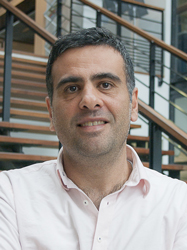
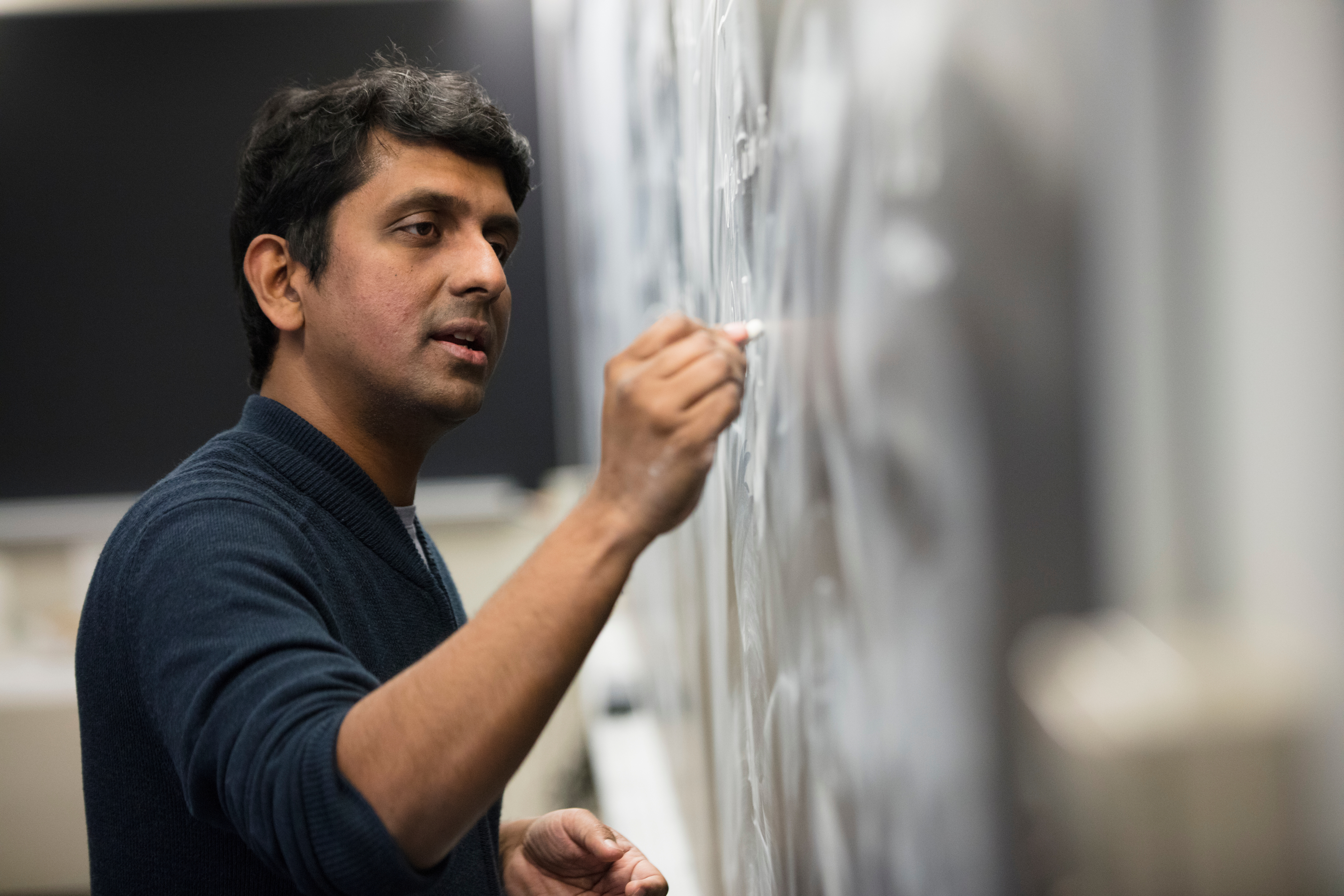
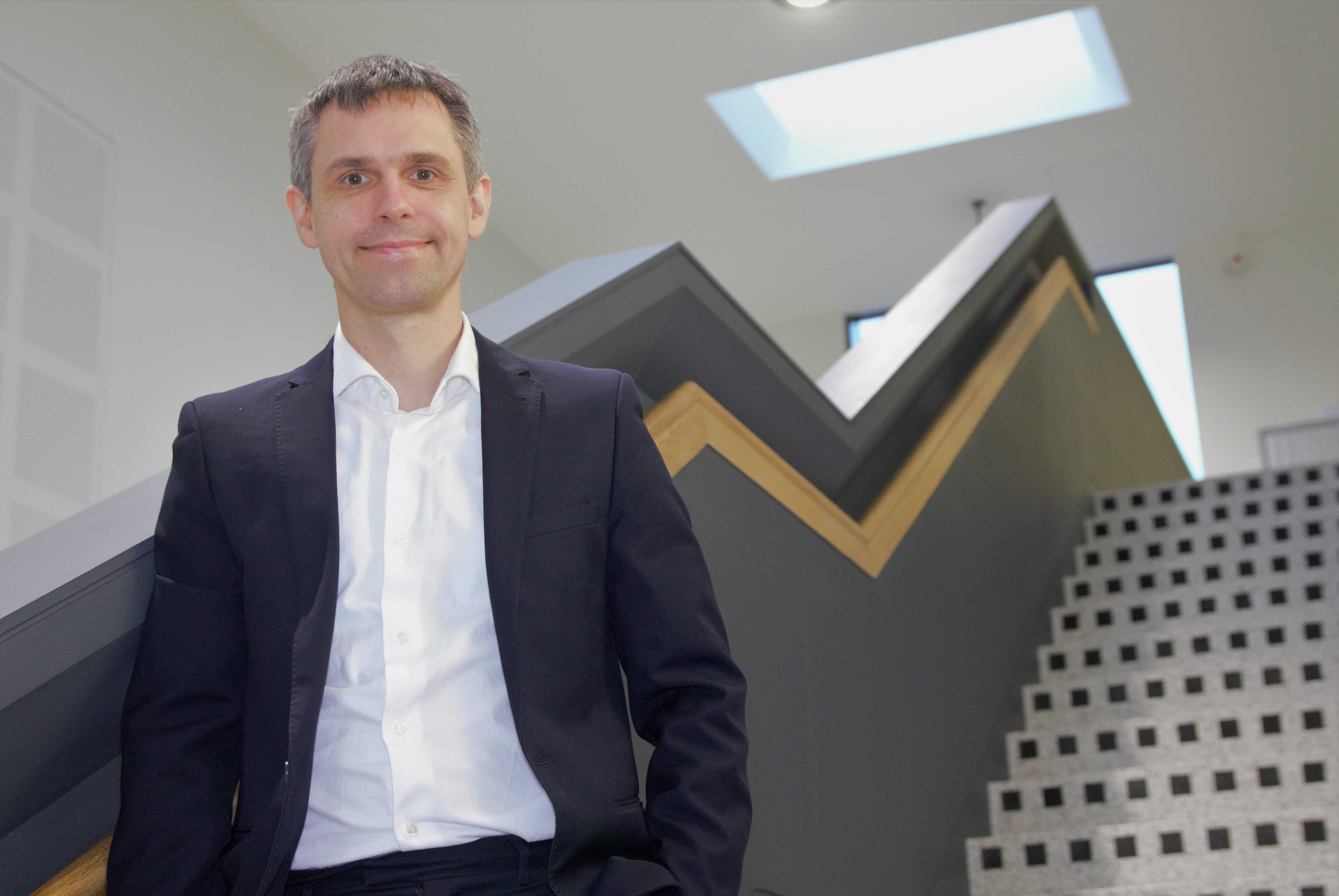
Vinothan N. Manoharan is a Professor in the School of Engineering and Applied Sciences and the Department of Physics at Harvard University. He joined Harvard in 2005 after a postdoctoral fellowship at the University of Pennsylvania and a PhD in Chemical Engineering at the University of California, Santa Barbara. His research bridges colloidal science, biophysics, and materials engineering, focusing on self-assembly processes and advanced imaging techniques.
Sergey Tulyakov is the Director of Research at Snap Inc. , leading the Creative Vision team. His work focuses on enhancing creator capabilities through computer vision , machine learning , and generative AI , with applications in 2D/3D/4D video generation, editing, and personalization. He pioneered video generation frameworks like MoCoGAN and First Order Motion Model , and has been recognized for BEST IN SHOW AWARD at SIGGRAPH Real-Time Live! 2020. PhD (2012-2017): University of Trento, Italy MSc (2010): Belorusian State University of Informatics and Radioelectronics B.Eng (2009): Belorusian State University of Informatics and Radioelectronics His research interests span computer vision , generative models , 3D reconstruction , and personalization , with a focus on making large models efficient and mobile-compatible . Recent publications highlight advancements in 4D video generation , text-guided 3D composition , and lightweight architectures . Key scientific awards include the SIGGRAPH Real-Time Live! 2020 Best in Show for Interactive Video Stylization. He has also served on technical program committees for top-tier conferences like CVPR, ICCV, SIGGRAPH, and NeurIPS since 2022. His team organizes tutorials and keynotes, including courses on Deep Generative Models and Efficient Neural Networks . While no direct student names are listed, his collaborative work spans 60+ top-tier publications.
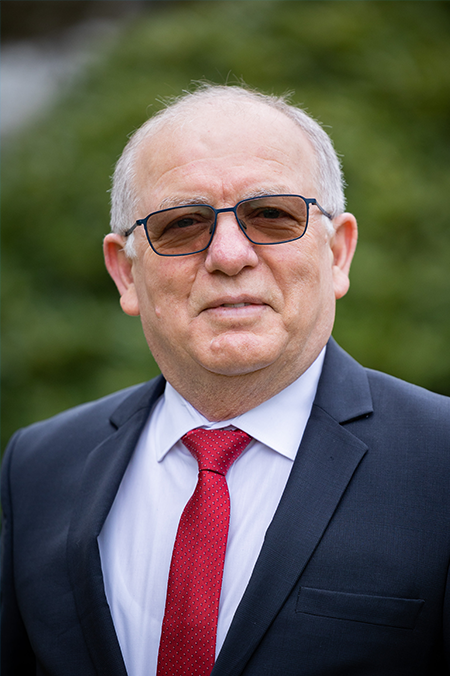
Professor Petros Elia is a faculty member at EURECOM, holding the position of Professor within the Department of Communications systems. He specializes in Information Theory , Coding Theory , Caching , Distributed Computing , and Wireless Networks , with additional research in Biometrics . His work focuses on advancing theoretical foundations and practical applications in distributed systems and wireless communication efficiency. He received a prestigious ERC Consolidator Grant for his DUALITY project (2016) and a four-year Fulbright Scholarship (1993-1997). He is also a recipient of the Newcom++ Network of Excellence Distinguished Achievement Award (2008-2011) and the Best Student Paper Award at SPAWC 2011, awarded to his advisee Arun Singh. His research explores cutting-edge topics such as tessellated distributed computing , hypergraph decomposition , and topology-aware caching , with recent contributions presented at venues like the IEEE International Symposium on Information Theory (ISIT 2025). His work bridges theoretical advancements with real-world applications in wireless networks and distributed systems. Education: Supported by his Fulbright Scholarship, he pursued studies in the U.S. during 1993-1997. Grants: ERC Consolidator Grant (2016), and others. Advising: Mentor to Arun Singh , whose work earned a student paper award. He actively contributes to teaching Mobile Communications at EURECOM and remains a key figure in advancing the field through interdisciplinary collaborations and leadership in the Communication Systems department.
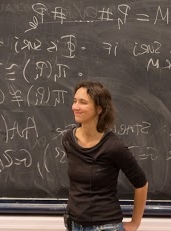
Nathalie Wahl is a Professor at the Department of Mathematical Sciences, University of Copenhagen, and serves as the Center Director for the Copenhagen Centre for Geometry and Topology (GeoTop). Her research focuses on algebraic topology, particularly mapping class groups of surfaces and 3-manifolds, homological stability, topological field theory, and loop spaces. PhD from Oxford University (2001) Current leadership of GeoTop (since 2020) Her recent work explores homological stability across automorphism groups, string topology, and structured algebras. Key collaborations include Allen Hatcher, Craig Westerland, and Nancy Hingston. She has received prestigious awards such as the ERC Consolidator Grant and the Young Elite Researcher Award. ERC Consolidator Grant (2018-2023) Female Research Leader Scholarship (2009-2013) Marie Curie European Fellowship (2003-2004)
Dr. Arman Khoshghalb is a Senior Lecturer in Geotechnical Engineering at the School of Civil and Environmental Engineering, UNSW Sydney, where he has been a faculty member since 2012. His academic credentials include a PhD in Geotechnical Engineering from UNSW (2012), an MSc from Sharif University of Technology (2005), and a BSc in Civil Engineering from the same institution (2003). His research focuses on numerical modeling of multi-phase porous media , with emphasis on unsaturated soils, large deformation analysis, and dynamic soil behavior. Key areas include meshfree computational methods, soil-structure interaction, bio-cementation, and thermo-hydro-mechanical processes in geotechnical systems. His work bridges theoretical advancements with practical applications in slope stability, foundation engineering, and sustainable ground improvement. Dr. Khoshghalb's publications predominantly explore geomechanical modeling, experimental soil mechanics, and computational techniques. Recent trends highlight innovations in bio-cemented soils, thermal properties of unsaturated soils, and adaptive numerical methods for complex geotechnical simulations. Awards & Honors: IACMAG Excellent Paper Award (2017) UNSW Research Excellence Award (2012) Advising & Grants: He has supervised 7+ PhD students on topics ranging from weak rock mechanics to computational geomechanics. Funded projects include: ARC Discovery Project (2019–2021): "Non-isothermal dynamic strain localisation in unsaturated porous media" ($298,257) ARC Linkage Infrastructure Grant (2015): "Earthquake shaking table for soil-structure interactions" ($320,000) ARC Linkage Project (2014–2017): "Constitutive modelling of weak rocks" ($314,280) He leads research within UNSW's geotechnical engineering group, collaborating on large-scale experimental testing and computational frameworks for infrastructure resilience.
Yusuf Altintas is a Professor in the Department of Mechanical Engineering at the University of British Columbia's Faculty of Applied Science, holding the NSERC–P&WC-Sandrik Coromant Industrial Research Chair and coordinating the Mechatronics Option. An internationally acclaimed scholar, he is a Fellow of 10 prestigious academies including the National Academy of Engineering (NAE), Royal Society of Canada (RSC), and ASME. His academic credentials include a Ph.D. from McMaster University, an Honorary Doctor of Engineering from the University of Stuttgart, and a Doctor of Technical Sciences from Budapest University of Technology and Economics. Professor Altintas's research pioneers the integration of physics-based modeling and data-driven approaches for machining systems. His work spans virtual high-performance machining simulation, machine tool dynamics, chatter stability prediction, and intelligent process control for CNC systems. Current projects focus on digital twin development for machining processes, spindle health diagnostics, ultrasonic vibration-assisted tooling, and adaptive damping systems for aerospace manufacturing applications. His methodologies bridge theoretical mechanics with industrial implementation in die/mold and aerospace sectors. Analysis of his 2022-2025 publications reveals dominant trends in physics-informed machine learning for spindle fault detection, topology-optimized tool design, and chatter avoidance in thin-walled component machining. Key thematic clusters include digital twin implementation (28% of recent work), dynamics modeling of multi-axis systems (35%), and intelligent monitoring algorithms (22%), with growing emphasis on anisotropic material machining and 3D printing process control. Georg Schlesinger Award (2016) NSERC Strategic Research Network in Virtual Machining Grant (2016) NSERC Synergy Award (2013) ASME Blackall Machine Tool and Gage Award (2013) Special Distinguished Scientist Award from Turkey's Scientific and Technical Research Council (2013) He directs the Manufacturing Automation Laboratory at UBC, leading an international research consortium on virtual machining systems supported by NSERC and industry partners including Sandvik Coromant and Pratt & Whitney Canada. His team develops real-time process monitoring frameworks and physics-based simulation tools that have been adopted in aerospace manufacturing for blade machining and die/mold production. The laboratory maintains advanced testbeds for five-axis machining dynamics, spindle health monitoring, and ultrasonic vibration-assisted tooling, serving as a hub for industry-academic collaboration in next-generation manufacturing technologies.
Dr. Brett J. Borghetti is a Professor of Computer Science in the Department of Electrical and Computer Engineering at the Air Force Institute of Technology (AFIT), Graduate School of Engineering and Management, Wright-Patterson AFB, OH. He was promoted to Professor in July 2022, following prior appointments as Associate Professor (2017) and Assistant Professor (2008/2013). His expertise lies in artificial intelligence, machine learning, deep learning, cybersecurity, and human-machine teaming. Education: Ph.D. in Computer Science, University of Minnesota, Twin Cities (2008) M.S. in Computer Systems, Air Force Institute of Technology (1996) B.S. in Electrical Engineering, Worcester Polytechnic Institute (1992) Dr. Borghetti's research focuses on applying machine learning to physical science sensors (hyperspectral, seismic, RF), cybersecurity, and enhancing human-machine team performance. He teaches graduate courses in machine learning, AI, data security, and algorithm design, and advises numerous MS and PhD students in areas such as sensor exploitation, cognitive workload, and cyber situational awareness. His recent publications demonstrate strong trends in deep learning for multimodal sensor fusion, nuclear security, and neuroergonomics. Scientific Awards: AETC Educator of the Year (2021, Civilian) AFIT Ezra Kotcher Teaching Award (2021) AFIT Teaching Excellence Award (2019) AF STEM Outstanding Science and Educator Award (2015) Multiple Eta Kappa Nu Outstanding Instructor Awards Air Force Meritorious Service Medal and other military honors Dr. Borghetti has advised numerous graduate students and led research projects with significant funding and applications in defense and national security. He has directed research in AI-driven sensor analysis, cyber defense systems, and adaptive automation. His work often involves collaboration with national labs and DoD agencies. He has contributed to major research initiatives in human factors, cyber intruder detection, and machine learning for operational environments. Labs and Research Teams: His work is associated with AFIT's research in cyber security, sensor exploitation, and human-machine systems. He collaborates with teams working on the Cyber Intruder Alert Testbed (CIAT), neuroergonomic modeling, and machine learning for defense applications.
Brooks H. Pate is the William R. Kenan, Jr. Professor of Chemistry at the University of Virginia, Department of Chemistry, within the College of Arts and Sciences. He leads an innovative research laboratory focused on developing and applying broadband rotational spectroscopy for advanced chemical analysis. B.S., University of Virginia, 1987 Ph.D., Princeton University, 1992 NRC Postdoctoral Fellow, National Institute of Standards and Technology (NIST), Gaithersburg, 1992–1993 Dr. Pate’s research centers on molecular rotational spectroscopy , particularly the development of chirped-pulse Fourier transform rotational spectroscopy . His work enables ultra-high-resolution analysis of molecular structure, dynamics, and stereochemistry. Key areas include intramolecular dynamics , molecular clusters (especially water hexamers), and quantitative chiral analysis with applications in pharmaceutical chemistry. His lab’s instruments operate across microwave to mm-wave frequencies, allowing analysis of both small (astrochemical) and large (biomolecular) species. The recent publications demonstrate a strong trend toward real-time, in situ chemical analysis and stereochemical monitoring in synthesis. The research combines experimental spectroscopy with quantum chemical modeling to extract structural and dynamical information. Applications span from fundamental quantum tunneling phenomena in water clusters to industrial process optimization in drug synthesis. Notable scientific awards include: 2016 William F. Meggers Award, The Optical Society UVa Innovator of the Year Multiple publications in Science recognized for groundbreaking impact Dr. Pate actively mentors graduate students and postdoctoral researchers, many of whom are co-authors on high-impact publications. His lab has secured significant research funding, leading to technological innovations that have spun out into a startup company focused on faster molecular analysis. The research is supported by instrumentation development, computational modeling, and strong interdisciplinary collaborations. The Pate Lab is a hub of innovation in physical chemistry, combining cutting-edge spectroscopic techniques with practical applications in pharmaceuticals and astrochemistry. The group operates advanced rotational spectrometers, including cavity-enhanced systems for real-time sampling from reaction flasks, and maintains strong ties with national labs and industry partners.
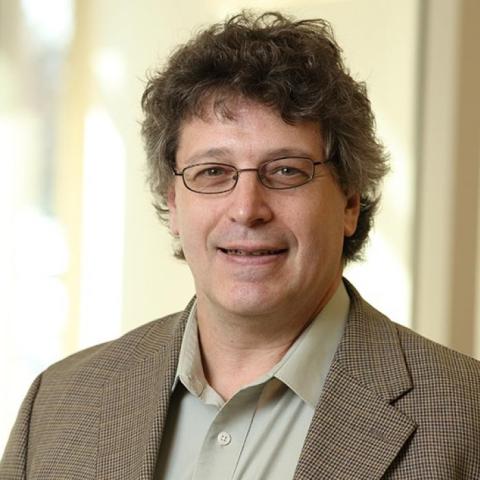
Vinod Vaikuntanathan is the Ford Foundation Professor of Engineering in the MIT EECS department and a principal investigator at MIT CSAIL. He holds a BTech from IIT Madras (2003), and SM/PhD degrees from MIT (2005/2009). His research focuses on cryptography, particularly fully homomorphic encryption (FHE), lattice-based cryptography, and quantum-resistant systems. He co-founded Duality Technologies as Chief Cryptographer. **Education:** BTech in Computer Science (2003), Indian Institute of Technology Madras SM in Electrical Engineering & Computer Science (2005), MIT PhD in Computer Science (2009), MIT **Research Interests:** His work spans FHE (enabling computations on encrypted data), lattice-based cryptography (post-quantum security), and intersections with quantum computing, machine learning, and privacy. He explores applications in secure computation, algorithm design, and cryptographic protocols. **Awards:** Recipient of the Gödel Prize (2022), Simons Investigator (2023), and MacVicar Faculty Fellow (2024). His work on FHE and lattice algorithms has earned widespread acclaim in cryptography and theoretical computer science. **Teaching & Mentorship:** Advanced cryptography courses at MIT (e.g., 6.5630, 6.876J) Advised PhD students (e.g., Sergey Gorbunov, Tianren Liu) and postdocs (e.g., Nir Bitansky, Mark Zhandry) now leading positions in academia and industry **Collaborations:** Organizer of the Charles River Crypto Day and MIT Cryptography Seminar Principal investigator on grants from NSF, DARPA, and Microsoft
Marie-Colette van Lieshout is a Professor of Spatial Stochastics at the Faculty of Electrical Engineering, Mathematics and Computer Science, University of Twente, and a Scientific Staff Member in the Stochastics group at Centrum Wiskunde & Informatica (CWI), Amsterdam. She has been active in research since 1997 and is a leading expert in stochastic geometry, spatial statistics, and image analysis. Her educational and professional background includes positions at the University of Warwick and the Free University Amsterdam. She is currently engaged in advanced research on point processes, random fields, and tessellation models, with applications in seismic hazard, fire risk, and machine learning. Her research interests include: Stochastic Geometry Spatial Statistics Image Analysis Point Process Modeling Seismic Risk Assessment Machine Learning for Spatial Data Her recent publications (2023–2025) focus on spatial intensity estimation, marked point processes, and data-driven risk modeling, showing a strong integration of classical spatial statistics with modern computational and machine learning techniques. Key themes include adaptive kernel smoothing, infill asymptotics, and applications in environmental and public safety domains. She has received significant recognition, including: Elected Fellow, International Statistical Institute (ISI) She has been awarded multiple research grants from NWO and other agencies, including the KLEIN grant for fire risk management and the DeepNL grant for seismicity prediction in Groningen. She has supervised or collaborated with researchers such as C. Lu, Z. Baki, and R. Markwitz. She is also active in academic service, serving on editorial boards (e.g., Methodology and Computing in Applied Probability), advisory boards (InHolland University), and councils of learned societies (Bernoulli Society, KWG). She leads and participates in research clusters such as STAR and contributes to outreach and education through courses and public lectures on earthquake modeling and spatial statistics.
Samuel Leder is a doctoral researcher at the Institute of Computational Design and Construction (ICD) under the Cluster of Excellence IntCDC at the University of Stuttgart. His work focuses on the integration of robotics and architectural design, particularly in developing distributed robotic systems for timber construction. He has been actively involved in research projects such as RP 19-1 – Robotic Kinematic System for Parallel Construction and RP 19-2 – Co-Design for Distributed Cooperative Multi-Robot Systems . Additionally, he serves on the Equal Opportunity Commission at ICD. Bachelor of Design in Architecture (summa cum laude), Washington University in St. Louis Bachelor of Applied Science in Systems Science and Engineering (magna cum laude), Washington University in St. Louis MSc in Architecture via the Integrative Technologies and Architectural Design Research (ITECH) program, University of Stuttgart Samuel’s research explores the synergies between agent-based modeling , robotic systems , and architectural design . His work aims to create minimal robotic machines capable of constructing complex spatial assemblies, particularly with timber structures . He investigates the co-design of robots and the structures they build, emphasizing modular systems and kinematic behaviors . Recent publications highlight advancements in digital twins , adaptive assembly , and human-robot collaboration for timber construction. The 15 most recent articles reveal trends in collective robotic construction , agent-based modeling , and material-robot interaction . These works emphasize timber fabrication , modular systems , and interactive simulation for large-scale construction tasks. Key sub-fields include adaptive assembly , cyber-physical systems , kinematic control , and human-guided robotics . Scientific Awards: German Academic Exchange Service (DAAD) Award for Outstanding Achievement Deutschlandstipendium Samuel’s research is conducted within the ICD at University of Stuttgart , where he collaborates on the Wood Building Systems for Distributed Robotics associated project. His work bridges architecture , robotics , and computational design , aiming to redefine on-site construction methodologies through innovative robotic systems.
David Tse is a Professor in the Department of Electrical Engineering and Computer Sciences at the University of California, Berkeley. He holds a Ph.D. in Electrical Engineering from the Massachusetts Institute of Technology (1994) and a B.A.Sc. in Systems Design Engineering from the University of Waterloo (1989). Education: B.A.Sc., Systems Design Engineering, University of Waterloo (1989) M.S., Electrical Engineering, MIT (1991) Ph.D., Electrical Engineering, MIT (1994) His research focuses on information theory , wireless communications , and networking , particularly on fundamental limits of communication systems, diversity-multiplexing tradeoffs, and capacity scaling in wireless networks. Selected work includes groundbreaking studies on MIMO channels , cooperative diversity , and spectrum sharing . Recent publications (2003–2007) analyze channel coherence, network capacity, and diversity-embedded coding, reflecting his emphasis on theoretical foundations of wireless communication. Key themes include fading channels, network optimization, and mathematical modeling using percolation theory and signal space approaches. Scientific Awards: IEEE Richard W. Hamming Medal (2019) National Academy of Engineering Member (2018) IEEE Information Theory Society Shannon Award (2017) IEEE Joint Paper Awards (2015, 2000, 2003) INFORMS Erlang Prize (2000) NSF CAREER Awards (1998) Okawa Research Grant (1997)
Tilmann Wurzbacher is a Professor at the University of Lorraine, affiliated with the Department of Mathematics, Computer Science, and Mechanics. His research focuses on geometric methods in mathematical physics, including multisymplectic geometry, supermanifolds, complex Kähler manifolds, and infinite-dimensional analysis. He has contributed to the development of multisymplectic structures for classical field theories and collaborates on foundational questions in supergeometry. His recent publications emphasize multisymplectic geometry, supermanifolds, and infinite-dimensional structures, with applications to geometric quantization, conservation laws, and Hamiltonian systems. He has co-authored works on co-moments, Lagrangian submanifolds, and singular superspaces. Wurzbacher actively organizes seminars and workshops, including the weekly LieGA seminar and international workshops on multisymplectic geometry. He participates in CNRS-funded networks such as the 80Prime Project "GraNum" and the GDGR "GDM".
Professor Henning Schomerus is a leading theoretical physicist at Lancaster University , specializing in condensed matter theory with a focus on quantum systems. His research spans topological photonics , non-Hermitian physics , quantum chaos , and mesoscopic transport . He leads the Theory Group and contributes to the Physics Strategy Committee . Education: Dr rer. nat. (University of Essen, 1997) Dipl. Phys. (University of Stuttgart, 1993) Research Interests include: Quantum transport in graphene and topological insulators , exploring disorder effects and quantum pumping Topological lasers and non-Hermitian photonic systems with combined amplification/absorption Quantum chaos and fractal Weyl laws in open systems Many-body localization and quantum noise phenomena Scientific Awards Senior Fellow of the Higher Education Academy (SFHEA) Fellow of the Institute of Physics (FInstP) Studenstiftung des Deutschen Volkes Scholarship JSPS Invitational Fellowship DFG Forschergruppe 760 Fellow Teaching encompasses advanced topics in Quantum Mechanics and Quantum Information Processing , with over 15 years of experience in undergraduate and postgraduate instruction.
Gina Crocenzi (Masterson) serves as a Professor in the Department of Modern and Classical Languages at George Mason University, teaching French literature and related disciplines. She maintains prior faculty appointments at Georgetown University and Princeton University, with active teaching responsibilities confirmed for Fall 2025 courses. Her academic foundation includes a summa cum laude B.A. in Philosophy/History from Georgetown University and a Ph.D. in Modern French Literature and Literary Criticism from the Catholic University of America. Professional certifications encompass Hybrid Learning (American University, 2018) and Online Instruction (NOVA, 2020). Research spans dual domains: French literary studies focusing on Kristeva, Bachelard, 20th-century philosophy, and theology; alongside computational geospatial work in traffic simulation and ZIP code systems. This unusual interdisciplinary range reflects publications in both humanities (e.g., Literature and the Science of the Unknowable ) and computer science venues. Scientific recognition includes: Excellence in Teaching Award, Northern Va Community College, Office of the Dean (Spring 2021) No verifiable information exists regarding graduate student mentorship, research grants, or laboratory leadership. Her professional background additionally incorporates international business project management within the US federal government.