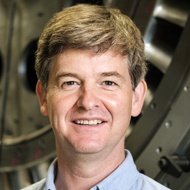
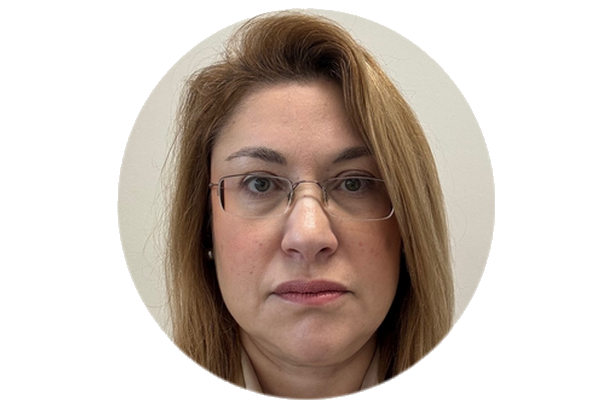
Prof. Rob Miller is the Chair in Aerothermal Technology and Director of the Whittle Laboratory at the University of Cambridge. He co-directs the Rolls-Royce Whittle University Technology Centre and contributes to policy via the UK Department for Transport’s Science Advisory Council and the FlyZero Design Advisory Group. His work bridges academic leadership with industrial innovation.
Dr Albert Stevan van Heerden is a Lecturer in Aerospace Engineering at the James Watt School of Engineering, University of Glasgow. Previously, he was a Research Fellow at Cranfield University's Rolls-Royce University Technology Centre and Centres for Aeronautics and Propulsion and Thermal Power Engineering. He holds a PhD in Aerospace Engineering from Cranfield University, an MS in Aeronautics from California Institute of Technology (Fulbright scholar), and a BEng in Mechanical Engineering from the University of Pretoria. His research focuses on conceptual aircraft design , airframe and propulsion systems development , and technical/economic assessment of sustainable aerospace technologies . He employs deterministic and non-deterministic design methods, with a unique emphasis on evolvable aircraft family design for long-term relevance. His work spans traditional civil transport aircraft, electric aircraft , and hydrogen-powered aircraft systems. Key publications include advancements in set-based design techniques margin allocation strategies hydrogen propulsion systems thermal management frameworks uncertainty allocation methods . Scientific recognition includes Fellow of the Higher Education Academy (FHEA) Member of the Royal Aeronautical Society (MRAeS) . He also serves as Academic Adviser for the Commonwealth Scholarship Commission and Academic Ambassador for the James Watt School of Engineering. His teaching portfolio includes Thermodynamics 2, Aircraft Design 3, and Fluid Mechanics (University of Glasgow Singapore), reflecting his expertise in core aerospace disciplines.
Prof. Schiffmann is a faculty member at École Polytechnique Fédérale de Lausanne (EPFL) in Switzerland, where he leads the Laboratoire de conception mécanique appliquée (LAMD) within the School of Engineering's Institute of Mechanical Engineering. His research focuses on advanced mechanical engineering applications for energy systems, particularly the development of high-speed micro-compressors operating at over 200,000 RPM. These innovations significantly improve heat pump efficiency with 25% reduced electricity consumption when operating at high temperature differentials. Prof. Schiffmann's laboratory work extends to enhancing fuel cell performance and developing systems for recovering heat from combustion engine exhaust gases in heavy vehicles. His research represents cutting-edge applications of mechanical engineering principles to address contemporary energy challenges, with practical implementations already influencing Swiss residential heating systems where more than half of new homes now utilize heat pumps.
Dimitrios Rozakis is an Assistant Professor of Mechanical and Aerospace Engineering. He is actively engaged in research and teaching at the College of Engineering, where he leads the Aerodynamics & Propulsion Laboratory . Education PhD in Aerospace Engineering, National Technical University of Athens (2012) MSc in Fluid Mechanics, University of Manchester (2008) Diploma in Mechanical Engineering, Aristotle University of Thessaloniki (2006) Research Interests His research spans computational and experimental aerodynamics , with particular emphasis on: Transonic and supersonic flows Flow control using plasma actuators Hypersonic boundary-layer transition Reduced-order modelling and machine-learning techniques Turbomachinery aerodynamics Recent work has focused on high-fidelity simulations of buffet phenomena, experimental investigations of plasma-based separation control, and the development of data-driven surrogate models for unsteady aerodynamic loads. Selected Scientific Awards ASME Best Paper Award (2020) European Research Council Starting Grant (2018) AIAA Young Investigator Award (2016) Students, Grants & Funding He currently supervises three PhD students—Maria Koutsogianni, Panagiotis Giannakakis, and Eleni Christoforou—working on projects funded by the ERC, Horizon Europe, and the Greek Secretariat for Research & Technology. Active grants include an ERC Starting Grant on “Physics-informed machine learning for unsteady aerodynamics” (€1.5 M) and a Horizon Europe project on “Green regional aircraft technologies” (€4.2 M). Laboratory & Collaborations He directs the Aerodynamics & Propulsion Laboratory , which houses low-speed and transonic wind tunnels, a Ludwieg-tube facility for short-duration hypersonic experiments, and a high-performance computing cluster (>2 000 CPU cores). Ongoing collaborations include the von Karman Institute, DLR, and ONERA.
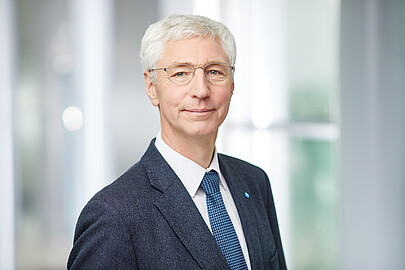
Prof. Jörg Seume is the Executive Director of the Institute of Turbomachinery and Fluid Dynamics at Leibniz University Hannover (Faculty of Mechanical Engineering). He also serves as Spokesperson of the Collaborative Research Centre (CRC) 871 'Regeneration of Complex Capital Goods' and holds roles in the Leibniz Research Centre Energy 2050. His research focuses on turbomachinery, fluid dynamics, gas turbine technology, and aerodynamics. Education details are not explicitly provided, but his academic and professional trajectory indicates expertise in mechanical engineering and fluid dynamics. Research interests include compressor and turbine design, aeroelasticity, aeroacoustics, and energy systems (e.g., PEM fuel cells, organic Rankine cycles). Recent publications (2023-2024) emphasize numerical simulations of turbine and compressor performance, aeroacoustic scaling, labyrinth seal dynamics, and innovations in hydrogen and fuel cell systems. He leads experimental and computational projects, including wind tunnel tests and fluid dynamics modeling. Notable projects include the WiValdi wind farm research initiative and the development of electric turbochargers for automotive applications. His work bridges academic research with industrial applications in energy and propulsion systems.
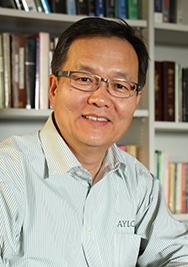
Paul Ro is Chair and Professor in the Department of Mechanical Engineering at Baylor University's School of Engineering and Computer Science, where he has served since August 2018. Previously, he held professorial and leadership roles at North Carolina State University, including Associate Department Head and Director of Graduate Programs in Mechanical and Aerospace Engineering from 2012 to 2018. Education: B.S. in Mechanical Engineering (High Distinction), University of Minnesota, 1982 M.S. in Mechanical Engineering, Massachusetts Institute of Technology, 1985 Ph.D. in Mechanical Engineering, Massachusetts Institute of Technology, 1989 Dr. Ro's research focuses on renewable energy harvesting and storage , vibro-acoustics and control , robotics and automation , ultra-precision positioning , and vehicle dynamics and control . His work bridges theoretical modeling and experimental validation, particularly in energy systems involving liquid-piston compressors and ocean-based compressed air storage. He has made significant contributions to near-isothermal compression technologies for enhanced energy efficiency. His recent publications (2017–2022) reflect a strong trend in energy storage systems , control in human-robot interaction , and thermal management in mechanical systems . These works demonstrate interdisciplinary innovation across mechanical engineering, robotics, and sustainable energy, with a consistent emphasis on experimental validation and thermodynamic optimization. Scientific Awards: No awards explicitly listed in the provided text. Dr. Ro has actively advised graduate students, including Vikram C. Patil, Jingdong Chen, and others, as evidenced by co-authored publications. His leadership roles indicate involvement in academic administration and graduate program development. While specific grants are not listed, his sustained research output suggests active funding support. He has also contributed to international research through visiting appointments at Seoul National University and the University of Tokyo. Dr. Ro has been involved in research teams focused on precision engineering and energy systems, particularly in the development of liquid-piston technologies for energy storage. His prior affiliation with the Precision Engineering Center at NC State highlights long-standing engagement with advanced mechanical systems and microdynamics.
Seyhan Onbaşıoğlu is a Professor in the Department of Mechanical Engineering at Istanbul Technical University (ITU), actively engaged in thermal engineering research with current projects extending to 2025. Affiliated with ITU's Ayazağa Campus in Istanbul, Turkey, the profile shows ongoing research leadership including principal investigator roles in multiple national projects. Research interests center on heat transfer enhancement, two-phase flow phenomena, and thermal system optimization, with fingerprint analysis indicating strong expertise in heat transfer (100%), flow distribution (94%), and experimental investigation (83%). Key focus areas include nucleate boiling, ice sublimation dynamics, and energy-efficient appliance design. Publication trends since 2016 emphasize experimental validation of thermal systems, with significant contributions to refrigeration technology, domestic appliance efficiency, and microchannel heat transfer. Recent works (2023-2025) increasingly integrate numerical modeling with experimental verification, particularly in suction muffler design and ice sublimation under humidity effects. h-index: 12 Total Citations: 129 (Scopus) Research Outputs: 27 publications Active Projects: 1 (2025) Completed Projects: 6 (2012-2022) As principal investigator, leads projects funded by TUBITAK, SRP, and TTO including refrigerator system development, steam generation technology, and ship diesel engine turbocharger design. Supervised 53 research works to date across thermal engineering applications. Current projects focus on refrigerator cooling system enhancement (2025) and ejector-integrated refrigeration design (2022).
Professor Keith Robert Pullen is a distinguished academic and inventor in energy systems engineering at City St George’s, University of London , where he has served since 2008. His career spans both academia and industry, with a focus on flywheel energy storage , high-speed electrical machines , and low-carbon power generation . He co-founded multiple spin-out companies, including Hydroventuri Ltd and Gyrotricity , and holds numerous patents in axial flux generators and turbo-compressors. His research integrates engineering innovation with practical applications for rural transport and developing countries . Education: PhD & DIC in Mechanical Engineering (1991), BEng in Mechanical Engineering (1987) from Imperial College London , sponsored by Rolls-Royce . Research Interests center on electrically driven flywheel systems, turbo compressors for fuel cells, and energy technologies for rural Africa. His work bridges mechanical engineering , renewable energy , and automotive innovation , with applications in hybrid vehicles and rail transport. Recent projects explore acoustic microdevices for biomedical engineering. Publications emphasize kinetic energy storage , microturbines , and phase-change materials . His grants include EPSRC-funded SCORE (Thermoacoustic engine), BIPED (EV batteries), and VESI (EV integration), alongside InnovateUK projects like LCEF (automotive flywheels with Nissan) and FCAMS (fuel cell compressors). Awards: Enterprise Fellowship (Royal Academy of Engineering), Fellow of the Institution of Mechanical Engineers, and Esso Teaching Fellow. Leadership: Director of Ascending Power Ltd and Dynamic Boosting Systems Ltd , and co-founder of Hydroventuri Ltd and Gyrotricity .
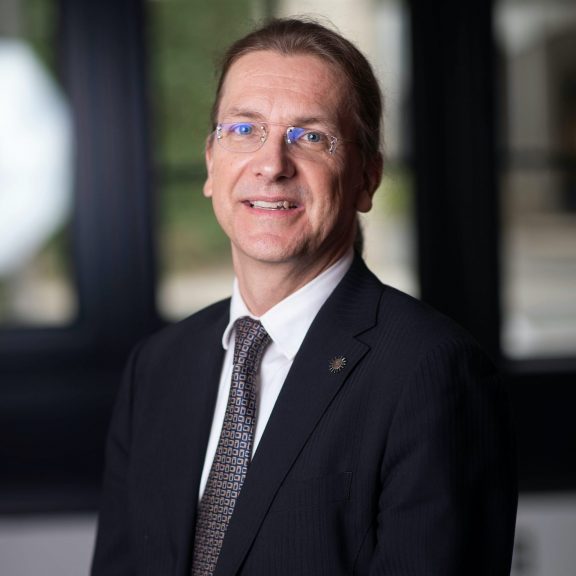
Ernesto Casartelli is a Professor and Head of the Competence Center for Fluid Mechanics and Numerical Methods at the Institute of Mechanical and Energy Engineering (IME) within Lucerne University of Applied Sciences and Arts (Hochschule Luzern) - Engineering & Architecture. He leads a research group specializing in computational fluid dynamics (CFD) applications for turbomachinery and fluid systems. His academic journey began with a Mechanical Engineering degree from ETH Zurich, followed by a PhD from the same institution. Prior to his academic career, he worked at Sulzer Innotec as a research engineer and group leader in Turbomachinery CFD. Professor Casartelli's research focuses on advanced computational methods for fluid dynamics problems, particularly in turbomachinery applications. His work spans CFD solver development, turbulence modeling (including Reynolds Stress Models), cavitation modeling, real gas effects, and adjoint optimization techniques. He has made significant contributions to understanding pump-turbine behavior, centrifugal compressor design, and multiphase flow phenomena. His research group actively collaborates with industry partners to solve practical engineering challenges in energy systems and fluid machinery. His recent publications demonstrate a strong trend toward developing and validating advanced numerical methods for complex fluid flow problems, with particular emphasis on industrial applications. The research spans fundamental CFD methodology development to applied engineering solutions for turbomachinery, hydropower systems, and thermal management. His work increasingly integrates optimization techniques with high-fidelity simulations to improve design processes. Professor Casartelli leads several research projects including Carbon Capture, Utilization and Storage; medical applications for cataract surgery; wind force analysis on green facades; urban area CFD studies; and energy-efficient appliance design. His work bridges theoretical fluid dynamics with practical engineering solutions across multiple sectors. As Head of the Competence Center for Fluid Mechanics and Numerical Methods, he oversees research activities, supervises projects, and maintains strong industry connections to ensure research relevance. His leadership has established the center as a hub for CFD expertise in Switzerland, particularly in turbomachinery applications and numerical method development.
Zoltán S. Spakovszky is the T. Wilson (1953) Professor in Aeronautics at the Massachusetts Institute of Technology (MIT) , where he has served as Director of the Gas Turbine Laboratory since 2008. He holds a Ph.D. in Mechanical Engineering from MIT (2000) and joined the MIT faculty in 2001 as Assistant Professor before being promoted to Professor in 2012. Dipl. Ing. , 1997, ETH Zürich M.S. , 1999, Massachusetts Institute of Technology Ph.D. , 2000, Massachusetts Institute of Technology Spakovszky's research focuses on propulsion and energy conversion , compressor aerodynamics , micro-fluidics , and aero-acoustics . He investigates flow instabilities in turbomachinery, supercritical CO2 power cycles, and aircraft design for environmental sustainability. His work bridges fundamental fluid dynamics with applied aerospace engineering. His publications span topics including rotating stall waves , cavitation instabilities , and electrified aviation . Many of his studies address challenges in improving engine efficiency and stability through advanced diagnostics and design optimizations. Scientific Awards : 2021 IGTI Scholar Award (ASME) 2018, 2016, 2014 IGTI Aircraft Engine Committee Best Paper Awards 2017 ASME Gas Turbine Award 2009 Ruth and Joel Spira Award for Excellence in Teaching 2003 ASME Melville Medal Spakovszky leads the Gas Turbine Laboratory at MIT, which conducts cutting-edge research in aerospace propulsion systems and fluid machinery. He has also held leadership roles such as Vehicle Sector Head (2015–2018) and Chair of the Graduate Committee (2020–2021).
Ali Afzalifar is a Postdoctoral Researcher at Aalto University's Department of Applied Physics, affiliated with the Soft Matter and Wetting group. His research focuses on nucleation theory, atmospheric processes, and engineering applications of supercritical fluids. He holds a Doctoral degree in Engineering and Technology from LUT University (2017). Key research interests include cloud seeding strategies for precipitation enhancement, sensitivity analysis of atmospheric models, and thermodynamic modeling of water clusters. His work bridges fundamental physics with applied engineering, particularly in compressor design for supercritical CO2 systems and real-gas modeling challenges. He led the Academy of Finland-funded project Electric Field; an Active Method to Control Phase Change (2019–2022), exploring nucleation and phase transitions. Collaborations involve institutions like UCLALES-SALSA for cloud modeling. Recent contributions include advancing classical nucleation theory and quantifying cloud seeding efficacy in stratocumulus systems. Publications span atmospheric science, thermodynamics, and engineering, with notable work on Gibbs free energy in water clusters and hygroscopic aerosol effects. His interdisciplinary approach addresses challenges in climate engineering, energy systems, and fluid dynamics.
Petronilla Fragiacomo is a Full Professor in Energy Systems and Power Generation at the University of Calabria, where she directs the Hydrogen and Fuel Cells Laboratory and chairs the Graduate Commission in Mechanical Engineering. She has been affiliated with the Department of Mechanical, Energetic and Management Engineering since 1987, progressing from researcher to full professor. Her research focuses on hydrogen production/storage, fuel cell technologies (SOFC, PEMWE, AEMFC), and renewable energy integration for stationary/mobile applications. Key innovations include multi-physics modeling of electrolyzer systems, hybrid propulsion for marine/terrestrial vehicles, and techno-economic analysis of hydrogen infrastructures. She pioneers Industry 4.0 applications in hydrogen economy frameworks. Recent publications (2024-2025) emphasize hydrogen refueling optimization, heavy-duty transportation, biomass gasification hybrids, and international supply chain analysis. Over 70% of works involve computational modeling of energy systems. Research Leadership: Director of PON COMESTO project (2018): Integrated PEMFC/PEMEC systems Scientific lead for Trenitalia-DIMEG collaboration (2020) PRIN project director: Intermediate Temperature SOFCs (2012) She oversees the Hydrogen and Fuel Cells Laboratory, collaborating with ENEA, CNR, and international universities (Esslingen, Warsaw, Los Angeles). Current industrial partnership: AVL University Program.
Dr. Alex White is a Senior Lecturer in Thermofluids at the Department of Engineering, Cambridge University, and a Fellow and Director of Studies at Peterhouse. He earned his undergraduate and PhD degrees from King's College, Cambridge, and conducted postdoctoral research in Cambridge, Lyon, and Toulouse before returning to Cambridge in 2000 as part of the Energy Group. His research focuses on two-phase flow (vapour-droplet flows), thermodynamics of power generation, Computational Fluid Dynamics (CFD), and heat pumps. His work includes theoretical and numerical studies on warm dense matter, electron transport, and energy storage systems like pumped thermal and compressed air storage. Recent publications emphasize warm dense matter physics, inertial confinement fusion, and thermal energy storage innovations. His theoretical analyses and simulations span high-energy-density plasmas, nonlocal electron stopping power, and hybrid energy systems. While no scientific awards are documented, his contributions to thermofluids and extreme condition physics are significant.
Irene Koronaki is a Professor at the National Technical University of Athens , affiliated with the School of Mechanical Engineering and the Thermal Engineering Section . She serves as Director of the Laboratory of Applied Thermodynamics, Cooling Technology & Refrigerated Vehicles since 2022 and has held academic roles at NTUA since 1999. Her research focuses include thermodynamics, heat pumps, energy efficiency, and renewable energy systems. Diploma in Mechanical Engineering, NTUA (1996) PhD in Thermal Engineering, NTUA (2000) Postdoctoral Researcher, NTUA (2002) Her research spans thermodynamics of cooling cycles, heat pumps, power cycles, energy saving in buildings, and thermal energy storage. She has pioneered work in nanofluids, solar cooling, and CO2 absorption systems. Her publications and projects reflect expertise in Stirling engines, hybrid solar collectors, and building energy optimization. Her recent articles highlight advancements in superfluid thermodynamics, solar PV/T systems, and medical robotics. Awards include the Edward F. Obert Award (2022) and leadership of the 2021 ASHRAE Student Design Competition winning team. She serves on ASME and ASHRAE committees and co-authored educational materials for refrigeration and energy inspection standards.
Dr. Abhijit Kushari is Professor and Head of the Department of Aerospace Engineering at the Indian Institute of Technology Kanpur. He holds a PhD from Georgia Institute of Technology and has been a faculty member since 2001, with prior experience as a Postdoctoral Fellow at Georgia Tech. His administrative roles include serving as Associate Dean of International Relations (2015-2017). Education: PhD in Mechanical Engineering, Georgia Institute of Technology (2000) MS in Aerospace Engineering, Georgia Institute of Technology (1995) B.Tech. (Honours) in Aerospace Engineering, IIT Kharagpur (1994) Research Interests: Dr. Kushari's research spans propulsion (rockets, gas turbines), combustion dynamics, liquid atomization, turbo-machinery flows, aeroacoustics, and fire suppression. His work integrates experimental and computational approaches to solve challenges in fluid-structure interaction and flow control, with applications in aerospace and energy systems. Publication Trends: His recent articles focus on jet acoustics, combustion efficiency, fluidic thrust vectoring, and compressor aerodynamics. Common themes include experimental validation of novel nozzle designs, biofuel combustion, and unsteady flow control, reflecting a strong emphasis on sustainable propulsion and aerodynamic optimization. Awards and Honours: Consulting Fellow, World Innovation Foundation Batch of 1970 Research Fellow, IIT Kanpur (2009-2012) Editorial Board roles: Scientific Reports (Nature), Journal of Rotating Machinery , Frontiers in Interdisciplinary Physics Propulsion Panel Member, Aeronautical R&D Board, DRDO Advising and Grants: He has supervised 8 PhD and 60 M.Tech. students in aerospace/mechanical engineering. Secured over ₹20 Crore in funding from DRDO, ISRO, DST, Pratt & Whitney, and others. Key projects include gas turbine combustor design, thrust vectoring systems, fire dynamics, and detonation modeling for defense applications. Laboratories and Teams: Leads advanced propulsion and combustion labs at IIT Kanpur, featuring facilities for spray characterization, thrust measurement, cascade testing, and fire suppression studies. Collaborates with international research teams and industry partners like GE Aviation.