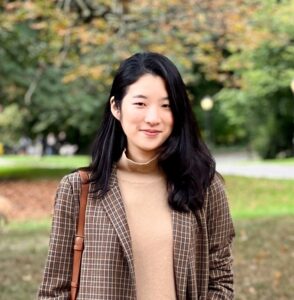
Deva Kannan Ramanan is a Professor at the Robotics Institute of Carnegie Mellon University , focusing on computer vision , machine learning , and human-centered robotics . His work bridges neurorobotics and visual perception , with applications in autonomous driving and 4D reconstruction . Research Topics Computer Vision 3-D Vision and Recognition Visual Servoing Neurorobotics Human-Centered Robotics Graphics & Creative Tools His recent publications in CVPR , ICRA , and ICCV emphasize 4D human reconstruction , neural rendering , and vision-language models for autonomous systems. He serves as General Chair of CVPR 2027 and Program Chair of CVPR 2018 , with IARPA funding for aerial-ground rendering (2023-2027). Current students include PhD candidates Sally Chen, Kangle Deng, and Zhiqiu Lin, while past advisees like Arun Vasudevan and Olga Russakovsky now hold positions at Amazon and Meta respectively.
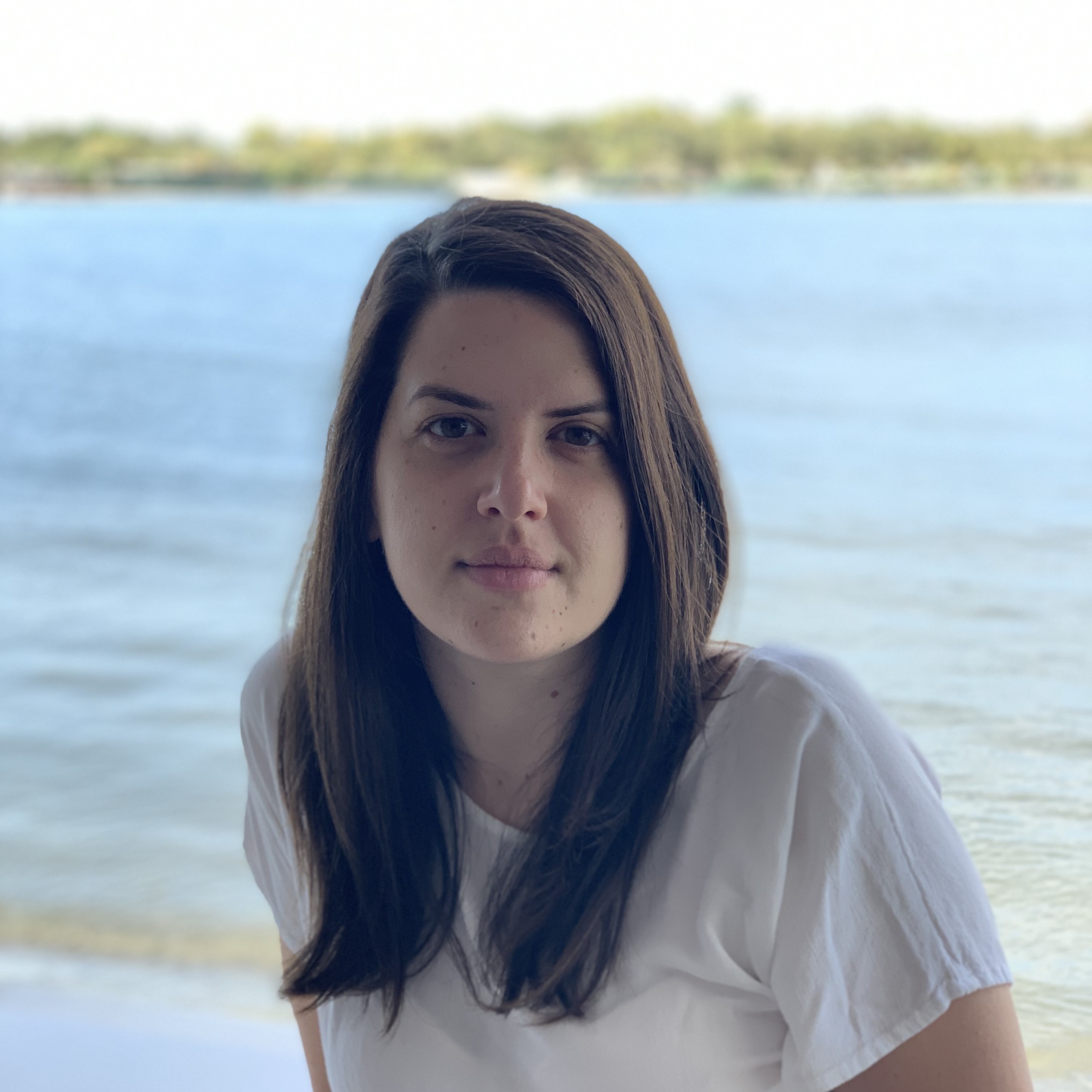
Liza Rebrova is an Assistant Professor in the Department of Operations Research and Financial Engineering (ORFE) at Princeton University's School of Engineering and Applied Science. She is also an associated faculty member of the Program in Applied and Computational Mathematics (PACM) and the Center for Statistics and Machine Learning (CSML). Her research focuses on randomized numerical linear algebra and the mathematics of data science, with connections to high-dimensional probability and stochastic optimization. She develops mathematically justified randomized algorithms for large-scale data, particularly interested in settings where data exhibits mathematical structure such as spectral decay, multi-modality, or non-negativity. Her work addresses challenges in data compression, recovery, and optimization under structured noise conditions. Dr. Rebrova's recent publications show a strong trend toward developing robust algorithms for linear systems, tensor data compression, and nonnegative matrix factorization. Her work bridges theoretical foundations with practical applications in machine learning and data science, with emphasis on memory efficiency and handling corrupted or incomplete data. NSF DMS-2309685 (Single PI, 2024-2026): "Outliers are not what they seem: data-aware, flexible, and robust randomized iterative methods" NSF DMS-2108479 (Collaborative, 2022-2024): "Fast, Low-Memory Embeddings for Tensor Data with Applications" (co-PIs Mark Iwen and Deanna Needell) She currently advises three PhD students (Jackie Lok, Shambhavi Suryanarayanan, and Sofiia Shvaiko) and has previously advised Abraar Chaudhry (PhD 2024) and Nicolo Grometto (Masters thesis 2023). At Princeton, she teaches graduate courses including ORF526 (Graduate Probability), ORF387 (Networks), and ORF523 (Convex and Conic Optimization).
Nima Fazeli is an Assistant Professor of Robotics at the University of Michigan (2020–Present), holding courtesy appointments in Computer Science & Engineering (CSE) and Mechanical Engineering. He directs the Manipulation and Machine Intelligence (MMint) Lab, focusing on enabling dexterous robotic manipulation through multimodal representation learning, tactile sensing, and model-based reasoning. His work integrates mechanics, perception, controls, and planning to achieve autonomous interaction with uncertain environments. Education: PhD, MIT (2019); MSc, University of Maryland (2014); BSc, Amirkabir University of Technology (2011) Research interests emphasize embodied intelligence , including visuo-tactile fusion, contact dynamics modeling, and cross-modal learning. Recent work explores tactile shadows, deformable object manipulation, and language-guided robot control. His research is supported by the NSF CAREER grant and National Robotics Initiative, with applications in manufacturing, assistive robotics, and space systems. Publications span topics like tactile sensing hardware (e.g., GelSlim 4.0), visuo-tactile implicit representations (ViTaSCOPE), and failure recovery policies (Racer). His team’s work has been featured in outlets like The New York Times and BBC. Key Awards: NSF CAREER Grant (2024) Teaching includes Introduction to Robotic Manipulation . Collaborations involve cross-disciplinary projects with mechanical, electrical, and biomedical engineering groups.
Professor Anders C. Hansen is a mathematician at the University of Cambridge and University of Oslo, leading the Applied Functional and Harmonic Analysis group. His work bridges functional analysis, artificial intelligence, and computational mathematics, focusing on the Solvability Complexity Index (SCI) hierarchy and stability issues in deep learning. He has held prestigious fellowships, including a Royal Society University Research Fellowship and Peterhouse Bye-Fellowship. Educated at the University of Cambridge, UC Berkeley, and the Norwegian University of Science and Technology Developed groundbreaking theories in compressed sensing and deep learning, revealing algorithmic instability paradoxes Organized workshops on computational mathematics and AI interpretability His research explores the SCI hierarchy , exposing computational barriers in AI, quantum mechanics, and inverse problems. Key projects include Smale’s 18th problem and analyzing neural network stability. His work has transformed understanding of compressed sensing, particularly in medical imaging. Recent scientific awards include the Whitehead Prize (2019), IMA Prize (2018), and Leverhulme Prize (2017). Collaborations span institutions like Caltech, MIT, and the University of Vienna. As an educator, he teaches NST Part IA Mathematical Methods , Part II Numerical Analysis , and a Part III course on Compressed Sensing . His group has mentored 17 PhD and postdoctoral researchers since 2012.
Kaiyuan Yang is an Associate Professor in the Department of Electrical and Computer Engineering at Rice University, leading the Secure and Intelligent Micro-Systems (SIMS) Lab. His research focuses on low-power integrated circuits and bioelectronic implants for applications like the Internet of Everything and medical devices. He holds a B.S. from Tsinghua University (2012) and M.S./Ph.D. degrees from the University of Michigan (2017). Research Interests: Low-power digital/analog/mixed-signal systems Bioelectronics and implantable devices Hardware security and PUF design Mixed-signal computing and emerging materials Recent work emphasizes magnetoelectric-powered implants, secure backscatter communication, and in-memory computing architectures. His publications span top venues like IEEE ISSCC, IEDM, and ACM MobiCom. Awards: 2022 NSF CAREER Award 2022 IEEE Top Picks in Hardware Security 2016 IEEE SSCS Predoctoral Achievement Award Dr. Yang serves on editorial boards for IEEE TVLSI and program committees for ISSCC/CICC. His lab develops miniature, secure, and energy-efficient systems for healthcare and IoT applications.
Ajit Rajwade is a Professor at the Department of Computer Science and Engineering , Indian Institute of Technology Bombay. His research spans Artificial Intelligence , Compressed Sensing , and Medical Imaging , with affiliations to the Centre for Machine Intelligence and Data Science and the Koita Centre for Digital Health . Education : PhD in Computer and Information Science and Engineering, University of Florida (2010) MSc in Computer Science, McGill University (2004) BTech in Computer Engineering, University of Pune (2002) His research interests focus on intelligent data acquisition, particularly in neural network analysis , graph signal processing , and medical imaging . He develops compressed sensing algorithms for inverse problems like tomography and MRI reconstruction , alongside applying group testing to pandemic response. Scientific awards include the Prof. S. P. Sukhatme Award (2024) and Departmental Teaching Excellence (2019). His publications demonstrate expertise in image restoration , noise modeling , and epidemiological algorithms . He has advised PhD students like Sabyasachi Ghosh and Jerin Geo James , with a focus on computationally efficient methods in medical imaging and machine learning .
Pierre Vandergheynst is a Full Professor at the Swiss Federal Institute of Technology Lausanne (EPFL) in the Department of Electrical Engineering, with a courtesy appointment in Computer and Communication Sciences. He serves as EPFL’s Vice-Provost for Education since 2015 and leads the Signal Processing Laboratory 2 (LTS2). His research spans harmonic analysis, sparse approximations, mathematical data processing, and applications in signal/image processing, computer vision, machine learning, and graph-based data analysis. PhD in Mathematical Physics (1998), Université catholique de Louvain Postdoctoral Researcher at EPFL (1998-2001) Assistant Professor at EPFL (2002-2007) His research explores geometry/symmetry in high-dimensional data, redundant dictionaries for dimensionality reduction, and computational harmonic analysis on manifolds. Recent work focuses on protein structure modeling, geometric deep learning, and graph-based signal processing. Key article trends include graph neural networks for protein analysis, geometric deep learning in neuroscience, and structured knowledge priors in neural models. His 2023-2025 publications emphasize interpretable AI, long-range dependencies in graphs, and molecular representation learning. Scientific Awards: IEEE Signal Processing Magazine Best Paper Award (2023) Signal Processing Society Best Paper Award (2022) Apple ARTS Award (2007) De Boelpaepe Prize, Royal Academy of Sciences of Belgium (2009-2010) He has supervised over 30 PhD theses and contributed to foundational work in graph signal processing, compressive sensing, and geometric deep learning. His lab develops tools for data science on non-Euclidean structures, with applications in medicine, astronomy, and wireless systems.
Jelani Nelson is a Professor and Department Chair in the UC Berkeley EECS Department (College of Engineering). His work focuses on theoretical computer science , particularly algorithms , data streams , dimensionality reduction , and privacy-preserving computation . Advising : Current students include Ishaq Aden-Ali, Xin Lyu, Mihir Singhal, and Hongxun Wu (co-advised with leading researchers). Education : PhD from MIT (George M. Sprowls Award), M.Eng from MIT. Research Highlights : Developed foundational results in Johnson-Lindenstrauss dimensionality reduction (optimality, sparse embeddings). Advancements in differential privacy (lower bounds, private mean estimation, threshold learning). Pioneering work on streaming algorithms for heavy hitters, norm estimation, and graph problems. Innovations in compressed sensing and oblivious subspace embeddings . Scientific Awards : PODS Best Paper Award (2011, 2022) IBM Pat Goldberg Memorial Best Paper Award (2011) George M. Sprowls Award for MIT doctoral thesis (2009) NeurIPS 2020 Spotlight Presentation
Anoosheh Heidarzadeh is an Assistant Professor in the Department of Electrical and Computer Engineering at Santa Clara University's School of Engineering. He holds a Ph.D. in Electrical and Computer Engineering from Carleton University (2012) and previously served as a Visiting Assistant Professor at Texas A&M University (2018-2022) and Associate Research Scientist at the same institution (2015-2017). His postdoctoral research was conducted at the California Institute of Technology (2013-2014). His research focuses on: Information and coding theory : Fundamental limits of data transmission and storage systems Private and secure computing : Protocols for confidential data processing in networked environments Fault-tolerant distributed systems : Resilient computation frameworks for large-scale applications Distributed machine learning : Scalable algorithms for collaborative learning architectures Recent publications (2021-2022) demonstrate strong emphasis on privacy-preserving computation (covering 73% of articles) and distributed coding techniques (67% of articles), with innovations in private information retrieval, matrix operations, and group testing methodologies. Theoretical contributions dominate (87%), while 13% address applied challenges like COVID-19 screening.
Mina Lee is an Assistant Professor in Computer Science at the University of Chicago, affiliated with the Data Science Institute and Cognitive Science. Her research focuses on 'Writing with AI,' exploring how AI transforms writing processes, content, and identities. She designs AI writing assistants and evaluates human-AI collaboration through user studies and experiments, addressing ethical implications like authorship norms and educational impacts. Education: Ph.D. in Computer Science from Stanford University (2023), advised by Percy Liang. B.S. in Computer Science from Korea University (2016). Postdoctoral research at Microsoft Research's Computational Social Science group (2023–2024). Research interests span Human-Computer Interaction (HCI), NLP, and computational social science. She co-founded workshops on Intelligent Writing Assistants and Human-centered Evaluation of Language Models. Notable awards include MIT Technology Review's Innovators Under 35 Korea (2022) and a Best Paper Award at GPCE 2016. Her work has been published in top venues like CHI, ACL, NeurIPS, and Nature Human Behavior. She advises PhD students on AI-assisted writing, cognitive augmentation, and safe generative models. Current lab projects include designing explainable AI tools and studying AI disclosure norms in writing.
Georgia Gkioxari is an Assistant Professor in the Division of Computing and Mathematical Sciences at Caltech , with a part-time affiliation at Meta AI . Her work focuses on extending visual perception models through advanced 2D and 3D representation learning, spatial reasoning, and generative models. Education: Not explicitly mentioned in the text Research interests span 3D perception , spatial reasoning , and vision-language integration , with projects like Visual Agentic AI for Spatial Reasoning and Token-by-Token Multimodal Alignment . Her publications emphasize 3D object detection , reconstruction , and generative modeling techniques including diffusion models and transformers . Scientific recognition includes the Meta LLM Evaluation Research Grant , Okawa Research Grant , Google Faculty Scholar Award 2024 , and Amazon Research Award . She teaches courses like Large Language & Vision Models (EE/CS 148) and Learning & 3D (CS 101) at Caltech. Labs & Teams: Leads Glab with members including Ilona Demler, Ziqi Ma, and Damiano Marsili
Prof. Hayden Kwok Hay SO is an Associate Professor at the University of Hong Kong (HKU), affiliated with the Department of Electrical and Electronic Engineering. He currently serves as Acting Director of the School of Innovation and previously co-directed the Computer Engineering Program. His research focuses on reconfigurable computing systems, FPGA-based architectures, and their applications in AIoT, medical imaging, and high-performance computing. He holds a B.S., M.S., and Ph.D. in Electrical Engineering and Computer Sciences from UC Berkeley (1998–2007). Prof. So has been recognized with awards such as the IEEE-HKN Teaching Award (2021), Croucher Innovation Award (2013), and multiple teaching excellence awards. He leads the Computer Architecture & System Research Lab (CASR) and co-founded the Joint Lab on Future Cities (JLFC). His work spans FPGA overlay architectures, graph processing systems, and hardware-software co-design for efficient computing. Key research contributions include advancements in FPGA-based reconfigurable systems, sparse dataflow architectures, and medical imaging accelerators. He has secured grants for projects like 'Advanced machine vision guided aquatic surface vehicles' and 'Efficient and Productive Parallel Data Processing in Hybrid FPGA-CPU Clusters.' Prof. So has advised numerous students and researchers, contributing to over 150 peer-reviewed publications. His current projects explore AI hardware acceleration, neuromorphic computing, and FPGA-driven solutions for big data challenges.
Xiaoxiang Zhu is a Professor for Data Science in Earth Observation at the Technical University of Munich (TUM) and serves as the Director of the International AI Future Lab - AI4EO. She is also on the Board of Directors of the Munich Data Science Institute (MDSI) and has held various leadership positions in research institutions including as Spokesperson for Helmholtz AI Research Field "Aeronautics, Space and Transport" (MASTr). Her educational background includes a doctorate (Dr.-Ing.) and habilitation from TUM. She has held positions as Private Dozent at TUM (2013-2015), TUM Junior Fellow (2013-2015), and Research Group Leader for "SparsEO" at Munich Aerospace (2011-2016). Professor Zhu's research focuses on the intersection of remote sensing, artificial intelligence, and data science. Her work primarily addresses global urban mapping, sustainable development goals, and climate change monitoring through Earth observation technologies. She develops advanced signal processing techniques and machine learning algorithms specifically tailored for satellite imagery and geospatial data analysis. Her research has significant applications in urban planning, environmental monitoring, and disaster management. Her team has pioneered approaches that combine synthetic aperture radar (SAR) with deep learning for improved Earth observation capabilities. Professor Zhu has received numerous prestigious awards including being named an IEEE Fellow (2021), receiving the Geodesy Award of the Nico Rüpke Foundation (2020), and being awarded an ERC Proof of Concept Grant (2020, 2022). She is also a Fellow of the Academia Europaea (2024) and AAIA Fellow (2024). Her publication record includes highly cited works such as "Deep Learning in Remote Sensing: A Comprehensive Review and List of Resources" (2017). She leads a substantial research team comprising numerous PhD students and postdoctoral researchers working on various projects including Horizon Europe - ThinkingEarth, EarthCare, and AI4TWINNING. Her research group, the Chair of Data Science in Earth Observation, is actively involved in multiple large-scale European and German research initiatives focused on Earth observation and AI applications.
John Paisley is an Associate Professor of Electrical Engineering at Columbia University's Fu Foundation School of Engineering and Applied Science, and a member of Columbia's Data Science Institute (DSI). He holds a B.S., M.S., and Ph.D. in Electrical and Computer Engineering from Duke University (2004-2010), followed by postdoctoral research in Computer Science at Princeton University and UC Berkeley. His research focuses on Bayesian models, posterior inference techniques for Big Data, and applications in data analysis, recommendation systems, information retrieval, and compressed sensing. He has pioneered methods like Bayesian Gaussian Process ODEs and Double Normalizing Flows, with recent work emphasizing uncertainty quantification in environmental modeling and neuroimaging analysis. His collaborative workflows (e.g., bneR ) address air pollution exposure and PM2.5 concentration uncertainties, combining Bayesian nonparametric ensembles with geospatial data. He has also developed frameworks for neural network interpretability, image denoising, and compressed sensing MRI. Paisley's work bridges statistical theory and applied machine learning, with applications in healthcare, environmental science, and geophysics. His academic contributions include over 50 publications since 2016, spanning topics like deep metric learning, adversarial learning, and variational inference optimization. He maintains an active research group and serves on editorial boards for machine learning and signal processing journals.
Olga Saukh is an Associate Professor at the Institute of Technical Informatics, Graz University of Technology (TU Graz), and a Faculty member at the Complexity Science Hub Vienna (CSH). She leads the Embedded Learning and Sensing Systems research group, which operates across both institutions, focusing on the design and deployment of efficient AI-based systems on edge and mobile platforms. Her work bridges deep learning and embedded systems, with applications in environmental monitoring, precision agriculture, and digital health. Ph.D. in Computer Science, University of Bonn (2009) Habilitation in Embedded Systems, TU Graz (2020) Postdoctoral Training, ETH Zurich (2010–2016) B.Sc. in Applied Mathematics, Taras Shevchenko National University of Kyiv (2002) M.Sc. in Applied Computer Science, University of Freiburg (2004) Her research centers on efficient machine learning, particularly model optimization, neural network pruning, and contrastive learning for resource-constrained devices. She is deeply engaged in solving real-world challenges in IoT, sensor networks, and cyber-physical systems. Her work emphasizes data privacy, sustainability, and practical deployment of AI at the edge. The 15 most recent publications highlight a strong trend in efficient deep learning, including model compression, pruning, and transfer learning, applied to diverse domains such as environmental sensing (air quality, pollution tracking), digital agriculture (cattle farming), and embedded AI (sensor calibration, on-demand sensing). Her work frequently appears in top-tier venues like NeurIPS, ICLR, and IEEE/ACM IPSN, reflecting her leadership at the intersection of machine learning and embedded systems. Scientific awards include: CONET Ph.D. Academic Award (2010) Multiple Best Paper Awards at IEEE PerCom, ACM/IEEE IPSN, IEEE ICPADS, IEEE SECON, and UrbCom Spotlight and Oral presentations at ICML and CoLLAs workshops Ph.D. scholarship from IPVS, University of Stuttgart (2004–2005) Prizes in Ukrainian national mathematics competitions (1996–1998) Olga Saukh actively serves on program committees of leading international conferences in machine learning and embedded systems. She has advised multiple students and leads a collaborative research group spanning TU Graz and CSH Vienna. Her group develops practical AI systems for real-world deployment, with a focus on sustainability and privacy. She co-organizes the public EfficientML reading group and has secured recognition through numerous grants and awards. Her future work continues to explore the theoretical and practical challenges of deploying efficient, trustworthy AI in mobile and embedded environments. Her research group, Embedded Learning and Sensing Systems, operates jointly between TU Graz and CSH Vienna, fostering interdisciplinary collaboration across institutions. The team develops AI solutions for edge computing, sensor networks, and cyber-physical systems, with a strong emphasis on environmental sustainability and data privacy. Members work on joint challenges using advanced collaboration tools, reflecting the distributed nature of modern academic research.