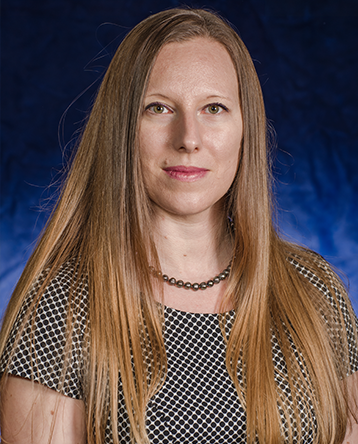
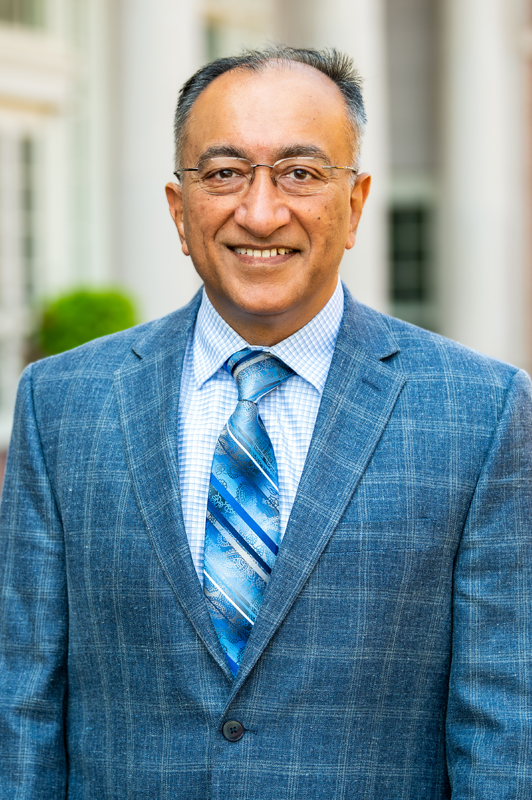
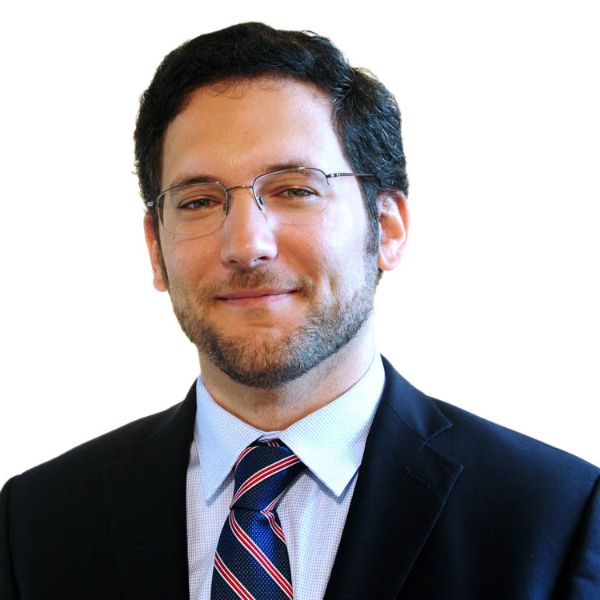
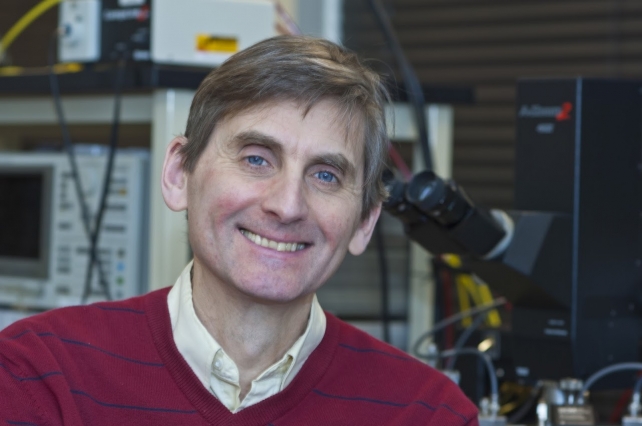
Niklas Rorsman is a Research Professor at the Microwave Electronics group, part of the Department of Microtechnology and Nanoscience at Chalmers University of Technology . His work focuses on advanced semiconductor devices, particularly gallium nitride (GaN) and silicon carbide (SiC) high-electron-mobility transistors (HEMTs) for microwave and cryogenic applications. Expertise : Semiconductor device physics, microwave electronics, cryogenic transistor characterization Key Technologies : GaN HEMTs, SiC MESFETs, graphene FETs Rorsman's research investigates trapping effects, thermal management, and material optimization in GaN/SiC devices. Recent studies explore field plates for cryogenic stability, recessed ohmic contacts, and high-κ dielectric interfaces. His publications demonstrate a focus on improving device linearity, noise performance, and reliability through structural and process innovations. Selected trends in his work include: Cryogenic GaN HEMTs with superconducting Nb gates Buffer-free AlGaN/GaN heterostructures for high breakdown voltage Graphene integration for millimeter-wave communication systems Advanced SiNx passivation and gate stack engineering Contact: niklas.rorsman@chalmers.se
Noa Marom is an Associate Professor in the Department of Materials Science and Engineering at Carnegie Mellon University (CMU), holding courtesy appointments in Chemistry and Physics. She is a member of the Pittsburgh Quantum Institute (PQI) and an affiliate of the Wilton E. Scott Institute for Energy Innovation. Her research focuses on computational materials science, energy security, and quantum materials. Marom earned a B.A. in Physics and B.S. in Materials Engineering (cum laude) from the Technion-Israel Institute of Technology (2003) and a Ph.D. in Chemistry from the Weizmann Institute of Science (2010). She held postdoctoral positions at the University of Texas at Austin’s Institute for Computational Engineering and Sciences (ICES) before joining Tulane University as an Assistant Professor (2013–2016) and CMU in 2016. Her research interests include computational design of semiconductor materials, topological quantum computing, and crystal structure prediction. Key projects involve machine learning for materials discovery and quantum computing applications, such as optimizing semiconductor interfaces for stable qubits. Marom has received numerous awards, including the NSF CAREER Award (2016), DOE INCITE Awards (2017–2019), and the IUPAP Young Scientist Prize (2018). She serves as Associate Editor of npj Computational Materials. Her work spans collaborations with institutions like the Paul Scherrer Institute (Switzerland) and the Pittsburgh Supercomputing Center. Research highlights include computational studies of InAs/InSb semiconductors for quantum bits and machine learning-driven discovery of organic semiconductors.
Pradeep Lall is the MacFarlane Endowed Distinguished Professor and Alumni Professor in the Department of Mechanical Engineering at Auburn University’s Samuel Ginn College of Engineering. He serves as Director of the Auburn University Electronics Packaging Research Institute (EPRI) and holds a joint courtesy appointment in the Department of Electrical and Computer Engineering. A leader in flexible hybrid electronics and harsh environment systems, Dr. Lall has built a world-renowned research program focused on additive manufacturing, electronics reliability, and sustainable materials. Ph.D. in Mechanical Engineering, University of Maryland M.B.A. in Finance and Strategy, Northwestern University M.S. in Mechanical Engineering, University of Maryland B.E. in Mechanical Engineering, Delhi College of Engineering Dr. Lall’s research centers on Flexible Hybrid Electronics (FHE) , Harsh Environment Electronics , Semiconductor Packaging , and Prognostics Health Management . His work leverages additive manufacturing techniques such as Aerosol-Jet, InkJet, and screen printing to develop conformal, robust, and sustainable electronic systems. His innovations include the Flexible Biometric Band for monitoring workers in hazardous environments and additively printed antennas for aerospace applications. His recent focus includes eliminating PFAS from electronics and developing water-based inks for eco-friendly manufacturing. The 15 most recent publications reflect a strong trend toward sustainability , additive manufacturing , and real-world applications in defense, aerospace, automotive, and healthcare. His work bridges fundamental research with industrial realization, particularly through partnerships with NextFlex and federal agencies. Themes include reliability under shock and vibration, sensor development for extreme environments, and workforce training in advanced manufacturing. Dr. Lall has received numerous scientific honors, including: SMTA Founder’s Award (2024) SEMI FlexTech R&D Achievements Award (2023) ASME Avram Bar-Cohen Memorial Medal (2022) IEEE Biedenbach Outstanding Engineering Educator Award (2020) IEEE Sustained Technical Contributions Award (2018) NSF Alex Schwarzkopf Prize (2016) Fellow of ASME, IEEE, NextFlex, and Alabama Academy of Science Dr. Lall has secured over $2 million in annual research funding from SRC, NSF, and NextFlex, leading large-scale projects on sustainable electronics and workforce development. He mentors numerous graduate and undergraduate students and leads the NSF-CAVE3 Center. As founding faculty advisor of the SMTA student chapter, he promotes student engagement in electronics manufacturing. His lab, EPRI, features a full prototyping line for additive electronics and collaborates with industry and government to advance domestic manufacturing capabilities. EPRI, under Dr. Lall’s leadership, partners with the Auburn University Research and Technology Park, the Office of Economic Development, and multiple colleges to drive technology commercialization and workforce education in electronic packaging. The institute is at the forefront of the national effort to reestablish U.S. leadership in semiconductor packaging and advanced electronics manufacturing.
Kyusang Lee is an Associate Professor in the Electrical and Computer Engineering and Materials Science and Engineering departments at the University of Virginia. His research focuses on optoelectronic devices, neuromorphic computing, and smart sensors, emphasizing applications in solar energy conversion and flexible electronics. He holds a B.S. from Korea University (2005), M.S. from Johns Hopkins University (2009), and Ph.D. from the University of Michigan (2014). He conducted postdoctoral research at the University of Michigan and MIT. Education: B.S., Electrical Engineering, Korea University, 2005 M.S., Electrical and Computer Engineering, Johns Hopkins University, 2009 Ph.D., Electrical Engineering and Computer Science, University of Michigan, 2014 Postdoctoral Fellowships: University of Michigan (EECS), MIT (Mechanical Engineering) His research interests span thin-film and flexible optoelectronics, neuromorphic computing architectures, and AIoT-enabled smart sensors. Notable contributions include remote epitaxy techniques for semiconductor membrane integration and solar-tracking concentrator designs. His work bridges materials science and device engineering to advance energy-efficient optoelectronics and bioinspired systems. Key Research Themes: Organic/inorganic optoelectronic devices for solar energy Flexible and stretchable electronics Neuromorphic hardware for edge computing Gas sensing and bioinspired sensor systems Lee’s publications reflect interdisciplinary innovation, with recent work on ferroelectric transistors, neuromorphic vision systems, and high-efficiency photovoltaics. He received the NSF CAREER Award (2020) and AFOSR YIP Award (2023).
Dr. Qing Guo is an Associate Professor in the Department of Chemistry at South University of Science and Technology (SUSTech), where he joined in April 2019 as a research group leader and doctoral supervisor. His research focuses on fundamental processes of energy-related catalytic reactions, with particular emphasis on surface photocatalysis and reaction mechanisms. Bachelor of Science: University of Science and Technology of China (2007) PhD: University of Chinese Academy of Sciences (2013) Research Assistant/Associate Fellow: Dalian Institute of Chemical Physics, Chinese Academy of Sciences (2013-2019) Associate Professor: SUSTech Department of Chemistry (2019-present) Dr. Guo's research interests center on surface catalysis mechanisms, particularly in energy-related photocatalytic reactions. He develops novel scientific instruments to investigate photocatalytic C-H bond activation of small alkane molecules, carbon chain growth, and the interaction mechanism between metal clusters and substrates. His work spans photocatalytic hydrogen production, alkane activation and conversion, biomass conversion, and single-atom catalysis. His innovative approach combines instrument development with fundamental surface science to address critical challenges in energy conversion. Analysis of Dr. Guo's recent publications reveals a strong focus on titanium dioxide-based photocatalysis, with particular attention to reaction mechanisms at the molecular level. His work systematically investigates the roles of surface oxygen species, photon energy effects, and reaction intermediates in hydrocarbon conversion processes. The research shows an increasing sophistication in both experimental techniques and theoretical understanding, with recent work extending to ammonia synthesis, electrocatalysis, and excitonic effects at molecule/metal oxide interfaces. Dr. Guo leads an active research group that has produced over 80 publications in high-impact journals including J. Am. Chem. Soc., JACS Au, Chem. Sci., and Adv. Mater. His work demonstrates significant contributions to understanding fundamental photocatalytic processes, with potential applications in green energy and sustainable chemical production. Dr. Guo serves as a doctoral supervisor and has mentored numerous graduate students, many of whom appear as co-authors on his publications. His research group has developed several large-scale research instruments, including a surface photochemical kinetics research device, an in situ catalytic mechanism research device, a surface scattering kinetics research device, and a device for preparing controllable size clusters. These instruments have enabled systematic investigation of important energy-related catalytic reactions. Dr. Guo's laboratory focuses on the development and application of advanced surface science techniques to study energy-related catalytic reactions. His team combines experimental surface science approaches with theoretical modeling to gain molecular-level understanding of photocatalytic processes. The group actively recruits postdoctoral researchers and research assistants with backgrounds in vacuum technology, optics, semiconductors, and surface chemistry.
Larissa Gomes Franca is a Research Fellow at the University of Cambridge's Department of Materials Science & Metallurgy, affiliated with the Photoactive Materials Group. She holds a PhD from Durham University as a Marie Skłodowska-Curie Early-Stage Researcher and earned her BSc and MSc in Physics at the Federal University of Santa Catarina, Brazil. Her research focuses on energy-efficient materials for optoelectronic applications like OLEDs , solar cells , and photon upconversion . She explores stimuli-responsive liquid crystal hosts for spectral conversion systems and investigates photophysical processes in organic materials using optical spectroscopy techniques. Key publication trends include advancements in thermally activated delayed fluorescence (TADF) , room temperature phosphorescence , and triplet-triplet annihilation for energy upconversion. Her work bridges materials informatics with liquid crystal engineering to enhance solar energy harvesting. Scientific awards: Royal Commission for the Exhibition of 1851 Research Fellowship (2023) Contact: lg735@cam.ac.uk | Personal Webpage
Spyridon Pavlidis is an Associate Professor in the Department of Electrical and Computer Engineering at North Carolina State University, leading the Laboratory for Electronics in Advanced Devices and Systems (NCSU LEADS). He is affiliated with the ME Commons Hub (CLAWS), PowerAmerica, FREEDM, and ASSIST Research Centers. His research focuses on semiconductor devices, wide bandgap materials (GaN/AlN), and their applications in power electronics, sensing, and bioelectronics. Pavlidis holds a PhD from Georgia Tech (2016) and a Master's from Imperial College London (2010). Education: Ph.D. in Electrical and Computer Engineering, Georgia Institute of Technology (2016) M.Eng in Electrical and Electronic Engineering, Imperial College London (2010) His expertise spans power electronics packaging, microwave technologies, and biosensing. Recent work includes developing GaN and AlN-based devices for high-power and high-frequency applications. Pavlidis has received prestigious awards, including the 2022 NSF CAREER Award and the 2022 Bennett Faculty Fellowship. He actively contributes to IEEE committees and technical program reviews. His funded research includes defect-state analysis in GaN diodes and bioelectronic sensors for medical applications. Pavlidis collaborates across interdisciplinary teams, advancing next-generation semiconductor technologies and wearable biosensors.
Professor Chen Xiaodong is a Distinguished University Professor at Nanyang Technological University (NTU), Singapore, holding primary appointment in the School of Materials Science & Engineering with courtesy appointments in the Lee Kong Chian School of Medicine and School of Chemistry, Chemical Engineering and Biotechnology. He serves as Deputy Director of the Institute for Digital Molecular Analytics and Science (IDMxS) and Director of both the Innovative Centre for Flexible Devices (iFlex) and Max Planck-NTU Joint Lab for Artificial Senses. His research spans mechanomaterials science and engineering, flexible electronics, sense digitalization, cyber-human interfaces and systems, and carbon-negative technology. Professor Chen's work focuses on developing methods for controlling materials architecture at 1-100 nm scale to solve fundamental and applied problems in energy, environment, and healthcare. His group integrates expertise from materials science, chemistry, biology, physics, and engineering to create innovative solutions. His scientific contributions have been recognized through numerous prestigious awards including the Singapore President's Science Award, National Research Foundation Investigatorship and Fellowship, Friedrich Wilhelm Bessel Research Award, Dan Maydan Prize in Nanoscience and Nanotechnology, and election to multiple national academies including Singapore National Academy of Science, Academy of Engineering Singapore, and German National Academy of Sciences Leopoldina. Professor Chen serves as Editor-in-Chief of ACS Nano and sits on editorial boards of numerous prestigious journals including Advanced Materials, Chemical Reviews, and Matter. He has mentored numerous PhD students and research fellows who have gone on to faculty positions at institutions worldwide. His laboratory develops cutting-edge technologies in flexible electronics, bio-inspired materials, and nano-bio interfaces, with strong industry collaborations and translational research focus.
Professor Andrew Johnson at the University of Bath is a leading researcher in materials chemistry for energy applications , specializing in precursor design for advanced thin film growth techniques including Chemical Vapour Deposition (CVD) and Atomic Layer Deposition (ALD) . His work spans sustainable technologies, graphene science, and nanoparticle synthesis, with a focus on enabling next-generation electronics and climate solutions. Department of Chemistry, University of Bath Centre for Sustainable Chemical Technologies (CSCT) Institute of Sustainability and Climate Change Collaborations with University of Leeds, University of California Davis, and industry partners like Pragmatic Printing Research Interests: Development of volatile, non-toxic molecular precursors for metals/oxides ALD/CVD of metastable materials (e.g., SnO, α-Fe2O3) Carborane chemistry for early transition metals and lanthanides Surface engineering for automotive lubricant alternatives Photoanodes for solar water splitting Flexible electronics with sustainable materials Collaborations & Grants: Funded by EPSRC and Innovate UK , with projects on low-power flexible electronics and complementary semiconductor systems. Collaborates with physics, chemical engineering, and industry partners for mechanical property testing and device fabrication.
Professor Gao Min Gao is a distinguished academic at Cardiff University's School of Engineering, holding the position of Professor of Energy Materials and Head of the Thermoelectric Laboratory. With over 25 years of experience in thermoelectric research, he has established himself as a leading expert in energy conversion technologies. His career at Cardiff University spans from Research Assistant/Associate (1993-1999) to his current professorship (2016-Present), with progressive academic promotions reflecting his significant contributions to the field. BSc in Semiconductor Physics from Xidian University, China PhD in Thermoelectrics under Professor D M Rowe at Cardiff University, UK Professor Gao's research focuses on fundamental understanding of thermoelectric processes for energy harvesting applications, with key areas including thermoelectric materials and devices, solution processed solar cells (Perovskite, OPV), concentrated photovoltaic/thermoelectric systems, and magnetocaloric materials. His work has significantly advanced the field, particularly through his early contributions to Peltier module applications for waste heat recovery and the development of improved TE module theory. His current research emphasizes novel characterization techniques for thermoelectric processes and innovative concepts for full-spectrum solar energy harvesting based on hybrid PV-TE systems. His extensive publication record demonstrates consistent high-impact research output across thermoelectrics and solar energy conversion. The articles show a clear progression from fundamental thermoelectric theory to practical applications and hybrid systems, with recent work focusing on spectral splitting, advanced concentrator designs, and novel material systems like Fe11Ti3Al6 alloys. His research bridges fundamental physics with practical engineering applications, particularly in waste heat recovery and solar energy harvesting. Board Member of European Thermoelectric Society (2013-2019) Member of EPSRC Review College (2016-Present) Theme coordinator (Device Physics), UK Thermoelectric Network (2016-Present) Independent expert for EC H2020 Programme (2014-2016) Professor Gao has supervised numerous PhD students, with current projects spanning laser micro-spectroscopy, next-generation photovoltaics, graphene/ceramic composites, and full-spectrum solar energy harvesting. His externally funded research includes significant projects such as the EU-RFCS-funded 'Development of innovative TEG systems optimized for energy harvesting from EAF off-gas cooling water' (2020-2024) and the EPSRC SUPERGEN project on 'Environmental impact of perovskite solar cell' (2019). His Thermoelectric Laboratory at Cardiff University serves as a hub for cutting-edge research in energy materials and conversion technologies.
Jesús del Alamo serves as the Donner Professor of Science within MIT’s Department of Electrical Engineering and Computer Science, leading cutting-edge research in semiconductor device physics with applications spanning logic, high-frequency, and power electronics. His work bridges fundamental materials science with practical device engineering to address next-generation computing challenges. Academic Credentials: PhD, Stanford University MS, Stanford University Research Focus: Professor del Alamo’s expertise centers on transistor physics and semiconductor device innovation, particularly III-V compound semiconductors (InGaAs, GaN) and diamond MOSFETs. Current investigations target reliability mechanisms in GaN transistors for RF/power applications, novel analog computing architectures, and electrochemical ionic synapses for neuromorphic hardware. His group pioneers atomic-scale fabrication techniques like thermal atomic layer etching for sub-5nm devices while exploring quantum confinement effects in vertical nanowires. Publication Evolution: Recent work (2023-2025) demonstrates a strategic shift toward neuromorphic computing, with 60% of publications focusing on electrochemical synapses and ferroelectric memories for AI acceleration. This builds upon decades of transistor scaling research, now converging with materials innovations in HfZrO 2 ferroelectrics and protonic conductors to enable energy-efficient analog deep learning hardware. Award Recognition: Louis D. Smullin Award for Excellence in Teaching Amar Bose Award for Excellence in Teaching Intel Outstanding Researcher Award Semiconductor Research Corporation Technical Excellence Award Semiconductor Industry Association-Semiconductor Research Corporation University Researcher Award Collaborative Leadership: He directs research within MIT’s Microsystems Technology Laboratories (MTL), collaborating with faculty including Bilge Yildiz (electrochemical systems) and Ju Li (computational materials). Current projects integrate device physics with neuromorphic algorithms, supported by semiconductor industry partnerships focused on translating fundamental discoveries into practical AI hardware solutions. Research Infrastructure: His group operates within MIT’s MTL cleanroom facilities, utilizing advanced characterization tools for in-situ device analysis and leveraging partnerships with industry leaders in semiconductor manufacturing to prototype novel transistor architectures.
Géraud Delport is a CNRS permanent researcher at the IPVF Laboratory in Palaiseau, France, specializing in optical and optoelectronic properties of hybrid perovskite materials. His research focuses on cryogenic spectroscopy of quantum electronic effects (excitons, polarons), lead-free perovskites, and thin-film optoelectronic devices including photovoltaics and photodetectors. He maintains extensive collaborations with LUMIN Laboratory Saclay, GEMAC Laboratory, IRCP Lab Paris, FOTON and ISCR Rennes, and CEA LITEN. His academic background includes: Post-doctorate (2018-2020) at Cavendish Laboratory, Cambridge University in Samuel Stranks' team Post-doctorate (2017-2018) with CNRS contract at Université Paris Saclay PhD (2013-2016) at ENS Paris Saclay in Nanophotonics group of Aimé Cotton/LUMIN laboratory under Prof. Jean Sébastien Lauret Physics studies (2009-2013) at ENS Cachan Dr. Delport's research bridges fundamental physics with practical applications in optoelectronics. He specializes in time-resolved photoluminescence spectroscopy to investigate exciton dynamics and charge carrier behavior in 2D/3D perovskite structures. His work spans from carbon nanotube photophysics (earlier career) to current leadership in gold-based and lead-free perovskite development, with emphasis on correlating structural properties with optoelectronic performance. Recent work explores cryogenic spectroscopy techniques to understand quantum electronic phenomena in novel semiconductor materials. Analysis of his publication record shows increasing focus on environmentally sustainable perovskite alternatives, particularly gold-based systems, with significant contributions to understanding radiative efficiency limitations and structural-optical property relationships. His research demonstrates progression from fundamental nanoscale characterization to device-oriented applications, with recent papers addressing challenges in photovoltaic efficiency and material stability. Dr. Delport's research is supported by competitive funding including: French ANR young researcher grant "POETESSE" "Photothermal techniques to study thin films semiconductors" (MIRADOR project) "Photodetector based on lead-free perovskite materials" CABLESOLAR Project on "tethered altitude balloons with flexible solar panels" As a research supervisor, he actively recruits doctoral and postdoctoral candidates for projects in optical spectroscopy and solid-state chemistry, with current openings for thin-film deposition research and lead-free perovskite synthesis. His collaborative approach spans multiple French research institutions, creating an integrated ecosystem for advancing perovskite-based optoelectronic technologies from fundamental science to practical applications.
Khalifa Aguir is a Professor at Aix-Marseille University, affiliated with the Department of Detection, Radiation and Reliability (DETECT) and the Microsensor Instrumentation (MCI) Team. His research focuses on gas sensing technologies , particularly metal oxide semiconductors , nanomaterials , and thin films for environmental and biomedical applications.
Jin Hu is an Associate Professor in the Department of Physics within the College of Arts & Sciences at the University of Arkansas. His research focuses on quantum materials, particularly topological semimetals, low-dimensional materials, and magnetic systems. He maintains active research labs and collaborates with multiple national facilities. Hu received his PhD in Physics from Tulane University in New Orleans and earned his BS in Physics from the University of Science and Technology of China. His educational background has provided a strong foundation for his work in condensed matter physics and quantum materials research. Dr. Hu's research centers on Topological Quantum Materials , where his group investigates Dirac, Weyl, and Majorana fermions in emergent quantum materials including topological insulators and semimetals. His lab also explores Low Dimensional Materials , focusing on novel properties in 2D systems like graphene and transition metal dichalcogenides, with emphasis on topological materials in low dimensions and 2D magnets. Additionally, his group studies Other Quantum Systems including superconductors, frustrated magnetism, and correlated materials. Analysis of his recent publications reveals a strong focus on topological semimetals and quantum transport phenomena. His work frequently examines the interplay between topology, symmetry, magnetism, and electronic correlations. There's a clear progression toward studying more complex quantum materials systems with multiple competing interactions, particularly in 2D van der Waals magnets and magnetic topological semimetals. Dr. Hu's research is supported by multiple major funding agencies including the Department of Energy (DOE), Office of Naval Research (ONR), National Science Foundation (NSF), Air Force Office of Scientific Research (AFOSR), Arkansas Research Alliance (ABI), and the University of Arkansas. His group participates in several major initiatives including the DOE EFRC μ-ATOMS, NSF Research Traineeship on 2D Quantum Materials, and the NSF Quantum Materials Foundry for 2D Quantum Materials and Devices (2D-QMaPs). Dr. Hu actively mentors graduate and undergraduate students, with recent PhD completions including Gokul and Nabi. His lab maintains two research facilities at the University of Arkansas where they synthesize single crystals and characterize their electronic, magnetic, and thermal properties. He also contributes to the Experimental Materials Property Database, making research data accessible to the broader scientific community.
Dr. Michael Fraser is a researcher affiliated with the Department of Electronic Materials Engineering at the Research School of Physics and Engineering, Australian National University. His work focuses on semiconductor optoelectronics and nanotechnology, particularly in quantum structures and terahertz technology. He collaborates with prominent researchers like Professor Chennupati Jagadish and Professor Hoe Tan. University: Australian National University Department: Electronic Materials Engineering Email: michael.fraser@riken.jp Dr. Fraser's research spans quantum structures , carrier dynamics , and terahertz emission . His publications highlight excitons , trions , quantum wires , and defect analysis in semiconductors . Techniques like micro-photoluminescence , X-ray absorption spectroscopy , and ion implantation are central to his studies. Key areas: Semiconductor optoelectronics, nanotechnology, quantum physics, material science, and terahertz technology. Recent trends: Carrier confinement in quantum wells, defect characterization in indium nitride, and polarization-sensitive terahertz detection.