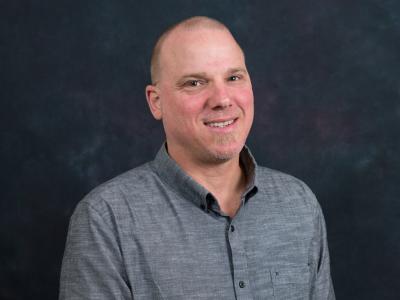
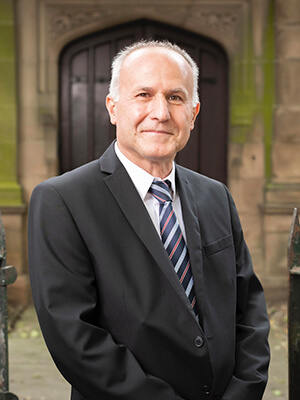
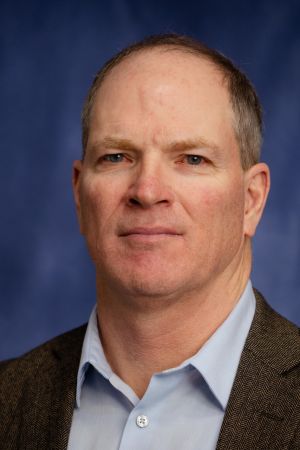
Will Heyniger is a Lecturer in the Department of Environmental and Sustainability Sciences at Kean University's College of Science, Mathematics and Technology. He holds a Master of Arts in Environmental Studies (May 2011) and teaches courses including Introduction to Meteorology, Environmental Science labs and lectures, Observing the Earth, and Sustainability fundamentals. Areas of Expertise: Atmospheric Science, Sustainability Sciences, Environmental Management, Ecological Restoration, Food Composting Heyniger emphasizes student engagement through enthusiastic knowledge sharing, aiming to forge connections with diverse student backgrounds. His teaching philosophy prioritizes creating an exciting classroom environment that naturally enhances learning outcomes.
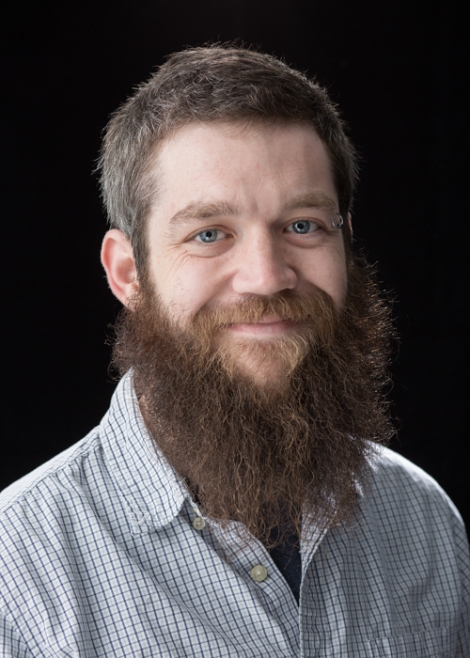
Kevin Gamble is a Senior Lecturer in the Department of Sustainable Technology and the Built Environment at Appalachian State University. His work focuses on interdisciplinary approaches to technology, historical energy transitions, and practical solutions for low-carbon systems. Education: M.S. in Appropriate Technology, Appalachian State University B.A. in Religious Studies, Appalachian State University His research spans sustainable organic waste management, traditional composting methods, and climate change mitigation strategies. Notably, he explores black soldier fly systems, farm waste recovery, and life cycle assessment of material systems. Through experimental studies like the 2015 ASEE publication on anaerobic digestion scalability, Gamble bridges laboratory insights with real-world applications for energy and waste systems. His teaching includes courses on energy transitions, climate response, and sustainable resource management.
Krishona Martinson is a Professor and Extension Program Leader in the Department of Animal Science at the University of Minnesota, part of the College of Food, Agricultural and Natural Resource Sciences (CFANS). She is based at 155C Haecker Hall, St. Paul, MN, and can be reached at krishona@umn.edu or +1 612 625 6776. Education: Ph.D., University of Minnesota, 2006 M.S., University of Minnesota, 2000 B.S., University of Wisconsin - River Falls, 1998 Her research and extension work centers on equine science, with emphasis on equine forage utilization and management , horse carcass composting , estimating ideal bodyweight in horses , and forage-related equine health issues , including poisonous plants and weed control . She also investigates equine industry impacts and trends , contributing valuable data for policy and management decisions. Her teaching includes ANSC 3517: Shires, Shorthorns and Sheep: Exploring Livestock Systems in England and ANSC 2055: Horse Management . Her publications and outreach efforts demonstrate strong engagement in equine health , extension education , and agricultural communication . The 2013 article on seasonal pasture myopathy exemplifies her work at the intersection of plant toxicity and equine medicine. Scientific Awards and Recognitions: CFANS Distinguished Extension/Outreach Award (2020) Equine Science Society Outstanding Educator (2019) Dean's Award for Distinguished Campus-Based Faculty (2017) British Equine Veterinary Association Richard Hartley Clinical Award (2014) Multiple national and state-level awards in extension, communications, and education Dr. Martinson leads extensive outreach initiatives, including the UMN Equine Conference , a monthly horse e-Newsletter , a comprehensive equine extension website , active social media presence ( Facebook , YouTube ), mobile apps , and online certificate courses . She is a frequent guest speaker at local, regional, and national equine events. She has led major collaborative projects such as HorseQuest , My Horse University , and the Equine Business Network , demonstrating strong leadership in grant-funded and team-based extension programming. She is actively involved in equine extension programming and leads a team focused on developing digital and field-based educational resources for horse owners, veterinarians, and agricultural professionals.
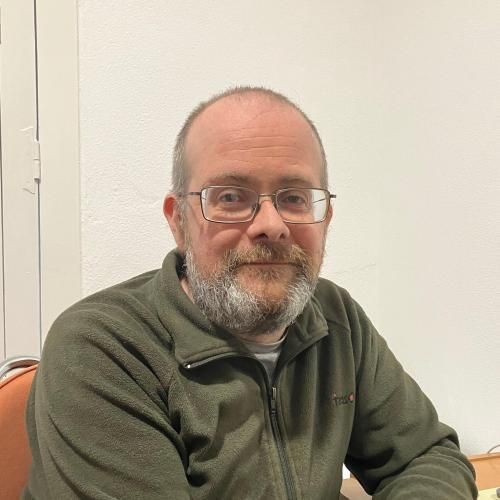
Adolfo López-Fabal is a contracted professor at the Higher Polytechnic School of Engineering within the University of Santiago de Compostela . He is affiliated with the Institute of Agricultural Biodiversity and Rural Development (IBADER) and the Strategic Grouping in Sustainable Management and Production of Bioresources (BioReDes) . His work focuses on agronomic practices for sustainable agricultural systems. Education: PhD in Agronomic Sciences from the University of Santiago de Compostela (2001) Research Interests : Dr. López-Fabal specializes in vegetable production and agronomy , with emphasis on mitigating agricultural pollution through innovative fertilization strategies and biological control methods. His current projects explore the synergistic use of compost and microbial agents like Trichoderma asperellum to combat plant pathogens. Publications & Trends : His 2015 work on Fusarium circinatum suppression in pine seedlings highlights his focus on integrating organic waste management with biocontrol agents to enhance crop resilience and reduce chemical dependency. Labs & Collaborations : He collaborates with the Agronomy and Animal Science research group, contributing to interdisciplinary initiatives in sustainable bioresource management.
Dr. Remigio Paradelo Nuñez is a university professor affiliated with the Department of Soil Science and Agricultural Chemistry at the Faculty of Biology, University of Santiago de Compostela. He contributes to the Center for Interdisciplinary Research in Environmental Technologies (CRETUS) and collaborates with the GEMAP Group for environmental studies applied to natural and cultural heritage. His research focuses on soil quality assessment, composting of industrial waste, and ecological restoration techniques. Notably, he developed methods for applying grape pomace compost in slate embankment restoration, integrating environmental sustainability with agricultural chemistry. He holds a PhD from the University of Santiago de Compostela (2009), supervised by Dr. María Teresa Barral Silva and Dr. Ana Belén Moldes Menduiña.
Douglas Hamilton is an Associate Professor in the Department of Biosystems and Agricultural Engineering at Oklahoma State University (OSU), where he has served since 2000. He is also an Extension Specialist for Waste Management with OSU Extension, a role he has held since 1995. His work bridges academic research and real-world application, focusing on environmental preservation in agricultural systems. His educational background includes a Ph.D. in Agricultural Engineering from The Pennsylvania State University (1992), an M.S. from Iowa State University (1985), and a B.S. from The University of Arkansas (1983). Dr. Hamilton's research interests are centered on organic waste treatment and nutrient recycling. He has conducted extensive applied research on anaerobic digestion, particularly the Anaerobic Sequencing Batch Reactor (ASBR) for low-solids liquids. He has also advanced knowledge in facultative lagoons, composting, and vermicomposting for solid waste. His work spans food wastes, poultry litter, and mortality composting, including developing systems for horse owners. His recent publications reflect a strong focus on improving ASBR efficiency, economic feasibility of biodigesters on swine operations, and practical extension tools for farmers. Themes across his work include sustainable energy (biogas), wastewater treatment, and innovative waste management technologies. Secretary of Agricultural Honor Award (2002) AEM First Place Student Branches Advisor (2016) Multiple Blue Ribbon Educational Aids Competition awards (2000, 2003, 2011, 2013) EMI First Place Student Branches Advisor (1999) Dr. Hamilton actively supervises graduate research and has developed specialized courses such as Comprehensive Nutrient Management Planning and Material Handling in Agricultural Waste Management. He has secured funding from USDA, Oklahoma Water Center, and Oklahoma Soybean Board. He collaborates with agencies like the California Department of Food and Agriculture and Virginia Tech on national waste management initiatives. He is also involved with the North American Manure Expo and professional societies including ASABE and North American Colleges and Teachers of Agriculture.
Allan Gunn is an Associate Professor in Large Animal Theriogenology and Production Animal Medicine at Charles Sturt University, affiliated with the School of Agricultural, Environmental and Veterinary Sciences and based in the Department of Pathobiology. He is a registered specialist in Theriogenology with the Royal College of Veterinary Surgeons (RCVS) and in Australasia, and holds multiple advanced qualifications including MANZCVS and DACT. His academic and clinical work is centered at the Wagga Wagga campus, where he actively teaches and mentors veterinary students. Education: BSc.Agric BVM&S (Veterinary Degree, University of Edinburgh) MANZCVS in Horse Medicine, Animal Reproduction, and Dairy Cattle Medicine Diplomate, American College of Theriogenology (DACT) Fellow, Higher Education Academy (FHEA) Fellow, Royal College of Veterinary Surgeons (FRCVS) Allan Gunn's research focuses on animal reproduction, particularly in dairy and production animals. His work spans reproductive physiology, semen biology, herd health, and clinical theriogenology. He applies experiential learning theories, such as Kolbe’s model, to veterinary education, emphasizing reflective practice and student agency. His publications and presentations at conferences like ANZCVS and the Society for Theriogenology reflect a consistent and impactful research trajectory. The 15 most recent articles demonstrate a strong emphasis on reproductive health in livestock, including bull semen evaluation, dystocia in goats, compost barn management, and the neuroendocrine regulation of reproduction. These works span both clinical case studies and applied research, often in collaboration with institutions like the University of Newcastle and the University of Melbourne. The keywords and sub-fields reflect deep engagement with theriogenology, dairy science, and veterinary andrology. Scientific Awards: Fellowship of the Royal College of Veterinary Surgeons (FRCVS), conferred in 2020 for meritorious contributions to clinical practice. Fellowship of the Higher Education Academy (FHEA), awarded in 2021 for excellence in teaching and educational scholarship. Allan Gunn is actively involved in mentoring and advising a wide range of students, including DACT, DVStud, Honours, Masters, and PhD candidates. He collaborates internationally and supervises research across institutions. He has secured research outputs and engagement through grants and industry partnerships, particularly in dairy herd management and reproductive technologies. His activities include invited lectures, conference participation, and public research showcases, indicating sustained academic and industry engagement. He is associated with the Gulbali Research Institute at Charles Sturt University, where his research in animal reproduction and sustainable herd management is conducted. His work involves interdisciplinary collaboration and field-based research, contributing to both academic knowledge and practical veterinary applications.
Stefano Cesco is a tenured Professor at the Free University of Bozen-Bolzano, affiliated with the Faculty of Agricultural, Environmental and Food Sciences. His research focuses on plant physiology, soil science, and sustainable agricultural practices. Key areas of investigation include nutrient cycling, microbial interactions, and the application of biotechnology for improving crop resilience. He has conducted extensive studies on plant-microbe symbiosis, heavy metal toxicity in soils, and innovative fertilization strategies using biostimulants and nano-materials. Dr. Cesco's work integrates multi-omics approaches, environmental monitoring, and interdisciplinary methodologies to address challenges in agriculture and environmental health. He has authored numerous publications on topics such as LED-light effects on plant growth, microbial biocontrol agents, and the impact of microplastics on agroecosystems. His research often emphasizes practical solutions for sustainable farming, including the use of composted organic waste and bioengineered fertilizers. His studies also explore the One Health framework, linking agricultural practices to broader ecological and human health outcomes. Notable projects include investigations into soil health in vineyards, the role of hybrid grape varieties in winemaking, and the application of advanced analytical techniques like TXRF and machine learning for plant health diagnostics.
Maria Amaya Franco Uria is a Professor at the Universidade de Santiago de Compostela , affiliated with the Department of Chemical Engineering at the Higher Technical School of Engineering . She is also part of the Instituto de Investigación do Medio Acuático para unha Saúde Global (iARCUS) . Her research focuses on sustainable waste management, environmental engineering, and biotechnology applications for industrial by-product valorization. Amaya holds a PhD in Chemical Engineering from the Universidade de Santiago de Compostela (2003), with a thesis titled "Biorreactores pulsantes para el tratamiento anaerobio-anóxico de aguas residuales de alta carga" , supervised by Dr. Juan Manuel Lema Rodicio and Dr. Enrique Roca Bordello. Her work emphasizes comparative environmental assessments of waste management strategies, particularly in fisheries. A key publication evaluates the environmental impacts of fish by-product valorization (fishmeal/oil production) versus traditional waste treatments like composting, incineration, and landfilling. This research highlights the sustainability benefits of industrial reuse over disposal methods. Amaya collaborates with interdisciplinary groups such as TIBD Tecnoloxías para o Desenvolvemento de Bioproductos Industriais and previously contributed to BIOGROUP Biotecnoloxía Ambiental . Her expertise bridges chemical engineering and environmental science, addressing global challenges in resource conservation and pollution mitigation.
Dr. Angela Davies is an Associate Professor in Textile and Garment Technology at De Montfort University, affiliated with the School of Fashion and Textiles within the Faculty of Arts, Design and Humanities. She serves as the Programme Leader for the MSc Sustainable Textile Technologies and is a core member of the Textile Engineering and Materials (TEAM) research group and the Infectious Disease Research Group (IDRG). Her educational background includes a BSc (Hons) in Clothing Design and Production (2002), a PhD in Technical Textiles (2009), and a PG Certificate in Higher Education (2016), all from De Montfort University. She is a Fellow of the Higher Education Academy. Dr. Davies' research focuses on sustainable textile development, medical and healthcare textiles, performance textiles, wearable technologies, and textile end-of-life management. Her work integrates material performance, biodegradation, and infection control, particularly in reusable hygiene and medical products. She emphasizes product durability, quality control, and innovation in sustainable textiles. The 15 most recent publications reflect a strong trajectory in sustainable and medical textiles, with key themes including biodegradation, infection control through laundering, reusable hygiene products, moisture management, and circular economy strategies. Her work bridges engineering, healthcare, and environmental sustainability, often involving interdisciplinary collaboration. Scientific awards include: Research and Teaching Awards 2023–24 – Knowledge Exchange (Leicestershire Police Force Hijab Uniform Project) Research and Teaching Awards 2023–24 – TEAM Research Team Recognition Dr. Davies is actively involved in advising PhD students and securing external funding. She serves as first supervisor for Eden Coe, Megan Melhuish, Tiffanni Trench, Katie Silver, and Irina Moreno, and as second supervisor for Jennifer Dranttel and James Stewart. Her funded projects include AHRC Design Exchange initiatives on reusable period products, ERDF-supported Quality by Design in pharmaceuticals, and the Leicester Textiles Renewal project. She leads knowledge exchange with UK businesses and public services, including Leicestershire Police and British Wool. She is actively engaged with the TEAM research group and contributes to public service innovation through consultancy, including the development of the Bluelight hijab and sustainable sportswear with Bolster.
Matt Bertucci is an Assistant Professor in the Department of Horticulture at the University of Arkansas, affiliated with the Bumpers College of Agricultural, Food and Life Sciences and the Division of Agriculture Research and Extension (DREX). He leads a field-based research program focused on sustainable fruit and vegetable production, with an emphasis on integrated weed management and soil health for specialty crop growers across Arkansas. His research spans multiple regions of the state, including Fayetteville, Hope, Batesville, Clarksville, and Kibler, ensuring regional relevance and accessibility. Dr. Bertucci is the project leader for the Northwest Arkansas Specialty Crop Soil Health Program and supports the Center for Arkansas Farms and Food (CAFF). His extension efforts include developing educational materials and workshops for county agents and growers statewide. Sustainable and Organic Horticulture (HORT 3503, Fall even years) Global Horticulture and Human Nutrition (AGED 5993/HORT 5993/FDSC 5993, Spring even years) His recent publications reflect a strong focus on herbicide efficacy and crop tolerance, particularly in blackberries, watermelon, and turfgrass, as well as soil health improvements using compost and cover crops. His work integrates environmental modeling, nutrient management in hydroponic systems, and herbicide resistance in key weeds like Palmer amaranth. Dr. Bertucci has received recognition through a productive publication record in high-impact journals such as Weed Technology , HortTechnology , and Agrosystems, Geosciences & Environment . Though no formal awards are listed, his research program is clearly impactful in applied horticulture and weed science. He advises graduate students through research leadership and teaching, and his current projects include compost use in tomato production, soil health improvement, roadside vegetation management, herbicide tolerance in blackberries, and specialty crop variety trialing. He collaborates with extension agents and researchers across disciplines to support small and specialty crop farms in Arkansas. Dr. Bertucci's work is conducted through a statewide network of research plots and extension partnerships, emphasizing practical, scale-neutral solutions for growers. His lab and team focus on field experimentation, data analysis, and outreach to ensure research findings are accessible and actionable for farmers and stakeholders.
Dr. Fuad Khoshnaw is a Senior Lecturer at the School of Engineering and Sustainable Development, De Montfort University (DMU), UK, within the Faculty of Computing, Engineering and Media. He holds a PhD in Mechanical and Manufacturing Engineering from Loughborough University and earlier degrees from the University of Technology, Baghdad, Iraq. He is also a Senior Fellow of the Higher Education Academy and a Chartered Engineer (CEng, MIET). His research expertise spans welding technology, corrosion engineering, surface protection, fracture mechanics, and additive manufacturing. He has published over 80 papers and edited six books, particularly in corrosion and welding. He has led and contributed to externally funded research projects, including a FNRS-funded project in Belgium and a GCRF grant focused on education for refugee children. Dr. Khoshnaw teaches key engineering modules such as Structural Integrity, Materials Engineering, and Corrosion. His recent publications (2021–2025) focus on biomaterials, tribocorrosion, plasma electrolytic oxidation, and welding integrity, reflecting a strong trend in surface engineering and biomedical applications. These works often appear in journals like Materials , Coatings , and Materials Today Communications . His scientific recognition includes: Chevening Scholar (2005), London Business School Senior Fellow of the Higher Education Academy (UK) As a dedicated academic, Dr. Khoshnaw serves on editorial boards, reviews for journals and books, and has contributed to international research collaborations. He has advised on research grants and mentored students, though specific advisees are not listed. He is actively involved in research groups such as the Institute of Engineering Sciences (IES) at DMU.
Adriana Artola Casacuberta is a Professor in the Department of Chemical, Biological and Environmental Engineering at Universitat de Girona. She leads research in solid-state fermentation, organic waste management, and biopesticide development as part of the BRAVE research group (Grup de recerca en tecnologies de (Bio) Remediació Ambiental i Valorització d'Efluents residuals). Her educational background includes: Ph.D. in Industrial Engineering from Universitat de Girona (1999) Master's in Biotechnology from Universitat Autònoma de Barcelona (1992) Degree in Chemical Sciences from Universitat Autònoma de Barcelona (1990) Dr. Artola's research focuses on sustainable waste management solutions, particularly in solid-state fermentation technologies for producing value-added products from organic waste streams. Her work spans composting processes, biopesticide development, biorefinery concepts, and circular economy applications in agriculture. She has developed innovative approaches for converting organic waste into biostimulants, biofertilizers, and biopesticides, contributing to more sustainable agricultural practices. Her recent publications demonstrate a strong focus on applying solid-state fermentation techniques to address environmental challenges, particularly in developing bio-based solutions for agricultural applications and waste valorization. Her research shows consistent growth in impact, with numerous publications and citations in the field of environmental engineering and waste management. Scientific contributions: Principal Investigator for Soil&WineResidues project (2025-2028) Investigator for SOLID-STATE FERMENTATION FOR CIRCULAR BIOECONOMY project (2024-2028) Investigator for FertiLab project (2022-2025) Investigator for SQUEEZER project (2022-2024) Investigator for BIOSURFACTANTES GLICOLIPIDOS project (2021-2024) Dr. Artola has supervised numerous students throughout her career, with 24 supervised works documented. She has secured significant research funding through multiple national and international projects, demonstrating her leadership in the field of environmental engineering and waste valorization. Her research group BRAVE focuses on developing sustainable solutions for environmental remediation and waste stream valorization. Her laboratory work centers on solid-state fermentation technologies, with applications in biopesticide production, biostimulant development, and organic waste conversion. The BRAVE research group maintains strong collaborations with other institutions across Europe, contributing to a network of researchers working on circular economy solutions for environmental challenges.
Antonio Sanchez Ferrer is a Professor in the Department of Chemical, Biological and Environmental Engineering at the Autonomous University of Barcelona (UAB), where he leads the Grup de recerca en tecnologies de (Bio) Remediació Ambiental i Valorització d'Efluents residuals (BRAVE) research group. His academic journey includes positions as Professor Titular d'Escola Universitària at the Escola Universitària Politècnica del Medi Ambient (1998-2005), CIRIT Fellow with the Government of Catalonia (1996-1998), and Process Researcher at Purac Bioquímica SA (1993-1994). Dr. Sanchez Ferrer earned his Ph.D. in Chemical Sciences from UAB (1998), following a Master's in Biotechnology (1996) and a Degree in Chemical Sciences with specialization in Industrial Chemistry (1993), all from UAB. His research fingerprint highlights key areas including Solid-state Fermentation (100%), Composting Process (68%), Organic Fraction of Municipal Solid Waste (64%), Organic Waste Management (54%), and Anaerobic Digestion (39%). His research program addresses critical environmental challenges through innovative waste valorization approaches. Current projects include CirBioWaste (focusing on Mediterranean bio-waste management), Soil&WineResidues (sustainable vineyard soil management), and Nano4PAnMBR (nanomaterial-aided enhancement for anaerobic membrane bioreactors). His recent publications demonstrate a clear trend toward practical, community-scale applications of waste management technologies, with particular emphasis on composting processes, gaseous emissions control, and circular bioeconomy models. With over 330 research outputs and an h-index of 68, Dr. Sanchez Ferrer has established himself as a leading authority in sustainable waste management. His work bridges fundamental science with practical implementation, particularly in Mediterranean climate contexts where water scarcity and organic waste management present unique challenges. Dr. Sanchez Ferrer has supervised 27 students throughout his career, mentoring the next generation of environmental engineers and researchers. His laboratory work focuses on developing scalable solutions for biowaste valorization, with recent emphasis on community composting initiatives and advanced treatment technologies for organic residues.
Linden Greenhalgh is an Extension Professor at Utah State University's Agriculture, Natural Resources, and 4-H programs in Tooele County. With over 15 years of experience in agricultural extension, he has been actively involved in youth education, rangeland management, and livestock production initiatives. Current academic rank: Professor Key departments: Agriculture, Natural Resources, 4-H Active programs: Beef Quality Assurance (2010-present), Horticulture (2021), 4-H Youth Development (2005-2021) Research Focus: Range Management Animal Science education for youth Forage crop development (particularly forage kochia) Biosolids applications for rangeland improvement Beef cattle production systems Community-based agricultural extension Publication Trends: His work spans 15+ years, focusing on rangeland management (forage kochia establishment), beef cattle production (risk management, synchronization of estrus), youth agricultural education (4-H programs), and sustainable soil management (biosolids and compost applications). The publications show a consistent commitment to practical agricultural solutions and youth development in rural Utah. Awards and Honors: National Association of County Agriculture Agents Poster Contest - State Winner (2015) Achievement Award, National Association of County Agricultural Agents (2011) Utah Conservation Commission recognition (2010) Utah Department of Agriculture and Food Achievement In-Service Award (2010) International Service Award, Epsilon Sigma Phi, Iota Chapter (2010) Utah Rural Summit Award (2009) Western Extension Directors' Awards of Excellence (2008) Community Involvement: Greenhalgh plays a pivotal role in the Tooele County 4-H program, overseeing volunteer initiatives, youth livestock shows (including the annual Jr. Livestock Show & Sale at Deseret Peak), and educational programs in agriculture, gardening, and family sciences. He's also integral to the Master Gardener volunteer program and community gardening initiatives.