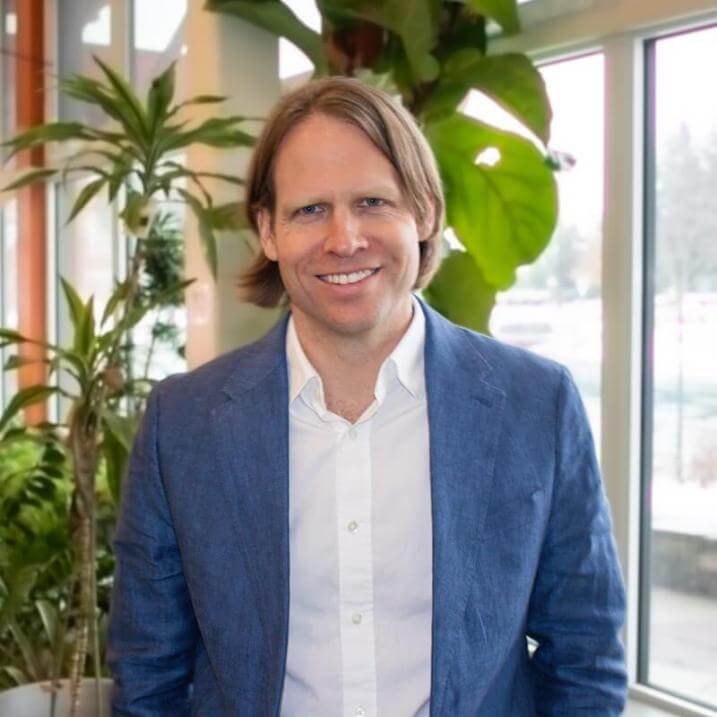
Eric Roy is an Associate Professor at the Rubenstein School of Environment and Natural Resources, University of Vermont, and Director of the Casella Center for Circular Economy and Sustainability. He is also a Fellow at the Gund Institute for Environment. His research focuses on nutrient cycling, biogeochemistry, and ecological engineering to design sustainable systems for nutrient management in food, waste, and water systems. Education: Ph.D. in Oceanography & Coastal Sciences from Louisiana State University (2013), M.S. in Food, Agricultural & Biological Engineering from Ohio State University (2008), and B.S. in Mechanical Engineering from Old Dominion University (2006). Research interests include nutrient stewardship, circular bioeconomy, and nature-based solutions. His work integrates lab and field studies with modeling to explore nutrient dynamics in engineered, urban, and agricultural ecosystems. Key themes include improving nutrient use efficiency in food systems, resource recovery, and green infrastructure design. Teaching emphasizes ecological design in water quality, waste management, and food systems. His recent publications highlight advancements in phosphorus retention modeling, floodplain function analysis, and composting system optimization. He leads the Nutrient Cycling and Ecological Design Lab, advancing interdisciplinary solutions for environmental sustainability.
Nanna Bloch Hartmann is a senior researcher at DTU Sustain (Technical University of Denmark) since 2015. She holds a PhD in ecotoxicology from DTU (2011) and has held postdoctoral roles at DTU Environment (2013–present), the European Commission’s Joint Research Centre (2011–2013), and Edinburgh Napier University (2009). Her research focuses on the environmental fate and effects of micro- and nanoplastics, with expertise in ecotoxicology, technical systems, and science communication. Education: PhD in Ecotoxicology, DTU (2007–2011) Guest PhD student, Edinburgh Napier University (2009) Research Interests: Mechanistic understanding of micro/nanoplastics’ fate, degradation, and effects in aquatic and technical systems Science communication to regulators, media, and the public Contributions to UN Sustainable Development Goals (SDGs 6, 12, 14). Grants & Projects: Combat Microplastics Pollution in the Baltic Sea (2024–2027) Sustainable Industrial Laundry Wastewater Treatment (2023–2027) Risk Evaluation of Micro/Nanoplastics (2022–2026) Recognition: Listed among Stanford’s top 2% global scientists (2021–2022). Active in promoting gender equality through roles in DTU’s Women in Engineering Science network and Equality Steering Group (2015–2018).
Anusuya Rangarajan is a Senior Extension Associate and Director of the Cornell Small Farm Program at Cornell University’s School of Integrative Plant Science, Horticulture Section. She specializes in sustainable farming practices, particularly reduced tillage and soil health management for vegetable production, and urban agriculture. Doctorate, Michigan State University (1995) Master of Science, University of Wisconsin (1989) BA/BS, Michigan State University (1986) Her research focuses on sustainability in vegetable production systems, emphasizing reduced tillage, cover crops, and compost to enhance soil health without compromising yield or quality. She collaborates with colleagues across the Northeast and Midwest, exploring impacts on weed and pest management, soil biology, and profitability. The selected articles reflect her expertise in sustainable agriculture, including organic practices, conservation tillage, and urban farming. Key themes include optimizing soil health, balancing ecological and economic viability, and adapting agricultural strategies to small-scale systems. As Director of the Cornell Small Farm Program, she organizes the biennial Small Farm Summit, secured competitive grants for beginning farmer development, local food systems, veterans in agriculture, and soil health initiatives. She leads a team of seven staff members, collaborating with Cornell Cooperative Extension and non-profits to deliver workshops, webinars, and educational materials.
Peter Irga is a Senior Lecturer and ARC DECRA Fellow at the University of Technology Sydney's School of Civil and Environmental Engineering, Faculty of Engineering and Information Technology. He is globally recognized as a leader in nature-based biological air treatment technologies, particularly green wall systems (Phytosystems), with current worldwide ranking #1 in his research topic (SciVal Topic T.37087). Dr Irga's research focuses on innovative nature-based solutions for urban air pollution challenges, including phytoremediation technologies, biosolar green roofs, and agrivoltaics. His work bridges environmental engineering with practical urban applications, examining the performance of nature-based systems in real-world settings to quantify their value and identify development opportunities. His research demonstrates how living infrastructure provides cities with natural beauty while improving human health and wellbeing, addressing UN Sustainable Development Goals 11 (Sustainable Cities), 13 (Climate Action), 15 (Life on Land), and 3 (Good Health). His research portfolio includes 80+ publications with an H-index of 30 and $5.21M in research income, including ARC funding. Industry recognition includes $4.54M in high-level consultancies. His work spans multiple disciplines including atmospheric science, environmental engineering, and sustainable materials development, with particular emphasis on practical implementation of green infrastructure solutions in urban settings. Tall Poppy Science Award (2022) from the Australian Institute of Policy and Science ARC DECRA Fellow (2021-2024) Chancellor's Postdoctoral Research Fellow (2018-2021) Dr Irga actively supervises Masters and PhD students and coordinates Postgraduate Environmental Engineering and Water Engineering programs. His funded research includes Sustainable High-Performance Transitory Structures using Biobased Materials (2025-2026), Bradfield Green and Bio-Solar Roof Monitoring (2025), and Plantabox for Targeting the Urban Heat Island Challenge (2024-2025). He collaborates with industry partners including Junglefy, Ambius, Bradfield Development Authority, and City of Sydney.
Marilia Chiavegato is an Assistant Professor at The Ohio State University, holding a split appointment in the Department of Animal Sciences and the Department of Horticulture and Crop Science. She specializes in agroecosystem sustainability, focusing on crop-livestock integration, grazing systems, and environmental impact assessment. Her work emphasizes climate change adaptation through multi-year analysis of large-scale datasets. Education: Ph.D. in Animal Sciences, Michigan State University (2014) M.S. in Applied Chemistry to Agriculture and the Environment, University of São Paulo (2010) B. Eng. in Agronomic Engineering, University of São Paulo (2008) Research Interests: Resilience of agroecosystems under climate change Greenhouse gas emissions monitoring Grazing management strategies Integrated crop-livestock systems Soil carbon sequestration Recent Work Trends: Dr. Chiavegato’s research bridges field-scale analysis with environmental pressures, focusing on mitigating emissions while enhancing productivity. Recent studies include grazing management’s impact on methane/nitrogen dynamics and biochar’s role in sustainable agriculture. Advising & Grants:** Advises students in Animal Sciences and Horticulture/Crop Science. Research funding sources include USDA grants and collaborative initiatives on sustainable farming. Labs/Teams:** Collaborates with Ohio State’s Agricultural Research and Development Center and Extension programs to translate research into practical farm solutions.
Professor Luke Connal is a full professor at the Research School of Chemistry at the Australian National University (ANU), where he leads the Connal Group. He joined ANU in 2017 after serving as a Senior Lecturer at the University of Melbourne. Currently, he holds an ARC mid-career industry fellowship and serves as the chair of the Royal Australian Chemical Institute (RACI) polymer division. Professor Connal is also an associate editor for the Royal Society of Chemistry journal "Molecular Systems Design and Engineering" and co-founder of two spin-out companies focused on polymer technologies. Professor Connal received his Bachelor of Chemical Engineering and PhD in polymer chemistry from the University of Melbourne, Australia. Following his doctoral studies, he completed a post-doctoral position with Professor Frank Caruso at the University of Melbourne, developing new techniques for the self-assembly of polymers. He then held a joint Sir Keith Murdoch postdoctoral Fellowship and Australian Linkage International Fellowship at the University of California, Santa Barbara, working with Professor Craig Hawker. Professor Connal's research focuses on the development of molecular design concepts to create new materials for diverse applications, including artificial skin and tissues, sustainable polymers and surfactants, additive manufacturing electronics, and water harvesting. His core competencies center around advanced polymer design, self-assembly, and catalysis . His group explores four main research themes: Catalysis, Functional Materials and Interfaces, Soft Matter, and Supramolecular Chemistry . They develop innovative materials such as enzyme-inspired polymer catalysts, smart polymers for 3D printing, and polymer electrolytes for energy storage applications. Analysis of Professor Connal's recent publications reveals a strong focus on developing biomimetic materials and responsive polymers. His work bridges fundamental polymer chemistry with practical applications in environmental remediation, healthcare, and sustainable technologies. A notable trend is the increasing emphasis on CO2 capture technologies through enzyme-inspired catalysts and hydrogel systems. His group has also made significant contributions to 3D printing of functional materials , particularly self-healing gels and pH-responsive polymers. The research demonstrates a consistent trajectory toward creating smart, responsive materials with applications addressing global challenges in sustainability and healthcare. David Syme Research Prize (2020) Grimwade Prize in Industrial Chemistry (2019) Professor Connal actively supervises multiple PhD students including Lilian Boton, Jason Buchanan, Sandra Jestin, Saif Rahaman, Peidong Shen, Ming Li Tan, Moki Thanusing, and Jekaterina Viktorova. His current research is supported by several significant grants including projects on sustainable and compostable plastic alternatives, multimaterial 3D printed antenna arrays, developing vitrimers as next-generation reusable plastics, multi-material 3D printing, and smart materials for atmospheric water management. These projects demonstrate his commitment to translating fundamental polymer research into practical solutions for environmental and technological challenges. The Connal Group at ANU operates at the intersection of polymer chemistry and materials science, developing innovative solutions across multiple domains. Their laboratory work focuses on creating new polymers with applications spanning artificial skin development, sustainable packaging alternatives, atmospheric water harvesting, and advanced electronics. The group's unique approach combines biomimicry principles with cutting-edge polymer synthesis techniques to create materials with precisely controlled properties. Current projects include developing strong and self-healing polymer materials for biological applications, expanding 3D printing capabilities for functional materials, creating fully recyclable or compostable plastics, and designing thermoresponsive polymer desiccants for sustainable water harvesting.
Professor Nicole Koenig-Lewis is a leading academic in Marketing at Cardiff Business School , with affiliations to the Centre for Climate Change and Social Transformations (CAST) and the International Society for the Circular Economy (IS4CE) . Her career spans over two decades, including roles at Swansea University and Cardiff University, culminating in her current professorship since 2023. Professor of Marketing - Cardiff Business School (2023-present) Reader in Marketing - Cardiff Business School (2018-2023) Senior Lecturer - Cardiff Business School (2016-2018) Research Focus : Her work bridges Sustainable Consumption , Access-Based Consumption , and Consumer Behavior Change , particularly through Sport/Cultural Events and Circular Economy frameworks. Recent projects include developing sustainability toolkits for rugby events and analyzing the psychological drivers of eco-packaging adoption. Publication Trends (2025-2019): Over 40 publications in journals like Journal of Business Research , European Journal of Marketing , and Journal of Environmental Psychology , with recurring themes in Behavioral Indicators , Event Sustainability , and Circular Consumption . Scientific Recognition : Recipient of multiple ESRC/UKRI grants, Outstanding Contribution Awards , and Best Paper Prizes . Notably led interdisciplinary teams to Highly Commendable 'Outstanding Partnership Impact' (2025) and 'Excellence in Environmental Sustainability' (2022) . Supervised 9 PhD students (current and past) Co-led 7 sustainability toolkits/conference impact projects Contributed to Routledge Companion to Marketing & Sustainability (2025) Labs & Collaborations : Co-founded the Cardiff University Festival Research Group , collaborating with organizations like The R&A , Pledgeball , and Welsh Government to transform events into sustainability catalysts. Currently mentors 4 active PhD students in circular economy and behavioral change.
Prof. Wojciech Sobieski is a faculty member at the Department of Mechanics and Fundamentals of Machine Design within the Faculty of Technical Sciences at the University of Warmia and Mazury in Olsztyn . His research focuses on fluid mechanics, numerical modeling, and porous media analysis, with applications in environmental engineering, hydraulic systems, and 3D printing. Academic Rank: Professor Scientific Discipline: Mechanical Engineering Key Research Areas: Tortuosity Analysis, Multiphase Flow, DEM Simulations His recent publications highlight advancements in computational methods for granular porous media, fluid flow modeling, and thermodynamic applications. Notable trends include the use of the Waterfall Algorithm for geometric analysis and sensitivity studies of numerical models like the Eulerian multiphase approach. He has contributed to understanding Forchheimer's laws and cavitation phenomena in hydraulic systems. Prof. Sobieski oversees the PathFinder Project , a research initiative focused on numerical modeling of porous media. His laboratory maintains infrastructure for multiphase flow simulations and particle-scale modeling. He has supervised 2 doctoral students to completion but currently has no active advisees.
Mariam Abdulkareem is a Postdoctoral Researcher at the School of Energy Systems, Lappeenranta University of Technology (LUT), specializing in Sustainability Science, with additional affiliation at the Natural Resources Institute Finland (LUKE). Her work bridges environmental technology and practical sustainability solutions for industrial and municipal systems. Her academic foundation includes: Doctoral degree in Sustainability Science from Lappeenranta University of Technology (2018-2021) Master's degree in Sustainability Science from Lappeenranta University of Technology (2015-2017) Dr. Abdulkareem's research centers on environmental technology and circular economy implementation , employing advanced life cycle assessment (LCA) methodologies to evaluate waste management systems, sustainable materials, and renewable energy integration. She focuses on quantifying environmental trade-offs in emerging technologies like printed electronics and industrial by-product valorization, with particular emphasis on end-of-life management and resource efficiency optimization. Her cross-disciplinary approach integrates ecological modeling with engineering solutions to address real-world sustainability challenges. Analysis of her 15 most recent publications (2021-2025) reveals a concentrated research trajectory in waste valorization and sustainable materials , with dominant themes including LCA of printed electronics waste streams, geopolymer concrete development from industrial side streams, and comparative analysis of recycling versus incineration pathways. Her work consistently applies multi-objective optimization frameworks to balance environmental performance, economic feasibility, and technical functionality across diverse regional contexts.
Prof Long D. Nghiem is a Professor and Director of the School of Civil and Environmental Engineering at the University of Technology Sydney (UTS), and Director of the Centre for Technology in Water and Wastewater (CTWW). He holds a PhD in Environmental Engineering from the University of Wollongong and has held academic positions at institutions including the University of Wollongong, Technical University of Munich (as August-Wilhelm Scheer Visiting Professor), and Colorado School of Mines. His research focuses on water treatment technologies, membrane science, anaerobic digestion, and sustainable resource recovery. Prof Nghiem has supervised 20 PhD and 8 MPhil students. His funded research includes grants totaling over $3 million, addressing topics such as advanced water treatment, biomethane production, and microplastic filtration. He has received awards like the UOW Vice Chancellor Award for Research Partnership and Impact (2017), and the Excellence in Reviewing Award from Environmental Science: Water Research Technology (2016). His research interests span membrane separation processes (e.g., forward osmosis, membrane distillation), water purification, and microbial strategies for waste management. He leads projects on resource recovery from wastewater and innovative technologies for addressing global water challenges. His work emphasizes practical applications, such as converting food waste into energy and developing eco-friendly biolubricants from microalgae. Education: PhD in Environmental Engineering, University of Wollongong (2004–2005) MSc in Education, University of Wollongong (2008–2010) BEng in Environmental Engineering, UNSW Australia (1998–2002) Affiliations: Editorial Board Member of Environmental Science: Water Research Technology Section Editor of Current Pollution Reports Prof Nghiem’s lab (CTWW) develops cutting-edge solutions for water and wastewater challenges, including solar-driven desalination, photocatalytic pollutant degradation, and microplastic removal technologies. His interdisciplinary approach bridges engineering, chemistry, and microbiology to create scalable, sustainable environmental solutions.
Professor Feike Dijkstra is a Professor in Terrestrial Biogeochemistry at the University of Sydney's School of Life and Environmental Sciences. He joined the university in 2010 and holds a prestigious ARC Future Fellowship (2011-2015). His affiliations include the Sydney Institute of Agriculture and the Centre for Carbon, Water and Food. Feike Dijkstra obtained his PhD in 2001 and MSc in 1996 from Wageningen University in the Netherlands. Prior to his current position, he worked at the US Department of Agriculture (2007-2010), and as a postdoc at the University of California, Santa Cruz (2004-2006), and the University of Minnesota (2001-2004). His research focuses on understanding carbon, nitrogen, and phosphorus dynamics in grasslands, forests, and agroecosystems. Key areas include: Plant-microbial interactions and their impact on nutrient cycling Effects of global climate change on ecosystems Soil organic matter decomposition and stabilization Role of root exudates and rhizosphere processes Carbon sequestration strategies and soil health Recent publications highlight advancements in understanding soil carbon dynamics under acidification, nitrogen retention mechanisms, and the role of microbial activity. Research also explores the effects of grazing and environmental changes on greenhouse gas emissions and nutrient cycling in diverse ecosystems. Awards: ARC Future Fellow (2011-2015) He advises students on projects such as drought impacts on root plasticity, iron oxides in soil organic matter preservation, and phosphorus availability in intercropping systems. His work contributes to interdisciplinary initiatives in sustainable land management and climate resilience through affiliations with the Centre for Carbon, Water and Food.
Rossana Bellopede is an Associate Professor at the Politecnico di Torino, affiliated with the Department of Environmental, Land and Infrastructure Engineering (DIATI) . She leads the Raw Materials (DIATI) laboratory and contributes to projects like CITERIA (critical raw material recovery) and SHOWCAVE (tourist cave impact mitigation). Her roles include coordinating PhD programs in Civil and Environmental Engineering and teaching courses on Circular Economy , Natural Stone Characterization , and Occupational Safety . Research focuses on solid waste recovery (tunnel muck, mining tailings) natural stone durability (weathering, bowing phenomena) microplastic pollution (karst systems, groundwater, caves) asbestos testing (industrial safety) Recent publications examine textile wastewater microfibers (2025), microplastic transport in karst environments (2025), and critical raw material recovery techniques (2025). Her work aligns with SDG 12 (Responsible Consumption) and SDG 11 (Sustainable Cities). Scientific participations include Advisor for ANIM (National Mining Engineers Association) Organizing committee of Heritage Stones Workshop (2021) Research network PROMETIA (2018-2025) She manages commercial projects like CE marking for Piasentina Stone , develops FAST4C circular textiles protocols (2024-2028), and supervises PhD candidates studying microplastic pollution in karst systems stone durability mechanisms sustainable construction materials
Lindsey Slaughter is an Associate Professor in the Department of Plant and Soil Science at Texas Tech University's Davis College. Her work focuses on soil microbial ecology and biochemistry, with a specialization in soil health and ecosystem function in semi-arid systems. Dr. Slaughter earned her Ph.D. in Soil Science from the University of Kentucky, preceded by a Master’s in Plant and Soil Sciences from the same institution and a Bachelor’s in Natural Resource Management from the University of Tennessee-Martin. She teaches undergraduate and graduate courses including Principles and Practices in Soils and Advanced Soil Microbial Ecology . Her research examines how environmental disturbances (e.g., water/nutrient scarcity, urban development) and agricultural practices (e.g., grazing, crop production) influence soil microbial communities, with implications for carbon sequestration, greenhouse gas emissions, and drought resistance. She frequently targets arbuscular mycorrhizal fungi (AMF) and employs microscopy and biochemical analyses to study plant-microbe-soil symbioses. Key research themes: Soil microbial ecology, nutrient cycling, conservation agriculture, climate change adaptation. Recent article trends: Publications emphasize tillage impacts on microbiomes, climate mitigation in cotton systems, AMF dynamics under elevated CO2, and urban soil microbial composition. Labs & Teams: Slaughter Soil Ecology Lab investigates microbial responses to conservation strategies, climate change, and agricultural practices in semi-arid ecosystems. Collaborates with institutions like the Universidade Federal de Lavras (Brazil) through student exchange programs. She advises Ph.D. and Master’s students and has mentored award-winning presentations at the PSS Student Research Symposium and SSSA meetings.
Professor Simon Pollard OBE DIC PhD DSc FREng FHEA is a Professor of Environmental Risk Management at Cranfield University's School of Water, Energy and Environment. With over 20 years of service at Cranfield, he has held numerous leadership positions including Pro-Vice Chancellor for the School of Water, Energy and Environment (2014-2021) and Pro-Vice-Chancellor International (2018-2024). He has served on the University's Executive for a decade and chaired key committees including Cranfield's Board for Energy and Environment, Health and Safety Committee, and International Committee. As an environmental engineer, Professor Pollard earned his PhD from Imperial College and his DSc from Cranfield University. His academic journey has positioned him as a leading authority in environmental risk governance, with significant contributions to government guidelines on environmental risk and leadership of risk centers for EPSRC and NERC. Professor Pollard's research focuses on environmental risk governance, preventative risk management, and regulatory design, with recent work exploring risk governance in the international water sector. His scholarship directly addresses the green economy, seeking to reconcile society's concerns about pollution with organizational responsibilities for safe management. His work spans carbon and climate risk, environmental policy, corporate sustainability, waste management, and resource efficiency. His extensive publication record demonstrates expertise across environmental engineering, risk assessment methodologies, water utility management, and sustainable waste practices, consistently bridging theoretical frameworks with practical applications. Professor Pollard has been honored with several prestigious awards including: Order of the British Empire (OBE) in 2020 Fellowship of the Royal Academy of Engineering (FREng) Fellowship of the Higher Education Academy (FHEA) Professor Pollard has served in numerous advisory capacities beyond academia, including membership on the Government's Interdepartmental Liaison Group on Risk Assessment, the joint engineering institutions' Hazards Forum, and BBSRC's Beringer Panel. As editor of Science of the Total Environment for 16 years, he has significantly influenced environmental research publication standards. His international engagement includes visiting professorships at the University of South Australia, Jiangsu University, and most recently, the University of Salerno (2024). Professor Pollard has led significant initiatives in responsible internationalization, resetting Cranfield's approach to academic partnerships amid changing geopolitical climates and renewing the university's approach to knowledge diplomacy. His work has directly influenced UUKi's commitment to international postgraduate education.
Paul Rainey is a Professor and Director of the Department of Microbial Population Biology at the Max Planck Institute for Evolutionary Biology in Plön, Germany. He also serves as Professor at ESPCI Paris and holds an adjunct position at the New Zealand Institute for Advanced Study (NZIAS). His research spans microbial evolution, ecological scaffolding, and biophysics, supported by the Max Planck Society and collaborations across institutions. University of Canterbury – BSc, MSc, PhD Paul's research focuses on experimental evolution, ecological complexity, and the emergence of individuality in microbial systems. Recent work explores evolutionary rescue, biophysical mechanisms of surface colonization, and the interplay between ecological and genetic factors in adaptation. His publications highlight interdisciplinary approaches, merging microbial ecology with theoretical frameworks for evolutionary transitions. Key themes include stochastic phenotype switching, genome streamlining, and the role of environmental structure in shaping evolutionary trajectories. Fellow of the Royal Society of New Zealand Member of EMBO Paul leads the Laboratory for Evolutionary Genetics at ESPCI Paris and collaborates with institutions like Kiel University and the CRC 1182. His work addresses microbial community dynamics, evolutionary medicine, and the broader implications of eco-evolutionary feedback in biological systems.