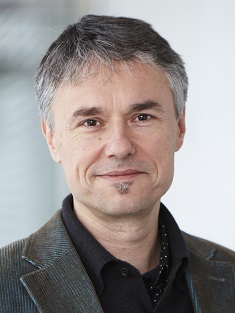
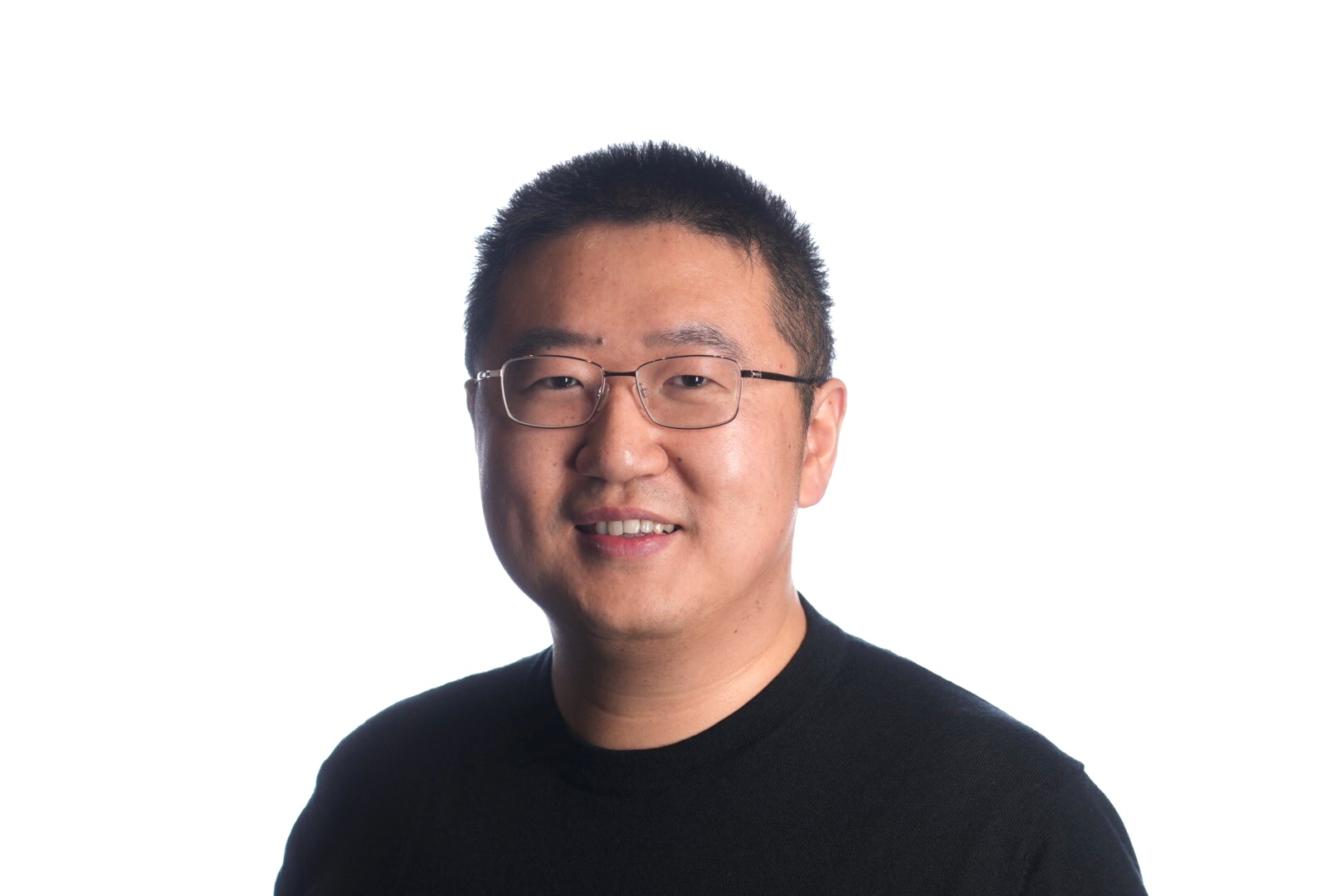
Baike She is a Postdoctoral Fellow at the School of Electrical and Computer Engineering, Georgia Institute of Technology. Their research focuses on interdisciplinary topics at the intersection of control theory, network science, and epidemiological modeling. Key areas include epidemic spread analysis, distributed systems optimization, and privacy-preserving algorithms for networked models. Research interests emphasize mathematical frameworks for analyzing complex systems, including compositional control approaches (e.g., LQR analysis via category theory), robust epidemic control strategies, and leveraging differential privacy in sensitive data computations. Work spans both theoretical developments and applied methodologies for real-world systems such as SIR/SIS epidemic models and infrastructure networks. Recent publications (2022-2025) highlight contributions to distributed reproduction number computation, optimal epidemic mitigation under uncertainty, and the integration of opinion dynamics with vaccination strategies. Methodologies include Gaussian process regression, dissipativity theory, and model predictive control frameworks. No specific awards or grants are explicitly listed in the provided texts. Advising roles and laboratory affiliations remain unspecified based on available information.
Kentaro Inui is a distinguished researcher at Tohoku University , specializing in Natural Language Processing , Computational Linguistics , and Machine Learning . His work focuses on advancing language model behavior through rigorous empirical analysis, including mechanisms for detokenization , entity identification , and numerical reasoning . Inui has pioneered methods to rectify spurious beliefs in LLMs via unlearning techniques and explored the dynamics of reasoning strategies in neural models. His research addresses chat translation quality through metrics like MQM-Chat and investigates repetition neurons responsible for text generation patterns. Inui also contributes to argumentation analysis with annotation frameworks like LPAttack and develops resources such as COPA-SSE for commonsense reasoning. His work on universal graph-based relation extraction and cross-stitching architectures has established new benchmarks in NLP task performance. Inui's publications span top-tier conferences including ACL , EMNLP , and LREC , often involving collaborations with researchers like Benjamin Heinzerling and Jun Suzuki. His methodological innovations in semi-structured explanation generation , position embedding (e.g., SHAPE), and zero pronoun resolution demonstrate his focus on both theoretical and practical NLP challenges. While no direct awards or student mentorship data appear in the provided corpus, his extensive publication record (over 20 papers between 2021-2025) underscores significant contributions to NLP education tools , knowledge base integration , and dialogue system consistency . Current projects like ReCall mechanisms and numerical property encoding directions highlight his ongoing impact on model interpretability and reasoning accuracy.
Dan Moldovan is a Professor in the Department of Computer Science at The University of Texas at Dallas, within the Erik Jonsson School of Engineering and Computer Science. He leads the InterVoice Research Center in the Human Language Technology Research Institute and has played a pivotal role in advancing question answering technologies, achieving top performance in multiple TREC evaluations (TREC-8 to TREC-13). Education: Ph.D. in Electrical Engineering and Computer Science, Columbia University (1978) M.S. in Electrical Engineering and Computer Science, Columbia University (1974) Diploma Engineer in Electrical Engineering, Polytechnic Institute of Bucharest (1969) His research centers on Natural Language Processing and Artificial Intelligence , with major contributions in Question Answering Systems , Knowledge Acquisition from Text (KAT) , Word Sense Disambiguation , and Semantic Indexing and Retrieval . He has developed systems to enrich WordNet with domain knowledge and transform it into a logical knowledge base. His work also explores distributed and parallel processing for scalable NLP algorithms. The recent publications (2005–2007) highlight his focus on semantic reasoning, multilingual QA, validation of answers using logic provers like COGEX, and the semantics of noun compounds. These works reflect a strong trend toward deep semantic understanding, contextual reasoning, and integration of logic in NLP systems. Scientific Awards: Best performance in TREC-8 (1999), TREC-9 (2000), TREC-11 (2002), TREC-12 (2003), and TREC-13 (2004) QA competitions Dan Moldovan has advised numerous research projects and led major initiatives such as Extended WordNet and the development of PowerAnswer. He has secured significant research support through appointments and leadership roles across institutions. His work in distributed NLP and parallel processing of rule-based systems reflects a long-standing interest in scalable AI architectures. He has directed several key research labs: InterVoice Research Center, UTD Parallel and Distributed Computer Systems Laboratory, University of Southern California Parallel Knowledge Processing Laboratory, University of Southern California
Dr. Shufang Zhu is a Lecturer (Assistant Professor equivalent) at the Department of Computer Science, University of Liverpool , and an Associate Member at the University of Oxford’s Department of Computer Science . Previously, she held roles including Senior Research Associate at Oxford (2023–2024) and Postdoctoral Researcher at Sapienza Università di Roma (2020–2022). She earned her Ph.D. in Software Engineering from East China Normal University (ECNU, 2020) under Prof. Geguang Pu, with a visiting Ph.D. at Rice University (2016–2018) under Prof. Moshe Y. Vardi. Education: B.Sc./Ph.D. in Software Engineering from ECNU (2010–2020). Scholarships include the Chinese Scholarship Council (CSC) and UT Austin EECS Rising Star (2022). Her research focuses on interdisciplinary areas of Formal Methods and Artificial Intelligence , emphasizing automated reasoning, planning, and synthesis. Key topics include temporal logics (LTL/LTLf), symbolic synthesis frameworks, and applications in reactive systems. Notable work addresses finite-trace specifications, best-effort strategies, and coordination in multi-agent systems. Teaching: Lecturer for Game-Theoretic Approach to Planning and Synthesis (European Summer School) and Foundations of Self-Programming Agents (Oxford). She also supervises funded Ph.D. positions, including a 2025 deadline for CSC-Liverpool scholarships. Awards: Future Digileader (Digital Futures, 2023), UT Austin EECS Rising Star (2022). Erdős number ≤3 via Moshe Y. Vardi. Collaborations: Co-chair of AAAI 2023 symposium on temporal logics in AI. Active in open-source tools like LydiaSyft for LTLf synthesis. Engages with academic networks through Google Scholar, DBLP, and GitHub.
Ueli Maurer is a Full Professor of Computer Science at ETH Zurich and heads the Information Security and Cryptography research group. He received his diploma and Ph.D. in Electrical Engineering from ETH Zurich in 1985 and 1990 respectively. After a fellowship at Princeton University, his research focuses on foundational aspects of cryptography and information security. Education Diploma in Electrical Engineering, ETH Zurich (1985) Ph.D. in Electrical Engineering, ETH Zurich (1990) DIMACS Research Fellow, Princeton University (1990-1991) His research spans information security, cryptographic protocols, discrete mathematics, and theoretical computer science. Key areas include provably secure systems design, digital signatures, public-key infrastructures, and trust management. His work bridges theoretical foundations with practical applications in digital security. His publications demonstrate a consistent focus on advancing cryptographic theory and security proofs. Recent works explore anamorphic encryption, blockchain security frameworks, and composable protocol design. Primary trends include privacy-preserving communication, adaptive security models, and information-theoretic approaches to cryptography. Awards & Honors IEEE Fellow ACM Fellow IACR Fellow Member, German Academy of Sciences (Leopoldina) Rademacher Lecturer (2000) Vodafone Innovation Award (2013) RSA Mathematics Award (2016) TCC Test-of-Time Award (2016) He advises doctoral students on cryptographic protocols and security proofs. His research group works on diverse projects including secure multi-party computation and blockchain technologies. He co-founded the Zurich Symposium on Privacy and Security and serves on editorial boards of major cryptography journals.
Chenliang Xu is an Associate Professor in the Department of Computer Science at the University of Rochester, affiliated with the Goergen Institute for Data Science and Artificial Intelligence (GIDS-AI). His research focuses on computer vision, audio-visual learning, and trustworthy AI. He holds a PhD from the University of Michigan (2016), with prior degrees from Nanjing University of Aeronautics and Astronautics and the University at Buffalo. Notable awards include the Best Paper Award at ACCV 2024 and the James P. Wilmot Distinguished Professorship. His work spans interdisciplinary topics such as video understanding, multimodal reasoning, and robust AI. Key research contributions include audio-visual scene synthesis, bias mitigation in models, and applications in public health. He has secured over $3M in grants, including NIH funding for AI-driven video description tools and public health initiatives. Prof. Xu advises a dynamic research group with 11 PhD students and numerous collaborators. His lab explores cutting-edge projects like egocentric audio-visual understanding, generative AI for avatars, and multimodal defense mechanisms. He teaches courses in machine vision, deep learning, and advanced computer vision.
Dilian Gurov is a Professor in Computer Science at KTH Royal Institute of Technology, associated with the Digital Futures Faculty and the Division of Theoretical Computer Science. He also coordinates the Doctoral Programme in Computer Science at the CSC school. Before joining KTH in 2002, he earned a Ph.D. from the University of Victoria, Canada (1998), and worked at the Swedish Institute of Computer Science (1997-2002). His research focuses on software specification and verification, including contracts, program models, logics, and tools, as well as multi-agent strategic planning involving knowledge-based strategies in imperfect information settings. Key contributions include the CAV Distinguished Paper Award 2023 for 'Automatic Program Instrumentation for Automatic Verification' and an EASST award for 'Checking Absence of Illicit Applet Interactions: A Case Study' (2004). He leads projects funded by VR (SEFROS, ContraST) and Vinnova (AVerT2) and collaborates with industries like Scania on formal verification of C programs. His service roles span over 30 conference committees and organization roles, including PC memberships for iFM, TAP, and ISoLA. Teaching responsibilities include courses such as 'Formal Methods,' 'Program Semantics and Analysis,' and 'Knowledge in Games with Imperfect Information.' His work emphasizes practical applications of formal methods, bridging academic research with industry needs through collaborations and tool development (e.g., CVPP, ProMoVer, TriCo).
Dr. Mathis Richter is a Postdoctoral Researcher at the Institute of Neuroinformatics (INI), part of the Faculty of Computer Science at Ruhr University Bochum, Germany. He has been affiliated with the INI since 2008, progressing from Research Assistant to Research Associate, and currently serves as a Postdoctoral Researcher since July 2018. At the INI, he contributes to both the Embodied Cognition group and the Autonomous Robotics group, led by Prof. Dr. Gregor Schöner. Dr. Richter earned his Dr.-Ing. (Ph.D. equivalent) in Engineering from Ruhr-Universität Bochum between 2011 and 2018, following an M.Sc. and B.Sc. in Applied Computer Science from the same institution. His academic journey includes an exchange year at the University of Birmingham, UK. His research centers on higher cognition, specifically concept representation, how concepts combine to form complex mental scenes, and the neural mechanisms organizing cognitive operations in time. Using Dynamic Field Theory as his primary framework, he develops mathematical models explaining how neural populations represent objects and concepts. His work demonstrates how these cognitive models connect to sensory-motor systems, often implemented on robotic platforms to validate their autonomy and functionality. Analysis of Dr. Richter's publications reveals a consistent focus on neural dynamic modeling of cognitive processes, with particular emphasis on spatial relations, language grounding, and embodied cognition. His research trajectory shows increasing sophistication in modeling complex cognitive phenomena while maintaining strong connections to robotic implementations. As an educator, Dr. Richter has taught Lab courses in Autonomous Robotics across multiple terms since Winter 2015/2016 and has delivered Lectures in Computational Neuroscience: Neural Dynamics since Winter 2018/2019. His teaching directly reflects his research expertise in neural dynamics and cognitive systems. Dr. Richter actively participates in interdisciplinary research that bridges cognitive science, neuroscience, computer science, and robotics, contributing to the INI's mission of understanding how organisms generate behavior and cognition through interaction with their environments.
R. Manmatha is an Adjunct Professor in the College of Information and Computer Sciences at the University of Massachusetts Amherst and a Principal Scientist at Amazon A9 since 2013. His academic journey includes a Ph.D. in Computer Science from University of Massachusetts Amherst (1997), an M.S. in Electrical Engineering from University of Hawaii (1986), and a B.Tech in Electrical Engineering from Indian Institute of Technology Kanpur (1983). Research Interests Manmatha's work spans Computer Vision , Information Retrieval , and Document Analysis . Key projects include: Developing Vision-Language Models for GUI grounding and OCR-free document understanding Creating Word Spotting techniques for historical manuscripts like George Washington's papers Advancing Image Retrieval through statistical and relevance models Building Meta Search systems using score distribution analysis Optimizing Diffusion Transformers for text-to-image generation Scientific Contributions His research has led to numerous publications in conferences like SIGIR , CVPR , and ICDAR , focusing on: Automatic Image Annotation using cross-media relevance models Scale Space Techniques for handwritten manuscript segmentation Alignment Methods for document-groundtruth generation Indian Language Document Search via locality-sensitive hashing Transformer-based architectures for multimodal and document tasks Advising & Collaborations Manmatha has mentored students including Jiwoon Jeon , Shaolei Feng , Toni Rath , Jamie Rothfeder , and Nitin Srimal . He co-founded Snaptell (acquired by Amazon) and contributed to Amazon's mobile search technology. Labs & Teams He leads the Multi-media Indexing and Retrieval (MIR) group at the Center for Intelligent Information Retrieval (CIIR) , focusing on non-textual information indexing through ASCII conversion and direct content analysis.
Bruno Olshausen is a Professor at the University of California, Berkeley, holding appointments in the Helen Wills Neuroscience Institute and the School of Optometry. He also directs the Redwood Center for Theoretical Neuroscience, focusing on mathematical and computational models of brain function. His research explores visual system processing, sparse coding, and neural mechanisms underlying perception. Olshausen earned his B.S. and M.S. in Electrical Engineering from Stanford University and a Ph.D. in Computation and Neural Systems from Caltech. Previously, he was on the faculty at UC Davis (1996–2005) before joining UC Berkeley. Education : Ph.D. in Computation and Neural Systems, California Institute of Technology, 1994 M.S. in Electrical Engineering, Stanford University, 1987 B.S. in Electrical Engineering, Stanford University, 1986 Research Interests : Olshausen's work bridges neuroscience and computer science, emphasizing the development of computational models for understanding visual processing, sparse coding, and neural representation. His lab explores topics such as optic flow analysis, hierarchical scene representation, and neuromorphic systems. Key themes include the study of neural circuits, probabilistic models of perception, and the application of these insights to AI and data compression. Grants & Labs : Director of the Redwood Center for Theoretical Neuroscience Recipient of grants in computational neuroscience and neuromorphic engineering Labs/Teams : His research group collaborates on projects involving neural network models, analog computing with emerging memory systems, and hyperdimensional computing architectures.
Dr.-Ing. Horst Hill is a Lecturer for Additive Manufacturing at Georg Agricola University of Applied Sciences (THGA) since March 2022, where he teaches in the Master's program "Material Engineering & Industrial Heritage Conservation". Additionally, he serves as Head of Special Materials at Deutsche Edelstahlwerke GmbH (since 2017), overseeing approximately 70 employees in the development of specialty steels and materials. Education: Diploma in Mechanical Engineering (specialization in materials engineering) from Ruhr University Bochum (2003-2008, overall grade: 1.5) Dr.-Ing. (PhD) from Ruhr University Bochum, Department of Materials Science (2008-2011), with dissertation on "Novel metal matrix composites (MMC) to increase the service life of wear-stressed tools in the polymer processing industry" (grade: very good) Research Interests: Dr. Hill's expertise lies at the intersection of advanced materials science and manufacturing technologies. His primary research focuses on additive manufacturing processes , particularly the development of new materials for 3D printing applications. He specializes in metal matrix composites (MMCs) with enhanced wear and corrosion resistance, specialty steels for demanding industrial applications, and powder metallurgy techniques for producing high-performance materials. His work bridges fundamental materials research with practical industrial applications in polymer processing, tooling, and energy sectors. His research encompasses the entire value chain from material design and process optimization to application-specific performance evaluation, with particular emphasis on sustainable manufacturing practices and resource efficiency in materials production. Research Trends: Dr. Hill's publication record demonstrates a clear evolution from fundamental materials research to applied additive manufacturing technologies. His early work (2009-2012) focused on understanding sintering behaviors, microstructural design, and performance optimization of metal matrix composites and plastic mold steels. From 2015 onwards, his research shifted toward additive manufacturing applications, exploring novel materials for 3D printing, graded material structures, and process-specific material developments. Recent publications (2021-2022) showcase cutting-edge work in high-strength austenitic materials for additive manufacturing and compositionally graded structures, reflecting the rapid advancement in the field. Professional Affiliations: Georg Agricola University of Applied Sciences (THGA) - Lecturer for Additive Manufacturing (since 03/2022) AiF e.V. - Reviewer for Subgroup 7.4 "Additive Manufacturing" (since 01/2022) Düsseldorf University of Applied Sciences (HSD) - Teaching assignment in Materials Engineering (09/2021-02/2022) Deutsche Edelstahlwerke GmbH - Various roles including Head of Special Materials (since 2012) Industrial Leadership: At Deutsche Edelstahlwerke, Dr. Hill leads the Special Materials division with approximately 70 employees, focusing on developing and producing high-performance specialty steels and metal matrix composites. His team works on innovative solutions for demanding applications in polymer processing, tooling, and other industrial sectors, combining advanced metallurgy with cutting-edge manufacturing technologies.
Hangfeng He is an Assistant Professor of Computer Science and Data Science at the University of Rochester , affiliated with the Hajim School of Engineering & Applied Sciences. He holds a PhD from the University of Pennsylvania and focuses on machine learning and natural language processing. His research emphasizes incidental supervision for natural language understanding, interpretability of deep neural networks, and reasoning in natural language. Education : PhD in Computer Science from University of Pennsylvania Research Interests : Machine Learning (especially deep learning theory, generalization, and optimization) Natural Language Processing (incidental supervision, language understanding, and multimodal reasoning) Reasoning (inductive biases, temporal data analysis, and model interpretability) Research Trends : His work spans foundational AI research and applied NLP, with recent focus on large language models, multimodal systems, and constraint-aware methods. He explores how models generalize from limited supervision and mitigate biases in real-world data. Key themes include improving model robustness, understanding inductive mechanisms, and applying AI to financial and social text analysis. Labs/Teams : While specific lab affiliations aren’t listed, his work aligns with the Department of Computer Science’s research clusters in AI, machine learning, and data science.
Petter Falkman is an Associate Professor in Systems and Control Engineering at Chalmers University of Technology, where he leads research in the Automation research group. With 68 publications spanning over two decades, his work bridges theoretical control systems with practical industrial applications, particularly in manufacturing and robotics. His research has been supported by major funding bodies including VINNOVA and European Commission projects. Falkman's research primarily focuses on intelligent automation systems, with key contributions in sequence planning, virtual commissioning, and human-robot interaction. His work integrates formal methods with practical industrial applications, developing frameworks like the Sequence Planner for control of intelligent automation systems. His recent publications demonstrate a strong emphasis on data-driven approaches, digital twin technologies, and the application of virtual reality for industrial applications. The research shows a clear trajectory toward increasingly sophisticated integration of human factors with automation systems, particularly through eye tracking and movement prediction technologies. Falkman has led or participated in 10 major research projects from 2011-2025, including CLOUDS (2022-2025) on circular solutions for sustainable production systems, UNICORN (2017-2021) on robotic refuse handling, and several VINNOVA-funded projects on virtual preparation and industrial automation. His collaborative network includes researchers across Chalmers and industry partners like Volvo Group, demonstrating strong industry-academia connections. Falkman has established himself as a key contributor to the development of frameworks for intelligent automation, with particular expertise in translating theoretical control concepts into practical industrial applications. His work on the Sequence Planner framework represents a significant contribution to the field, enabling more efficient preparation and commissioning of automation systems.
Amir Mostafaei is Assistant Professor at Illinois Tech's Armour College of Engineering, researching metal additive manufacturing processes. His work focuses on laser powder bed fusion and binder jetting of structural alloys, shape memory materials, and biomaterials. Key areas include process optimization, microstructure control, and advanced characterization using micro-CT and synchrotron techniques. He directs the AMIR Lab investigating process-structure-property relationships in additively manufactured components. Recent projects examine sintering kinetics of binder jetted parts and fatigue behavior of non-spherical Ti-6Al-4V powder processed via laser powder bed fusion. NSF CAREER Award (2024) Multiple student research awards (URCA, RES-MATCH) The lab develops data analytics approaches for quality prediction and maintains collaborations with national labs including Argonne.
Dr. Cranos Williams is the Goodnight Distinguished Professor of Agricultural Analytics at North Carolina State University, holding primary and secondary appointments in the Department of Electrical and Computer Engineering and the Department of Plant and Microbial Biology, respectively. He serves as Platform Director of the NC Plant Sciences Initiative and leads the EnBiSys Research Laboratory. His research integrates electrical engineering methodologies with plant biology to address challenges in biofuel production, environmental adaptability, and stress resilience in plants. Dr. Williams holds a Ph.D. in Electrical Engineering from NC State (2008), an M.S. from the same institution (2002), and a B.S. from NC A&T State University (2001). His work focuses on applying machine learning, signal processing, and systems analysis to quantify genetic and environmental impacts on plant responses. His research highlights include advancing sweetpotato quality assessment via AI, studying gene expression dynamics in Drosophila, and developing high-throughput phenotyping tools. His articles span topics like plant microbiome analysis, freezing tolerance mechanisms, and diversity in STEM education. Dr. Williams has received notable awards, including the University Faculty Scholar (2023), Alumni Association Outstanding Research Award (2021), and Alcoa Foundation Engineering Research Achievement Award (2019). He advocates for broadening participation in STEM and leads initiatives like the GRAD-AID for Ag program to train AI-driven plant science researchers. As head of EnBiSys Lab, Dr. Williams fosters interdisciplinary innovation at the intersection of engineering, data science, and agriculture. His contributions bridge computational tools and biological systems to address global agricultural challenges.