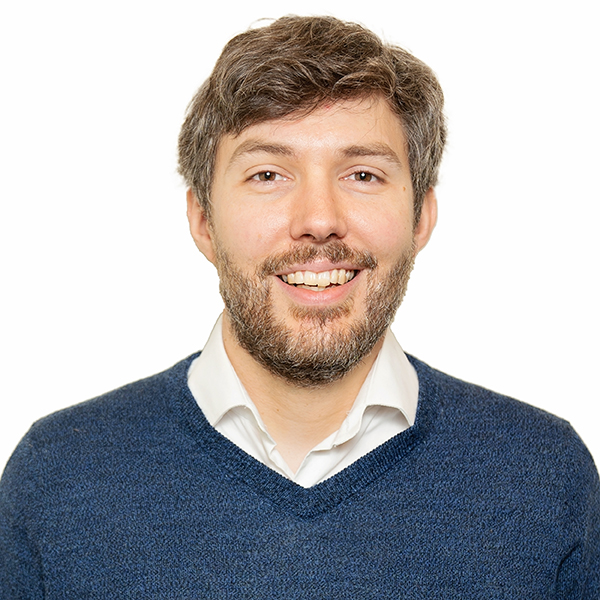
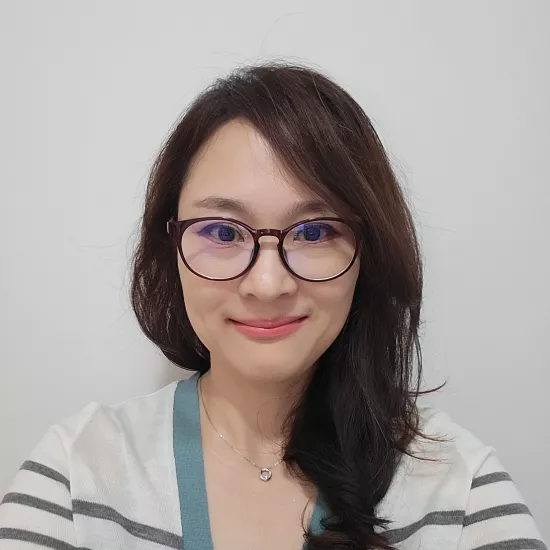
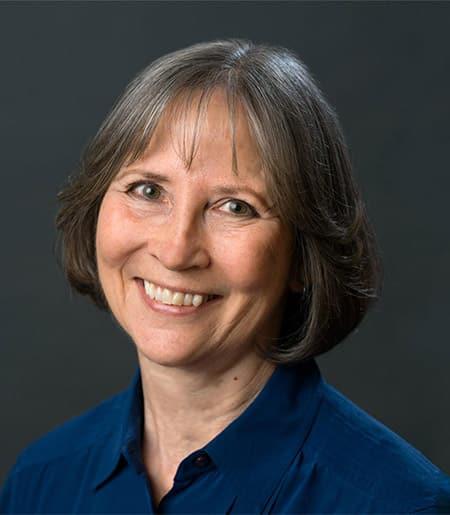
Clarity Ropafadzo Mapengo is a Lecturer in Food Science & Technology at Teesside University's School of Health and Life Sciences. She holds a PhD in Food Science from the University of Pretoria (2020) and joined Teesside in 2022 after serving as a Postdoctoral Researcher there. Education: PhD in Food Science (University of Pretoria, 2018–2020) Her research focuses on climate-resilient food systems, natural polymer applications, and innovative processing technologies like high-pressure processing (HPP) and infrared drying. She integrates green chemistry principles into functional food development, particularly low-glycemic-index products and nano-therapies. Recent work explores HPP's impact on meat quality, solar/infrared drying of crops, and xylan-based prebiotics. Collaborations include FAO initiatives and University of Cairo projects on sustainable agrifood systems. Salzburg Global Fellow (2024-2025) Innovation Ambassador, Global Biotech Revolution (2024) World Food Forum Young Scientist Group Representative (2022) She leads the Food Chain & Composition module and contributes to Biologics & Health Product Development. Her enterprise interests emphasize food waste reduction and value-added agrifood solutions.
Dr. Huadong Mo is a Senior Lecturer at the School of Systems and Computing, University of New South Wales (UNSW) Canberra, Australia. He holds a B.E. degree in automation from the University of Science and Technology of China (2012) and a Ph.D. in systems engineering and engineering management from the City University of Hong Kong (2016). Prior to his current position, he was a research associate at ETH Zurich's Reliability and Risk Engineering Lab (2016-2019) and a Lecturer at UNSW Canberra (2019-2021). Dr. Mo's educational background includes a strong foundation in systems engineering with international experience across China, Switzerland, and Australia. His career trajectory demonstrates a progression from academic research to faculty positions with increasing responsibilities in teaching and research leadership. His research focuses on enhancing the resilience, performance, and security of complex systems using learning-based algorithms, primarily in power and energy systems, cyber-physical systems, and manufacturing systems. He applies data analytics to understand system evolution under uncertainties, with particular emphasis on prognostics and health management, sustainable transportation, robust operation of power systems under extreme events, and reinforcement learning-based asset management. His work bridges theoretical advances with practical applications in critical infrastructure. Analysis of Dr. Mo's recent publications reveals a strong focus on energy systems, particularly in the integration of machine learning with power grid management, battery storage systems, and resilience against cyber threats. His research shows a clear trajectory toward increasingly complex system integration, with growing emphasis on multi-vector energy communities, cross-domain prediction, and uncertainty-aware energy management. The interdisciplinary nature of his work spans electrical engineering, computer science, and operations research. 2024 IEEE SMC Early Career Award 2023 Visiting Research Fellowship (Jean d'Alembert Pour Fellowship) Gold Medal in 2024 China International College Student Innovation Competition (as supervisor) Arc PGC Supervisor Award (2021) IEEE SMC Outstanding Chapter Award (2021) Alumni Achievement Award from City University of Hong Kong (2019) Dr. Mo actively supervises numerous HDR students working on cutting-edge research topics including battery health monitoring, quantum control, reinforcement learning for power systems, and explainable AI for energy management. He leads multiple significant research grants totaling over 3 million AUD, including projects funded by ARC, Energy Innovation Fund, and international collaborations with institutions like ETH Zurich, Cambridge, and Tsinghua University. His research group maintains strong international connections, facilitating student exchanges and collaborative research. As Postgraduate Course Coordinator of Systems Engineering and Chair of IEEE SMC ACT Chapter, Dr. Mo plays a significant role in academic leadership and professional community building. His research team collaborates with industry partners on practical implementations of their theoretical work, particularly in the energy sector.
Liam O’Loughlin is an Associate Professor in the Department of English at Capital University, where he researches postcolonial literatures, environmental humanities, and cultural studies. His current project examines disaster representations in contemporary South Asian fiction. He holds a PhD in Critical and Cultural Studies from the University of Pittsburgh and a BA in English from the University of Maryland. His research intersects postcolonial theory, environmental criticism, and media studies, with a focus on: Industrial/environmental disasters in literature Global Black and South Asian cultural relationships Institutional critiques of academic fields Documentary film and anti-colonial narratives His publications consistently explore postcolonial disaster narratives, institutional power structures, and transnational solidarity, with recent work emphasizing South Asian-Black diasporic connections and ecological crises. Thematically, articles engage with trauma, representation politics, and decolonial theory across literary and visual media. Professor O’Loughlin co-edits scholarly collections, including a special issue of South Asian Review on disaster representations. He teaches courses spanning Postcolonial/Global Literatures, Literature and the Environment, and Academic Composition.
Thomas W. Malone is the Patrick J. McGovern Professor of Management at the MIT Sloan School of Management. He holds joint appointments as Professor of Information Technology and Professor of Work and Organizational Studies. As founding director of the MIT Center for Collective Intelligence, he leads pioneering research on how people and computers can connect intelligently. Previously, he founded the MIT Center for Coordination Science and co-directed the MIT Initiative on 'Inventing the Organizations of the 21st Century'. His teaching focuses on organizational design, IT, and leadership. His research examines how new organizations leverage information technology, with groundbreaking predictions about electronic business in 1987. Major works include the influential books The Future of Work (2004) and Superminds (2018). Research areas span: Collective Intelligence: Designing systems combining human and machine intelligence Organizational Structure: Decentralization, coordination, and future work models Climate Solutions: Crowdsourcing through Climate CoLab AI Implications: Human-AI collaboration in business strategy His publications demonstrate consistent focus on collective problem-solving, with recent emphasis on AI-workforce integration, remote team intelligence, and computational group metrics. Key research projects include the Collective Intelligence Design Lab, Minglr, Climate CoLab, and Measuring Collective Intelligence. Honors include an honorary doctorate from the University of Zurich . He co-founded four software companies and holds 11 patents in collaboration systems and organizational modeling. He directs the MIT Center for Collective Intelligence, leading interdisciplinary teams on global challenges. Current initiatives explore AI-enhanced prediction markets, collective intelligence genomes, and hybrid human-machine systems for organizational design.
Ji-young Shin serves as an Assistant Professor in the Teaching Stream within Education Studies at the University of Toronto Mississauga's Department of Language Studies. Her position integrates teaching, research, and practical application in language education with emphasis on assessment innovation and technology integration. Her academic credentials include: PhD in English / Second Language Studies & ESL from Purdue University, USA MS in Educational Psychology & Research Methodology from Purdue University, USA MA in Teaching English to Speakers of Other Languages (TESOL) from Hankuk University of Foreign Studies, South Korea BA in English Education (Japanese minor) from Hankuk University of Foreign Studies, South Korea Shin's research program focuses on language assessment, corpus linguistics, and technology-mediated pedagogy. She employs mixed methods with quantitative emphasis, utilizing corpus-informed computational analysis and latent-trait modeling complemented by qualitative discourse analysis. Her work addresses critical gaps in second language acquisition, educational measurement, and digital learning environments, particularly regarding AI applications and test validation across diverse language contexts. Her publication trajectory from 2017-2025 demonstrates consistent innovation in language assessment methodologies and technology integration. Key themes include AI-powered chatbots for L2 Korean instruction, online vocabulary testing for Spanish, and corpus-based writing pedagogy. Her work shows increasing focus on artificial intelligence applications and cross-linguistic validation studies, reflecting evolving priorities in language education research. Shin has secured competitive research funding including: Global Classrooms Grant (2025–2026) for VR-enhanced intercultural competence Black, Indigenous, and/or Racialized Scholar Grant (2025–2026) for cross-border AI language learning IRCC Engage3 Project (2022–2024) as Co-PI on VR/AI educational advancement Advancement Fund Plus (2022) for generative AI in teacher education British Council Award (2019) for technology-mediated assessment development She teaches advanced courses including 'The Future of Ed Tech: Active Learning Classrooms and Artificial Intelligence' (EDS285) and supervises community-based experiential learning (EDS388). Her grant portfolio indicates active supervision of research assistants and collaboration with international teams focused on AI implementation and assessment validation. Current projects explore generative AI for language learning across diverse contexts and virtual reality applications in teacher education. While specific laboratory infrastructure isn't documented, her collaborative publications with researchers across Korea, Spain, and the United States suggest participation in international research networks focused on language assessment technology and corpus applications.
Professor Christopher Baddeley is a faculty member in the School of Chemistry at the University of St Andrews, where he leads research in Surface Chemistry and heterogeneous catalysis. His work focuses on understanding surface reaction mechanisms underlying enantioselective catalytic processes and developing novel surface architectures for catalytic applications. His research expertise includes: Surface reaction mechanisms in enantioselective heterogeneous catalysis Construction of porous 2-D surface architectures using intermolecular H-bonding and metal-organic coordination Development of in situ probes for liquid-solid interface studies Corrosion inhibition mechanisms on metal surfaces Characterization of bimetallic surface composition using Medium Energy Ion Scattering Professor Baddeley employs advanced surface characterization techniques including Scanning Tunnelling Microscopy (STM), Reflection Absorption Infrared Spectroscopy (RAIRS), and High Resolution Electron Energy Loss Spectroscopy (HREELS) in ultrahigh vacuum environments. His laboratory also features specialized equipment for studying processes at the liquid-solid interface, bridging the gap between idealized UHV studies and real-world catalytic systems. Analysis of his recent publications reveals strong trends in surface science with particular emphasis on: Molecular adsorption and monolayer formation on metal surfaces N-heterocyclic carbene chemistry for surface modification Corrosion inhibition mechanisms of organic molecules on copper alloys Thermal behavior of bimetallic nanoparticles on oxide supports Surface-confined hydrogenation reactions Professor Baddeley has received significant recognition for his contributions to surface science: CR Burch Prize from the British Vacuum Council (1999) His academic leadership extends to supervising doctoral students and serving as an external examiner for PhD theses at other institutions. Professor Baddeley has secured substantial research funding through multiple EPSRC grants: N-heterocyclic Carbenes on Metal Surfaces project (2019-2022) Investigating corrosion at the interface project (2019) Hydrogen Free Selective Hydrogenation project (2015-2018) MEIS investigations of adsorbate induced segregation (2007-2010) He is actively involved in the EaSTCHEM research school, a joint initiative between the University of Edinburgh and the University of St Andrews that provides a collaborative environment for chemical research and training, with significant contributions to UN Sustainable Development Goals related to clean energy and responsible consumption.
Pamela Tolbert is the Lois S. Gray Professor of Industrial and Labor Relations and Social Sciences at Cornell University's School of Industrial and Labor Relations, Department of Organizational Behavior. Her research focuses on organizational change, institutional theory, entrepreneurship, and social inequality, with a particular emphasis on gender dynamics, diversity management, and the impact of institutional structures on organizational practices. PhD in Sociology from UCLA Her work explores the intersection of institutional environments and organizational behavior, including studies on cross-cultural entrepreneurial attitudes, diversity management, and the evolution of cultural organizations. She has contributed to journals like Organization Science , Administrative Science Quarterly , and ILR Review , often examining how institutional logics shape organizational outcomes. Tolbert's research trends highlight institutional theory's role in understanding organizational change, inequality in professions, and the co-evolution of organizational forms. Her articles frequently address demographic shifts, such as gender composition in workplaces and their effects on turnover and intergroup relations. Scientific Awards Fellow, Academy of Management (2016) Fellow, Judge School of Business, Cambridge University (2010) Lois S. Gray Chaired Professor (2010–) Robert N. Stern Graduate Student Mentoring Award (2025) Outstanding Professor, Cornell National Panhellenic Council (2025) Best Published Paper, American Sociological Association (2025) Tolbert has mentored numerous graduate students and contributed to institutional service as Director of Graduate Studies (2015–2019) and Chair of the Department of Organizational Behavior (1997–2013, 2019–2022). She also served as Acting Director of the Sloan WorkFamily Careers Institute (2003) and co-organized conferences for Cornell's Labor and Employment Law Program.
David Lo is the OUB Chair Professor of Computer Science at Singapore Management University's School of Computing and Information Systems, where he directs the Information Systems and Technology Cluster and the Center for Research on Intelligent Software Engineering. An ACM Fellow, IEEE Fellow, and ASE Fellow, his research focuses on AI for Software Engineering (AI4SE), leveraging machine learning, data mining, and NLP to enhance software analytics and automation. Research Highlights: AI4SE, code LLMs, human-AI synergy in software engineering, software reliability, and empirical studies of practitioner pain points Awards: IEEE TCSE Distinguished Service Award, university-wide Teaching Excellence Award, Outstanding Graduate Supervisor Award, 2 Test-of-Time Awards, and 11 ACM SIGSOFT/IEEE TCSE Distinguished Paper Awards Leadership: General Chair of ASE'16 and MSR'22, PC Co-Chair for ASE'20, FSE'24, and ICSE'25, ACM SIGSOFT Executive Committee member His work has received over 20 awards, 37,000 citations, and an H-index of 100. As an educator, he has mentored trainees who became faculty and R&D experts globally.
Jouni Paltakari is a Professor in Bioproducts and Biosystems at Aalto University. His research focuses on paper converting and packaging technology, with particular interest in value-added fiber-based substrates, nanocellulose applications, and intelligent packaging solutions. He leads research activities in material characterization, composite modeling, and sustainable manufacturing processes. Institution: Aalto University Department: Bioproducts and Biosystems Research Areas: Paper converting, Packaging technology, Nanocellulose, Sustainable composites Email: jouni.paltakari@aalto.fi
Jia-Bin Huang is an Associate Professor in the Department of Computer Science at University of Maryland, College Park , with a secondary appointment at the University of Maryland Institute for Advanced Computer Studies . His work bridges computer vision , computer graphics , and machine learning . His research focuses on 3D scene reconstruction , neural radiance fields , generative models , and multimodal foundation models . He has made significant contributions to video super-resolution , text-driven 3D modeling , and inverse rendering techniques. 15 recent publications (2024-2025) at top venues: CVPR , NeurIPS , SIGGRAPH Asia , 3DV , and ECCV Pioneering work in Urban Scene Inverse Rendering , Generative Video Editing , and 3D Human Digitization He has received multiple awards including the 3M Non-Tenured Faculty Award , ETRA Best Paper , and NSF Grants . His lab trains 12 PhD students and has graduated 18 Masters/PhD students now at institutions like Stanford , Meta , and Google .
Linqin Mu serves as an Assistant Professor at Arizona State University's School for Engineering of Matter, Transport and Energy, focusing on rechargeable battery systems for sustainable energy storage solutions. Her work bridges fundamental material science with practical commercialization efforts in next-generation battery technologies. Educational background includes: Ph.D. in Physics from Institute of Physics, Chinese Academy of Sciences B.S. in Materials Science from Southwest University Her research targets critical challenges in energy storage through: Development of low-cost, high-performance battery materials Advanced interfacial chemistry studies for next-generation batteries Innovative microstructure design of composite electrodes Multi-valent aqueous electrochemical device engineering Comprehensive failure mechanism analysis using synchrotron techniques Publication analysis reveals consistent focus on cathode material innovation, particularly in sodium-ion and nickel-rich lithium-ion systems. Key trends include dopant engineering for structural stability, interfacial chemistry control, and commercialization-driven material design with over 40 publications in top journals including Nature Communications and Advanced Materials. Research recognition includes: ECS Battery Division Postdoc Associate Research Award (2019) for battery degradation studies Mentorship spans undergraduate to doctoral levels in the Mu Lab, emphasizing hands-on battery research with students from materials science, chemistry, and engineering backgrounds. Current projects involve developing critical materials for high-energy storage devices while investigating fundamental failure mechanisms in next-generation batteries. The Mu Lab operates as a collaborative research hub specializing in advanced battery material characterization and development, utilizing synchrotron radiation techniques and electrochemical analysis to address industry-relevant energy storage challenges.
Dr. Yeshui Zhang is a Lecturer at the School of Engineering, University of Aberdeen, UK, since December 2021. Previously, she held a Faraday Institution Research Fellowship at University College London (2018–2021). University of Birmingham (BSc Environmental Management, 2012) University of Sheffield (MSc Energy and Environmental Engineering, 2013) University of Leeds (PhD Chemical and Process Engineering, 2017) Her research spans chemical and environmental engineering, focusing on: Energy storage materials (e.g., lithium-ion batteries) Pyrolysis-catalysis of waste materials High-temperature quartz crystal microbalance applications Carbon nanotubes synthesis Circular economy strategies for plastics Recent publications emphasize catalytic waste valorization for hydrogen-rich syngas, biomass pyrolysis mechanisms, and hybrid-functional catalyst design. She serves as Associate Editor for Carbon Capture Science & Technology and contributes to standards in battery manufacturing. Emerging Investigator Award, IChemE 2022 IAAM Young Scientist Medal 2022 Best Paper Award, 21st CCSSTA 2020 Dr. Zhang supervises PhD students in chemical engineering and leads the Meston Lab 155 at Aberdeen. Her work bridges academic research with industrial applications through memberships in the Royal Society of Chemistry and IChemE.
Sachiko Amari serves as a Research Professor of Physics in the Department of Physics at Washington University in St. Louis, where she conducts pioneering research in cosmochemistry through the McDonnell Center for the Space Sciences. Her work bridges laboratory astrophysics and planetary science, focusing on extraterrestrial materials to unravel solar system formation and stellar processes. Amari's educational foundation includes a PhD from Kobe University and both Master of Engineering and Bachelor of Engineering degrees from Waseda University in Japan. This engineering background informs her precise analytical approach to meteoritic materials. Her research centers on presolar grains—stardust formed in stellar outflows that were incorporated into primitive meteorites. Using secondary ion mass spectrometry, she analyzes isotopic ratios to investigate nucleosynthesis in stars, mixing processes in stellar ejecta, and Galactic chemical evolution. A secondary focus examines noble gas trapping mechanisms in meteorites to understand volatile origins and early solar system processes. Her work reveals how microscopic grains preserve macroscopic cosmic histories. Analysis of her recent publications shows consistent emphasis on silicon carbide and graphite presolar grains, with increasing technical sophistication in NanoSIMS analysis. Research trends include correlating multi-element isotopic systems, identifying rare stellar sources like novae, and resolving phase Q—the elusive noble gas carrier in meteorites. Her work demonstrates how laboratory studies of individual grains constrain astrophysical models. Amari leads an active research group within the McDonnell Center for the Space Sciences and collaborates on major initiatives including the Mars Sample Return Science Definition Team. She mentors graduate students in meteoritics research while developing analytical protocols for extraterrestrial material characterization. Her laboratory serves as a hub for stardust analysis, utilizing advanced mass spectrometry techniques to decode isotopic fingerprints of stellar processes.
Dr. Farzaneh Derakhshan is an Assistant Professor in the Computer Science Department at Illinois Institute of Technology (Illinois Tech), where she explores logical foundations of concurrency and develops formal methods for program verification. She earned her Ph.D. in Pure and Applied Logic from Carnegie Mellon University in 2021 under Frank Pfenning, followed by a postdoctoral fellowship at CMU with Limin Jia and Stephanie Balzer. Current affiliation: Illinois Tech (since ~2021) Previous affiliation: Carnegie Mellon University (Ph.D. and postdoc) Research focus: Type theory, logical verification, and security for concurrent systems Teaching: Courses on programming languages, type systems, and security Her research addresses fundamental challenges in concurrent programming, including: Developing modal logic frameworks for system verification Designing type systems for intermittent computing Creating behavioral type systems for security guarantees Applying relational logic to GPU security and secure compilation Investigating logical foundations of session-typed processes Formal verification of cyclic process networks Current research trends include: Hybrid dynamic verification for parallel systems Logical approaches to side-channel security Formal methods for cyber-physical systems Crash-resilient computing models Security verification in decentralized applications Noninterference proofs in session-typed concurrency Scientific recognition: NSF SaTC CORE Collaborative Award #2350217 Organizing committee member at Dagstuhl Seminar 26071 Professional leadership: Program committee co-chair for PLACES 2025 Committee roles at LICS 2026, ESOP 2026, ICFP 2025, and ECOOP 2025 Regular reviewer for ACM Transactions journals Laboratory involvement: Co-director of behavioral types research at Illinois Tech Collaboration with Carnegie Mellon's formal verification group Key participant in the FACCT workshop
Elizabeth A. Edwards is a University Professor at the University of Toronto in the Department of Chemical Engineering and Applied Chemistry , with cross-appointments to the Department of Cell & Systems Biology . As Director of BioZone and Canada Research Chair in Anaerobic Biotechnology, she leads groundbreaking research in microbial bioremediation of groundwater pollutants and industrial wastewater treatment through anaerobic digestion. Ph.D. in Environmental Engineering (Stanford, 1993) M.Eng. and B.Eng. in Chemical Engineering (McGill, 1985/1983) Licensed Professional Engineer (P.Eng.) Her research focuses on anaerobic microbial communities that degrade pollutants like chlorinated solvents and aromatic hydrocarbons. Using advanced molecular biology, genomics, proteomics , and biochemical pathway analysis , her lab investigates functional interactions in microbial consortia and translates discoveries to commercial applications such as the KB-1® bioproduct . Recent studies examine enzyme activity, lignocellulose degradation, and granulation dynamics in anaerobic reactors. Scientific Recognition: 2020 Killam Prize in Engineering 2016 Canada Research Chair (Tier 1) 2014 Royal Society of Canada Fellow 2011 Canadian Academy of Engineering Fellow 2011 AAAS Fellow 2008-2010 Killam Research Fellowship She supervises extensive graduate student projects spanning enzyme discovery, bioremediation optimization, and microbial consortium analysis. Her lab collaborates with GeoSyntec Consultants and SiREM Labs for field implementation of bioremediation strategies.