معرفی
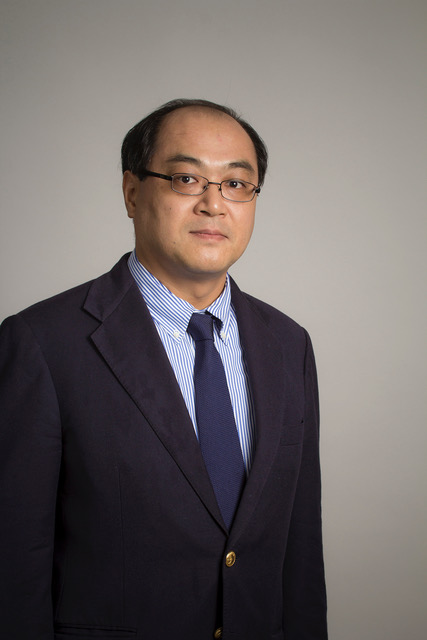
Professor Christopher Baddeley is a faculty member in the School of Chemistry at the University of St Andrews, where he leads research in Surface Chemistry and heterogeneous catalysis. His work focuses on understanding surface reaction mechanisms underlying enantioselective catalytic processes and developing novel surface architectures for catalytic applications.
His research expertise includes:
- Surface reaction mechanisms in enantioselective heterogeneous catalysis
- Construction of porous 2-D surface architectures using intermolecular H-bonding and metal-organic coordination
- Development of in situ probes for liquid-solid interface studies
- Corrosion inhibition mechanisms on metal surfaces
- Characterization of bimetallic surface composition using Medium Energy Ion Scattering
Professor Baddeley employs advanced surface characterization techniques including Scanning Tunnelling Microscopy (STM), Reflection Absorption Infrared Spectroscopy (RAIRS), and High Resolution Electron Energy Loss Spectroscopy (HREELS) in ultrahigh vacuum environments. His laboratory also features specialized equipment for studying processes at the liquid-solid interface, bridging the gap between idealized UHV studies and real-world catalytic systems.
Analysis of his recent publications reveals strong trends in surface science with particular emphasis on:
- Molecular adsorption and monolayer formation on metal surfaces
- N-heterocyclic carbene chemistry for surface modification
- Corrosion inhibition mechanisms of organic molecules on copper alloys
- Thermal behavior of bimetallic nanoparticles on oxide supports
- Surface-confined hydrogenation reactions
Professor Baddeley has received significant recognition for his contributions to surface science:
- CR Burch Prize from the British Vacuum Council (1999)
His academic leadership extends to supervising doctoral students and serving as an external examiner for PhD theses at other institutions. Professor Baddeley has secured substantial research funding through multiple EPSRC grants:
- N-heterocyclic Carbenes on Metal Surfaces project (2019-2022)
- Investigating corrosion at the interface project (2019)
- Hydrogen Free Selective Hydrogenation project (2015-2018)
- MEIS investigations of adsorbate induced segregation (2007-2010)
He is actively involved in the EaSTCHEM research school, a joint initiative between the University of Edinburgh and the University of St Andrews that provides a collaborative environment for chemical research and training, with significant contributions to UN Sustainable Development Goals related to clean energy and responsible consumption.