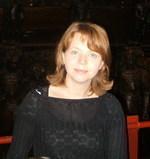
Paola Calza is a Full Professor in the Department of Chemistry at the University of Turin. Her research focuses on environmental chemistry, analytical chemistry, and advanced photocatalytic technologies for water purification. Her work addresses the degradation of emerging contaminants, transformation product analysis, and the development of novel materials for pollutant removal. She has contributed significantly to advancing photocatalysis, nanomaterial synthesis, and sustainable water treatment strategies. Her research spans diverse applications, including aquaculture water treatment, pharmaceutical pollution mitigation, and soil bioremediation. Key areas: Photocatalytic degradation, MXene-based nanocomposites, HPLC-HRMS analysis, and bio-inspired materials. Collaborations involve interdisciplinary approaches combining environmental science, materials engineering, and analytical techniques. Publications emphasize practical solutions for real-world water and soil contamination challenges.
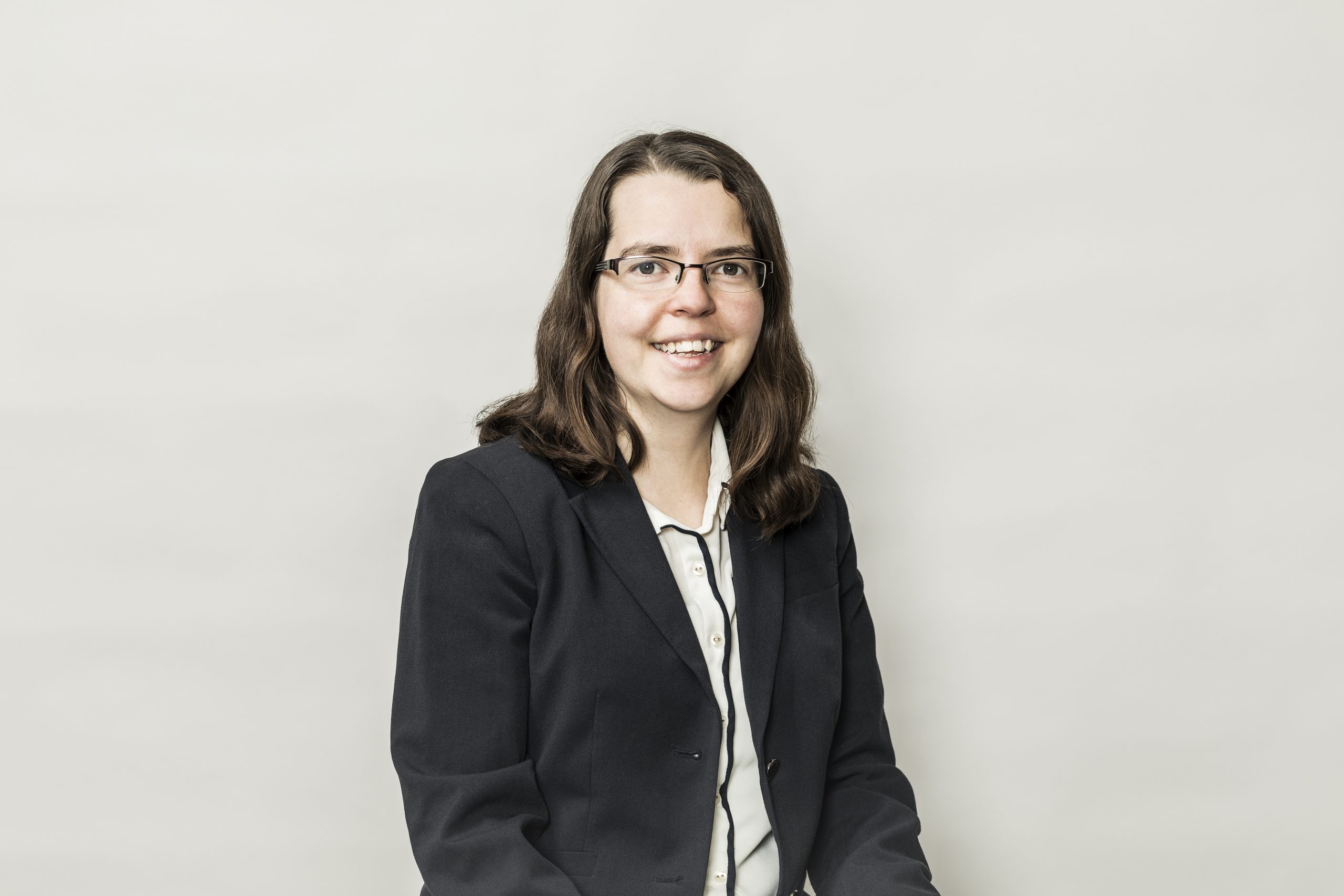
Marina Freire-Gormaly is an Assistant Professor in the Mechanical Engineering Department at York University's Lassonde School of Engineering. Her research focuses on renewable energy-powered water treatment systems, machine learning for smart design, advanced manufacturing, and sustainable engineering solutions for remote communities. She holds a PhD and M.A.Sc. from the University of Toronto, specializing in carbon capture and storage technologies. She has worked on nuclear energy projects at Ontario Power Generation and contributed to World Bank sustainability assessments. She currently chairs the Canadian Society of Mechanical Engineers' Student and Young Professional Affairs committee. Education: PhD in Mechanical Engineering, University of Toronto M.A.Sc. in Mechanical Engineering, University of Toronto Research Interests: She pioneers solar-powered reverse osmosis systems, energy recovery mechanisms, and IoT-driven smart systems. Her lab explores nanotechnology applications in environmental sustainability, including carbon capture and aquatic remediation. She integrates machine learning for optimizing energy-water nexus challenges in off-grid regions. Key Contributions: Developed models for membrane fouling in desalination systems, advanced pore network characterization for geologic CO2 storage, and designed automated renewable energy systems. Her work bridges engineering innovation with global sustainability goals. Grants & Collaborations: Engages with industries like Honda Canada and Trane Canada on sustainability initiatives. Supervises graduate students in emerging areas like nanobubble technology and direct air capture systems. Lab Activities: The Freire-Gormaly Lab focuses on clean energy-water systems, with current projects involving nano-technology for space applications (Canadian Space Agency collaboration) and life cycle assessments of carbon storage technologies.
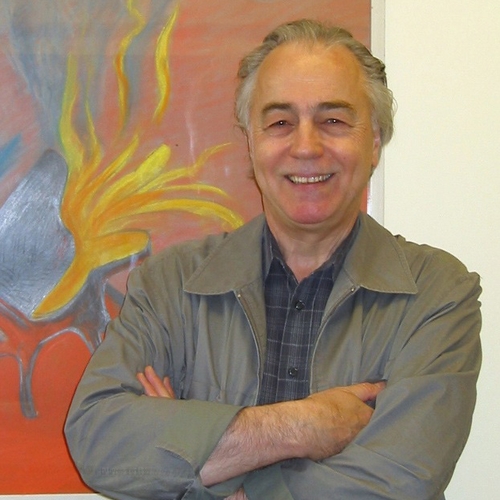
Guerino Mazzola is a Professor of Creativity, Improvisation, and Mathematical Music Theory at the School of Music, University of Minnesota. His academic career includes a PhD in Mathematics from Zurich University and postdoctoral work at Paris-Sud and Rome. He has been a key figure in developing mathematical music theory since 1980, authoring influential books such as The Topos of Music (2002) and Cool Math for Hot Music (2016). Education: PhD in Mathematics (Zurich University), Habilitation in Algebraic Geometry (1980), and Computational Sciences (1993). Research Interests: Mathematical foundations of music, gesture theory, performance analysis, computational musicology, and interdisciplinary creativity. Notable contributions include the Rubato software for performance analysis and the development of gesture theory applied to free jazz. He has received awards such as the Mexican Mathematical Society Medal (2000) and has been a visiting professor at prestigious institutions like the École Normale Supérieure in Paris. Teaching spans advanced courses on gesture theory, performance science, and music informatics, with a focus on bridging mathematical rigor and artistic creativity.
Stacey F. Bent is the Jagdeep and Roshni Singh Professor in the School of Engineering at Stanford University, where she serves as Professor of Chemical Engineering with courtesy appointments in Chemistry, Electrical Engineering, and Materials Science and Engineering. She also holds the position of Vice Provost for Graduate Education and Postdoctoral Affairs and is a Senior Fellow at the Precourt Institute for Energy. Her academic journey began with a B.S. in Chemical Engineering from UC Berkeley (1987) followed by a Ph.D. in Chemistry from Stanford University (1992), after which she completed postdoctoral work at AT&T Bell Laboratories and served as an assistant professor at New York University before joining Stanford in 1998. Dr. Bent's research focuses on understanding and controlling surface and interfacial chemistry with applications in semiconductor processing, micro- and nanoelectronics, nanotechnology, and sustainable energy. Her group employs molecular-level approaches to study semiconductor surface functionalization, atomic layer deposition mechanisms, nanoscale light absorption materials, photovoltaic interface engineering, and catalyst/electrocatalyst deposition. Her lab maintains extensive facilities including over ten ALD/MLD reactors, ultra-high vacuum chambers with in situ XPS capabilities, and various characterization tools for materials analysis. Her recent publications reveal strong focus areas in atomic layer deposition techniques, battery interface engineering, catalyst design for syngas conversion, and nanoscale patterning technologies. The research spans fundamental surface science to practical energy applications, with particular emphasis on developing precise materials synthesis methods for advanced electronic and energy systems. Among her numerous accolades are election to the National Academy of Engineering (2020), the ACS Award in Surface Chemistry (2018), and the ALD Innovator Award (2021). She has also received multiple teaching awards including the Tau Beta Pi Award for Excellence in Undergraduate Teaching (2006) and the Stanford Medal for Faculty Excellence Fostering Undergraduate Research (2013). Braskem Award for Excellence in Materials Engineering and Science (AIChE) (2021) ALD (Atomic Layer Deposition) Innovator Award (2021) National Academy of Engineering (2020) ACS Award in Surface Chemistry (2018) Fellow of the American Chemical Society (2013) AVS Fellow (2006) Dr. Bent has mentored over 70 graduate students and postdocs who have gone on to successful careers in academia, industry, and government. Her research group maintains strong collaborations with national laboratories and industry partners, particularly in semiconductor manufacturing and energy technologies. She previously served as Director of the TomKat Center for Sustainable Energy for 10 years and as co-Director of the Center on Nanostructuring for Efficient Energy Conversion (CNEEC), a DOE Energy Frontier Research Center. The Bent Research Group operates state-of-the-art facilities including multiple ALD/MLD reactors capable of depositing over 30 materials, in situ characterization tools, and access to Stanford's shared equipment facilities for advanced materials analysis. The group's international composition (with members from over 10 countries) reflects its global impact in surface science and materials engineering.
Jeremy Baumberg is a Professor at the Cavendish Laboratory, University of Cambridge, leading research in nanoscience and nanotechnology. He specializes in designing nano-materials with unique optical properties, including plasmonic cavities and polymer opals, with applications in catalysis, sensing, and energy. His work bridges academia and industry through collaborations with Hitachi, IBM, and his spin-offs Mesophotonics and Base4. Research interests focus on light-matter interaction in nanoscale systems, quantum plasmonics, surface-enhanced Raman spectroscopy (SERS), and nanocavity engineering. Recent projects include developing plasmonic nanogap reactors, high-energy-density battery materials, and the open-source WaterScope platform for water quality monitoring. Awards : Faraday Medal (2017) Rumford Medal (2014) Young Medal (2013) Royal Society Fellowship (2011) Mullard Prize (2005) His lab, the Ray Dolby Centre, explores optomechanical systems, plasmonic sensors, and nanostructured materials. Baumberg advises ARIA and serves on the EPSRC Council, emphasizing interdisciplinary innovation and scalable nanotechnology solutions.
Dr. Angela Poole is an Assistant Professor of Molecular Nutrition in the Division of Nutritional Sciences at Cornell University's College of Human Ecology. She leads a research group focused on precision nutrition, investigating interactions between host genetics, dietary intake, and gut/oral microbiomes to prevent metabolic diseases. Education & Background Ph.D. in Genome Sciences, University of Washington Postdoctoral research at Dr. Ruth Ley's laboratory B.S. in Engineering and Applied Science, Caltech Research Focus Her interdisciplinary work combines genetics, microbiology, and nutrition to develop personalized dietary interventions. Key areas include: Optimizing dietary fiber for diabetes prevention Oral biofilm pathogenesis Host-microbiome-diet interactions in metabolic disorders Publication Trends Her 15 most recent publications (2014-2025) demonstrate consistent focus on microbiome dynamics, genetic influences on nutrition, and metabolic health. Recent work emphasizes oral/gut microbiome responses to dietary components like resistant starch and salivary amylase. Research Group Leads an active lab developing systems biology approaches for precision nutrition applications.
Robert Thorne is a Professor in the Department of Physics at Cornell University's College of Arts and Sciences. His research spans biological physics, experimental condensed matter physics, and physics education innovations. He holds a B.Sc. from the University of Manitoba (1981) and a Ph.D. from the University of Illinois at Urbana (1987). Stephen H. Weiss Presidential Fellow (2011-present) Founder and CTO of MiTeGen LLC (2004-present) Research Interests: Thorne's work focuses on: Single-particle cryo-EM and time-resolved molecular movies Advanced X-ray crystallography and SAXS techniques Water/ice physics in biological and materials contexts X-ray fluorescence imaging for archaeology Physics education curriculum reform and outreach programs Publication Trends: His 15 most recent articles (2004-2021) demonstrate expertise in: Structural biology methodology Radiation damage mitigation Nanoconfined material behavior Cultural heritage imaging Physics education innovation Crystallography instrumentation Awards: Presidential Young Investigator (1988-1993) Alfred P. Sloan Fellow (1988-1990) Stephen H. Weiss Presidential Fellow (2011-present) Advising & Grants: Active mentor of M.S. student Myeonghak Lee and undergraduate Andrew DiFabbio . His research has received grants supporting student engagement and CHESS synchrotron upgrades.
Gordon J. Stacey is the David C. Duncan Professor in the Physical Sciences and CCAT Project Director at Cornell University's Department of Astronomy. He received his PhD in Astronomy from Cornell in 1985 and joined the faculty in 1991 after postdoctoral work at UC Berkeley. His research focuses on star and galaxy formation across cosmic time, utilizing far-infrared/submillimeter spectroscopy. He leads the CCAT Project, developing the FYST telescope in Chile, and is Principal Investigator for the POEMM mission targeting protoplanetary disks. Notable contributions include instrumental advancements like ZEUS-2 and EoR-Spec, as well as seminal studies on [CII], [NII], and [OIII] lines in high-redshift galaxies. Education: PhD in Astronomy from Cornell University (1985). Research emphasizes interstellar medium interactions, cosmic evolution, and instrumentation. Key projects include EoR-Spec for FYST (first light 2027) and the VIPA-based POEMM mission (2029 balloon flight). Awards include the David C. Duncan Professorship. His work bridges observational cosmology, galaxy evolution, and technological innovation in astronomy. Scientific awards include the endowed David C. Duncan Professorship. Current roles involve directing the CCAT Project and advancing instrumentation for submillimeter astronomy. Future projects focus on protoplanetary disk studies via POEMM and FYST observations of the Epoch of Reionization.
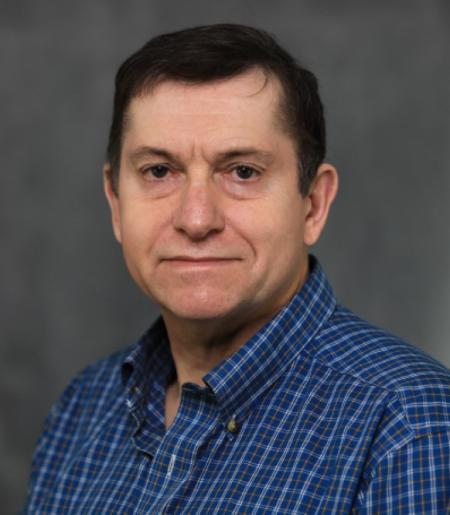
Powder Metallurgy (MH2100) and has expertise in computational materials science. His research emphasizes predictive modeling of material behavior, including precipitation kinetics, sintering processes, and coating interactions. Notable areas include phase field modeling of discontinuous precipitation, spinodal decomposition in Fe-Cr alloys, and high-entropy alloy design. His studies bridge experimental data with computational tools like the YAPFI phase-field framework. Key themes in his publications span cemented carbides, Co-based entropic alloys, and tool wear mechanisms. He combines CALPHAD thermodynamic modeling with first-principles calculations to address challenges in materials processing and corrosion resistance. His work often addresses industrial applications, such as optimizing machining tools and additive-manufactured superalloys.
Amir Asadi is an Associate Professor in the Department of Engineering Technology and Industrial Distribution at Texas A&M University, holding the Corrie & Jim Furber '64 Faculty Fellow position. His research focuses on scalable manufacturing of multifunctional composites, structural energy systems, and advanced materials design. He leads the Polymer Composites Advanced Manufacturing (PCAM) Lab, which explores bottom-up fabrication techniques and additive manufacturing processes. Asadi holds a Ph.D. in Mechanical and Manufacturing Engineering from the University of Manitoba (2013), an M.S. in Mechanical Engineering from Iran University of Science & Technology (2006), and a B.S. in Mechanical Engineering from the same institution (2004). His work bridges molecular-level interactions with macroscale material performance, targeting applications in aerospace, e-mobility, and energy storage. Key research interests include structural battery/supercapacitor composites, additive manufacturing of polymer composites, and fast-rate manufacturing of thermoplastics. He has pioneered methods like supercritical CO₂-assisted atomization and cellulose nanocrystal-enabled interface tailoring to enhance composite performance. Asadi has received the NSF CAREER Award (2022) and has been an invited speaker at major conferences such as the Brazilian Conference on Composite Materials (2021) and Chalmers University’s “Materials for Tomorrow” event (2020). His lab’s innovations aim to revolutionize lightweight, multifunctional materials for industrial sectors. His research outputs include over 50 peer-reviewed articles, covering topics from nanocomposite interfaces to 3D-printed structural batteries. He collaborates with industry partners like the Air Force Research Lab and focuses on translating lab-scale innovations into scalable manufacturing solutions.
Dr. Jingjing Qiu is an Associate Professor in the Department of Mechanical Engineering at Texas A&M University (TAMU), leading the Advanced Materials & Manufacturing (AM²) Lab. Her research focuses on advanced manufacturing, nanomaterials, multifunctional composites, sustainable materials, energy harvesting, and healthcare applications. She holds a Ph.D. in Industrial & Manufacturing Engineering from Florida State University (2008), and M.S./B.S. degrees in Materials Science from Beihang University (2004/2001). Prior to academia, she gained 1 year of industrial experience as a Quality Engineer at SAIC Motor. Research interests include AI-driven nanomaterials synthesis, low-carbon manufacturing processes, and biomedical innovations such as drug delivery systems for brain tumors. The AM² Lab emphasizes interdisciplinary collaboration in materials science, data science, and sensor integration for energy and medical devices. Recent work highlights include AI-assisted microplastics removal, thermoelectric energy harvesting via graphene aerogels, and neuromorphic computing systems. Her team actively pursues postdoctoral and PhD candidates for research in energy/healthcare materials, requiring expertise in nanomaterials characterization (e.g., SEM, XPS, electrochemical techniques) and interdisciplinary problem-solving. Lab facilities support cutting-edge fabrication and testing of functional materials. Publications span over 15 years, with recent trends in sustainable manufacturing, soft robotics, and bio-inspired materials. Ongoing projects include DOE-funded initiatives on rare earth recycling and low-carbon ceramic production. No scientific awards are explicitly listed in the provided texts.
Jeffrey Sanford Russell is a Professor of Philosophy at the University of Southern California's School of Philosophy, where he also serves as Director of Graduate Studies. He holds a PhD from New York University (2011). His research focuses on decision theory, ethics, formal epistemology, metaphysics, and the philosophy of religion and mathematics. Russell teaches courses on topics like probability, rational choice, and the limits of logic, emphasizing interdisciplinary approaches blending philosophy with mathematics, psychology, and economics. His work explores foundational questions in ethics, such as infinite value aggregation paradoxes, and decision theory, including stochastic dominance and self-locating evidence in cosmology. He has contributed to debates on multiverse hypotheses, moral hedging, and the structure of possible worlds. Russell’s publications appear in top journals like Noûs , Philosophical Review , and Philosophy and Phenomenological Research . His recent research addresses moral and epistemic challenges in infinite scenarios, such as infinite ethics and fanaticism in decision-making. He also investigates the intersection of metaphysics and formal logic, including composition principles and qualitative grounds for non-qualitative facts. Russell’s work bridges abstract philosophical inquiry with practical implications, such as ethical dilemmas in collective action and the epistemology of divine hiddenness.
Stefan Hallström is an Associate Professor in Lightweight Structures at KTH Royal Institute of Technology's Aeronautical and Vehicle Engineering School, affiliated with the MATERIAL AND STRUCTURAL MECHANICS department. He specializes in composite materials, structural mechanics, and lightweight design, focusing on aerospace and automotive applications. His research explores advanced composites, sandwich structures, and material behavior under various loading conditions. Hallström teaches courses including Lightweight Design (SD2432), Lightweight Structures and FEM (SD2411), and supervises degree projects in Lightweight Structures and Solid Mechanics. He has published extensively on topics like 3D-woven composites, damage tolerance, and mechanical reinforcement strategies, with over 90 peer-reviewed articles. His work emphasizes material characterization, finite element modeling, and practical applications in structural engineering. Key research trends include optimizing composite joint performance using metal inserts, analyzing moisture effects on composite laminates, and developing frameworks for modeling 3D textile architectures. His contributions address challenges in aerospace materials, energy absorption in beams, and improving simulation accuracy for molded composites. Hallström collaborates on projects involving novel instrumented test rigs for polymer composites and advanced manufacturing techniques for structural reliability. His expertise bridges theoretical mechanics with practical engineering solutions, influencing both academic research and industrial applications.
Parisa Kordjamshidi is an Associate Professor of Computer Science and Engineering at Michigan State University (MSU), leading the Heterogeneous Learning and Reasoning (HLR) Lab. Her research focuses on Neuro-Symbolic AI, spatial language understanding, and structured learning, with notable contributions to frameworks like Saul for declarative programming. She joined MSU in 2019 after roles at Tulane University and the Florida Institute for Human and Machine Cognition. Education: Ph.D. in Computer Science from KU Leuven (2013), postdoctoral research at UIUC's Cognitive Computation Group, and work in the KnowEng project. Research Interests: Artificial Intelligence, Machine Learning, Natural Language Processing, Neuro-Symbolic systems, spatial semantics extraction, structured output learning, and multimodal reasoning. Key projects include NSF CAREER awards for spatial language understanding and ONR grants for integrating domain knowledge into AI. Awards: NSF CAREER (2019), Amazon Faculty Research Award (2022), Fulbright Scholar (2025), and Rising Stars at MIT EECS (2015). Grants: Active projects on Neuro-Symbolic compositional generalization (ONR), spatial language learning (NSF), and collaborations with the Department of Media and Information for health misinformation management. Professional Activities: Editorial roles at JAIR, TACL, and Frontiers journals; service on program committees for ACL, EMNLP, and AAAI; organization of workshops like Spatial Language Understanding (SpLU) and CLeaR. Lab and Software: HLR Lab develops Saul (declarative learning-based programming framework) and tools for spatial role labeling. Her team emphasizes mentoring, with structured weekly meetings, reading groups, and conference participation for students.
Dr. Alexander J G Lunt is a Senior Lecturer in Mechanical Engineering at the University of Bath, specializing in micromechanical testing and materials characterization. He leads the Integrated Materials Processing and Structures Research Centre and has a PhD in Mechanical Microscopy from the University of Oxford. His research focuses on advanced materials, composites, additive manufacturing, and synchrotron/neutron-based techniques. He has supervised 5 PhD students and collaborates with industries like Rolls-Royce and Airbus. Notable awards include the John Willis Award and Vice Chancellor's Engage Award. His work contributes to UN SDGs in sustainable materials and manufacturing.