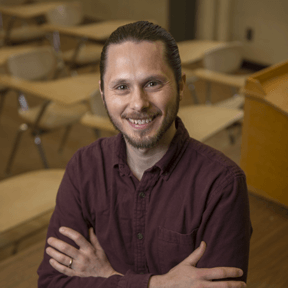
Vijay Iyer is the Franklin D. and Florence Rosenblatt Professor of the Arts at Harvard University, holding a joint appointment in the Department of Music and the Department of African and African American Studies. His work bridges music studies, Black studies, and cognitive science, focusing on embodied music cognition and Afro-diasporic musical traditions. As a graduate advisor in Creative Practice and Critical Inquiry (CPCI), he mentors doctoral students at the intersection of artistic practice and academic research. PhD in Technology and the Arts (UC Berkeley, 1998) BA in Mathematics and Physics (Yale, 1992) A globally recognized composer-pianist, Iyer’s scholarship decenters Eurocentric paradigms in music cognition through case studies of West African and African-American musics. His creative outputs include 24 albums and commissions for ensembles like the Silk Road Ensemble and International Contemporary Ensemble. Current research explores speculative musicalities, digital culture, and the politics of spatial-temporal experience in Black music. Recent publications analyze microtiming in jazz, collaborative improvisation, and the ethical dimensions of musical practice. His accolades include a MacArthur Fellowship, Doris Duke Performing Artist Award, and multiple DownBeat Magazine Jazz Artist of the Year titles. At Harvard, he teaches courses like Black Speculative Musicalities and co-founded the CPCI doctoral program.
Juan Medina Contreras is a faculty member at the Faculty of Communication, University of Salamanca . He holds a Doctorate in Communication , a Degree in Journalism , an Expert in Gender and Communication , and a Master in Screenwriting and Political Image Consulting . His career spans academic research, teaching, and professional training in communication. His research focuses on film studies , political communication , gender representation , and visual rhetoric . Notable contributions include analyzing female archetypes in the [REC] saga, the portrayal of defense organizations in the Marvel Cinematic Universe, and the role of cinematic editing in shaping political and cultural narratives. His 15 most recent publications span 2014–2021 , with recurring themes in Spanish cinema , gender dynamics , political advertising , and historical memory . He has also explored digital photography ethics and citizen journalism challenges. While no scientific awards are explicitly mentioned, his work includes a research study on quality of life for disabled women in Palencia (2014). He has supervised theses and contributed to books like Género negro sin límites (2019) and La estética televisiva en las series contemporáneas (2018).
Dr. Yali Ling serves as an Assistant Professor in the Fashion Merchandising and Design program within the Department of Family and Consumer Sciences at California State University, Long Beach's College of Health and Human Services. Her research bridges traditional textile engineering with cutting-edge sustainable material innovation. Education: Ph.D. in Textile Technology Management, North Carolina State University (2021-2024) M.S. in Fashion Design and Engineering, Wuhan Textile University (2018-2021) B.S. in Fashion Design, Wuhan Textile University (2014-2018) Research Focus: Dr. Ling's work pioneers sustainable textile production through hemp/cotton blends and recycled materials, while advancing digital fashion technologies via 3D body scanning applications. Her expertise spans yarn engineering for performance textiles and functional apparel design addressing ergonomic challenges in diverse populations. This dual focus creates synergies between eco-conscious manufacturing and precision garment engineering. Publication Trends: Her 15 most recent publications (2019-2025) reveal three converging trajectories: (1) Sustainable material innovation (hemp textiles, eco-spinning), (2) Triboelectric wearable technology development, and (3) Anthropometric-driven apparel design. These strands collectively address industry demands for environmentally responsible production while enhancing human-technology interfaces in textile applications. Scientific Recognition: 2024 Best Poster Presentation at Textile Research Open House (NCSU) 2022 VF Graduate Student Impact Award ($5,000) 2021 Wuhan Textile University Special Graduate Scholarship ($1,500) 2020 Chinese Ministry of Education National Scholarship ($3,000) 2020 CNTAC "Maker China" Innovation Excellence Award 2019 China Natural Dialectics Research Association Symposium Prize Professional Engagement: Dr. Ling maintains active industry partnerships through her sustainable textile research while mentoring undergraduate students in the Fashion Merchandising and Design program. Her current work focuses on scaling hemp-based textile production and developing AI-integrated pattern generation systems. Research Infrastructure: While specific laboratory facilities aren't detailed in available materials, her publications indicate collaborations with Wilson College of Textiles' advanced manufacturing facilities and access to 3D body scanning technologies for anthropometric research.
Shuang Ma Andersen is a Full Professor at the Department of Green Technology (IGT) and SDU Chemical Engineering, specializing in electrocatalysis, fuel cell technologies, and sustainable resource recovery. Her research focuses on oxygen evolution reaction (OER) catalysts, membrane electrode assemblies, and innovative synthesis methods for iridium/platinum-based systems.
Dr. Fan Xia is an Assistant Professor in the Department of Epidemiology and Biostatistics at the University of California, San Francisco (UCSF) School of Medicine. She earned her PhD in Biostatistics from the University of Washington, Seattle in June 2020. Dr. Xia's research focuses on methodological developments in causal inference, particularly causal mediation analysis, and she has made significant contributions to the field with numerous publications in high-impact statistical and medical journals. PhD in Biostatistics, University of Washington, Seattle (June 2020) Dr. Xia's research is primarily oriented around causal mediation analysis. Her work provides comprehensive guidance for applied statisticians and epidemiologists navigating the philosophical subtleties and abundant methodology in causal inference. She develops methodologies for complex causal mediation structures, including mediation analysis with treatment-induced confounding, mediation analysis with multiple mediation pathways, and mediation analysis for longitudinal data, using rigorous statistical theories for semiparametric inference. Additionally, her research involves causal discovery and cluster randomized trials with stepped wedge designs, which are related to model-based causal inference with longitudinal data. Dr. Xia has demonstrated a steady publication record with increasing productivity since completing her PhD. Her publications span from 2017 to 2025, with a notable increase in output from 2021 onward. Her work appears in top statistical journals like Biometrika, Journal of the American Statistical Association, and Biometrics, as well as medical journals including JAMA Network Open and Clinical Infectious Diseases. The publications reflect her dual focus on methodological advancements in statistics and applications to important health issues, particularly in HIV research, clinical trials methodology, and chronic disease epidemiology. No specific awards mentioned in the provided information Dr. Xia appears to be actively involved in collaborative research across multiple domains. Her publications indicate collaborations with researchers in epidemiology, medicine, and public health. While specific grant information is not provided, her research on stepped wedge cluster randomized trials suggests involvement in methodological grant-funded research. She has served as a co-investigator on studies related to HIV, hypertension, tobacco use, and chronic kidney disease, demonstrating the breadth of her research impact. Dr. Xia appears to be part of the broader biostatistics and epidemiology research community at UCSF. Her publications indicate collaborations with researchers across different departments and institutions. While specific lab information is not provided, her work on stepped wedge designs suggests she may be part of or collaborate with teams focused on clinical trial methodology. Her research on HIV and women's health also suggests connections with relevant research groups at UCSF, contributing to the university's mission of advancing health worldwide.
Dr. Sameer Mulani is an Associate Professor, Associate Department Head, and Director of Graduate Programs in the Department of Aerospace Engineering and Mechanics at the University of Alabama's College of Engineering. He leads the Stochastic Mechanics and Multi-Disciplinary Optimization Laboratory (SMO Lab) and is an integral part of the Remote Sensing Center and Alabama Materials Institute. Dr. Mulani's research spans uncertainty quantification, random vibrations, multi-disciplinary optimization, and composite structures' multi-scale analysis and design. His work combines computational methods with machine learning to develop innovative solutions for aerospace engineering challenges. He has made significant contributions to self-healing composite materials, uncertainty quantification techniques, and optimization of composite structures. His research group has published extensively on topics including polynomial chaos expansion for uncertainty quantification, self-healing composites, stochastic buckling analysis, and machine learning applications in structural mechanics. The publications demonstrate a strong trend toward integrating probabilistic methods with traditional engineering analysis to improve reliability and safety of aerospace structures. AIAA Associate Fellow, Class of 2025 2025 Department of the Air Force Summer Faculty Fellowship Program 2024 Department of the Air Force Summer Faculty Fellowship Program MSC Software Contest Winner (2011) Night on the Town: General Electric Award (2007) DAAD Fellowship (1999-2000) Dr. Mulani has advised numerous graduate students who have gone on to successful careers at institutions including Los Alamos National Laboratory, Cirrus Aircraft, L3Harris, and Lockheed-Martin. His lab collaborates with various research centers including the Remote Sensing Center where they work on antenna design, manufacturing, and integration for aircraft systems. The SMO Lab utilizes advanced software including MSC NASTRAN/PATRAN, ANSYS Mechanical/FLUENT, ABAQUS, SOLIDWORKS, and CATIA for their simulations and analyses.
Alexandre Thomas Guillaume Quesney is an Assistant Professor in the Mathematics Applied to Information and Communication Technologies department at the Technical University of Madrid's School of Computer Engineering. He is actively affiliated with the Geometry and its Applications research group and maintains academic operations at the Montegancedo Campus in Boadilla del Monte, Madrid. His research focuses on advanced mathematical structures with primary expertise in homotopy theory, particularly operad theory. His work extends into combinatorial algebras and non-commutative geometry, exploring foundational connections between algebraic systems and topological spaces. Key research themes include: Algebraic structures in homotopy theory Operadic compositions and deformations Non-commutative geometric models Combinatorial methods in algebra Quesney contributes to academic discourse through the UPM seminar series and collaborates within the Geometry and its Applications research framework. His scholarly presence is marked by consistent engagement in mathematical publications as evidenced by Mendeley readership metrics across multiple works. Professional activities include: Active research group membership since November 2022 Faculty appointment since March 2022 Regular seminar participation
Professor Spiridon Ivanov Penev is a leading academic in the School of Mathematics and Statistics at the University of New South Wales. He holds a PhD in Mathematical Statistics from Humboldt University (Berlin, Germany) and has been affiliated with UNSW since 1992, progressing from Lecturer to Professor in 2019. His research spans wavelet methods, saddlepoint approximations, structural equation models, and stochastic risk analysis. Education: PhD in Mathematical Statistics, Humboldt University Current Affiliation: Department of Statistics, School of Mathematics and Statistics, UNSW His work focuses on advanced nonparametric techniques, including wavelet-based signal recovery with adaptive sampling rates, and robust inference in structural equation models. He has developed bias-corrected reliability measures for psychometric applications and contributed to stochastic optimization problems in finance and engineering. Recent publications highlight his expertise in semiparametric regression, robust portfolio optimization, and marine engineering applications using machine learning. Key trends include the use of Bregman divergence for shape-preserving estimation and Markov chain methods for climate model weighting. Scientific Awards: DAAD award Elected member of the International Statistical Institute (ISI) He has supervised numerous grants as Chief Investigator, including Australian Research Council projects and industry collaborations. Administrative roles include membership in the School of Mathematics and Statistics Executive Committee. Teaching duties span advanced statistical inference, multivariate analysis, and data science applications.
Bernard S. Black serves as Professor of Finance at Kellogg School of Management and the Nicholas D. Chabraja Professor at Northwestern University School of Law, holding a joint appointment since 2010. He concurrently serves as managing director of the Social Science Research Network and founding chairman of the annual Conference on Empirical Legal Studies. His academic foundation includes: B.A. from Princeton University M.A. in physics from University of California at Berkeley J.D. from Stanford Law School Prior academic roles encompass Professor of Law at Stanford Law School (1998-2004) and Columbia Law School (1988-1998). His research centers on empirical analysis of law-finance interactions, with emphasis on corporate governance frameworks in emerging economies, securities regulation, and medical malpractice systems. Methodologically, he integrates legal scholarship with quantitative finance approaches. Recent publications (2016-2022) demonstrate sustained focus on corporate governance validity testing, causal inference methodologies, and cross-country comparative studies—particularly examining Brazil and BRIK nations. Key themes include board structure efficacy, shareholder rights enforcement, and institutional determinants of market value in developing economies. No scientific awards were documented in source materials. While specific student advisees remain unlisted, Professor Black's extensive co-authorship record (including books like The Law and Finance of Corporate Acquisitions ) indicates active research mentorship. His leadership of the Social Science Research Network and Conference on Empirical Legal Studies constitutes significant community-building beyond traditional advising. He directs the Social Science Research Network as managing director and founded the Conference on Empirical Legal Studies, creating platforms for interdisciplinary law-finance scholarship dissemination.
Harry Denny serves as Professor and Director of the Writing Lab at Purdue University's Department of English, overseeing both physical consultations and the globally accessed Online Writing Lab (OWL). His leadership shapes institutional writing pedagogy through critical engagement with identity politics and social justice frameworks. His educational foundation includes a BA in American Studies from the University of Iowa, an MA in Sociology from the University of Colorado, and a PhD in Rhetoric and Communication from Temple University. This interdisciplinary background informs his critique of power structures within academic spaces. Denny's research pioneers intersections between Writing Center Studies, Queer Theory, and Social Justice, examining how gender, sexuality, and HIV/AIDS politics manifest in writing pedagogy. He maps sociocultural dynamics in one-to-one mentoring through monographs like Facing the Center while challenging heteronormative assumptions in educational spaces. His work consistently centers marginalized voices, particularly through analyses of media representations and identity disclosure in writing centers. Recent publications reveal intensified focus on decolonial approaches and translanguaging in international writing center collaborations (Colombia/USA), alongside queer possibilities in everyday mentoring practices. This trajectory extends his lifelong commitment to dismantling oppressive structures through writing center praxis, emphasizing anti-racist programming and professional labor conditions. As Writing Lab Director, Denny cultivates Purdue's writing support ecosystem where theoretical rigor meets practical application. His team operationalizes critical frameworks through tutor training, OWL content development, and community partnerships that transform writing centers into sites of social change.
Christoph Gehlen is Professor and Chair of Materials and Materials Testing in Civil Engineering at the Technical University of Munich (TUM), based at Franz-Langinger-Str. 10 in Munich. His research group focuses on advanced concrete technologies, materials science, and digital construction methods, with significant contributions to additive manufacturing in civil engineering through the Collaborative Research Center TRR 277. His research spans concrete technology, durability assessment, and sustainable construction practices. Key interests include corrosion mechanisms in reinforced concrete, non-destructive testing methodologies, and additive manufacturing techniques like Selective Paste Intrusion (SPI). Recent work emphasizes 3D concrete printing for structural applications, life cycle assessment of printed elements, and fundamental studies on material behavior under environmental stressors including carbonation, chloride exposure, and freeze-thaw cycles. Analysis of his 15 most recent publications (2024-2025) reveals dominant research trajectories in digital fabrication of concrete structures, particularly SPI-based additive manufacturing. His work integrates materials science with structural engineering to develop functionally graded components, assess sustainability metrics, and solve reinforcement integration challenges. Significant interdisciplinary efforts address durability issues through electrochemical monitoring, coda wave interferometry, and advanced imaging techniques for concrete microstructure characterization. Gehlen leads the Chair of Materials and Materials Testing in Civil Engineering at TUM, which operates advanced laboratories for concrete characterization including confocal laser scanning microscopy and virtual testing environments. His team actively participates in TRR 277 (Additive Manufacturing in Construction), developing fabrication-aware design methods and experimental validation protocols for novel construction technologies.
Badogiannis Efstratios is a Professor at the Department of Structural Engineering , National Technical University of Athens. He serves as Deputy Dean and works in the Reinforced Concrete Laboratory, Zografou Campus, Athens, Greece. Email: badstrat@central.ntua.gr Phone: +30 210 772 1266 Research Interests: Focus on sustainable concrete technology, pozzolanic materials (metakaolin, palygorskite clay), durability of lightweight and self-compacting concrete, seismic isolation systems for bridges, application of artificial neural networks in civil engineering, and mechanical/thermal activation of clays. Publication Trends: Recent work emphasizes AI-driven rheological modeling, seismic resilience of precast bridge systems, durability of concretes incorporating industrial by-products (e.g., by-pass filter dust, rice husk ash), and nano-materials for structural health monitoring. Laboratory Affiliation: Actively contributes to research at the Reinforced Concrete Laboratory, focusing on sustainability, corrosion resistance, and innovative construction techniques.
Professor Caterina Zeppieri is a faculty member at the Institute for Analysis and Numerics within the Faculty of Mathematics and Computer Science at the University of Münster, Germany. She serves as an investigator in Mathematics Münster and specializes in optimization and calculus of variations. Her research spans multiple collaborative projects within the Excellence Cluster EXC 2044. Her primary research interests focus on Calculus of Variations , Homogenization Theory , and Free-Discontinuity Problems , with significant contributions to the mathematical understanding of material science phenomena. Her work bridges theoretical mathematics with practical applications in material modeling, fracture mechanics, and multi-scale analysis. She has developed sophisticated mathematical frameworks for understanding stochastic homogenization, phase-field approximations, and gradient damage models in heterogeneous materials. Analysis of her recent publications reveals a consistent trajectory toward increasingly complex multi-scale problems involving randomness and discontinuities. Her work demonstrates deep connections between Γ-convergence theory, stochastic processes, and applications to material science, particularly in modeling fracture phenomena and composite materials. A notable trend is her development of global methods that unify deterministic and stochastic approaches to homogenization problems. Zeppieri actively contributes to teaching at the University of Münster, regularly offering courses on Partial Differential Equations, Calculus of Variations, and Advanced Topics in Mathematical Modeling. Her teaching spans both undergraduate and graduate levels, including specialized seminars on cutting-edge research topics in her field. She is deeply involved in the EXC 2044 collaborative research center, particularly in project units C1 (Evolution and asymptotics), C2 (Multi-scale phenomena and macroscopic structures), and C3 (Interacting particle systems and phase transitions), where she contributes her expertise in variational methods and homogenization to multi-disciplinary research efforts.
Andrew J. Goupee serves as the Donald A. Grant Professor of Mechanical Engineering at the University of Maine's Maine College of Engineering and Computing. His office is located in Room 243 of the Ferland Engineering Education and Design Center, and he can be reached at (207) 581-3657 or agoupe91@maine.edu. Dr. Goupee earned his Ph.D. in Mechanical Engineering from the University of Maine in 2010. He maintains significant external engagements as a Visiting Professional at the National Wind Technology Center and Cooperating Faculty at the Advanced Structures and Composites Center. His research program focuses on advancing floating offshore wind technology through: Numerical methods for floating offshore structures Experimental model testing of floating platforms Structural optimization techniques Multiscale methods for heterogeneous materials Dr. Goupee's scholarly work shows a clear progression toward increasingly complex floating wind turbine systems, with emphasis on experimental validation of numerical models and the integration of control systems. His research spans fundamental hydrodynamic principles to full-scale demonstration projects. His research is supported by major funding agencies including the Department of Energy (DOE), National Science Foundation (NSF), National Aeronautics and Space Administration (NASA), and Maine Technology Institute (MTI). Key projects include the FOCAL and NASA Floater ATLANTIS projects, the DOE ARPA-E Aqua Ventus I floating wind turbine demonstration, and development of the W 2 offshore wind-wave generation system. Dr. Goupee teaches core mechanical engineering courses including Dynamics, Mechanical Vibrations, Wind Energy Engineering, and Capstone Design sequences. He is an active member of professional organizations including ASME and ISOPE, contributing to the advancement of offshore engineering standards and practices.
Jingyi Chen is a Professor in the Department of Chemistry and Biochemistry at the University of Arkansas. She serves as Vice Chair in the College of Arts & Sciences and leads the Chen Research Group focused on rational design and synthesis of functional nanomaterials for energy conversion and human-health applications. PhD, Chemistry & Nanotechnology – University of Washington (2006) MA, Chemistry – State University of New York College at Buffalo (2002) BS, Chemistry – Sun Yat-sen University (1997) Her research spans three major projects: Project I: Developing cost-effective catalysts for fuel cell applications through precise synthesis of copper-based bimetallic nanocrystals. Project II: Surface modification of nanoparticles with polydopamine for bio-related applications like low-friction coatings. Project III: Creating nanoplatforms for targeted drug delivery against antibiotic-resistant infections and cancer. Recent publications focus on nickel phosphide nanoparticles (2024), perovskite oxide oxygen evolution catalysts (2023-2024), and silver nanoparticle antimicrobial mechanisms (2020-2023). Her group has produced 15+ recent publications in journals like ACS Nano , J. Phys. Chem. C , and ACS Infectious Diseases . Award highlights include: Thomson Reuters Top 1% Highly Cited Researcher (2015-2018) Arkansas Research Alliance Fellow (2018) Women’s Giving Circle Award (2014) Ralph E. Powe Junior Faculty Enhancement Award (2011) She has mentored over 20 graduate and undergraduate students , including Ryan Manso (PhD 2022), Isabelle Niyonshuti (PhD 2021), and David Thompson (DOE SCGSR awardee 2022). Her lab (CHBC 304/306/309) employs advanced tools like synthesis setups , electrochemical stations , and laser irradiation systems .