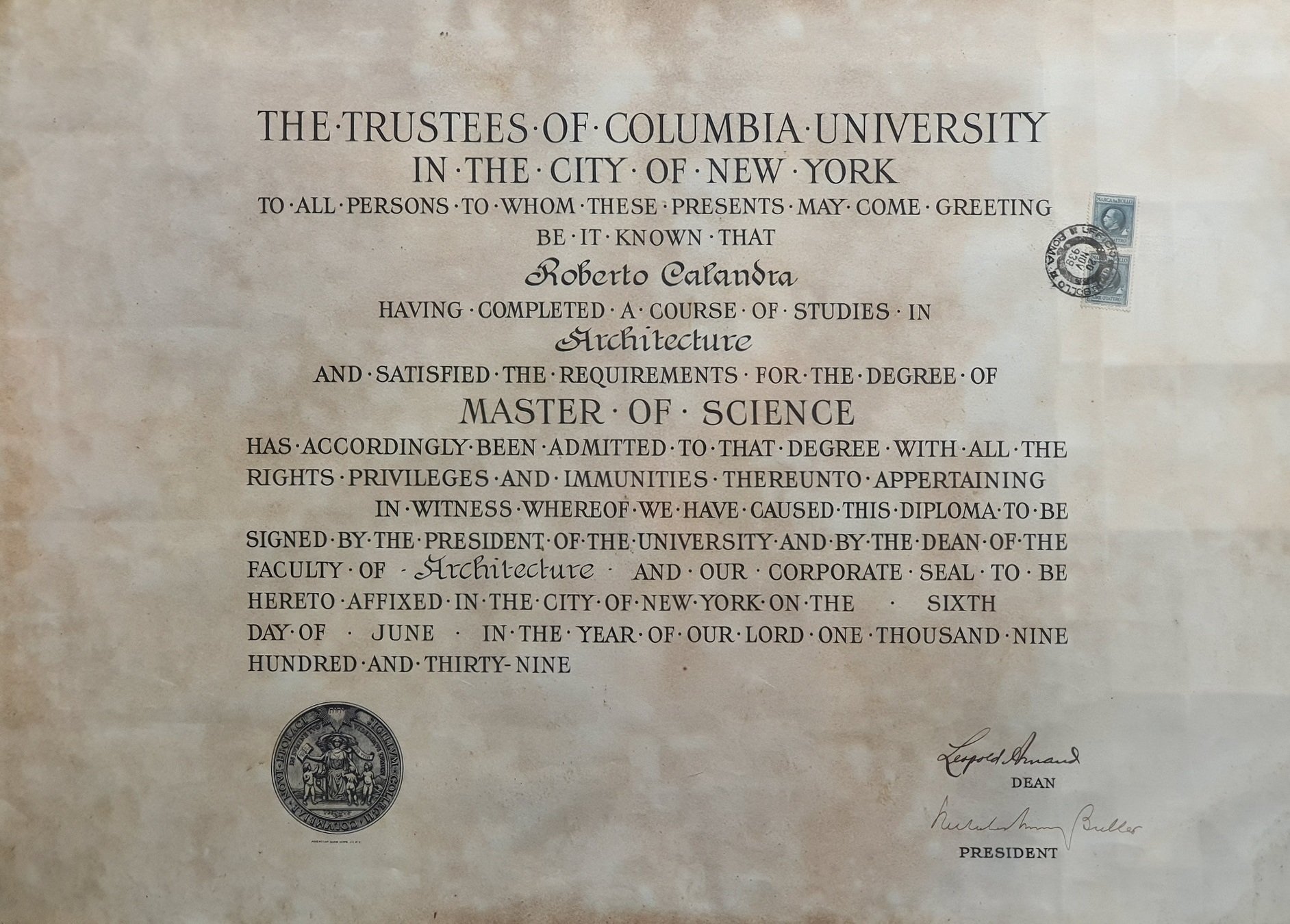
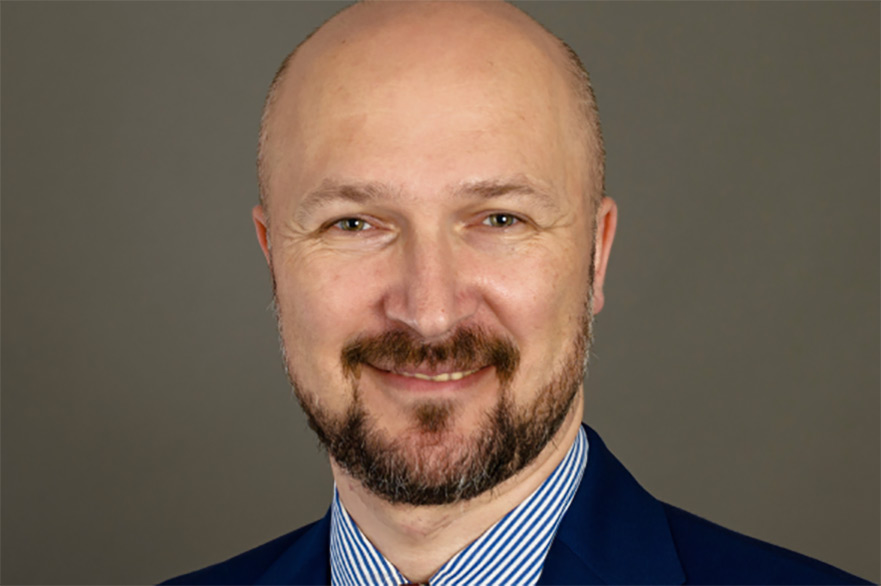
Roberto Calandra is a Full (W3) Professor at Technische Universität Dresden, where he leads the Learning, Adaptive Systems and Robotics (LASR) Lab. Previously, he served as a Research Scientist at Meta AI (formerly Facebook AI Research) and a Postdoctoral Scholar at UC Berkeley’s BAIR Lab under Sergey Levine. His academic journey includes a PhD in Robotics from TU Darmstadt, an M.Sc. in Machine Learning from Aalto University, and a B.Sc. in Computer Science from Università di Palermo. His research bridges Robotics and Machine Learning, focusing on tactile sensing, Bayesian Optimization, and model-based reinforcement learning. He pioneered the DIGIT tactile sensor , now the most widely used tactile sensor in robotics, and advocates for a computational field of Touch Processing to advance haptic understanding. His work emphasizes data-efficient learning, real-world dexterous manipulation, and multimodal perception. Recent publications highlight breakthroughs in tactile sensor design, in-hand object manipulation, and multimodal integration. He organizes workshops on robotics and machine learning (e.g., at NeurIPS, ICRA) and promotes open-source tools like PyTouch and TACTO .
Robert Godwin-Jones is a Professor in the Department of Foreign Language at Virginia Commonwealth University's College of Humanities and Sciences, where he has served since 1979. He holds the position of Foreign Language Liaison and maintains active scholarly contributions through his "German Stories" digital repository and "Communicating Across Cultures" blog, focusing on technology-enhanced language pedagogy and intercultural communication. His educational background includes: B.A. in French and German from Franklin and Marshall College (1971) M.A. in Comparative Literature (German, French, and English) (1973) Ph.D. in Comparative Literature from the University of Illinois Urbana-Champaign (1977) Dr. Godwin-Jones specializes in Computer-Assisted Language Learning (CALL), with research spanning artificial intelligence applications, virtual reality environments, and digital literacies for language learners. His work examines how emerging technologies transform second language acquisition through ecological semiotics, distributed agency models, and multimodal communication frameworks. He investigates pedagogical translanguaging strategies for less commonly taught languages and analyzes authenticity in AI-mediated language interactions, particularly in pragmatics and writing development. Analysis of his 2021-2025 publications reveals three dominant trajectories: (1) generative AI integration in language instruction with emphasis on ethical implementation and threat mitigation; (2) extended reality applications creating immersive language spaces in the metaverse; and (3) ecological approaches connecting smart devices, ambient intelligence, and situated learning contexts. His scholarship consistently bridges theoretical frameworks with practical classroom applications across 19th-century German literature studies and contemporary language education. He maintains active professional engagement through memberships in: Delta Phi Alpha German Honorary Society Phi Kappa Phi Honorary Society Modern Language Association American Association of Teachers of German American Association of Teachers of French Foreign Language Association of Virginia As director of the "German Stories" project since 1994, he has curated verified editions of 19th-century German narratives with English translations under Creative Commons licensing, creating what has become a foundational resource for literary study and language acquisition. His blog extends this work through contemporary analyses of intercultural communication challenges, while his scholarly leadership in organizations like CALICO shapes national discourse on technology in language education. His laboratory functions as the "German Stories" digital ecosystem, which has evolved into a comprehensive platform hosting annotated texts, pedagogical resources, and research archives. This environment supports both formal classroom instruction and informal learning communities, demonstrating his commitment to porous classroom models that integrate physical and digital learning spaces.
Cristina L. M. Silva is an Associate Professor at the Escola Superior de Biotechnology within Universidade Católica Portuguesa . She specializes in Food Science and Engineering with a focus on modeling and optimization of food processes , sustainable food systems , and preservation technologies like ultrasound, ozone, and UV-C radiation. Her work extends to by-product valorization , particularly in fruit and vegetable processing. She was elected a Fellow of the International Academy of Food Science and Technology (IAFoST) in 2022, reflecting her global leadership in food engineering education. She chairs the IUFoST Education Working Group 1.2 and serves on the advisory board of the ISEKI-Food International Association . Additionally, she is editor-in-chief of the International Journal of Food Studies and associate editor for multiple journals. Research Interests: Food process modeling, sustainable technologies, microbial safety, by-product valorization, and educational innovation in food science. Leadership: Deputy Director for Internationalization at ESB; led the CBQF Food Processing Engineering lab . Scientific Awards: IAFoST Fellow (2022).
Leteng Lin is a Senior Lecturer at the Department of Built Environment and Energy Technology, Faculty of Technology, Linnaeus University. He holds a PhD in Chemical Engineering (2013), Master's (2005), and Bachelor's (2002) degrees from the same field. His research focuses on energy technology, chemical engineering, and sustainable resource utilization, particularly in combustion, gasification, and pyrolysis processes for biomass and waste feedstocks.
James A. Sherwood is a Professor and Associate Dean for Graduate Studies at the Francis College of Engineering, University of Massachusetts Lowell. He serves as Director of the Baseball Research Center and Co-Director of the Advanced Composite Materials and Textiles Research Laboratory (ACMTRL) and the Sports Collaborative for Open Research and Education (SCORE). Dr. Sherwood earned his B.S. in Engineering Science, M.S. in Applied Mechanics, and Ph.D. in Aerospace Engineering and Engineering Mechanics from the University of Cincinnati. With nearly 40 years of experience, he has established himself as an expert in finite element analysis and composite materials. His research interests focus on composite materials with specialty in the forming of composites, finite element modeling, sports engineering with emphasis on baseball and football, and constitutive modeling. Dr. Sherwood has developed novel modeling approaches for simulating composite forming using the finite element method and has expertise in characterizing textiles used for fabric-reinforced composites. His recent publications demonstrate a strong focus on wind turbine blade manufacturing, composite forming processes, and sports engineering applications, particularly in baseball equipment analysis. Fastballs, Flips and Physics - Science on the Sandlot - Baseball Hall of Fame Featured in ESPN Magazine for compliance testing of Major League Baseball E-Council Teacher of the Year for Mechanical Engineering (1999) E-Council Teacher of the Year for Mechanical Engineering (1998) Teacher of the Year for Mechanical Engineering (1997) Dr. Sherwood has led research projects totaling over $15 million, funded by NASA, AFOSR, NSF, DOE, US Army Natick Soldier Research Development and Engineering Center, NIST, Major League Baseball, Little League Baseball, NCAA, and various sporting goods companies. He currently leads the NIST FIBERS Consortium to address challenges faced by the U.S. Composites Manufacturing industry. His work bridges academic research with practical industry applications, particularly in wind energy and sports technology. As Co-Director of the Advanced Composites and Textile Research Lab (ACMTRL), Dr. Sherwood has built a research team focused on the structural behavior of composites and relating manufacturing processes to resulting structural stiffness. His Composites Forming research team has expertise in characterizing textiles for fabric-reinforced composites and has developed innovative approaches to simulating composite forming processes.
Dr. Zhaoxia Pu is a Professor in the Department of Atmospheric Sciences at the University of Utah and an Adjunct Professor at the School of Computing . Recognized as a Fellow of both the American Meteorological Society and the Royal Meteorological Society, she serves on the NOAA Science Advisory Board and has led 38 federally funded projects from agencies including NOAA, NASA, NSF, DOE, and ONR. Specializes in numerical weather prediction , data assimilation , and AI/machine learning for high-impact weather systems Developed advanced methods integrating satellite/radar data (GOES-R, CYGNSS, TROPICS) with Earth system models (UFS, E3SM, WRF) Recipient of the 2024 Excellence in Research Award and 2023 Provost's Banner Project recognition Research Trends : Her recent publications focus on: Machine learning approaches for precipitation retrieval using GOES-R data Cold fog microphysics and visibility parameterization in complex terrain Tropical cyclone dynamics through radar and lidar data assimilation Boundary layer turbulence in landfalling storms Drought mechanisms linked to synoptic-scale circulation New particle formation in mountainous regions Scientific Leadership : Lead scientist for CFACT NSF field campaign (2021–2025) Editorial board member of leading journals Active reviewer for NSF, DOE, NOAA, and NASA Teaching & Mentorship : Teaches Numerical Weather Prediction , Atmospheric Dynamics , and Introduction to Atmospheric Sciences courses. Has supervised 28 graduate students to completion.
Nick Virgilio is a Full Professor in the Department of Chemical Engineering at Polytechnique Montréal . His research focuses on soft matter interfaces, polymer blends, and advanced hydrogel systems for biomedical and catalytic applications. Director, Research Laboratory on Surfaces, Interfaces and Soft Matter Member, Research Center for High-Performance Polymer and Composite Systems (CREPEC) Research interests include interfacial phenomena in multiphase systems, self-assembly of soft materials, nanoparticle-hydrogel composites, Pickering emulsions, and polymer microstructure engineering. Scientific awards include the 2010 Canadian Macromolecular Science Thesis Prize and the 2004 Polytechnique Montréal Master's Thesis Award. Recent publications highlight his work in macroporous hydrogels for cancer cell capture, nanoparticle synthesis in soft matrices, and interfacial control of polymer blends. His studies frequently appear in high-impact journals like ACS Applied Materials & Interfaces , Green Chemistry , and Macromolecules . Students under his supervision have explored topics from biofilm mechanics to lunar environment polymer systems across 4 PhD and 6 Master’s theses completed or ongoing.
Professor Shankar Madathil holds the Chair in Power Electronic Systems at the University of Sheffield , within the School of Electrical and Electronic Engineering . His academic journey began with a PhD in Engineering from Cambridge University (1992), preceded by a Master's in Semiconductor Technology (1986) and MSc in Applied Sciences (1984) from PSG College of Technology , India.
Mouad JEBLI is an Associate Professor at CESI Engineering School in Aix-en-Provence, France, where he serves as a Teacher-researcher within the Engineering and Digital Tools research team. His academic focus centers on the chemomechanical behavior and durability of concrete materials, with particular expertise in interfacial transition zone (ITZ) characterization and degradation mechanisms. His educational background includes a Doctorate in Mechanics and Civil Engineering (2013-2016) from University of Montpellier/IMT Mines Alès, with research on local-scale mechanical properties of cement paste-aggregate interfaces, and a Specialized Master in Engineering and Project Management of Building and Public Works (2011-2012) from University of Montpellier 2 and Cadi Ayyad University, Morocco. Dr. JEBLI's research spans Concrete Technology, Durability of Materials, and Mechanical Behavior of Materials, emphasizing experimental characterization of chemomechanical degradation processes including leaching, internal sulfate attack, and interface mechanics. His work integrates multi-scale approaches from nanoindentation to structural testing, with significant contributions to cohesive zone modeling and composite repair techniques for concrete structures. Analysis of his 15 most recent publications (2018-2024) reveals consistent focus on experimental methodologies for concrete durability assessment, with strong emphasis on interface mechanics, degradation modeling, and sustainable repair solutions. Key thematic trends include the evolution of ITZ properties under chemical attack, development of predictive models for material interfaces, and application of natural fiber composites for structural rehabilitation. His scientific recognition includes: Best Poster Award at 36èmes Rencontres de l’AUGC (2018) Dr. JEBLI actively supervises graduate research, currently guiding PhD candidate MA TAZI (defending 2026) on composite patch repairs, and previously supervised PhD graduates S. NESRINE (2021) and A. Girboveanu (2020), along with multiple Master's students including Fabrice GBEWADE (2019) and Kim Quyen Nguyen (2016). His research is conducted through the Engineering and Digital Tools team, which develops advanced engineering methodologies for construction materials and structural systems.
Dr. Mykola Tasinkevych is a Senior Lecturer at the School of Science & Technology, Nottingham Trent University (since 2021). Previously, he held research positions at the Max Planck Institute for Metals Research (Senior Scientist), University of Lisbon (FCT Fellow), and Northwestern University. He completed his PhD in 1999 and has since published 75+ peer-reviewed papers, secured €1M+ in competitive grants (FCT, DFG, EU), and supervised 15+ students/postdocs. His research centers on soft condensed matter , with expertise in: Liquid crystal-enabled nanoparticle self-assembly and topological defects Dynamics of active colloids and microswimmers Superhydrophobic surfaces and wetting phenomena Capillary interactions at fluid interfaces He collaborates internationally with groups at University of Colorado Boulder, University of Lisbon, and University of Hawaiʻi. His recent publications (2020–2025) focus on active matter control (e.g., microswimmers in ratchets), liquid crystal skyrmions under flow/topological constraints, and nanoparticle assembly in chiral environments. Machine learning applications for texture analysis also emerge in forthcoming work. Awards/Grants: FCT Postdoctoral Fellowship (1999–2003) FCT 5-year Principal Investigator Fellowship (2017; 10% success rate) DFG/EU FP7 Grants (2007–2016) FCT Major Grant PTDC/FIS-MAC/5689/2020 (6% success rate) He leads theoretical research groups on soft matter, advising projects in physics and securing funding for international collaborations. Current work explores dynamical phenomena in topological solitons and nanoparticle composites.
Oum El Kheir Aktouf is a Professor in Computer Science at Grenoble Institute of Technology (Esisar Engineering School) and a member of the LCIS laboratory, France. She previously served as a Visiting Professor at San José State University, USA, during a sabbatical leave. Education : Master and PhD in Computer Science from Grenoble Institute of Technology Her research focuses on dependability, safety, and security of embedded and interconnected systems, including sensor-based applications and multi-agent architectures. She employs runtime testing, diagnosis, and monitoring approaches. Her work spans mobile application testing, fault diagnosis in RFID and wireless sensor networks, and security frameworks for autonomous systems. Recent publications highlight trends in Android security benchmarking , decentralized cryptography , and multi-agent resilience . She has participated in 12 funded national and international research projects and supervised courses in operating systems, real-time systems, distributed computing, and system dependability.
Jaakko Akola is a Professor in the Department of Physics at the Norwegian University of Science and Technology (NTNU). His research focuses on computational materials science, particularly density functional theory (DFT) and atomistic simulations of materials, nanoparticles, molecules, and interfaces. He leads significant projects such as "SIDI" (inoculation in cast iron), "Infinity-RETIS" (chemical rare events), and "AllDesign" (rational alloy design), alongside coordinating EU-funded initiatives like "CritCat" for catalyst development. The Materials Theory group under Akola employs DFT, molecular mechanics, and Monte Carlo methods to explore atomic-scale structures and functions in technological applications. Key research areas include platinum-free catalysts for hydrogen energy, amorphous semiconductors for memory devices, noble metal nanoparticles in biological environments, and alloy design for cast iron and aluminum. Recent work integrates machine learning to advance theory-driven material design, reducing reliance on experimental trial-and-error. Akola's publications highlight advancements in hydrogen evolution catalysis, phase-change memory materials, and alloy precipitation. His projects often involve interdisciplinary collaborations with experimental teams. He teaches Quantum Physics 1 (FY2045) and Computational Physics (TFY4235) at NTNU, reflecting his commitment to education alongside research.
Kevin De Pauw is a postdoctoral researcher at the Department of Physiotherapy, Human Physiology and Anatomy at Vrije Universiteit Brussel (VUB). He actively contributes to 12 research projects with a focus on robotics, mental fatigue, brain physiology, and sports physiotherapy. Current projects include Brubotics, APEX, and TBrainBoost Collaboration network spans Belgium, Germany, and Netherlands Key research themes: Mental Fatigue (100%), Robotics (100%), and Prosthetics (52%) Research Interests: His work explores the intersection of brain physiology, fatigue mechanisms, and robotics applications in rehabilitation. He develops predictive musculoskeletal simulations and investigates inter-limb asymmetry in athletes. Article Trends: Recent publications show increasing focus on robot-assisted rehabilitation , brain neuroplasticity , and mental fatigue quantification . Research combines AI-driven wearable robotics with neurophysiological monitoring . Student Supervision: He mentors Master's students in topics related to Lower limb asymmetry analysis Adolescent cognition-fitness relationships Exoskeleton interface design Laboratory Affiliation: Member of Brubotics and TBrainBoost teams at VUB, working on sustainable human-centered robotics and neurocirculation enhancement technologies.
Sinead O'Keeffe is a Research Fellow at the University of Limerick in the Faculty of Science and Engineering , specifically within the Department of Electronic and Computer Engineering . Her research bridges the technical domain of optical fiber sensor development with critical applications in radiation therapy and sports medicine. Primary Research Themes Medical radiation dosimetry using optical fiber sensors Brachytherapy dose monitoring systems Sports injury prevention in Gaelic football and running Mental health literacy in rural farming communities Key Technical Contributions Development of scintillation-based dosimeters Characterization of perfluorinated polymer fibers 3D printed sensor systems for clinical and rehabilitation applications Interdisciplinary Applications Prostate cancer radiotherapy dose measurement Mental health intervention programs for athletes Work-family conflict analysis in Irish farming Email: sinead.okeeffe@ul.ie
Philippe Tassin is a Professor of Physics at Chalmers University, specializing in electromagnetic structured media and computational electrodynamics. He teaches optics, quantum mechanics, and computer science courses, earning recognition through the Golden Chalk award and Chalmers' Pedagogical Prize. M.Sc. and Ph.D. (summa cum laude) from Free University of Brussels Postdoctoral work at Iowa State University and Ames Laboratory (US DOE national lab) His research spans metamaterials, plasmonics, and nanophotonics, with significant contributions to inverse design methodologies using machine learning. He has authored influential papers in Science , Nature Photonics , and Physical Review Letters , and frequently presents at international conferences. Recent publications highlight advancements in liquid metal composites for electromagnetic absorption, AI-driven metasurface design, and adaptive meshing for photonic simulations. His work integrates computational physics with experimental validation across multiple electromagnetic domains. KAW Fellowship Swedish Research Council Grant IEEE & SPIE Fellowships BAEF Alumni Award Frans Van Cauwelaert Award (Royal Flemish Academy) As editor of Photonics and Nanostructures , member of the Young Academy of Sweden, and vice-chair of IEEE Photonics Sweden Chapter, he actively contributes to academic leadership and public science communication.