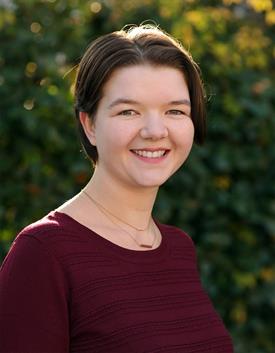
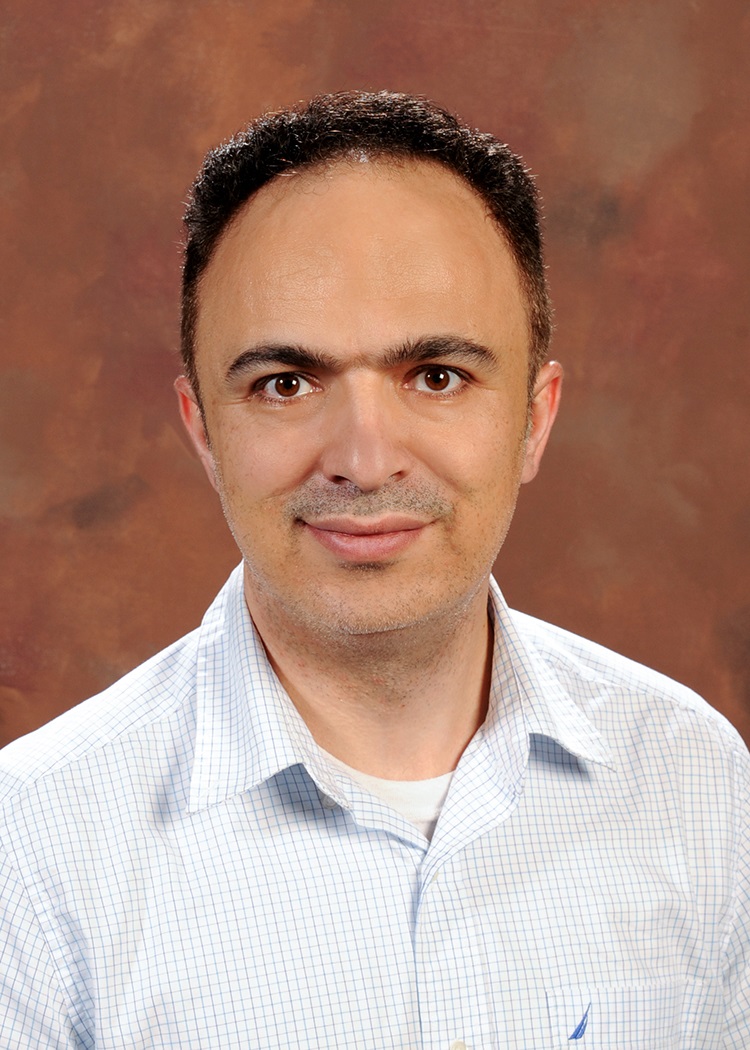
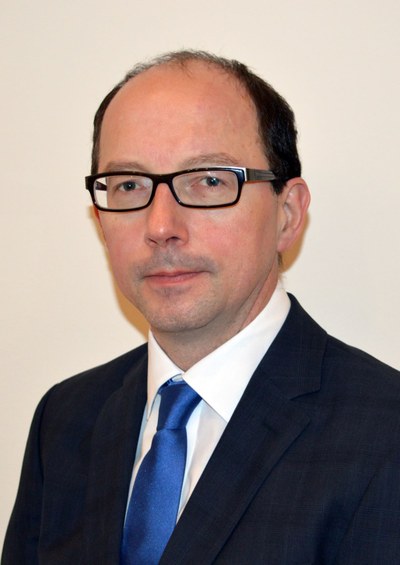
Kathrin Ebener-Holscher serves as a Researcher at the Faculty of Social Sciences and Cultural Studies, Düsseldorf University of Applied Sciences. She is currently employed as a Research Assistant in the ANSAB project (Aufgaben und Nutzen Sozialer Arbeit in der beruflichen Rehabilitation), funded by the German Pension Insurance (DRV) Bavaria South from December 2021 to November 2024, and previously held a Lecturer position teaching quantitative research methods in the Bachelor's Social Work program. Her research centers on Social Work within vocational rehabilitation, examining the roles and effectiveness of social work interventions through participatory mixed-methods approaches. She investigates stakeholder perspectives—including rehabilitation clients, practitioners, and business actors—to identify conditions for successful rehabilitation processes and sustainable reintegration into the workforce. Her work emphasizes transition support, interface management, and the development of evidence-based recommendations for professional practice. Her 2024 publication in Sozialer Fortschritt analyzes business-actor interfaces in rehabilitation processes using ANSAB project data, highlighting how social work bridges gaps between clients and employers. This reflects her broader focus on practical applications of research to improve rehabilitation outcomes and professionalize social work in vocational contexts. She collaborates within an interdisciplinary ANSAB team led by Prof. Dr. Silke Tophoven, including Prof. Dr. Ruth Enggruber, Prof. Dr. Matthias Meißner, Julia Seefeld M.A., and Viktoria Holter. The project features a unique participatory steering committee predominantly composed of rehabilitation clients to ensure lived-experience input throughout the research lifecycle.
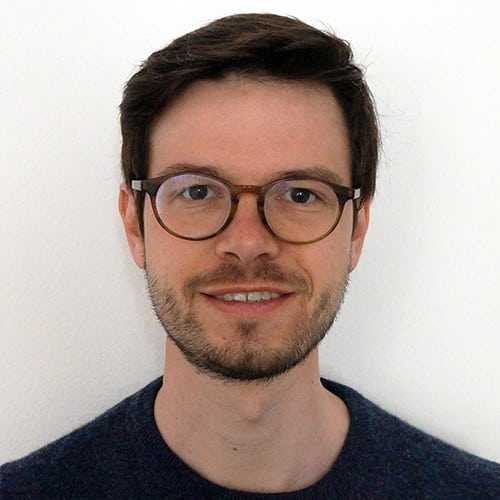
Stefan Kitzler is a PhD candidate at the Complexity Science Hub (CSH) since May 2021, University lecturer in computer science at Vienna University of Technology (TU Wien) since March 2024, and Scientist at AIT Austrian Institute of Technology. He completed a 2023 research stay at University of Montreal's EconCrime Lab and served as Technical Advisor at the BIS Innovation Hub on the Data Atlas project in early 2025. Education: Bachelor's and Master's in Technical Physics, TU Wien His research focuses on cryptoasset data analysis within Decentralized Finance (DeFi), examining service structures, DAO governance dynamics, and criminal activity patterns. Work combines blockchain technology with financial crime analysis to map systemic risks in digital currency ecosystems, emphasizing empirical evidence and cross-ledger transaction flows. Recent publications reveal evolving DeFi research trajectories: early work (2022-2023) established composability frameworks for DeFi protocols on Ethereum, while 2025 studies expanded into DAO governance transparency and crime landscape mapping. This progression demonstrates interdisciplinary integration of computer science, criminology, and financial systems analysis. Scientific Awards: Research prize (2023) for DeFi paper Kitzler contributes to the DeFiTrace project analyzing illegal payment flows in cross-ledger DeFi ecosystems under Bernhard Haslhofer. While no formal students are documented, his lecturing role at TU Wien and research group participation indicate knowledge transfer activities within academic and institutional settings. He actively participates in CSH's Digital Currency Ecosystems and Crime in the Digital Age research groups, collaborating on blockchain analytics projects that bridge academic research with real-world financial technology applications.
Gül Varol is an Associate Professor (permanent researcher) in the IMAGINE group at École des Ponts ParisTech. She holds an ELLIS Scholar distinction and collaborates with MPI. Previously, she was a postdoc at the University of Oxford’s Visual Geometry Group (VGG). Her PhD from Inria Paris/ENS under Ivan Laptev and Cordelia Schmid earned her ELLIS and AFRIF awards. She earned BS/MS degrees from Boğaziçi University. Research Focus: Her work bridges computer vision and language, emphasizing video understanding, human motion synthesis, and sign language technologies. Notable contributions include the BOBSL dataset (BSL), SLRTP challenge, and methods for sign language translation/contextual retrieval. She also pioneers text-driven 3D motion editing (MotionFix) and video chaptering with LLMs (Chapter-Llama). Awards & Service: Received Google Research Scholar Award (2023), ECCV 2024 Program Chair, IJCV associate editor, and leadership in workshops like NeurIPS’20 Preregistration and CVPR’25 Sign Language. Organized over 15 conferences/workshops since 2017. Labs & Teams: Core member of IMAGINE (LIGM lab), collaborates with MPI and industry (Google/Adobe). Active in outreach initiatives like Women in CV and Girls Who Code.
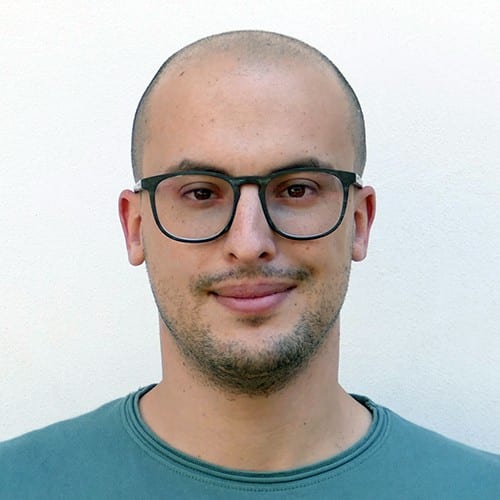
Pietro Saggese is an Assistant Professor at the IMT School for Advanced Studies Lucca, Italy, where he is affiliated with the Department of Economics and Data Science within the School of Economics, Management, and Data Science. He is also associated with the Complexity Science Hub (CSH) in Vienna, contributing to the Digital Currency Ecosystems research group. Prior to his current role, he was a postdoctoral researcher at CSH and the AIT Austrian Institute of Technology from 2021 to 2023. Bachelor’s and Master’s in Physics, University of Turin PhD in Economics and Data Science, IMT School for Advanced Studies Lucca (2021) Pietro Saggese's research centers on cryptofinance and cryptoasset analytics, with a particular focus on decentralized finance (DeFi) ecosystems. He investigates the interplay between DeFi protocols on Ethereum to assess risks and opportunities, analyzes arbitrage behavior in Bitcoin, detects financial bots on blockchains, and evaluates the governance structures of Decentralized Autonomous Organizations (DAOs). His work combines data science, complex systems theory, and economic modeling to provide empirical insights into digital currency markets. His recent publications reveal a strong trend toward understanding systemic structures in DeFi, including composability, governance centralization, and solvency risks. The works span technical blockchain analysis, economic modeling, and regulatory implications, highlighting an interdisciplinary approach to cryptoeconomic systems. Scientific Awards and Recognition: No specific awards listed in the text, though his collaborator Stefan Kitzler won a research prize for a DeFi-related paper. Pietro actively collaborates with researchers at CSH, AIT, and IMT Lucca on grants and projects related to digital currency ecosystems. His advising roles are not explicitly mentioned, but his publications suggest mentorship and collaboration with early-career researchers. He is involved in high-impact research projects on blockchain transparency, DAO governance, and financial stability in crypto markets. He is a key contributor to the Digital Currency Ecosystems research initiative at the Complexity Science Hub, where he continues to publish and present on pressing issues in decentralized finance, including power concentration in DAOs and the solvency of crypto exchanges.
Giovanni Paolini is an Associate Professor of Mathematics at the University of Bologna (Italy) since 2023. Previously, he worked as an Applied Scientist/Senior Applied Scientist at Amazon Web Services and Caltech (2019–2023), and held a postdoctoral position at the University of Fribourg (2019). He earned his PhD in Mathematics from Scuola Normale Superiore (Pisa, Italy) in 2019, under Prof. Mario Salvetti, with a thesis on topology and combinatorics of affine reflection arrangements. His research spans combinatorics, topology, group theory , and machine learning (deep learning and NLP). Notable contributions include resolving the K(π,1) conjecture for affine Artin groups and developing AI for strategic games like 7 Wonders Duel. He organizes events such as MATH-MIND: Mathematics-Industry Networking Days (2025) and has participated in workshops like Artin Groups and Arrangements at MSRI (2024). Teaching roles include courses on geometry, combinatorial topology, and machine learning at the University of Bologna. His work bridges pure mathematics and applied AI, with publications in journals like Inventiones Mathematicae and conferences like ICLR and ICML. Collaborations include projects with Stefano Soatto (UCLA), Mario Salvetti, and interdisciplinary teams at Amazon.
Jay (Ju-Sung) Lee is an Assistant Professor in the Department of Media and Communication at Erasmus School of History, Culture and Communication, Erasmus University Rotterdam. His academic work bridges social, communication, and semantic networks with advanced digital methodologies. He is actively engaged in research involving computational social science, network analysis, and text analysis. Education: Ph.D. in Quantitative Sociology, Carnegie Mellon University, 2008 M.S. in Organization and Decision Sciences, Carnegie Mellon University B.S.E. in Computer Science, Princeton University His research focuses on analyzing textual discourse from organizations, media, and the public, particularly in contexts of societal tension such as the financial and refugee crises. He investigates how discourse structures relate to social and organizational behavior through computational and network-based methods. His methodological expertise includes statistics, network analysis, computer-aided text analysis, and agent-based modeling. The recent articles highlight a strong trend in digital and computational approaches to communication and society, spanning science communication, urban data ethics, media representation, and cultural networks. His work integrates both qualitative and quantitative techniques, with a consistent focus on societal impact and methodological innovation. There are no scientific awards explicitly mentioned in the provided text. Jay Lee has supervised or collaborated with researchers across disciplines, though no formal list of advisees is provided. He has been involved in externally funded projects such as the NWO project “Digging into Data” and has contributed to academic service through peer review and event organization. His research has been supported by international collaborations with institutions in the U.S., Canada, and the U.K. He was previously a postdoctoral researcher at the University of Twente’s Department of Governance and Technology for Sustainability and at the Center for Computational Analysis of Social and Organizational Systems (CASOS), Carnegie Mellon University. He contributes to the ERMeCHS research cluster in Digital Humanities and aligns with UN Sustainable Development Goals through his digital and societal research.
Martijn L.P.J. Koedam is a researcher at the Electronic Systems department within the Electrical Engineering school at Eindhoven University of Technology . His work focuses on embedded systems, multi-processor architectures, and resource utilization optimization in real-time environments. Research areas: Embedded Systems, Multi-Processor Systems, Real-Time Systems External role: Founder/R&D at Verintec Solutions (since 2018) His research explores predictable and composable platforms for cyber-physical systems, emphasizing dynamic environments, quality-sensitive applications, and model-driven design. Projects like IMOCO4.E , TRANSACT , and I-MECH highlight collaborations with experts such as Kees Goossens and Sander Stuijk. Recent publications address resource utilization in multi-rate control systems, deployment frameworks for dynamic environments, and composable ROS2 architectures for robotics. These works intersect with disciplines like computer science, signal processing, and cyber-physical systems. He contributes to projects like COMP4DRONES and I-MECH , focusing on real-time systems and model-driven design. His external position at Verintec Solutions aligns with his technical expertise in embedded systems and MedTech innovation.
Sylvia Ratnasamy is a Professor of Computer Science at the University of California, Berkeley, specializing in networked systems design. She holds affiliations with the International Computer Science Institute (ICSI), the Networked Systems Lab (NETSYS), and the Software Principles for Advanced Networking (SPAN) Center. Her research focuses on scalable network architectures, middlebox virtualization, data center networking, and distributed systems. Education: PhD in Computer Science from UC Berkeley (2002), Bachelor's in Computer Engineering from the University of Pune, India (1997). Research interests include networked systems, software-defined networking, middlebox architectures, and performance optimization. Notable contributions include the design of NetBricks, E2 framework for NFV, and foundational work on data-centric storage (e.g., OpenDHT). Recent work explores cloud-augmented autonomous driving, cellular network architectures, and hardware-accelerated scheduling. Major awards include the ACM Grace Murray Hopper Award (2014), ACM SIGCOMM Test-of-Time Award (2011), and Sloan Research Fellowship (2012). She has advised numerous projects funded by NSF, DARPA, and industry collaborations. Labs/Teams: Co-leads the SPAN Center for networking research. Active in academic service, including SIGCOMM Technical Steering Committee and program committees for top conferences like NSDI, SOSP, and HotNets.
Derek N. Mueller is a Professor of Rhetoric and Writing in the Department of English at Virginia Tech, where he also serves as a Faculty Associate in the Food Studies Program. He has held his professorship since 2021, following his promotion from Associate Professor (2018-2021). Prior to Virginia Tech, he was Associate Professor of Written Communication at Eastern Michigan University (2014-2018), where he also directed the First-year Writing Program (2013-2018). Dr. Mueller earned his educational credentials from: PhD in Composition and Cultural Rhetoric from Syracuse University (2009) MA in English (Rhetoric and Writing) from University of Missouri-Kansas City (2000) BA in English (Literature and Writing) from Park University (1996) Dr. Mueller's research focuses on the interplay among writing, rhetorics, and technologies. His scholarly work examines digital writing platforms, networked writing practices, theories of composing, and discipliniographies or field narratives related to writing studies/rhetoric and composition. He approaches these topics through the lenses of visual rhetorics, information design, and data visualization, creating methodologies for understanding how disciplines form, evolve, and sometimes dissipate. His publication record reveals a consistent trajectory of innovation in composition studies methodology. Early work established foundations in digital underlife and networked writing classrooms, while more recent scholarship explores visual rhetorics in administrative contexts, network visualization methods, and research methodologies for writers. A unifying thread throughout his work is the exploration of how writing practices and disciplinary formations can be understood through network analysis and visualization techniques. His research often bridges theoretical frameworks with practical applications for writing instruction and program administration. Dr. Mueller's scholarly contributions have been recognized with several prestigious awards: John Lovas Award for "an outstanding online project devoted largely to academic pursuits," Earth Wide Moth (2025) Computers & Composition Distinguished Book Award for Network Sense: Methods for Visualizing a Discipline (2018) CCCC Research Impact Award for Network Sense: Methods for Visualizing a Discipline (2019) Claude English Award for leadership, service, and professional achievement from Park University (2019) Catch the Spirit Award from Native Vision, Johns Hopkins Center for Indigenous Health (2016) As an educator and mentor, Dr. Mueller has guided numerous graduate students through their academic journeys and research projects. His grant activity demonstrates significant investment in program development and innovation, including multiple Pathways Grants at Virginia Tech focused on digital literacies, composition program development, and online teaching initiatives. He has also secured funding for life skills workshops for Native youth and first-year writing program assessment initiatives. Dr. Mueller maintains an active digital scholarly presence through Earth Wide Moth, his online platform for notes, reactions, and memory exploration. His creative work extends into visual arts through editorial illustrations for OnlyPoems and gallery exhibitions like "Out of Hollow Green Stuff Woven" at Roanoke College. He has also developed creative pedagogical tools like the Institutional Service Tarot Deck and Memory Masktch™ card game, demonstrating his commitment to innovative approaches to academic work and memory.
Dr. Madeleine Sorapure is a Teaching Professor and former Director of the Writing Program at the University of California, Santa Barbara (UCSB), and currently serves as Associate Dean in the Division of Undergraduate Education. She specializes in digital rhetoric, multimedia communication, and data visualization pedagogy. Her research explores the intersection of technology, writing, and design, with a focus on how data visualization shapes public understanding and educational practices. Education: PhD in English from Binghamton University (1990), MA in English (1984), and BA in English from the University of Notre Dame (1982). Affiliations: Member of the National Council of Teachers of English (NCTE) Editor of the Inventio section of Kairos Co-Director of the Professional Writing Minor at UCSB Research Interests: Her work spans data visualization practices, multimodal composing, and the integration of digital tools in education. Notable projects include studies on pandemic data dashboards, Dear Data pedagogy, and the rhetoric of information visualization. Awards: UCSB Distinguished Teaching Award (2021) Kairos Best Webtext Award (2005) for Between Modes: Assessing Student New Media Compositions Fulbright Lecturer (Joszef Attila University, 1995–96) Teaching & Service: She has designed courses in document design, digital portfolios, and responsive web design. Her administrative roles include leadership in the UCSB Writing Program and BOARS (Board of Admissions and Relations with Schools). Key Contributions: Authored widely used textbooks like Common Culture and pioneered innovative assignments such as the Dear Data project, blending personal data collection with visual storytelling.
Reza Rahaeimehr serves as Assistant Professor in the Department of Computer & Cyber Sciences at Augusta University's School of Computer and Cyber Sciences, teaching courses including Operating Systems, Web Development, and specialized cybersecurity topics. His educational credentials feature: Ph.D. in Computer Science, University of Connecticut, 2019 Dr. Rahaeimehr's research centers on practical cybersecurity vulnerabilities , with pioneering work in acoustic side-channel attacks that exploit keyboard sounds to extract sensitive data. His investigations extend to machine learning security (particularly backdoor attacks in intrusion detection systems) and cryptographic protocols for cloud infrastructure and supply chain management, revealing critical weaknesses in real-world systems. Publication trends (2018-2023) demonstrate evolving focus from foundational cryptographic security toward AI-driven threat analysis, with recent work emphasizing transfer learning vulnerabilities and acoustic eavesdropping techniques. This trajectory highlights growing industry relevance in hardware security and adaptive defense mechanisms. No scientific awards are documented in current institutional records. Dr. Rahaeimehr actively contributes through departmental service as Faculty Advisor for the Undergraduate Courses & Curricula Committee (2023-2028) and professional service on technical program committees for major security conferences including the International Conference on Cryptology and Network Security (2023).
Dr. Hasan H. Turan is a Senior Lecturer and the Research Lead at the Capability Systems Centre, University of New South Wales (UNSW Canberra) within the School of Systems & Computing. Previously, he worked as a post-doctoral research fellow at Qatar University's Mechanical and Industrial Engineering Department from 2015 to 2017. His academic journey includes a Ph.D. in Industrial and Systems Engineering from Istanbul Technical University and a master's degree from North Carolina State University. Dr. Turan's educational background reflects his strong foundation in systems engineering and optimization: Ph.D. in Industrial and Systems Engineering, Istanbul Technical University Master's in Industrial and Systems Engineering, North Carolina State University Dr. Turan's research focuses on the development and application of data-driven optimization algorithms and simulation models across various domains including service and maintenance logistics, defense applications, energy capacity expansion, and telecommunications networks. His current work emphasizes integrating machine learning (particularly reinforcement learning), artificial intelligence, and computational intelligence techniques (such as genetic algorithms) with simulation models (discrete event and system dynamics) to address complex decision-making problems. His approach combines theoretical rigor with practical applications, particularly in defense contexts where robust decision support is critical. His recent publication trends reveal a strong focus on simulation-optimization techniques applied to defense resource planning, military fleet management, and logistics. There's a clear progression toward integrating AI and machine learning with traditional optimization methods, particularly in addressing uncertainty in defense and supply chain applications. His work spans multiple methodologies including differential evolution algorithms, deep reinforcement learning, and system dynamics approaches to tackle problems in maintenance planning, workforce allocation, and rare earth supply chains. Dr. Turan has demonstrated significant leadership in his field through professional activities: Guest editor for a special issue on simulation-based optimization in the Annals of Operations Research Editorial board member of the Journal of Business Analytics Convener of the 3rd and 4th IEEE Systems Modeling Conference Organizer of special sessions on simulation-based optimization at international conferences Committee member for leading international conferences on modeling, simulation, and management science As an educator, Dr. Turan has taught 15 different courses at bachelor's and master's levels to students from diverse backgrounds. He is actively involved in mentoring research students and seeks PhD candidates with strong programming skills and understanding of optimization and simulation modeling. He has secured competitive scholarships for high-achieving students in engineering, mathematics, or related sciences. His funded research projects have been supported by prestigious organizations including the Department of Defence, Qatar National Research Fund, The Scientific and Technological Research Council of Turkey, and Balassi Institute. Dr. Turan leads research activities at the Capability Systems Centre, focusing on developing advanced methodologies for complex decision-making problems. His team works on integrating AI with simulation-optimization approaches to address challenges in defense asset management, workforce planning, and logistics. The research environment he cultivates emphasizes both theoretical innovation and practical implementation to deliver actionable insights for defense and industry partners.
Dr. Kyle Gullings is an Associate Professor of Music Theory and Composition at The University of Texas at Tyler, where he has served since 2011. He previously directed the School of Performing Arts (2019–2023). His work focuses on open educational resources (OER), music pedagogy, and composition addressing social themes like space exploration, nuclear policy, and mental health. He co-authored the Open Music Theory textbook, supported by a $30,000 VIVA grant, and has published peer-reviewed articles on music education and interdisciplinary collaboration. Education: Doctor of Musical Arts in Composition, The Catholic University of America Master of Music in Composition (Stage Music Emphasis), The Catholic University of America Bachelor of Music in Music Theory/Composition, Concordia College His compositional works have been performed nationally through festivals like the Kennedy Center’s Page to Stage Festival and the Society of Composers, Inc. Awards include recognition from the National Opera Association and SCI/ASCAP competitions. Gullings advocates for accessible music education and has pioneered OER initiatives to reduce student textbook costs. Grants & Projects: $30,000 VIVA Open Course Grant for Open Music Theory development Course Redesign Grant supporting OER adoption He leads collaborative projects blending music with engineering and community engagement. His lab focuses on innovative pedagogy and interdisciplinary arts integration.
Ralf Lämmel is Professor and Head of the Software Languages group at the University of Koblenz. His research spans software language engineering, model-driven development, and semantic web technologies. He specializes in API analysis, data validation (SHACL constraints), and variability management for software systems. Recent work focuses on AI-assisted workflows for archaeology and trust analysis in large language models. Publications demonstrate growing interest in knowledge graph validation and semantic web applications. He has developed tools like the Virtual Platform for software variability and ProGS for property graph validation. Service includes program committee memberships for software engineering conferences and editorial roles. He leads research groups exploring API evolution and RDF validation techniques.
Anil Goel is an Adjunct Professor with expertise in database systems, data management, and distributed computing. His work focuses on in-memory databases, transaction processing, and enterprise data infrastructure. He has contributed to projects like SAP HANA, emphasizing scalability and real-time analytics. Key research areas include columnar storage systems, log-structured data management, and distributed transaction protocols. His publications span from 2000 to 2022, with recent work addressing global data mesh architectures and composable data management frameworks. He has explored innovative methods for synthetic data generation, quorum-based replication, and lockless database operations. Despite his prolific output, no scientific awards or student advisement records are mentioned in the provided texts. His articles reflect a strong emphasis on optimizing database performance, durability, and scalability in both traditional and cloud-native environments.