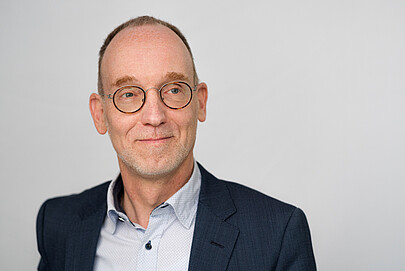
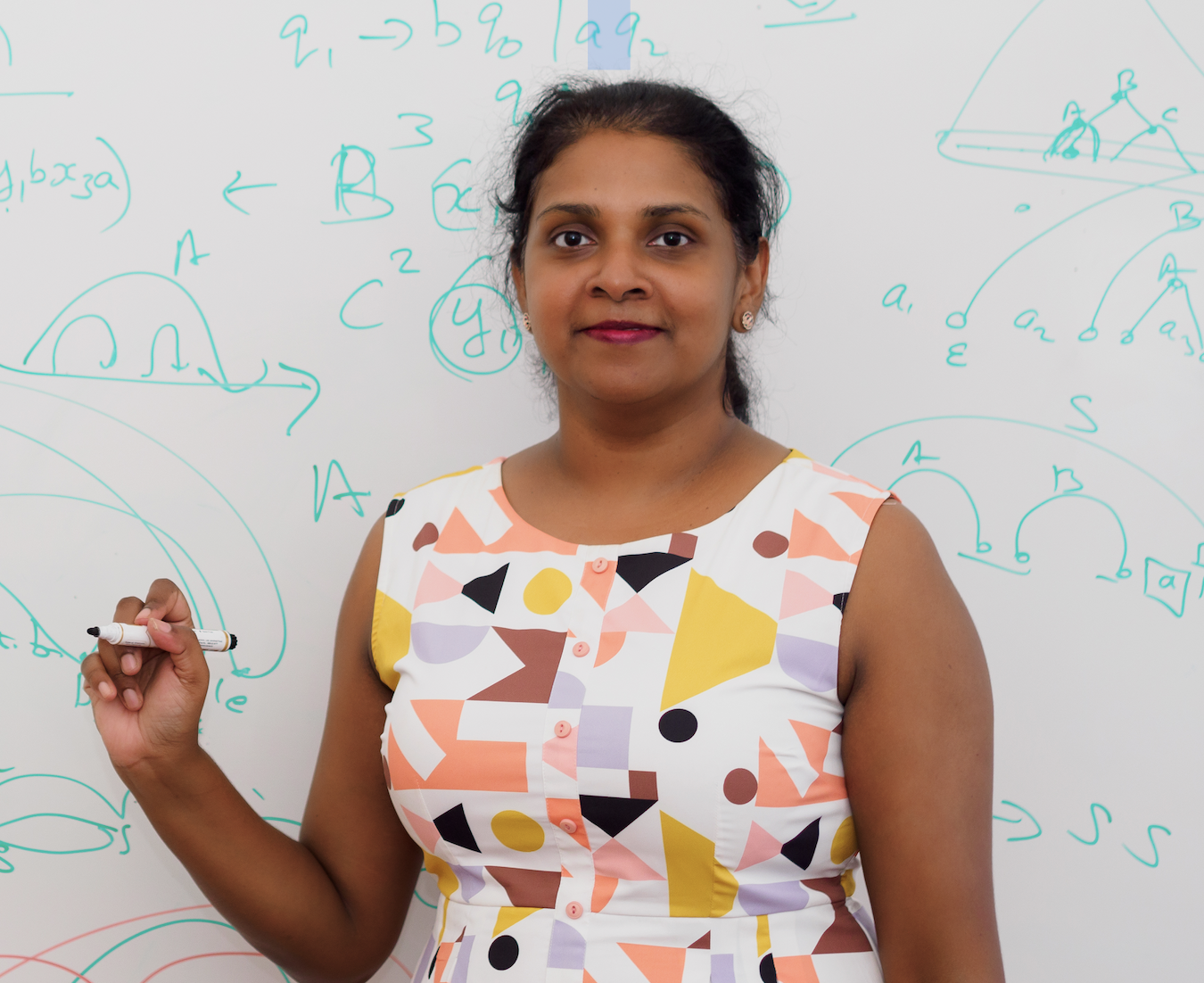
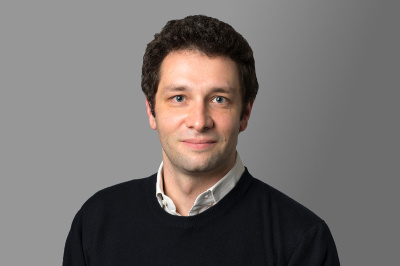
Matthias Paul Lanzinger is an Assistant Professor at the Technische Universität Wien's Faculty of Informatics, Department of Database and Artificial Intelligence. His research focuses on algorithms, graph neural networks, hypergraph decomposition techniques, parameterized complexity, and computational logic. He leads projects like 'DeConquer' (Vienna Science Fund) and 'HyperTrac', exploring efficient query processing and hypergraph-based algorithms. Research interests include theoretical computer science, database systems, and applying logical frameworks to solve complex computational problems. Recent work emphasizes hypertree decompositions, fuzzy Datalog, and graph motif analysis via the Weisfeiler-Leman test. He co-edited the 2024 Datalog-2.0 workshop proceedings and has supervised students on topics like column-store performance and graph query languages. His publications span venues like ACM Transactions on Database Systems, ICLR, and IJCAI, highlighting contributions to algorithmic efficiency, database theory, and logical reasoning systems. Active in academic service, he teaches courses on database systems, scientific research, and advanced topics in informatics.
Xiangyang Xue is a Professor at Fudan University in Shanghai, China, with an extensive research portfolio spanning computer vision, machine learning, and artificial intelligence. His work demonstrates significant contributions to object-centric representation learning, 3D reconstruction, person re-identification, and semantic segmentation. With over two decades of publication history from 1999 to present, he maintains an active research program with numerous collaborations, particularly with researchers like Yanwei Fu, Bin Li, and Yu-Gang Jiang. Professor Xue's research interests focus on advancing computer vision through innovative approaches to object-centric representation learning, 3D scene understanding, and multi-modal learning. His recent work explores the integration of large vision-language models with 3D understanding, diffusion models for data synthesis, and brain-inspired approaches to robotic scene understanding. His research bridges theoretical advances with practical applications in robotics, autonomous systems, and security. Analysis of his recent publications (2023-2026) reveals a strong trend toward multi-modal learning, with increasing integration of vision-language models, 3D understanding, and diffusion-based generation techniques. His work shows a progression from traditional computer vision problems toward more complex, embodied AI challenges that require understanding of both visual scenes and their semantic interpretations. Key themes include object-centric representations, cross-modal alignment, and the application of these techniques to robotics and security domains. Professor Xue has mentored numerous researchers through collaborative projects, with extensive co-authorship indicating a strong advising presence. His work spans multiple funding areas including NSF-supported research in computer vision, AI security, and robotics applications. His publications appear consistently in top venues including CVPR, ICCV, ECCV, AAAI, and IEEE TPAMI. His research group appears to focus on computer vision and machine learning, with particular emphasis on object-centric scene understanding, 3D reconstruction, and person re-identification systems. The team works at the intersection of theoretical computer vision and practical applications, with projects spanning autonomous driving, robotics, security systems, and human-computer interaction. Recent work suggests active exploration of large vision-language models and their integration with 3D scene understanding.
Shay Golan is a Senior Lecturer in the Computer Science department at Ariel University, where he teaches core algorithms and data structures courses. Previously, he held postdoctoral positions at Reichman University, Haifa University (hosted by Shay Mozes and Oren Weimann), and was a Fulbright Postdoctoral Fellow at UC Berkeley's EECS department (hosted by Jelani Nelson). He earned his Ph.D. in Computer Science from Bar-Ilan University under the supervision of Ely Porat and Tsvi Kopelowitz. Dr. Golan's primary research focuses on string algorithms with emphasis on streaming, small space, and dynamic settings. His work spans multiple subfields including data structures, graph algorithms, and discrete algorithms. He has made significant contributions to pattern matching, edit distance problems, and string compression techniques, with applications extending to bioinformatics for DNA sequence analysis. His recent publication trajectory (2022-2026) reveals a strong focus on string algorithmic challenges across multiple dimensions: theoretical complexity analysis (LZ77 compression, string covers), specialized string problems (2D string matching, hairpin structures), graph algorithm applications (planar graph distance oracles), and bioinformatics implementations (DNA minimizers). His work consistently appears in top theoretical computer science venues including STOC, SODA, and CPM, demonstrating both theoretical depth and practical relevance. Fulbright Postdoctoral Fellow at UC Berkeley As an educator, Dr. Golan has consistently taught foundational computer science courses including Algorithms 1, Algorithms 2, Data Structures, and Computability since 2016. His research is supported through collaborations with leading institutions including Reichman University, Haifa University, and UC Berkeley. He maintains active research partnerships with prominent computer scientists including Itai Boneh, Ely Porat, and Tsvi Kopelowitz. Dr. Golan participates in the broader theoretical computer science community through conference presentations and workshop participation, with recorded talks available for several of his publications. His work bridges theoretical computer science with practical applications, particularly in computational biology and genomic sequence analysis.
Heribert Vollmer is a Professor of Theoretical Computer Science and Managing Director of the Institute for Theoretical Computer Science at Leibniz University Hannover, where he has been employed since 2002. He is also a member of the Academic Freedom Network and serves as a liaison lecturer for the network at Leibniz University. His extensive academic career includes serving as Dean of Studies for Computer Science from 2015-2023 and as spokesperson for the 'Foundations of Computer Science' department of the German Informatics Society. Professor Vollmer earned his doctorate in 1994 on 'Complexity Classes of Functions' from the University of Würzburg, following studies in computer science with a focus on computational linguistics at the Rhineland-Palatinate University of Education in Koblenz (1984-1989). He completed his habilitation in 2000 with a monograph on 'Some Aspects of the Computational Power of Boolean Circuits of Small Depth' and received a teaching qualification in computer science. His research spans theoretical computer science, computational complexity, and logic, with particular focus on Boolean circuits, complexity classes, and descriptive complexity. He has also made significant contributions to the philosophy of mind and intelligence, exploring the relationship between artificial intelligence and consciousness through the lens of Pierre Teilhard de Chardin's philosophical work. His interdisciplinary approach bridges technical computer science with broader philosophical questions about intelligence in humans and machines. Professor Vollmer's notable recognition includes the Feodor Lynen Fellowship from the Alexander von Humboldt Foundation, which supported his research at the University of California at Santa Barbara. He has published over 140 papers in scientific journals and conference proceedings, authored a textbook on circuit complexity, and edited multiple books in his field. As an academic leader, Professor Vollmer has served as editor of the journal 'ACM Transactions on Computational Logic' and as a member of the editorial board of the 'Yearbook of Academic Freedom.' His research has been supported through various academic positions and fellowships, including his visiting professorship at UC Santa Barbara funded by the Humboldt Foundation. He leads the Institute for Theoretical Computer Science at Leibniz University Hannover and is actively involved in the global computer science community as the German representative to Technical Committee 1 'Foundations of Computer Science' of the International Federation for Information Processing (IFIP).
Prof. Dr. Thorsten Thormählen is a University Professor for Computer Graphics and Multimedia Programming in the Department of Mathematics and Computer Science at Philipps University Marburg, Germany, a position he has held since October 2012. Prior to this, he served as Substitute Professor for Interactive Graphics Systems at the University of Tübingen (2011-2012) and led the independent research group "Image-based 3D Scene Analysis" at the Max Planck Center for Visual Computing and Communication (2007-2012). His academic background includes a PhD (Dr.-Ing.) from the University of Hannover (2000-2005), where he also worked as a full-time scientific assistant, and a Diploma in Electrical Engineering from the University of Duisburg (1994-1999). Prof. Thormählen's research centers on Visual Computing , spanning Computer Graphics , Computer Vision , Video Processing , and Human-Computer Interaction . His work pioneers tools for 3D reconstruction (e.g., Multi-View Photometric Stereo), video manipulation (e.g., MovieReshape), and multimedia processing (e.g., GSN Composer), with groundbreaking contributions to accessibility through haptic and auditory interfaces for blind 3D modelers. His lab develops practical systems that bridge theoretical computer vision with real-world applications. Analysis of his 15 most recent publications reveals a consistent focus on photometric stereo techniques for 3D reconstruction, video processing innovations, and accessibility-driven interfaces. His work increasingly emphasizes inclusive design, particularly for visually impaired users, while maintaining technical rigor in camera calibration, surface modeling, and multi-sensor fusion. At the Max Planck Center, he established and led the "Image-based 3D Scene Analysis" research group, which advanced methods for reconstructing 3D environments from video sequences. His current work at Marburg continues this trajectory, integrating computer vision, graphics, and human-centered design to solve complex problems in digital content creation and accessibility.
Dominique de Werra is an Honorary Professor at the Swiss Federal Institute of Technology in Lausanne (EPFL), affiliated with the Department of Mathematics within the Faculty of Basic Sciences. He holds an Engineering degree and a Doctorate in Operations Research from EPFL. His career includes roles as Full Professor (1979–2008), Vice-President (1991–2000), and Dean of International Relations (2000–2004). He has served as President of IFORS (2010–2012) and EURO (1987–1988), and led academic networks like CLUSTER and EURECOM. His research focuses on Operations Research, Combinatorial Optimization, Graph Theory, and applications in scheduling, logistics, and multidisciplinary fields. He has authored over 200 technical publications, co-authored textbooks like Operations Research for Engineers , and edited numerous journal special issues. Awards include Honorary Doctorates from Paris-Dauphine, Poznan, and Fribourg, as well as the EURO Gold Medal (1995) and Distinguished Service Medal (2012). de Werra has supervised over 140 master’s theses and 350 student projects. He has held visiting professorships worldwide and served on editorial boards of journals like Discrete Applied Mathematics and European Journal of Operational Research . His contributions span academic leadership, conference organization, and interdisciplinary collaborations in archaeology, zoology, and engineering.
Milos Stojakovic is a Full Professor in the Department of Mathematics and Informatics at the Faculty of Sciences, University of Novi Sad, Serbia. He has held this position since 2016, following appointments as Associate Professor (2011-2016) and Assistant Professor (2006-2011) at the same institution. Since 2018, he has led the Foundations of Computer Science research group. His academic foundation includes dual Bachelor's degrees in Mathematics and Computer Science (1999), a Master's degree in Computer Science (2001), and a Ph.D. in Computer Science from ETH Zurich (2005) under Emo Welzl and Tibor Szabó. Dr. Stojakovic's research focuses on: Positional games and their variants Discrete and computational geometry Discrete random structures Combinatorial algorithms Graph theory and applications His extensive publication record reveals a consistent focus on positional games, with recent work exploring Maker-Breaker games, Avoider-Enforcer games, and Constructor-Blocker games. His research bridges combinatorics, game theory, and computational geometry, with notable contributions to hypergraph coloring, graph searching algorithms, and geometric matchings. He co-authored the seminal book 'Positional Games' (2014) in the Oberwolfach Seminars series. Dr. Stojakovic has received significant recognition including the 'Dr Z. Đinđić Award' for best young scientist in Vojvodina (2008) and the 'Best Student of University of Novi Sad Award' (1998/99). He has successfully mentored three PhD students to completion: Mirjana Mikalački (2014, 'Positional games on graphs'), Marko Savić (2018, 'Efficient algorithms for discrete geometry problems'), and Jelena Stratijev (2023, 'Strong positional games'). His research has been supported by various grants, including the 1 million RSD grant accompanying the Dr Z. Đinđić Award. As head of the Foundations of Computer Science group, Dr. Stojakovic leads research in theoretical computer science and discrete mathematics. He has organized international workshops including multiple editions of the Novi Sad Workshop on Foundations of Computer Science (NSFOCS) and specialized workshops at the Oberwolfach Research Institute for Mathematics.
Jindong Gu is a Senior Researcher at the University of Oxford and a member of the Torr Vision Group. He concurrently serves as a Faculty Researcher at Google. He holds a PhD from the University of Munich (2022) and focuses on building Responsible AI systems. His research emphasizes interpretability, robustness, privacy, and safety in visual perception, foundation models, robotic policies, and their integration into general intelligence systems. His research interests include adversarial machine learning, vision-language models, AI safety, and multimodal systems. Recent work explores vulnerabilities in large models, including jailbreak attacks, privacy threats, and robustness improvements through techniques like latent editing and model distillation. No scientific awards are explicitly listed for Dr. Gu in the provided text. His advisory roles and grants remain unspecified, though his work is supported through affiliations with Oxford and Google. He collaborates with the Torr Vision Group, a leading research collective in computer vision and AI at Oxford.
Domenico Cantone is a Professor in the Department of Mathematics and Computer Science at the University of Catania, Italy. With an extensive publication record spanning from 1987 to 2025, he has established himself as a leading researcher in mathematical logic, set theory, and their applications to computer science problems. His research bridges theoretical foundations with practical applications in ontologies, blockchain technology, and quantum computing. Professor Cantone's research interests primarily focus on set theory and mathematical logic, with significant contributions to computational aspects of these fields. His work has evolved from foundational set theory to practical applications in semantic web technologies, blockchain systems, and quantum algorithms. He has made substantial contributions to decidability problems in set theory fragments, developing decision procedures that have applications in automated reasoning systems. His recent work demonstrates a strategic expansion into interdisciplinary areas, particularly the application of formal methods to blockchain technology and the exploration of quantum computing for string algorithms. The trajectory of Cantone's publication record shows a consistent focus on theoretical foundations while gradually incorporating more applied research directions. His early work concentrated on pure set theory and logic, then expanded to include applications in automated reasoning and ontology representation, and more recently has embraced emerging technologies like blockchain and quantum computing. This evolution reflects both his theoretical depth and ability to identify promising intersections between formal methods and cutting-edge technologies. Professor Cantone has maintained exceptionally productive collaborations throughout his career, most notably with Marianna Nicolosi Asmundo (58 joint publications), Simone Faro (54 publications), Daniele Francesco Santamaria (35 publications), and Eugenio G. Omodeo (35 publications). These long-standing collaborations demonstrate his ability to build and sustain research teams focused on complex theoretical problems. His work has appeared in prestigious venues including Theoretical Computer Science, Journal of Automated Reasoning, and Fundamenta Informaticae, among others.
Andrea Torsello is a researcher at the University of York, specializing in 3D shape analysis, graph-based machine learning, and quantum computing applications in computer vision. His work bridges theoretical and applied domains, focusing on pattern recognition, network thermodynamics, and remote sensing. PhD from University of York (2004) Published extensively in journals like IEEE Transactions and Pattern Recognition Research interests include: Quantum-inspired graph analysis 3D reconstruction techniques Manifold learning for complex networks Thermodynamic modeling of time-evolving systems Key contributions involve: Quantum walk-based graph similarity measures k-Anonymity for graph data Physics-driven CNN models for ocean wave reconstruction Game-theoretic approaches to shape matching
Luke Mathieson is a Senior Lecturer and Deputy Head of School (Teaching and Learning) in the School of Computer Science at the University of Technology Sydney. His academic career spans theoretical computer science with a focus on computational complexity and its applications. Dr. Mathieson's educational background includes a PhD in Theoretical Computer Science from Durham University, a Masters and Postgraduate Diploma in Higher Education from Macquarie University, and dual Bachelor's degrees in Computer Science (Honors) and Science (Chemistry) from the University of Newcastle Australia. His research interests are centered on parameterized complexity and its applications, extending to various areas of complexity theory, algorithmics, quantum computing, graph theory, and related mathematics. A major theme of his research is the complexity of graph editing problems, a topic in which he specializes. His recent work bridges theoretical complexity with practical applications in AI education, network science, and quantum computing. Dr. Mathieson has taught an extensive range of computer science subjects, particularly focusing on the theory of computation, computational complexity, and algorithmics. At UTS, he teaches or has taught subjects including Data Structures and Algorithms, Applications Programming, Computing Science Studio, Theory of Computing Science, Programming, and Advanced Algorithms. He serves as the Course Director for the Bachelor of Science in Information Technology suite of degree programs and the Course Coordinator for the IT Core. Senior Lecturer, University of Technology Sydney, School of Computer Science (2022-present) Lecturer, University of Technology Sydney, School of Computer Science (2021-2022) Scholarly Teaching Fellow, University of Technology Sydney, School of Computer Science (2017-2021) Research Associate, University of Newcastle Australia, Centre for Information Based Medicine (2014-2017) Adjunct Lecturer, Macquarie University, Department of Computer Science (2014) Postdoctoral Fellow, Macquarie University, Department of Computer Science (2011-2013) Research Associate, University of Newcastle Australia, School of Electrical Engineering and Computer Science (2010-2011) His research demonstrates consistent productivity across theoretical computer science with notable contributions to parameterized complexity and network controllability. Recent publications show an expanding scope incorporating quantum computing applications and educational technology innovations. The QB-suite: a framework for quantum algorithm design and benchmarking (2024-2027) National Industry PhD Program: Improving biosecurity through livestock history recording (2024-2028) Random Number Generation and Analytics for Client Understanding (2018-2019) He maintains active research collaborations across multiple institutions and is affiliated with the Faculty Centre for Quantum Software and Information (QSI) at UTS, reflecting his growing involvement in quantum computing research.
Anish Mukherjee is a Lecturer in the Department of Computer Science. He has held postdoctoral positions at the University of Warwick, University of Warsaw / IDEAS-NCBR, and Charles University in Prague. He earned his Ph.D. from the Chennai Mathematical Institute in India. Ph.D. in Computer Science (Chennai Mathematical Institute) Postdoctoral Experience: Warwick, Warsaw/IDEAS-NCBR, Charles University His research focuses on theoretical computer science, particularly algorithms and complexity theory for dynamic, parallel, and distributed computation. Additional interests include streaming algorithms, graph algorithms, string algorithms, circuit complexity, and exact exponential-time algorithms for NP-hard problems. He has received the TCS Scholarship during his Ph.D. studies. Recent publications examine problems in semi-streaming matchings, network design parameterization, and dynamic query maintenance. Recipient of TCS Scholarship He coordinates the Cyber Security (COMP232) module. His research outputs span conferences like FOCS, ACM SPAA, SIAM, and journals such as the Journal of Computer and System Sciences.
Aiswarya Cyriac is an Associate Professor in the Theoretical Computer Science Group at Chennai Mathematical Institute (CMI), India, with active roles including program committee co-chair for FSTTCS 2025 and ICLA 2025. She is a member of ReLaX, an international research lab established by CNRS (France), fostering cross-border collaboration in foundational computer science. Her office is located at CMI's H1, SIPCOT IT Park campus in Siruseri, Chennai. Educational Background: Ph.D. from École normale supérieure de Cachan, France (2014) Her research specializes in automata theory and its applications to the verification of infinite state systems, concurrent models, and distributed algorithms. She develops formal mathematical frameworks for string constraints with subword ordering, finite state transducers, and treewidth-based verification techniques, addressing decidability and complexity challenges in system analysis. Current projects focus on verification of communicating Datalog programs and string constraint satisfiability. Publication trends (2020-2024) reveal a concentrated effort on verification methodologies for communicating systems, string constraint analysis, and transducer theory. These works consistently appear in premier venues like STACS, ICALP, LICS, and PODS, demonstrating her leadership in automata-theoretic approaches to system verification and formal language applications. Educational Leadership: Ph.D. advising: Soumodev Mal (ongoing, co-advised with Prakash Saivasan), Sahil Mhaskar (ongoing, co-advised with M. Praveen) Master's supervision: Kushal Prakash ("Unbounded Distributed Graph Automata", 2018), Adwitee Roy ("Graph Automata and Tree-Width", 2017) Short internships: Anupa Sunny (NFA learning, 2017), Rao Shrisha Shripathy (weighted automata learning, 2017), Nisarg Patel (finite state models, 2016) She maintains strong institutional ties through the Theoretical Computer Science Group at CMI and ReLaX (CNRS), driving collaborative research on formal verification and automata theory. Her work bridges theoretical foundations with practical applications in database-driven systems and distributed algorithms, supported by consistent conference participation and editorial service.
Ashutosh Rai is an Assistant Professor in the Department of Mathematics at the Indian Institute of Technology Delhi (IIT Delhi). He previously served as an Assistant Professor in the Computer Science Department at IIIT Delhi. His academic journey includes postdoctoral research at Charles University in Prague and the Hong Kong Polytechnic University. He completed his PhD and Master’s at the Institute of Mathematical Sciences (IMSc), Chennai, under the supervision of Prof. Saket Saurabh and Prof. Venkatesh Raman. His research focuses on Theoretical Computer Science, especially parameterized algorithms, fixed-parameter tractability, kernelization, and the complexity of NP-complete problems. His work bridges classical and parameterized complexity, exploring hardness and algorithmic solutions. The 15 most recent publications highlight consistent contributions to parameterized complexity, graph editing, coloring, and optimization problems. His research spans journals like Algorithmica , SIAM Journal on Discrete Mathematics , and Theoretical Computer Science , and top conferences including ICALP, IPEC, ESA, and MFCS. Key themes include kernelization, approximation in parameterized settings, and structural graph problems. He has taught courses such as Analysis and Design of Algorithms, Theory of Computation, Parameterized Algorithms, Operating Systems, and Combinatorics at IIT Delhi, IIIT Delhi, and Charles University. He has also mentored students and collaborated extensively with leading researchers in the field. Email: ashutosh.rai@maths.iitd.ac.in
Thomas Maillart is a Senior Lecturer and researcher at the Research Institute for Statistics and Information Science at the University of Geneva. His work bridges complex systems, collective intelligence, and cybersecurity, with a focus on modeling human dynamics and digital risks. Education: PhD in Science, ETH Zurich (2011) Master’s degree, EPFL (2005) His research centers on understanding how incentives, structures, and social interactions shape collective behavior in online and physical environments. He investigates topics such as cyber risks, privacy, resilience, and technological innovation. His work often applies statistical physics and data science to socio-technical systems, including open-source software development, cybersecurity policy, and human behavior modeling. His recent publications reflect a strong trend toward interdisciplinary research, combining insights from computer science, economics, psychology, and public policy. He explores how machine learning can forecast digitization labor needs, how collective action enhances cybersecurity, and how bio-sensors can aid in medical diagnosis. His work frequently appears in high-impact journals such as Science , PLOS ONE , and Physical Review . Scientific Awards: Zurich Dissertation Prize (2012) for pioneering work on cyber risks Thomas Maillart has advised and collaborated with numerous researchers and students, though specific names are not listed in the provided text. He has been involved in significant research grants and initiatives, including cybersecurity consulting for governmental and private organizations and co-founding a cybersecurity startup in 2005. His academic service includes organizing and presenting at international conferences such as WEIS and ACM conferences. He is associated with several research platforms, including ResearchGate, Google Scholar, LinkedIn, and Twitter, and has contributed to both peer-reviewed and practitioner-oriented publications. His recent editorial work includes co-editing a book on critical information infrastructure security.