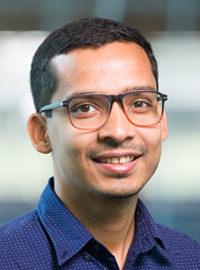
Neetesh Sharma is an Assistant Professor at the FAMU-FSU College of Engineering in the Civil & Environmental Engineering Department . His work focuses on enhancing community well-being through infrastructure resilience, socioeconomic impacts of natural hazards, and uncertainty quantification. He holds a Ph.D. (2020) and M.S. (2016) from the University of Illinois Urbana-Champaign and a B.Tech. (2010) from National Institute of Technology Tiruchirappalli, India. Research Interests include: Infrastructure Resilience and Post-disaster Recovery Socioeconomic Impacts of Natural Hazards Uncertainty Quantification in Infrastructure Systems Recent publications emphasize risk analysis, functional connectivity modeling, and seismic resilience. His work integrates mathematical frameworks with real-world applications to improve disaster preparedness and recovery strategies. Collaborative participatory approaches and digital twin technologies are key themes in his research. Current opportunities include 2 PhD student openings. Contact via email or visit his Google Scholar profile .
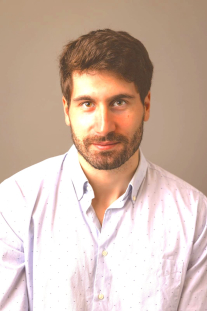
Federico Nutarelli is an Assistant Professor of Economics at the IMT School for Advanced Studies Lucca, Italy. His research focuses on the intersection of machine learning and economic analysis, particularly in international trade, health economics, and industrial organization. He holds a Ph.D. in Economics from IMT Lucca, and previously conducted postdoctoral research at Bocconi University. In 2024, he was a Visiting Scholar at MIT Sloan School of Management. Key research interests include causal machine learning methods to analyze heterogeneous firm responses to economic shocks, pharmaceutical market pricing strategies, and structural demand models. His work bridges methodological rigor with applied relevance, contributing to health economics, trade dynamics, and innovation policy. Recent publications (2020–2025) explore topics such as matrix completion for world trade analysis, machine learning applications in economic complexity, and modeling innovation ecosystems. His work often employs advanced statistical techniques like Shapley values and reinforced Bernoulli processes. No scientific awards were explicitly mentioned in the provided texts. Federico collaborates with institutions like Bocconi University and MIT Sloan, reflecting his interdisciplinary network in economics and data science.
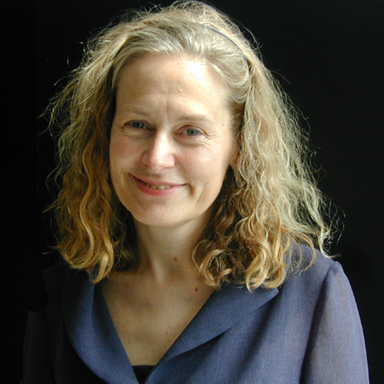
Marie Farge is a distinguished French mathematician and physicist currently serving as Directrice de Recherche 1ère classe at the French National Center for Scientific Research (CNRS) since 2008. She maintains strong affiliations with École Normale Supérieure in Paris where she has been based since 1981, and teaches at multiple institutions including Institut des Etudes Politiques (IEP) in Paris since 2011. Her extensive academic career includes visiting positions at prestigious institutions worldwide including Cambridge University, Harvard University, and the Max Planck Institute. Dr. Farge's research focuses on the intersection of mathematics and physics, with particular emphasis on wavelets , turbulence , and computational fluid dynamics . Her pioneering work has established wavelet analysis as a fundamental tool for studying turbulent flows and extracting coherent structures. She has developed the Coherent Vortex Simulation (CVS) method, which has become influential in turbulence modeling. Her research spans theoretical mathematics, numerical methods, and practical applications in fluid dynamics and plasma physics. Analysis of her publication record reveals a consistent focus on applying wavelet transforms to fluid dynamics problems, with increasing sophistication in handling three-dimensional turbulence and plasma phenomena. Her work demonstrates a progression from theoretical foundations of wavelet analysis to practical computational methods for complex fluid systems. The interdisciplinary nature of her research bridges mathematics, physics, and engineering applications. Prix Poncelet from the French Academy of Sciences (1993) American Physical Society Gallery of Fluid Motion award (1990) Seymour Cray Award for Scientific Computing (1988) Ministry of Foreign Affairs of Japan Award (1985) Fulbright Fellowship at Harvard University (1981) ESRO Award (1971) Elected member of Academia Europaea (2005) Grand Prix du CNRS 'La Recherche en Action' (1989) As an educator, Dr. Farge has taught extensively across France and internationally at institutions including Stanford University, Cambridge University, and numerous European and Asian universities. She has served on the editorial boards of major journals including the Journal of Applied and Computational Harmonic Analysis since 1993 and has been active in the Ethics Committee of CNRS since 2007. Her teaching spans wavelet theory, computational physics, turbulence, and signal processing, reflecting the breadth of her expertise. Dr. Farge maintains active research collaborations worldwide, evidenced by her numerous visiting positions at leading research centers including the Center for Turbulence Research at Stanford University, the Newton Institute in Cambridge, and the Institute for Advanced Study in Princeton. Her work continues to influence both theoretical developments in wavelet analysis and practical applications in fluid dynamics and related fields.
Yuhao Chen is a Research Assistant Professor at the University of Waterloo, specializing in cutting-edge research at the intersection of computer vision, robotics, and healthcare. His work focuses on 3D reconstruction, food tracking, medical imaging, and AI-driven solutions for nutrition analysis and sports analytics. He has contributed to benchmark datasets like NutritionVerse, MetaGraspNet, and FoodVerse, advancing applications in robotic grasping, dietary intake estimation, and human-object interaction analysis. Research interests include egocentric video analysis, real-time 3D reconstruction, zero-shot learning, and multi-task learning. His projects often integrate Gaussian splatting, photometric SLAM, and diffusion models to solve complex problems in food tracking, medical image segmentation, and sports player motion analysis. Recent work highlights include FoodTrack for dietary monitoring and RepViT-MedSAM for medical image segmentation. Yuhao Chen’s innovations span robotics, healthcare, and AI, with a focus on practical applications such as automated nutrition assessment, robotic bin picking, and athlete performance analysis. His research emphasizes scalable frameworks and physically informed 3D reconstruction methods to address real-world challenges in health, sports, and automation.
Kshirasagar Naik is a Professor in the Department of Electrical and Computer Engineering at the University of Waterloo, Ontario. He is actively involved in graduate research supervision and has been a member of IEEE since 1994. His academic career spans decades, with a focus on wireless communication, energy efficiency, and cybersecurity. 1992, Doctorate in Computer Engineering from Concordia University, Ontario 1988, Master of Mathematics in Computer Science from University of Waterloo, Ontario 1983, MTech in Computer Engineering from Indian Institute of Technology, Kharagpur, India 1981, BScEng in Electronics and Telecommunication from Sambalpur University, India His research interests include Mobile and Ad Hoc Networks , Cybersecurity , Internet of Things (IoT) , and Intelligent Transportation Systems . He has published extensively on energy optimization in wireless devices, delay-tolerant networks, and security protocols for vehicular systems. Recent publications highlight the integration of Machine Learning and IoT in environmental monitoring, particularly forest fire detection and prediction. Other works focus on cybersecurity , vehicular networks , and energy optimization in data centers and handheld devices. Professor Naik is currently accepting graduate students for research in mobile systems, network protocols, and green computing at the University of Waterloo.
Xinfeng Gao is a Professor of Mechanical & Aerospace Engineering at the University of Virginia, leading the CFD & Propulsion Laboratory. She specializes in high-performance computing (HPC) algorithms for fluid dynamics, combustion, and plasma systems. Her work integrates numerical methods, parallel computing, and data analytics to address complex engineering challenges. Prior to UVA, she held a professorship at Colorado State University from 2011 to 2023, establishing the CFD and Propulsion Lab there. She earned her PhD in Aerospace Engineering from the University of Toronto in 2008, followed by postdoctoral research at Lawrence Berkeley National Laboratory (LBNL). Her research focuses on three core areas: high-order CFD methods for high-speed flows, parallel adaptive algorithms for spatial and temporal domains, and HPC combined with data analytics for aerospace design optimizations. Applications include reduced-order models for turbulence, propulsion device innovation, and quantum computing for fluid simulations. She collaborates with national labs (LLNL, LBNL), aerospace industries (Boeing), and software companies to translate research into practical solutions. Her recent grants include the NSF Mid-Career Advancement Award (2022–2025) for CFD+DA integration in commercial tools and UVA’s RIG Award (2025–2026) for gas-surface material studies under extreme conditions. She teaches MAE 6720 (Computational Fluid Dynamics) and MAE 3420 (Computational Methods). Key awards include the 2023 University of Virginia Research Achievement Award and the 2022 NSF MCA Award. Her work emphasizes cross-disciplinary innovation, blending computational science with experimental validation through initiatives like the Gas-Surface-Materials RIG project, involving experts from MAE, MSE, Chemistry, and Physics.
Peter Haas is a Professor at the Manning College of Information and Computer Sciences at the University of Massachusetts Amherst, with an adjunct role in Industrial Engineering. Previously, he spent 30 years as a Principal Research Staff Member at IBM Research and held a consulting professorship in Management Science and Engineering at Stanford University. His research focuses on applying probability and statistics to data management, simulation of complex systems, and machine learning scalability. Education : PhD, Operations Research, Stanford University, 1986 MS, Statistics, Stanford University, 1984 MS, Environmental Engineering, Stanford University, 1979 SB, Engineering and Applied Physics, Harvard University, 1978 Research Interests : Haas’s work spans stochastic systems, probabilistic databases (e.g., MCDB and SimSQL), sampling techniques, and simulation optimization. He pioneered methods for managing uncertain data and scalable machine learning, including compressed linear algebra for declarative systems. His recent focus includes in-database decision support and hybrid simulation metamodeling with neural networks. Key Contributions : He developed the Online Aggregation framework (SIGMOD 1997), which earned a Test-of-Time Award in 2007. His work on matrix factorization and distributed stochastic gradient descent (DSGD) revolutionized large-scale machine learning. He also advanced techniques for estimating distinct-values and correlation discovery in databases. Awards : A six-time recipient of IBM’s Pat Goldberg Memorial Award, he is an ACM and INFORMS Fellow. His honors include the VLDB Best Paper Award (2016), EDBT Best Paper (2018), and recognition in Communications of the ACM. Advising & Grants : He advises four current PhD students and has graduated Matteo Brucato. His IBM career included over 30 patents, including foundational work for DB2’s sampling capabilities and IBM Watson analytics. He leads the DREAM Lab, focusing on data systems for exploration and analytics. Labs/Teams : Directs the Data systems Research for Exploration, Analytics, and Modeling (DREAM) Lab, advancing projects like Splash (health system simulation) and SuDocu (document summarization by example).
Catherine Le Ribault is a Researcher (CNRS) at the Laboratoire de Mécanique des Fluides et d’Acoustique (LMFA), affiliated with École Centrale de Lyon. Her research focuses on fluid mechanics and acoustics with specialization in granular flows, environmental fluid dynamics, and turbulence modeling. She is part of the Fluides Complexes et Transfert group, contributing to studies on dune dynamics, particle transport, and multiphase flows. Key research areas include aeolian processes, boundary layer interactions, and computational simulations of geophysical phenomena. Her work addresses applications in environmental engineering and geophysics. At LMFA, she collaborates on projects related to environmental flows and experimental/numerical methods, leveraging the lab’s infrastructure for fluid mechanics research.
Melvin Rafi is an Assistant Teaching Professor in the Department of Aerospace Engineering Sciences at the University of Colorado Boulder, part of the College of Engineering and Applied Science. His research focuses on aircraft flight dynamics, control systems, and aviation safety, particularly in loss-of-control mitigation and augmented-reality displays. He holds a PhD, MS, and BS in Aerospace Engineering from Wichita State University. Education: PhD, Aerospace Engineering, Wichita State University, 2020 MS, Aerospace Engineering, Wichita State University, 2013 BS, Aerospace Engineering, Wichita State University, 2007 His work emphasizes real-time adaptive control systems, resilient aircraft control architectures, and safety-enhancing technologies like augmented-reality pilot advisory displays. Recent publications explore predictive loss-of-control avoidance, Kalman-filter-based adaptive control, and flight dynamics in flexible aircraft. Rafi has conducted extensive pilot-in-the-loop simulations and flight tests to validate these systems. His research trends highlight integration of artificial intelligence, neural networks, and human factors into aviation safety frameworks. Notable projects include real-time control margin prediction and failure recovery mechanisms for general aviation and transport aircraft. Rafi’s professional experience includes postdoctoral research at Wichita State University’s General Aviation Flight Lab before joining CU Boulder. He collaborates on projects involving 3D design visualization, flight simulation systems, and sensor technologies for real-time aircraft diagnostics.
Professor Natalia Berloff is a Professor of Applied Mathematics at the University of Cambridge's Department of Applied Mathematics and Theoretical Physics (DAMTP), where she has been a faculty member since 2002. She is also a Fellow of Jesus College, Cambridge. From 2013 to 2016, she served as Professor, Dean of Faculty, and Director of the Photonics and Quantum Materials Program at Skoltech. Previously, she held positions at the University of California, Los Angeles, including UC President's Research Fellow (1997-1999) and PIC Assistant Professor (1999-2002). Her research focuses on quantum fluids, physics-inspired computing, and non-equilibrium quantum systems. Key areas include coherence in quantum systems, superfluidity, Bose-Einstein condensates, and classical/quantum simulators. Her work bridges applied mathematics and theoretical physics, with applications in optical computing and quantum technologies. Recent studies emphasize Ising machines, photonic networks, and analog computing solutions for optimization problems. Her publications span over two decades, with recent trends in analog optical computing, gain-based systems, and quantum annealing. She leads the Quantum Fluids group, exploring novel computational paradigms using quantum fluids and polariton condensates. Her contributions have advanced interdisciplinary fields like quantum simulation and photonic-based AI. Education: Doctorate in Applied Mathematics (details not explicitly stated but implied via career progression). Grants/Awards: No specific grants or awards listed, though her leadership roles imply significant external funding. Labs/Teams: Leads the Quantum Fluids group and the Physics-inspired Computing team at DAMTP.
Fabien Pascal Daniel Evrard is an Assistant Professor in the Department of Aerospace Engineering at the University of Illinois. His research focuses on computational fluid dynamics, multiphase flow, and advanced simulation techniques for complex fluid systems. He specializes in developing numerical methods for Euler-Lagrange simulations, interface tracking, and turbulence modeling. Key research areas include: Volume of Fluid Method Wall-bounded two-way coupled systems Crater morphology analysis in plume-surface interactions Geometric interface reconstruction Recent work emphasizes improving computational efficiency through semi-analytical approaches and data-driven characterization of fluid-structure interactions. His publications (43 total) demonstrate contributions to both fundamental theory and applied engineering solutions.
Dr. Daniel Nettels is a Senior Scientist at the University of Zurich's Department of Biochemistry within the Faculty of Science. His research focuses on biophysical methods, including single-molecule spectroscopy and fluorescence techniques, to study protein folding, misfolding, and the dynamics of biomolecular condensates. He joined Prof. Ben Schuler's group in 2004 after completing a Ph.D. in physics at the University of Fribourg and prior studies in physics at the University of Bonn. Nettels teaches the module BCH 306: Biochemical and Biophysical Methods. His work integrates experimental and computational approaches to understand disordered proteins and their roles in biological systems. Education: Ph.D. in Physics, University of Fribourg (2003) M.Sc./Diploma in Physics, University of Bonn (1998) Research Interests: Single-molecule FRET and spectroscopy Biomolecular condensates and their dynamics Intrinsically disordered proteins Teaching: BCH 306 module in the Faculty of Science
Skirmantas Janusonis is an Associate Professor in the Department of Psychological and Brain Sciences at the University of California, Santa Barbara (UCSB). He is a core faculty member of the UCSB Neuroscience Research Institute and the Interdepartmental Graduate Program in Dynamical Neuroscience, and a member of the California NanoSystems Institute. His research program lies at the intersection of neuroscience, complex systems, and computational modeling. Education: Ph.D. in Neuroscience and Behavior, University of Massachusetts Amherst Postdoctoral Research, Department of Neuroscience, Yale University School of Medicine B.S./M.S. in Biology, Vilnius University, Lithuania Dr. Janusonis's research focuses on the stochastic (random walk-like) behavior of serotonergic axons in the brain, particularly within the ascending reticular activating system and the broader serotonergic matrix. His work integrates molecular neurobiology, comparative neuroanatomy (from sharks to rodents to humans), advanced microscopy, and supercomputing simulations. He investigates how these complex systems self-organize and their relevance to mental disorders, especially autism and the enigma of platelet hyperserotonemia. His lab collaborates with physicists, mathematicians, and engineers to model anomalous diffusion and fractional Brownian motion in 3D brain spaces. His recent publications reveal a strong trend toward computational and theoretical neuroscience, using high-resolution data and mathematical generalizations to model axonal distributions. Key themes include reflected fractional Brownian motion, self-organization of serotonergic densities, and the interface between central and peripheral serotonin systems. His work challenges traditional views of the blood-brain barrier and proposes interdisciplinary solutions involving immunology, physiology, and computer science. Scientific Awards and Recognition: Elected to the Board of Directors of the Organization for Computational Neurosciences (2024) NSF, NIMH, and California NanoSystems Institute grant funding Multiple student awards under his mentorship, including the Harry J. Carlisle Award and NIH IRTA NSF CRCNS and Frontera supercomputing grants UCSB Art of Science People's Choice Award (awarded to lab member) Dr. Janusonis actively mentors PhD students such as Justin Haiman and Dahyana Arroyo, and has advised alumni including Dr. Angela Chen, Dr. Kasie Mays, and Dr. Melissa Hingorani. His lab has received numerous grants from the NSF and NIH, supporting research on stochastic axon systems and super-resolution imaging. He teaches graduate and undergraduate courses including Neuroanatomy (Psy 269), Neurobiology of Brain States (Psy 136), and Complex Systems (Psy 113L). Research Team and Collaborations: The Janusonis Lab is an interdisciplinary group combining neuroscience, mathematics, and engineering. It collaborates with institutions such as UC San Diego, the University of Pisa, and MIT. The lab is equipped with advanced imaging tools and has access to Frontera, a leading NSF supercomputer. Outreach includes science nights at local schools and public lectures at the Santa Barbara Museum of Natural History.
Professor Matt Garratt is a faculty member at the University of New South Wales (UNSW Canberra), School of Engineering and IT, serving as AI theme lead for the Defence Trailblazer Universities initiative with over $200 million in funding. His primary research focuses on sensing, guidance, and control for autonomous systems within robotics and unmanned aerial vehicles. Garratt's research spans robotics, swarm intelligence, and autonomous systems with emphasis on bio-inspired navigation techniques and adaptive flight control. His work addresses critical challenges including terrain following using vision systems, landing UAVs on moving platforms, and developing self-organizing swarms. He integrates artificial intelligence, computer vision, and machine learning to advance unmanned systems capabilities in complex environments. Analysis of his recent publications reveals strong trends in bio-inspired UAV navigation (particularly honeybee behavior modeling) and swarm robotics applications. His work increasingly incorporates deep learning for perception tasks while addressing real-world challenges like gas plume detection and adversarial robustness in 3D vision systems. The research demonstrates consistent progression toward practical implementation of autonomous systems in dynamic environments. Professor Garratt has secured over $7.7 million in external research funding as Chief Investigator on 33 grants. He actively mentors graduate students with scholarships available for Masters and PhD research in robotics and AI, focusing on: UAV path planning and adaptive control systems Swarm robotics collective motion optimization Bio-inspired autonomous navigation techniques Computer vision for robotic perception He co-founded the UNSW Canberra AIR (AI and Robotics) Group (AIR Lab), which drives research in trusted autonomy, swarm intelligence, and AI integration for defense applications. The lab develops practical solutions for autonomous systems operating in complex, real-world environments while maintaining ethical AI frameworks.
Professor Chew Lock Yue is an Associate Dean (Students) in the College of Science and a Full Professor in the School of Physical & Mathematical Sciences at Nanyang Technological University (NTU). He holds a B.Eng (Hons) in Electrical Engineering from the National University of Singapore (1991), an M.Sc in Electrical Engineering from the University of Southern California (1997), and a Ph.D. in Theoretical Physics from NUS (2004). His research focuses on complex systems, nonlinear dynamics, quantum thermodynamics, and urban systems modeling. Current projects include thermodynamics of information processing, machine learning integration with complex systems, and statistical physics of sea-level rise. Professional roles span technical leadership at DSO National Laboratories (1992-2005), academic appointments since 2005 (Assistant Professor to Full Professor), and administrative roles including Cluster Deputy Director at NTU’s Data Science & Artificial Intelligence Research Centre (2018-2021). He has received multiple teaching awards, including the Nanyang Award for Excellence in Teaching (2007) and the Best Faculty Mentor Award (2013). Research interests also encompass social-ecological systems, quantum heat engines, and spatial agglomeration patterns in urban contexts. His work bridges physics with interdisciplinary challenges like climate modeling and machine learning, with over 150 publications in peer-reviewed journals. Active in education, he teaches courses on quantum mechanics, nonlinear dynamics, and statistical physics.