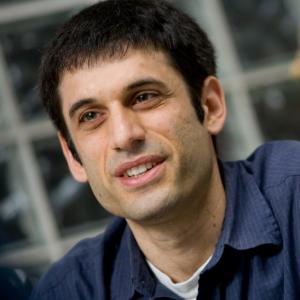
Philip E. Paré is the Rita Lane and Norma Fries Assistant Professor of Electrical and Computer Engineering at Purdue University's College of Engineering. His research focuses on networked epidemic modeling, control theory, and data-driven systems analysis, with applications to public health and product demand dynamics. Research Areas: Networked Epidemic Modeling, Control Theory, Machine Learning, Privacy in Cyber-Physical Systems Recent work explores multi-virus spread, differential privacy in epidemic models, and optimal curing strategies. A 2023 NSF CAREER Award recipient, he develops frameworks for counterfactual analysis and feedback control in societal-scale challenges. Scientific Awards: NSF CAREER Award (2023)
Robert D. Kleinberg is a Professor of Computer Science at Cornell University's Department of Computer Science and a member of the field of Information Science. He received his Ph.D. from MIT in 2005 and previously worked at Akamai Technologies designing internet content delivery networks. His research bridges theoretical computer science and practical applications in electronic commerce, networking, and information systems. Research Interests: Kleinberg's work focuses on the design and analysis of algorithms, with special emphasis on economic aspects of algorithms, online learning, random processes in networks, and applications to electronic commerce and information retrieval. His research combines theoretical rigor with real-world impact, exploring how algorithmic principles can optimize complex systems. Publication Trends: Kleinberg's recent publications demonstrate a consistent focus on online optimization, algorithmic fairness, network design, and learning algorithms. His work frequently appears in top-tier venues spanning theoretical computer science (STOC, FOCS), machine learning (NeurIPS, COLT), and networking (NSDI). The publications reflect interdisciplinary approaches combining computer science, economics, and applied mathematics. Awards and Honors: Microsoft Research New Faculty Fellowship Alfred P. Sloan Foundation Fellowship NSF CAREER Award Best Paper Award at ACM EC 2014 Advising and Academic Leadership: Kleinberg actively mentors Ph.D. students and postdoctoral researchers, with current advisees including Raunak Kumar, Princewill Okoroafor, and Tegan Wilson. He has supervised numerous graduates who now hold academic positions worldwide. His teaching includes core algorithm courses (CS 4820, CS 6820) and specialized topics at both undergraduate and graduate levels.
Thanos Karatzias is a Professor and Associate Dean for Research & Innovation at Edinburgh Napier University's School of Health and Social Care, with clinical expertise at the Rivers Centre for Traumatic Stress in Edinburgh. His career spans clinical and academic work in psychological trauma, particularly interpersonal trauma, with a focus on Complex PTSD (CPTSD) under ICD-11. Collaborating internationally, he studies trauma effects on general populations, veterans, prisoners, and individuals with learning disabilities. Editor : Traumatology Leadership Roles : Former Chair of British Psychological Society Scotland Working Party for Adult Survivors of Sexual Abuse His research explores trauma's impact on mental and physical health, with recent work validating diagnostic tools like the International Trauma Interview (ITI) and investigating treatment approaches for CPTSD. He has received significant funding, including from the Chief Scientists Office, and contributes to policy through advisory boards like Changing Faces Scotland.
Eunji Lim is an Associate Professor in the Department of Decision Sciences and Marketing at the Robert B. Willumstad School of Business, Adelphi University, located in Garden City, New York. She has been a faculty member at Adelphi since 2018, initially as an Assistant Professor and promoted to Associate Professor in 2023. Her prior academic appointments include Assistant Professor roles at Kean University (2013–2018) and the University of Miami (2008–2013). Education Ph.D. in Operations Research (implied by department) , Stanford University (2008) Research Interests Lim’s research lies at the intersection of operations research, statistics, and management science. She focuses on simulation-based decision making for operations and supply-chain systems, leveraging large-scale stochastic simulation to optimize complex processes. A second major theme is nonparametric function estimation under shape constraints , where she develops statistically rigorous methods to estimate convex, monotonic, or smooth functions from noisy data. These methodologies find applications in business analytics, revenue management, inventory control, and engineering design. Publication Trends Her recent articles (2013–2025) reveal a consistent emphasis on convex and isotonic regression , simulation analytics , and stochastic optimization . A clear trajectory emerges from theoretical foundations—convergence rates, consistency, and asymptotic distributions—toward practical algorithms for high-dimensional and noisy environments. Interdisciplinary impacts are evident in publications targeting both statistics and operations-research audiences, with cross-cutting keywords such as simulation optimization, shape-restricted inference, and robust estimation. Scientific Awards No specific awards or fellowships are listed in the provided materials. Advising & Grants No information on current or former PhD/Master’s students, postdocs, or funded research grants is provided. Labs & Teams No laboratory or research-group affiliations beyond her departmental appointment are mentioned.
Judith Sluijter is a Researcher at Erasmus MC , specializing in Radiotherapy . Her work focuses on advanced imaging technologies and their application in oncology. Primary affiliation: Erasmus MC (Radiotherapy) Research Interests: Judith’s research centers on medical imaging , particularly cone-beam computed tomography (CBCT) and volume CT in the pelvic region. She explores artificial intelligence-based autosegmentation to improve imaging accuracy for radiotherapy applications, including the delineation of complex anatomical structures like the seminal vesicle . Recent Research Trends: Her 2025 publication in Physics and Imaging in Radiation Oncology highlights the integration of AI into CBCT systems to enhance image quality and clinical decision-making in pelvic oncology. This reflects her focus on computational methods, radiological precision, and translational applications in oncology. Advisory & Collaborations: No explicit student advising roles or grants are mentioned in the provided text.
Dr. Alexander Goettker is a postdoctoral researcher at Justus Liebig University Giessen's Department of Psychology and Sports Science, specializing in oculomotor behavior and sensorimotor integration. He contributes to the Collaborative Research Center "Cardinal Mechanisms of Perception" and the International Research Training Group "The Brain in Action". Ph.D. in Psychology (2020) with thesis on saccadic-pursuit eye movement interactions M.Sc. in Psychology (2016), including predoc program in visual neuroscience B.Sc. in Psychology (2014) Key research areas: Saccadic and pursuit eye movement coordination Integration of retinal and extra-retinal signals Eye-hand movement interactions Naturalistic visual processing in sports contexts Publication trends show focus on sensorimotor integration, visual processing during eye movements, and the interplay between perceptual judgments and motor control. His work spans journals like Current Biology , PNAS , and Scientific Reports .
Dorra YAHIAOUI is a senior professor and director of the Center for Research and Excellence in International Business at Kedge Business School. She also serves as head of the "Human Resource Management" research group at EuroMed Research Business Institute, where she contributes to advancing research in international business practices and human resource management across diverse cultural contexts. Her educational background includes: PhD in Management Sciences from the University of Lyon III (France) ITP certification from the International Teachers Program at London Business School MBTI (Myers Briggs Type Indicator) certification from The Myers Briggs Company France Women in Education Leadership certification from Harvard University Graduate School of Education Dorra YAHIAOUI's research focuses on international comparisons of managerial practices, the innovation process within multinationals, parent-subsidiary relationships, internationalization strategy, and management in the Middle East, Africa, and Asia. Her work bridges theoretical frameworks with practical applications in cross-cultural business environments, examining how organizations adapt their human resource practices across different national contexts. She has made significant contributions to understanding the complexities of managing multinational enterprises during periods of turbulence and crisis. Her recent publications demonstrate a strong focus on international business challenges, human resource management in multinational contexts, sustainability issues, and consumer behavior in post-pandemic environments. The research spans diverse geographical regions including Asia-Pacific, Middle East, Africa, and Europe, reflecting her global perspective on business management. Key themes include digital transformation, organizational resilience during crises, cross-cultural management practices, and sustainable business practices across different institutional contexts. Dorra YAHIAOUI has served as a visiting professor at various partner universities in Russia, the United States, Italy, Cyprus, Lebanon, the United Arab Emirates, Togo, Cameroon, and other countries, sharing her expertise internationally. She also works as an international consultant for several major groups across different countries, applying her research insights to real-world business challenges.
Taj Nathan is a Visiting Professor at the University of Chester's Chester Medical School, an Adjunct Professor at Liverpool John Moores University, and an Honorary Senior Research Fellow at the University of Liverpool. He serves as Director of Research for the Cheshire and Wirral Partnership NHS Foundation Trust and holds the dual role of CRN-NWC Clinical Lead and Mental Health Specialty Lead for the National Institute for Health Research. Professor Nathan's academic qualifications include: MB BCh (University of Wales College of Medicine, 1991) MRCPscyh (Royal College of Psychiatrists, London, 1996) MMedSc (University of Leeds, 1997) Dip. Foren. Sc. (University of Liverpool, 1999) MD (University of Liverpool, 2007) PGCert Historical Studies (distinction) (University of Oxford, 2022) His research focuses on forensic psychiatry with emphasis on personality disorders, autism spectrum disorder, and violence risk assessment in complex mental health systems. He investigates clinical decision-making processes, standardized assessments, and the interplay between psychosis and substance misuse, while also addressing critical issues in suicide prevention and emergency mental healthcare pathways. Analysis of his 2024 publications reveals a strong concentration on patient safety mechanisms in mental healthcare, particularly incident reporting systems and adverse event responses. A recurring theme is risk assessment methodology in forensic settings, alongside expanding research on complex mental health needs involving autism and intellectual disability. His work increasingly utilizes mixed-methods approaches to dissect systemic challenges in mental health service delivery. Professor Nathan has received the following scientific recognition: JM Press international non-fiction essay prize (2018) He actively supervises research, currently co-supervising 4 PhD candidates, and secures funding through NIHR grants as Clinical Lead. His projects include the COMPAT study on complex mental health pathways and SSHaRE NoW research on suicide prevention, often involving collaborations with NHS trusts and academic institutions across the UK. As Director of Research, he leads interdisciplinary teams at the Cheshire and Wirral Partnership NHS Foundation Trust, working closely with the COMPAT study group and SSHaRE NoW consortium. His operational framework integrates clinicians, academics, and service users to address forensic mental health challenges through system-level innovations.
Dr. Mauro Manassi is a Lecturer in Psychology at the University of Aberdeen's School of Psychology, where he has been appointed since August 2019. He leads the Manassi Laboratory, which focuses on visual perception research, and co-hosted the 46th European Conference on Visual Perception in Aberdeen in August 2024. His educational background includes a PhD in Neuroscience from École Polytechnique Fédérale de Lausanne (2014), an MSc in Clinical Psychology from the University of Padua (2009), and a BSc in Psychology of Personality and Interpersonal Relationships from the University of Padua (2006). Prior to his academic career, he completed an 18-month postdoc at UC Berkeley under Prof. David Whitney's laboratory, funded by the Swiss National Science Foundation. Manassi's research centers on how the visual system organizes cluttered environments into coherent perceptions and stabilizes our visual interpretations of the world. His laboratory investigates two key principles: Organization (studying visual crowding and ensemble perception) and Stabilization (examining serial dependence in visual perception). His work has significant implications for understanding visual perception in complex environments, including applications in medical image perception for radiology and dermatology. His publication record shows a strong focus on serial dependence mechanisms, visual crowding phenomena, and medical image perception. The research demonstrates how our brains create stable visual experiences despite discontinuous retinal input, with findings showing that our perception integrates visual information over approximately 15 seconds. His recent work extends these principles to clinical contexts, revealing how perceptual biases affect medical diagnosis. His scientific recognition includes the British Psychology Society Cognitive Psychology Section Award for Best Research Article of the Year (2022) and awards for hosting the European Conference on Visual Perception in 2024. Manassi actively supervises PhD students and research assistants while serving in multiple administrative roles at Aberdeen, including Head of S.C.R.E.A.M. committee, Data Protection Champion, and member of the Ethics Committee. His research has attracted substantial media attention, with over 259,000 views on his YouTube visual illusion and viral coverage of his work on The Conversation.
Christian Lennerholt is a Senior Lecturer in Information Systems Development at the School of Informatics, University of Skövde, Sweden. His work focuses on bridging theoretical research with practical implementation in business intelligence and data-driven decision making, with significant contributions to understanding implementation challenges in organizational contexts. Dr. Lennerholt completed his doctoral studies in 2022 with the thesis "Facilitating the Implementation and Use of Self Service Business Intelligence." His academic journey includes extensive research in information systems, with publications spanning from 2007 to the present day. His primary research interests center on Self-Service Business Intelligence implementation challenges, particularly examining user-related issues, data quality concerns, and organizational readiness factors. Dr. Lennerholt investigates how technology adoption intersects with human factors and organizational structures to determine the success or failure of business intelligence initiatives. Analysis of Dr. Lennerholt's publication history reveals a consistent trajectory from foundational work on IT outsourcing relationships (2007-2009) toward specialized research on Self-Service Business Intelligence. His most recent work demonstrates increasing sophistication in addressing complex implementation challenges through frameworks like AQUIRE, while maintaining practical relevance for organizational practitioners. Dr. Lennerholt currently leads the "Real-time environmental feedback" project (2023-2025), investigating how real-time data can reduce municipal resource consumption. Previously, he contributed to the "Resilient payment system" project (2016-2021), which examined collective action strategies during payment system disruptions across multiple societal sectors. His academic contributions include numerous publications in reputable journals and conferences, with particular focus on implementation challenges, user adoption barriers, and practical frameworks for successful business intelligence deployment. Dr. Lennerholt has also made significant contributions to understanding information security in municipal contexts and innovative approaches to academic teaching and student throughput.
Professor John Paul Gosling is an applied statistician affiliated with the Department of Mathematical Sciences at Durham University . With a background in industry, academia, and the civil service, his work bridges statistical theory and real-world applications, particularly in criminal justice, toxicology, and climate science. Education: MMath in Mathematics (University of York, 1998–2002), PhD in Statistics (University of Sheffield, 2002–2005) Current Role: Professor in Statistics, focusing on human interaction with statistical information His research interests include: Bayesian Statistics : Developing models for complex systems Expert Knowledge Elicitation : Structuring expert input for risk assessment Uncertainty Quantification : Analyzing and communicating uncertainty in data Machine Learning Integration : Combining statistical inference with AI for decision-making Key trends from his recent articles include: Application of Voronoi Tessellations in Bayesian regression and classification Development of emulation techniques for computationally intensive models Focus on legal and public health domains Integration of copula methods for dependent variables He actively supervises PhD students in Bayesian theory and machine learning interfaces and contributes to Statistics research at Durham University.
Dr. Ibrar Yaqoob serves as a Senior Research Fellow and Program Lead for the Smart and Resilient Supply Chain strand at the Artificial Intelligence and Cyber Futures Institute (AICF) at Charles Sturt University. He leads a research team comprising PhD students and postdoctoral fellows, and previously held research positions at Khalifa University in the UAE and Kyung Hee University in South Korea. Dr. Yaqoob holds a PhD in Computer Science from Universiti Malaya (2017) and has been a Visiting Academic at the University of Cambridge. His research focuses on blockchain, NFTs, and metaverse applications for healthcare, supply chain and logistics, wireless networks, IoT, and smart cities, with additional expertise in mobile edge-cloud computing and big data. Dr. Yaqoob has published over 100 research articles with more than 24,000 citations and an h-index of 58, with 98.9% of his publications appearing in Q1 journals. His recent publications demonstrate a strong trend toward practical blockchain implementations across diverse sectors including healthcare data management, sustainable supply chains, and smart city infrastructure. His work frequently combines blockchain with emerging technologies like NFTs, metaverse applications, and large language models to solve complex real-world problems in supply chain transparency, medical data security, and sustainable development. Ranked in the world's top 0.1% of researchers for three consecutive years (2023-2021) as a Highly Cited Researcher Listed among the World's top 2% scientists for five consecutive years (2020-2024) 2024 IEEE Consumer Electronics Magazine Best Paper Award (1st Place) 2024 Vice Chancellor's Researcher of the Year Commendation 2024 AICF Research Excellence Award 13 highly cited papers (top 1%) and 21 most downloaded articles Dr. Yaqoob serves as Chief Investigator on multiple significant research projects including the AgriTwins project (AUD $2.38 million), Trustworthy Operations and Supply Chain Management project (AUD $10,000), and Decentralized AI Juries project (AUD $13,875). He actively mentors PhD students and postdoctoral researchers while serving on editorial boards for prestigious journals including IEEE Network Magazine, Future Generation Computer Systems, and IEEE Access. His research team at the AICF Institute focuses on bridging emerging technologies with practical applications to address real-world challenges in supply chain resilience and sustainability.
Wei Li is a Professor in the Department of Computing at Nova Southeastern University's College of Computing & Engineering. He joined NSU in 2005 after earning his Ph.D. from Mississippi State University. His research focuses on enhancing computer system security through interdisciplinary approaches, including network security, artificial intelligence applications, and software engineering practices. Dr. Li’s research areas encompass computer security, network security, software engineering, artificial intelligence, and database systems. His work bridges theoretical advancements and practical cybersecurity solutions, such as improving intrusion detection systems, analyzing social engineering attack vulnerabilities, and developing machine learning models for IoT security. His recent publications (2020–2025) address topics like password policy effectiveness, remote worker cybersecurity risks, and adaptive deep learning models for anomaly detection. These contributions highlight his focus on mitigating organizational cybersecurity risks through empirical studies and innovative technical solutions. No scientific awards or grants are explicitly listed in the provided information. His advising record remains unspecified, and no active labs or teams are mentioned.
Professor Rhona Flin is a distinguished academic at Robert Gordon University's Aberdeen Business School, where she conducts groundbreaking research on human performance in high-risk work settings. Her expertise spans safety culture, organizational psychology, and non-technical skills development across various high-stakes industries including oil and gas, emergency management, and healthcare. Professor Flin earned her Bachelor's degree in Psychology from the University of Aberdeen in 1977, followed by a PhD in Psychology from the same institution in 1983. Her academic journey has positioned her as a leading expert in understanding how psychological factors influence safety, decision-making, and technology adoption in complex work environments. Professor Flin's research primarily focuses on human performance in high-risk settings, examining safety culture, organizational dynamics, and critical non-technical skills including situation awareness, decision making, teamwork, leadership, and coping with stress and fatigue. Her work bridges psychological theory with practical applications in industries where human error can have catastrophic consequences. A significant portion of her recent research investigates the psychological factors that influence the adoption of new technologies, particularly in the energy sector, where she has conducted innovative benchmarking studies on organizational innovation culture. Analysis of Professor Flin's recent publication record reveals several key trends. Her work increasingly focuses on emergency management decision-making, with multiple 2024 publications examining cognitive challenges in crisis situations and the training methods needed to improve performance. She has also expanded her research into renewable energy sectors, particularly wind power, where she investigates human factors in both onshore and offshore operations. Another significant thread in her recent work involves the development of behavioral marker systems for assessing non-technical skills across various domains, from helicopter operations to surgical settings. Professor Flin has contributed to professional guidelines such as those developed with the Difficult Airway Society and the Association of Anaesthetists on implementing human factors in anesthesia, demonstrating the practical impact of her research. As an academic supervisor, Professor Flin has guided numerous doctoral candidates through their research journeys. Her current and recent supervisees are investigating diverse topics including implementation of ISO 45003 in UK HEIs, sustainable business practices in the oil and gas industry, challenges facing Omani citizens in logistics, and decision-making competence in health supply chains. Her supervision portfolio demonstrates her ability to mentor research across multiple disciplines while maintaining focus on core themes of human performance, safety, and organizational culture. Professor Flin is actively involved in the Energy, Sustainability & Society Research Group at Robert Gordon University. Her collaborative approach is evident in her numerous multi-institutional projects that bring together experts from psychology, business, engineering, and healthcare to address complex human factors challenges in high-risk environments.
G. James Lemoine is an Associate Professor in the Department of Organization and Human Resources at the School of Management, University at Buffalo. His research focuses on leadership (especially servant leadership, ethical leadership, and moral identity frameworks), creativity, and organizational behavior methodologies. He teaches courses in Organizational Behavior and Leadership. Education: PhD in Management (Georgia Institute of Technology) BS in Business Administration (Louisiana State University) His research interests span leadership ethics, creativity catalysts, and shared leadership networks. Notable contributions include frameworks linking servant leadership to stakeholder benefits and analyzing gender differences in creative performance. Recent work explores political skills in organizational change and VUCA (volatility, uncertainty, complexity, ambiguity) management. Selected Awards: SUNY Chancellor's Award for Excellence in Teaching (2021) Best Dissertation-Based Paper Award (Academy of Management, 2016) Fredric M. Jablin Doctoral Dissertation Award (ILA, 2016) His research has been published in journals like Academy of Management Annals, Journal of Applied Psychology, and Organizational Research Methods. He maintains active roles in professional organizations including the Academy of Management and Greenleaf Center for Servant Leadership. Lemoine advises on servant leadership effectiveness, leadership ethics, and multi-team empowerment spillover effects. His work has practical implications for improving organizational performance through morally-grounded leadership practices.