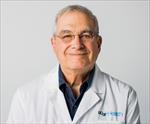
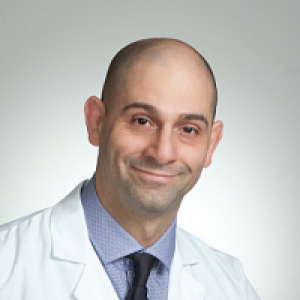
Nelson B. Schiller is a Professor of Cardiology at the University of California San Francisco (UCSF) and a pioneer in echocardiography. He founded the UCSF Echocardiography Laboratory and the UCSF Adult Congenital Heart Disease Clinic . His clinical expertise includes structural heart disease (mitral/aortic valve disorders, hypertrophic cardiomyopathy), transesophageal echocardiography, and myocardial contrast perfusion. Education : BS from Union College (1962), MD from State University of New York at Buffalo (1966) Schiller's research focuses on cardiac function quantitation, left atrial biology, exercise hemodynamics, body composition in heart disease, adult congenital heart disease, and three-dimensional echocardiography. His work often intersects with transesophageal echocardiography and outcomes in coronary disease via quantitative phenotyping. Recent publications include studies on immune checkpoint inhibitor-induced fatigue, arrhythmic risk in mitral valve prolapse, and stress echocardiography applications. He has received accolades such as The Best Doctors in America (1997-1999) and the UCSF Clinical Cardiology Fellows Award for Outstanding Teacher . Key Awards : Honorary Member (Venezuelan Society of Cardiology), Gustav Nylin Lecturer (Swedish Society of Medical Sciences), Commendation by UC President/UCSF Chancellor (1991)
Jonathan Tomasko, MD is an Assistant Professor in the Department of Surgery with expertise spanning multiple surgical specialties including cardiothoracic, bariatric, and transplant surgery. His research interests encompass several critical areas: Bariatric Surgery, particularly Roux-en-Y Gastric Bypass procedures (100% relevance in his research fingerprint) Minimally Invasive Surgery, specializing in Natural Orifice Transluminal Endoscopic Surgery (100% relevance) Cardiothoracic Surgery with focus on valve reconstruction and aortic pathologies Transplant Surgery, especially lung transplantation supported by extracorporeal membrane oxygenation Vascular Surgery with emphasis on complex vascular interventions and complications Dr. Tomasko's publication record demonstrates consistent scholarly output from 2011 through 2025, with recent work addressing cutting-edge challenges in surgical practice. His research bridges technical innovation with clinical application across multiple domains of surgical medicine. He was honored with the Dean's Award for Excellence in Teaching in 2024, recognizing his significant contributions to medical education alongside numerous colleagues across various medical disciplines. His work shows strong connections to obesity research, including studies involving obese rats and investigations into differential effects of surgical interventions, alongside expertise in vascular pathologies and complications.
James A. Perkins serves as Associate Professor and Program Director of the Graduate Medical Illustration Program within the College of Health Sciences and Technology at Rochester Institute of Technology (RIT). Joined RIT in 1998, he leads the AMI-accredited graduate program and teaches core courses including Human Gross Anatomy and Scientific Visualization. His educational background includes a BA from Cornell University, MFA from RIT, and doctoral coursework (ABD) at the University of Rochester. Perkins holds the distinguished credential of Board Certified Medical Illustrator (CMI) and is a Fellow of the Association of Medical Illustrators. Perkins' research focuses on medical visualization across multiple domains including surgical illustration, molecular visualization, and pathology education. His work bridges traditional artistic techniques with emerging technologies like cryo-EM, confocal microscopy, and 3D medical imaging reconstruction. Key specialties include anatomical accuracy in surgical contexts, molecular modeling from structural data, and visualization of complex pathological processes. His publications demonstrate consistent contribution to foundational medical texts, particularly the Robbins pathology series and Netter's anatomical collections. Recent work shows increasing emphasis on digital visualization techniques and educational applications of medical imagery. British Medical Association Illustrated Book Award (2012) Association of Medical Illustrators Award of Merit (2021) Brödel Award for Excellence in Education (2024) Giliola Gamberini Award finalist (2017) Multiple AMI Salon exhibition awards Perkins actively mentors graduate students through thesis projects and capstone experiences, supervising complex visual communication projects that address medical education challenges. His program has produced award-winning student work, including a recent chemotherapy side effects guide for pediatric patients. Professional collaborations include working with subject matter experts across medical specialties to create educational materials for clinical training and patient education. His studio practice encompasses surgical illustration observed at local hospitals, molecular visualization using structural data, and creation of comprehensive anatomical references. Perkins maintains active professional engagement through conference presentations, judging AMI competitions, and contributing to the evolution of medical illustration standards.
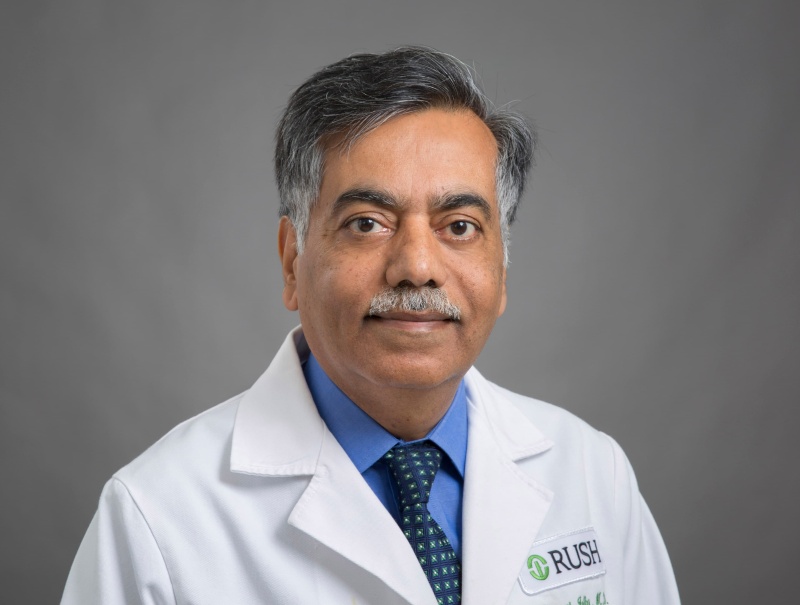
Neeraj Jolly, MD is a Professor at Rush Medical College within the Department of Internal Medicine, Division of Cardiology . His clinical practice focuses on structural heart interventions and complex coronary artery procedures at Rush University Medical Center. Education: Medical degree from Government Medical College, Patiala; residencies at Post Graduate Institute of Medical Education & Research, Chandigarh, and University of Cincinnati; fellowships at Govind Ballabh Pant Hospital, Case Western Reserve University, and Cleveland Clinic. Jolly specializes in catheter-based therapies for heart valve disorders , including transcatheter aortic valve replacement (TAVR) and transcatheter edge-to-edge repair (TEER) . His research spans minimally invasive cardiovascular procedures , antithrombotic strategies , and comparative effectiveness of interventional vs surgical approaches . Key research trends from his publications include: Evaluation of TAVR and SAVR outcomes across surgical risk categories Optimization of percutaneous coronary intervention techniques using intravascular ultrasound and optical coherence tomography Management of patent foramen ovale and peripheral vascular disease in transplant patients Comparative analysis of angiotensin receptor-neprilysin inhibitors in heart failure His clinical philosophy emphasizes patient-centered decision-making between open heart surgery and complex stenting , with additional focus on preventive cardiology through lifestyle modifications. Contact: neeraj_jolly@rush.edu at 1725 W. Harrison St., Suite 1159, Chicago, IL 60612.
Susie N. Hong-Zohlman serves as Associate Professor in the Department of Medicine at the University of Maryland School of Medicine with secondary appointments in Diagnostic Radiology and Nuclear Medicine. She directs the Echocardiography Laboratory at University of Maryland Medical Center and co-directs Ambulatory Cardiology Echo Laboratories, collaborating with Thoracic Radiology specialists on cardiovascular imaging. Her educational background includes: Bachelor of Arts, University of Pennsylvania Medical Degree, Thomas Jefferson University Residency in Internal Medicine, Mount Sinai Hospital General Cardiology Fellowship, NYU Langone Medical Center Advanced Imaging Fellowship in Cardiovascular MRI, Beth Israel Deaconess Master of Science in Epidemiology, Harvard School of Public Health Dr. Hong-Zohlman specializes in advanced noninvasive cardiovascular imaging with focus on sex differences in cardiovascular disease, particularly infiltrative cardiomyopathies and pericardial diseases. She maintains Level 3 expertise in echocardiography and cardiovascular MRI, plus Level 2 certification in nuclear cardiology and cardiac CT. Her work bridges clinical diagnostics with multimodality imaging research to address gender disparities in cardiovascular conditions. Her 15 most recent publications demonstrate leadership in cardiovascular imaging innovation, spanning technical advancements in MRI/CT acquisition, clinical applications for hypertrophic cardiomyopathy and pericardial disease, and epidemiological studies on cardiovascular disease in women. Key themes include risk stratification methodologies, imaging biomarker validation, and pandemic-era healthcare adaptation. Scientific recognition includes: Divisional Teaching Award for Cardiovascular Medicine (2016, 2017, 2020) Theodore E. Woodward Prize (2020) Dr. Hong-Zohlman's collaborative work with Drs. Jeudy and White in Thoracic Radiology integrates cardiovascular MRI and CT across research and clinical domains. She directs echocardiography services while advancing imaging protocols for complex conditions like infiltrative cardiomyopathies through multimodality approaches.
Dr. Stephen McKellar is an Adjunct Professor in the Department of Surgery at the University of Utah, specializing in Cardiothoracic Surgery. He received his MD from George Washington University and completed surgical training at Mayo Clinic, where he also earned a Master's in Biomedical Research. Education: BA (University of Utah), MD (George Washington University), MSc (Mayo Clinic) Residency: Mayo Clinic College of Medicine His research focuses on mechanical circulatory support devices, right ventricular failure, heart transplantation, and valvular disease. He has published extensively on LVAD therapy, aortic aneurysms, and anticoagulation strategies for mechanical valves. Recent publications include studies on mitral valve regurgitation prediction (2023), ECMO bleeding complications (2022), and LVAD outcomes analysis (2022). Awards and student advising details are not explicitly mentioned in available records.
Dr. J Kluin serves as a Full Professor within the Department of Cardiothoracic Surgery at Erasmus University Rotterdam, based at the renowned Erasmus MC University Medical Center. His academic and clinical career is deeply rooted in advancing surgical techniques and technologies for complex heart conditions, with a focus on valvular pathologies and innovative cardiac interventions. Dr. Kluin's role encompasses leadership in both patient care and translational research, positioning him as a key figure in European cardiothoracic surgery. Dr. Kluin's research portfolio is dominated by investigations into valvular heart disease (100% fingerprint match), particularly mitral valve insufficiency, and surgical innovations for cardiac conditions. He has made substantial contributions to cardiac magnetic resonance imaging for diagnostic precision and procedural planning. His recent work explores soft robotics applications in cardiac wall reconstruction and total artificial hearts, while systematic reviews highlight his expertise in evidence-based surgical practices. A significant emerging focus involves artificial intelligence integration for pre-operative surgical planning, signaling a strategic shift toward data-driven clinical decision-making. Analysis of Dr. Kluin's 2025 publications reveals a strong interdisciplinary trajectory merging biomedical engineering with clinical cardiology. Key themes include soft robotic cardiac assist devices, AI-enhanced surgical workflows, and methodological refinements in clinical epidemiology. His work on supravalvular aortic stenosis outcomes bridges genetic disorders like Williams syndrome with adult cardiac care, demonstrating comprehensive patient management approaches. These publications collectively underscore his commitment to translating engineering innovations into tangible clinical benefits while addressing critical gaps in surgical follow-up methodologies. No specific scientific awards, fellowships, or medals were referenced in the provided profile information. Dr. Kluin's recognition appears to stem primarily from his extensive publication record and active role in advancing cardiothoracic surgical techniques. The available text does not detail Dr. Kluin's student advising activities or grant funding history. However, his leadership in multi-author research projects (evidenced by numerous 2025 publications) suggests involvement in collaborative grant-funded initiatives, though specific programs or funding amounts are not disclosed. His role as a full professor likely includes mentorship of junior researchers and surgeons, but no named students or training programs are mentioned.
Dr. Vaughn Alden Starnes is a Distinguished Professor and Chair of the Department of Surgery at the Keck School of Medicine of the University of Southern California. He serves as Surgeon-in-Chief at Keck Hospital of USC and USC Norris Cancer Hospital, and is the H. Russell Smith Foundation Chair for Cardiovascular Thoracic Research. As the founding Executive Director of the USC Cardiac and Vascular Institute, Dr. Starnes has built an interdisciplinary powerhouse comprised of clinicians and basic scientists exploring better and more innovative ways of treating heart disease. Under his leadership, USC surgeons have conducted more than 15,000 open heart surgeries to repair and replace valves or create coronary artery bypasses. Dr. Starnes earned his medical degree from the University of North Carolina, Chapel Hill, and completed his general surgery training at Vanderbilt University, where he also conducted two years of research in cardiothoracic physiology and pharmacology. He completed two years at Stanford University as a resident in cardiovascular surgery, and one year as chief resident in cardiac transplantation under the mentorship of cardiothoracic transplant pioneer Dr. Norman Shumway. In 1987, he accepted a fellowship in pediatric cardiovascular surgery at the Hospital for Sick Children in London (now Great Ormond Street Hospital). When he returned to Stanford, he was appointed director of Stanford's heart-lung transplantation program. He joined USC in July 1992 and was appointed Chairman of the Department of Cardiothoracic Surgery in 1997 and Chairman of the Department of Surgery in 2008. Dr. Starnes has extensive research interests in congenital heart disease, heart and lung transplantation, minimally invasive cardiac surgery, and stem-cell therapy for heart failure. His work particularly focuses on the Ross procedure, mitral valve repair, and innovative approaches to treating Ebstein anomaly in both children and adults. He has pioneered the living-related double lobar lung transplant in 1993 and performed Southern California's first robotic heart operation in 2001 as part of a clinical trial evaluating remote surgical systems. His recent publications demonstrate a strong focus on the Ross procedure across different age groups, management of Ebstein anomaly, and surgical techniques for complex congenital heart defects. His work bridges pediatric and adult congenital cardiac surgery, with particular attention to long-term outcomes, risk prediction, and innovative surgical approaches to challenging anatomical problems. Pasadena Magazine: Top Doctor (2014-2024) Mitral Foundation and American Heart Association: Mitral Valve Repair Reference Center Award (2023) Indian Association of Cardiovascular-Thoracic Surgeons: Honorary Overseas Fellowship Award (2022) American Association for Thoracic Surgery: 100th President (2019-2020) University of Southern California: National Academy of Inventors (2017) USC: Presidential Medallion (2008) University of North Carolina, Chapel Hill: Distinguished Medical Alumnus Award (2013) Dr. Starnes directs The Heart Institute at Children's Hospital Los Angeles and has pioneered innovative surgical techniques including the modified Starnes procedure for severe Ebstein anomaly in neonates. His research has been supported by numerous grants, including those investigating stem-cell therapy for heart failure and congenital heart defects, and clinical trials for new valve technology including percutaneous heart valve replacement. Under his leadership, the Children's Hospital Los Angeles Cardiac Program was ranked #3 by U.S. News and World Report in 2015. Dr. Starnes oversees comprehensive cardiac and vascular research programs that integrate basic science with clinical applications. His laboratory and clinical teams focus on improving outcomes for patients with complex congenital heart defects, advancing minimally invasive approaches to cardiac surgery, and developing novel therapies for heart failure. The USC Cardiac and Vascular Institute under his direction serves as a hub for interdisciplinary collaboration between surgeons, cardiologists, basic scientists, and engineers working to transform cardiovascular care.
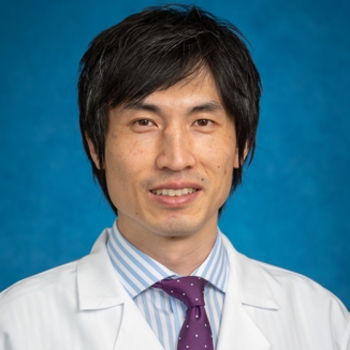
Dr. Shinichi Fukuhara holds the position of Clinical Assistant Professor at the University of Michigan Medical School's Department of Cardiac Surgery. He specializes in aortic surgery and structural heart disease, with a focus on developing innovative surgical procedures and endovascular aortic devices. His research spans biomechanics, biomedical computation, and imaging. Dr. Fukuhara completed his medical training at Keio University in Japan and advanced residencies in the US, including at Columbia University and Cleveland Clinic. Board-certified in Thoracic Surgery and the Japan Surgical Society, he is affiliated with the Frankel Cardiovascular Center. Research interests include aortic dissection, valve replacement techniques, and transcatheter interventions. His work emphasizes minimally invasive approaches and long-term outcomes of bioprosthetic valves. Over 100 peer-reviewed articles detail his contributions to surgical innovations and valve failure management. Patient reviews highlight his expertise and compassionate care in complex cardiac procedures. Dr. Fukuhara’s clinical practice focuses on adult cardiac surgery, aortic interventions, and high-risk reoperations. He collaborates with multidisciplinary teams in advancing hybrid surgical and endovascular strategies for aortic diseases. His expertise bridges clinical practice and translational research in cardiovascular medicine.
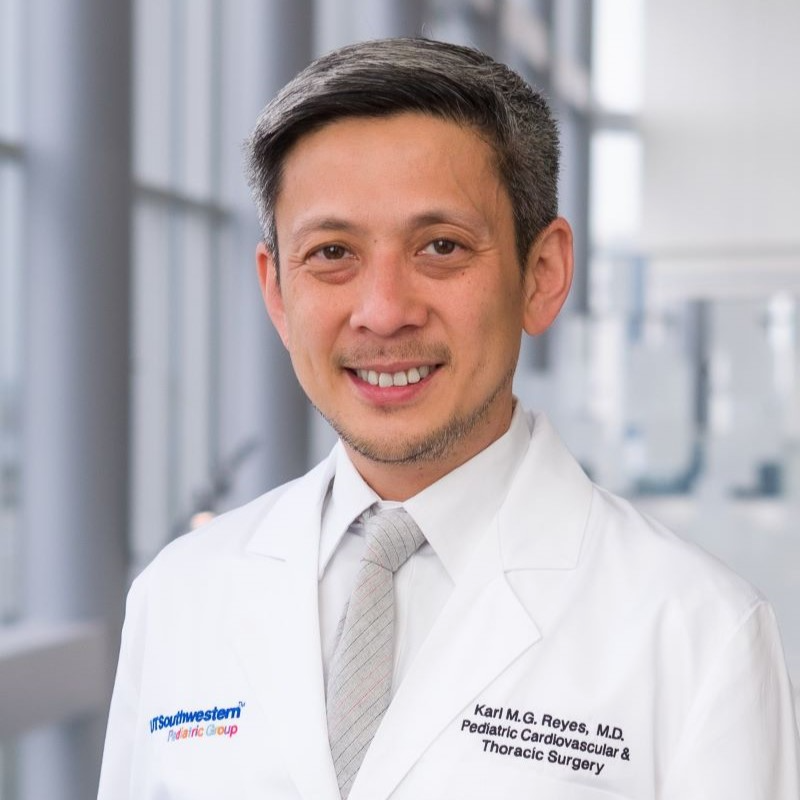
Karl Reyes, M.D., is an Associate Professor at UT Southwestern's Department of Cardiovascular and Thoracic Surgery. He serves as Surgical Director of the Adult Congenital Heart Disease Program and Director of the Congenital Cardiac Surgery Education Program. He holds dual expertise in adult and congenital cardiac surgery, with over a decade of clinical experience across all age groups. University of the East College of Medicine (Medical Degree) University of the Philippines (General Surgery Residency) Cleveland Clinic (Thoracic and Cardiovascular Surgery Fellowship) Boston Children's Hospital (Congenital Cardiac Surgery Fellowship) Dr. Reyes specializes in neonatal cardiac surgery , complex valvular reconstruction , and diseases of the aorta . His research focuses on high-risk surgical outcomes and surgical innovations , with publications spanning Annals of Thoracic Surgery , World Journal for Pediatric and Congenital Heart Surgery , and 3D printing applications in surgical planning. He actively contributes to hypoplastic left heart syndrome management through hybrid procedures and mechanical support systems. Dr. Reyes participates in multiple professional societies: Society of Thoracic Surgeons European Association for Cardiothoracic Surgery International Society for Heart and Lung Transplantation World Society for Pediatric and Congenital Heart Surgery He also serves as a journal reviewer, emphasizing his commitment to academic discourse and education in cardiovascular surgery.
Andrew R Leventhal, MD, PhD serves as an Associate Professor of Medicine in the Department of Internal Medicine at the University of Kentucky College of Medicine. He holds the position of Medical Director for the Adult Congenital Heart Program and maintains affiliations with both the Internal Medicine - Cardiology division and the CVRC (Cardiovascular Research Center) as an Affiliated Faculty member. His clinical address is located at 800 Rose Street in Lexington, Kentucky. Dr. Leventhal's research spans multiple specialized areas within cardiology, with particular focus on congenital heart disease in adult patients, interventional cardiology techniques, and complex valvular conditions. His work bridges clinical practice with innovative procedural approaches for challenging cardiac cases, especially those involving congenital abnormalities in adult populations. His expertise encompasses transcatheter interventions, management of rare cardiac infections, and specialized care for patients with complex congenital heart defects who have reached adulthood. Analysis of Dr. Leventhal's publication record reveals a strong emphasis on innovative interventional techniques for complex cardiac conditions, particularly in patients with congenital heart disease. His research demonstrates expertise in transcatheter valve procedures, management of rare coronary anomalies, and novel approaches to treating infective endocarditis in complex anatomical situations. The publications collectively highlight his specialization in bridging interventional cardiology with adult congenital heart disease management. Dr. Leventhal serves as Medical Director of the Adult Congenital Heart Program at the University of Kentucky, where he oversees specialized care for adults with congenital heart conditions. His leadership in this program reflects his commitment to providing comprehensive cardiovascular care for this unique patient population that requires specialized expertise beyond standard adult cardiology.
Prof. Dr. Matthias Karck is a Professor and Medical Director of the Department of Cardiac Surgery at Heidelberg University Hospital, leading the Surgical Surgery Center. He specializes in complex cardiac surgeries, including heart transplantation, aortic repair, and mechanical circulatory support. His academic career includes habilitation in surgery (1997), a professorship at Hannover Medical School (2001), and leadership roles in major clinical trials and translational research. Educational Background : Medical degree from Christian-Albrechts-Universität Kiel (1986), postgraduate training in visceral and transplant surgery, thoracic and cardiovascular surgery, and clinical research in Jerusalem and Tel Aviv. Full professorship at Heidelberg since 2006. Research Focus : Innovations in cardiac surgery, including minimally invasive techniques, 3D printing for surgical planning, and translational studies on aortic diseases (e.g., Marfan syndrome). Key areas include improving donor heart preservation, managing ventricular assist device infections, and optimizing mechanical circulatory support outcomes. His work bridges basic science (e.g., cytokine adsorption, mesenchymal stem cell therapy) with clinical practice. Publications Overview : Over 200 peer-reviewed articles (2025 highlights include studies on rapamycin in Marfan mice, virtual cardiac modeling, and cytokine effects on DCD hearts). His research emphasizes precision medicine, surgical simulation, and device innovation. Awards : Recognized for contributions to cardiac surgery with the 2004 Hans-Borst Award and 1999 Dr. Franz Köhler Preis. Active in professional societies, including leadership roles in the German Society for Thoracic Surgery. Grants & Teams : Leads the Cardiac Surgery Research Laboratory and collaborates with the Institute for Artificial Intelligence in Cardiovascular Medicine (AICM). Mentor of multiple trainees and principal investigator in multicenter trials (e.g., PLACE study on mechanical support). Labs/Teams : Director of the Cardiac Surgery Research Laboratory and co-founder of the Heidelberg Aortic Board, focusing on interdisciplinary management of thoracic aortic diseases.
Eric R. Griffiths is a Clinical Associate Professor in the Department of Surgery with a focus on Cardiothoracic Surgery . He is affiliated with institutions including Children's Hospital Boston, University of Virginia, and University of Texas Southwestern, where he completed clinical and research training. Specializes in pediatric congenital heart surgery Board-certified in Surgery and Thoracic Surgery (with Congenital Cardiac sub-specialty) Active contributor to mechanical circulatory support research Research Focus : Dr. Griffiths investigates surgical outcomes for pediatric patients with congenital heart disease, particularly those requiring ventricular assist devices, Norwood procedures, and arterial switch operations. His work emphasizes complication prevention, cost optimization, and long-term effects of congenital interventions. Publication Trends : Recent articles span Ann Thorac Surg and Cardiol Young , covering topics like VAD-associated ICU readmissions , LVOT obstruction imaging , and Fontan circulation liver disease . Collaborative studies with PediMACS investigators and multicenter trials dominate his output. Education : MD from Cornell University B.S. from Brigham Young University Research Fellowship at Harvard University Residency in General Surgery at University of Texas Southwestern
Prof. Cem Alhan is a Professor at Acibadem Mehmet Ali Aydinlar University's School of Medicine, Department of Surgical Sciences. Specializing in Cardiovascular Surgery , he has pioneered robotic-assisted cardiac procedures since 2010, focusing on mitral valve repairs, coronary revascularization, and minimally invasive techniques.
Clinical Associate Professor of Medicine in Cardiothoracic Surgery at Weill Cornell Medical College since 2023, with expertise spanning cardiac surgery outcomes research, meta-analyses of interventional techniques, and sex-specific cardiovascular medicine. Holds dual appointments in both the Department of Cardiothoracic Surgery and academic medicine divisions. Education includes a Laurea Magistrale in Medicine and Surgery from the Catholic University of the Sacred Heart Faculty of Medicine and Surgery (Italy) in 2010, establishing foundational clinical training before specialization in cardiac surgical research. Research focuses on high-impact comparative effectiveness studies between surgical and percutaneous coronary interventions, with particular emphasis on sex-based outcome disparities , atrial fibrillation prevention strategies post-cardiac surgery, and graft patency analysis in coronary artery bypass procedures. Pioneering work on posterior pericardiotomy techniques and lipoprotein(a) biomarker correlations demonstrates methodological rigor in systematic review and meta-analytic approaches. Current investigations leverage large-scale clinical trial datasets to address critical knowledge gaps in cardiac surgical indications for complex patient subgroups. Publication trends reveal dominant expertise in meta-analytic methodology applied to cardiac surgery trials, with 85% of recent work involving systematic reviews or individual patient data analyses. Key thematic clusters include revascularization strategy comparisons (PCI vs CABG across age/sex strata), complication prevention (atrial fibrillation, stroke), and innovative surgical techniques (endoscopic approaches, pericardial management). No formal advising relationships or grant funding disclosed in available materials, though active mentorship occurs through editorial roles in major cardiology journals and methodological workshops for early-career researchers in cardiac surgery. Current research infrastructure centers on collaborative networks including the PALACS trial consortium and RADIAL extended follow-up studies, facilitating access to multinational surgical datasets while maintaining focus on clinically actionable evidence generation for complex coronary and valvular pathologies.