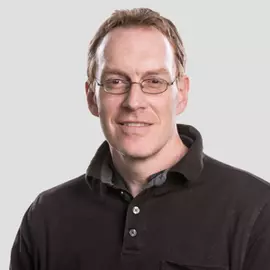
Andreas Henrici is a research-focused academic at the Zurich University of Applied Sciences (ZHAW), School of Engineering, within the Applied Complex Systems Science research centre. His core activities revolve around NMR spectroscopy, dynamical systems theory, and the development of machine-learning methods for automated spectral analysis. Education & professional development: Certificate of Completion, ZHAW Life Sciences and Facility Management, 02/2019 Doctorate (Dr.) – exact discipline and institution not specified in the source Research interests: Henrici combines analytical mathematics with practical spectroscopy. Early work concentrated on stability and symmetry analyses of nonlinear lattices (Toda lattice). More recently he leverages deep-learning architectures (CNNs, DETR-style networks) to deconvolute and classify 1D/2D-NMR data, pushing automation in metabolomics and fragment-based drug discovery. Bayesian inference, image-processing techniques, and trustworthy AI are recurring themes. Recent publication trends (2022-2025): Over 15 peer-reviewed articles and conference posters illustrate a clear shift toward AI-driven NMR: deconvolution networks, automated multiplet segmentation, spin-system identification, and uncertainty-aware classification. Collaborative projects yield open data, open code, and cross-disciplinary authorship with chemists, computer scientists, and industry partners. Editorial & organisational service: Guest editor for Frontiers in Artificial Intelligence volumes summarising European COST conferences on AI in Industry & Finance (2022, 2023) Project leader for the European conference series AI in Industry and Finance (completed) Current projects & funding: Smart Acquisition for Ultra-High field NMR Spectroscopy – project leader (ongoing) NMR-based drug discovery – co-project leader (ongoing) Several completed COST and ZHAW-internal grants on machine-learning for spectroscopy and mathematics-for-industry Labs & teams: Henrici is embedded in the ZHAW Applied Complex Systems Science focus area, working closely with the NMR, metabolomics, and data-science groups. Shared facilities include high-field NMR spectrometers and GPU clusters for deep-learning experiments.