معرفی
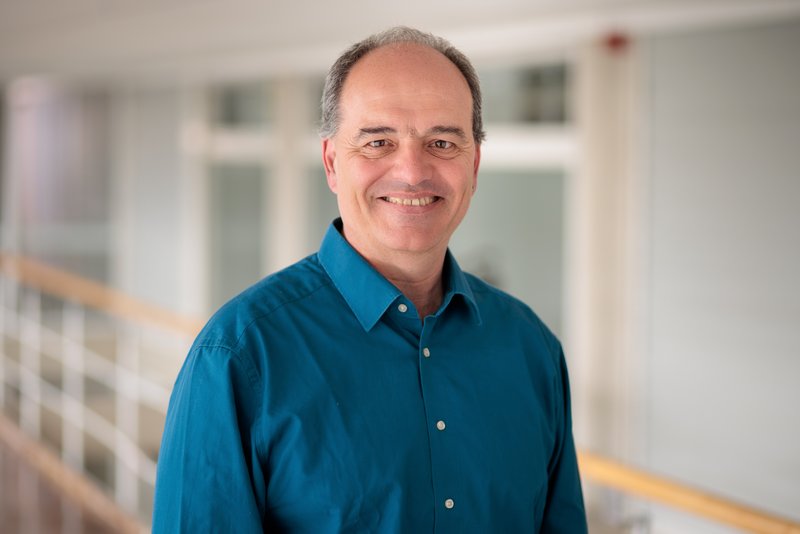
Daniel Thalmann is a distinguished Professor at École Polytechnique Fédérale de Lausanne (EPFL), specifically within the School of Computer and Communication Sciences and the Institute of Computer Science. As a current EPFL member, he leads the Virtual Reality Laboratory (VRLAB) and has established himself as a pioneer in virtual reality research with decades of international leadership in the field. His academic contributions span numerous publications, including the influential book "Stepping into Virtual Reality" (2023), which serves as both a textbook and reference for VR applications.
Professor Thalmann's research interests encompass a broad spectrum of virtual reality and related technologies, with particular emphasis on computer animation, crowd simulation, virtual humans, and human-computer interaction. His work demonstrates exceptional depth in understanding how virtual environments can be designed to interact naturally with users, simulate complex social scenarios, and extend human capabilities through immersive technologies. He has made significant contributions to the theoretical foundations of VR while maintaining strong practical applications across various domains.
The most recent publications reveal a clear progression in Thalmann's research trajectory, moving from core VR technologies toward increasingly sophisticated applications that integrate artificial intelligence, multi-sensory experiences, and real-world problem solving. His work now spans health sciences applications, brain-computer interfaces, sensory systems including smell and taste simulation, and the architectural foundations of the metaverse. This evolution demonstrates both continuity in his core expertise and strategic expansion into emerging application areas where virtual reality can have transformative impact.
Through the Virtual Reality Laboratory at EPFL, Professor Thalmann has fostered numerous collaborations across disciplines and institutions, contributing significantly to the global VR research community. His leadership extends to organizing major international conferences including the Computer Graphics International (CGI) and Computer Animation and Social Agents (CASA) events, where he has served as editor and contributor to multiple proceedings volumes. The laboratory continues to advance research in social robotics, virtual humans, and immersive environments, with applications ranging from healthcare to cultural heritage preservation.