John Cagnol is a Researcher at CentraleSupélec, affiliated with the Department of Mathematics and Computer Science within the Mathematics and Computer Science for Complexity and Systems Laboratory. His work spans applied mathematics, computational mechanics, and AI-driven healthcare solutions. Recent research focuses on shape optimization in Maxwell’s equations, hyperelastic shell dynamics, and AI applications in medical imaging. He collaborates extensively, with co-authors addressing topics like vaccine-resistant variant modeling and curriculum design for complex systems engineering. His contributions bridge theoretical frameworks (e.g., Hadamard well-posedness) with practical applications (e.g., insurance regulatory frameworks). Education: Details not explicitly stated in provided texts. Research interests emphasize interdisciplinary approaches, blending mathematical physics with real-world challenges in healthcare and engineering education. He leads efforts in curriculum innovation at CentraleSupélec, aiming to integrate systems thinking into engineering pedagogy. No scientific awards are mentioned, though his publication record reflects active collaboration across academia and industry.
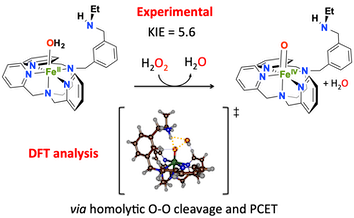
Katell Senechal-David is a Researcher (Enseignant-Chercheur) at Université Paris-Saclay, affiliated with the Institut de Chimie Moléculaire et des Matériaux d'Orsay (ICMMO, UMR 8182) and the Laboratoire de Chimie Inorganique (LCI). Her research focuses on inorganic chemistry, electrochemistry, and bioinspired catalytic systems, particularly involving non-heme iron complexes. She explores mechanisms of oxygen activation (O₂ and H₂O₂), catalytic oxidation processes, and the design of functional materials for environmental and industrial applications. Her work emphasizes understanding second-sphere effects, ligand design, and mechanistic pathways in transition metal-catalyzed reactions. Key contributions include studies on FeIVO/FeIIIOOH intermediates, electrochemical oxidation pathways, and enzyme-mimicking systems. She collaborates extensively with teams at ICMMO and other institutions, publishing in high-impact journals like Chemical Science , Dalton Transactions , and Chemistry - A European Journal . Innovations include the development of acid-resistant catalysts, surface-immobilized complexes, and protein-grafted artificial enzymes. Her research bridges fundamental coordination chemistry with applied catalysis, aiming to model natural monooxygenases and advance green chemical processes.
Frédéric Avenier is a Professor at Université Paris-Saclay, affiliated with the Institut de Chimie Moléculaire et des Matériaux d'Orsay (ICMMO) and the Laboratoire de Chimie Bioorganique et Bioinorganique (LCBB). He holds a PhD in Molecular Chemistry from Université Joseph Fourier, Grenoble (2003), followed by postdoctoral research at the University of Cambridge (2004-2008) and ENS Lyon (2008-2009). His research focuses on bio-inspired catalytic systems, particularly enzyme mimics involving iron complexes for oxygen activation and selective oxidation reactions. Key contributions include studies on diiron-peroxo intermediates and artificial flavoenzymes. Avenier has authored over 30 peer-reviewed publications, with highlights in Angewandte Chemie , Nature Communications , and ACS Catalysis . His work bridges inorganic, bioorganic, and computational chemistry, addressing challenges in sustainable catalysis. Education: PhD in Molecular Chemistry (2003), Université Joseph Fourier, Grenoble Habilitation (2017), Université Paris-Sud Research interests emphasize designing metal-based catalysts inspired by biological systems to achieve selective oxidations and oxygen activation. Collaborations include projects on polyoxometalate-catalyzed reactions and enzyme-hybrid biocatalysts. Recent publications (2013–2025) explore copper-mediated halogenations, palladium-catalyzed bioorthogonal reactions, and non-heme iron amine transfer mechanisms. Experimental and computational approaches are combined to elucidate reaction pathways and catalytic intermediates.
Florent Di Meglio is an Associate Professor at MINES ParisTech, working in the Centre Automatique et Systèmes (Center for Automatic Control and Systems). His research focuses on control theory, particularly for partial differential equations and their applications in various engineering domains. Education: Ph.D. in Mathematics and Control at MINES Paristech in 2011 Graduated from MINES Paristech (Grande Ecole) in 2008 Postdoctoral researcher at UC San Diego under Miroslav Krstic Professor Di Meglio's research spans several areas of control theory with applications in oil and gas drilling, robotics, and fluid dynamics. His work primarily focuses on the control of partial differential equations, particularly hyperbolic systems, using methods like backstepping and boundary control. He has made significant contributions to the stabilization of coupled PDE-ODE systems, estimation techniques for drilling processes, and the application of control theory to thermoacoustic systems and robotics. His recent publications demonstrate a strong focus on robust control design for coupled hyperbolic PDEs, state estimation for complex systems, and applications in drilling technology. His work often bridges theoretical control methods with practical engineering problems, particularly in the oil and gas industry. Scientific Awards: 2014 France-Berkeley Fund Award for the project "Analysis and Control of Grid-Integrated Plug-in Electric Vehicle Fleets" with Professor Scott MOURA Professor Di Meglio has advised numerous Ph.D. students working on diverse topics including deep learning approaches to combustion/acoustic coupling, parameter estimation for thermoacoustic instabilities, and state estimation for flexible exoskeletons. His research has been supported by several major projects including the H2020 Marie-Curie EID – ITN project MAGISTER (2017-2021), the H2020 Marie-Curie EID - ITN project HYDRA (2016-2020), and the ANR project MACSDRILL (2016-2020). He is actively involved in the academic community, serving as the animator of the PDE Workgroup (Groupe de Travail EDP) of the GDR MACS.
Cristel CHANDRE serves as a Research Professor (Directeur de Recherche) at the French National Centre for Scientific Research (CNRS), based at the Institute of Mathematics of Marseille (I2M UMR7373). With expertise spanning mathematical physics and nonlinear dynamics, CHANDRE contributes significantly to theoretical frameworks in Hamiltonian systems and chaos theory, with applications across physics domains. CHANDRE's research focuses on nonlinear dynamics and dynamical systems , with particular emphasis on Hamiltonian dynamics and chaos . Their work bridges theoretical mathematics with practical applications in atomic physics, molecular physics, and plasma physics . Key research areas include: Hamiltonian formulations for complex physical systems Chaos theory and nonlinear phenomena in quantum systems Mathematical modeling of plasma dynamics Computational approaches to molecular dynamics Fluid reductions of kinetic equations Development of numerical methods for dynamical systems Analysis of CHANDRE's recent publications reveals a consistent focus on Hamiltonian systems and their applications across physics domains. Their work demonstrates increasing integration of computational methods with theoretical frameworks, particularly in quantum dynamics and plasma physics. The research shows strong interdisciplinary connections between mathematics, physics, and computational science, with notable contributions to understanding fundamental physical processes from the molecular to plasma scales. Professional recognition includes: Editor-In-Chief of Communications in Nonlinear Science and Numerical Simulation (Elsevier) Expert-evaluator for the European Commission (European Research Executive Agency and European Education and Culture Executive Agency) CHANDRE maintains active research collaborations across international boundaries, serving as an expert evaluator for European Union research programs including Marie Sklodowska Curie actions and Erasmus Mundus programs. Their GitHub repositories (including pyHamSys and Polarimetry) demonstrate commitment to open science and computational reproducibility in mathematical physics, with tools that enable other researchers to apply advanced mathematical techniques to complex physical problems. Through the Institute of Mathematics of Marseille, CHANDRE leads research initiatives that develop computational frameworks for Hamiltonian systems, plasma dynamics, and molecular physics. Their work on pyHamSys (a Python package for Hamiltonian systems) and Polarimetry (for analyzing polarization-resolved microscopy data) provides valuable resources for the scientific community, facilitating both theoretical exploration and experimental analysis in nonlinear science.
Qingmiao Zhang is a researcher in the fields of Computer Science and Engineering, focusing on advanced wireless communication systems, network optimization, and machine learning applications. Their work includes innovative approaches to mmWave Massive MIMO channel estimation, resource allocation in fog computing, and deep reinforcement learning for urban rail transit systems. Research Trends: Recent publications highlight expertise in Federated Learning, Edge Computing, and hybrid network architectures combining satellite and terrestrial systems. Key methodologies involve deep unfolding, multi-agent systems, and dynamic task execution models. Collaborations: Frequently collaborates with researchers like Junhui Zhao, Dongmin Wang, and Lidong Zhu on cutting-edge network optimization and machine learning projects.
Harikrishnan Charuvil Asokan is a researcher at the Laboratory of Fluid Mechanics and Acoustics (LMFA - UMR 5509) affiliated with Claude Bernard University Lyon 1 and École Normale Supérieure de Lyon. He is a member of the EM³ team (Ecoulements Multi-physiques Multi-phasiques & Multi-échelles) which focuses on multi-physical, multi-phase and multi-scale flows. His research interests include fluid dynamics, multiphase flows, multiscale modeling, computational fluid dynamics, and turbulent flows. The EM³ team investigates complex flow phenomena across various scales and physical conditions, with applications in engineering and environmental systems. The EM³ team is part of the broader Laboratory of Fluid Mechanics and Acoustics which conducts research in acoustics, environmental flows, turbulence, instabilities, and turbomachinery. The laboratory is a joint research unit involving multiple prestigious French institutions including INSA Lyon, École Centrale de Lyon, Claude Bernard University Lyon 1, and École Normale Supérieure de Lyon.
Shihab Shamma is a Professor at École Normale Supérieure (ENS) in Paris, France, affiliated with the Perceptual Systems Laboratory (LSP) and the GNT Team specializing in Hearing research. His office is located on the 2nd floor, room 203, at 29 rue d'Ulm, 75005 Paris. He maintains a dual professional presence with the University of Maryland, as indicated by his umd.edu email and faculty page. His research focuses on understanding the neural mechanisms underlying auditory perception and perceptual systems. His work integrates experimental neuroscience with computational modeling to explore how the brain processes complex acoustic signals. This interdisciplinary approach bridges neuroscience, cognitive science, and engineering. Dr. Shamma leads research within the Perceptual Systems Laboratory, where his team investigates the functional organization of the auditory cortex and neural coding of sound. His scientific contributions have advanced the understanding of how sensory information is represented and transformed in the brain. He is actively involved in mentoring and collaborative research, though specific advisees are not listed. He is associated with the GNT Team (Hearing), suggesting a focused effort on auditory neuroscience and potential collaborations in hearing disorders, neural prosthetics, or bio-inspired sound processing. His work likely involves grants and interdisciplinary projects, although specific funding sources are not mentioned.
Dmitry Berenson is an Associate Professor in the Robotics Department at the University of Michigan, Ann Arbor. Previously, he served as an Assistant Professor at Worcester Polytechnic Institute from 2012 to 2016, following a postdoctoral position at the University of California, Berkeley in 2011-2012. His educational background includes: B.S. in electrical engineering from Cornell University (2005) Ph.D. in robotics from the Robotics Institute, Carnegie Mellon University (2011) Dr. Berenson's research focuses on advancing robotic manipulation capabilities, particularly in challenging scenarios involving deformable objects and complex environments. His work bridges the gap between theoretical motion planning algorithms and practical robotic applications, with emphasis on developing methods that can handle uncertainty, occlusion, and complex physical interactions. He has made significant contributions to contact-rich manipulation, deformable object handling, and the integration of learning with classical planning approaches. His research has important applications in manufacturing, agriculture, surgery, and everyday human environments where robots need to interact with complex objects. His recent publications demonstrate a strong trend toward integrating machine learning techniques (particularly diffusion models and other deep learning approaches) with traditional motion planning and manipulation methods. This hybrid approach allows for more robust handling of complex scenarios like deformable object manipulation, occluded environments, and long-horizon tasks that have traditionally challenged robotics systems. Among his notable achievements, Dr. Berenson has received the prestigious IEEE RAS Early Career Award and the NSF CAREER award, recognizing his significant contributions to robotics research and education. As an academic advisor, Dr. Berenson has mentored numerous students who have gone on to contribute to the field of robotics. His research has been supported by various grants that have enabled his team to pursue innovative approaches at the intersection of motion planning, manipulation, and machine learning. His work often involves interdisciplinary collaboration across computer science, mechanical engineering, and applied mathematics. Dr. Berenson leads a research group at the University of Michigan focused on robotic manipulation and motion planning. His lab develops algorithms that enable robots to perform complex manipulation tasks in unstructured environments, with particular expertise in handling deformable objects and reasoning about physical interactions. The group maintains strong connections with industry partners and other academic institutions, fostering a collaborative environment for advancing the state of the art in robotics.
Nicolas Cimetiere is an Associate Professor in the Chemistry and Process Engineering (CIP) department at École Nationale Supérieure de Chimie de Rennes, where he conducts research and teaching in environmental engineering with a focus on water treatment technologies. His research interests include: Development of analytical tools for trace organic compounds in complex matrices (e.g., LC-MS/MS, GC-MS, Membrane Inlet Mass Spectrometry) Adsorption processes for emerging pollutant removal and modeling (kinetics, thermodynamics, activated carbon systems) Impact of oxidation treatments on disinfection by-product (DBP) formation Modeling and simulation of physico-chemical water treatment processes His work integrates experimental and modeling approaches across lab and pilot scales to improve water quality prediction and control in treatment facilities. He applies innovative strategies such as automated solid-phase extraction and real-time monitoring for pharmaceuticals and DBPs in environmental and recreational water systems. Nicolas Cimetiere obtained his PhD from the University of Poitiers in 2009, supervised by Joseph De Laat and Florence Dossier-Berne, on monochloramine reactivity. He completed a postdoctoral fellowship at ENSIP funded by ANSES, studying UV dechloramination in swimming pools, before joining ENSC Rennes in 2010 as an assistant professor. He advises PhD and Master’s students in environmental and chemical engineering topics, though specific names are not listed. His research contributes to sustainable water management and pollution control, with applications in municipal and recreational water systems.
Arnaud Fihey is an Assistant Professor at the University of Rennes, where he conducts research at the intersection of quantum chemistry and materials science. His work focuses on modeling the geometry, electronic structure, and excited-state properties of optoelectronic systems with high experimental relevance. His research spans from isolated organic chromophores, fluorophores, and photochromes to complex hybrid materials in which photoactive molecules are anchored to metallic aggregates. To address computational challenges in simulating large systems, he is actively developing and testing accelerated theoretical methods such as Density-Functional Tight-Binding (DFTB) and QM/Electrodynamics frameworks, aiming to extend the reach of quantum modeling beyond the limitations of conventional ab initio approaches. While no specific publications, students, or awards are listed in the available text, his research program demonstrates a strong emphasis on methodological innovation for the simulation of photoresponsive materials. He is based at the Beaulieu campus in Building 10B, Office 217, and can be reached via email at arnaud.fihey@univ-rennes.fr.
Fei Liu is an Assistant Professor in Finance at IPAG Business School in Paris since 2019, with prior academic roles as Guest Lecturer at EISTI–CyTech (2019-2021) and Teaching Assistant at the University of Liverpool (2014-2016). Holding a PhD in Mathematics from the University of Liverpool (2018), Liu possesses strong quantitative foundations and has passed multiple Society of Actuaries (SOA) preliminary examinations. Liu's academic credentials include: PhD in Mathematics (2014-2018), University of Liverpool: Dissertation on "Modeling and forecasting stochastic volatility in stock markets" MPhil in Mathematics (2011-2013), University of Liverpool: Research on "Risk modeling in insurance and finance, identifying roles of risks in ruin probabilities" Bachelor's Degree in Mathematics (2007-2011), University of Liverpool Research focuses on bridging mathematical finance with real-world applications, particularly in algorithmic trading and risk management systems. A significant thrust explores AI-driven approaches to financial decision-making and the quantitative integration of ESG factors into sustainable investment frameworks. Liu investigates how sentiment analysis from news and social media can enhance portfolio construction and market prediction models, especially in volatile geopolitical contexts. Recent publications (2022-2025) reveal a pronounced shift toward sustainable finance applications, with multiple studies on ESG sentiment integration for portfolio optimization and market analysis. Concurrently, Liu maintains strong contributions to volatility modeling in cryptocurrency markets and high-frequency trading, demonstrating consistent expertise in applying machine learning to complex financial time series data across diverse asset classes. Liu's scholarly work appears in reputable journals including Annals of Operations Research, Journal of Forecasting, and Quantitative Finance, though no specific awards are documented in the source material.
Diego Lopez is a Lecturer at National Institute of Applied Sciences Lyon (INSA Lyon), affiliated with the Laboratory of Fluid Mechanics and Acoustics (LMFA-UMR 5509). He teaches Physics in the Undergraduate Department at INSA Lyon, responsible for tutorials and practical work in Mathematical Tools for Engineering Sciences (OMSI), Optical Measures, Electrokinetics, and Mechanical Electromagnetism. His research focuses on fluid-structure interaction problems with ecological and biological applications. Key research themes include: Transport of floating materials in environmental hydrodynamics Sedimentation of anisotropic particles in turbulent flow Bacterial locomotion near complex interfaces Reconfiguration strategies of plants under fluid flow Dr. Lopez completed his doctoral research at École Polytechnique ParisTech with his 2012 thesis "Modeling reconfiguration strategies in plants submitted to flow." As a member of the Environment Team (EE) within LMFA's Complex Fluids and Transfers Group, he develops simplified models to identify fundamental mechanisms driving complex fluid-structure interactions in natural systems.
Zhang Chongyi is a Researcher at the Institute of Biochemistry, Academia Sinica , with a joint appointment as Professor at the Institute of Biochemical Sciences, National Taiwan University since 2020. His research focuses on protein structure-function relationships , particularly in intracellular protein degradation machinery like the Lon protease, and the development of small molecule inhibitors targeting these systems. His research expertise spans structural biology techniques including Protein crystallization Biochemical/biophysical analysis Single-molecule electron microscopy Key areas involve autophagy , macroautophagy , and proteasome inhibition mechanisms. Recent work explores structural determinants of protease function and drug design applications in both viral and bacterial contexts. Scientific Awards include 2023 Outstanding Research Award , National Science Council 2022 Deepening Project Grant , Academia Sinica Advising and collaborative research involve structural studies of proteases, with co-authorships on 16+ major publications between 2006-2025. His work has been cited >13,000 times according to ResearchGate. The article portfolio (15 recent publications) reveals expertise in Structural analysis of proteolytic machines Allosteric activation mechanisms Viral protease inhibition Drug development pipelines Protein degradation in disease contexts Structural biology of macromolecular complexes
凌嘉鴻 is a Researcher at the Institute of Biochemistry, Academia Sinica , specializing in CRISPR-Cas9 gene editing, immunotherapy, and DNA repair mechanisms. His work focuses on enhancing natural killer (NK) cell therapies, developing adenovirus vectors for DNA delivery, and unraveling CRISPR-Cas9-mediated DNA double-strand break repair processes. Ph.D., Microbiology, University of Illinois at Urbana-Champaign Postdoc, University of California, Berkeley His recent research explores CRISPR-Cas9 applications in genomic stability , immune cell engineering , and viral therapy . Key publications include studies on NK cell cytotoxicity enhancement and DNA-free CRISPR gene editing. He has also contributed to structural analyses of Cas9 endonucleases and off-target profiling of CRISPR systems.