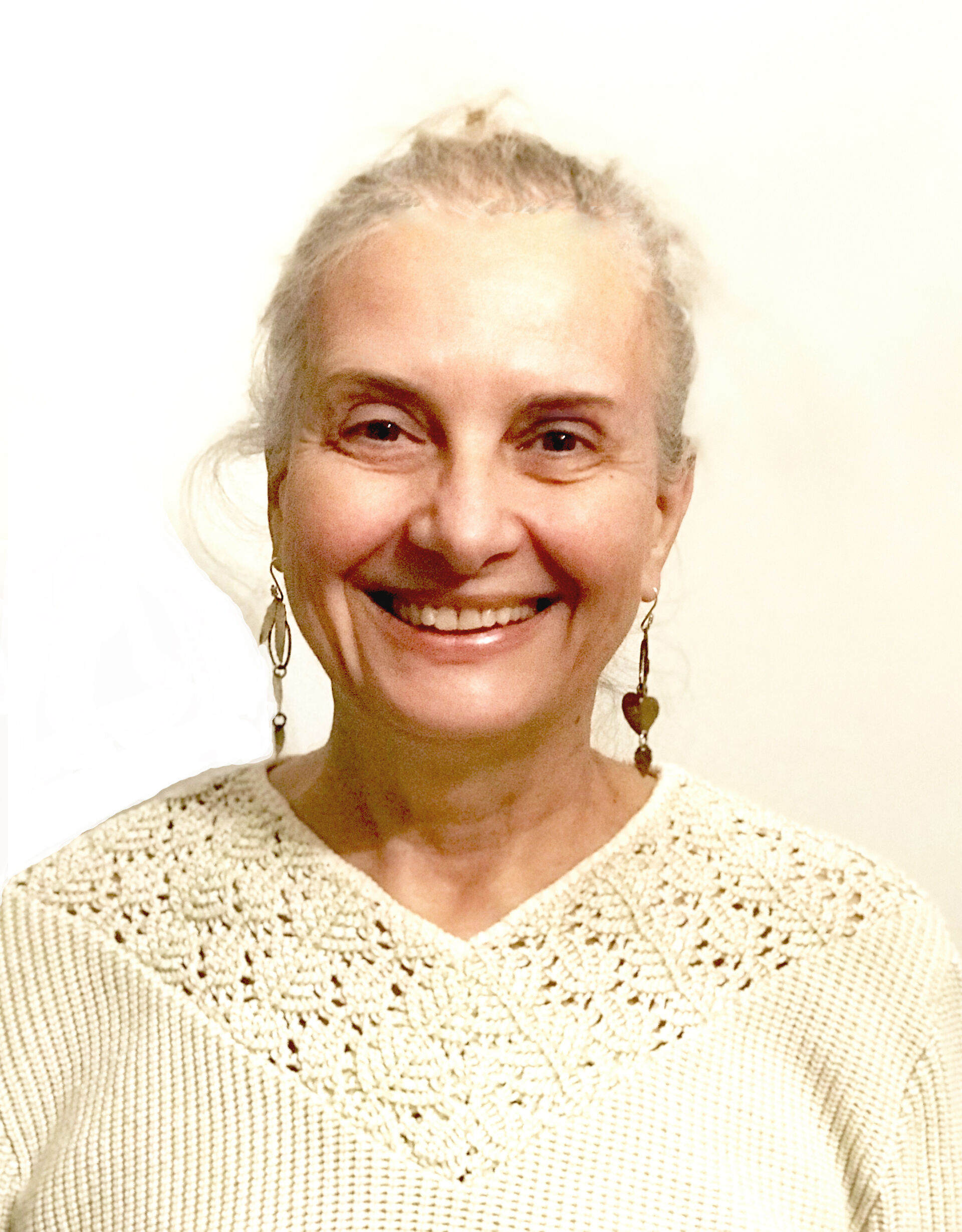
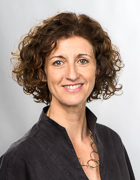
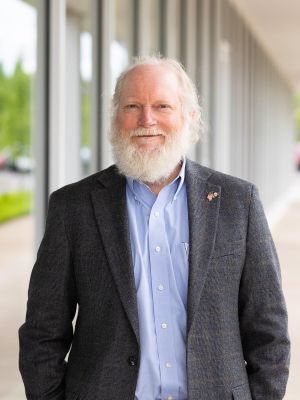
Babak Heydari is Associate Professor in Mechanical and Industrial Engineering at Northeastern University, with joint appointments in the College of Engineering and School of Public Policy. He directs the Multi-AGent Intelligent Complex Systems (MAGICS) Lab and serves as Co-Director of the Engineering Management program. Education: PhD in EECS from UC Berkeley, with graduate certificate in Management of Technology. Research interests: Focuses on socio-technical systems, complex networks, and resilience engineering. Develops computational frameworks for understanding platform ecosystems, sharing economy models, and network resilience using AI and game theory approaches. Publications demonstrate consistent innovation in network modeling, with recent applications to AI governance and resilient infrastructure. Work combines computational methods with policy insights. National Science Foundation CAREER Award Wiley Systems Engineering Journal Best Paper Award Best Paper Award, Journal of Systems Engineering (2016) Leadership includes chairing the Executive Committee of the Council of Engineering Systems Universities and serving on advisory boards for international resilience initiatives.
Dr. Jann Michael Weinand is the head of the Integrated Scenarios department at the Institute of Climate and Energy Systems (ICE-2) within Forschungszentrum Jülich GmbH. He leads a team of 30 scientists, PhD students, and master students focusing on energy system analysis, complexity management, and AI integration. His work addresses regional and international energy systems, emphasizing renewable energy resource assessment and techno-economic feasibility. Dr. Weinand holds a Dr.-Ing. from the Karlsruhe Institute of Technology (2020) and a Mechanical Engineering and Business Administration degree from RWTH Aachen University (2016). His research spans energy autonomy, renewable resource optimization, and the socio-technical challenges of energy transitions. Key research areas include energy system modeling, geothermal and wind energy potential, and data-driven methodologies. He coordinates interdisciplinary projects with academic and industrial partners, contributing to high-impact journals like Nature Energy and Joule. His team develops open-source tools (e.g., ETHOS workflows) for reproducible energy assessments and advocates for spatially disaggregated energy planning. Publications highlight trade-offs in energy system design, AI risks, and land-use conflicts for renewables. He emphasizes integrating social, technical, and environmental factors into energy policy frameworks.
Dr. Saeed Taheri is a Senior Lecturer at Nottingham Business School, Nottingham Trent University, within the Department of Strategy, Analytics and Operations. With a background in Materials Science and Engineering, he transitioned to academia after a decade in Iranian manufacturing sectors as a production technology specialist and quality manager. PhD in Operations and Supply Chain Management (2018) MSc and BSc in Materials Science & Engineering Research Focus: Specializing in system dynamics modeling of socio-technical systems, with applications spanning humanitarian supply chains, healthcare operations, and lean product development. His work addresses complex organizational and policy challenges through simulation and optimization. External Engagements: Serves as MSc project supervisor at Warwick Manufacturing Group (WMG), maintains professional membership in the System Dynamics Society, and collaborates internationally on research projects. Teaches Operations & Supply Chain Management modules Supervises research across undergraduate to PhD levels Consultant for engineering management journals
Giuseppe Grossi is Professor of Business Administration at Kristianstad University (Sweden), Research Professor of Accounting at Nord University (Norway), and Visiting Professor at Kozminski University (Poland). He serves as a part-time Associate Professor at the University of Siena (Italy) and has held visiting/researcher positions at Stockholm University, Sydney University, Victoria University of Wellington, and Kozminski University (2015–present). Kristianstad University: Department of Business Administration, Faculty of Economics Nord University: Research Professor of Accounting Kozminski University: Visiting Professor Research Focus: His work bridges smart cities , hybrid organizations , government accounting , and public sector auditing , emphasizing intersections with sustainability, governance, and digital transformation. He explores how accounting systems shape public value creation and accountability in complex institutional settings. Recent Publications: His 15 most recent articles (2023–2025) analyze topics including: Socio-technical imaginaries in smart city sustainability Performance measurement for social sustainability in municipalities Digital transformation's impact on auditing practices Hybrid organizations' accounting tensions IPSAS implementation across European countries Leadership dynamics at the European Court of Auditors Leadership & Editorial Roles: Grossi chairs the Comparative International Governmental Accounting Research (CIGAR) network since 2023 and serves on editorial boards of 12 journals, including Accounting, Auditing and Accountability Journal and Pacific Accounting Review . He is Editor-in-Chief of Journal of Public Budgeting, Accounting and Financial Management (since 2018) and Associate Editor of Qualitative Research in Accounting & Management (since 2021). Grants & Projects: He leads/co-leads research funded by the Swedish Research Council, Polish National Science Centre, Portuguese Foundation for Science and Technology, and Nordic Council of Ministers. Current projects include 'Measuring vulnerability – Reporting on social sustainability in Swedish municipalities' and 'Reinventing Auditing: A new role of the European Court of Auditors.'
Steven P. Dow is a Professor at the University of California San Diego leading the ProtoLab, which investigates collective intelligence, creativity, and decision-making through social computing and human-centered design. His work develops systems leveraging LLMs, crowdsourcing, and visualization to scaffold problem-solving for individuals and communities. His research spans Social Computing , Human-Computer Interaction , and Participatory Design , focusing on cognitive/social aspects of collaborative processes. Key areas include AI-augmented creativity tools, value-centered civic engagement frameworks, and metadata-driven collective ideation systems that bridge technical and cultural dimensions of design. 2025 publications reveal a strong trend toward LLM-crowd integration for creative workflows, with work appearing at UIST and Collective Intelligence conferences. Research emphasizes inclusive idea convergence in civic contexts and dynamic exploration in design processes using forward-backward propagation techniques. Prof. Dow actively mentors students, with advisees like Sangho Suh and Nancy Qiu leading publications on AI storyboarding and self-reflective crowds. His ProtoLab drives projects including community-driven design environments and context-aware exploratory search systems. The ProtoLab serves as an interdisciplinary hub developing socio-technical systems for community co-design, leveraging ubiquitous devices and mixed-initiative interfaces to transform how teams solve complex problems through emergent scaffolding and value-centered frameworks.
Dr Adam J Fenton is an Assistant Professor at Coventry University’s Centre for Peace and Security (CPS), with his work spanning security, resilience, technology, and governance. He is currently leading a project with the Alan Turing Institute to assess socio-technical aspects of digital twins in building UK transport network resilience, alongside NATO-funded research on subsea cable cyber-physical security and UKRI-funded studies on AI’s impact on religious faith and cultural resilience. His 2024 Marie Sklodowska-Curie fellowship focused on maritime cybersecurity governance, and he holds legal qualifications from Monash University, with admission to practice in Australia’s Northern Territory Supreme Court and prior border security experience. Assistant Professor, Coventry University Centre for Peace and Security (CPS) Alan Turing Institute collaboration NATO Science for Peace and Security Programme awardee UKRI SALIENT Hub grant recipient Marie Sklodowska-Curie fellowship (2024) Monash University BA/Law (Hons), Australian legal practitioner His research interweaves security studies, AI ethics, maritime cybersecurity, and legal frameworks. Key projects include Digital Twinning for Crisis Response (DTBOC) and CYBERCABLE for underwater infrastructure protection. His work addresses hybrid threats in strategically vital shipping lanes like the Straits of Malacca, blending technical rigor with policy analysis. The Chancellor's Medal - Higher Education (2010) recognizes his early academic excellence. His publications span digital twinning, AI ethics, maritime cybersecurity, Indonesian law reform, and religious freedom, reflecting a multidisciplinary approach to global security challenges. Digital Twinning for transport resilience Cyber-Physical Security of critical infrastructure AI Ethics and religious/cultural impacts Hybrid Maritime Threats in Southeast Asia Legal Reform in Indonesian anti-terrorism As Principal Investigator for CYBERCABLE and STRAITSECURITY , and Co-Investigator for DTBOC , his research bridges academia with practical policy. He actively contributes to media discourse on maritime technology and geopolitical conflicts.
Birger Sevaldson is a Professor affiliated with the Oslo School of Architecture and Design (AHO), Norway, and co-founder of the Systemic Design Association (SDA). He collaborates closely with OCAD University, Toronto, where he helped anchor the Strategic Innovation Lab (sLab). His work focuses on advancing systemic design as an integrative discipline combining systems thinking with design practices. Research interests include complexity visualization (via gigamapping), socio-technical systems design, and strategic innovation frameworks. He co-organizes the annual Relating Systems Thinking to Design (RSD) symposium and has published seminal works on systemic design methodologies. He advocates for ethical and accountable design practices addressing societal challenges like urbanization and healthcare systems. Professional contributions include co-founding the SDA in 2011 alongside Peter Jones, Harold Nelson, and Alex Ryan. His collaborations bridge academia and industry through initiatives like the SDA Newsletter and global symposia. He has advised on systemic design education and policy innovation for governments including Elections Canada and Alberta's policy groups. Labs/Teams: Strategic Innovation Lab (sLab) at OCAD University, Systemic Design Research Network (SDRN).
Jason A. Delborne is a Professor of Science, Policy and Society in the Genetic Engineering and Society (GES) cluster of the Chancellor's Faculty Excellence Program at North Carolina State University. His departmental affiliation is with the Department of Forestry and Environmental Resources in the College of Natural Resources. He serves on the executive committee of the Genetic Engineering and Society Center and was named a University Faculty Scholar in 2019. His educational background includes: Bachelor's degree in Human Biology from Stanford University (1993) Doctorate in Environmental Science, Policy and Management from the University of California, Berkeley (2005) Delborne's research centers on public and stakeholder engagement with emerging biotechnologies, drawing from the interdisciplinary field of Science, Technology, and Society (STS). His work explores how policymakers and the public interface with controversial science, particularly in genetic engineering and its societal implications. Key areas include: Public engagement methodologies Governance of biotechnologies Policy development for emerging technologies Genetic engineering in food, energy, and water systems Gene drives for conservation Synthetic biology and biodiversity His notable recognition includes being named a University Faculty Scholar by NC State University in 2019. Delborne has secured significant funding as co-Principal Investigator for the NSF-funded National Research Traineeship program, Agricultural Biotechnology in our evolving Food, Energy, and Water Systems (AgBioFEWS). He has contributed to national and international advisory efforts through service on two National Academies of Sciences, Engineering, and Medicine committees and the International Union for Conservation of Nature Task Force on Synthetic Biology. He actively participates in the Engineering Biology Research Consortium (EBRC) Council and multiple advisory boards, advancing interdisciplinary collaboration within the Genetic Engineering and Society Center to address complex socio-technical challenges.
Wiebke Kirleis is Professor for Environmental Archaeology and Archaeobotany at the Institute for Pre- and Protohistory, Faculty of Arts and Humanities, Christian-Albrechts-Universität zu Kiel (CAU). She has held this position since May 2014 and was previously a junior professor at the same university from 2008 to 2014. She is actively involved in major interdisciplinary research projects, including the Cluster of Excellence ROOTS and the Collaborative Research Centre 1266 'Scales of Transformation', where she serves as co-speaker and technical platform speaker. PhD in Natural Sciences, University of Göttingen (2002) Diploma in Biology, University of Göttingen (1998) Studies in Botany, Anthropology, and Environmental History, University of Göttingen (1990–1998) Wiebke Kirleis' research centers on the interaction between humans and plants during the late Pleistocene and Holocene, with a focus on plant economy, domestication, agricultural development, and landscape transformation. Her work explores how wild and cultivated plants were used for nutrition, ritual, and technical purposes, and how agricultural innovations such as ploughing and manuring impacted Central European landscapes. She has a strong geographical focus on Northern and Central Germany, Southeastern Europe, the Near and Middle East, and Southeast and East Asia, particularly Indonesia. Her methodological expertise includes archaeobotany (analysis of charred and waterlogged plant remains), palynology (pollen and spore analysis from sediment cores), and anthracology (study of charcoal remains). Her recent research includes studies on broomcorn millet diffusion, early farming in Scandinavia and Russia, and plant use in Bronze Age settlements across Europe and Turkey. She leads and collaborates on numerous interdisciplinary projects, emphasizing the integration of botanical data into broader archaeological narratives. Her publications reflect a consistent trend in environmental archaeology, focusing on plant domestication, agricultural transitions, and human-induced landscape change. Keywords across her recent work include archaeobotany, palynology, Neolithic and Bronze Age subsistence, and environmental reconstruction. Her research spans subfields such as food security, cultural transmission of plant use, early monumentality, and socio-economic aspects of prehistoric agriculture. Board member, Cluster of Excellence ROOTS Co-speaker, CRC 1266 'Scales of Transformation' Speaker, ROOTS Technical Platform Board member, Johanna-Mestorf-Akademie Chair, Scientific Advisory Board, Dithmarschen Stone Age Park (since 2023) Full member, German Archaeological Institute (DAI) Elected member, Commission for Archaeology of Non-European Cultures (KAAK) Wiebke Kirleis has supervised numerous research projects funded by the DFG and other agencies, including the Graduate School 'Human Development in Landscapes'. She has advised students and collaborated internationally with institutions in Italy, Norway, Indonesia, and Australia. Her leadership roles in academic self-administration include serving on planning, budget, and equality committees at CAU Kiel. She is committed to science communication, having launched the digital exhibition 'Alles bleibt anders' and produced educational films on archaeobotany. She is also involved in mentoring female postdocs through the via:mento program. She leads the archaeobotanical component in the 'Superfood' module of the SFB 1266 digital exhibition and is actively involved in the ROOTS Cluster’s Subcluster 'Dietary ROOTS'. Her lab and research team operate within the Institute for Pre- and Protohistory, contributing to the university’s strong focus on interdisciplinary landscape archaeology.
Kirsty Kitto is an Associate Professor at the University of Technology Sydney in the Learning Design and Technology Unit. With a background in theoretical physics and computer science, her research focuses on developing quantum-inspired models of contextuality to understand complex human behavior in educational systems. She explores the intersection of Artificial Intelligence (AI) , Learning Analytics , and Educational Theory , seeking to bridge the divide between big data and pedagogical frameworks. Current Appointments : Associate Professor (2020-present), Senior Lecturer (2017-2020) Past Academic Roles : Senior Research Fellow (QUT), Senior Lecturer (QUT), Associate Lecturer (Flinders University) Her funded research includes projects on: Quantum models in cognitive systems (ARC Fellowship DP1094974) AI literacy in digital workplaces (IEEE Transactions study) Contextual learning analytics (DVC Education and Students Division) Skills passports for lifelong learning (UMAP 2024 paper) Kitto's recent work examines human-AI interaction in writing assessment, data storytelling for teacher-centered analytics, and causal modeling to strengthen educational theory-data connections. She actively supervises Masters and PhD students and contributes to policy debates through government submissions on generative AI in education. Her methodology combines mathematical formalism with sociotechnical analysis to address educational complexity.
Dr Sara Giarola is an Honorary Research Fellow at Imperial College London's Department of Chemical Engineering, part of the Faculty of Engineering. Her work focuses on large-scale energy systems modeling, climate change mitigation strategies, and the integration of technological innovations into global energy frameworks. She is affiliated with the Sustainable Gas Institute (SGI), Energy Futures Lab, Grantham Institute, and MUSE energy systems model project. Dr Giarola holds a PhD in Chemical Engineering from the University of Padova and has extensive experience in mathematical programming, supply chain optimization, and advanced biorefining processes. Her research spans interdisciplinary areas including renewable energy systems, bioenergy production, and policy analysis for decarbonization pathways. Key affiliations include the Network of Excellence in Air Quality and SGI's Modelling gas futures initiative. She contributes to the development of agent-based models and geospatial analytics to address complex energy transition challenges, particularly in regions like Ecuador, Mexico, and China. Publications highlight her expertise in modeling energy trade dynamics, hydrogen infrastructure, and the socio-technical dimensions of net-zero pathways. Her work emphasizes real-world applications of integrated assessment models to evaluate climate policies and technological feasibility.
Timo Szczepanska is a postdoctoral researcher at UiT The Arctic University of Norway , affiliated with the Norwegian College of Fishery Science . With expertise in computational modeling and social simulation, Szczepanska contributes to interdisciplinary research bridging technology, environmental science, and urban systems. Current member of the CRAFT research group Active participant in the FUTURES4Fish project Published extensively in journals like JASSS and Frontiers in Marine Science Research Focus: Szczepanska's work explores urban complexity through participatory simulations, develops agent-based models for human behavior analysis, and investigates climate change impacts on fisheries. Key methodological contributions include model reimplementations and integrating creative writing with future scenario planning. Recent Article Trends: Recent publications demonstrate a dual focus on decarbonisation strategies for urban mobility and innovative approaches to fisheries governance under climate change. Methodologically, Szczepanska combines agent-based modeling with game design and creative worldbuilding across multiple domains. Collaborative Networks: Collaborates with international researchers across institutions including Radboud University, Potsdam University of Applied Sciences, and various European research groups. Specializes in translating complex systems into interactive pedagogical tools and policy-relevant simulations. Technical Expertise: Proficient in computational platforms like NetLogo and Unity, with particular emphasis on model documentation, validation, and interdisciplinary translation of technological futures.
Alma Leora Culén is a Professor in the Design of Information Systems at the Department of Informatics, University of Oslo, part of the Faculty of Mathematics and Natural Sciences. She holds a prominent role in advancing sustainable interaction design, research through design methodologies, and transformative design practices focused on societal transitions. Her academic journey includes contributions to HCI education reform, emphasizing ethical and sustainable design principles. Culén has pioneered projects like 'Plurishop' exploring sustainable smartphone alternatives and 'Transition Design' approaches for mitigating democratic erosion. She actively engages in interdisciplinary collaborations through research groups such as DESIGN and Design4Dem. Key research interests span sustainable technology, participatory design processes, and leveraging AI for complex design mediation. Her work often intersects with societal challenges like climate action, youth engagement in socio-technical systems, and rural sustainability initiatives. Culén's pedagogical innovations include intensive design courses and speculative installations for civic education. She leads projects funded by the Norwegian Research Council, focusing on sustainable consumption patterns and MaaS solutions for rural areas. Notable collaborations include international design research societies and EU-funded sustainability initiatives. Her lab activities emphasize participatory prototyping and transition design frameworks, with a focus on vulnerable populations such as chronically ill youth and elderly users. Culén's work bridges academic research with real-world impact through partnerships with libraries, municipalities, and tech industries.
Prof. Regine Keller is a Professor of Landscape Architecture and Public Space at the Technische Universität München (TUM), leading the Department of Architecture within the TUM School of Engineering and Design. Her work focuses on contemporary urban challenges such as climate change, resource management, and the preservation of cultural monuments through innovative landscape architecture solutions. Education background: Studied Art History and Theater Studies at LMU Munich, followed by Landscape Management at TUM. Previously served as Vice President for Studies and Teaching at TUM (2011–2014), and taught at Munich University of Applied Sciences prior to joining TUM in 2005. Active memberships include Bavarian Chamber of Architects, DASL, Bavarian Academy of Fine Arts, and Berlin Academy of Arts. Research interests emphasize public space design that balances ecological, social, and cultural needs. Key projects include the Olympic Park Munich analysis, urban regeneration in Cañada Real Galiana (Madrid), and participatory interventions like the 'Pop-Up-Trees' initiative. Her work highlights democratic engagement with urban green spaces and adaptive reuse of historical sites. Notable awards include the 2013 Bavarian 'Pro meritis scientiae et litterarum' honor for academic contributions, and multiple architecture awards for projects like the Felsennelkenanger student residence. Research outputs span over 50 publications, focusing on landscape architecture's role in urban transformation. Grants and collaborations include projects integrating art installations (e.g., 'waldplastik!' in Nuremberg) with urban planning. Her lab and academic teams address cutting-edge topics such as climate-responsive urban design and the socio-political dimensions of public space.
Stephen Eubank serves as Professor of Biocomplexity and Professor of Public Health Sciences at the University of Virginia, where he holds a tenured position in the Department of Public Health Sciences and acts as deputy director of the Biocomplexity Institute. His work bridges computational modeling, epidemiology, and complex systems theory with significant contributions to large-scale simulation frameworks. Eubank's educational background includes: B.A. in Physics from Swarthmore College (1979) Ph.D. in Physics from the University of Texas at Austin (1986) Postdoctoral Associate in Fluid Turbulence at La Jolla Institute (1987) Postdoctoral Associate in Nonlinear Dynamics at Los Alamos National Laboratory (1991) His research centers on simulating socio-technical systems and computational epidemiology, with particular expertise in network structure dynamics and scaling phenomena. Eubank investigates how disease transmission and other diffusive processes interact with underlying network topologies, developing advanced simulation technologies for modeling realistic population behaviors. His work integrates physics-based approaches with public health applications through the Urban Infrastructure Suite framework. Eubank maintains an active research leadership profile as Principal Investigator for a key research group within the National Institutes of Health's MIDAS network. His career includes founding Prediction Company for market time-series analysis and serving as Visiting Scientist at ATR Kyoto for natural language processing research. As deputy director of the Biocomplexity Institute, Eubank leads the Urban Infrastructure Suite initiative—a collection of interoperable simulations modeling individual behaviors across entire urban regions. This work integrates physical infrastructure networks with social dynamics to model complex system interactions, building on his earlier TRANSIMS and EpiSims projects developed during his tenure at Los Alamos National Laboratory.